Sunday Morning Book Thread - 4-19-2026 ["Perfessor" Squirrel]
Welcome to the prestigious, internationally acclaimed, stately, and illustrious Sunday Morning Book Thread! The place where all readers are welcome, regardless of whatever guilty pleasure we feel like reading. Here is where we can discuss, argue, bicker, quibble, consider, debate, confabulate, converse, and jaw about our latest fancy in reading material. As always, pants are required, unless you are wearing these pants...
So relax, find yourself a warm kitty (or warm puppy--I won't judge) to curl up in your lap, and dive into a new book. What are YOU reading this fine morning?
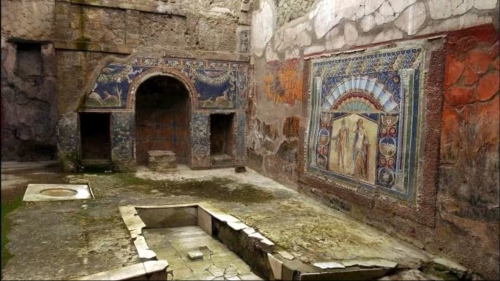
PIC NOTE - The Villa of the Papyri
While it wasn't the largest library of antiquity, the so-called "Villa of the Papyri" is the only one whose collection has survived to the present day. Its roughly 1,800 scrolls were located in the Roman city of Herculaneum in a villa that was most likely built by Julius Caesar's father-in-law, Lucius Calpurnius Piso Caesoninus.
When nearby Mount Vesuvius erupted in 79 A.D., the library was buried—and exquisitely preserved—under a 90-foot layer of volcanic material. Its blackened, carbonized scrolls weren't rediscovered until the 18th century, and modern researchers have since used everything from multispectral imaging to X-rays to try to read them. Much of the catalog has yet to be deciphered, but studies have already revealed that the library contains several texts by an Epicurean philosopher and poet named Philodemus.
-- 8 Legendary Ancient Libraries
GROWING THE BEARD
According to TVTropes.org, "Growing the Beard" is when a series shows a significant improvement in quality over time. The term itself derives from Season 3 of Star Trek: The Next Generation, when Commander William Riker grew a beard. The episodes of Season 3 and onwards tend to be much better written compared to Seasons 1 and 2, according to most fans.
However, "Growing the Beard" is not limited to television series. It can apply to novels just as easily. As y'all know, I read A LOT of books that are part of a series (see below), so I'm quite familiar with this trope from a literary standpoint. I can think of several notable examples of when a series "grew the beard" and become much, much better overall:
The Shannara Series by Terry Brooks -- The Sword of Shannara is rightly derided as a cut-and-paste clone of Lord of the Rings by J.R.R. Tolkien. He admits as much in The Annotated Sword of Shannara. Taken on its own merits, Sword isn't a bad novel, but it does suffer quite a bit by being so derivative of a much better story written by a much better author. However, the success of Sword gave Brooks enough creative leeway to forge a much different path in the first sequel to Sword: The Elfstones of Shannara. This is a much, much different story. It's also vastly improved in quality, demonstrating that Terry Brooks can tell a fantastic story when he's motivated to do so (he "phones it in" in later novels...). In fact, Elfstones is one of my favorite fantasy novels of all time, with one of the best endings of any fantasy story I've ever read.
The Dresden Files by Jim Butcher -- Storm Front, the first novel in the series, was written by Butcher as a "take that" to his creative writing professor. He deliberately jammed as many tropes and cliches into the narrative as possible for an urban fantasy story. She read it and told him that she could sell it, compared to some of his other creative writing projects at the time. So that's what he did. It's an enjoyable read. A decent first novel. Fool Moon, the first sequel, is not quite as good in my opinion, but carries on the same spirit as the first book. Grave Peril, however, stands as one of the better books in the entire series, with the introduction of Michael Carpenter, Harry Dresden's best friend. From Grave Peril onwards, Michael Carpenter and his family come to represent the moral center of Harry's life, which has tremendous impact on Harry's character development in the long-running story arc, up to and including Twelve Months, the most recent novel.
The Wheel of Time by Robert Jordan -- The first book in the series, The Eye of the World is much like The Sword of Shannara in that it's a standard fantasy novel, with all the tropes and cliches we expect. Personally, I love the story *because* it's so troperiffic. However, Book 2, The Great Hunt allows Jordan to stretch his creative writing skills and develop the depths of his characters. It's very quest-driven, but we do get to experience a tremendous amount of world-building along the way as the story moves us around the world. Starting in Book 4 (The Shadow Rising) we move from a quest-driven storyline to a political storyline as the various factions all jockey for power and influence with the Dragon Reborn, who's simply trying to reach the end of his purpose.
The Chronicles of the Kencyrath by P.C. Hodgell -- God Stalk harkens back to the sword-and-sorcery of authors like Robert Howard and Fritz Leiber, with a low-fantasy setting where a young woman finds herself enmeshed in a local power struggle between Thieves Guilds. She's also trying to understand her own origins as she can't quite remember where she came from. Starting in Book 2 (Dark of the Moon), Hodgell expands the world-building by introducing us to Jame's long-lost twin brother, who is ruler of the Kencyrath, but is struggling to establish his birthright. The quality of the story-telling shows a noticeable increase between Book 1 and Book 2, and just gets better and better from then on, though a couple of books do dip a bit in quality. Still worth reading and highly enjoyable, however.
I could go on. The point is that authors who write a lot of books over time do tend to improve (mostly). Certainly our favorite authors will almost always show that they've improved their craft.
Who are some of YOUR favorite authors who have shown a lot of improvement over time?
++++++++++
++++++++++
CRITERIA FOR TBRA BOOKS (ht: muldoon)
A few weeks ago, our resident Limericist Laureate posted the following comment:
Folks often mention their TBR pile, but do any of you have a TBRA* pile with interesting selections?
*To Be Read Again.
Posted by: muldoon at March 29, 2026 11:02 AM (qgHp7)
I'm not going to bore you with a comprehensive list of books I'll read again (see above and below for examples). I know some readers will *never* re-read a book, for their own reasons. I'm not one of those readers. Muldoon's comment did get me thinking about the criteria that I consider when choosing whether or not to re-read a book
Characters -- First and foremost, I think CHARACTERS are what draw me back to a book once I've read it. Do the characters seem fully fleshed out? Do they have individual personalities and quirks that are memorable? Do they have qualities that I admire in a person? This can apply both to protagonists and antagonists. I like a memorable villain as much as I admire a noble hero. My favorite stories will have both.
Plot -- Do I like the plot of the stories that engage me again and again? If the events within a story are boring or off-putting for some reason, then I'm unlikely to return to the book for a second read. There are some books I've read only once and so long ago that I've forgotten the plot, so I may pick those up again just to see what I remember about them. In some cases, once I start re-reading them I'll remember why I didn't enjoy it much the first time. Note that a plot doesn't have to be complicated or subversive for me to enjoy it again. I like straightforward heroic quests as much as I enjoy complex mysteries where you are not quite sure what's going on.
Setting -- I love world-building in storytelling. I'll go back to some of my favorite stories again and again just because I love the world the author created. Steven Erickson's world of the Malazan Empire is a great example. As is P.C. Hodgell's Rathilien in The Chronicles of the Kencyrath. Both are fantastic examples of world-building done *right*.
Emotional impact -- Finally, the fourth quality I look for in a book that's worth re-reading is the emotional impact it has on me as a reader. What do I experience emotionally as I read the story? Do I feel joy, sadness, anger, depression, or hope? Do I feel satisfied at the end? Is there a satisfying emotional payoff? I re-read The Lord of the Rings not long ago and I was impressed by how much of an emotional impact that story still has on me, even though I've read it many times before. Now THAT'S good storytelling.
One series of books that has failed to make it to the TBRA pile is Isaac Asimov's Foundation series. I read those some time ago because I wanted to read a science fiction epic that is foundational to the field. And while it wasn't bad, it also was not great. The best way I can describe the series is "flat." I don't recall much about the story, to be honest. Asimov's characters are kind of dull. His plot is OK, but not terribly engrossing, his Galactic Empire doesn't have much going for it, and by the time I was done, I really didn't feel much of anything. So while I *might* re-read it again in the future, it would never rise to the very top of my TBRA pile.
MORON RECOMMENDATIONS
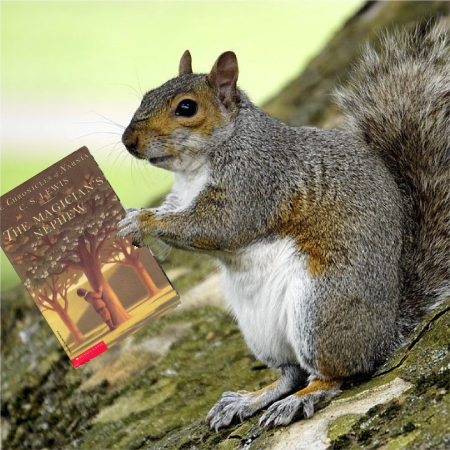
While most people first encounter Narnia in C.S. Lewis' The Lion, The Witch, and the Wardrobe, my personal favorite story in the series is The Magician's Nephew. This is the origin story of the series, though written much later by Lewis.
Digory Kirke and his new friend Polly sneak into his Uncle Andrew's locked study and discover some magic rings. Polly touches a red one and disappears, and Digory must follow with a green one if he is to rescue her. They are transported to a transit zone between worlds, and instead of returning home, they jump to a different world. When Digory rings a bell there in a ruined tower, he awakens Jadis, an evil witch. They try to escape home, but end up in a new world called Narnia.
This is an allegory of the Adam and Eve story; in this one Digory awakens evil and brings it into this new world. Along the way, foreshadowing of events to come are left for the reader that tie into the main series storyline. I especially like that a portion of a London street lamp is dropped on the ground in Narnia, and it grows into the lamp that Lucy finds in The Lion, the Witch, and the Wardrobe.
Posted by: Thomas Paine at April 12, 2026 09:13 AM (0U5gm)
Comment: When you first encounter The Magician's Nephew after reading the previous Narnia books, it can be a bit jarring. However, like Thomas Paine, I agree that it's one of the best in the series. The sequence that takes place in the dead world of Charn is very creepy and unsettling. The end, fittingly for a book written by C.S. Lewis, is very hopeful and uplifting. Just a great book and a great series overall. Well worth reading and rereading.
++++++++++
I dosed off a bit this morning and woke up thinking about Carla Emery's Encyclopedia of Country Living. My husband bought me a replacement copy as my original fell apart. The original was memographed pages. Carla started writing and would mail new chapters as they were finished. She took some of her kids with her, to sell the book at local fairs. She was raised on a farm and knewwhat she was talking about. It all eventually lead to tv interviews and the book being published as a regular edition. She and her husband started a school for homesteaders, but the marriage finally fell apart.
There was so much knowledge of old ways that people tried to recover and save in the 60s and 70s. Yet here we are, with young homesteaders throwing it away for Instragram influencers. It's a shame.
Posted by: Notsothoreau at April 12, 2026 09:28 AM (gQ15S)
Comment: I bought a copy of this book several years ago, no doubt based on Moron recommendations. Not quite sure what I intend to do with it, though. I don't live in the country. Though I could raise chickens, perhaps. Some of my neighbors do. I don't have enough land to grow a decent garden as my yard is about the size of a postage stamp. And I'm pretty lazy when it comes to that sort of thing.
MORE MORON RECOMMENDATIONS CAN BE FOUND HERE: AoSHQ - Book Thread Recommendations
+-----+-----+-----+-----+
WHAT I'VE BEEN READING RECENTLY
The journey through F. Paul Wilson's Secret History of the World continues. Like The Dresden Files, these books move fast. I can blaze through a book in a day or two because Wilson just keeps the pace moving quickly, but it never feel so rushed that you can't enjoy the story.
Repairman Jack Book 9 - Infernal by F. Paul Wilson
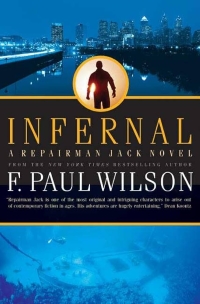
Jack's father is killed in a terrorist attack. Still grieving for father he only recently reconnected with, Jack is contacted by his older brother Tom, who needs Jack's help to disappear.
Tom is in deep, deep trouble with the law, as he's a corrupt judge under federal investigation. He dragoons Jack into assisting Tom with a little recovery operation off the coast of Bermuda, which will have tragic consequences for both Jack and Tom, as they discover a lost artifact that should have remained lost.
Repairman Jack Book 10 - Harbingers by F. Paul Wilson
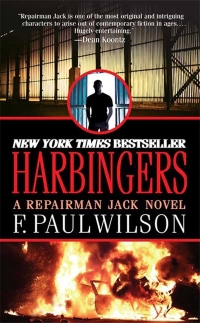
Until now, Jack has mostly dealt with factions tied to the "Otherness," the alien cosmic entity that seeks intrusion into our world.
Now he discovers that the nominal "Ally" has its own faction, which it uses to intervene in its endless war against the Otherness. It's very nearly as ruthless as the Otherness in pursuing its goals, but it wants to keep Earth within its sphere of influence.
Jack's caught up in a war that threatens to take away everyone that Jack cares about.
Repairman Jack Book 11 - Bloodline by F. Paul Wilson
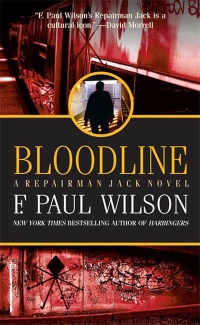
Jack is hired to find a teenage girl who’s shacking up with a much older man. Dawn's mother misses her dearly and wants her returned safe and sound.
Dawn's paramour has deep, dark secrets of his own and when Dawn becomes pregnant, he knows that his task is nearly complete.
This is one of the darker entries in the Repairman Jack series. The villains' plans are truly morally and ethically repugnant. Wilson is very good about creating irredeemably evil characters.
The ICE Trilogy Book 1 - Panacea by F. Paul Wilson
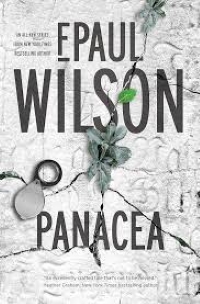
ICE here means "Intrusive Cosmic Entities," which is the name that ex-CIA operative Rick Hayden calls the alien forces that appear to be causing chaos on our planet. Unlike Repairman Jack, Rick is NOT a direct target of either the Ally or the Otherness, but he is aware of what the Otherness is capable of to some extent.
Laura Fanning is a medical examiner who’s hired to track down a mythical and mystical "universal cure" for a terminally-ill billionaire. Laura and Rick will travel to the ends of the Earth—or at least a remote corner of Scotland to find the panacea and brink it back.
The ICE Trilogy Book 2 - The God Gene by F. Paul Wilson
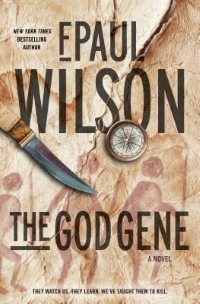
Rick's zoologist brother has gone missing. Rick and medical examiner Laura once again scour the globe to track down Keith, who appears to have disappeared in East Africa.
Meanwhile, a trader in exotic animals has discovered the source of Keith's "protosimian" companion—a monkeylike creature with extraordinary intelligence and uncanny blue eyes.
The "dapis" as they are dubbed may even be a threat to the human race—one that is empowered by either the Ally or the Otherness.
Repairman Jack Book 12 - By the Sword by F. Paul Wilson
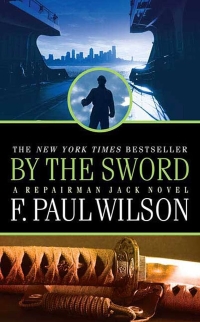
Numerous factions are climbing out of the woodwork to claim ownership of the Gaijin Masamune, a legendary sword that was a ground zero of the Hiroshima blast in World War II, yet somehow survived.
Things get crazy at the end when Jack maneuvers the various factions to go to literal war with one another.
By the Sword interweaves material from Black Wind as a core part of its storyline, though it's not necessary to read the earlier book to enjoy this one.
Repairman Jack Book 13 - Ground Zero by F. Paul Wilson
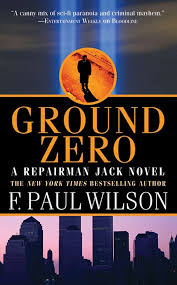
The collapse of the World Trade Center was orchestrated by Osama bin Laden. Or was it? Jack's childhood friend Louise "Weezy" Connell claims to have found the TRUE origin of the attack on the World Trade Center and needs Jack's help to disappear before the real architects of the terrorist attack find her.
Turns out the truth is much, much darker than anything Weezy or even Jack can imagine, leading to a global conspiracy network that has one mission: destroy the Lady, a mysterious figure who stands in the way of the Otherness.
The Adversary Cycle Book 4 - The Touch by F. Paul Wilson
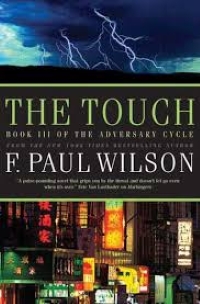
A devoted family physician is granted the power to heal any disease or ailment with a touch. It only works a limited time per day.
He has no idea where it comes from, but the Vietnamese gardener of one of his patients has seen it back in Vietnam during the war. Ba (his name) knows that this power comes with a tragic price, though it's one that Dr. Bulmer believes is worth paying for the gift he's able to bring to others, including one special little boy.
The Peabody-Ozymandius Traveling Circus & Oddity Emporium by F. Paul Wilson
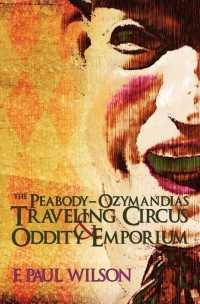
This novella was born out of a short-story anthology called Freak Show.
Wilson decided to expand his contribution and tie it more firmly into The Secret History of the World.
All of the sideshow freaks of the circus in question have been born out of the Otherness, touched by that darkness in some profound way. Their leader, Oz, is searching for missing components of an Infernal Device, the purpose of which remains a mystery, though it will only work in certain "touched" regions of the Earth during the equinox.
The ICE Trilogy Book 3 - The Void Protocol by F. Paul Wilson
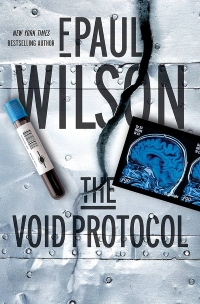
Super-powered humans have begun showing up in America. The origin of their strange gifts is unknown, but the billionaire patron of Laura Manning and Rick Hayden is determined to find them and understand the nature of their gifts.
The secret lies deep within a hidden military facility underneath the Pine Barrens of New Jersey, where a mysterious "hole" in reality exists that defies any and all explanations.
Repairman Jack Book 14 - The Last Christmas by F. Paul Wilson
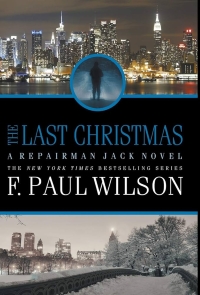
This one is a bit odd because Wilson wrote it AFTER he swore he’d never write another Repairman Jack novel. But then he decided to tell this tale and fit it into the overall narrative.
One thing to take away from this story: Don't ever, ever try to screw Jack over once he's accepted your job. Don't play games with him. Don't withhold information he asks for. When he finds out you’ve been less than forthright with him, he WILL make you pay. May God have mercy on your soul. Because Jack sure won't.
The Adversary Cycle Book 5 - Reprisal by F. Paul Wilson
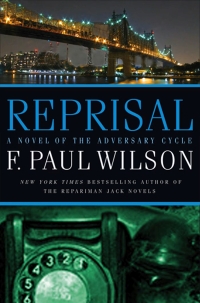
This is one of the darkest novels in the entirety of The Secret History of the World. In the author’s introduction, Wilson admits that there were passages that were very difficult for him to write, but were necessary for the story.
At its core Reprisal's main theme is the targeted, deliberate destruction of innocence. The Adversary never, ever forgets nor forgives anyone who has slighted him or stood in his way in the past. He exacts terrifying revenge on the former Catholic priest who very nearly killed the Adversary before he could be reborn.
Repairman Jack Book 15 - Fatal Error by F. Paul Wilson
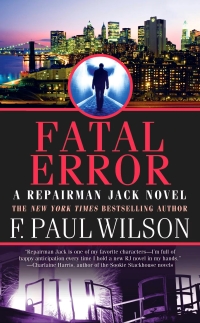
At last we are nearing the end of The Secret History of the World.
In Fatal Error, Jack finds himself embroiled in one final scheme to kill the Lady, the mystical guardian of planet Earth. Twice now she’s been killed by agents of the Otherness, but has managed to find a way to return.
Meanwhile Jack is helping a man whose wife and child were kidnapped. The man in question helped design software code that could potentially end the Internet worldwide, which has grim implications for the future.
Repairman Jack Book 16 - The Dark at the End by F. Paul Wilson
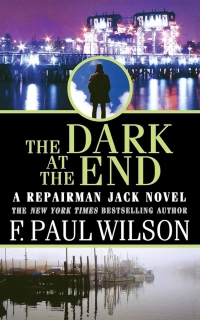
Canonically, this is the last of the Repairman Jack novels within The Secret History of the World. The next novel, Nightworld, does feature Jack, but he's part of an ensemble cast of characters from previous works in the series.
In this novel, Jack is finally unleashed to go after the Adversary directly, now that the Adversary knows the Sentinel, the Ally's champion, has been severely weakened by age and infirmity. Jack is paired with his own unlikely ally, Ernst Drexler, who used to by an actuator for the Septimus Order, a faction of the Otherness.
Signalz by F. Paul Wilson
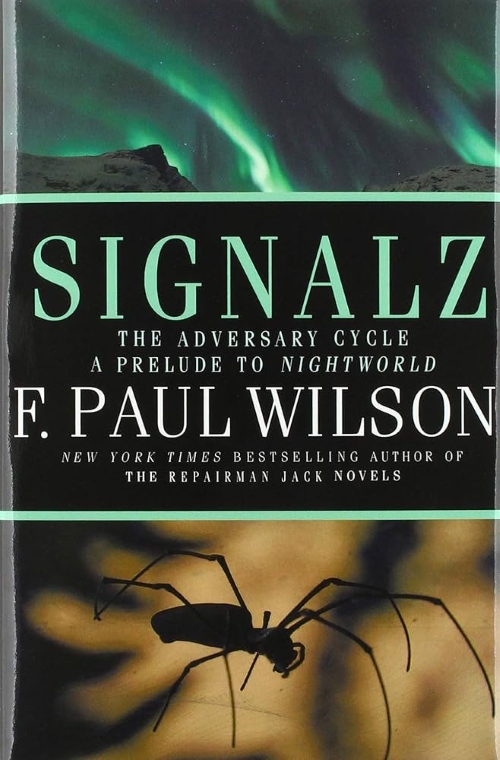
This novella is a prequel to Nightworld, though written several years after that novel. It sets the stage for the events of Nightworld, featuring a number of secondary characters from previous novels who are now trapped in the most terrifying events of their life.
Their world as they knew it is over, as they begin to experience the direct influence of the Otherness within their personal lives.
The Adversary Cycle Book 6 - Nightworld by F. Paul Wilson
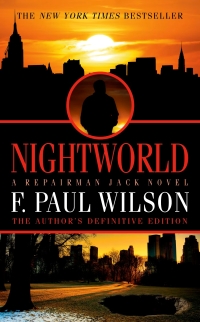
This is it. The last novel of The Secret History of the World. Chronologically, it takes place around 2012, though it's a bit vague in that regard.
It was originally part of The Adversary Cycle, closing out that series, but as Wilson wrote more and more Repairman Jack novels, he knew he had to revise and rewrite Nightworld to fit in the events that took place in those books.
The end result is one of the most terrifying books about the end of the world I've ever read.
The world, in a nutshell, is boned.
PREVIOUS SUNDAY MORNING BOOK THREAD - 4-12-2026 (NOTE: Do NOT comment on old threads!)
Tips, suggestions, recommendations, etc., can all be directed to perfessor -dot- squirrel -at- gmail -dot- com.
 Disclaimer: Twilight has come. Night will follow. It will begin in the heavens and end in the Earth. But before that...the rules will be broken.