
aceofspadeshq at gee mail.com
CBD:
cbd at cutjibnewsletter.com
Buck:
buck.throckmorton at protonmail.com
joe mannix:
mannix2024 at proton.me
MisHum:
petmorons at gee mail.com
J.J. Sefton:
sefton at cutjibnewsletter.com
Democrat Whistleblower Claims that Adam Schiff Ordered His Staff to Illegally Leak Classified Information In Order to Rig and Indictment Against Trump
Adam Schiff, I assume, has been quizzed about this before.
And I assume he lied to federal investigators when he was asked. That's obstruction of justice.Tony SerugaThis researcher says that Eric Swalwell was part of the illegal leaking conspiracy as well:
@TonySeruga 3h 🚨 ADAM SCHIFF'S FELONY CONFESSED BY HIS OWN DEMOCRATIC STAFF: Leaked Classified Secrets to Frame Trump -- 10+ Years in Prison or Just Another Swamp Pass? Declassified FBI 302s -- released by Director Kash Patel -- expose a Democratic whistleblower (a 10+ year House Intelligence Committee veteran) who warned agents in 2017 and 2023: then-Rep. Schiff convened staff and explicitly authorized leaks of classified intelligence derogatory to President Trump. The explicit aim? To manufacture material "to indict" a sitting President during the now-discredited Russiagate probe. This was no rogue staffer. It was the ranking member -- later chairman -- of the very committee entrusted with our nation's most sensitive secrets, plotting in open conference to weaponize them against the Executive Branch. A fellow Democrat called it "illegal, unethical, and treasonous." Professor Jonathan Turley captured the constitutional horror: "a truly chilling account... perfectly moronic to commit such a felony with a planning conference meeting with staff." Under 18 U.S.C. § 798, unauthorized disclosure of classified information carries up to 10 years or more per count. "Someone," Turley rightly declared, "is a felon." The Framers designed the Intelligence Committee to defend the Republic from foreign threats and domestic overreach -- not to serve as a partisan Star Chamber. Schiff's alleged scheme was not oversight; it was subversion, the precise factional cancer the Constitution was written to excise. While he sermonized about "threats to democracy," he allegedly orchestrated one from within its most sensitive chamber. President Trump has torn back the curtain. The rule of law is not optional. Equal justice is not partisan. The same statutes that bind the rest of us must now bind the self-anointed high priest of the Russia hoax. America is watching. History is recording. Accountability cannot wait.
Adam Schiff and Eric Swalwell conspired to leak classified, and falsified, information that I was a Russian Spy who had an affair with President Trump's National Security Advisor General Flynn.
— Svetlana Lokhova (@RealSLokhova) May 10, 2026
The goal was to impeach President Trump. The motive: Schiff didn't get the CIA… https://t.co/FYwa5Uwz9x pic.twitter.com/WtSs716Ihu
🚨 HOLY SMOKES. President Trump posts revelation that Adam Schiff criminally LEAKED classified information to target Trump while on the Intel Committee
— Eric Daugherty (@EricLDaugh) May 12, 2026
It’s a FELONY.
Lock him up!
TURLEY: “This is a truly chilling account, if true. Now, when I first read it, frankly, I was… pic.twitter.com/DD7uASU8GV
Comments
(Jump to bottom of comments)Posted by: TheJamesMadison, discovering British horror with Hammer Films at May 12, 2026 01:21 PM (tXqCv)
Posted by: Jukin the Deplorable and Totally Unserious at May 12, 2026 01:22 PM (xvV+O)
Swamp pass. 100 quatloos.
Posted by: rickb223 at May 12, 2026 01:22 PM (VN2np)
To ask is to answer, innit?
Posted by: Oddbob at May 12, 2026 01:23 PM (vTZFs)
Posted by: Stateless - He ain't heavy, he's my dog at May 12, 2026 01:23 PM (Sco7b)
Posted by: four seasons at May 12, 2026 01:23 PM (3ek7K)
Posted by: Bulg at May 12, 2026 01:23 PM (77rzZ)
Tear back the curtain, then bring the hammer ... of responsibility.
Posted by: illiniwek at May 12, 2026 01:24 PM (vbXSk)
Posted by: Boss Moss at May 12, 2026 01:24 PM (hQ92x)
Posted by: The Whine Guy at May 12, 2026 01:24 PM (954tc)
Posted by: Jukin the Deplorable and Totally Unserious at May 12, 2026 01:24 PM (xvV+O)
Posted by: The Whine Guy at May 12, 2026 01:24 PM (954tc)
Posted by: Inogame at May 12, 2026 01:24 PM (53oGX)
Posted by: barbarausa at May 12, 2026 01:24 PM (enw9G)
Posted by: redridinghood at May 12, 2026 01:25 PM (NpAcC)
Posted by: Inogame
======
Not for leaking. Don't think he was on the Jan 6th Committee.
Posted by: whig at May 12, 2026 01:26 PM (E4rtv)
Posted by: barbarausa at May 12, 2026 01:24 PM (enw9G)
But, did you catch the typo in the headline?
Proofreading is for pussies....
Posted by: Stateless - He ain't heavy, he's my dog at May 12, 2026 01:26 PM (Sco7b)
Posted by: Elric The Blade at May 12, 2026 01:26 PM (iFTx/)
Hang the lot of them.
Posted by: Comrade Flounder, Disinformation Demon at May 12, 2026 01:26 PM (dK+Kv)
Posted by: museisluse at May 12, 2026 01:27 PM (YtyqX)
Posted by: runner at May 12, 2026 01:27 PM (GD0B3)
CA must be so proud.
Posted by: four seasons
......
We've got plenty more where they came from.
Posted by: wth at May 12, 2026 01:27 PM (UjdFS)
Posted by: runner at May 12, 2026 01:27 PM (GD0B3)
Posted by: Heroq at May 12, 2026 01:29 PM (f2WBH)
You stupids don't understand that because you didn't go to Harvard.
Posted by: People's Hippo Voice at May 12, 2026 01:29 PM (MtSIY)
Posted by: runner at May 12, 2026 01:27 PM (GD0B3)
More than for just the January 6 hearings?
>>>President Joe Biden Monday pardoned Sen. Adam Schiff, D-Calif.,, in connections with Schiff’s work on the January 6 committee
Posted by: Comrade Flounder, Disinformation Demon at May 12, 2026 01:29 PM (dK+Kv)
____________________
To look at this objectively, I'd have to say that someone in Schiff's staff realized that he/she was sitting in the "Patsy Seat", and has taken positive steps to resolve the situation.
Posted by: Orson at May 12, 2026 01:30 PM (dIske)
CA must be so proud.
Posted by: four season
--
Trust me they are. Very proud.
Posted by: Jukin the Deplorable and Totally Unserious at May 12, 2026 01:30 PM (xvV+O)
Kelly is safe because to prosecute him would be an admission that what he said was actual classified information.
This is a dilemma. If they go after him, it makes what he did worse. So they just say "he is full of shit" and he gets away with it.
Posted by: bob (moron inbobnitus) at May 12, 2026 01:30 PM (jnIP3)
--------
They left off the rest of the quote which was,
"... and I am HERE for it, bay-bee!! 😜 🎊 👍🏻🍰🍾 "
Posted by: ... at May 12, 2026 01:30 PM (BwrBR)
...and "Nothing Will Happen" guy still has no comment.
Posted by: Auspex at May 12, 2026 01:30 PM (Y8DZL)
----------
Agree.
But...
I'm not getting my panties in wad just yet. Indictments are one thing. Convictions are quite another. And the DoJ's record on the latter is.... wanting.
Any word on Bolton's indictment? The Minneapolis church terrorists? Comey's latest? Etc, etc.
Posted by: Martini Farmer at May 12, 2026 01:30 PM (jehhT)
By any means necessary
Posted by: melodicmetal at May 12, 2026 01:31 PM (61TgR)
The argument being ANY politically motivated leak of Nat Sec info is a serious crime...
Posted by: 18-1 at May 12, 2026 01:31 PM (sKqQm)
Well, there's "knew¹" like we all knew about COVID and Obamacare and a bunch of other stuff and then there's "knew²" as in documented facts. Which may or may not change what anyone knows¹ about anything.
Posted by: Oddbob at May 12, 2026 01:31 PM (vTZFs)
Posted by: Oglebay at May 12, 2026 01:31 PM (2ap+5)
By any means necessary
Posted by: melodicmetal at May 12, 2026 01:31 PM (61TgR)
I've got binoculars!
Posted by: There he is! at May 12, 2026 01:32 PM (TbWk/)
By any means necessary
Posted by: melodicmetal
---
Like a Luigi type of reckoning?
Posted by: Jukin the Deplorable and Totally Unserious at May 12, 2026 01:32 PM (xvV+O)
Well, there's "knew¹" like we all knew about COVID and Obamacare and a bunch of other stuff and then there's "knew²" as in documented facts. Which may or may not change what anyone knows¹ about anything.
Posted by: Oddbob at May 12, 2026 01:31 PM (vTZFs)
Ooooooo, you and your fancy superscripts. Mr. onepercenter over here.
Posted by: Conspicuous consumption. How nouveau riche. at May 12, 2026 01:33 PM (TbWk/)
Just now, for the first time, he is learning all of this information, which was presented in committee hearings he attended.
Posted by: People's Hippo Voice at May 12, 2026 01:33 PM (MtSIY)
But...
I'm not getting my panties in wad just yet. Indictments are one thing. Convictions are quite another. And the DoJ's record on the latter is.... wanting.
Any word on Bolton's indictment? The Minneapolis church terrorists? Comey's latest? Etc, etc.
Posted by: Martini Farmer at May 12, 2026 01:30 PM (jehhT)
=======
The main issue is getting indictments, actually. Grand juries in DC just throw everything out.
Once they actually go to trial, this DOJ actually has a pretty good record. Unless some judge in Minnesota says that the jury got it wrong and no punishment.
But this is North Florida, not Minnesota or DC.
Posted by: TheJamesMadison, discovering British horror with Hammer Films at May 12, 2026 01:33 PM (tXqCv)
Posted by: bob (moron inbobnitus)
Haven't they already admitted that, though.
Posted by: Bulg at May 12, 2026 01:33 PM (77rzZ)
Because she replaced Romney. Remember?
Is there anyone? I thought they would try it with Pence but he is such a fucking weak sister I don't think he can even pull 'fey backstabbing bitch' off."
Posted by: ... at May 12, 2026 01:34 PM (BwrBR)
Posted by: John Thune at May 12, 2026 01:34 PM (wGerL)
Posted by: Operator Error at May 12, 2026 01:34 PM (dJ8F3)
Because she replaced Romney. Remember?
Is there anyone? I thought they would try it with Pence but he is such a fucking weak sister I don't think he can even pull 'fey backstabbing bitch' off."
Posted by: ... at May 12, 2026 01:34 PM (BwrBR)
Thune? Massie?
Posted by: Comrade Flounder, Disinformation Demon at May 12, 2026 01:34 PM (dK+Kv)
The intel committees were created in the 1970s following the Church commission inquiry. Jeebus.
It's a special kind of disgust and amazement one has, if one were familiar with how they operated up until recent times, seeing the crude partisan corruption (well, all Dem) and abuses that now seem the norm.
Posted by: rhomboid at May 12, 2026 01:35 PM (U/Byj)
Whose bug-eyed stare will prevail -- Patel's or Schiff's?
Posted by: Semi-Literate Thug at May 12, 2026 01:35 PM (biznJ)
Just now, for the first time, he is learning all of this information, which was presented in committee hearings he attended.
Posted by: People's Hippo Voice at May 12, 2026 01:33 PM (MtSIY)
======
It was more important to throw out a new hair style, act tough, and do nothing to defend his voters' choice for president than it was to get on Paul Ryan's bad side by saying the entire Russian collusion nonsense was nonsense.
How was he going to defend his post-Congress career if he did that?
Posted by: TheJamesMadison, discovering British horror with Hammer Films at May 12, 2026 01:35 PM (tXqCv)
Posted by: fd at May 12, 2026 01:35 PM (frwQN)
Posted by: gnats local 678 at May 12, 2026 01:36 PM (CWTWj)
Posted by: Bulg
I'm not sure. I only saw the Hegseth quote that "he's wrong" or something like that. Not prosecuting leaves doubt anyway.
Posted by: bob (moron inbobnitus) at May 12, 2026 01:36 PM (jnIP3)
Posted by: Oddbob at May 12, 2026 01:36 PM (vTZFs)
Leaked Classified Secrets to Frame Trump -- 10+ Years in Prison or Just Another Swamp Pass?
I wouldn't be surprised that Schifffff will scream that the FBI 302s are unreliable perjury traps. Because they are. They're antiquated forms based exclusively on an agent's written notes, with MANDATORY bans on video or audio recording witness/suspect interviews, according to FBI guidelines.
If he gets the Swamp Ass, I'd love to see it cited to FINALLY get the FBI JBTs to use proper audio/video recordings in their cases and take away this most pernicious means of gleefully wiping their ass with The Constitution.
Posted by: IllTemperedCur at May 12, 2026 01:36 PM (y9nCu)
That reminds me...
I remember during COVIDmania when the government mandated people take the clot shot to "stop the spread" because you didn't want to kill granny.
And then a little while later the FNM/government started claiming that NO ONE ever said the clot shot stopped or even slowed the spread it was just to make you got less sick when you did get COVID
BUT
They still left in the rules requiring people to get the clot shot on the grounds that it would stop the spread.
Posted by: 18-1 at May 12, 2026 01:37 PM (sKqQm)
Posted by: fd at May 12, 2026 01:37 PM (frwQN)
The argument being ANY politically motivated leak of Nat Sec info is a serious crime...
---
That is still an Article of Known Truth on the left, that he "leaked the name of a CIA operative."
None of them know or will ever accept that everyone knew who she was and that she was nothing but a desk jockey in Foggy Bottom.
Posted by: People's Hippo Voice at May 12, 2026 01:37 PM (MtSIY)
Posted by: John Thune at May 12, 2026 01:37 PM (wGerL)
Posted by: Bilwis Devourer of Innocent Souls, I'm starvin' over here at May 12, 2026 01:37 PM (w/O5Q)
I mean prison
But I'd settle for one of homeless crazies he created to enrich his culture
Posted by: melodicmetal at May 12, 2026 01:37 PM (61TgR)
Or was it to stop someone not of the body from getting too close to the cerebral cortex?
Posted by: ... at May 12, 2026 01:38 PM (BwrBR)
Posted by: Northernlurker , Maple Syrup MAGA at May 12, 2026 01:38 PM (DuY/7)
Posted by: Sponge - F*ck Cancer at May 12, 2026 01:39 PM (IXZGh)
Posted by: MAGA_Ken at May 12, 2026 01:39 PM (Vh9CX)
Posted by: Bulg at May 12, 2026 01:39 PM (77rzZ)
Changing that policy and announcing it loudly might be the single greatest thing Kash could do to restore the reputation of the FBI.
Posted by: Oddbob at May 12, 2026 01:39 PM (vTZFs)
They could claim that the information is false and was classified in order to find a leaker. No one would believe it but the information is already out there so protecting it matters less.
Posted by: I used to have a different nic at May 12, 2026 01:39 PM (ExV1e)
Hang this mutherf*cker. By the neck. Until dead.
ENOUGH.
Posted by: Sponge - F*ck Cancer at May 12, 2026 01:39 PM (IXZGh)
Then Newsom could appoint.... Katie Porter
Posted by: Smell the Glove at May 12, 2026 01:39 PM (gu0hJ)
I Schiff a "catcher" kind of catamite?
Not that there's anything wrong with that, but it may make a difference in prison.
Posted by: Auspex at May 12, 2026 01:40 PM (Y8DZL)
Posted by: Bulg at May 12, 2026 01:40 PM (77rzZ)
Posted by: American Hawkman at May 12, 2026 01:40 PM (6so3e)
Posted by: Oddbob at May 12, 2026 01:40 PM (vTZFs)
Occasionally Massie says tactical things the left really likes but strategically/philosophically they still HATE him.
Thune is saving their bacon with the SAVE Act but they can't praise a Republican leader who doesn't generally make waves with Trump.
So their favorite Rep now is probably Raffensperger
Though I do miss the moment when it was Dick Cheney. Genocidal war criminal Cheney who help Chimpy McBushHitler murder millions of peaceful Muslims. That guy.
Posted by: 18-1 at May 12, 2026 01:40 PM (sKqQm)
Posted by: pahound at May 12, 2026 01:41 PM (jvxI2)
Posted by: Northernlurker , Maple Syrup MAGA at May 12, 2026 01:38 PM (DuY/7)
I feel so judged right now
Posted by: ... at May 12, 2026 01:41 PM (BwrBR)
Over/under on how many comments generated by a simple typo?
Posted by: Oddbob at May 12, 2026 01:36 PM (vTZFs)
The question is moob.
Posted by: Comrade Flounder, Disinformation Demon at May 12, 2026 01:41 PM (dK+Kv)
Which i have on another matter, of course, but thanks for staying quiet, Ed Buck.
Posted by: Adam "Pencil Neck" Schiff at May 12, 2026 01:41 PM (0e5Te)
Posted by: RebeccaH at May 12, 2026 01:42 PM (VFung)
Posted by: Huck Follywood at May 12, 2026 01:42 PM (VAqn7)
The argument being ANY politically motivated leak of Nat Sec info is a serious crime...
Posted by: 18-1 at May 12, 2026 01:31 PM (sKqQm)
Only if a member of a Republican staff does it, silly.
Posted by: Sponge - F*ck Cancer at May 12, 2026 01:42 PM (IXZGh)
Posted by: jim (in Kalifornia) at May 12, 2026 01:42 PM (ynpvh)
Posted by: Huck Follywood at May 12, 2026 01:42 PM (VAqn7)
They are to the side of of the law, below, behind and in front of the law as well.
Posted by: jim (in Kalifornia) at May 12, 2026 01:42 PM (ynpvh)
Posted by: [/sup]I used to have a different nic at May 12, 2026 01:43 PM (ExV1e)
Posted by: Boss Moss at May 12, 2026 01:43 PM (hQ92x)
Posted by: Huck Follywood at May 12, 2026 01:43 PM (VAqn7)
One of the interesting things to see is the Trump admin starting to move against Dem criminals in a way we haven't seen since the 1980s. And here I mean tradition crimes like this Lucas woman.
But Shrub did jack shit about Dem crime...
Posted by: 18-1 at May 12, 2026 01:43 PM (sKqQm)
Posted by: I used to have a different nic at May 12, 2026 01:43 PM (ExV1e)
Then Newsom could appoint.... Katie Porter
Posted by: Smell the Glove at May 12, 2026 01:39 PM (gu0hJ)
Fine. It's California. I have but few f*cks to give, and I can't spare any currently.
Posted by: Sponge - F*ck Cancer at May 12, 2026 01:43 PM (IXZGh)
Posted by: fd at May 12, 2026 01:44 PM (frwQN)
Posted by: ... at May 12, 2026 01:44 PM (BwrBR)
Posted by: Cheri at May 12, 2026 01:44 PM (oiNtH)
Posted by: Northernlurker , Maple Syrup MAGA at May 12, 2026 01:44 PM (DuY/7)
Then Newsom could appoint.... Katie Porter
Posted by: Smell the Glove at May 12, 2026 01:39 PM (gu0hJ)
Fine. It's California. I have but few f*cks to give, and I can't spare any currently.
Posted by: Sponge - F*ck Cancer at May 12, 2026 01:43 PM (IXZGh)
Kalifornia is what happens when socialist dysfunction infects a state to its highest office...
Posted by: jim (in Kalifornia) at May 12, 2026 01:45 PM (ynpvh)
Posted by: gKWVE at May 12, 2026 01:45 PM (9/mqv)
Posted by: sock_rat_eez at May 12, 2026 01:45 PM (VyBeY)
Posted by: NemoMeImpuneLacessit at May 12, 2026 01:46 PM (qgNn3)
Posted by: Bulg "
Yes!
Posted by: fd at May 12, 2026 01:44 PM (frwQN)
Woah......I got the complete wrong impression at the TxMoMe last year.........
Posted by: Sponge - F*ck Cancer at May 12, 2026 01:46 PM (IXZGh)
The final reveal that "Deep Throat" was Mark Felt and he did it because he was mad about not getting a promotion is really the perfect ending to all the Watergate mythology.
Oh and the burglars went in to tape the Dem leaders setting up a brothel service so it really was the perfect intro to the story too...
Posted by: 18-1 at May 12, 2026 01:46 PM (sKqQm)
Posted by: 18-1
Did nothing to prevent illegals either. And engaged in a long pointless war of occupation in Iraq. In other words, he was a liberal Republican. He fiddled while the country burned and accused his won voters of being racists when they hated on his nepot Supreme Court nomination and his amnesty.
Heckuva job Jorge Arbusto.
Posted by: whig at May 12, 2026 01:47 PM (E4rtv)
Posted by: Northernlurker , Maple Syrup MAGA at May 12, 2026 01:47 PM (DuY/7)
Posted by: Huck Follywood
Can't believe it's been almost 40 years since Seagal did that.
Posted by: Auspex at May 12, 2026 01:47 PM (Y8DZL)
>>Schiff didn't get the CIA Director role that Hillary promised him if she won.
==============
Chills within chills. We were talking last thread about whether Hillary would have been worse than Obama if he hadn't swept in to Take What Was His in 2008. The thought of CIA Director Schiff...
Posted by: Blonde Morticia at May 12, 2026 01:47 PM (XJ22o)
Posted by: Hadrian the Seventh at May 12, 2026 01:47 PM (HdYcL)
Posted by: redridinghood at May 12, 2026 01:47 PM (NpAcC)
Posted by: gKWVE
=======
Impalement is cheap and environmentally friendly.
Posted by: whig at May 12, 2026 01:48 PM (E4rtv)
Posted by: San Franpsycho at May 12, 2026 01:48 PM (RIvkX)
Posted by: Smell the Glove at May 12, 2026 01:48 PM (gu0hJ)
Posted by: Blonde Morticia at May 12, 2026 01:47 PM (XJ22o)
======
2009: Deep personal corruption while selling out the country to China vs. Racial unrest, deep organizational corruption, while selling out the country to China AND Iran.
Let's be honest, Hillary would have been less bad than Obama.
Posted by: TheJamesMadison, discovering British horror with Hammer Films at May 12, 2026 01:48 PM (tXqCv)
Posted by: ... at May 12, 2026 01:44 PM (BwrBR)
EVERYTHING they accuse the right of doing they're doing 10fold. 10 f*cking fold.
No one is above the law is because they're breaking every law and have the media carrying their water and only look into one side of the equation.
We're so f*cking corrupt, it's ridiculously embarrassing.
I have nothing but sorrow for those that have made the ultimate sacrifice for this country only to have it turn into such a corrupt shithole, 3rd world dictators blush.
MuthaF*CK...........
Posted by: Sponge - F*ck Cancer at May 12, 2026 01:48 PM (IXZGh)
Key word: Treasonous
Posted by: San Franpsycho at May 12, 2026 01:48 PM (RIvkX)
____________
Treason or sedition?
Posted by: Hadrian the Seventh at May 12, 2026 01:49 PM (HdYcL)
I still hold that if early on in the war Shrub had leveled Tikrit there would have been no "resistance".
Posted by: 18-1 at May 12, 2026 01:49 PM (sKqQm)
Posted by: Yudhishthira's Dice at May 12, 2026 01:49 PM (BI5O2)
Posted by: 18-1
======
You made a typo. It is Ratshitbugger.
Posted by: whig at May 12, 2026 01:49 PM (E4rtv)
Posted by: Smell the Glove at May 12, 2026 01:49 PM (gu0hJ)
Posted by: davidt at May 12, 2026 01:50 PM (Q+gd/)
Posted by: Yudhishthira's Dice at May 12, 2026 01:49 PM (BI5O2)
=====
So was Eric Swalwell.
Posted by: TheJamesMadison, discovering British horror with Hammer Films at May 12, 2026 01:50 PM (tXqCv)
Posted by: ... at May 12, 2026 01:50 PM (BwrBR)
Nah, he gets the Deep State pass.
Posted by: Scuba_Dude at May 12, 2026 01:50 PM (Oq/TM)
South Carolina's Legislature Will Delete C***s***er Jim Clyburn's Seat Tomorrow; Alabama Now Free to Eliminate One of Its Two Democrat Districts
Alabama has two majority-minority districts due to unconstitutional racist and Democrat Protection Racket mandates.
The Supreme Court just vacated a lower court ruling mandating the racially rigged districts, and Alabama will swiftly move to eliminate one of them.The U.S. Supreme Court cleared the way for Alabama to implement a new race-neutral congressional map ahead of the 2026 midterms on Monday.With that lawless lower court ruling vacated, the maps Alabama actually drew in 2023 should now back in effect.
In a 6-3 order, the high court vacated a series of lower court rulings that effectively resulted in the state's use of a congressional map that includes two majority-minority districts. As The Federalist reported, such affirmative action districts were historically carved out under past interpretations of Section 2 of the Voting Rights Act to Democrats' benefit. ...
Responding to Monday's decision, Allen said in a statement that Alabama's May 19 primary election "will proceed as scheduled," and that his office "will remain in close contact with the Governor's Office and the Attorney General's Office as this situation continues developing." ... Writing for the dissent, Sotomayor argued that "[t]here is no reason" for the Supreme Court to vacate the district court's order and remand the matter "for reconsideration in light of the Court's new interpretation of §2 of the Voting Rights Act" in Callais. She contended that the lower court's "finding of intentional discrimination" in the battle over Alabama's 2023 proposed map "is independent of, and unaffected by, any of the legal issues discussed in Callais."
The U.S. Supreme Court on Monday set the stage for Alabama to eliminate one of two largely Black congressional districts before this year's midterm elections, creating an opening for Republicans to gain an additional U.S. House seat in a partisan battle for control of the closely divided chamber. ... Alabama officials had pointed to the Louisiana case as reason for the Supreme Court to end a judicial order to use a court-imposed House map until after the 2030 census. The high court on Monday overturned that order and directed a lower court to reconsider the case in light of the Louisiana decision. That could free the state to instead use a map approved in 2023 by the Republican-led legislature that includes only one district where Black residents comprise a majority. Anticipating a court reversal, Alabama officials recently enacted a law allowing it to void the results of a May 19 primary for some congressional districts and instead hold a new primary under the revised district boundaries. Alabama had asked for an expedited decision ahead of the primary.I don't know how long the lower court will take to issue a ruling, though. The Supreme Court vacated and remanded -- the latter word meaning "sent back to the lower court for reconsideration of its decision, now informed by the Supreme Court's new ruling and instruction." I guess the lower court could once again attempt to impose the old map, making new claims. Shipwreckedcrew, a former federal prosecutor, thinks it's unlikely the lower court can attempt to re-impose the court-mandated map without the unconstitutional command to gerrymander as many majority-minority districts as possible:
ShipwreckedcrewBut this could take time. I don't know which maps will be in effect if the lower Hawaiian judge drags this out. Meanwhile, South Carolina will eliminate race hustler Jim Clyburn's seat tomorrow.
@shipwreckedcrew 14h Alabama didn't make the same argument that the petitioners did in Louisiana. It did not argue that the race-consicous remedy was a 14th Amendment violation that was only available in very narrow circumstances. The plaintiffs in the Alabama case can challenge the old map again, but they aren't entitled to "majority-minority" districts ordered by a court as the remedy. Alabama may be forced to draw new maps that explicitly rely on partisanship and not race, but the end result is going to be the same.
South Carolina lawmakers will take up this proposed congressional map tomorrow.
— VoteHub (@VoteHub) May 11, 2026
The plan would eliminate a Democratic-leaning seat represented by Jim Clyburn.
🔴 +1 GOP
🔵 -1 DEM pic.twitter.com/xiEccWQ4NT
Notice the shifting goalposts.
— Bonchie (@bonchieredstate) May 12, 2026
In South Carolina, it’s about having a black person in Congress.
But in Tennessee, because the Democrat being booted is white and his probable GOP replacement is black, it’s suddenly not.
The constant? Democrats in power. That’s all this is. https://t.co/IFIyxgQtK7
The New Proposed Redistricted South Carolina Map With 2024 Margins:
— OSZ (@OpenSourceZone) May 11, 2026
SC 01: 🔴 Trump +14
SC 02: 🔴 Trump +15
SC 03: 🔴 Trump +26
SC 04: 🔴 Trump +23
SC 05: 🔴 Trump +19
SC 06: 🔴 Trump +11
SC 07: 🔴 Trump +18 pic.twitter.com/QJgz969u46
Comments
(Jump to bottom of comments)Posted by: gnats local 678 at May 12, 2026 12:14 PM (CWTWj)
Posted by: Reforger at May 12, 2026 12:14 PM (ZFqKB)
Posted by: Thomas Paine at May 12, 2026 12:15 PM (0U5gm)
Posted by: gnats local 678 at May 12, 2026 12:16 PM (CWTWj)
Posted by: Josephistan at May 12, 2026 12:16 PM (FLx59)
Posted by: gnats local 678 at May 12, 2026 12:17 PM (CWTWj)
Posted by: Martini Farmer at May 12, 2026 12:17 PM (jehhT)
Posted by: Formerly Virginian at May 12, 2026 12:17 PM (N1DT3)
Posted by: Skip at May 12, 2026 12:17 PM (rjXSA)
Barring weird circumstances, which we have had, Alabama elects Republicans to all statewide offices.
Posted by: toby928(c) at May 12, 2026 12:18 PM (4NO2D)
Posted by: Lance McBoyle at May 12, 2026 12:18 PM (oftw2)
Posted by: CroqAI at May 12, 2026 12:18 PM (ZFqKB)
Posted by: steevy at May 12, 2026 12:19 PM (YwEeS)
In the south, democrats used the VRA to create artificial, racist districts to achieve a congressional majority, and now that the court has ruled those unconstitutional, those must go.
Based on non-gerrymandered districts, the democrats cannot win.
Posted by: Thomas Paine at May 12, 2026 12:19 PM (0U5gm)
Posted by: gnats local 678 at May 12, 2026 12:19 PM (CWTWj)
Having more competitive districts will moderate the radical Dems, and it will also expose those voters to more reasonable candidates and make them consider reality for a change.
I have spoken to blacks in safe districts, and they consider Rs to be completely unacceptable. They have no exposure to ideas like school choice except though the lens of the Dem propaganda machine (which is often driven by teachers unions, for example.)
Posted by: bob (moron inbobnitus) at May 12, 2026 12:19 PM (jnIP3)
South Carolina, where the first shot of the civil war was fired, where 40 percent of those enslaved came through the Charleston port, is today engaged in an ugly recidivism to draw maps that will deny a Black person the chance to serve in Congress.
The stakes could not be higher.
Our political fight is not on a playground, but a moral battleground.
We must stand for Black representation across the South
This man has represented South Carolina as their Senator for 13 years (so far). Voters chose him in 2014, 2016, and 2022.
https://is.gd/JO0MMa
Posted by: Archimedes at May 12, 2026 12:19 PM (Riz8t)
Posted by: Formerly Virginian at May 12, 2026 12:19 PM (N1DT3)
Posted by: Anna Puma at May 12, 2026 12:19 PM (2GVsD)
Posted by: Tenant Farmer at May 12, 2026 12:20 PM (oftw2)
Clyburn is 85 . He might not make it to November anyway so what's the big deal?
Posted by: Smell the Glove at May 12, 2026 12:20 PM (gu0hJ)
Posted by: The Whine Guy at May 12, 2026 12:20 PM (c232c)
"That's a DREAM TEAM."
"Perfect ticket."
"That does NOT mean you have my endorsement! But it's perfect." 🤣👏🏻
"Sounds like presidential and VP candidate!"
LET'S GO! It's coming!
Trump ran an audience poll, with JD getting the most applause, and Marco slightly less
Posted by: SMOD at May 12, 2026 12:20 PM (RHGPo)
--
Wow, that's contradictory to a post someone made here a day or so ago quoting a SC state legislator saying "it's not gonna happen" when asked about redistricting Clyburn's ridiculously carved out district.
In any event, please make this so. The Democrats must be foaming at the mouth like rabies infected dogs at what's happening. Good!
Posted by: Lady in Black at May 12, 2026 12:20 PM (qBdHI)
Posted by: Aetius451AD at May 12, 2026 12:20 PM (bss/y)
Posted by: The Whine Guy at May 12, 2026 12:20 PM (c232c)
Posted by: Martini Farmer at May 12, 2026 12:17 PM (jehhT)
How would that look any different to how things are now?
Asking for my ammunition stores...
Posted by: Washington Nearsider: Gotterdammerung at May 12, 2026 12:21 PM (iNUL3)
Posted by: illiniwek at May 12, 2026 12:21 PM (vbXSk)
*not an exact quote but pretty close
Posted by: Oddbob at May 12, 2026 12:21 PM (vTZFs)
Posted by: Bulg at May 12, 2026 12:21 PM (77rzZ)
Posted by: The Whine Guy at May 12, 2026 12:21 PM (c232c)
Posted by: Sponge - F*ck Cancer at May 12, 2026 12:22 PM (IXZGh)
It was Roberts.
Posted by: Archimedes at May 12, 2026 12:22 PM (Riz8t)
I just started busting out laughing all day yesterday and this morning.
Thanks ace.
Posted by: Aetius451AD at May 12, 2026 12:23 PM (bss/y)
Posted by: SloPitch Whiffer at May 12, 2026 12:23 PM (NYInA)
Posted by: Mr Aspirin Factory at May 12, 2026 12:23 PM (F8sQr)
Posted by: gnats local 678 at May 12, 2026 12:23 PM (CWTWj)
"That's a DREAM TEAM."
Right now I like Rubio as President... That of course can change
Posted by: It's me donna at May 12, 2026 12:23 PM (aGNhy)
Posted by: Oddbob at May 12, 2026 12:24 PM (vTZFs)
Not for us.
Posted by: The Dems at May 12, 2026 12:24 PM (Riz8t)
Posted by: tubal at May 12, 2026 12:24 PM (Gqar8)
I'll be in my bunk!
Posted by: BlackOrchid (j+aD2) at May 12, 2026 12:24 PM (j+aD2)
Posted by: rev the buzz at May 12, 2026 12:24 PM (54Efn)
If black people want political power then need to become republicans.
Posted by: The Whine Guy at May 12, 2026 12:24 PM (c232c)
Posted by: Oddbob at May 12, 2026 12:24 PM (vTZFs)
The asshole also compelled economic activity by calling a health scheme a tax, so...
Grain of salt. Out of the mouths of retards.
Posted by: Aetius451AD at May 12, 2026 12:24 PM (bss/y)
*not an exact quote but pretty close
Posted by: Oddbob at May 12, 2026 12:21 PM (vTZFs)
That was Chief Justice John Roberts, of all people.
Posted by: Washington Nearsider: Gotterdammerung at May 12, 2026 12:25 PM (iNUL3)
No it doesn't.
"The way to stop discrimination on the basis of race is to stop discriminating on the basis of race" is a, quote from Chief Justice John Roberts in the 2007 case Parents Involved in Community Schools v. Seattle School District No. 1. This sentiment, often called colorblind constitutionalism, argued that legal systems should not use racial distinctions, a view later used to end affirmative action in college admissions.
Posted by: The Dems at May 12, 2026 12:25 PM (Riz8t)
Posted by: tubal at May 12, 2026 12:24 PM (Gqar

The white witch Spanburg.... What a piece of work... Good and hard Virginia, good and hard
Posted by: It's me donna at May 12, 2026 12:25 PM (aGNhy)
Then after witnessing the insanity the Independents will move to Republicans for law and order. 1968 anyone?
Posted by: Smell the Glove at May 12, 2026 12:25 PM (gu0hJ)
"That's a DREAM TEAM."
Right now I like Rubio as President... That of course can change
Posted by: It's me donna at May 12, 2026 12:23 PM (aGNhy)
Either will do. We have that blessing of Good Choices at hand.
Posted by: tubal at May 12, 2026 12:25 PM (Gqar8)
Suck it, Dems!!
Posted by: Weasel at May 12, 2026 12:26 PM (bBnhX)
Posted by: melodicmetal at May 12, 2026 12:26 PM (61TgR)
Posted by: Bertram Cabot, Jr. at May 12, 2026 12:26 PM (Cqx++)
Either will do. We have that blessing of Good Choices at hand.
Posted by: tubal at May 12, 2026 12:25 PM (Gqar
Indeed...
Posted by: It's me donna at May 12, 2026 12:26 PM (aGNhy)
Posted by: Martini Farmer at May 12, 2026 12:17 PM (jehhT)
How would that look any different to how things are now?
Asking for my ammunition stores...
Posted by: Washington Nearsider
ABM
Always Buy More
Posted by: rickb223 at May 12, 2026 12:26 PM (VN2np)
Posted by: Nick in Tallahassee at May 12, 2026 12:26 PM (wrEn7)
Posted by: gnats local 678 at May 12, 2026 12:26 PM (CWTWj)
Ranked choice voting.
Gerrymandering.
Mail in voting.
Kicking Republicans out of the vote tabulation.
New Black Panthers at the polling stations.
Who's putting who in chains?
Posted by: Sponge - F*ck Cancer at May 12, 2026 12:27 PM (IXZGh)
Ro Ro Ro Kanoe thinks that this will deny a Black person the chance to be elected to Congress? You can only think that if you think that all people are racists, no matter what color they are.
Run on policies that will be supported by 50% +1 of your district, and you have a good chance to be elected. Unless your constituents think you're lying through your teeth.
Posted by: IllTemperedCur at May 12, 2026 12:27 PM (y9nCu)
Posted by: Wally at May 12, 2026 12:27 PM (0e5Te)
Posted by: tubal at May 12, 2026 12:28 PM (Gqar8)
Posted by: gnats local 678 at May 12, 2026 12:26 PM (CWTWj)
Prepared? Kamala?
This fails to engender fear...
Posted by: Aetius451AD at May 12, 2026 12:28 PM (bss/y)
"That's a DREAM TEAM."
Right now I like Rubio as President... That of course can change
Posted by: It's me donna at May 12, 2026 12:23 PM (aGNhy)
Either will do. We have that blessing of Good Choices at hand.
Posted by: tubal
Rubio still has a lot of good he can do as SecState in Latin America and the Caribbean.
Posted by: rickb223 at May 12, 2026 12:28 PM (VN2np)
Getting Jim Clyburn out of politics and watching him preach and bitch from the sidelines would be a dream. Next step would be a political autobiography that gets an 8-figure advance and 0 readers.
Posted by: Blonde Morticia at May 12, 2026 12:28 PM (XJ22o)
Posted by: gnats local 678
But she'll still be dumber than a bag of hammers. I wouldn't worry about Vance.
Posted by: Bulg at May 12, 2026 12:29 PM (77rzZ)
Posted by: Max Power at May 12, 2026 12:29 PM (q177U)
Posted by: tubal at May 12, 2026 12:29 PM (Gqar8)
Posted by: rickb223 at May 12, 2026 12:28 PM (VN2np)
What's stopping the VP from being SecState?
I mean, it's not like he hasn't worn multiple hats....
Posted by: Formerly Virginian at May 12, 2026 12:30 PM (N1DT3)
because this time she'll really be prepared and maybe even sober
I like your brand of Donk mindless optimism.
Posted by: IllTemperedCur at May 12, 2026 12:30 PM (y9nCu)
======
Massachusetts has a D+6 and a D+8 pair of districts.
This SC map is safer for Republicans than Massachusetts is for Democrats.
Posted by: TheJamesMadison, discovering British horror with Hammer Films at May 12, 2026 12:30 PM (tXqCv)
Posted by: Sponge - F*ck Cancer at May 12, 2026 12:27 PM (IXZGh)
=============
Ballot harvesting.
Posted by: Blonde Morticia at May 12, 2026 12:30 PM (XJ22o)
Posted by: NR Pax at May 12, 2026 12:30 PM (+4yJ5)
Posted by: melodicmetal at May 12, 2026 12:31 PM (61TgR)
I mean, it's not like he hasn't worn multiple hats....
He probably couldn't handle both jobs AND be viceroy of Persia.
Posted by: Archimedes at May 12, 2026 12:32 PM (Riz8t)
@disclosetv 1h
JUST IN - U.S. charges Singaporean, Indian firms and foreign Indian crew member with conspiracy, misconduct and obstruction in deadly collision and collapse of the Francis Scott Key Bridge.
Posted by: weft cut-loop at May 12, 2026 12:32 PM (diia5)
Posted by: redridinghood at May 12, 2026 12:32 PM (NpAcC)
They're partisan Democrats above all, but there's an obvious racialism aspect to their voting behavior, most obvious when a black Democrat loses to a white Democrats in a primary (black turnout in the general goes down).
What does that do to the turnout...machines? The fortification? Is there enough juice to push for state level seats without a federal standardbearer like a 40 year black incumbent?
Posted by: TheJamesMadison, discovering British horror with Hammer Films at May 12, 2026 12:32 PM (tXqCv)
This SC map is safer for Republicans than Massachusetts is for Democrats.
Posted by: TheJamesMadison, discovering British horror with Hammer Films at May 12, 2026 12:30 PM (tXqCv)
As one of you degenerate Morons put it, Republicans hide in Massachusetts like humans hiding from SkyNet.
Posted by: IllTemperedCur at May 12, 2026 12:32 PM (y9nCu)
I mean, it's not like he hasn't worn multiple hats....
He probably couldn't handle both jobs AND be viceroy of Persia.
Posted by: Archimedes
And El Jefe of Cuber.
Posted by: rickb223 at May 12, 2026 12:33 PM (VN2np)
Posted by: Reforger at May 12, 2026 12:33 PM (ZFqKB)
Posted by: Elric The Blade at May 12, 2026 12:33 PM (iFTx/)
Posted by: IllTemperedCur at May 12, 2026 12:32 PM
The first Democrats had rubber skin..
Posted by: toby928(c) at May 12, 2026 12:34 PM (4NO2D)
Posted by: Elric The Blade at May 12, 2026 12:33 PM (iFTx/)
====
Electoral apartheid.
Posted by: TheJamesMadison, discovering British horror with Hammer Films at May 12, 2026 12:34 PM (tXqCv)
In the hasty desire for a quickly restored Union, the nation (after soundly defeating the Confederate insurgency) gave in to the innate tendency of human desire to take the easy route. Instead of crushing the traitors into oblivion, and never allowing them to rise again, we opted for appeasement.
I feel this also applies present day, as we are quickly approaching the end of the era known as Trumpism in America. Over the last decade, much like the Civil War, this country was torn apart. The political cult known as MAGA quite literally attempted to overthrow the U.S. government — much like the Confederacy. The actions of MAGA politicians over the last 10 years amounts to a treason that should never be forgiven.
When this long dark era of Trumpism comes to an end (and it will), I fear that once again we will, as a nation, exchange the gavels of justice with our all-too-familiar desire to return to normalcy. If normalcy is what allowed the Confederate blood of this country to rise again in the 21st century in the form of Trumpism, then normalcy is not something that we should be seeking in which to return.
Posted by: Our Country is Screwed at May 12, 2026 12:34 PM (qZhBA)
https://youtu.be/ojvpl7tFfnw?t=31
Posted by: Biden's Dog sniffs a whole lotta malarkey, at May 12, 2026 12:22 AM (y1wyK)
I thought Rubio was going to be Proconsul of Cuba. I have him penciled in to throw out the first pitch for MLB's Havana Trumps in '30.
Posted by: Bilwis Devourer of Innocent Souls, I'm starvin' over here at May 12, 2026 12:34 PM (w/O5Q)
Any MAGA politician that helped to perpetuate this disunity and tearing apart of our nation needs to be punished severely. We must not allow ourselves to make the same mistake as we did during the Reconstruction Era following the Civil War.
The only way this nation moves forward is if we eliminate the plague that has destroyed our country from within. That plague is MAGA. Healthy debate, appeasement and compromise will not bring us out of this darkness. Only accountability will end this long national nightmare.
Posted by: Our Country is Screwed at May 12, 2026 12:34 PM (qZhBA)
Posted by: Our Country is Screwed at May 12, 2026 12:34 PM (qZhBA)
=======
If Nancy Pelosi and Paul Ryan had treated Trump like a normal Republican instead of feeding a fake narrative about him being a Russian agent, he'd be out of office, had built a border wall, and infrastructure would have probably improved across the nation with little other change.
Posted by: TheJamesMadison, discovering British horror with Hammer Films at May 12, 2026 12:35 PM (tXqCv)
I discovered the lovely Madeline Smith a couple of weeks ago in a Hammer horror flick on Svengoolie. Hubba hubba.
Have you come across her yet?
Posted by: Bulg at May 12, 2026 12:35 PM (77rzZ)
Posted by: Our Country is Screwed at May 12, 2026 12:35 PM (qZhBA)
Posted by: tubal at May 12, 2026 12:35 PM (Gqar8)
Posted by: toby928(c) at May 12, 2026 12:34 PM (4NO2D)
It kind of is the same kind of evolution. Skynet uses the terminator exoskeletons as both infiltrators and terror machines. Once they have the majority, the skin comes off.
Posted by: Aetius451AD at May 12, 2026 12:35 PM (bss/y)
Any MAGA politician that helped to perpetuate this disunity and tearing apart of our nation needs to be punished severely. We must not allow ourselves to make the same mistake as we did during the Reconstruction Era following the Civil War.
The only way this nation moves forward is if we eliminate the plague that has destroyed our country from within. That plague is MAGA. Healthy debate, appeasement and compromise will not bring us out of this darkness. Only accountability will end this long national nightmare.
Posted by: Our Country is Screwed at May 12, 2026 12:34 PM (qZhBA)
======
Box cars for everyone!
Posted by: TheJamesMadison, discovering British horror with Hammer Films at May 12, 2026 12:35 PM (tXqCv)
Electoral apartheid.
Posted by: TheJamesMadison, discovering British horror with Hammer Films at May 12, 2026 12:34 PM (tXqCv)
Stolen without attribution.
This is perfect.
Posted by: Washington Nearsider: Gotterdammerung at May 12, 2026 12:35 PM (iNUL3)
Posted by: Piper at May 12, 2026 12:35 PM (Wmg4n)
Posted by: Bilwis Devourer of Innocent Souls, I'm starvin' over here at May 12, 2026 12:36 PM (w/O5Q)
Posted by: Our Country is Screwed at May 12, 2026 12:34 PM (qZhBA)
Oh, FFS....
Posted by: It's me donna at May 12, 2026 12:36 PM (aGNhy)
The wailing and lamentations over the gerrymandering fight is wonderful.
Posted by: NR Pax
===============
It absolutely is! I've been watching the soyboys at Pod Save America and it's like Election Night 2024 all over.
Posted by: Blonde Morticia at May 12, 2026 12:36 PM (XJ22o)
I discovered the lovely Madeline Smith a couple of weeks ago in a Hammer horror flick on Svengoolie. Hubba hubba.
Have you come across her yet?
Posted by: Bulg at May 12, 2026 12:35 PM (77rzZ)
=====
Looks like she starts in the early 70s. I'm still in the late 50s.
Posted by: TheJamesMadison, discovering British horror with Hammer Films at May 12, 2026 12:36 PM (tXqCv)
Posted by: Elric The Blade at May 12, 2026 12:36 PM (iFTx/)
Posted by: Anybody under 35 at May 12, 2026 12:36 PM (2Ez/1)
Posted by: Our Country is Screwed at May 12, 2026 12:34 PM
So, it's victory or death for us.
Posted by: toby928(c) at May 12, 2026 12:36 PM (4NO2D)
Posted by: Bonecrusher at May 12, 2026 12:37 PM (JNTt1)
Electoral apartheid.
Posted by: TheJamesMadison, discovering British horror with Hammer Films at May 12, 2026 12:34 PM (tXqCv)
Stolen without attribution.
This is perfect.
Posted by: Washington Nearsider: Gotterdammerung at May 12, 2026 12:35 PM (iNUL3)
=====
I stole it from Cynical Publius on X.
Posted by: TheJamesMadison, discovering British horror with Hammer Films at May 12, 2026 12:37 PM (tXqCv)
Posted by: Our Country is Screwed at May 12, 2026 12:34 PM (qZhBA)
======
Box cars for everyone!
Posted by: TheJamesMadison, discovering British horror with Hammer Films at May 12, 2026 12:35 PM (tXqCv)
Sounds like a solution with some finality.
Posted by: Aetius451AD at May 12, 2026 12:37 PM (bss/y)
Posted by: Bilwis Devourer of Innocent Souls
Oooooooh! I want to get one of those satin basebol embroidered jackets with Havana Trumps on it.
Posted by: rickb223 at May 12, 2026 12:37 PM (VN2np)
It's probably still unconstitutional in red states, they just don't give a shit about the constitution. Thats exactly how Republican Privilege works.
Not that it wasn’t apparent a long time ago, but they have truly and completely abandoned any attempts to be seen as non-partisan at this point.
Just blatantly doing everything they can to ensure they give Republicans an opportunity to scheme out a win on the margins, disenfranchising as many people as they can in the process.
So why are we living like this? They clearly don’t care about the law and they’re showed to be hiding MILLIONS in bribes with zero remorse. Why are we allowing the conservative justices to go on?
The only chance is voting in mass to a point where it would be impossible steal through minor manipulation. If that fails it’s time to find a new country that’s more in line with your values.
So leave the country while we’re the lawful ones? I’m not sure that’s how this country was founded. It would make more sense if Thomas was concerned about his bribes.
Posted by: Intercepted Reddit Transmissions brought by the Intrepid AoS Liaison at May 12, 2026 12:38 PM (Uj3sz)
Posted by: TheJamesMadison, discovering British horror with Hammer Films at May 12, 2026 12:34 PM (tXqCv)
Stolen without attribution.
This is perfect.
Posted by: Washington Nearsider: Gotterdammerung at May 12, 2026 12:35 PM (iNUL3)
=====
I stole it from Cynical Publius on X.
Posted by: TheJamesMadison, discovering British horror with Hammer Films at May 12, 2026 12:37 PM (tXqCv)
You watch your ass.
Posted by: Aetius451AD at May 12, 2026 12:38 PM (bss/y)
Posted by: tubal at May 12, 2026 12:38 PM (Gqar8)
--
Madeline Smith from Urban Cowboy was in a Hammer Horror movie?
Posted by: Lady in Black at May 12, 2026 12:38 PM (qBdHI)
Posted by: Intercepted Reddit Transmissi
======
It's weird how Virginia and Texas have different constitutions.
That's probably a racism thing.
Posted by: TheJamesMadison, discovering British horror with Hammer Films at May 12, 2026 12:38 PM (tXqCv)
Sometimes I wonder if the reason her handlers let her go out on stage blitzed is that she's even less coherent sober.
Posted by: Oddbob at May 12, 2026 12:39 PM (vTZFs)
______
What knockers!
Posted by: Gene Wilder at May 12, 2026 12:39 PM (2Ez/1)
I hope he realizes that we think the same things about them and would be quite happy to implement that.
Posted by: NR Pax at May 12, 2026 12:39 PM (+4yJ5)
So leave the country while we’re the lawful ones? I’m not sure that’s how this country was founded. It would make more sense if Thomas was concerned about his bribes.
Posted by: Intercepted Reddit Transmissions brought by the Intrepid AoS Liaison at May 12, 2026 12:38 PM (Uj3sz)
Oh brother
Posted by: It's me donna at May 12, 2026 12:39 PM (aGNhy)
Posted by: Intercepted Reddit Transmissions brought by the Intrepid AoS Liaison at May 12, 2026 12:38 PM (Uj3sz)
=======
Why didn't they do this in 2024?
Why did 6 million Democrats just not vote in 2024 who had voted in 2020?
Could it be racism?
Posted by: TheJamesMadison, discovering British horror with Hammer Films at May 12, 2026 12:39 PM (tXqCv)
https://www.youtube.com/shorts/nvyZHLp5DrM
Posted by: SMOD at May 12, 2026 12:39 PM (RHGPo)
No it doesn't.
"The way to stop discrimination on the basis of race is to stop discriminating on the basis of race" is a, quote from Chief Justice John Roberts in the 2007 case Parents Involved in Community Schools v. Seattle School District No. 1. This sentiment, often called colorblind constitutionalism, argued that legal systems should not use racial distinctions, a view later used to end affirmative action in college admissions.
Posted by: The Dems
========
Actually on race, Roberts has been consistent. See Shelby decision, the end of Gratz-Grutter O'Connor decisions in the Harvard and North Carolina race admittance cases, etc.. Roberts has his faults but his guidance of the court on race matters has been good.
Scotus cases like Adarand v Pena (1995) and Richmond v. Croson (1989) required strict scrutiny on using race during the Rehnquist court but the weaker sisters of O'Connor and Kennedy kept those precedents from being widely used by undercutting them with decisions like Grutter and Gratz in education.
Now, the crowning achievement would be ending disparate impact jurisprudence.
Posted by: whig at May 12, 2026 12:40 PM (E4rtv)
Posted by: Comrade Flounder, Disinformation Demon at May 12, 2026 12:40 PM (dK+Kv)
Posted by: tubal
Didn't the SST crash after takeoff at Dulles?
It was the Concorde at of Worms.
Posted by: stu-mick-o-sucks at May 12, 2026 12:40 PM (w9Wax)
Posted by: FenelonSpoke at May 12, 2026 12:40 PM (2sfNr)
Why did 6 million Democrats just not vote in 2024 who had voted in 2020?
Could it be racism?
Posted by: TheJamesMadison, discovering British horror with Hammer Films at May 12, 2026 12:39 PM (tXqCv)
No, it was misogyny that time.
Posted by: Aetius451AD at May 12, 2026 12:40 PM (bss/y)
Posted by: Our Country is Screwed at
Dear NH Writer,
Look away, look away, look away…
Posted by: Piper at May 12, 2026 12:40 PM (Wmg4n)
Why didn't they do this in 2024?
Why did 6 million Democrats just not vote in 2024 who had voted in 2020?
Could it be racism?
Posted by: TheJamesMadison, discovering British horror with Hammer Films at May 12, 2026 12:39 PM (tXqCv)
I was thinking that they have a delusional concept about their numbers when it comes down to it.
Posted by: tubal at May 12, 2026 12:41 PM (Gqar8)
Posted by: connected and litigious at May 12, 2026 12:41 PM (cS1cw)
Posted by: The Whine Guy at May 12, 2026 12:21 PM (c232c)
========
I agree wholeheartedly.
Posted by: Bonecrusher at May 12, 2026 12:41 PM (JNTt1)
Posted by: Our Country is Screwed at
Dear NH Writer,
Look away, look away, look away…
Posted by: Piper at May 12, 2026 12:40 PM (Wmg4n)
Hey, the future belongs to him.
Posted by: Aetius451AD at May 12, 2026 12:41 PM (bss/y)
Why did 6 million Democrats just not vote in 2024 who had voted in 2020?
Could it be racism?
Posted by: TheJamesMadison
=====
The ballots just did not feel it necessary to crawl to the polls for Kamala. Unfair to make them show up at the polls instead of being conveniently mailed.
Posted by: whig at May 12, 2026 12:41 PM (E4rtv)
If they bring up ICE, I just say two words, “Larisha Thomas”, my father’s home health aide’s cousin who was killed by six illegals about five miles from my house. I tell them that I’ll save my sympathy for her two children who’ll be separated from their mom for the rest of their lives. That immediately quiets people down.
Posted by: Unkaren at May 12, 2026 12:41 PM (DsaP5)
Posted by: Reforger at May 12, 2026 12:42 PM (ZFqKB)
==
Good. Very good.
Posted by: runner at May 12, 2026 12:42 PM (GD0B3)
Posted by: tubal at May 12, 2026 12:41 PM (Gqar
They believe their own sides propaganda. They believe there are something like 50% black people, and everyone else is gay.
Posted by: Aetius451AD at May 12, 2026 12:42 PM (bss/y)
--
Here, have some Midol and go lay down on your fainting couch.
Posted by: Lady in Black at May 12, 2026 12:42 PM (qBdHI)
Posted by: Lady in Black
Different actress.
Posted by: Bulg at May 12, 2026 12:42 PM (77rzZ)
Posted by: Reforger at May 12, 2026 12:42 PM
I have wondered how different things would be today if the Democrat Party had been outlawed and it's politicians hung after the unpleasantness.
Posted by: toby928(c) at May 12, 2026 12:43 PM (4NO2D)
Posted by: Reforger at May 12, 2026 12:42 PM (ZFqKB)
That is the implication, hence the finality of his solution.
Posted by: Aetius451AD at May 12, 2026 12:43 PM (bss/y)
Posted by: Hadrian the Seventh at May 12, 2026 12:43 PM (HdYcL)
Posted by: tubal at May 12, 2026 12:41 PM (Gqar
======
I really, REALLY want the Fulton County FBI investigation to be proven in court that Democrat-aligned election workers actually stole the state.
We can end the whole, "There's no widespread fraud" and "No one would cheat because it never changes any results," and "Trump was super unpopular in 2020 because of whatever reasons."
Mostly, I want it to happen to watch Ossoff lose his re-election campaign, a dark horse presidential candidate get tossed aside in embarrassing fashion, and for the left to ignore the fact that it took manufacturing 1/6 of the total vote in GA to barely beat Trump.
Posted by: TheJamesMadison, discovering British horror with Hammer Films at May 12, 2026 12:43 PM (tXqCv)
Also the left: Gerrymandering is wrong. Period.
The SC: Sorry, you aren't allowed to use racial discrimination to gerrymander
Also, also the left: WHAT?!? You are banning us setting up racist gerrymandering? Why do you hate democracy!?!
Posted by: 18-1 at May 12, 2026 12:44 PM (sKqQm)
--
Are you around Columbia or Charleston? I'm in the upstate and there is a lot of Trump love here.
Posted by: Lady in Black at May 12, 2026 12:44 PM (qBdHI)
Posted by: toby928(c) at May 12, 2026 12:43 PM (4NO2D)
I doubt it would have made much difference, it would have merely morphed into some other name, but the same shit.
Posted by: Aetius451AD at May 12, 2026 12:44 PM (bss/y)
Posted by: connected and litigious
Yep. O'Keefe has come out with some new video hits this week showing voters being paid for their votes. 5-8 bucks per vote. Warnock did that in GA for his race by airdropping gift cards into the electorate to avoid triggering the financial surveillance of cash.
Basically, you spray out mail in ballots in poor areas and then send your ballot harvesters out to collect those ballots paying the voter. The ballot harvesters then fill them out and submit them along with the vacant lot and warehouse ballots that are collected on the route.
Posted by: whig at May 12, 2026 12:44 PM (E4rtv)
normalcy is not something that we should be seeking in which to return.
Abby Normal for President
Posted by: Bertram Cabot, Jr. at May 12, 2026 12:44 PM (Cqx++)
Meanwhile, South Carolina will eliminate race hustler Jim Clyburn's seat tomorrow.
___________
Not today? Time's a-wastin', guys!
Posted by: Hadrian the Seventh at May 12, 2026 12:44 PM (HdYcL)
Posted by: TheJamesMadison, discovering British horror with Hammer Films at May 12, 2026 12:35 PM (tXqCv)
Sounds like a solution with some finality.
-----
There ought to be a fancy term for that...
Posted by: Crusader at May 12, 2026 12:44 PM (TN0g+)
Ellis Edwards as Johnny Danger is drunk and riding a 250cc motorcycle. He rides up to Darvid Charvet as Matt Brody. Danger invites Brody to hop on the motorcycle and ride to the end of the pier. He tells Brody, "It's party time, slick!" Brody asks if Danger got in a fight with his friend Matt. Danger says he did and he did it for the fun. Then Danger rides around the pier, makes some ham-handed attempts at chatting up some girls, then guns it and rides the motorcycle off the pier.
It's pure 90s gold.
http://tiny.cc/lwa3101
Posted by: bonhomme at May 12, 2026 12:45 PM (mkw2N)
Posted by: toby928(c) at May 12, 2026 12:43 PM (4NO2D)
If Lincoln hadn't been shot.
Posted by: Reforger at May 12, 2026 12:45 PM (ZFqKB)
If they bring up ICE, I just say two words, “Larisha Thomas”, my father’s home health aide’s cousin who was killed by six illegals about five miles from my house. I tell them that I’ll save my sympathy for her two children who’ll be separated from their mom for the rest of their lives. That immediately quiets people down.
Posted by: Unkaren at May 12, 2026 12:41 PM (DsaP5)
=====
There's no party registration in South Carolina.
Posted by: TheJamesMadison, discovering British horror with Hammer Films at May 12, 2026 12:45 PM (tXqCv)
Posted by: Cow Demon at May 12, 2026 12:45 PM (T6aVk)
Posted by: toby928(c)
=====
This phenomenon is going on throughout the West. Both state actors like China, Russia, Venezuela, Muzzies, and Mexico are involved as well as local cheating organizations.
Posted by: whig at May 12, 2026 12:46 PM (E4rtv)
Posted by: toby928(c) at May 12, 2026 12:43 PM (4NO2D)
-----
That doesn't seem fair since they had already endured the War of Northern Aggression...
Posted by: Crusader at May 12, 2026 12:46 PM (TN0g+)
My favorite one of these...
Why did perennial purple state FL became the reddest of red states and have 900k yearly Dems votes disappear right after DeSantis put in moderate vote security measures?
Posted by: 18-1 at May 12, 2026 12:46 PM (sKqQm)
Posted by: Smell the Glove at May 12, 2026 12:46 PM (gu0hJ)
Posted by: Cow Demon at May 12, 2026 12:45 PM (T6aVk)
=====
Abbott already made it one.
There are no white people left.
Vote Democrat to make Abbott pay.
Posted by: TheJamesMadison, discovering British horror with Hammer Films at May 12, 2026 12:46 PM (tXqCv)
There's no party registration in South Carolina.
Posted by: TheJamesMadison, discovering British horror with Hammer Films at May 12, 2026 12:45 PM (tXqCv)
Dude, again with the facts!!! This is the HQ!!
Posted by: tubal at May 12, 2026 12:47 PM (Gqar8)
He replied "Impossible."
I replied "Shit stains."
This morning he sent me the latest news. LOL
Posted by: no one of any consequense at May 12, 2026 12:47 PM (qFwJc)
Posted by: TheJamesMadison, discovering British horror with Hammer Films at May 12, 2026 12:35 PM (tXqCv)
Sounds like a solution with some finality.
Posted by: Aetius451AD at May 12, 2026 12:37 PM (bss/y)
Was there any question?
Posted by: Comrade Flounder, Disinformation Demon at May 12, 2026 12:47 PM (dK+Kv)
My favorite one of these...
Why did perennial purple state FL became the reddest of red states and have 900k yearly Dems votes disappear right after DeSantis put in moderate vote security measures?
Posted by: 18-1 at May 12, 2026 12:46 PM (sKqQm)
=====
Voter suppression.
Nearly a million Democrats denied the ability to vote.
There are millions of examples. It's not my job to look them up for you, but I know they exist.
*block*
Posted by: TheJamesMadison, discovering British horror with Hammer Films at May 12, 2026 12:47 PM (tXqCv)
Posted by: Our Country is Screwed at May 12, 2026 12:34 PM (qZhBA)
======
Box cars for everyone!
Posted by: TheJamesMadison, discovering British horror with Hammer Films at May 12, 2026 12:35 PM (tXqCv)
Sounds like a solution with some finality.
Posted by: Aetius451AD at May 12, 2026 12:37 PM (bss/y)
==
For our friend in NH, I might warn them that he or she is no longer in the majority of opinion in the US, and probably never really was. As such, such threats made by him or her are at risk of being taken seriously by the majority of the country, and as such he or she might be shipped off to Haiti.
Posted by: Black JEM at May 12, 2026 12:47 PM (GZYu7)
Posted by: Kareem of Whea at May 12, 2026 12:47 PM (Cjger)
I despise the term "majority-minority district." It has nothing to do with minorities or majorities. It's a euphemism for "Fake But Safe Democrap" district. Suck my fat dick.
Posted by: Elric The Blade at May 12, 2026 12:33 PM (iFTx/)
====
Electoral apartheid.
Posted by: TheJamesMadison, discovering British horror with Hammer Films at May 12, 2026 12:34 PM (tXqCv)
Separate, but equal.
Donks like sticking with their traditions.
Posted by: IllTemperedCur at May 12, 2026 12:48 PM (y9nCu)
All of this has been slow-walked by the Wise Ass Latina and gang to prevent this for being used to redistrict before 2026.
hahahahahahaha
Posted by: r hennigantx at May 12, 2026 12:48 PM (/+uur)
Posted by: NR Pax at May 12, 2026 12:48 PM (+4yJ5)
TJM: We can end the whole, "There's no widespread fraud" and "No one would cheat because it never changes any results," and "Trump was super unpopular in 2020 because of whatever reasons."
Widespread fraud is bad, but a little fraud is totally OK. Fraud is fine so long as it is not "widespread".
Posted by: Cow Demon at May 12, 2026 12:48 PM (T6aVk)
Posted by: ... at May 12, 2026 12:48 PM (BwrBR)
Posted by: t-bird at May 12, 2026 12:48 PM (ReYtg)
---------
I'd take them at their word.
Every time the Democrats start to talk about violently putting down the nominal right, some idiot goes out and either attempts to assassinate the President or shoots up a conservative/Republican gathering.
Every. Time.
Posted by: Martini Farmer at May 12, 2026 12:48 PM (jehhT)
So, if I don't vote for Bo French and Chip Roy in the primary, TX will be an evil Muslim caliphate by the end of the year!!!
Posted by: Cow Demon at May 12, 2026 12:45 PM (T6aVk)
_____________
Lordy, I got one of those pamphlets endorsing candidates in the R runoff. Cornyn was the one for thr Senate. I threw it out, since nothing beyond that could be worthwhile.
Posted by: Hadrian the Seventh at May 12, 2026 12:48 PM (HdYcL)
Nearly a million Democrats denied the ability to vote.
There are millions of examples. It's not my job to look them up for you, but I know they exist.
*block*
You speak leftist well...perhaps...too well...
Posted by: 18-1 getting paranoid :) at May 12, 2026 12:48 PM (sKqQm)
South Carolina, where the first shot of the civil war was fired (by Democrats), where 40 percent of those enslaved (by Democrats) came through the Charleston port, is today engaged in an ugly recidivism (by Democrats) to draw maps that will deny a Black (Democrat) the chance to serve in Congress
Posted by: Ripley at May 12, 2026 12:48 PM (GUOwU)
------------------
Well, unless the black person runs as a Republican
Posted by: Victor Tango Kilo at May 12, 2026 12:48 PM (UeJxe)
.......
Xerox machine malfunction?
Posted by: wth at May 12, 2026 12:48 PM (UjdFS)
Posted by: That Guy who thinks everything is a distraction from the Epstein Files at May 12, 2026 12:48 PM (0sNs1)
--
Go long on nose rings. They'll want to be decked out in the latest fashions for their social media posts.
Posted by: Lady in Black at May 12, 2026 12:49 PM (qBdHI)
Posted by: Kareem of Whea at May 12, 2026 12:47 PM (Cjger)
Go forth, armed and vigilant.
Posted by: Comrade Flounder, Disinformation Demon at May 12, 2026 12:49 PM (dK+Kv)
There are no white people left.
Vote Democrat to make Abbott pay.
Posted by: TheJamesMadison, discovering British horror with Hammer Films at May 12, 2026 12:46 PM (tXqCv)
There are no white Muslims?
Posted by: Balkans and Turkey at May 12, 2026 12:50 PM (T6aVk)
Posted by: TheJamesMadison, discovering British horror with Hammer Films at May 12, 2026 12:35 PM (tXqCv)
Sounds like a solution with some finality.
Posted by: Aetius451AD at May 12, 2026 12:37 PM (bss/y)
Too Jewish!
Posted by: Hedley Lamarr at May 12, 2026 12:50 PM (DsaP5)
Posted by: nurse ratched at May 12, 2026 12:50 PM (W2Pud)
Posted by: That Guy who thinks everything is a distraction from the Epstein Files at May 12, 2026 12:48 PM (0sNs1)
======
Did you know that not one Epstein file has been released at all?
Not a single one.
Well, not the secret ones. The ones that definitely prove that Trump and Epstein raped children together.
If the Epstein files were actually released, then those videos would be released. Thereforce, they have not been released.
Posted by: TheJamesMadison, discovering British horror with Hammer Films at May 12, 2026 12:50 PM (tXqCv)
.......
Xerox machine malfunction?
Posted by: wth at May 12, 2026 12:48 PM (UjdFS)
Did not a lady in Detroit print 147k absentee ballots?
Posted by: r hennigantx at May 12, 2026 12:50 PM (/+uur)
Posted by: Smell the Glove at May 12, 2026 12:50 PM (gu0hJ)
Posted by: nurse ratched at May 12, 2026 12:50 PM (W2Pud)
======
I didn't start it.
Posted by: TheJamesMadison, discovering British horror with Hammer Films at May 12, 2026 12:50 PM (tXqCv)
Posted by: TheJamesMadison, discovering British horror with Hammer Films at May 12, 2026 12:46 PM
This man. He gets it!
Posted by: Robert Francis "Beto" O'Rourke at May 12, 2026 12:50 PM (0sNs1)
.......
Xerox machine malfunction?
And on the flip side of this, if a significant portion of leftist votes were coming from fake methods you'd them doing much better in special elections wouldn't you?
Joe Republican doesn't show up to vote in April because ..."reasons". Perhaps the exact same is true for Karen Democrat except something else is casting the ballot in her name...
Posted by: 18-1 at May 12, 2026 12:51 PM (sKqQm)
Now, the crowning achievement would be ending disparate impact jurisprudence.
Posted by: whig at May 12, 2026 12:40 PM (E4rtv)
==
I assume white students denied admission to Harvard after Harvard complied with the SCOTUS loss by giving their slots to Asian students while still accepting the same percentages of mostly under-qualified minority applicants gives Thomas an excellent opportunity to gut Griggs v. Duke Power.
Posted by: Black JEM at May 12, 2026 12:51 PM (GZYu7)
Just because.
Elections will still go forward as a double checking mechanism.
Posted by: Cow Demon at May 12, 2026 12:51 PM (T6aVk)
Posted by: melodicmetal at May 12, 2026 12:51 PM (gMrla)
Wow, so tuff.
Go yell into an empty cave, you ditzy cows.
Posted by: People's Hippo Voice at May 12, 2026 12:51 PM (MtSIY)
Go long on nose rings. They'll want to be decked out in the latest fashions for their social media posts.
Posted by: Lady in Black at May 12, 2026 12:49 PM (qBdHI)
_________
Line up a battery of induction stoves.
Posted by: Hadrian the Seventh at May 12, 2026 12:51 PM (HdYcL)
Posted by: Intercepted Reddit Transmissi
======
It's weird how Virginia and Texas have different constitutions.
That's probably a racism thing.
Posted by: TheJamesMadison, discovering British horror with Hammer Films at May 12, 2026 12:38 PM (tXqCv)
______
One of the comedic ironic aspects of the VA bukkake clusterfuck is that, IIRC, the constitutional provisions that assfucked Democrap efforts to restrict the state were originally put in place by Democraps to preserve the existing Democrap-friendly map. Hilarious if true. Still hilarious even if untrue.
Posted by: Elric The Blade at May 12, 2026 12:51 PM (iFTx/)
Posted by: r hennigantx at May 12, 2026 12:52 PM (/+uur)
I really, REALLY want the Fulton County FBI investigation to be proven in court that Democrat-aligned election workers actually stole the state.
We can end the whole, "There's no widespread fraud" and "No one would cheat because it never changes any results," and "Trump was super unpopular in 2020 because of whatever reasons."
Mostly, I want it to happen to watch Ossoff lose his re-election campaign, a dark horse presidential candidate get tossed aside in embarrassing fashion, and for the left to ignore the fact that it took manufacturing 1/6 of the total vote in GA to barely beat Trump.
Posted by: TheJamesMadison
-----
Dunno, the state GOP establishment is trying desperately to hide it along with the Dems. The mud is going to splash bigtime on the GOP with Kemp, Ratshitbugger as SoS, and Carr, the wanking AG being involved. The head of the GBI, Vic Reynolds at the time, was stupid enough to say some incriminating stuff on tape regarding his willingness to follow orders (Kemp) to shut down investigations. Coffee County is also bubbling up again.
The other forthcoming election fraud investigations involve Maricopa and Pima Counties in AZ. Again, state GOP obstructing it.
Posted by: whig at May 12, 2026 12:52 PM (E4rtv)
Just because.
Elections will still go forward as a double checking mechanism.
Posted by: Cow Demon at May 12, 2026 12:51 PM (T6aVk)
=======
Two polls released today.
One was D+3. The other was D+14.
But all polls are right, even if the results are outside of each others' margins of error, and the only thing to do is assume that the real result is halfway between them.
That's science.
(D+3 would probably mean the GOP gains a Senate seat and the House bends slightly more to the GOP. D+14 would be the most Democrat year since the Great Depression.)
Posted by: TheJamesMadison, discovering British horror with Hammer Films at May 12, 2026 12:52 PM (tXqCv)
Posted by: Dr. Pork Chops & Bacons at May 12, 2026 12:52 PM (g8Ew8)
Onward!
Posted by: sock_rat_eez at May 12, 2026 12:53 PM (VyBeY)
Because we were denied access.
Posted by: Ruby Freeman's suitcases at May 12, 2026 12:54 PM (ReYtg)
Posted by: TheJamesMadison, discovering British horror with Hammer Films at May 12, 2026 12:50 PM (tXqCv)
It was always burnin since the world's been turnin.
Posted by: Cow Demon at May 12, 2026 12:54 PM (T6aVk)
Shitbags and assholes whose lack of fear was only matched by their ignorance because they never had to worry about elections.
Royalty in all but name only.
Posted by: People's Hippo Voice at May 12, 2026 12:54 PM (MtSIY)
*****
Do these people no know that
Connecticut
Delaware
Hawaii
Massachusetts
New Hampshire
New Mexico
Rhode Island
have 0 Republican representatives in Congress?
Posted by: redridinghood at May 12, 2026 12:54 PM (NpAcC)
Posted by: gKWVE at May 12, 2026 12:54 PM (QhZ9X)
Posted by: Kareem of Whea at May 12, 2026 12:47 PM (Cjger)
Go forth, armed and vigilant.
Posted by: Comrade Flounder, Disinformation Demon at May 12, 2026 12:49 PM (dK+Kv) "
that's my expectation, and my plan, in a nutshell.
Posted by: sock_rat_eez at May 12, 2026 12:54 PM (VyBeY)
Posted by: Smell the Glove at May 12, 2026 12:54 PM (gu0hJ)
Posted by: Bulg at May 12, 2026 12:35 PM (77rzZ)
===========
A gentleman never tells. . . .
Posted by: Bonecrusher at May 12, 2026 12:54 PM (JNTt1)
Its funny they got caught with their "anti-gerrymandering" campaigns. They assumed the courts would stop red state from redistricting while they could use stacked "independent commissions" to gerrymander for them...but even a fig leaf of independences causes this to be harder for them
Posted by: 18-1 at May 12, 2026 12:54 PM (sKqQm)
The evolution of the lesser spotted "thinking man's" anti-Trumper:
1. Trump is electoral poison! He must exit politics immediately and let the thoughtful and voter-friendly R's get their chance!
2. Trump supporters only vote for Trump! It's their fault if we now lose when he's not on the ballot!
Posted by: ... at May 12, 2026 12:55 PM (BwrBR)
Posted by: Elric The Blade at May 12, 2026 12:51 PM (iFTx/)
======
Dems are continuing floating the idea of scrapping the jungle primary in CA because two Republicans continue to look like they'll finish first and second.
These power uber alles games just keep biting them in the ass. It's weird.
Posted by: TheJamesMadison, discovering British horror with Hammer Films at May 12, 2026 12:55 PM (tXqCv)
It could still be worthwhile. I have been known to take the county Democrat voting guide with me to the polls.
Posted by: Oddbob at May 12, 2026 12:55 PM (vTZFs)
Posted by: Dr. Pork Chops & Bacons at May 12, 2026 12:52 PM
But I'm still ok, right?
Right?
Posted by: Stanford Wong at May 12, 2026 12:55 PM (0sNs1)
Posted by: SH at May 12, 2026 12:56 PM (sX1BW)
Posted by: Hadrian the Seventh at May 12, 2026 12:56 PM (HdYcL)
John Thune can still suck a fat one though.
Posted by: gKWVE at May 12, 2026 12:56 PM (QhZ9X)
Posted by: Elric The Blade at May 12, 2026 12:51 PM (iFTx/)
The law of unintended consequences.
Posted by: Reforger at May 12, 2026 12:56 PM (ZFqKB)
The other forthcoming election fraud investigations involve Maricopa and Pima Counties in AZ. Again, state GOP obstructing it.
Posted by: whig at May 12, 2026 12:52 PM (E4rtv)
======
"Republicans cheat at elections! GA proves it!"
"To defeat whom?"
"That doesn't matter."
"Which Republicans? Your favorite Republicans?"
*block*
Posted by: TheJamesMadison, discovering British horror with Hammer Films at May 12, 2026 12:56 PM (tXqCv)
Why are all of the starters on this NBA team black, even though black people are only 12% of the population? Oh they are just the best people for the job based on how they trained throughout their lives.
Ok why are 60% of the small businessmen in this area white versus 55% of the total population being white? RACISM STRAIGHT UP RACISM
Posted by: 18-1 at May 12, 2026 12:56 PM (sKqQm)
Posted by: whig at May 12, 2026 12:40 PM (E4rtv) "
Oh, please, yes!
Overturn [Duke Power vs. (whatsisname) !
Posted by: sock_rat_eez at May 12, 2026 12:57 PM (VyBeY)
Posted by: ... at May 12, 2026 12:57 PM (BwrBR)
Posted by: sock_rat_eez at May 12, 2026 12:57 PM (VyBeY)
=====
Griggs.
Posted by: TheJamesMadison, discovering British horror with Hammer Films at May 12, 2026 12:57 PM (tXqCv)
Little people.
Straight up sizeism!
Posted by: Duncanthrax at May 12, 2026 12:58 PM (0sNs1)
The wicked smaht Dems all want Mahan but, sadly, most Dems are retahds.
Posted by: gKWVE at May 12, 2026 12:59 PM (QhZ9X)
Posted by: Dr. Pork Chops & Bacons
.......
Should I Send Money(c)?
Posted by: wth at May 12, 2026 12:59 PM (UjdFS)
Sure Jan. Err, Jim
Posted by: Steve_in_SoCal at May 12, 2026 01:00 PM (FxH7T)
Posted by: sock_rat_eez at May 12, 2026 01:00 PM (VyBeY)
The wicked smaht Dems all want Mahan but, sadly, most Dems are retahds.
Posted by: gKWVE at May 12, 2026 12:59 PM (QhZ9X)
=====
He tried to buy the 2020 Democrat primary for president. So did Bloomberg.
It's amazing the limits of buying elections. You can't just show up with a bunch of cash and say, "See my ads. Vote for me."
Posted by: TheJamesMadison, discovering British horror with Hammer Films at May 12, 2026 01:00 PM (tXqCv)
Posted by: sock_rat_eez at May 12, 2026 01:00 PM (VyBeY)
Department of State
@StateDept
Last week, the United States refused to participate in the UN’s review of the Global Compact on Migration.
The United States objects to the Global Compact on Migration and UN efforts to facilitate replacement migration to the United States and our Western allies.
https://is.gd/IlPQ42
Posted by: ShainS -- Paris Hilton is harder to get into than the D.C. Hilton at May 12, 2026 01:00 PM (dMrIm)
Posted by: Black JEM
=====
Supreme Court misinterpreted the Civil Rights Act of 1964 in Griggs. But, like the Voting Rights Act misinterpretation, the clear solution is to go constitutional. 14th Amendment clearly is colorblind in application and was never intended to give the power to Congress to do what the Brits call positive discrimination powers.
Does not meet strict scrutiny of being narrowly tailored remedy for past discrimination. The focus of the CRA was individual fairness in consideration for jobs, etc. not 'groups' and the same goes for the 13th to 15th Amendments. Equal protection of the laws was drafted so that no classification should be used by the state to purposefully affect individuals right to be treated fairly under the law--e.g. like every one else that is similarly situated.
Posted by: whig at May 12, 2026 01:01 PM (E4rtv)
Posted by: melodicmetal at May 12, 2026 01:01 PM (gMrla)
--
He's term limited and will be out of office soon. I never knew what to think of him. He was one of the first governors to reopen the state when the Wu Flu was hermetically sealing everyone in their homes. He was also a vocal supporter of Trump, at least AFAIK. OTOH, he's been kind of a nothing burger in terms of what he's accomplished in this state. Glad he's out soon, but please, please, please, don't let our next gov be Nancy Mace.
Posted by: Lady in Black at May 12, 2026 01:01 PM (qBdHI)
Posted by: FenelonSpoke at May 12, 2026 01:01 PM (Yl2Ob)
Posted by: ... at May 12, 2026 12:57 PM (BwrBR)
Second only to the AGW, "Climate Change" admission.
Posted by: Comrade Flounder, Disinformation Demon at May 12, 2026 01:01 PM (dK+Kv)
John Thune can still suck a fat one though.
Posted by: gKWVE at May 12, 2026 12:56 PM (QhZ9X)
Indiana? *slowly I turned......*
Posted by: Dr. Pork Chops & Bacons at May 12, 2026 01:01 PM (g8Ew8)
The wicked smaht Dems all want Mahan but, sadly, most Dems are retahds.
Posted by: gKWVE
White straight males are no longer wanted in today's feminized and racialized Democrat party. They will take his money but vote for their preferred race and/or female candidates.
Posted by: whig at May 12, 2026 01:02 PM (E4rtv)
Posted by: pookysgirl, pointing out the obvious at May 12, 2026 01:02 PM (Wt5PA)
Posted by: FenelonSpoke at May 12, 2026 01:02 PM (Yl2Ob)
Posted by: wth at May 12, 2026 01:02 PM (UjdFS)
I suppose it could happen. They could also vote in a bunch of black Republicans once the blacks figure out that they don't have to be joined at the hip to the D party. But somehow that would still be raciss, wouldn't it?
Posted by: Oddbob at May 12, 2026 01:03 PM (vTZFs)
Posted by: wth at May 12, 2026 01:02 PM (UjdFS)
=======
When he was running for the Democrat presidential nomination, his signs were all over Charleston.
He got 3rd place with 11 percent.
Posted by: TheJamesMadison, discovering British horror with Hammer Films at May 12, 2026 01:03 PM (tXqCv)
--
I noted this the other day.
There's this Trump-revenge fantasy growing among the left that wishcasts that the North had gone full genocide on the South after the Civil War.
it's completely ignorant of every bit of American history.
A war of revenge would have seen the Midwest join with the South against the Northeast.
Hell, Grant and a whole lot of Northern officers would have switched sides.
And it would have been the North that would have been wiped out.
Posted by: People's Hippo Voice at May 12, 2026 01:03 PM (MtSIY)
Which if you ask every Democrat is a travesty that Wyoming has any members of Congress at all instead of letting Los Angeles dictate policy to them. "A voter in Wyoming is more important than our illegal gangbanger from El Salvador in LA! Racist!"
Posted by: SimoHayha at May 12, 2026 01:04 PM (/ZkOF)
What a wonderful country where a retard can become a billionaire!
Posted by: wth at May 12, 2026 01:02 PM (UjdFS)
____________
There's hope for me yet!!!
Posted by: Hadrian the Seventh at May 12, 2026 01:04 PM (HdYcL)
Kamala did have an earpiece against Trump, as she was doing repeated "zingers" to Trump's PREVIOUS responses (not current responses but the ones from five minutes earlier). It was pathetic.
This wasn't wit of the staircase, this was wit of some group of people able to intake Trump's words and EVENTUALLY come up with one-liners.
In 2028 it will be done in just about real time. Gonna be weird. But you can expect the wittiest Democrat ever up on that stage.
Posted by: ... at May 12, 2026 01:04 PM (BwrBR)
Posted by: Smell the Glove at May 12, 2026 01:04 PM (gu0hJ)
Posted by: Oddbob at May 12, 2026 01:03 PM (vTZFs)
======
Replacing white man Cohen with a black Republican woman in Memphis is racism because Cohen is the black people's choice.
Replacing Clyburn with a white Republican would be racism because blacks deserve people who look like them in Congress.
Posted by: TheJamesMadison, discovering British horror with Hammer Films at May 12, 2026 01:04 PM (tXqCv)
Posted by: Dr_No at May 12, 2026 01:05 PM (ayRl+)
Posted by: FenelonSpoke
I doubt it. Minorities are not enamored of their elites which they have noticed have done little to help them over time but done quite well for themselves in the process. There is a reason these are rotten boroughs in urbanized and racialized cheat districts. The elected officials do nothing to help the people but yet do quite well for themselves. See Tiffany Henyard, Stacey Abrams, or Fani Willis as an example.
Hard to get upset when these sorts lose their jobs when they never actually did them in the first place.
Posted by: whig at May 12, 2026 01:05 PM (E4rtv)
Posted by: no one of any consequense at May 12, 2026 01:05 PM (qFwJc)
Posted by: Smell the Glove
======
I think she is on Ozempic, might just settle for fingers or toes.
Posted by: whig at May 12, 2026 01:06 PM (E4rtv)
Posted by: People's Hippo Voice
Yup. A lot of northern radicals were pissed off at Grant for issuing the paroles at Appomattox.
Posted by: Auspex at May 12, 2026 01:06 PM (Y8DZL)
--
Wonder if he's aware that a large number of freed black men joined Grant's army to beat back the racist, southern Democrats, who were viciously and ruthlessly killing them for just daring to be free and *gasp* vote.
Posted by: Lady in Black at May 12, 2026 01:06 PM (qBdHI)
Posted by: Dr_No
I put my money on the bob tail nag.
Posted by: gKWVE at May 12, 2026 01:06 PM (QhZ9X)
Every other blue state will take their turn on the Wheel of Pain as they are forced to re-draw.
Where blue-vs.-blue will be glorious and bloody.
Incumbent old liberal whites fighting for "their" seat against blacks who want their seat to be the safe one.
Posted by: People's Hippo Voice at May 12, 2026 01:06 PM (MtSIY)
All on President Trump and China meeting.
'Critical'
'High Stakes'
End of the world bullshit.
Or it's a fricking meeting. I'm pretty sure we'll all be fine if nothing happens.
Posted by: Stateless - He ain't heavy, he's my dog at May 12, 2026 01:07 PM (Sco7b)
Posted by: Smell the Glove at May 12, 2026 01:07 PM (gu0hJ)
So, is Jim Cleburne going to ease into retirement quietly or will there be be new "Black ( congressional )Lives Matter along with angry shouting dude with the Afro.?
Posted by: FenelonSpoke
=============
Like I said somewhere above, Clyburn will have AI spin up a book, and then he'll do a media tour that shakes the rafters even though no one will have read it.
Jasmine Crockett also disappearing. She'll be some sort of influencer or digital marketer is my guess. Again, lots of noise.
Posted by: Blonde Morticia at May 12, 2026 01:07 PM (XJ22o)
they can try, but between Hegseth and Musk I think it can be stopped.
Posted by: BlackOrchid (j+aD2) at May 12, 2026 01:07 PM (j+aD2)
Posted by: Comrade Flounder, Disinformation Demon at May 12, 2026 01:01 PM (dK+Kv)
As an aside I still love how when we'd make fun of their Global Warming Conferences being blanketed by blizzards they would shout "weather isnt climate, redneck retard!".
And yet for 20 years they literally cry and threaten to kill themselves every time there's a storm or hot day.
Posted by: ... at May 12, 2026 01:08 PM (BwrBR)
And it would have been the North that would have been wiped out.
Posted by: People's Hippo Voice
======
Not the North so much as Yankees. Yankees has a particular connotation here in the Southlands as someone that imagines themselves to be superior in morals, intelligence, and culture than someone else based on region.
Posted by: whig at May 12, 2026 01:08 PM (E4rtv)
Posted by: Smell the Glove
........
with a side dish of mashed potatoes.
Posted by: wth at May 12, 2026 01:08 PM (UjdFS)
ooh oooh do PA!
Posted by: BlackOrchid (j+aD2) at May 12, 2026 01:08 PM (j+aD2)
Posted by: JROD at May 12, 2026 01:09 PM (IlL6s)
Posted by: Dr_No at May 12, 2026 01:09 PM (ayRl+)
Posted by: tubal at May 12, 2026 12:29 PM (Gqar
'i ham shhpeaking, Mr. Pants!' I wush born a poor child that you aborted to the wrong country! Fweedom!'
Yeah, can't wait to see how Stelter and the other libt*rds try to spin her falling flat on her face.
Posted by: Nelly at May 12, 2026 01:10 PM (6+ehB)
And we're about to get the worst consequence of it.
Silent and Boomers clutching on to DELICIOUS POWER for so long meant that Gen X got completely cut out of government.
The next class of leaders will be ALL members of my precious Millennial cohort.
It's basically the apocalypse. Get ready to live in Hell.
Posted by: Yudhishthira's Dice at May 12, 2026 01:10 PM (BI5O2)
Little people.
Straight up sizeism!
Posted by: Duncanthrax
Midget basketball, with the baskets lowered to about 5 or 6 feet, might actually be fun to watch.
Posted by: Bulg at May 12, 2026 01:10 PM (77rzZ)
All on President Trump and China meeting.
Posted by: Stateless
===============
It would be kind of funny if Trump started talking about citizenship tourism and that Chinese spy mayor in California at a joint press conference.
Posted by: Blonde Morticia at May 12, 2026 01:11 PM (XJ22o)
Back to the topic, though, this is pretty clever:
Anticipating a court reversal, Alabama officials recently enacted a law allowing it to void the results of a May 19 primary for some congressional districts and instead hold a new primary under the revised district boundaries.
Posted by: Blonde Morticia at May 12, 2026 01:11 PM (XJ22o)
I remember when I was a kid, midget pro wrestling was a thing. Is it still?
Posted by: Oddbob at May 12, 2026 01:12 PM (vTZFs)
Posted by: Bulg at May 12, 2026 01:10 PM (77rzZ)
Only if the hoops went up about a foot every period.
Posted by: Comrade Flounder, Disinformation Demon at May 12, 2026 01:12 PM (dK+Kv)
Back to the topic, though, this is pretty clever:
Anticipating a court reversal, Alabama officials recently enacted a law allowing it to void the results of a May 19 primary for some congressional districts and instead hold a new primary under the revised district boundaries.
Posted by: Blonde Morticia at May 12, 2026 01:11 PM (XJ22o)
======
False.
Every GOPer does nothing and drags their feet and does nothing except Trump and, sometimes, DeSantis.
The GOP has not changed at all since 2003 and Bill Kristol will be king of the GOP in 2029 the second Trump isn't president anymore.
#Science
Posted by: TheJamesMadison, discovering British horror with Hammer Films at May 12, 2026 01:12 PM (tXqCv)
Posted by: Dr_No at May 12, 2026 01:13 PM (ayRl+)
That vid of Kamala drunk at the bar, waxing eloquent is one I will never forget. The slurring and the hand waving
==============
Where is this? Must see!
Posted by: Blonde Morticia at May 12, 2026 01:13 PM (XJ22o)
Posted by: Blonde Morticia at May 12, 2026 01:11 PM (XJ22o
You know he would. Lol.
Posted by: Stateless - He ain't heavy, he's my dog at May 12, 2026 01:13 PM (Sco7b)
Posted by: wth at May 12, 2026 01:02 PM (UjdFS)
____________
There's hope for me yet!!!
Posted by: Hadrian the Seventh
Don't be so hard on yourself. You're my favorite midwit around here.
Posted by: Non Compos Mentis at May 12, 2026 01:13 PM (oftw2)
Posted by: Alec Leamas at May 12, 2026 01:13 PM (ssz2a)
Posted by: Blonde Morticia at May 12, 2026 01:11 PM (XJ22o
You know he would. Lol.
Posted by: Stateless - He ain't heavy, he's my dog at May 12, 2026 01:13 PM (Sco7b)
======
Trump is always so scripted, though.
Posted by: TheJamesMadison, discovering British horror with Hammer Films at May 12, 2026 01:13 PM (tXqCv)
==============
Where is this? Must see!
Posted by: Blonde Morticia at May 12, 2026 01:13 PM (XJ22o)
Yeah, don't be a tease.
Posted by: Comrade Flounder, Disinformation Demon at May 12, 2026 01:13 PM (dK+Kv)
Posted by: Lady in Black
She is getting some blowback as apparently she left out Massie as one of the Congress critters trying to payoff someone sexually harassed (30k I think from his office staff). Staffer for Victoria Spartz in Indiana. The staffer alleges an affair (while his previous wife was still alive btw) that she quit because he became insistent on beyond the pale perversions according to the staffer. Then he harassed her for ending the relationship.
Mace left Massie's name out when mentioning all these Congress critters paying off accusers. All of them were already out of office so her 'relevations' were a wet fart equivalent.
Posted by: whig at May 12, 2026 01:14 PM (E4rtv)
Posted by: Bulg at May 12, 2026 01:14 PM (77rzZ)
A lot of it, and we will stereotype here because that's what we do, is personality type. The high esteem self-importance broadly observed in the "millennial" cohort works as a bangup replacement for the "previous" gen of rulers.
Turns out generalized ennui is not a recipe for seizing either power or the means of production.
Posted by: ... at May 12, 2026 01:14 PM (BwrBR)
She is getting some blowback as apparently she left out Massie as one of the Congress critters trying to payoff someone sexually harassed (30k I think from his office staff). Staffer for Victoria Spartz in Indiana. The staffer alleges an affair (while his previous wife was still alive btw) that she quit because he became insistent on beyond the pale perversions according to the staffer. Then he harassed her for ending the relationship.
Mace left Massie's name out when mentioning all these Congress critters paying off accusers. All of them were already out of office so her 'relevations' were a wet fart equivalent.
Posted by: whig at May 12, 2026 01:14 PM (E4rtv)
======
I read that Massie paid the girl off with his own money.
Posted by: TheJamesMadison, discovering British horror with Hammer Films at May 12, 2026 01:14 PM (tXqCv)
"To defeat whom?"
"That doesn't matter."
"Which Republicans? Your favorite Republicans?"
*block*
---
LOL Erick Erockson is all on X sucking up bigly to Kemp.
Like he's Superman and Batman all in one; the bestest Republican in all of America.
Confirmation that the stink of corruption on Kemp is eye-watering strong.
Posted by: People's Hippo Voice at May 12, 2026 01:14 PM (MtSIY)
Ari Hoffman
@thehoffather
NEW: When asked by the Seattle Channel about businesses leaving Seattle, Socialist Mayor Katie Wilson said she was "really proud" of passing a payroll tax, which chased Amazon out of Seattle, causing lower tax revenues, then suggested increasing the tax, saying, "no options are off the table."
She then admitted it's "less expensive to do business in Bellevue than in Seattle," adding, "I think capital gains tax is absolutely on the table."
Posted by: beckster at May 12, 2026 01:15 PM (kX27y)
Like he's Superman and Batman all in one; the bestest Republican in all of America.
Confirmation that the stink of corruption on Kemp is eye-watering strong.
Posted by: People's Hippo Voice at May 12, 2026 01:14 PM (MtSIY)
======
Who decided he couldn't beat manly man Jon Ossoff because he's so strong and mighty.
Posted by: TheJamesMadison, discovering British horror with Hammer Films at May 12, 2026 01:15 PM (tXqCv)
Posted by: connected and litigious at May 12, 2026 01:15 PM (cS1cw)
I used to live in MA and fled to NH
Now they trying to MA the place up..
Oh and CT people who have become afraid of the crime they voted so eagery for
Posted by: melodicmetal at May 12, 2026 01:16 PM (61TgR)
He's going to get a million dollar a year job at an Atlanta law firm that requires him to be in DC and appear on talking head shows once every 4 months.
Posted by: TheJamesMadison, discovering British horror with Hammer Films at May 12, 2026 01:17 PM (tXqCv)
I find your guy refusing to salute Hitler streak of, just to be kind of annoying optimism incredibly entertaining.
Posted by: ... at May 12, 2026 01:17 PM (BwrBR)
The next class of leaders will be ALL members of my precious Millennial cohort.
It's basically the apocalypse. Get ready to live in Hell.
Posted by: Yudhishthira's Dice at May 12, 2026 01:10 PM (BI5O2)
Maybe we'll finally get that common sense millennial control I have been asking about in the form of 2AR.
Posted by: Comrade Flounder, Disinformation Demon at May 12, 2026 01:17 PM (dK+Kv)
Posted by: connected and litigious
9v battery to both posts.
Posted by: rickb223 at May 12, 2026 01:17 PM (VN2np)
I find your guy refusing to salute Hitler streak of, just to be kind of annoying optimism incredibly entertaining.
Posted by: ... at May 12, 2026 01:17 PM (BwrBR)
=====
I know it's my bit, but this one is genuine:
I don't get it.
Posted by: TheJamesMadison, discovering British horror with Hammer Films at May 12, 2026 01:18 PM (tXqCv)
Posted by: Northernlurker , Maple Syrup MAGA at May 12, 2026 01:18 PM (DuY/7)
The next class of leaders will be ALL members of my precious Millennial cohort.
It's basically the apocalypse. Get ready to live in Hell.
Posted by: Yudhishthira's Dice at May 12, 2026 01:10 PM (BI5O2)
Gen Z kicks ass. They'll keep you punks in check.
Posted by: Bulg at May 12, 2026 01:19 PM (77rzZ)
Posted by: Alec Leamas
Scotus had to go constitutional on it via the narrowly tailored bit because Supreme Court only facially interprets a law ONCE. You can challenge the law as applied but not the language of the law. And the Justice Brennan, in Thornburg v. Gingles introduced a vote dilution test to remedy past discrimination. The recent Callais decision went with Adarand (and Harvard/NC cases plus Shelby County districting decision) in junking remedies for past discrimination. It require evidence of present and active discrimination as the intent for districting. Ironically, that is pretty much what the left openly has done in state and local districts to create safe seats for minorities. They thought it was safe to do to enshrine their power.
Posted by: whig at May 12, 2026 01:19 PM (E4rtv)
Posted by: Gmac-WTF did you think was going to happen? at May 12, 2026 01:19 PM (Q/FnY)
Smart people.
Angel Reese pissed she only makes $1,000 a day instead of $7,000 a week.
Posted by: rickb223 at May 12, 2026 01:19 PM (VN2np)
Posted by: Wofus at May 12, 2026 01:20 PM (CNa+A)
Posted by: Gmac-WTF did you think was going to happen? at May 12, 2026 01:19 PM (Q/FnY)
======
"I will fight tooth and nail to keep that elder statesman's position because I envy his intelligence so much."
-Governor Kemp
Posted by: TheJamesMadison, discovering British horror with Hammer Films at May 12, 2026 01:20 PM (tXqCv)
Posted by: the lower depths at May 12, 2026 01:20 PM (Dg7ng)
He's going to get a million dollar a year job at an Atlanta law firm that requires him to be in DC and appear on talking head shows once every 4 months.
Posted by: TheJamesMadison
=========
I think he may be fighting federal obstruction of justice charges in the near future. Same with Chris Carr and definitely slimy Ratshitburger. Look up Vic Reynolds' statement regarding taking orders. Vic was Kemp's handpicked head of the GBI who did nothing related to election fraud.
Posted by: whig at May 12, 2026 01:22 PM (E4rtv)
--
Here:
After the surrender, Grant ordered his troops to stop all celebration, saying the "war is over; the rebels are our countrymen again."
He despised the Southern cause and slavery but in no way would have joined a war of revenge and spite.
Posted by: People's Hippo Voice at May 12, 2026 01:23 PM (MtSIY)
I don't get it.
Posted by: TheJamesMadison, discovering British horror with Hammer Films at May 12, 2026 01:18 PM (tXqCv)
Your buck the trend optimism shtick. Sometimes warranted, sometimes less so, mostly fun to read.
Posted by: ... at May 12, 2026 01:23 PM (BwrBR)
Posted by: ... at May 12, 2026 01:23 PM (BwrBR)
=====
Ah.
Well, it's not like I even know what I read.
I jus no dat de read squiggles geaux a weigh.
Posted by: TheJamesMadison, discovering British horror with Hammer Films at May 12, 2026 01:24 PM (tXqCv)
Posted by: Gref at May 12, 2026 01:24 PM (5rh/l)
Posted by: Our Country is Screwed at May 12, 2026 12:34 PM
So, it's victory or death for us.
Posted by: toby928(c) at May 12, 2026 12:36 PM (4NO2D)
Take note of the name. Put it on a list, just in case.
Posted by: Alberta Oil Peon at May 12, 2026 01:28 PM (95Ab8)
Posted by: Black JEM at May 12, 2026 12:47 PM (GZYu7)
Halfway to Haiti works too, with a concomitant savings in fuel expended.
Posted by: Alberta Oil Peon at May 12, 2026 01:35 PM (95Ab8)
Posted by: Hadrian the Seventh at May 12, 2026 12:51 PM (HdYcL)
Heh. A microwave beam, not strong enough to harm a normal human, might cause severe burns to those with piercings.
Posted by: Alberta Oil Peon at May 12, 2026 01:38 PM (95Ab8)
Posted by: Bulg at May 12, 2026 01:10 PM (77rzZ)
I have long advocated getting rid of the nets, and replace them with an elevated goal crease having a platform in front of it. On this platform would be a midget goalie. Goal crease wide enough that he could not block it completely with his body.
Posted by: Alberta Oil Peon at May 12, 2026 01:48 PM (95Ab8)
The Morning Rant: AI-Driven Redistricting?

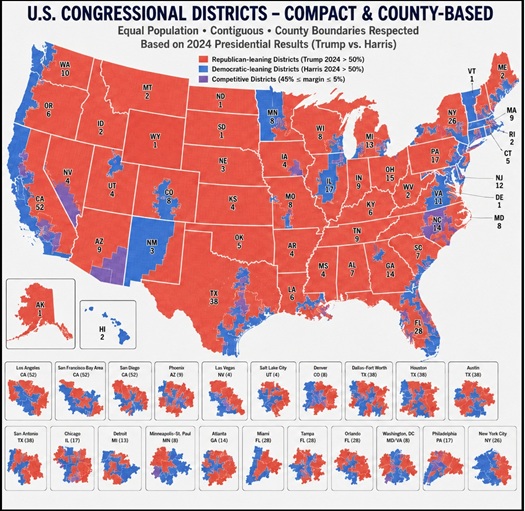
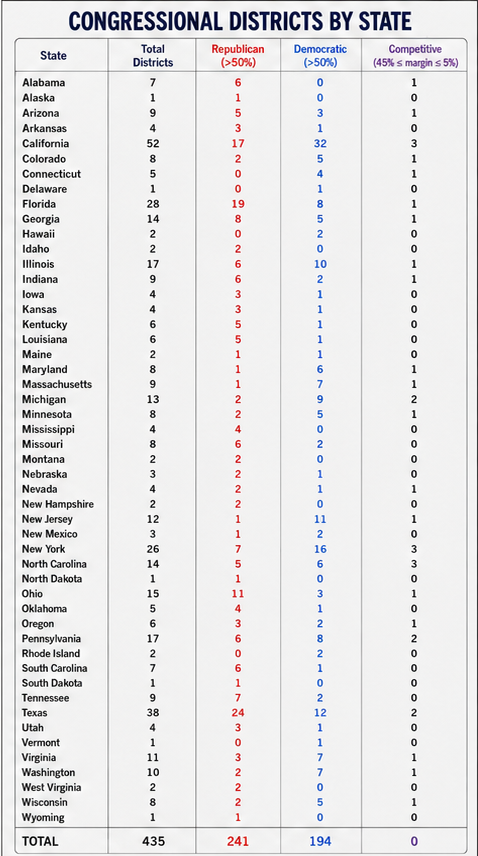
[Crossposted at CutJibNewsletter and X/Twitter]. If you folks who are on X/Twitter would follow us it would be much appreciated!
Comments
(Jump to bottom of comments)Posted by: Duke Lowell, Certified Sex Coach at May 12, 2026 10:59 AM (u73oe)
Posted by: rickb223 at May 12, 2026 10:59 AM (VN2np)
Posted by: Monty Python at May 12, 2026 11:00 AM (N1DT3)
Posted by: Duke Lowell at May 12, 2026 11:00 AM (u73oe)
Posted by: Sponge - F*ck Cancer at May 12, 2026 11:00 AM (IXZGh)
Posted by: Duke Lowell at May 12, 2026 11:01 AM (u73oe)
Posted by: Monty Python at May 12, 2026 11:02 AM (N1DT3)
Posted by: Elric The Blade at May 12, 2026 11:02 AM (iFTx/)
And they got their shit pushed in over it.
Posted by: Washington Nearsider: Gotterdammerung at May 12, 2026 11:02 AM (iNUL3)
Posted by: Formerly Virginian at May 12, 2026 11:03 AM (N1DT3)
Posted by: Elric The Blade at May 12, 2026 11:02 AM (iFTx/)
To my mind, this can only turn the ratchet TOWARDS Republicans. There are no more Dem seats available because they've already gerrymandered themselves into their maximum number of seats. They can only lose representation now. There is nothing more to gain.
Posted by: Washington Nearsider: Gotterdammerung at May 12, 2026 11:04 AM (iNUL3)
If you disagree with the Pope you can't be Christian.
That's right folks the people that tell us they are smarter then us don't understand not only that how Catholic thought covers the Pope spouting off on politics, but these people have forgotten Protestants (and Orthodox) even exist
Posted by: 18-1 at May 12, 2026 11:05 AM (sKqQm)
That's right folks the people that tell us they are smarter then us don't understand not only that how Catholic thought covers the Pope spouting off on politics, but these people have forgotten Protestants (and Orthodox) even exist
Posted by: 18-1 at May 12, 2026 11:05 AM (sKqQm)
Cool. Now do abortion.
Posted by: Washington Nearsider: Gotterdammerung at May 12, 2026 11:06 AM (iNUL3)
Yep.
The Gov of MA was threatening to gerrymander recently. Her state hasn't had a GOP rep since the 90s...it was comical
Posted by: 18-1 at May 12, 2026 11:06 AM (sKqQm)
Even better, have Fetterman propose it.
Posted by: joekur at May 12, 2026 11:06 AM (i04W0)
Posted by: Formerly Virginian at May 12, 2026 11:07 AM (N1DT3)
The Total for the Competitive Column should be 33.
I checked it twice. But I'm not AI....
Oh, MS Now says this will be detrimental to President Trump! MS Now - all Hopium, all the time.
Posted by: Stateless - He ain't heavy, he's my dog. at May 12, 2026 11:07 AM (Sco7b)
Posted by: Pete Bootyjuice at May 12, 2026 11:08 AM (sKqQm)
But they got greedy, as evil often does.
They woke up one day and said "yeah we know we cheat and get away with it all the time, but we need more power, how can we REALLY stick it in?"
And what they did was look at that big beautiful hermetically sealed can of worms and think "hey let's get just one worm". They just HAD to know what was in Pandora"s box. I hope they enjoy the answer.
Posted by: ... at May 12, 2026 11:09 AM (BwrBR)
Yet, the people of these shitholes continually vote for the same D's that made it a shithole, rob from it and never improve it in any way whatsoever, ever.
Big cities are an accumulation of stupid.
Posted by: Sponge - F*ck Cancer at May 12, 2026 11:09 AM (IXZGh)
.. it says "On Emergency Application To The Supreme Court of Virginia
Posted by: SMOD at May 12, 2026 11:09 AM (RHGPo)
Yet, the people of these shitholes continually vote for the same D's that made it a shithole, rob from it and never improve it in any way whatsoever, ever.
Big cities are an accumulation of stupid.
Posted by: Sponge - F*ck Cancer
And they believe strongly the rest of us should be ruled like this. You know, based on the very successful track record they have.
Posted by: Piper at May 12, 2026 11:10 AM (OoFl2)
.. it says "On Emergency Application To The Supreme Court of Virginia
Posted by: SMOD at May 12, 2026 11:09 AM (RHGPo)
They also misspelled "Senator."
These are the people who would rule us.
Posted by: Washington Nearsider: Gotterdammerung at May 12, 2026 11:11 AM (iNUL3)
Posted by: Martini Farmer at May 12, 2026 11:11 AM (jehhT)
Posted by: Raoul Ortega at May 12, 2026 11:11 AM (j7INY)
Half of war is letting your opponent fuck up their own damn self. I'm sure that was Sun Tzu who said that.
I must equally credit part of the GOP for *hopefully* taking full advantage and never ever looking back or giving quarter.
Posted by: ... at May 12, 2026 11:11 AM (BwrBR)
Posted by: gKWVE at May 12, 2026 11:12 AM (sDWtc)
Yes, AI is susceptible to bias, but it's still a vast improvement over the current dog's breakfast of utterly arbitrary "rules".
Posted by: Archimedes at May 12, 2026 11:12 AM (Riz8t)
Take the L and present a better record to the voters, maybe you'll do better next time.
Posted by: gKWVE at May 12, 2026 11:13 AM (sDWtc)
Posted by: Hakeem and Chuck-HELP! at May 12, 2026 11:13 AM (oftw2)
Posted by: Rev. Wishbone at May 12, 2026 11:13 AM (kSpDG)
Let me share a story highlighting how lefty LIVs work...
A few years ago I was working in a small city. My lefty cow-workers got excited about a candidate for mayor who promised to save da Erf. One of her proposals make people stop using big cars.
Now...my cow-workers mostly drove big cars/trucks, and tended to be fat.
So the mayor wins and requires all the corporate lots be repainted so at least 50% are for compact cars and the company that runs our office building complied. Immediately my cow-workers start scratching each other's cars...exactly what the Mayor's plan wanted.
Do they blame her? No. Its the fault of the management company. And yes they all voted for her again.
Posted by: 18-1 at May 12, 2026 11:13 AM (sKqQm)
Posted by: Archimedes at May 12, 2026 11:14 AM (Riz8t)
Take the L and present a better record to the voters, maybe you'll do better next time.
Posted by: gKWVE at May 12, 2026 11:13 AM (sDWtc)
BWWWAAAHAHAHAHAHAHAHAHA!!!!!!
Posted by: The DNC at May 12, 2026 11:14 AM (IXZGh)
Rebekah Jones suggests the new Tennessee Maps were made to draw a swastika
... if all you have is a hammer, every thing looks like a nail
... damn commies
Posted by: SMOD at May 12, 2026 11:15 AM (RHGPo)
I've posted my similar thoughts elsewhere.
P.S. It looks like reservations/bookings for tables at Oktoberfest this September start opening at the end of this month.
Posted by: SPinRH_F-16 at May 12, 2026 11:16 AM (FDHJL)
They can't win without cheating or destroying the system.
Posted by: Sponge - F*ck Cancer at May 12, 2026 11:16 AM (IXZGh)
Take the L and present a better record to the voters, maybe you'll do better next time.
Posted by: gKWVE at May 12, 2026 11:13 AM (sDWtc)
They could absolutely pass the exact same map next year. But next year won't matter. They need it THIS year because of the midterms.
By 2028, it may not matter at all. By 2030, it absolutely won't matter.
For the Democrats to survive as a national party, it MUST happen now.
Posted by: Washington Nearsider: Gotterdammerung at May 12, 2026 11:16 AM (iNUL3)
Also the left: Gerrymandering is wrong. Period.
The SC: Sorry, you aren't allowed to use racial discrimination to gerrymander
Also, also the left: WHAT?!? You are banning us setting up racist gerrymandering? Why do you hate democracy!?!
Posted by: 18-1 at May 12, 2026 11:16 AM (sKqQm)
I'm really hoping the Virginia Dems in response to the coming SC loss unleash their crack suicide squad ( Life of Brian reference)
Posted by: Smell the Glove at May 12, 2026 11:17 AM (gu0hJ)
Rebekah Jones suggests the new Tennessee Maps were made to draw a swastika
Hint: YOU are the baddies, stupid.
Posted by: Sponge - F*ck Cancer at May 12, 2026 11:17 AM (IXZGh)
Sadly. We'd have to expect the thieves to hand out anti-theft devices.
Posted by: t-bird at May 12, 2026 11:18 AM (ReYtg)
... damn commies
Posted by: SMOD
>What's the proper hammer for a commie?
Posted by: Rev. Wishbone at May 12, 2026 11:18 AM (kSpDG)
Rebekah Jones suggests the new Tennessee Maps were made to draw a swastika
... if all you have is a hammer, every thing looks like a nail
... damn commies
Posted by: SMOD at May 12, 2026 11:15 AM (RHGPo)
Except of course, the guy who hates the Jews and has a Nazi tattoo.
CLEARLY he's not a Nazi, he's just ironic... because he's on the left.
Posted by: Formerly Virginian at May 12, 2026 11:18 AM (N1DT3)
Sort of. Yes those cities are dense with illegals, creating rotten boroughs.
You in fly over land get one federal rep for you and your fellow 800k citizens.
In the blue shitties though? Half or more might be illegals.
Posted by: 18-1 at May 12, 2026 11:18 AM (sKqQm)
Posted by: Smell the Glove at May 12, 2026 11:19 AM (gu0hJ)
Posted by: Rev. Wishbone at May 12, 2026 11:18 AM (kSpDG)
Sledge
Posted by: Formerly Virginian at May 12, 2026 11:19 AM (N1DT3)
Posted by: Jasmine Crockett, race hustler at May 12, 2026 11:19 AM (j+GfC)
Posted by: Dr. Pork Chops & Bacons at May 12, 2026 11:19 AM (g8Ew8)
Posted by: Smell the Glove at May 12, 2026 11:21 AM (gu0hJ)
Filing with SCOTUS, Jay “hopping Jennifer Gilbert’s children would die” Jones wrote to "Supreme Court of Virginia"
LMAO! You can't make this up 🤡
Posted by: SMOD at May 12, 2026 11:21 AM (RHGPo)
Posted by: tubal at May 12, 2026 11:21 AM (Gqar8)
Liberalism: Government controls everything. Limited rights. Denounces God and all He provides.
Communism: Government controls everything. Few rights. Government is god.
Naziism: Government controls everything. Fewer rights. Government is god. Class society to the extreme were some are killed off.
All other isms: Government controls everything. No rights. Government is god. Slavery for all.
But they continually label the right as being the bad guys.
The proof is in the pudding.
Posted by: Sponge - F*ck Cancer at May 12, 2026 11:22 AM (IXZGh)
He also is having her play Clytemnestra.
*bangs head into keyboard*
Posted by: Anna Puma at May 12, 2026 11:23 AM (2GVsD)
Posted by: tubal at May 12, 2026 11:21 AM
Lets hope it's not 'vaccinated.'
Posted by: Sponge - F*ck Cancer at May 12, 2026 11:23 AM (IXZGh)
Yes, there's no perfection but No Justice, No Peace is now the biggest issue regarding state voting maps.
Organizing for Action (OFA) is no longer operating as a standalone, independent organization. In 2019, OFA formally merged with the National Democratic Redistricting Committee (NDRC) to become All On The Line, focusing heavily on gerrymandering and redistricting. The original OFA structure and nationwide grassroots advocacy work were folded into this new initiative, with many digital tools and materials inherited by the Obama Alumni Association.
In 2019, OFA shifted its primary focus from general issue advocacy (health care, climate change) to redistricting, joining with Attorney General Eric Holder’s campaign. The successor campaign, All On The Line, operates under the NDRC to combat gerrymandering and restore fairness to elections.
Training materials and organizing manuals from the original OFA are now managed by the Obama Alumni Association, preserving the group's "Respect - Empower - Include" principles.
While the national 501(c)(4) entity dissolved, some local chapters (like OFA Westside LA) continued to operate independently. (AI Overview)
Posted by: L - No nic, another fine day at May 12, 2026 11:24 AM (NFX2v)
He also is having her play Clytemnestra.
*bangs head into keyboard*
Posted by: Anna Puma at May 12, 2026 11:23 AM (2GVsD)
Hollywood can't die fast enough.
Posted by: Sponge - F*ck Cancer at May 12, 2026 11:24 AM (IXZGh)
Posted by: Jasmine Crockett, race hustler at May 12, 2026 11:19 AM (j+GfC)
That boat done been paddle to the bank.
Posted by: Eromero at May 12, 2026 11:24 AM (LHPAg)
And they want to destroy the system to facilitate cheating. Under a popular vote, they literally only need to cheat in one large locale. If they want to make it believable, from several large locales. Generate votes from, what, New York City, Los Angeles, Minneapolis, Chicago in any amount needed.
National popular vote makes it far easier to cheat in friendly states where they can know they won’t get caught, and if they do they can know there won’t be consequences.
The electoral system puts an upper limit to the usefulness of cheating in any one state. It doesn’t matter how much they cheat in California; it won’t deliver more than California’s electoral vote total. Cheating in Democrat-run states that will let them get away with it doesn’t help them, because those electoral votes are already in the bag. They need to cheat in states where there is at least a tiny chance that someone will expose and prosecute—they had to work very, very hard to keep red states from restoring fair elections in 2020) , because those are the states where cheating gains them electoral votes.
Posted by: Stephen Price Blair at May 12, 2026 11:25 AM (EXyHK)
Posted by: Bulg at May 12, 2026 11:25 AM (77rzZ)
Posted by: ... at May 12, 2026 11:26 AM (BwrBR)
... destined for NetFlix
Posted by: SMOD at May 12, 2026 11:26 AM (RHGPo)
Posted by: t-bird at May 12, 2026 11:26 AM (ReYtg)
He also is having her play Clytemnestra.
Oh and that's not the worst not by far...that's Ellen Page as Achilles.
Greece's greatest young warrior as a middle aged petite woman who chopped her boobs off?
Who the hell would go to see this crap?!?
Posted by: 18-1 at May 12, 2026 11:26 AM (sKqQm)
He also is having her play Clytemnestra.
*bangs head into keyboard*
Posted by: Anna Puma at May 12, 2026 11:23 AM (2GVsD)
Yeah. Yeah. Greek errybody!
Posted by: Aetius451AD at May 12, 2026 11:26 AM (bss/y)
Posted by: gKWVE
======
His popular books on theology are excellent and well cited so you can go deeper on particular topics if you want.
Not Catholic so I will leave it to others to evaluate his performance as Pope but he was probably one of the top theologians of his lifetime.
Posted by: whig at May 12, 2026 11:27 AM (E4rtv)
Posted by: ... at May 12, 2026 11:28 AM (BwrBR)
Case in point:
https://twitter.com/i/status/2053828567574991052
https://twitter.com/i/status/2051647381981290697
Posted by: Archimedes at May 12, 2026 11:28 AM (Riz8t)
Posted by: Don Black at May 12, 2026 11:29 AM (ZxPkt)
... National Socialist versus a Socialist versus a Communist
"Long hair, short hair, what's the difference once the heads blowed off" -- Max Yasgur, National Lampoon's 'Woodstock'
Posted by: SMOD at May 12, 2026 11:29 AM (RHGPo)
Posted by: Anna Puma at May 12, 2026 11:29 AM (2GVsD)
Trump's first term was a serious outlier.
Posted by: Martini Farmer at May 12, 2026 11:29 AM (jehhT)
Posted by: ... at May 12, 2026 11:29 AM (BwrBR)
Correction: It was one of the fiercest debates in politics. For now, the matter has been settled. Kamala is definitely worse. Sorry, Hillary. Or congratulations.
.. I've said since she started positioning for 2024, that Kamala was a "buffoon". Her inability to simply answer simple question beggars the question of her ability to make simple decisions.
... “The governor and I and we were all doing a tour of the library here and talking about the significance of the passage of time. Right? The significance of the passage of time,” Ms Harris said.
Posted by: SMOD at May 12, 2026 11:30 AM (RHGPo)
Greece's greatest young warrior as a middle aged petite woman who chopped her boobs off?
Who the hell would go to see this crap?!?
Posted by: 18-1
======
I never like Nolan's other films that much anyway including his Dunkirk movie. So, I simply don't care anymore what Hollyweird does and says. The whole rotten edifice of our entertainment industry deserves to topple into the dust like the House of Usher. All fake, gay, and about as entertaining as cleaning a toilet.
Posted by: whig at May 12, 2026 11:30 AM (E4rtv)
Who the hell would go to see this crap?!?
Posted by: 18-1 at May 12, 2026 11:26 AM (sKqQm)
I was so, so excited to go see this when it was announced.
Now... I'm just not going to see it at all. I don't believe I'm the only person who feels this way.
Posted by: Washington Nearsider: Gotterdammerung at May 12, 2026 11:30 AM (iNUL3)
Matt Damon as Odysseus yelling "Let's go!" or "Men of Greece forward!"
Posted by: Anna Puma at May 12, 2026 11:29 AM (2GVsD)
Rhetorical.
Posted by: Aetius451AD at May 12, 2026 11:30 AM (bss/y)
Posted by: Aetius451AD at May 12, 2026 11:26 AM (bss/y)
------
Don't threaten me with a good time!!!
Posted by: Mayor Pete at May 12, 2026 11:30 AM (oqH4h)
It would be fun to ask a Democrat WHY the Nazis were bad just to see if they would mention the Holocaust.
Posted by: I used to have a different nic at May 12, 2026 11:30 AM (ExV1e)
Posted by: Matt Damon at May 12, 2026 11:30 AM (Riz8t)
Posted by: Anna Puma at May 12, 2026 11:30 AM (2GVsD)
It didn't star Helen of Troy. Because she was a Greek, not an Ethiopian. The Greeks knew the difference.
Posted by: gKWVE at May 12, 2026 11:30 AM (sDWtc)
Posted by: rickb223 at May 12, 2026 11:31 AM (VN2np)
He also is having her play Clytemnestra.
Oh and that's not the worst not by far...that's Ellen Page as Achilles.
Greece's greatest young warrior as a middle aged petite woman who chopped her boobs off?
Who the hell would go to see this crap?!?
Posted by: 18-1 at May 12, 2026 11:26 AM (sKqQm)
Oh, that's great news!
I was going to sarcastically comment that the movie needed more trannies. But that's already covered.
That worked well. Let's try it again.
An incredibly beautiful woman is now rummaging around upstairs ready to bring me a sandwich so I'll have the strength to entertain when her hot girlfriends arrive.
Posted by: Stateless - He ain't heavy, he's my dog. at May 12, 2026 11:31 AM (Sco7b)
----
tell me you're joking
unless he's deliberately trying for box office bomb
Posted by: Don Black at May 12, 2026 11:31 AM (ZxPkt)
Posted by: Don Black at May 12, 2026 11:29 AM (ZxPkt)
-
Troy Ohio?
Could be.
Posted by: Biden's Dog sniffs a whole lotta malarkey, at May 12, 2026 11:31 AM (1o8D5)
Now... I'm just not going to see it at all. I don't believe I'm the only person who feels this way.
Posted by: Washington Nearsider: Gotterdammerung at May 12, 2026 11:30 AM (iNUL3)
Same. I had issue with Troy when it came out (why do all the dudes look like they are auditioning for a Loreal commercial?)
Posted by: Aetius451AD at May 12, 2026 11:31 AM (bss/y)
MUNKEY
Posted by: IllTemperedCur at May 12, 2026 11:31 AM (y9nCu)
IMO, a national AI- or computer-drawn representation map is a reasonable aspiration for a constitutional amendment or federal law some time in the distant future.
This honestly does not seem reasonable to me:
>>Partisan manipulation of districts has been found by the courts to be permissible
Posted by: Blonde Morticia at May 12, 2026 11:32 AM (XJ22o)
Posted by: Don Black at May 12, 2026 11:29 AM (ZxPkt)
Yes. Just like the Egyptians in the Pharoahnic times. All black. And Jesus, he was obviously black, because came outta Egypt doncha know. ( Had a black guy who was perfesser make that claim, publicly, once ).
Posted by: tubal at May 12, 2026 11:32 AM (Gqar8)
Posted by: gKWVE at May 12, 2026 11:32 AM (sDWtc)
Posted by: bill in arkansas, not gonna comply with nuttin, waiting for the 0300 knock on the door at May 12, 2026 11:32 AM (gm9Sb)
----
tell me you're joking
unless he's deliberately trying for box office bomb
She play Achilles' ghost, not the warrior in the flesh, or so I'm told.
Posted by: Archimedes at May 12, 2026 11:32 AM (Riz8t)
Posted by: rickb223
Wow. He's been stealing picanic baskets for a long time.
Posted by: Bulg at May 12, 2026 11:32 AM (77rzZ)
Posted by: 18-1 at May 12, 2026 11:26 AM (sKqQm)
-
So now it's a no-boobs thread?
Posted by: Biden's Dog sniffs a whole lotta malarkey, at May 12, 2026 11:32 AM (1o8D5)
Posted by: Anna Puma at May 12, 2026 11:33 AM (2GVsD)
unless he's deliberately trying for box office bomb
Posted by: Don Black at May 12, 2026 11:31 AM (ZxPkt)
I almost wonder if he is skullfucking the punditry with a bait and switch. But the opposite of how it normally is.
OR he is going completely whacky, but believes he can make it work with editing and shots. I don't know.
Posted by: Aetius451AD at May 12, 2026 11:33 AM (bss/y)
Posted by: The person who always says that at May 12, 2026 11:33 AM (2Ez/1)
Posted by: Anna Puma at May 12, 2026 11:34 AM (2GVsD)
Posted by: Chicken Chow Mein at May 12, 2026 11:34 AM (j+GfC)
Helen, you have to go back to your husband.
Whoa, gag me with a spoon!
Posted by: Duke Lowell at May 12, 2026 11:34 AM (u73oe)
Posted by: rickb223 at May 12, 2026 11:35 AM (VN2np)
Posted by: Anna Puma at May 12, 2026 11:34 AM (2GVsD)
The hilarious thing is old brad pitt is right there.
Posted by: Aetius451AD at May 12, 2026 11:35 AM (bss/y)
Posted by: ...
We are about ten years away if the component supply bottleneck can be fixed for feature length films. Probably more like a couple of years before photo realistic shorts can be produced, less if anime or other animated techniques.
Been following Amelia videos which are probably using big iron as a test for how good the technology is. And it is there for ads as you can see with the Pratt LA campaign videos.
It will be as if you imagine it, the computer can create your imagination. Course the downside is truly horrific stuff of nightmares for some which will probably lead to depraved continuation in reality for them. Imagine the AI movie tech in the hands of Muzzies for example or violent Troons and what they will produce.
Apple and the Garden of Eden all over again.
Posted by: whig at May 12, 2026 11:35 AM (E4rtv)
For more than 33 years, Jim Clyburn has gotten more powerful in his DEI district.
Yet he opposes school choice, child-support enforcement, anti-crime measures, and other crucial reforms to help his poor black constituents escape poverty.
Good riddance, Jim.
https://is.gd/GM6vc8
Posted by: Archimedes at May 12, 2026 11:35 AM (Riz8t)
Posted by: Anna Puma at May 12, 2026 11:35 AM (2GVsD)
Naziism: Government controls everything. Fewer rights. Government is god. Class society to the extreme were some are killed off.
Naziism: Government controls everything but citizens can own things. This can result in people who are not government drones having nice houses or cars. This is the big complaint that leftists have against it. They just used the "killing undesirables" as an excuse.
Posted by: I used to have a different nic at May 12, 2026 11:35 AM (ExV1e)
Posted by: Ken James at May 12, 2026 11:35 AM (1Xy6x)
FL before modest vote protection measures in 2018:
R 49.6
D 49.2
FL 4 years later after modest vote protection measures"
R: 59
D: 40
About 900K dem votes just...disappeared.
Posted by: 18-1 at May 12, 2026 11:35 AM (sKqQm)
By eliminating the Permanent Apportionment Act of (I think) 1921, restoring something more like the original ratio of 1:30k, we'd have something like 7k representatives.
We manage that by 1) Adding three legislatively-elected senators per state to restore states' control of their senators, 2) Eliminating Congressional staff, 3) creative term limits, and 4) Restricting bill creation.
And by moving Congress over to RFK stadium.
Posted by: SPinRH_F-16 at May 12, 2026 11:36 AM (FDHJL)
Posted by: tubal at May 12, 2026 11:36 AM (Gqar8)
"Do you want the hose again? DO YOU!?"
Posted by: NR Pax at May 12, 2026 11:36 AM (+4yJ5)
Posted by: Chris Nolan's sound editor at May 12, 2026 11:36 AM (sDWtc)
Posted by: Duke Lowell at May 12, 2026 11:36 AM (u73oe)
Posted by: Anna Puma at May 12, 2026 11:35 AM (2GVsD)
A specifically female intersectional interpretation of the Odyssey.
Posted by: Aetius451AD at May 12, 2026 11:36 AM (bss/y)
I actually think some people will suffer psychotic breaks from really horrifying AI. When the Exorcist first came out, people checked themselves into mental health clinics. Those special effects look cartoonish and silly now.
Posted by: Archimedes at May 12, 2026 11:37 AM (Riz8t)
Posted by: Biden's Dog
It's never a no-boobs thread as long as I'm around.
Discovered a new boobalicious actress a couple of weeks ago -- Madeline Smith, Brit lass. Was in a lot of Hammer horror stuff. One of her flicks was on Svengoolie Saturday before last. She was also a Bond girl ("Live and Let Die").
IMdB notes that her trademark was her "full bosom."
Posted by: Bulg at May 12, 2026 11:39 AM (77rzZ)
I keep hearing about how Africans invented everything (including Democracy) but the apparently have a very boring past.
Posted by: SMOD at May 12, 2026 11:39 AM (RHGPo)
Posted by: Bertram Cabot, Jr. at May 12, 2026 11:39 AM (Cqx++)
I actually think some people will suffer psychotic breaks from really horrifying AI. When the Exorcist first came out, people checked themselves into mental health clinics. Those special effects look cartoonish and silly now.
Posted by: Archimedes at May 12, 2026 11:37 AM (Riz8t)
Tapping into primal fears will do that.
Posted by: tubal at May 12, 2026 11:39 AM (Gqar8)
Posted by: Archimedes at May 12, 2026 11:37 AM (Riz8t)
=
After seeing Jaws, I no long wanted to go to the beach.
Also worried about taking a shower.
And don't get me started on SNL's land shark!
Posted by: Biden's Dog sniffs a whole lotta malarkey, at May 12, 2026 11:40 AM (1o8D5)
My guess on the real history based on what we actually know...Priam was probably a Greek adventurer, and he stole Helen for one of his sons to get a claim on the throne of Sparta. The problem is Menelaus was able to put together an alliance to go get her back instead.
Posted by: 18-1 at May 12, 2026 11:40 AM (sKqQm)
Springtime for Nolan and Hollywood
Odysseus is flaming and gay…
Posted by: Stephen Price Blair at May 12, 2026 11:40 AM (EXyHK)
And how much of a built-in advantage they've been coasting on for near 100 years; since FDR.
There is almost no one alive that has seen a Democrat Party have to play on a national level playing field--it's always been tilted heavily in their favor.
And that's before the massive media advantage they enjoyed until the late 80s and 90s.
Democrats are not, and have been for 100 years, the party of Americans--they are the party forced on America via various schemes both legal and illegal.
Mostly illegal.
Posted by: People's Hippo Voice at May 12, 2026 11:40 AM (MtSIY)
The most chef kiss thing about it is that they spent a decade or two laughing in the faces of those who built them up, supported their work, cheered their names, promoted them, adored them even.
They did it because they got too big for their boots. They had a monopoly on visual media and decided to rub it in.
And now when the computers come to replace them, they will find their friends on the Left are all mere Judas's looking for the next handout or payoff and shiny new toy. And the ones who would have fought to keep them, who would have organized and spent their hard earned money to make sure entertainment stayed real with true human actors, are all in unison gonna say.... "nah bro."
Pedowood. You told us to go fuck ourselves. And as your industry crumbles into dust, that is EXACTLY what we will be doing. You will recognize it from our moans of orgasmic pleasure.
Posted by: ... at May 12, 2026 11:41 AM (BwrBR)
Dude!
Posted by: Matt Damon at May 12, 2026 11:30 AM (Riz8t)
-----------
*tweet* pronoun personal foul, "Persons of Greece..."
Posted by: WisRich at May 12, 2026 11:41 AM (G0vdT)
Posted by: Smell the Glove at May 12, 2026 11:41 AM (gu0hJ)
My guess on the real history based on what we actually know...Priam was probably a Greek adventurer, and he stole Helen for one of his sons to get a claim on the throne of Sparta. The problem is Menelaus was able to put together an alliance to go get her back instead.
Posted by: 18-1 at May 12, 2026 11:40 AM (sKqQm)
Dragging History into a movie discussion - or, never bring a book to a movie fight.
Posted by: tubal at May 12, 2026 11:42 AM (Gqar8)
Posted by: SMOD at May 12, 2026 11:42 AM (RHGPo)
Ethiopia had some impact on the ancient world, but sub-Saharan Africa had very limited long distance trade to the rest of the world until the Arabs wielding the flag of Jihad followed the trade routes back across the deserts and started mass slaving.
Posted by: 18-1 at May 12, 2026 11:42 AM (sKqQm)
Posted by: Anna Puma
========
I detest modern directors and their conceits of Hollyweird. Their purpose is to entertain me; not teach me anything nor cater to the perverted tastes of elites.
No entertainment, you won't get squat from me. Plenty of other times and directors from olden times to get that from. Modern music has already driven me from the hideous and vile music scene to the past. Modern art is so repulsive that even money laundering and tax avoiding elites are ashamed of it. Modern sculpture resembles whatever one can find in the average garbage dump. And modern literature is worse than the Sears Catalog of yore, not even good enough for toilet paper in an outhouse. Plays and theater, boring, tendentious, and morally corrupt aimed purposefully at offending the rubes. Modern architecture, something that inspires a deep hatred for humanity and architects that create these anti human monstrosities.
And yet, all of this will be swept away from this horrendous epoch of history just like history has flushed rancid elites down the toilet multiple times in the past.
Posted by: whig at May 12, 2026 11:42 AM (E4rtv)
Like the dude at Florida State that went on a shooting spree after consulting with AI about the best way to do it.
Posted by: NR Pax at May 12, 2026 11:42 AM (+4yJ5)
Posted by: Matt Damon at May 12, 2026 11:43 AM (IXZGh)
And when you ask why places like Haiti are not WAKANDA FOREVAH! they blame racism.
Posted by: NR Pax at May 12, 2026 11:43 AM (+4yJ5)
Posted by: Bulg at May 12, 2026 11:43 AM (77rzZ)
Posted by: tubal at May 12, 2026 11:39 AM (Gqar
I saw Primal Fears open for Tears for Fears at Dodger Stadium in '91. Scary stuff.
Posted by: Alberta Oil Peon at May 12, 2026 11:44 AM (95Ab8)
Rep is Teresa Leger Fernandez (D). Check out her district. All of northern NM, including Santa Fe, and a good chunk of the east, just barely including Roswell.
Posted by: Cow Demon at May 12, 2026 11:44 AM (T6aVk)
When NJ was *created* they gerrymandered Passaic County to dilute the influence of the urban / industrial region with upstate farmland. It is clear that at the founding they did not want that high density region to have power over the honest people of the state.
(And I know this thanks to FDRs WPA make-work history project for the state)
Posted by: bob (moron inbobnitus) at May 12, 2026 11:45 AM (jnIP3)
Posted by: Anna Puma at May 12, 2026
Yeah, why would his ghost suddenly be scrawny and fem?
And which scrawny fem person really wants to work in the shadow of Brad Pitt? That man is aging and is still hot as hades.
Posted by: Piper at May 12, 2026 11:45 AM (OoFl2)
Posted by: SMOD at May 12, 2026 11:45 AM (RHGPo)
Posted by: Maj. Healey at May 12, 2026 11:45 AM (abIsI)
Posted by: Smell the Glove at May 12, 2026 11:45 AM (gu0hJ)
Posted by: Ken James at May 12, 2026 11:35 AM (1Xy6x)
AI isn’t.
Posted by: Cow Demon at May 12, 2026 11:45 AM (T6aVk)
Posted by: 18-1 at May 12, 2026 11:46 AM (sKqQm)
Posted by: Bulg at May 12, 2026 11:43 AM (77rzZ)
That chick with the big mouth.
Posted by: I used to have a different nic at May 12, 2026 11:46 AM (ExV1e)
Posted by: Sponge - F*ck Cancer at May 12, 2026 11:46 AM (IXZGh)
Posted by: Anna Puma at May 12, 2026 11:46 AM (2GVsD)
Posted by: I used to have a different nic
AI Martha Rae? They're Peter Cushinging her?
Posted by: Bulg at May 12, 2026 11:47 AM (77rzZ)
Posted by: I used to have a different nic at May 12, 2026 11:46 AM (ExV1e)
————
That really narrows it down.
Posted by: Duke Lowell at May 12, 2026 11:47 AM (u73oe)
New Odysseus: MATT DAMON.
Posted by: 18-1 at May 12, 2026 11:46 AM (sKqQm)
Remember the 90s tv mini series of the Odyssey? Armand Assante as Odysseus.
Posted by: Aetius451AD at May 12, 2026 11:47 AM (bss/y)
I would imagine he gets that about 8 times a day.
Posted by: ... at May 12, 2026 11:47 AM (BwrBR)
Posted by: ...
========
As I noted above, it is the entire rotten anti human and vile entertainment industry that has become rotten due to leftists. Chuck all of it on the trash heap to be burned and start again.
Reading Will and Ariel Durant's History of Civilizations, I have not found a historical epoch where the present Western culture has been so devoid of truth, beauty, and eternal values. Parts of it, yes, the entirety of all entertainment, no.
Our culture peaked somewhere about 1960's and has since then descended into a vast wasteland of putrid content.
Posted by: whig at May 12, 2026 11:47 AM (E4rtv)
Just from an accurate Census and current districting alone.
Ending vote by mail could push that higher.
The Dems were able to weather the Gingrich Revolution because they 1) still had Blue Dog Dems in the South 2) minority-majority districts in the South and 3) massive media advantage.
A 40 seat flip is the end of the Democrat Party as a national force.
Posted by: People's Hippo Voice at May 12, 2026 11:47 AM (MtSIY)
Juliette Binoche did a good take on the role in The Return.
Though looking at the rest of Nolan's cast, Hathaway might be one of his better actresses.
Posted by: 18-1 at May 12, 2026 11:47 AM (sKqQm)
Posted by: NR Pax
I'm willing to meet in the middle and blame the French.
Posted by: gKWVE at May 12, 2026 11:47 AM (sDWtc)
Posted by: Anna Puma at May 12, 2026 11:46 AM (2GVsD)
Could be worse - could be Emma Watson.
Posted by: tubal at May 12, 2026 11:48 AM (Gqar8)
I actually think some people will suffer psychotic breaks from really horrifying AI. When the Exorcist first came out, people checked themselves into mental health clinics. Those special effects look cartoonish and silly now.
Posted by: Archimedes at May 12, 2026 11:37 AM (Riz8t)
The staircase spider walk is still nightmare fuel, although I suspect that they dumped it in the original cut because they couldn't convincingly do the scene without digital enhancement.
Posted by: IllTemperedCur at May 12, 2026 11:48 AM (y9nCu)
Posted by: Smell the Glove at May
I disagree. Lupita is stunning. But she isn’t representative of Helen of Troy. Should we suspend disbelief for it? Maybe we could if it wasn’t DEI crap all hours of the day being shoved.
Posted by: Piper at May 12, 2026 11:48 AM (OoFl2)
Posted by: I used to have a different nic at May 12, 2026 11:46 AM (ExV1e)
————
That really narrows it down.
Posted by: Duke Lowell at May 12, 2026 11:47 AM (u73oe)
I would think Julia Roberts before Anne Hathaway.
Posted by: Aetius451AD at May 12, 2026 11:48 AM (bss/y)
Posted by: Cow Demon at May 12, 2026 11:48 AM (T6aVk)
Just from an accurate Census and current districting alone.
Ending vote by mail could push that higher.
And they could lose ANOTHER 40 seats if we stop counting illegals.
Posted by: 18-1 at May 12, 2026 11:48 AM (sKqQm)
I would imagine he gets that about 8 times a day.
Posted by: ... at May 12, 2026 11:47 AM (BwrBR)
Maybe. I just think he'd fly off the handle at one point. It would entertain me.
Posted by: Sponge - F*ck Cancer at May 12, 2026 11:48 AM (IXZGh)
Posted by: Smell the Glove at May 12, 2026 11:45 AM (gu0hJ)
-------
Harsh crowd. I've always liked her regardless of her politics.
Posted by: WisRich at May 12, 2026 11:48 AM (G0vdT)
Posted by: bill in arkansas, not gonna comply with nuttin, waiting for the 0300 knock on the door at May 12, 2026 11:48 AM (gm9Sb)
Posted by: People's Hippo Voice at May 12, 2026 11:47 AM (MtSIY)
Have to win 2028 first.
Posted by: Aetius451AD at May 12, 2026 11:49 AM (bss/y)
Posted by: Alberta Oil Peon
Be funnier if you said "Primal Scream". Both bands owed their names and (in TFFs' case) their style to Arthur Janov.
Posted by: gKWVE at May 12, 2026 11:49 AM (sDWtc)
I've seen a lot of "man on the street interviews" where when asked to name an African country a fair number respond with Wakanda.
Posted by: 18-1 at May 12, 2026 11:49 AM (sKqQm)
Posted by: JM in Illinois at May 12, 2026 11:49 AM (tAhJv)
the matter has been settled. Kamala is definitely worse. Sorry, Hillary.
Posted by: SMOD
================
I'm 100% sure that Hillary is throwing vases over how stupid the current Dems are. "If they'd supported ME in 2008 instead of that teaboy..." The country should have been stamped with HER legacy by now! The ones who DIDN'T get booted out of electoral politics twice should come to her for advice. But unfortunately for her, the inverse proportion between her talent and her ambition is the greatest thing about her.
Posted by: Blonde Morticia at May 12, 2026 11:49 AM (XJ22o)
Posted by: 18-1 at May 12, 2026 11:48 AM (sKqQm)
Or non citizens period.
Posted by: Cow Demon at May 12, 2026 11:49 AM (T6aVk)
Posted by: Anna Puma at May 12,
I don’t think Anne Hathaway is remarkably pretty. She isn’t ugly, she is very talented, but she isn’t a beauty for the ages.
Posted by: Piper at May 12, 2026 11:50 AM (OoFl2)
Posted by: tubal at May 12, 2026 11:50 AM (Gqar8)
Posted by: I used to have a different nic at May 12, 2026 11:46 AM (ExV1e)
Tanned, lesbian and READY!!!!
Posted by: Sandra Bernhard at May 12, 2026 11:50 AM (IXZGh)
Leftwing responses to that:
Its because Republicans don't bother trying to appeal to people in New England
Or
Uh...its random chance
Posted by: 18-1 at May 12, 2026 11:50 AM (sKqQm)
Posted by: Smell the Glove at May 12, 2026 11:50 AM (gu0hJ)
The young actresses I follow on Instagram had pictures of them going to see 'The Devil Wears Prada 2.'
Did that interest you enough to drag you into the theaters?
Posted by: Stateless - He ain't heavy, he's my dog. at May 12, 2026 11:51 AM (Sco7b)
Posted by: 18-1
-------------
Their other big contribution was the Mali silver mines. their slave driving king was somewhat renowned for travelling around the world in his gold plated Cadillac with a continental kit and Daytons, wearing a fuzzy hat and hitting his hoes upside their head.
Long story short, whatever wealth they had, they blow through pretty quick.
Posted by: bob (moron inbobnitus) at May 12, 2026 11:51 AM (jnIP3)
Posted by: gKWVE at May 12, 2026 11:51 AM (sDWtc)
Posted by: Rizzuto-Berra Bowl at May 12, 2026 11:51 AM (oftw2)
Posted by: Anna Puma at May 12, 2026 11:46 AM (2GVsD)
Could be worse - could be Emma Watson.
Posted by: tubal at May 12, 2026 11:48 AM (Gqar
Dominique Jackson
Posted by: I used to have a different nic at May 12, 2026 11:52 AM (ExV1e)
Posted by: Piper at May 12, 2026 11:50 AM (OoFl2)
Huh. I think she's beautiful. Harder to put my finger on why, but backbrain/wetware stuff is sometimes hard to explain.
Posted by: Aetius451AD at May 12, 2026 11:52 AM (bss/y)
Posted by: Aetius451AD at May 12, 2026 11:47 AM (bss/y)
That was a damn good miniseries. Bernadette Peters nailed it as Circe.
Posted by: Cow Demon at May 12, 2026 11:52 AM (T6aVk)
Harsh crowd. I've always liked her regardless of her politics.
Posted by: WisRich
==============
Rlly? What's likable about that idiot? She's one of the worst. She's so dumb she almost married some guy who was prosecuted for multiple federal felonies, went to prison, and got deported.
Posted by: Blonde Morticia at May 12, 2026 11:52 AM (XJ22o)
I actually think some people will suffer psychotic breaks from really horrifying AI. When the Exorcist first came out, people checked themselves into mental health clinics. Those special effects look cartoonish and silly now.
Posted by: Archimedes at May 12, 2026 11:37 AM (Riz8t)
Tapping into primal fears will do that.
Posted by: tubal
Primal perversions and evil for a lot of folks. Pedoes with AI films is not something I even want to imagine. Ditto for spree killers.
And the insidious desire inspired, like by a certain snake in a certain Garden, to do monstrous deeds is baked into the cake. Whispering in their ears that what horrid acts they desire are actually good if they carry them out. It will fool them to imagine as if they were gods beyond good and evil as Nietzsche put it.
Posted by: whig at May 12, 2026 11:52 AM (E4rtv)
The young actresses I follow on Instagram had pictures of them going to see 'The Devil Wears Prada 2.'
Did that interest you enough to drag you into the theaters?
Posted by: Stateless - He ain't heavy, he's my dog. at May 12, 2026
Nope! I never saw the first one. lol. It is rare for me to sit still long enough to watch a movie. I did watch Melania at home but it was broken into 2 sessions.
Posted by: Piper at May 12, 2026 11:53 AM (OoFl2)
Posted by: Aetius451AD
A lot of it for me is those eyes.
Posted by: Bulg at May 12, 2026 11:53 AM (77rzZ)
Knowing what we know now about BO, would Hillary have been a better or worse president? It's like choosing between Hantavirus and Ebola.
Posted by: Archimedes at May 12, 2026 11:53 AM (Riz8t)
My guess on the real history based on what we actually know...Priam was probably a Greek adventurer, and he stole Helen for one of his sons to get a claim on the throne of Sparta. The problem is Menelaus was able to put together an alliance to go get her back instead.
Posted by: 18-1 at May 12, 2026 11:40 AM (sKqQm)
I'm pretty sure the "fighting for Helen!" was all propaganda to justify sacking the wealth of Troy.
Posted by: Formerly Virginian at May 12, 2026 11:53 AM (N1DT3)
Posted by: Smell the Glove at May 12, 2026 11:54 AM (gu0hJ)
It is at its core a revolt against God. I want to blame the hippie movement but I think that was partially a CIA creation which means the revolt started earlier.
The burning creativity and life in America seems to have waned considerably. The Left just throws a wet blanket over everything they touch. Usually after milking it.
Posted by: ... at May 12, 2026 11:54 AM (BwrBR)
Since the whole state is affected by the cities, the whole state should have a vote in the management of the city:
The mayor of the capital and any city over 1 million is a state-wide election.
And a city council seat for every next million population.
Local control of large cities is a festering failure.
Posted by: People's Hippo Voice at May 12, 2026 11:54 AM (MtSIY)
Posted by: bill in arkansas
========
Need to bring back public hangings and Judge Parker. Would rapidly deplete the state of criminals.
Posted by: whig at May 12, 2026 11:54 AM (E4rtv)
Posted by: Piper at May 12, 2026 11:50 AM (OoFl2)
She's a bit 'girl next door' homely to me. Not ugly, but not jaw dropping smokin' in any way.
Of course, I'm sure she'd have a lot worse things to say about me, so there's that.
Posted by: Sponge - F*ck Cancer at May 12, 2026 11:55 AM (IXZGh)
142 @135 Anne Hathaway, who's annoying
Posted by: Smell the Glove at May 12, 2026 11:45 AM (gu0hJ)
But she does take it up the squeekhole.
(I know, that's an internet hoax, but I'm going with it anyway, because #1, Fuck Hollywood and #2 she has an epic pooper when she wears the Catwoman catsuit while riding the Batcycle)
Posted by: IllTemperedCur at May 12, 2026 11:55 AM (y9nCu)
Posted by: Smell the Glove at May 12, 2026 11:54 AM (gu0hJ)
Probably have to add in the disease issue of trying to have an overland route to get around the lack of good ports.
Posted by: I used to have a different nic at May 12, 2026 11:55 AM (ExV1e)
Posted by: Don Black at May 12, 2026 11:55 AM (ZxPkt)
Posted by: Easy the Elder at May 12, 2026 11:55 AM (mxBJ+)
Posted by: vinnie barbarino at May 12, 2026 11:56 AM (oY6Yp)
Yes Mansa Musa is an interesting figure in African history. But there is a long time frame here
Late 600s:Islam conquers North Africa, inherits trade routes south. To this point the Byzantines/Christians only had any really connections to Ethiopia (which would be lost again until the Portuguese sailed around Africa)
700s: Islam decides it needs to dominate the people living their and sends war/slave raiding parties which eventually conquer them.
1300: Mansa Musa, and other west Africa Muslim rulers, get rich using their slaves locally in the mines.
Posted by: 18-1 at May 12, 2026 11:56 AM (sKqQm)
Posted by: gKWVE at May 12, 2026 11:49 AM (sDWtc)
But the "open for" joke requires that the opening band be a word or phrase from a previous post, and not a real band.
Posted by: Alberta Oil Peon at May 12, 2026 11:56 AM (95Ab8)
[My first two limericks:]
From eighth grade --
There once was man named John
Who happened to be an ex-con
When he got out of jail
He stepped on a nail
And now he runs like a fawn.
From a software job with a Limerick Contest for a federal contractor named PCS (Prescription Card Services) in Scottsdale in the early 90s --
We OD'd on TQM's MC
And MAC'd Big Bro's FEP
PDQ send a new SOS to HQ
R&R can improve R&D
Posted by: ShainS -- Paris Hilton is harder to get into than the D.C. Hilton at May 12, 2026 11:56 AM (3MZwD)
Basically this year's Pride is telling gays and lesbians "this (your own movement) is no longer about you"and what's more it's telling them "and you are part of the problem".
I fucking LOVE it. I mean I really really love it.
Posted by: ... at May 12, 2026 11:56 AM (BwrBR)
Posted by: Rizzuto-Berra Bowl at May 12, 2026 11:51 AM (oftw2)
Most just took asprin.
Posted by: Reforger at May 12, 2026 11:56 AM (ZFqKB)
Posted by: Piper at May 12, 2026 11:53 AM (OoFl2)
Me too. I was always comedy but the horror movies are keeping me still.
I figured fashion so I thought of you.
All of you have a great day as I pop in and out...
Posted by: Stateless - He ain't heavy, he's my dog. at May 12, 2026 11:56 AM (Sco7b)
Posted by: Smell the Glove
-------------
This is Thomas Sowell's take on things. He sells it fairly well, and that surely has something to do with it, but I think it is simplified and his book is a bit one sided.
Posted by: bob (moron inbobnitus) at May 12, 2026 11:56 AM (jnIP3)
Agreed. I was excited about the prospect until I heard what idiocy Nolan was cooking up.
Posted by: Archimedes at May 12, 2026 11:57 AM (Riz8t)
The burning creativity and life in America seems to have waned considerably. The Left just throws a wet blanket over everything they touch. Usually after milking it.
Posted by: ...
=======
It is not just here but the West in general. But looking at China or the Middle East, you really get the sense that humanity has regressed as our leaders and elites get more monstrous. I think it is fair to say that most of them and their wannabe lackeys view humanity as sheep, to be shorn or killed at the whims of a degraded international elite.
Posted by: whig at May 12, 2026 11:57 AM (E4rtv)
Posted by: bill in arkansas, not gonna comply with nuttin, waiting for the 0300 knock on the door at May 12, 2026 11:57 AM (gm9Sb)
epic pooper would be a good name for a band
Posted by: anachronda at May 12, 2026 11:57 AM (oY6Yp)
Posted by: Anna Puma at May 12, 2026 11:33 AM
The Achilles/Hector fight was the highlight.
Posted by: toby928(c) at May 12, 2026 11:57 AM (4NO2D)
Probably have to add in the disease issue of trying to have an overland route to get around the lack of good ports.
Posted by: I used to have a different nic at May 12, 2026 11:55 AM (ExV1e)
Throw in islham for good measure.
Posted by: Sponge - F*ck Cancer at May 12, 2026 11:57 AM (IXZGh)
---
Stupidest? Kamala
Most inept? Hillary
Most evil? Obama, runner-up, Carter
Most illegitimate? Biden, runner up FDR
Biggest fraud? Gore with LBJ as an alternate
Posted by: People's Hippo Voice at May 12, 2026 11:58 AM (MtSIY)
Basically this year's Pride is telling gays and lesbians "this (your own movement) is no longer about you"and what's more it's telling them "and you are part of the problem".
I fucking LOVE it. I mean I really really love it.
Posted by: ... at May 12, 2026 11:56 AM (BwrBR)
The Revolution consumes it's own- now quit whining about dick and GET WITH THE PROGRAM!
Posted by: Aetius451AD at May 12, 2026 11:58 AM (bss/y)
I'm not sure the Greeks in the Mycenean period felt the need to justify conquests. The later attempts by both the Spartans and Athenians to discuss the ethics of war in the Peloponnesian war period is fascinating (note they were both still assholes)
Posted by: 18-1 at May 12, 2026 11:58 AM (sKqQm)
Posted by: Bulg at May 12, 2026 11:58 AM (77rzZ)
------
Agreed. I was excited about the prospect until I heard what idiocy Nolan was cooking up.
could be worse
Posted by: j. j. abrams at May 12, 2026 11:58 AM (oY6Yp)
Make The Rainbow God's Promise Again.
Posted by: Sponge - F*ck Cancer at May 12, 2026 11:59 AM (IXZGh)
Posted by: gKWVE
Yeah but the problem is that the French were not only murdered but the half white people were as well.
Then again, blaming the French is a good tradition.
Posted by: NR Pax at May 12, 2026 11:59 AM (+4yJ5)
Posted by: Smell the Glove
Didn't east Africa eventually feature several notable trading/slaving empires?
Posted by: 18-1 at May 12, 2026 11:59 AM (sKqQm)
Late 600s:Islam conquers North Africa, inherits trade routes south. To this point the Byzantines/Christians only had any really connections to Ethiopia (which would be lost again until the Portuguese sailed around Africa)
What did the Byzantines/Christians say as they departed?
Abyssinia!
Posted by: Archimedes at May 12, 2026 11:59 AM (Riz8t)
-------
The first call came to Bob Allen’s phone at 6 p.m. ET on a Friday. The message: Get the repo men ready.
Spirit Airlines was still in operation and planes were in the air. But the aircraft leasing firms that own dozens of its bright yellow jets were getting anxious as Spirit barreled toward liquidation. They wanted their planes back.
“I had six hours to find 20 pilots,” Allen said.
Nomadic Aviation Group, his company, had been standing by for months as Spirit teetered closer to the brink. Allen and co-founder Steve Giordano quickly assembled a roster of pilots, most of whom had worked for Spirit. They made a WhatsApp group, which swelled to 40 pilots. One had just landed.
“He said, ‘can I fly in shorts?’” Giordano recalled. Not a problem. “We generally go khakis and polos, but you know, you’ve got to do what you’ve got to do,” he told him.
Posted by: Martini Farmer at May 12, 2026 11:59 AM (jehhT)
Saw him in that The Great Wall.
He's horrible. Bruce Willis with an earpiece bad.
Posted by: People's Hippo Voice at May 12, 2026 11:59 AM (MtSIY)
I would think Julia Roberts before Anne Hathaway.
Posted by: Aetius451AD at May 12, 2026 11:48 AM (bss/y)
Julia needs to do Gwynplaine in a gender-swapped remake of The Man Who Laughs.
Posted by: IllTemperedCur at May 12, 2026 12:00 PM (y9nCu)
Posted by: Smell the Glove at May 12, 2026 12:00 PM (gu0hJ)
Posted by: Yudhishthira's Dice at May 12, 2026 12:00 PM (BI5O2)
He plays a sneaky asshole reasonably well...presumably because he isn't acting.
Presumably though Nolan isn't intending to have Odysseus be that sort of character.
Posted by: 18-1 at May 12, 2026 12:01 PM (sKqQm)
Yeah, I was only making funny.
But thank you for the better perspective. I only know that he is held up as a genius and their culture so far advanced ("the bronzes!") but in reality it was pretty sad.
Posted by: bob (moron inbobnitus) at May 12, 2026 12:01 PM (jnIP3)
Posted by: Reforger at May 12, 2026 12:01 PM (ZFqKB)
Posted by: Don Black
=======
The elites in Hollyweird hate their audiences because they engage in wrongthink. So elites are bound never to actually try to entertain them as it will only encourage the savages in appreciating traditional Western culture. That must be swept away for a new day to dawn. So subversion, inversion, and mocking those traditions is the order of the day.
Posted by: whig at May 12, 2026 12:02 PM (E4rtv)
"Enjoyed", past tense? If the chief means of distortion - simply not reporting things - is considered, the advantage has probably grown.
When there was only the legacy media, and it was bad, though not nearly as farcical as it is now, they grossly distorted the "news" against such as Nixon and Reagan. Who won nearly every state in their re-elections.
Socially incorrect to even muse on the question, but perhaps there's a problem - an enormous, defining problem - with the voters, and not just the media.
Posted by: rhomboid at May 12, 2026 12:02 PM (U/Byj)
Posted by: Smell the Glove at May 12, 2026 11:54 AM (gu0hJ)
That's only part of it.
African geography is REALLY bad for travel and trade. (Save around the Mediterranean)
Posted by: Formerly Virginian at May 12, 2026 12:02 PM (N1DT3)
Lot of psy ops going on and we cannot be ignorant of that.
I have watched some psy ops from start to "finish" and as you know even detailed several here "live".
Essentially the "point" is to mindfuck as many in as short a time as possible and what's more to create and nurture the environments for said manipulation. Covid was the classic example. They had us in a perfect storm ready to be mindfucked into oblivion. And it's very very very difficult to "opt out" of a mindfuck operation since generally "everyone else" is affected in some way.
When people say "covid broke people" they are saying that it was weak willed and scared people who got affected by this virus but the reality is in general the planned manipulations successfully targeted them.
Why do you think the Left sends out all one message on EVERYTHING? It's not just because they don't want to lose arguments. It is targeted mental mindfuckination.
Posted by: ... at May 12, 2026 12:04 PM (BwrBR)
You are definitely right though - he might have been the wealthiest man in history. But that was a reflection of Islam - slave trading, using gold as a tool, traveling the Muslim world and impressing your peers - one could have seen Mansa appear from say Syria or Persia if they had such mineral wealth (and so many slaves) available...
Posted by: 18-1 at May 12, 2026 12:04 PM (sKqQm)
Posted by: IllTemperedCur
Conrad Veidt in that makes my skin crawl.
Posted by: Bulg at May 12, 2026 12:04 PM (77rzZ)
---
Check our GossipGoblin on the toks. The only reason you don't know it's real is it's sci-fi dystopian.
Crazy cutting-edge stories and getting more realistic-looking all the time.
Promptgenix on tok and spotify has space-swamp blues you'll swear are real.
And video visuals of imagined planets that exceed anything Hollywood has done for years.
Posted by: People's Hippo Voice at May 12, 2026 12:04 PM (MtSIY)
“I had six hours to find 20 pilots,” Allen said.
Nomadic Aviation Group, his company, had been standing by for months as Spirit teetered closer to the brink. Allen and co-founder Steve Giordano quickly assembled a roster of pilots, most of whom had worked for Spirit. They made a WhatsApp group, which swelled to 40 pilots. One had just landed.
“He said, ‘can I fly in shorts?’” Giordano recalled. Not a problem. “We generally go khakis and polos, but you know, you’ve got to do what you’ve got to do,” he told him.
Posted by: Martini Farmer at May 12, 2026 11:59 AM (jehhT)
Where are they going to park them all? And maintain them?
Posted by: Alberta Oil Peon at May 12, 2026 12:04 PM (95Ab8)
Posted by: whig at May 12, 2026 11:57 AM (E4rtv)
---
The elites' worldview is that other people (even other elites) are nothing more than disposable resources.
If they serve a useful purpose, they can stay.
If not, then they see absolutely nothing wrong with eliminating them. En masse, if necessary, to fulfil the goals of the elites.
Posted by: "Perfessor" Squirrel at May 12, 2026 12:04 PM (gnNyN)
pg 229 -232 is titled "No Final Translation of Homer Possible." By Butcher and Lang.
There would have been less controversy about the proper method of Homeric translation, if critics had recognized that the question is a purely relative one, that of Homer there can be no final translation. The taste and literary habits of each age demand different qualities in poetry, and therefore a different sort of rendering of Homer. To the men of the time of Elizabeth, Homer would have appeared bald, it seems, and lacking in ingenuity, if he had been presented in his antique simplicity. For the Elizabethan age, Chapman supplied what was then necessary, and the mannerisms that were then deemed of the essence of poetry, - namely, daring and luxurious conceits. Thus in Chapman's verse Troy must "shed her towers for tears of overthrow"; and when the winds toss Odysseus about, their sport must be called "the horrid tennis."
Posted by: Anna Puma at May 12, 2026 12:04 PM (2GVsD)
Posted by: bill in arkansas, not gonna comply with nuttin, waiting for the 0300 knock on the door at May 12, 2026 12:05 PM (gm9Sb)
Posted by: bob (moron inbobnitus) at May 12, 2026 11:56 AM (jnIP3)
Animals adapt to the environment they live in. Is it any surprise that the humans in Africa would adapt to an environment where travel and trade are EXTREMELY difficult and weather unpredictable?
African culture grew as it did because of Africa. Africans who adopt Western Culture tend to do very well in the West.
Posted by: Formerly Virginian at May 12, 2026 12:05 PM (N1DT3)
The tools for controlling populations have gotten better while the Christian restrictions, at least in the West, on leaders have gotten weaker.
Posted by: 18-1 at May 12, 2026 12:05 PM (sKqQm)
Posted by: Smell the Glove
Didn't east Africa eventually feature several notable trading/slaving empires?
Posted by: 18-1
=======
Yes as did Western Africa, the Americas, etc. Slavery is the normal condition of humanity in history across times and cultures. Which is why academia steeped in the left treats it as a secret that shall never be taught nor mentioned.
Sowell is a excellent writer on economics but his sociology and history contributions are minimal. Better to read his economics books than his forays into other areas.
Posted by: whig at May 12, 2026 12:05 PM (E4rtv)
Posted by: t-bird at May 12, 2026 12:07 PM (ReYtg)
Posted by: 18-1
======
Perhaps. I know not all the causes but can observe the decline.
Posted by: whig at May 12, 2026 12:07 PM (E4rtv)
Posted by: NR Pax at May 12, 2026 12:07 PM (+4yJ5)
Posted by: People's Hippo Voice at May 12, 2026 12:07 PM (MtSIY)
Mo I was informed that good guys with guns are a myth that has never stopped nor curbed one single shooting ever.
Posted by: ... at May 12, 2026 12:07 PM (BwrBR)
What he needs is a sexy asian chic filter and 2 hours of filler to make a video.
Posted by: bob (moron inbobnitus) at May 12, 2026 12:07 PM (jnIP3)
The effed up part is, if a filmmaker did a straight-up version of the Odyssey, as written by Homer, it would be an amazing adventure movie and probably do great business at the box office.
Anabasis and the 10,000. Now THAT would be epic. No "Gods sticking their noses into human affairs" bullshit either.
The Warriors is a decent modern adaptation, but it's kinda dated, and in many ways it misses the point.
Posted by: IllTemperedCur at May 12, 2026 12:08 PM (y9nCu)
given that he's already used ai to create the map, that should be easy.
Posted by: anachronda at May 12, 2026 12:08 PM (oY6Yp)
Posted by: rhomboid at May 12, 2026 12:09 PM (U/Byj)
Posted by: Formerly Virginian
======
Selection effect. Same issue with those that decided to leave Europe for America to settle. It screens out lesser individuals. With lower barriers though to international travel, we can see that when masses of any ethnicity cluster together, they recreate the culture of where they were from, not where they are. What is true for some is not true for the entire population.
Posted by: whig at May 12, 2026 12:09 PM (E4rtv)
Posted by: Archimedes at May 12, 2026 12:09 PM (Riz8t)
Make The Rainbow God's Promise Again.
Posted by: Sponge - F*ck Cancer at May
Well that is not a good acronym.
Posted by: Piper at May 12, 2026 12:09 PM (Wmg4n)
Posted by: Alberta Oil Peon at May 12, 2026 12:09 PM (95Ab8)
Basically this year's Pride is telling gays and lesbians "this (your own movement) is no longer about you"and what's more it's telling them "and you are part of the problem".
I fucking LOVE it. I mean I really really love it.
Posted by: ... at May 12, 2026 11:56 AM (BwrBR)
Oh yeah. The left has a real thing for eating its own. What's really fascinating is how the trans movement, which glommed on to the gay movement, is seeking to erase homosexuals. Homosexuality is same-sex attraction. But there's actually no such thing as sex, the tranny ideologues tell us. Most youth with "gender" issues grow out of them and post-puberty figure out they're just gay. But that's not good enough the trans butchers say, and swoop in to mutilate the kids' bodies. Gays are derided for not wanting to have sex with trans men. Lesbians are derided for not wanting to have sex with trans women. It's the trannies who are the actual eliminationists within the LGBTQEDWTF "movement," all the while wailing about a non-existent "trans genocide."
Posted by: They cry in pain as they beat you at May 12, 2026 12:10 PM (TbWk/)
Posted by: toby928(c) at May 12, 2026 12:10 PM (4NO2D)
Posted by: Anna Puma at May 12, 2026 12:10 PM (2GVsD)
Posted by: rhomboid at May 12, 2026 12:11 PM (U/Byj)
Ooooohhhhhhhhhh!
Posted by: Archimedes at May 12, 2026 12:09 PM (Riz8t)
This. 'Well, boys, we're right fucked. We'll have to chew our way out.'
Posted by: Aetius451AD at May 12, 2026 12:11 PM (bss/y)
That's true of any ancient text, Homer, the Bible, etc.
As the modern languages change, the translations periodically need to change to reflect those changes.
Posted by: Bulg at May 12, 2026 12:11 PM (77rzZ)
Knowing what we know now about BO, would Hillary have been a better or worse president? It's like choosing between Hantavirus and Ebola.
Posted by: Archimedes
==============
Crazy, isn't it? She'd have been a billionaire as she exited the White House and Chelsea would be a US Senator now. One can speculate on how she would have left the country vs how Obama did. What would Hillarycare have been?
Posted by: Blonde Morticia at May 12, 2026 12:11 PM (XJ22o)
If they serve a useful purpose, they can stay.
If not, then they see absolutely nothing wrong with eliminating them. En masse, if necessary, to fulfil the goals of the elites.
Posted by: "Perfessor" Squirrel
=======
I think the lackeys are now speaking that out loud. Oligarchs without the endless favor currying lackeys would not be nearly so dangerous. The oligarchs never want to get their hands dirty nor risk their hides; they rely on the nasty sorts to do their dirty work to curry favor with the oligarchs.
Posted by: whig at May 12, 2026 12:12 PM (E4rtv)
Xenophon, "you can't trust Persians."
Posted by: Anna Puma at May 12, 2026 12:10 PM (2GVsD)
Plus ca change, and all that shit
Posted by: IllTemperedCur at May 12, 2026 12:12 PM (y9nCu)
Posted by: mojave spaceport and airliner parking lot at May 12, 2026 12:12 PM (oY6Yp)
Texas has 38 seats. If Republicans win 58% of the congressional vote they get 58% of 38 which is 22. Dems get 16. Obviously there would need to be rounding up or down rules. Maybe the overall winner gets a bonus 1-2 seats or something. And states with only 2 seats would still be 2-0 if the vote was overwhelmingly one way or the other.
Then each party has a primary (secondary?) vote to determine who will represent the seats they won.
If every state did that, you’d have a house that much better represents the will of the people. And you’d have actual competitive elections in most states. No more 9-0 states like Massachusetts where 40% of the voters have no representation.
Posted by: Heroq at May 12, 2026 12:13 PM (f2WBH)
Posted by: whig at May 12, 2026 12:09 PM (E4rtv)
That's ONE possible explanation, but as we cannot run a controlled experiment, it's not dispositive.
I will note that colonialism which forced a western-ish culture on Africa left the Africans in much better shape than "decolonization". That seems to suggest it's a culture issue, not an inherent one.
Posted by: Formerly Virginian at May 12, 2026 12:13 PM (N1DT3)
Posted by: Alberta Oil Peon
======
Amazing for the elites, not so great for the slaves that had to build those things.
Posted by: whig at May 12, 2026 12:13 PM (E4rtv)
Posted by: ... at May 12, 2026 12:13 PM (BwrBR)
------
Sorry, but no. Helen of Troy launched a thousand ships. I wouldn't launch my Honda CRV for Lupita. She dresses well and has no obvious infirmities. That doesn't make her "stunning".
Posted by: Crusader at May 12, 2026 12:13 PM (TN0g+)
Posted by: Blonde Morticia at May 12, 2026 12:11 PM (XJ22o)
I bet "Obamacare" grates on her more than anything. Including not being President.
Posted by: Reforger at May 12, 2026 12:14 PM (ZFqKB)
South Carolina's Legislature Will Delete C***s***er Jim Clyburn's Seat Tomorrow; Alabama Now Free to Eliminate One of Its Two Democrat Districts
Posted by: Archimedes at May 12, 2026 12:14 PM (Riz8t)
Posted by: Anna Puma at May 12, 2026 12:10 PM (2GVsD)
/looks at the Iran war
Well, I can't say he is wrong....
Posted by: Formerly Virginian at May 12, 2026 12:14 PM (N1DT3)
Posted by: Reforger at May 12, 2026 12:15 PM (ZFqKB)
African geography is REALLY bad for travel and trade. (Save around the Mediterranean)
Posted by: Formerly Virginian
===============
That's what I read. Its rivers don't have deep, wide passages that are good for carrying goods from the interior to the coasts. Physical geography makes overland travel equally difficult. No movement, no development.
Posted by: Blonde Morticia at May 12, 2026 12:15 PM (XJ22o)
taste the rainbow > under the rainbow > beyond the rainbow
Posted by: skittles at May 12, 2026 12:15 PM (oY6Yp)
The Indians of Mexico and Central America developed a pretty amazing civilization without much in the way of ports, or even roads.
Posted by: Alberta Oil Peon at May 12, 2026 12:09 PM (95Ab
Or the wheel.
Posted by: IllTemperedCur at May 12, 2026 12:15 PM (y9nCu)
Posted by: Jerry Carroll at May 12, 2026 12:16 PM (RRQTN)
Posted by: gnats local 678 at May 12, 2026 12:16 PM (CWTWj)
Posted by: Washington Nearsider: Gotterdammerung at May 12, 2026 12:17 PM (iNUL3)
Posted by: Blonde Morticia at May 12, 2026 12:11 PM (XJ22o)
ALSO, Barry was still a young man (relative) in 2016 and he'd have still been on the bench.
Instead they ran HIllary (who WASN'T young at that point) and lost AND have nobody on the bench. All they need is someone who looks good and can read a telelprompter... AND THEY DON'T EVEN HAVE THAT.
Posted by: Formerly Virginian at May 12, 2026 12:17 PM (N1DT3)
Posted by: whig at May 12, 2026 12:13 PM (E4rtv)
I didn't say "admirable". Pretty nasty, when you get down to it. Point is, civilization can happen without natural transportation arteries.
Posted by: Alberta Oil Peon at May 12, 2026 12:18 PM (95Ab8)
Posted by: Formerly Virginian
=====
And yet most of those colonies devolved rather than kept up. Rhodesia and South Africa are examples but you find the same in other former colonies.
IQ is a subject that is uncomfortable for a lot of people because it has a rancid past history of those glomming onto it. But yet, it is pretty clear by multiple triangulations that it exists beyond schooling, beyond the Flynn effect (which seems to be dying btw), etc. And that culture will interact with that population general iq. And the cruelest thing is that IQ is inheritable as that becomes more clear over time. Assortative mating makes it relevant over time as well in a culture.
That whole field of genetics and iq has been choked off as valid study because of 'racism' but yet, it is a fact, that cousin marriages has promoted a massive number of birth defects and lowered general population iq in Middle Eastern populations.
Move them to England, they do the same thing as Pakistan, and voila, a huge spike in birth defects and mental issues there in those populations.
Posted by: whig at May 12, 2026 12:21 PM (E4rtv)
Posted by: Alberta Oil Peon
From what I recall, the Incan civilization had pretty good roads and used alpacas on them as beasts of burden. Did not, however, come up with the wheel.
Posted by: whig at May 12, 2026 12:22 PM (E4rtv)
Posted by: Blonde Morticia at May 12, 2026 12:15 PM (XJ22o)
Those rivers that don't seasonally disappear (or close to) have MASSIVE waterfalls- huge, abrupt changes in altitude from the interior to the coast, not gentle decreases like in North America and Europe.
Pre-modern societies can't deal with issues like that.
Posted by: Formerly Virginian at May 12, 2026 12:22 PM (N1DT3)
Posted by: Alberta Oil Peon at May 12, 2026 12:09 PM (95Ab
Most of the land transportation was on human-back though t here were dray-llamas in the Andes t hat could take minor loads.
There was a trade up the Pacific coasts of south and central America, though it seems to have been short range and more "chain" commerce than long-range commerce. There were also traders moving in the Gulf of America and among the islands, and in fact the first contacts the Aztecs had with the Spanish was one of those island hopping traders
Posted by: Kindltot at May 12, 2026 12:29 PM (rbvCR)
Case in point:
https://twitter.com/i/status/2053828567574991052
https://twitter.com/i/status/2051647381981290697
Posted by: Archimedes at May 12, 2026 11:28 AM (Riz8t)
Those are great!!
Posted by: thatcrazyjerseyguy at May 12, 2026 12:31 PM (5xuJ/)
Texas has 38 seats. If Republicans win 58% of the congressional vote they get 58% of 38 which is 22. Dems get 16. Obviously there would need to be rounding up or down rules. Maybe the overall winner gets a bonus 1-2 seats or something. And states with only 2 seats would still be 2-0 if the vote was overwhelmingly one way or the other.
Then each party has a primary (secondary?) vote to determine who will represent the seats they won.
If every state did that, you’d have a house that much better represents the will of the people. And you’d have actual competitive elections in most states. No more 9-0 states like Massachusetts where 40% of the voters have no representation.
Posted by: Heroq at May 12, 2026 12:13 PM (f2WBH)
Yeah but we don't have a Parliament. That's voting for party. The Germans do something like this: everyone gets two votes: 1) for their rep which may or may not be voted on by the basis of party and 2) what party they want running things.
Posted by: Cow Demon at May 12, 2026 12:42 PM (T6aVk)
Mid-Morning Art Thread

Donald M. Mattison
Comments
(Jump to bottom of comments)- C. S. Lewis
Posted by: stu-mick-o-sucks at May 12, 2026 09:30 AM (w9Wax)
Posted by: Biden's Dog sniffs a whole lotta malarkey, at May 12, 2026 09:30 AM (1o8D5)
Posted by: cmeat at May 12, 2026 09:30 AM (R11M+)
Posted by: Sponge - F*ck Cancer at May 12, 2026 09:31 AM (IXZGh)
Posted by: Diogenes at May 12, 2026 09:31 AM (2WIwB)
Posted by: cmeat at May 12, 2026 09:31 AM (R11M+)
Posted by: George Costanza at May 12, 2026 09:31 AM (2Ez/1)
Posted by: Oglebay at May 12, 2026 09:31 AM (2ap+5)
Posted by: Tuna at May 12, 2026 09:32 AM (lJ0H4)
Is the artist available to portray Mrs. BD and me?
Posted by: Biden's Dog sniffs a whole lotta malarkey, at May 12, 2026 09:32 AM (1o8D5)
Posted by: Bulg at May 12, 2026 09:32 AM (77rzZ)
Posted by: Dirty Frank at May 12, 2026 09:32 AM (KrNsD)
Posted by: cmeat at May 12, 2026 09:32 AM (R11M+)
Posted by: Sponge - F*ck Cancer at May 12, 2026 09:32 AM (IXZGh)
Posted by: Aetius451AD at May 12, 2026 09:33 AM (bss/y)
Posted by: cmeat at May 12, 2026 09:33 AM (R11M+)
Posted by: Biden's Dog sniffs a whole lotta malarkey, at May 12, 2026 09:33 AM (1o8D5)
Posted by: Gref at May 12, 2026 09:33 AM (5rh/l)
Posted by: vmom deport deport deport at May 12, 2026 09:33 AM (v0tDp)
Posted by: Don Black at May 12, 2026 09:33 AM (ZxPkt)
Posted by: Donald M. Mattison at May 12, 2026 09:33 AM (2Ez/1)
Posted by: dantesed at May 12, 2026 09:33 AM (Oy/m2)
Posted by: Diogenes at May 12, 2026 09:33 AM (2WIwB)
Posted by: cmeat at May 12, 2026 09:34 AM (R11M+)
Posted by: Denny Crane I Mean It! at May 12, 2026 09:34 AM (dmDsy)
Posted by: dantesed at May 12, 2026 09:33 AM (Oy/m2)
Looks like they are posing on a balcony with mountains behind.
Posted by: Aetius451AD at May 12, 2026 09:34 AM (bss/y)
Posted by: Skeevy Stevie at May 12, 2026 09:35 AM (oftw2)
Posted by: My gaydar is out of cal at May 12, 2026 09:35 AM (2Ez/1)
Posted by: Sponge - F*ck Cancer at May 12, 2026 09:35 AM (IXZGh)
Posted by: Anna Puma at May 12, 2026 09:35 AM (2GVsD)
Posted by: cmeat at May 12, 2026 09:35 AM (R11M+)
Search for "the davicos" and results are all for auto repair!
Posted by: Biden's Dog sniffs a whole lotta malarkey, at May 12, 2026 09:33 AM (1o8D5)
***
So...you thinking trannies?
Posted by: Diogenes at May 12, 2026 09:36 AM (2WIwB)
Posted by: Martini Farmer at May 12, 2026 09:36 AM (jehhT)
Posted by: George Costanza
You know what you did.
Posted by: gKWVE at May 12, 2026 09:36 AM (sDWtc)
Posted by: Sponge - F*ck Cancer at May 12, 2026 09:36 AM (IXZGh)
Posted by: They Stand There! at May 12, 2026 09:36 AM (oftw2)
Posted by: dantesed at May 12, 2026 09:33 AM (Oy/m2)
Two other ladies took their spot under the portico?
Posted by: Rex B at May 12, 2026 09:36 AM (rgnea)
Posted by: cmeat at May 12, 2026 09:36 AM (R11M+)
Posted by: redridinghood at May 12, 2026 09:37 AM (NpAcC)
Posted by: Oglebay at May 12, 2026 09:37 AM (2ap+5)
Posted by: huerfano at May 12, 2026 09:37 AM (VJX5o)
Posted by: Diogenes at May 12, 2026 09:36 AM (2WIwB)
-
Was Ralph Monroe a tranny, you bigot?!?!?!
Posted by: Biden's Dog sniffs a whole lotta malarkey, at May 12, 2026 09:37 AM (1o8D5)
Posted by: stu-mick-o-sucks at May 12, 2026 09:38 AM (w9Wax)
Posted by: cmeat at May 12, 2026 09:38 AM (R11M+)
"You better mind yer parunts, an' yer teachurs fond an' dear,
An' churish them 'at loves you, an' dry the orphant's tear,
An' he'p the pore an' needy ones 'at clusters all about,
Er the Davicos'll git you
Ef you
Don't
Watch
Out!"
Posted by: naturalfake at May 12, 2026 09:38 AM (iJfKG)
Posted by: Elric the Blade at May 12, 2026 09:38 AM (Sl96E)
Posted by: Seems Apropos at May 12, 2026 09:38 AM (oftw2)
Posted by: Anna Puma at May 12, 2026 09:38 AM (2GVsD)
Posted by: Martini Farmer at May 12, 2026 09:36 AM (jehhT)
Were they interchangeable or did the one get pissed if you mistook one for the other?
Posted by: Sponge - F*ck Cancer at May 12, 2026 09:38 AM (IXZGh)
Posted by: Smell the Glove at May 12, 2026 09:38 AM (gu0hJ)
Posted by: cmeat at May 12, 2026 09:36 AM (R11M+)
-
So... now it's a Patty Duke Show thread.
Posted by: Biden's Dog sniffs a whole lotta malarkey, at May 12, 2026 09:38 AM (1o8D5)
Posted by: Quarter Twenty at May 12, 2026 09:38 AM (2Ez/1)
Posted by: redridinghood at May 12, 2026 09:38 AM (NpAcC)
Posted by: Martini Farmer at May 12, 2026 09:36 AM (jehhT)
I tried to do that but sheesh! What are the odds that every time I called to ask one out, they were both washing their hair?
Posted by: Diogenes at May 12, 2026 09:39 AM (2WIwB)
Posted by: cmeat at May 12, 2026 09:39 AM (R11M+)
Search for "the davicos" and results are all for auto repair!
Posted by: Biden's Dog sniffs a whole lotta malarkey, at May 12, 2026 09:33 AM (1o8D5)
____________
So, Joe Pesci's girlfriend?
Posted by: Hadrian the Seventh at May 12, 2026 09:39 AM (HdYcL)
Posted by: stu-mick-o-sucks at May 12, 2026 09:38 AM (w9Wax)
——
Also: they are nuts
Posted by: Elric the Blade at May 12, 2026 09:40 AM (Sl96E)
Posted by: Mary Poppins' Practically Perfect Piercing (aka Eloquent Depression) at May 12, 2026 09:40 AM (qRla/)
Posted by: Sponge - F*ck Cancer at May 12, 2026 09:40 AM (IXZGh)
**************
"My fodder was a mechanic, his fodder was a mechanic, two of my brudders were mechanics...."
/Monalisa Davico
Posted by: muldoon at May 12, 2026 09:40 AM (I0N4X)
Posted by: cmeat at May 12, 2026 09:40 AM (R11M+)
Posted by: cmeat at May 12, 2026 09:41 AM (R11M+)
Serbian women are known for being direct in communication, passionate, and loyal.
Posted by: stu-mick-o-sucks at May 12, 2026 09:38 AM (w9Wax)
___________
"Passionate" = Will stab you to death during an argument.
Posted by: Hadrian the Seventh at May 12, 2026 09:41 AM (HdYcL)
Posted by: Elric the Blade
Serbia is emerging as a significant European nut producer, particularly in hazelnuts, with 2023 production reaching over 10,000 metric tons.
Posted by: stu-mick-o-sucks at May 12, 2026 09:41 AM (w9Wax)
Posted by: Anna Puma at May 12, 2026 09:41 AM (2GVsD)
Posted by: cmeat at May 12, 2026 09:42 AM (R11M+)
Posted by: stu-mick-o-sucks at May 12, 2026 09:38 AM
+++
See Melania comma Trump type one each.
Posted by: Quarter Twenty at May 12, 2026 09:42 AM (2Ez/1)
Posted by: BeckoningChasm at May 12, 2026 09:42 AM (CHHv1)
Posted by: stu-mick-o-sucks at May 12, 2026 09:41 AM (w9Wax)
I am a significant Canadian nut producer. Busta.
Posted by: Peter North at May 12, 2026 09:42 AM (IXZGh)
Posted by: It's me donna at May 12, 2026 09:42 AM (aGNhy)
Posted by: stu-mick-o-sucks at May 12, 2026 09:38 AM (w9Wax)
___________
"Passionate" = Will stab you to death during an argument.
Posted by: Hadrian the Seventh at May 12, 2026 09:41 AM (HdYcL)
-
You mean they get sheathing mad?
Posted by: Biden's Dog sniffs a whole lotta malarkey, at May 12, 2026 09:43 AM (1o8D5)
Posted by: Anna Puma at May 12, 2026 09:41 AM (2GVsD)
the way they kill you.
Posted by: Sponge - F*ck Cancer at May 12, 2026 09:43 AM (IXZGh)
Posted by: tankascribe at May 12, 2026 09:43 AM (NtoJk)
Posted by: Martini Farmer at May 12, 2026 09:36 AM (jehhT)
Were they interchangeable or did the one get pissed if you mistook one for the other?
Posted by: Sponge - F*ck Cancer at May 12, 2026 09:38 AM (IXZGh)
---------
I could tell them apart.
They were, uh, competitive.
Posted by: Martini Farmer at May 12, 2026 09:43 AM (jehhT)
Posted by: Hadrian the Seventh at May 12, 2026 09:41 AM (HdYcL)
The frission of getting an icepick to the neck during sex adds a certain something.
Posted by: Aetius451AD at May 12, 2026 09:43 AM (bss/y)
Posted by: Mary Poppins' Practically Perfect Piercing (aka Eloquent Depression) at May 12, 2026 09:44 AM (qRla/)
Posted by: Ragical, The Unhallowed Knight at May 12, 2026 09:45 AM (oftw2)
Posted by: Diogenes at May 12, 2026 09:36 AM (2WIwB)
-
Was Ralph Monroe a tranny, you bigot?!?!?!
Posted by: Biden's Dog sniffs a whole lotta malarkey, at May 12, 2026 09:37 AM (1o8D5)
***
Dang. I actually had to look that up. I'd forgotten.
No. Was thinking 4 on the floor, or maybe automatic.
Posted by: Diogenes at May 12, 2026 09:45 AM (2WIwB)
Posted by: cmeat at May 12, 2026 09:46 AM (R11M+)
On the Left:
"I carry 4 Serbian Lady-Size Stabbing knives about my voluptuous body at all times."
On the Right:
"Within my stylish scarlet cloak of doom, I carry five Serbian Spurned Lover Torture knives. Plus one "Cleave that Bastard" Brand Serbian Meat Clever. I win!"
Posted by: naturalfake at May 12, 2026 09:46 AM (iJfKG)
Posted by: Limerick lover at May 12, 2026 09:46 AM (2Ez/1)
Posted by: cmeat at May 12, 2026 09:46 AM (R11M+)
Better than the alternative. . .
Posted by: John Bobbitt at May 12, 2026 09:46 AM (qRla/)
Posted by: cmeat at May 12, 2026 09:47 AM (R11M+)
Posted by: WaitingForMartel at May 12, 2026 09:48 AM (U3fVU)
Posted by: cmeat at May 12, 2026 09:47 AM (R11M+)
Nutella?
Posted by: Aetius451AD at May 12, 2026 09:48 AM (bss/y)
Posted by: According to legend at May 12, 2026 09:48 AM (2Ez/1)
you know who else had "hazelnuts?"
Posted by: cmeat at May 12, 2026 09:47 AM (R11M+)
The guy who invented "Nutella"?
Posted by: naturalfake at May 12, 2026 09:49 AM (iJfKG)
I guess you could say "I have a type" ...
Posted by: ShainS at May 12, 2026 09:49 AM (7Wb7n)
When you're wounded and left on Afghanistan's plains,
And the women come out to cut up what remains,
Jest roll to your rifle and blow out your brains
An' go to your Gawd like a soldier.
Posted by: Mary Poppins' Practically Perfect Piercing (aka Eloquent Depression) at May 12, 2026 09:50 AM (qRla/)
Posted by: cmeat at May 12, 2026 09:50 AM (R11M+)
Posted by: Weasel at May 12, 2026 09:51 AM (ei1sX)
Posted by: ... at May 12, 2026 09:51 AM (BwrBR)
Monalisa Vito - a limerick
You were terrible during jury-picking.
The judge gave you a real ass-kicking
You fell flat on your face.
You're gonna lose this case!
And my biological clock is still ticking!
Posted by: muldoon at May 12, 2026 09:51 AM (I0N4X)
Posted by: Anna Puma at May 12, 2026 09:52 AM (2GVsD)
Posted by: cmeat at May 12, 2026 09:52 AM (R11M+)
Posted by: Anna Puma at May 12, 2026 09:53 AM (2GVsD)
Posted by: cmeat at May 12, 2026 09:53 AM (R11M+)
Excellent!
Posted by: Anna Puma at May 12, 2026 09:53 AM (2GVsD)
The Youts...
Posted by: It's me donna at May 12, 2026 09:53 AM (aGNhy)
Posted by: r hennigantx at May 12, 2026 09:54 AM (/+uur)
Posted by: r hennigantx at May 12, 2026 09:54 AM (/+uur)
Posted by: cmeat at May 12, 2026 09:54 AM (R11M+)
--------
But the Dutch couple got it birdwatching. For fucks sake, sell me another.
Please tell me we are not falling for another banana in the tailpipe.
Posted by: ... at May 12, 2026 09:54 AM (BwrBR)
Better than the alternative. . .
Posted by: John Bobbitt at May 12, 2026 09:46 AM (qRla/)
--------------
* David Carradine and Michael Hutchence have hung around the chat *
Posted by: ShainS at May 12, 2026 09:54 AM (7Wb7n)
Posted by: rickb223 at May 12, 2026 09:54 AM (VN2np)
Posted by: Limerick lover
***********
Frission?
Yeah, I guess it would. If it were a...you know...a real word.
Posted by: muldoon at May 12, 2026 09:55 AM (I0N4X)
Posted by: rickb223 at May 12, 2026 09:55 AM (VN2np)
Posted by: Le Haim at May 12, 2026 09:56 AM (ArHOS)
they just won't let it go.
Posted by: cmeat at May 12, 2026 09:56 AM (R11M+)
And the women come out to cut up what remains,
Jest roll to your rifle and blow out your brains
An' go to your Gawd like a soldier.
Posted by: Mary Poppins' Practically Perfect Piercing
______
Since it's the art thread:
https://tinyurl.com/3ffzv3ab
Posted by: Biff Pocoroba at May 12, 2026 09:56 AM (XvL8K)
Posted by: Rev. Wishbone at May 12, 2026 09:56 AM (kSpDG)
So Election is meaningless.
Now we here that VA is going to SCOTUS.
This has ZERO to do with the US.
There are no federal laws mentioned. There is no federal enforcement or agencies involved.
Posted by: r hennigantx at May 12, 2026 09:56 AM (/+uur)
Posted by: rickb223 at May 12, 2026 09:54 AM (VN2np)
Sweater puppies under the blouse. These ladies were not blessed with cannons.
Posted by: Sponge - F*ck Cancer at May 12, 2026 09:57 AM (IXZGh)
There are enough people in Maskachusetts alone who'd panic, but I think the PTB so overstepped the covid lunacy that any attempt to re-ignite a lockdown would be completely ignored.
Posted by: Mary Poppins' Practically Perfect Piercing (aka Eloquent Depression) at May 12, 2026 09:57 AM (qRla/)
The Wuhan Flu broke a lot of people.
Posted by: Anna Puma at May 12, 2026 09:57 AM (2GVsD)
Posted by: Jeff Spicoli at May 12, 2026 09:57 AM (IXZGh)
Posted by: Don Black at May 12, 2026 09:57 AM (ZxPkt)
Posted by: Mr Aspirin Factory at May 12, 2026 09:58 AM (F8sQr)
they just won't let it go.
--------
Hantavirus is catchy... sounds bad, deadly.
"Rat Flu" OTOH....
Posted by: Martini Farmer at May 12, 2026 09:58 AM (jehhT)
Posted by: cmeat at May 12, 2026 09:58 AM (R11M+)
But the Dutch couple got it birdwatching. For fucks sake, sell me another.
Please tell me we are not falling for another banana in the tailpipe.
Posted by: ... at May 12, 2026 09:54 AM (BwrBR)
-------------
"Would you believe 'another MonkeyPox in the Bathhouse?'"
/obligatory DogEater and Gay Satanic Pedo AutoPen Empire MonkeyPox Czar
Posted by: ShainS at May 12, 2026 09:59 AM (7Wb7n)
Posted by: Anna Puma at May 12, 2026 09:59 AM (2GVsD)
Posted by: cmeat at May 12, 2026 09:59 AM (R11M+)
Posted by: r hennigantx at May 12, 2026 09:59 AM (/+uur)
Posted by: r hennigantx at May 12, 2026 09:54 AM (/+uur)
I usually just take having a 1 in the post # a win.
Posted by: Sponge - F*ck Cancer at May 12, 2026 10:00 AM (IXZGh)
Wikipedia
Wikipedia
+1
. It is often described as a sudden wave of chills, goosebumps, or tingling that typically starts at the back of the neck or along the spine and can radiate to the shoulders, arms, or lower back
scienceinsights.org
scienceinsights.org
. The sensation is usually short-lived, lasting only a few seconds, though it can occur in multiple waves during a single stimulus
Posted by: Aetius451AD at May 12, 2026 10:00 AM (bss/y)
109 103 sheesh. every news brief says it's not as transmissable as covid.
they just won't let it go.
Posted by: cmeat at May 12, 2026 09:56 AM (R11M+)
__________
Do you want children to DIE?!?!?!
Posted by: Hadrian the Seventh at May 12, 2026 10:00 AM (HdYcL)
----
SCOTUS has ruled that state supreme courts have the final word on state matters
Posted by: Don Black at May 12, 2026 10:00 AM (ZxPkt)
Posted by: Don Black at May 12, 2026 09:57 AM (ZxPkt)
------------
"One Scoop if by land, Two Scoops if by sea."
-- Classic YD
Posted by: ShainS at May 12, 2026 10:00 AM (7Wb7n)
Posted by: Anonosaurus Wrecks, Fat, Dumb, and Happy at May 12, 2026 10:00 AM (ndZc7)
Posted by: San Franpsycho at May 12, 2026 10:01 AM (RIvkX)
So Election is meaningless.
Now we here that VA is going to SCOTUS.
This has ZERO to do with the US.
There are no federal laws mentioned. There is no federal enforcement or agencies involved.
Posted by: r hennigantx
SCOTUS will deny hearing it.
Posted by: rickb223 at May 12, 2026 10:01 AM (VN2np)
It was never about law, it is about power.
Posted by: Anna Puma at May 12, 2026 09:59 AM (2GVsD)
I hate the stupid (lying) media that published this BS like it means something.
Posted by: r hennigantx at May 12, 2026 10:01 AM (/+uur)
Posted by: cmeat at May 12, 2026 10:01 AM (R11M+)
Posted by: Aetius451AD at May 12, 2026 10:00 AM (bss/y)
--------------
AKA a Male Orgasm.
Posted by: ShainS at May 12, 2026 10:02 AM (7Wb7n)
When I explained that this is not the first Hanta virus outbreak. That in fact we have known about it since the Korean War. And they still have not found a cure.
His response was to still blame Trump and RFK Jr.
Posted by: Anna Puma at May 12, 2026 10:02 AM (2GVsD)
Posted by: cmeat at May 12, 2026 10:02 AM (R11M+)
=====
Or, if you're a Marxist, from crime, violence, destruction, and death.
Posted by: San Franpsycho at May 12, 2026 10:02 AM (RIvkX)
Posted by: Sponge - F*ck Cancer at May 12, 2026 09:57 AM (IXZGh)
Too many AI results these days.
https://tinyurl.com/5dm8kuc5
Posted by: Aetius451AD at May 12, 2026 10:02 AM (bss/y)
Posted by: ShainS at May 12, 2026 10:02 AM (7Wb7n)
I dunno about orgasm, but it is a great feeling.
Posted by: Aetius451AD at May 12, 2026 10:03 AM (bss/y)
Posted by: cmeat at May 12, 2026 10:03 AM (R11M+)
Posted by: rickb223 at May 12, 2026 10:01 AM (VN2np)
There is nothing to HEAR.
Posted by: r hennigantx at May 12, 2026 10:04 AM (/+uur)
Posted by: Anna Puma at May 12, 2026 10:02 AM (2GVsD)
For something that was picked up in Argentina and infected a cruise ship ? Is there nothing Trump can't do ?
Posted by: It's me donna at May 12, 2026 10:04 AM (aGNhy)
https://tinyurl.com/r9rf3hez
Posted by: Anonosaurus Wrecks, Fat, Dumb, and Happy at May 12, 2026 10:00 AM (ndZc7)
-----------
lol
OUT: Lobster Redistricting.
IN: Mobster Redistricting.
Posted by: ShainS at May 12, 2026 10:04 AM (7Wb7n)
There was an old Forensic Files episode about a hantavirus outbreak on an Indian reservation.
Posted by: Mary Poppins' Practically Perfect Piercing (aka Eloquent Depression) at May 12, 2026 10:05 AM (qRla/)
Posted by: Quarter Twenty at May 12, 2026 09:42 AM (2Ez/1)
====
She is Slovenian not Serbian.
Do not confuse Slavs. This upsets them.
Posted by: San Franpsycho at May 12, 2026 10:06 AM (RIvkX)
they won't redraw. they won't hand over the voter rolls.
Posted by: cmeat at May 12, 2026 10:06 AM (R11M+)
Hantavirus is a terrible disease
Makes you bleed from your eyes, ears, nose, and knees
There's only one way to survive
Your only chance to stay alive
Is no voting for the Orange Man in November, please!!!
Posted by: naturalfake at May 12, 2026 10:06 AM (iJfKG)
+++
Kinda busy down here right now, boss.
Posted by: Midget strapped to her thigh at May 12, 2026 10:06 AM (2Ez/1)
Posted by: It's me donna at May 12, 2026 10:04 AM (aGNhy)
The only choice is to strafe the ship with napalm.
Posted by: Aetius451AD at May 12, 2026 10:06 AM (bss/y)
Posted by: Anna Puma
*********
Geography - as limerick
Take a Sicilian lady out walkin'
And you must know you'll do more than talkin'
She'll be willing to 'go'
While a Serb girl, ya know?
A Serb girl is totally balkin'
Posted by: muldoon at May 12, 2026 10:06 AM (I0N4X)
Posted by: Anna Puma
>Soon everybody will be armed to the teeth with PPE when they weaponize Monkey Pox.
Posted by: Rev. Wishbone at May 12, 2026 10:06 AM (kSpDG)
Posted by: Mary Poppins' Practically Perfect Piercing (aka Eloquent Depression) at May 12, 2026 10:07 AM (qRla/)
SCOTUS will deny hearing it.
Posted by: rickb223 at May 12, 2026 10:01 AM (VN2np)
__________
It's a near-run thing. It takes four justices and the Three Disgraces just need a squish like Barrett or Kavanaugh.
Posted by: Hadrian the Seventh at May 12, 2026 10:07 AM (HdYcL)
Posted by: Mark Andrew Edwards, Buy ammo at May 12, 2026 10:07 AM (xcxpd)
Posted by: Quarter Twenty at May 12, 2026 09:42 AM (2Ez/1)
====
She is Slovenian not Serbian.
Do not confuse Slavs. This upsets them.
Posted by: San Franpsycho
I'd rather call a Mexican a Puerto Rican.
Posted by: rickb223 at May 12, 2026 10:07 AM (VN2np)
Do not confuse Slavs. This upsets them.
Posted by: San Franpsycho at May 12, 2026 10:06 AM (RIvkX)
__________
Such that you might get stabbed.
Posted by: Hadrian the Seventh at May 12, 2026 10:08 AM (HdYcL)
Posted by: It's me donna at May 12, 2026 10:04 AM (aGNhy)
It's because Trump and RFK are against the Hantavirus Vaccine.
Posted by: ... at May 12, 2026 10:08 AM (BwrBR)
Posted by: cmeat at May 12, 2026 10:08 AM (R11M+)
State officials now plan to return to congressional maps originally approved by the Legislature in 2023, along with state Senate maps drawn in 2021.
If you recall this was actually all decided almost 2 years ago when Texas was told that you cannot make a minority majority by adding up 28% Blacks and 27% Hispanic.
This has all been slow-walked by Kagan and the Wise Latina so that it did NOT go into effect for the 26 Midterms.
Posted by: r hennigantx at May 12, 2026 10:09 AM (/+uur)
Posted by: SOMEASSHOLESTOLEMYPEN at May 12, 2026 10:09 AM (xkrbm)
I like this. I don't know why the chick on the left, who is clearly a lesbian, is wearing a Dick Tracy-esque yellow raincoat but at first glance I really like this.
Would probably hang.
Posted by: Robert at May 12, 2026 10:09 AM (dpXJq)
Posted by: Muddy Waters at May 12, 2026 10:09 AM (QaH55)
Posted by: cmeat at May 12, 2026 10:09 AM (R11M+)
Posted by: Hadrian the Seventh
See Don Black at #128. SCOTUS won't touch state election matters.
Posted by: rickb223 at May 12, 2026 10:09 AM (VN2np)
Posted by: Hadrian the Seventh at May 12, 2026 10:10 AM (HdYcL)
In the UK, a Green Party member has been destroyed.
Antoinette Fernandez called for the UK to pay reparations to slave descendants.
Turns out Ms. Fernandez is the descendant of the King of Lagos whom the British deposed because he was a slave trader.
They still better drive a stake through her political heart.
Posted by: Anna Puma at May 12, 2026 10:10 AM (2GVsD)
Posted by: Mary Poppins' Practically Perfect Piercing (aka Eloquent Depression) at May 12, 2026 10:05 AM (qRla/)
New Mexican ground squirrels are carriers too.
Chip N Dale Disease
Posted by: r hennigantx at May 12, 2026 10:10 AM (/+uur)
Posted by: cmeat at May 12, 2026 10:10 AM (R11M+)
Posted by: rickb223 at May 12, 2026 10:07 AM (VN2np)
=====
So I learned Spanish in NYC. When I spoke Spanish here, got this pinched face look that said, "¿Qué? ¿Qué?"
Posted by: San Franpsycho at May 12, 2026 10:10 AM (RIvkX)
Posted by: Piper at May 12, 2026 10:11 AM (Wmg4n)
I was referring to that episode because Korean War and hemorrhagic fever was mentioned in it.
Posted by: Anna Puma at May 12, 2026 10:12 AM (2GVsD)
Posted by: rickb223
"Excuse me, did some sore losers say something? Sounds like a fart in the wind." -- Samuel Alito
Posted by: gKWVE at May 12, 2026 10:12 AM (sDWtc)
Posted by: Ex Rex Reeder at May 12, 2026 10:13 AM (QaH55)
Posted by: Anna Puma at May 12, 2026 10:12 AM (2GVsD)
What was the Outbreak movie with Dustin Hoffman? Was that Marburg? (still a hemorrhagic fever.)
Posted by: Aetius451AD at May 12, 2026 10:14 AM (bss/y)
Posted by: cmeat at May 12, 2026 10:10 AM (R11M+)
"Tropical Mexican"
Posted by: Robert at May 12, 2026 10:14 AM (dpXJq)
1. "Let's scatter all the possibly exposed passengers to the four corners of the Earth."
2. "Let's leave 32 passengers on board to finish the home leg of the cruise from Tenerife to The Netherlands."
Posted by: muldoon at May 12, 2026 10:14 AM (I0N4X)
Posted by: gKWVE at May 12, 2026 10:14 AM (sDWtc)
I swear, for every e-mail with a big distribution list, at least half the recipients feel they have to respond even if they have nothing to add. "Great idea!" "Will be praying." Etc.
Posted by: Hadrian the Seventh at May 12, 2026 10:14 AM (HdYcL)
Posted by: cmeat at May 12, 2026 10:15 AM (R11M+)
The US as a whole did not panic when in Virginia we had an outbreak of Ebola Reston at a monkey house.
Posted by: Anna Puma at May 12, 2026 10:15 AM (2GVsD)
Posted by: r hennigantx at May 12, 2026 10:15 AM (/+uur)
Posted by: Le Haim at May 12, 2026 10:15 AM (xeo0s)
Do not confuse Slavs. This upsets them.
Posted by: San Franpsycho at May 12, 2026 10:06 AM (RIvkX)
What about the Croatians?
Posted by: dantesed at May 12, 2026 10:16 AM (Oy/m2)
Another American woman with mild vague symptoms but negative test.
Posted by: muldoon at May 12, 2026 10:16 AM (I0N4X)
Posted by: muldoon at May 12, 2026 10:06 AM (I0N4X)
-------------
* snort *
As 3/8 Croatian and 1/8 Slovenian -- I resemble that limerick pun.
Posted by: ShainS at May 12, 2026 10:16 AM (7Wb7n)
Posted by: cmeat at May 12, 2026 10:16 AM (R11M+)
Posted by: stu-mick-o-sucks at May 12, 2026 10:16 AM (w9Wax)
Posted by: cmeat at May 12, 2026 10:17 AM (R11M+)
Posted by: Hadrian the Seventh at May 12, 2026 10:14 AM (HdYcL)
There was an old Dilbert cartoon about that.
Posted by: Mary Poppins' Practically Perfect Piercing (aka Eloquent Depression) at May 12, 2026 10:17 AM (qRla/)
Posted by: tankdemon at May 12, 2026 10:17 AM (y9z9C)
Posted by: rickb223 at May 12, 2026 10:17 AM (VN2np)
Posted by: muldoon at May 12, 2026 10:17 AM (I0N4X)
You've got smoker's cough from smoking, brewer's droop from drinking beer
I don't know how you came to get the Betty Davis' knees
But, worst of all young man you've got industrial disease"
Posted by: r hennigantx at May 12, 2026 10:18 AM (/+uur)
Posted by: cmeat at May 12, 2026 10:18 AM (R11M+)
Posted by: Robert at May 12, 2026 10:18 AM (dpXJq)
Posted by: Don Black at May 12, 2026 10:18 AM (ZxPkt)
Posted by: Bulg at May 12, 2026 10:18 AM (77rzZ)
Posted by: Le Haim at May 12, 2026 10:18 AM (xeo0s)
Posted by: gKWVE at May 12, 2026 10:14 AM (sDWtc)
------------
Almost as much as he likes Chairman Xi's Wang in his Ass.
Posted by: ShainS at May 12, 2026 10:18 AM (7Wb7n)
Your first post was $6 gas.
Now it's $5.
Get your talking points right.
Posted by: Mary Poppins' Practically Perfect Piercing (aka Eloquent Depression) at May 12, 2026 10:18 AM (qRla/)
If the WHO was really worried about an outbreak would have asked Trump, "can we borrow a nuclear sub armed with Harpoon missiles for a second?"
Posted by: Anna Puma at May 12, 2026 10:19 AM (2GVsD)
Posted by: cmeat at May 12, 2026 10:19 AM (R11M+)
Posted by: Hadrian the Seventh
_________
Sending a Reply All "thanks" should carry the death penalty.
As Al Swearengen said, either advance the conversation or shut the fuck up.
Posted by: Biff Pocoroba at May 12, 2026 10:19 AM (XvL8K)
Posted by: tankdemon at May 12, 2026 10:17 AM (y9z9C)
Apparently so--
11 Anne Hathaway on the left.
Posted by: Bulg at May 12, 2026 09:32 AM (77rzZ)
Posted by: tankdemon at May 12, 2026 10:19 AM (y9z9C)
I still have a plastic storage bin with all the gear I could find if we had to isolate ourselves.
In retrospect, I bought into the panic. But I've got a really cool "bunnysuit" with a mask, goggles and gloves that looks straight out of "Outbreak."
Posted by: Martini Farmer at May 12, 2026 10:19 AM (jehhT)
Posted by: Admiral Ackbar at May 12, 2026 10:20 AM (JCZqz)
Posted by: tankdemon
See me at #11.
Posted by: Bulg at May 12, 2026 10:20 AM (77rzZ)
Another American woman with mild vague symptoms but negative test.
Posted by: muldoon at May 12, 2026 10:16 AM (I0N4X)
The man that invented PCR says it does not work that way.
And the COVID PCR required 40x replication of the sample.
1,099,511,627,776X
Posted by: r hennigantx at May 12, 2026 10:20 AM (/+uur)
Posted by: cmeat at May 12, 2026 10:20 AM (R11M+)
New AIPAC maga: Israel first and amnesty.
Shabbat Shalom
Sad!
Posted by: Le Haim at May 12, 2026 10:20 AM (xeo0s)
Posted by: Piper at May 12, 2026 10:20 AM (Wmg4n)
MASH had an episode or two about Korean hemorrhagic fever.
Posted by: Bulg at May 12, 2026 10:18 AM (77rzZ)
_________
Piss on MASH. I hated the show. I hated the movie. I hated the premise. I hated each and every person associated with it, right down to the 3rd Assistant Gaffer.
Posted by: Hadrian the Seventh at May 12, 2026 10:21 AM (HdYcL)
Thomas Massie tried to get a girl to peg him
She said eww no
The Democrats found out
Your boy made a lot of noise about Joooos to keep them off him
Now he's toast
Sad!
Posted by: gKWVE at May 12, 2026 10:21 AM (sDWtc)
Posted by: Anna Puma at May 12, 2026 10:21 AM (2GVsD)
How many rats are present in the kitchens, air ducts and below decks on that ship?
Hantavirus is not just transmitted by direct contact with rodent feces, it can be in rat fur, feces, blood, urine or saliva, and can be airborne via aerosolized particles or on dust in the air.
Posted by: muldoon at May 12, 2026 10:22 AM (I0N4X)
Now it's $5.
Posted by: Mary Poppins' Practically Perfect Piercing (aka Eloquent Depression) at May 12, 2026 10:18 AM (qRla/)
Gas prices just dropping like a rock.
Posted by: Robert at May 12, 2026 10:22 AM (dpXJq)
The US as a whole did not panic when in Virginia we had an outbreak of Ebola Reston at a monkey house.
Posted by: Anna Puma at May 12, 2026 10:15 AM (2GVsD)
The book was/is The Hot Zone.
As suburbia was creeping out from the District, my late FIL referred to Reston as a slum waiting to happen.
Posted by: Ex Rex Reeder at May 12, 2026 10:22 AM (QaH55)
Posted by: Mary Poppins' Practically Perfect Piercing (aka Eloquent Depression) at May 12, 2026 10:22 AM (qRla/)
Posted by: one hour sober at May 12, 2026 10:23 AM (J4Dwc)
Donald M. Mattison
I like this painting a great deal though I would probably wouldn't hang it.
The painting is in the Smithsonian American Art Museum, a gift of Georgia Mattison Coxe. Also learned, 'The Davicos (Portrait of the Davico Sisters),' painted by American artist Donald M. Mattison before 1934, was created in the United States though the sisters were Italian. (AI Overview, in part, and Smithsonian a reference.)
Wikipedia does have a nice bio for this painter, Donald Mattison, and he seems to have been so ideally 'normal' and hardworking, painting "life's pleasanter moments": beautiful landscapes, community celebrations, and the innocent pastimes of children, among other accomplishments such as teaching.
Thanks.
Posted by: L - No nic, another fine day at May 12, 2026 10:23 AM (NFX2v)
I would love, love, love for the Supreme Court to decline to hear it because the Commonwealth does not have standing.
Just like every freaking court did re the 2020 election lawsuits.
Posted by: WaitingForMartel at May 12, 2026 10:23 AM (U3fVU)
MASH had an episode or two about Korean hemorrhagic fever.
Posted by: Bulg at May 12, 2026 10:18 AM (77rzZ)
_________
Piss on MASH. I hated the show. I hated the movie. I hated the premise. I hated each and every person associated with it, right down to the 3rd Assistant Gaffer.
Posted by: Hadrian the Seventh at May 12, 2026 10:21 AM (HdYcL)
This is my story
Posted by: Mark Andrew Edwards, Buy ammo at May 12, 2026 10:23 AM (xcxpd)
He will win and give a big middle finger to them.
Sad!
Posted by: Le Haim at May 12, 2026 10:24 AM (xeo0s)
Posted by: Mary Poppins' Practically Perfect Piercing (aka Eloquent Depression) at May 12, 2026 10:18 AM (qRla/)
Talking about a 2% issue is just plain fucking stupid.
Walk into your boss or wife (same diff) and state how you found a 2% issue and that if you buy a new (State your new product, car, etc) that 2% will now be 1.9% of your monthly budget.
Posted by: r hennigantx at May 12, 2026 10:24 AM (/+uur)
Soup for President
Posted by: Anna Puma at May 12, 2026
Can you imagine a Shiba in human form? Cutest thing on the planet. Manipulation and drama off the charts. They would be insufferable.
Posted by: Piper at May 12, 2026 10:24 AM (Wmg4n)
As suburbia was creeping out from the District, my late FIL referred to Reston as a slum waiting to happen.
Posted by: Ex Rex Reeder at May 12, 2026 10:22 AM (QaH55)
---
That was a fun read...(not so much...)
Posted by: "Perfessor" Squirrel at May 12, 2026 10:24 AM (gnNyN)
Posted by: Piper at May 12, 2026 10:20 AM (Wmg4n)
This calls for drastic measures.
Time to break out the Jiff.
Posted by: Robert at May 12, 2026 10:25 AM (dpXJq)
Posted by: cmeat at May 12, 2026 10:25 AM (R11M+)
Her Majesty is an AKC Delegate and the Delegate e-mail list, which has hundreds of members, is notorious for having hosts of not-so-bright people hitting "Reply" to everything.
Posted by: Hadrian the Seventh at May 12, 2026 10:25 AM (HdYcL)
Posted by: Alberta Oil Peon at May 12, 2026 10:25 AM (95Ab8)
In retrospect, I bought into the panic. But I've got a really cool "bunnysuit" with a mask, goggles and gloves that looks straight out of "Outbreak."
Posted by: Martini Farmer
They lost me when the Diamond Princess didn't turn into a floating morgue.
3200 people, mostly old, 11 die. Of the most deadly pandemic since 1918.
Posted by: rickb223 at May 12, 2026 10:26 AM (VN2np)
Pill Pockets for Dogs.
Posted by: one hour sober at May 12, 2026 10:23 AM (J4Dwc)
__________
Pill Pockets were among the greatest inventions in history.
Posted by: Hadrian the Seventh at May 12, 2026 10:26 AM (HdYcL)
Posted by: cmeat at May 12, 2026 10:27 AM (R11M+)
Posted by: Anna Puma at May 12, 2026 10:15 AM (2GVsD)
I lived in Reston when I first came to Northern Virginia. I was working in the chemical and biological weapons section of the On-Site Inspection Agency, and was reading The Hot Zone. The McDonalds I used to go to was across the street from where the Monkey House had stood.
Don't think I wasn't a little creeped out by that.
Posted by: Bulg at May 12, 2026 10:27 AM (77rzZ)
The TV series just turned into a political soapbox mess. And for a dark comedy to brutally kill McLean Stevenson's character in that way, that was just very wrong.
To be fair the signs were there from the start when they turned the song about the Painless Pole wanting to kill himself into the TV show's opening tune.
Posted by: Anna Puma at May 12, 2026 10:28 AM (2GVsD)
Can you imagine a Shiba in human form? Cutest thing on the planet. Manipulation and drama off the charts. They would be insufferable.
Posted by: Piper at May 12, 2026 10:24 AM (Wmg4n)
___________
Canine Karens
Posted by: Hadrian the Seventh at May 12, 2026 10:28 AM (HdYcL)
Posted by: muldoon at May 12, 2026 10:28 AM (I0N4X)
Another American woman with mild vague symptoms but negative test.
Posted by: muldoon
Don't wait until the last minute, panic now!
Posted by: Anonosaurus Wrecks, Fat, Dumb, and Happy at May 12, 2026 10:28 AM (ndZc7)
Posted by: Pug Mahon at May 12, 2026 10:29 AM (PSEDc)
Every week it would be about how the Jew Billionaires (Shekky and Liam) fucked over the (insert name of latest progressives cause).
Wow I just realized that is the New York Times.
Posted by: r hennigantx at May 12, 2026 10:29 AM (/+uur)
Posted by: Piper at May 12, 2026 10:30 AM (p4NUW)
14 buffets to flatten the curve.
Posted by: Cruise Ship Capitan at May 12, 2026 10:30 AM (rgnea)
Posted by: Anonosaurus Wrecks, Fat, Dumb, and Happy at May 12, 2026 10:28 AM (ndZc7)
*Smashes windows and sets police car on fire*
Posted by: Robert at May 12, 2026 10:30 AM (dpXJq)
Posted by: Hadrian the Seventh at May 12, 2026 10:26 AM (HdYcL)
Now do Prison Wallets
Posted by: r hennigantx at May 12, 2026 10:30 AM (/+uur)
Every week it would be about how the Jew Billionaires (Shekky and Liam) fucked over the (insert name of latest progressives cause).
Wow I just realized that is the New York Times.
Posted by: r hennigantx
Jew Billionaires would be a great sitcom.
Every week it would be about Mel Brooks pushing more Merchandising.
Posted by: rickb223 at May 12, 2026 10:31 AM (VN2np)
Posted by: Aetius451AD at May 12, 2026 10:31 AM (bss/y)
Posted by: muldoon at May 12, 2026 10:17 AM (I0N4X)
I thought you're supposed to quarantine healthy people just in case, then close all the schools and churches and finally let everyone regardless of infection loot, riot and buy drugs and alcohol while blanketing the country with untraceable ballots. Is that not proper deadly virus protocol? Should we not have done it that way?
Posted by: ... at May 12, 2026 10:32 AM (BwrBR)
I get them at Tractor Supply. Peanut butter flavor. I've been known to give them to my dogs without the pill when I've run out of treats and am too lazy to drive to the store.
Posted by: one hour sober at May 12, 2026 10:32 AM (J4Dwc)
Posted by: Hadrian the Seventh at May 12, 2026 10:21 AM
----
Whew. Dodged that bullet.
Posted by: 4th Assistant Gaffer at May 12, 2026 10:32 AM (2Ez/1)
Every week it would be about Mel Brooks pushing more Merchandising.
Posted by: rickb223 at May 12, 2026 10:31 AM (VN2np)
You know how they got to be billionaires?
Never Pay Retail.
Posted by: Aetius451AD at May 12, 2026 10:32 AM (bss/y)
3200 people, mostly old, 11 die. Of the most deadly pandemic since 1918.
Posted by: rickb223 at May 12, 2026 10:26 AM (VN2np)
I cannot find it now but COVID was in the Blood Supply in Wash and Oregon in Fall of 2018.
Posted by: r hennigantx at May 12, 2026 10:32 AM (/+uur)
Posted by: Anna Puma at May 12, 2026 10:33 AM (2GVsD)
Posted by: Aetius451AD at May 12, 2026 10:32 AM (bss/y)
They have a station here in town
NPR
Posted by: r hennigantx at May 12, 2026 10:33 AM (/+uur)
Posted by: Anna Puma at May 12, 2026 10:33 AM (2GVsD)
Posted by: cmeat at May 12, 2026 10:34 AM (R11M+)
Posted by: rickb223 at May 12, 2026 10:31 AM (VN2np)
I just ordered the Blazin Saddles Up Yours Ni66r tshirt
Posted by: r hennigantx at May 12, 2026 10:34 AM (/+uur)
Posted by: Sponge - F*ck Cancer at May 12, 2026 09:57 AM (IXZGh)
Too many AI results these days.
https://tinyurl.com/5dm8kuc5
Posted by: Aetius451AD at May 12, 2026 10:02 AM (bss/y)
FIRE AT WILL!
Posted by: Sponge - F*ck Cancer at May 12, 2026 10:34 AM (IXZGh)
Posted by: one hour sober at May 12, 2026 10:23 AM (J4Dwc
He won’t eat them. Did I mention he is a Shiba? Very, very picky. About everything. That video I sent to Anna Puma is a great tutorial on this breed. Now we need one on the people who decide this is the dog for them. 🤣
Posted by: Piper at May 12, 2026 10:34 AM (Wmg4n)
Posted by: Anna Puma at May 12, 2026 10:34 AM (2GVsD)
It is quite likely that after shoving a pill down a Borzoi's throat such that your arm is up to the elbow in its mouth you will see the pill on the floor 10 minutes later
Posted by: Hadrian the Seventh at May 12, 2026 10:35 AM (HdYcL)
Posted by: one hour sober at May 12, 2026 10:35 AM (J4Dwc)
His response was to still blame Trump and RFK Jr.
Posted by: Anna Puma at May 12, 2026 10:02 AM (2GVsD)
It's been endemic in New Mexico for centuries. We have had cases in Alberta. It's hard to catch it.
Posted by: Alberta Oil Peon at May 12, 2026 10:35 AM (95Ab8)
Posted by: Piper at May 12, 2026 10:34 AM (Wmg4n)
I once handed Ajax a bare pill, just to see what he would do. He crunched it, ate it. Gave me a sad look. Then I gave him a treat.
That dog believed in me more than I deserved.
Posted by: Aetius451AD at May 12, 2026 10:36 AM (bss/y)
Posted by: Bulg at May 12, 2026 10:37 AM (77rzZ)
Posted by: r hennigantx at May 12, 2026 10:37 AM (/+uur)
That will never for those people who believe their pets are vegan.
Posted by: Anna Puma at May 12, 2026 10:38 AM (2GVsD)
Posted by: cmeat at May 12, 2026 10:38 AM (R11M+)
Posted by: Bulg at May 12, 2026 10:37 AM (77rzZ)
Cream cheese.. Our dogs will eat almost anything wrapped in cream cheese...
Posted by: It's me donna at May 12, 2026 10:39 AM (aGNhy)
Posted by: Anna Puma at May 12, 2026 10:34 AM (2GVsD)
Would be the funniest he's ever been
Posted by: ... at May 12, 2026 10:39 AM (BwrBR)
Posted by: Hope Solo's Globetrotting Squeakhole at May 12, 2026 10:39 AM (qRla/)
That dog believed in me more than I deserved.
Posted by: Aetius451AD at May
Awwwww, Ajax.
Posted by: Piper at May 12, 2026 10:40 AM (Wmg4n)
Shouldn't you be more concerned with the unconscionable increase in the price of Astroglide?
Posted by: Alberta Oil Peon at May 12, 2026 10:41 AM (95Ab8)
Posted by: Aetius451AD at May
We truly don't deserve dogs. At all.
Posted by: Washington Nearsider: Gotterdammerung at May 12, 2026 10:41 AM (iNUL3)
Posted by: Dr. Pork Chops & Bacons at May 12, 2026 10:41 AM (g8Ew8)
Posted by: Will Robinson at May 12, 2026 10:41 AM (zBgIx)
Me too.. Both ours have such tails... Our doodle "had" a big fluffy tail but she had to have her hair cut and it was too matted so they pretty much shaved her..... Can't wait till the tail grows back...
Posted by: It's me donna at May 12, 2026 10:41 AM (aGNhy)
**furiously scribbles out grocery list**
Posted by: Sandra Fluke at May 12, 2026 10:42 AM (qRla/)
Posted by: cmeat at May 12, 2026 10:42 AM (R11M+)
Posted by: ... at May 12, 2026 10:39 AM (BwrBR)
Admittedly I haven't seen much of Colbert, but his smug and superior attitude is incredibly off-putting. He's also not funny...at all. It amazes me that he has stuck around for so long.
Posted by: CharlieBrown'sDildo at May 12, 2026 10:42 AM (iERP6)
Posted by: Eromero at May 12, 2026 10:42 AM (LHPAg)
Billionaire Jews, mama let me be
Don't come a hangin' around my door
I don't wanna see your face no more
Posted by: Anonosaurus Wrecks, Fat, Dumb, and Happy at May 12, 2026 10:44 AM (ndZc7)
Posted by: Anna Puma at May 12, 2026 10:34 AM (2GVsD)
Would be the funniest he's ever been
Posted by: ... at May 12, 2026 10:39 AM (BwrBR)
------------
He'd triple his audience were he to bleed out of his mangina.
Posted by: ShainS at May 12, 2026 10:44 AM (7Wb7n)
Posted by: Bulg at May 12, 2026 10:45 AM (77rzZ)
Posted by: San Franpsycho at May 12, 2026 10:46 AM (RIvkX)
hahahahahaha
Posted by: r hennigantx at May 12, 2026 10:46 AM (/+uur)
Posted by: Dr. Pork Chops & Bacons at May 12, 2026 10:41 AM (g8Ew
-----------
Sadly, you have to pry their jaws open and shove it down their throats.
And then they start hiding from you (almost as if they know the current time-of-day and their pill schedule) ...
Posted by: ShainS at May 12, 2026 10:47 AM (7Wb7n)
my bil paul was elected mayor of laguna. no idea how much he grifted. he's a "consultant."
Posted by: cmeat at May 12, 2026 10:47 AM (R11M+)
He got the message and never had that problem again. And luckily, he was such a good boy, he did not claw me.
Posted by: Anna Puma at May 12, 2026 10:47 AM (2GVsD)
Can't gripe about the lack of bright colors in this one!
Posted by: mindful webworker - well, she was just seventeen, YKWIM at May 12, 2026 10:47 AM (tlr+e)
Posted by: Anonosaurus Wrecks, Fat, Dumb, and Happy at May 12, 2026 10:48 AM (ndZc7)
=====
TBF, he deserved it.
Posted by: San Franpsycho at May 12, 2026 10:50 AM (RIvkX)
Posted by: Don Black at May 12, 2026 10:51 AM (ZxPkt)
Posted by: Don Black at May 12, 2026 10:51 AM (ZxPkt)
-----------
Pet Pill Thread >>>>>> Pet Boobs Thread
Posted by: ShainS at May 12, 2026 10:51 AM (7Wb7n)
That dog believed in me more than I deserved.
Posted by: Aetius451AD at May
My dog, 95% of the time, will catch whatever I'm eating midair when tossed to him and he'll eat it.
The other 5% of the time, he didn't see me eat it or didn't like the smell as it approached and will let it hit the ground.
Posted by: Sponge - F*ck Cancer at May 12, 2026 10:51 AM (IXZGh)
Posted by: rickb223 at May 12, 2026 10:53 AM (VN2np)
Posted by: ShainS at May 12, 2026 10:51 AM (7Wb7n)
Alternate title: Avoid CBD's AI Art
Posted by: Sponge - F*ck Cancer at May 12, 2026 10:53 AM (IXZGh)
Posted by: rickb223 at May 12, 2026 10:54 AM (VN2np)
Posted by: Anna Puma at May 12, 2026 10:54 AM (2GVsD)
Pill shooter.
Posted by: rickb223 at May 12, 2026 10:53 AM (VN2np)
Crush the pill to a powder and put it in a Bug-A-Salt. Fire at the cat. The powder should enter the skin just fine.
Posted by: Sponge - F*ck Cancer at May 12, 2026 10:54 AM (IXZGh)
------------
It's funny what you remember.
The early episode scene where they steal his (Col. Stevenson's) desk -- and the look on his face at the end of the episode as a helicopter is transporting it away -- had my usually miserable mother literally crying with laughter.
It was a good old memory that for some reason I still retain ...
Posted by: ShainS at May 12, 2026 10:55 AM (7Wb7n)
Posted by: FenelonSpoke at May 12, 2026 10:55 AM (+wdeh)
Posted by: rickb223 at May 12, 2026 10:54 AM (VN2np)
----------
lol
A Moron's Dream!
Posted by: ShainS at May 12, 2026 10:56 AM (7Wb7n)
-
Better Europe than here.
Posted by: Anonosaurus Wrecks, Fat, Dumb, and Happy at May 12, 2026 10:57 AM (ndZc7)
-
Better Europe than here.
Posted by: Anonosaurus Wrecks, Fat, Dumb, and Happy at May 12, 2026 10:57 AM (ndZc7)
There is no Greece. There is only the EU.
And Brussels wants this for you, Greece!
Posted by: Washington Nearsider: Gotterdammerung at May 12, 2026 10:58 AM (iNUL3)
Instant hard on.
Dillon Aero M-134D.
https://tinyurl.com/57h9nana
Posted by: rickb223 at May 12, 2026 10:58 AM (VN2np)
It was a good old memory that for some reason I still retain ...
Posted by: ShainS at May 12, 2026 10:55 AM (7Wb7n)
Because your mom was happy.
My mom was also a reasonably miserable person a lot.
Remember the good times. I don't remember many, but there sure is a whole lot of miserable times.
Posted by: Sponge - F*ck Cancer at May 12, 2026 10:58 AM (IXZGh)
Posted by: Bulg at May 12, 2026 10:58 AM (77rzZ)
The Bosco Administration cut taxes, improved services, reduced crime and gave the citizens a budget surplus.
Posted by: Hadrian the Seventh at May 12, 2026 10:59 AM (HdYcL)
Posted by: rickb223 at May 12, 2026 10:59 AM (VN2np)
-
Better Europe than here.
Posted by: Anonosaurus Wrecks, Fat, Dumb, and Happy at May 12, 2026 10:57 AM (ndZc7)
Camp of the Saints is a documentary. Who knew?
Posted by: Alberta Oil Peon at May 12, 2026 10:59 AM (95Ab8)
Posted by: Bulg at May 12, 2026 10:58 AM (77rzZ)
I rewatched some episodes not all that long ago and had forgotten how much of the Alan Aldo show it really was.
Yeah, times were simpler back then and people were a lot more naive.
Posted by: Sponge - F*ck Cancer at May 12, 2026 11:00 AM (IXZGh)
Posted by: Washington Nearsider: Gotterdammerung at May 12, 2026 11:00 AM (iNUL3)
Posted by: Duke Lowell at May 12, 2026 11:00 AM (u73oe)
Posted by: cmeat at May 12, 2026 11:01 AM (R11M+)
Posted by: cmeat at May 12, 2026 11:03 AM (R11M+)
Posted by: Dr_No at May 12, 2026 01:00 PM (ayRl+)
The Morning Report — 5/ 12/26

Democrat House leader Hakeem Jeffries and potentially the next Speaker, is the nephew of militant racist Leonard Jeffries. Before his July 20, 1991 speech, Dr. Leonard Jeffries was already known for his teaching that blacks are racially superior to whites because blacks, whom he calls “sun people,” have more melanin in their skin than whites, whom he calls “ice people.” “Let me clarify my views,” Dr. Jeffries said, after a long exegesis on the role of Jews in the African slave trade, “if they say we are destroying Western civilization with our proposals, then I say let it happen quickly, because Western civilization is nothing more than an institutionalized, sophisticated form of barbarism.” . . .Now that’s important because when these people talk about “white supremacists”, they don’t mean the KKK, they mean Americans in general and all who aren’t on board with their black supremacist agenda. Now let’s meet Hakeem’s brother in the present day.You can bet your life he does. And with that as the set-up we have this twisted article of faith of Leftism.
Hasan Kwame Jeffries tweeted that, “John Brown understood that only way to free America from the scourge of white supremacy was to get rid of white supremacists by any means necessary. He was right THEN. He is right now.”
Whom does the possible future Speaker’s brother consider needs killing? Is Trump on the list? His current timeline is full of rants about “white people” and claims that Republicans are the new ‘Jim Crow’ I suppose the only question left to ask is whether Hakeem agrees with his brother the way he did with his uncle.
Black conservatives perennially face the slur that they’re “not really black” if they aren’t on the Left. Not only that, they are tools of white racists if they dissent from the NAACP hard line. When the Supreme Court voted 6-3 to overturn a racially gerrymandered congressional district in Louisiana, Sen. Mike Lee (R-Utah) was outraged by the local Deseret News in Salt Lake City prominently featuring an Associated Press photo of a lone black protester in front of the court holding a sign that said, “Thurgood is watching you, Clarence.” That implied Thurgood Marshall was disappointed in Clarence Thomas. Lee tweeted: “They’re going after Justice Thomas for being conservative while Black...
So being black has nothing to do with melanin but political persuasion. Ditto sex, sexual orientation and heritage. The long and short of it is being good means Leftist, and being evil is anything other than that. And from there, you have the absolute moral authority to do anything to gain and maintain power because democracy, freedom and the planet demand it! And those who protest or accuse them of hypocrisy have no right because after all America itself, along with western civilization and Judeo/Christianity are collectively all to be blamed. And as this essay alludes, being a "white supremacist" merely means being white. This is where melanin or lack thereof is all that is needed to define people, unlike the reverse vis a vis Clarence Thomas and others like him. Yes, the Democrat/Left are evil and dangerous and they're at their most evil and dangerous when they're cornered like rats and sense that the political winds are blowing in the opposite direction to where they want to take us. With the Virginia Supreme Court rejecting the naked power grab of Spanberger and her cohorts in the attempted gerrymandering and complete disenfranchising of non-leftist Virginians, the reaction was almost worse than their attempted power grab: the sacking of their State's Supreme Court and replacement with Leftist lackies. If they succeed, God-forbid, it might be lights out for America before too long.
If at first you don’t succeed, throw out the rules and rig the game in your favor. That’s the strategy Democrats are looking to embrace after the Virginia Supreme Court slapped down their illegal efforts to gerrymander the commonwealth in their favor ahead of the 2026 midterms. The state’s high court found (4-3) that the Democrat-run General Assembly violated the Virginia Constitution by bypassing procedural requirements necessary for the redistricting amendment to appear on the state’s April ballot. . . Not content with accepting defeat, Democrats are exploring ways to resurrect their failed gerrymandering gambit ahead of the 2026 elections, The New York Times reported over the weekend. Democrats’ brainstorming session included one “audacious” and “possibly far-fetched” idea that involves packing the Virginia Supreme Court with new Democrat appointees. Floated on a purported phone call between U.S. House Minority Leader Hakeem Jeffries, D-N.Y., and Virginia Democrat House leaders, the proposal involves the Virginia General Assembly and Democrat Gov. Abigail Spanberger approving legislation that would lower the retirement age for state Supreme Court justices.
Dangerous times, my friends, as if we weren't painfully aware of that by now...
America is not yet at the stage reached by the Weimar Republic in Germany in the 1920s or among Japan’s military rulers in the 1930s, in which the assassination of politicians became almost routine, a means to remove talented individuals from power and to discourage opposing views from being voiced. But when putatively respectable individuals and institutions on one side of the political spectrum give voice to approval of violence and murder, the Weimar experience comes into view. When one side’s leaders’ rhetoric constantly portrays the opposition leader as another Hitler, it’s not surprising that some of its followers take it on themselves to kill him.The assassinations and attempts might not be coming fast and furious, to coin a phrase, but the deplatforming, debanking, censorship, intimidation and other tactics surely have the same chilling effect on any voices of dissent wherever they come from. From the halls of Congress to the boardroom, to Main Street and Wall Street, to school boards and right down to the schoolyard itself! Well, Weimar is as Weimar does. And with that... Have a good day.
- ABOVE THE FOLD, BREAKING, NOTEWORTHY
- So what do you want to do while we wait to get the all-clear on the Americans involved? I’ve got an idea. How about we contemplate exactly what the left is doing right now in its sick and twisted war rooms? You guessed it: If someone dies, it will give the left a new narrative to use to bash the Trump administration in the run-up to the midterms.
The Sick and Twisted Political Opportunity Democrats May Be Waiting For
- Victor Davis Hanson: Demographic change, DEI ideology, anti-Israel radicalism, and political cowardice have mainstreamed hostility toward Jews.
The Four Horsemen of the New Antisemitism
- AMERICA & ISRAEL STRIKE IRAN!
- President Trump: “I have a plan. Iran can’t have a nuclear weapon.”
Trump Says Ceasefire on “Massive Life Support” as Iran Rejects U.S. Proposal
- With the Iran cease-fire on “massive life support,” it’s time for President Donald Trump to resume Project Freedom, and get the Strait of Hormuz open to normal commercial traffic. Not Tehran’s traffic, of course: The blockade must continue until the Islamic Republic gives up its “nuclear dust” and verifiably ends its nuke programs.
Reopen the Strait and quit playing along with Iran’s talk-talk stall CIVIL WAR 2.0, LEFTIST PERSECUTIONS, DEMOCRAT PUTSCH, AMERICAN DISSOLUTION - Does his brother agree with him?
House Dem Leader’s Brother Calls for ‘Getting Rid of White Supremacists’ by ‘Any Means Necessary’
- Graham Platner Smeared Cops as ‘Trash’ and ‘Authoritarian Bullies’ in Deleted Reddit Posts
EXCLUSIVE: 'Thin Blue Line Trash': Graham Platner Smeared Maine Police Chief Who Didn’t Kneel at Black Lives Matter Protest About George Floyd
- The sources said this option would require the General Assembly to lower the mandatory retirement age for Virginia Supreme Court justices from 75 to 54, which happens to be the age of the youngest current justice.
Democrats Considering Radical Plan to Replace Virginia Supreme Court Justices
- Dems’ reported plan to stack the VA Supreme Court is an omen for what they plan to do to SCOTUS should they retake trifecta control of the federal government.
Dems’ Virginia Court-Packing Plan Is A Test Run Of What They’ll Do To SCOTUS After Retaking Power - On May 6, the day after the government filed its response, Pate denied the SPLC’s motion as moot: The government isn’t lying, and there’s no evidence that they intend to, so there’s no need to order them not to.
The SPLC’s Drama Queen Media Defense Swings And Misses
- “The VOC Museum teaches the violent truth about communism. That’s why we are never surprised when Marxists threaten us and vandalize our schoolhouse—they want to stop our mission.”
“May Day” Vandalism and the Metamorphoses of Communist Delusions
- You have to be awfully smart to believe something this stupid.
The Young, Violent Political Left "DEMOCRAT/LEFTIST/GLOBALIST BORDER BLOODBATH," AMNESTY, IMMIGRATION, BORDER SECURITY - The report did not indicate if any of the illegal aliens accepted Trump’s offer to self deport to receive cash and a free flight home.
Over 80,000 Illegal Aliens Have Given Up Asylum Claims During Trump Admin
- The Dignity Act is amnesty dressed up as enforcement, proving once again that too many in Congress still value cheap labor over America’s borders, laws, and sovereignty.
The Insulting Dignity Act DOMESTIC AFFAIRS, THE COURTS, WASTE/FRAUD/ABUSE - . . . Kagan and her liberal colleagues slow-walked another Alito-written opinion, Louisiana v. Callais, which effectively put an end to Democrats’ nakedly race-based gerrymandering.
SCOTUS Liberals Caught Slow-Walking Another Ruling To Help Dems WE-ALL-SLAM-FOR-I-SLAM - But he doesn’t identify those who carried them out. And there’s a reason why he didn’t.
The Good News is that Pope Leo Condemns ‘Terrorist Attacks’ OFFICIAL DEMOCRAT PARTY/LEFTIST-ENDORSED ANTI-SEMITISM, ANTI-CHRISTIANITY, PLUS VARIOUS & SUNDRY GODLESS HEATHENS - In a post on X, Fetterman shared a photo of an article from Politico regarding Wecht announcing that he was leaving the Democrat Party and becoming an independent. Fetterman noted that while he is not switching his party affiliation, he understood Wecht’s “personal choice.”
Sen. Fetterman Calls for Democrat Party to ‘Confront Its Own Rising Antisemitism Problem’ FIRST AMENDMENT ISSUES, CENSORSHIP, FAKE NEWS, MEDIA, BIG BROTHER TECH - Ofcom has repeatedly harassed GB News for alleged code breaches, while left-wing bias at established broadcasters such as BBC News and Sky News has gone unpunished.
Regulator Probes TV Channel for Not Being Hostile Enough to Donald Trump.
- They're "not really black."
The Elitist Media Despise Black Conservatives* * * * * - If proven, the allegations could result in significant legal and financial consequences for Netflix. The lawsuit comes as Paxton, a longtime supporter of President Donald J. Trump and the America First agenda, is the favorite in a primary race to unseat Senator John Cornyn, a longtime detractor of President Trump and the MAGA movement, as the Republican nominee for Cornyn’s U.S. Senate seat in the November midterms.
AG Paxton Files Lawsuit Against Netflix for ‘Spying on Texas Kids.’
- NBC News reports that Vandana Joshi, widow of Tiru Chabba, one of two people killed in the shooting, has filed the lawsuit in Florida against OpenAI. Chabba died alongside Robert Morales, the university’s dining director. The complaint also names Phoenix Ikner, the accused shooter, as a defendant, citing what it describes as his extensive conversations with ChatGPT.
Lawsuit: OpenAI’s ChatGPT Told Florida State Gunman to Target Children for ‘National Exposure’ THE ECONOMY, STUPID - All the right people are losing their jobs under President Donald Trump.
There’s A Hidden Gem In The Latest Jobs Report
- The President needs Congress to approve the suspension of the tax. Recent estimates indicate that a temporary suspension of the tax would cost the federal government roughly half a billion dollars per week. The announcement comes as polling from earlier this month suggests a clear majority of Americans are worried about rising gas prices.
Trump Plans Temporary Suspension of Gas Tax. EDUCATION, AND WHAT PASSES FOR IT - States are starting to push back against the extensive perks granted to the teachers’ unions.
Mounting Resistance to the Teacher Union Leviathan
- The school district ignores the anti-white biases of many AI tools.
Exclusive: Virginia School District Injects DEI Into AI Tools
- UCLA receives hundreds of millions of dollars in federal and state grants, including $641 million California approved in fiscal year 2024 alone. The school successfully sued to regain more than $500 million in federal funds the Trump administration froze in July over alleged campus civil rights violations, CalMatters reported. Master of Laws students at UCLA’s law school will be eligible for $20,500 annually in federal unsubsidized loans by July, according to the school’s website.
EXCLUSIVE: California University Worked With Globalist NGO To Make Mexico’s Judicial System Gay THE 2020 AND 2022ELECTION HEISTS & AFTERMATH - With distrust running this deep on both sides of the aisle, you'd think voters would be laser-focused on the security of the systems actually counting their ballots.
Voters Trust Electronic Voting Systems, but They Shouldn’t
- The Fulton County Election Board is playing the victim card as the federal government begins a long-overdue accountability effort.
Fulton County Fights Federal Subpoena For Records About Botched 2020 Election DEMOCRAT/LEFTIST AND RINO SCANDALS, MESHUGAS, CHUTZPOCRISY, INSANITY - One person who deals in baby products says it could be as high as eight to ten times as much.
Gavin Newsom’s ‘Free’ Diapers Cost More Than 3 Times Costco Diapers
- Bridget Brink's stock purchases included shares in Chinese automakers that are direct competitors to American companies that employ thousands in her district
Michigan House Candidate Says She Would Ban Stock Trading Among US Officials To 'Fight Corruption.' As Biden's Ukraine Ambassador, She Made 179 Stock Trades Worth Up to $4M. (So, a Brink's Job! - jjs) POLITICS - Consider it a cautionary tale the next time you read, and read, and read again about a new Democrat darling who will save the Republic through sheer grit and ruthless competence. Our readers will, of course, already know better.
Abigail Spanberger’s Faceplant
- The request for the Supreme Court to get involved comes after the Virginia Supreme Court, in a 4-3 ruling, found that the “legislative process employed to advance” the redistricting referendum had violated Article XII, Section 1 of Virginia’s Constitution.
Virginia Democrats Seek Supreme Court’s Intervention over VA Supreme Court Gerrymander Ruling
- Republicans may not be firing on all cylinders, but Democrats are hardly in better form. With gas prices climbing and the Iran-U.S. conflict showing no signs of resolution, the GOP faces real headwinds heading into the 2026 midterms. Yet while Trump and his party absorb most of the scrutiny, the disarray within the Democratic Party has gone largely unexamined.
Republicans Are In Bad Shape, But Democrats Aren’t In Much Better - Accusations of “planted” candidates have plagued the already overcrowded primary, leaving Nebraskans with a bizarre lineup of candidates whose policy platform doesn’t always match up with their party registration. At least one Democrat candidate has pledged to drop out of the race should she win the party’s nomination.
How Nebraska’s Senate Primary Became The Most Bizarre Race In The Country FOREIGN AFFAIRS, INTERNATIONAL - Netanyahu’s proposal could reshape the U.S.-Israel alliance, particularly as bipartisan support for military aid has waned in the wake of recent conflicts. The move also signals a strategic pivot for Israel as it seeks greater autonomy and deeper regional partnerships.
Netanyahu Wants to ‘Draw Down’ US Military Aid to Zero in Coming Years. - There has been a steady drumbeat of Labour MPs officially calling on Starmer to resign, and especially after his poorly received reset speech this morning. From a couple of dozen at daybreak we’re now at 69 plotters, edging clearly towards the threshold of 81 members to trigger a leadership challenge.
Half of Britons Say Starmer Should Stand Down as Prime Minister as Coup Plotting Picks up Momentum
- Can there really be hope, after all?
A Political “Earthquake” in Britain
- “First…I think it’s the first time to my knowledge that you had that level, the president, the cabinet, but also leaders, not just from energy, but from AI, and from the world of capital markets and labor leadership all in the same room, and that’s what it takes,” he said.
Exclusive — Sen. Dave McCormick Says ‘Existential Battle with China’ Requires Government and Industry Teamwork: ‘This is Like Winning World War 2’
- China projects strength abroad, but internal purge politics, economic strain, and structural dependence suggest a far more fragile system than it appears.
Who Really Needs Whom? Trump, Xi Jinping, and the Illusion of Chinese Strength
- The Nicaraguan communist regime led by dictatorial husband-and-wife “co-presidential” couple Daniel Ortega and Rosario Murillo has signed decades-long gold mining lease contracts with at least 15 Chinese mining companies that have effectively handed over control of the nation’s gold resources to China. Those deals have also resulted in Chinese companies reportedly controlling as much as over 1.013 hectares of Nicaraguan land, or the equivalent to 8.5 percent of all of Nicaragua, of which six percent is controlled by five U.S. sanctioned companies.
Report: U.S. Sanctioned Chinese Mining Companies Control 6 Percent of Nicaragua
- Venezuelan interim President Delcy Rodriguez responded Monday after President Donald Trump said he’s “seriously considering” making Venezuela the 51st state. Trump floated the idea during a phone call with Fox News’ John Roberts, claiming that there is “$40 trillion in oil there” and that Venezuelans love him. Rodriguez later rejected the president’s suggestion.
Trump Says He’s ‘Seriously Considering’ Making Venezuela 51st State. Delcy Rodriguez Responds
- Rubio’s Rome message was not conciliatory, but disciplinary.
Marco Rubio In Rome: Vatican Symbolism And Strategic Friction THE UKRAINIAN "FRONT" - Needless to say, Zelensky and his henchmen either never quite believed the UOC or they just don't like Christianity (or both), and so on May 11, 2026, Ukrainian storm troopers descended upon the UOC’s St. Michael Monastery, and according to reports, forcibly removed parishioners, volunteers, and clergy.
Diminutive Dictator Zelenksy Is Now Shutting Down Churches in the Name of Democracy DEFENSE, MILITARY, SECURITY AFFAIRS - Eileen Wang agreed to plead guilty to a single felony count that carries a maximum sentence of 10 years in federal prison.
Feds Charge California Democrat For Acting As Chinese Agent (The entire party is a wing 'wang?' of the CCP!- jjs) HEALTH AND HEALTH CARE - The quarantine measures aim to prevent the spread of the virus, with medical officials closely monitoring the condition of the passengers. Depending on individual assessments, passengers may be allowed to continue their quarantine at home.
Hantavirus Cruise Passengers in Quarantine and ‘Biocontainment’ at U.S. Facilities. ACTUAL SCIENCE, TECHNOLOGY - Artemis III Will Test Tech, Teamwork, and the Future of Moon Missions
Artemis II Success Sets Up High-Stakes Mission Artemis III for Late 2027
- The image to the right, cropped and expanded to post here, was taken on May 3, 2026 when the spacecraft was still about three million miles away.
Psyche approaches Mars
- Katalyst has never done this before. It was preparing LINK as a demo mission when NASA requested bids for saving Swift. It proposed reconfiguring LINK for that purpose, and won the contract in September 2025, only eight months ago.
Katalyst completes final ground testing of its Swift rescue spacecraft FEMINAZISM, TRANSGENDER PSYCHOSIS, HOMOSEXUALIZATION, WAR ON MASCULINITY/NORMALCY - Immigration, crime, and the cowardice of Western feminism.
Feminist Betrayal Of Universalism CULTURE WARS, NATIONAL SUICIDE - While Page’s role in Nolan’s retelling of Homer’s The Odyssey — set to debut in theaters on July 17 — has yet to be officially confirmed, the Juno star is known to be in the movie, according to a report by the video gaming and entertainment website IGN.
Reports of Trans Actor Elliot Page Playing Achilles in Christopher Nolan’s ‘Odyssey’ Spark Fierce Backlash
- The gang-like protections of the online subculture cultivates grievance and rewards anger.
The Red-Pill Rabbit Hole Swallowing Young Men
- Christian Toto: Guilty pleasure classic returns with buff bodies and iconic red swimwear
Is ‘Baywatch’ Reboot Another Blow to Body Positivity Movement?
- Family-friendly Major League Baseball should think twice about whom its teams honor.
The Baltimore Orioles’ Tupac Bobblehead Night
- Sheer discrimination.
At the Venice Biennale, No Israeli Can Win a Prize
Also, do follow us on X (Twitter): @CutJibNews And my X (Twitter) account at: @therealJJSefton and on Instagram: @Cutjibnewsletter TIP JAR : Your support helps keep the lights on and is truly appreciated. Note: We are on Stripe, not PayPal.
Comments
(Jump to bottom of comments)Posted by: gnats local 678 at May 12, 2026 07:29 AM (CWTWj)
Posted by: Rufus T. Firefly at May 12, 2026 07:30 AM (JNpyB)
Posted by: NR Pax at May 12, 2026 07:30 AM (+4yJ5)
Democrat House leader Hakeem Jeffries and potentially the next Speaker, is the nephew of militant racist Leonard Jeffries.
More ominously, potentially the next President.
Posted by: Hadrian the Seventh at May 12, 2026 07:31 AM (HdYcL)
Ellen of Troy.
Posted by: fd at May 12, 2026 07:31 AM (vFG9F)
Only if they harpoon Lena Dunham.
Posted by: fd at May 12, 2026 07:32 AM (vFG9F)
Posted by: Martini Farmer at May 12, 2026 07:32 AM (jehhT)
Posted by: Mister Scott (Formerly GWS) at May 12, 2026 07:32 AM (0N4FZ)
We really need impeachments of these people for this.
Posted by: NR Pax at May 12, 2026 07:33 AM (+4yJ5)
Democrat House leader Hakeem Jeffries and potentially the next Speaker, is the nephew of militant racist Leonard Jeffries.
More ominously, potentially the next President.
Posted by: Hadrian the Seventh at May 12, 2026 07:31 AM (HdYcL)
I remember Leonard Jeffries when I lived in NYC. He is radioactive cancer.
Posted by: J.J. Sefton at May 12, 2026 07:34 AM (x0n13)
Posted by: NR Pax at May 12, 2026 07:35 AM (+4yJ5)
Fulton County Fights Federal Subpoena For Records About Botched 2020 Election"
The people involved will be long dead and buried before anything happens.
Posted by: guy who always says nothing will happen and is usually right at May 12, 2026 07:35 AM (vFG9F)
Posted by: fd at May 12, 2026 07:38 AM (vFG9F)
I have a feeling that Fauci really wants to come out of retirement so he can make pronouncements that save us from hantavirus.
Posted by: NR Pax at May 12, 2026 07:35 AM (+4yJ5)
Hope that makes it easier to indict him for something.
Posted by: Hadrian the Seventh at May 12, 2026 07:38 AM (HdYcL)
Posted by: OrangeEnt at May 12, 2026 07:39 AM (1Ff7Z)
No. What you need is conviction in the Senate. Why do people keep scraming for "IMPEACHMENT"when they know there will never be a conviction?
Posted by: Will Robinson at May 12, 2026 07:40 AM (zBgIx)
The new story out of the hantavirus outbreak is that the husband and wife Dutch tourists were bird watchers and went to a dump in Argentina to see a rare bird. The dump is rat infested (duh) and they my have breathed in dried rat feces which had the virus in it.
Get a bird bath
Posted by: Smell the Glove at May 12, 2026 07:41 AM (gu0hJ)
Posted by: NemoMeImpuneLacessit at May 12, 2026 07:41 AM (nHcc1)
Funny how these people who call PDT a pedophile ignored Michel Jackson for years and years. He wasn't fooling me.
Posted by: fd at May 12, 2026 07:38 AM (vFG9F)
1) Nobody in the arts and entertainment industry, where raping the help is considered a perquisite of the job, has any moral standing to condemn anyone for underage sex.
2) The loudest voices against PDJT or the Catholic Church with respect to abused youth don't really care about abused youth. They care about attacking PDJT or the Catholic Church.
Posted by: Hadrian the Seventh at May 12, 2026 07:42 AM (HdYcL)
Posted by: fd at May 12, 2026 07:42 AM (vFG9F)
Posted by: FenelonSpoke at May 12, 2026 07:43 AM (looXz)
Posted by: fd at May 12, 2026 07:44 AM (vFG9F)
Posted by: Smell the Glove at May 12, 2026 07:44 AM (gu0hJ)
These are the same people who came up with the term "Minor Attracted Person" and view pedophilia as a beautiful lifestyle choice.
Posted by: NR Pax at May 12, 2026 07:44 AM (+4yJ5)
Posted by: fd at May 12, 2026 07:45 AM (vFG9F)
These are the same people who came up with the term "Minor Attracted Person" and view pedophilia as a beautiful lifestyle choice.
Posted by: NR Pax at May 12, 2026 07:44 AM (+4yJ5)
They stood and applauded for Polanski too.
Posted by: Hadrian the Seventh at May 12, 2026 07:46 AM (HdYcL)
Posted by: Will Robinson
I'm well aware of that. And I know the odds are slim of impeachment but I think this should be done regardless. Drag these various Justices before a hearing and make a spectacle of it. And if you happen to get enough votes for conviction, use that to push for more.
Posted by: NR Pax at May 12, 2026 07:46 AM (+4yJ5)
Israel War Room @IsraelWarRoom
7h
GOOD NEWS: Last week, the US Board of Immigration Appeals reinstated deportation proceedings against radical terror supporter and @Columbia student Mohsen Mahdawi.
Posted by: Biden's Dog sniffs a whole lotta malarkey, at May 12, 2026 07:48 AM (1o8D5)
Posted by: I used to have a different nic at May 12, 2026 07:49 AM (ExV1e)
Posted by: mr tmz at May 12, 2026 07:49 AM (rJ48h)
Posted by: Mister Scott (Formerly GWS) at May 12, 2026 07:32 AM (0N4FZ)
The whole event might make that court conservative.
Posted by: Nova Local at May 12, 2026 07:50 AM (tOcjL)
Posted by: FenelonSpoke at May 12, 2026 07:43
--------
My guess is the academy DEI requirements in order to qualify for any Oscar awards.
Posted by: WisRich at May 12, 2026 07:51 AM (mMoRd)
African civilization is better because it's nothing more than a tribalized, unsophisticated form of barbarism?
When you get right down to it, these people just hate white people and everything the 'Ice People' have done, good or bad, and are jealous everything they have built and maintained over the course of a thousand years.
Woke Communism is the weapon to destroy all of the things they hate.
Posted by: SpeakingOf at May 12, 2026 07:53 AM (6ydKt)
Posted by: Lady in Black at May 12, 2026 07:53 AM (qBdHI)
My wife has three siblings. All are, at least, virulently anti-Trump and two are "vote blue no matter who" lunatics willing, or perhaps eager, to destroy the country provided that their side has power.
My wife disagrees with them.
Hakeem Jeffries is enough of a piece of shit all on his own without worrying about the rest of his family.
Posted by: I used to have a different nic at May 12, 2026 07:55 AM (ExV1e)
Good morning, Horde.
Posted by: Inogame at May 12, 2026 07:56 AM (53oGX)
Hakeem needs to realize that "By any means necessary" can be used by our side as well.
Posted by: NR Pax at May 12, 2026 07:56 AM (+4yJ5)
Posted by: Aetius451AD at May 12, 2026 07:58 AM (bss/y)
Yes; I was forgetting about those requirements to win an award. Thanks. I say , "Bah!"
While the actress playing Helen of Troy supposedly is a somewhat attractive black woman, she's no stunner and not based on the actual character . I understand the complaints of a Greek woman who feels they're trying to dismiss traditional Greek culture and standards of beauty.
Posted by: FenelonSpoke at May 12, 2026 07:59 AM (7RYym)
---------
Agreed. But will we? So far, signs point to.... no.
Posted by: Martini Farmer at May 12, 2026 07:59 AM (jehhT)
--
I've been saying this for literally years, but federal legislation must be passed making it a minimum 10-year prison sentence for the online posting of personal, residential information against any American, elected official or not, whose intended purpose is inciting violence against that targeted person.
Posted by: Lady in Black at May 12, 2026 07:59 AM (qBdHI)
They would gas them if they could.
Posted by: guy who always says nothing will happen and is usually right at May 12, 2026 07:59 AM (vFG9F)
What about their spouses? Their kids?
What about speaking fees, book deals, etc?
What about hiring friends and family members as staff and paying them from campaign contributions?
I mean... if we're gonna clean up corruption, let's go for everything.
Posted by: I used to have a different nic at May 12, 2026 08:01 AM (ExV1e)
I would say the writing is on the wall. It will be an all out assault of the electoral system, coercion of the opposition voters and massive fraud.
I hope I’m wrong. I hope in November you point and laugh at me, rightly accusing me of hyperbole and fear mongering.
Get out and vote in November. Show no fear. No ability for them to coerce you. No daylight between you and your rights which come from God, not man.
“ So do not fear, for I am with you;
do not be dismayed, for I am your God.
I will strengthen you and help you;
I will uphold you with my righteous right hand”
Isaiah 41:10
Posted by: Marcus T at May 12, 2026 08:01 AM (hZXic)
Posted by: Martini Farmer
That's because we prefer civilization even in the face of the opposition.
Posted by: NR Pax at May 12, 2026 08:01 AM (+4yJ5)
>get your cotton picking hands off of Virginia
They aren't even *trying* to hide the racism anymore...
Virginia has always been a hotbed of fascism and racism since its inception. Very happy I live far away from that shithole now.
Democratic voter turnouts are dropping because of people like Jeffries, who are the meekest milquetoasts in politics. People want to vote for fighters, not people who point to the rule book to justify why they do nothing, while Republicans show that the rules are suggestions at best.
Fuck Jeffries, Fuck Schumer. Gutless leadership who do not know how to fight. They don't realize our lives legit are at stake, our country is at stake, and the world is at stake. Democrats remain scared to death to fight a bunch off fat, brainless MAGAizs who keep kicking them in the face every day.
Fight or get the fuck out of the way.
Posted by: Intercepted Reddit Transmissions brought by the Intrepid AoS Liaison at May 12, 2026 08:02 AM (ycI94)
I’ll bet it’s way more than the Iran war.
Posted by: SMOD at May 12, 2026 08:02 AM (qIAN9)
Posted by: NR Pax at May 12, 2026 07:56 AM (+4yJ5)
Part of the thing with all of this (the redistricting, Obamas comments reported yesterday, the DOJ) is that Republicans HAVE been the 'loyal opposition' that Obama talked about. They have played the game that Dems can do whatever they want and Republicans will still play by the rules.
It's like bullies. It IS true that the only way to deal with a bully is to punch them in the mouth. But there are two paths the bully can take. He can realize you are not an easy mark and leave you alone OR he can get more enraged. This is not the way that things are supposed to be. You are upsetting his world view (even his sense of self and his place in the world) and he loses it. Which means you have to keep punching him.
The commies are classic bullies right now. Or always.
Posted by: Aetius451AD at May 12, 2026 08:04 AM (bss/y)
Posted by: NR Pax at May 12, 2026 08:04 AM (+4yJ5)
18 Nolan’s Odyssey is shaping up to be as successful as Disney’s Snow White remake.
Posted by: NemoMeImpuneLacessit at May 12, 2026 07:41 AM (nHcc1)
That’s all I hope for with most big budget productions these days; that it’s such a financial flop that it discredits everyone involved with it forever.
Posted by: Tom Servo at May 12, 2026 08:05 AM (AnnNE)
I have noticed that the 'Gas' meta seems to have subsided. You managed to work in two memes there, kudos.
Posted by: Aetius451AD at May 12, 2026 08:05 AM (bss/y)
Yay me! Headed to the chiropractor's office. Hopefully get my back fixed.
Posted by: rickb223 at May 12, 2026 08:06 AM (VN2np)
Posted by: San Franpsycho at May 12, 2026 08:06 AM (RIvkX)
Posted by: Jump down turn around at May 12, 2026 08:06 AM (vFG9F)
Posted by: SMOD at May 12, 2026 08:06 AM (qIAN9)
So, they would rather be eligible for an Oscar than be profitable?
Posted by: no one of any consequense at May 12, 2026 08:07 AM (qFwJc)
Posted by: NR Pax
Meh. Mango Mussolini, the Fanta Menace, and some other names were creative and funny. MAGAizs is just dumb...and doesn't even work. Shouldn't it be MAGAzis?
Posted by: Intercepted Reddit Transmissions brought by the Intrepid AoS Liaison at May 12, 2026 08:07 AM (ycI94)
Posted by: NR Pax at May 12, 2026 07:33 AM (+4yJ5)
Why? No Democrat Senator would vote to convict so the threshold for removal would not be met.
Because it would cause them shame? Oh, my sweet summer child, welcome to 21st century America.
Posted by: I used to have a different nic at May 12, 2026 08:08 AM (ExV1e)
Posted by: Jump down turn around
He's a victim of "generational trauma", so we owe him an apology and $5 million.
Posted by: Intercepted Reddit Transmissions brought by the Intrepid AoS Liaison at May 12, 2026 08:08 AM (ycI94)
======
That is not the only factor reprising Weimar.
We are in fact quite like Weimar.
-Rule by decree
-Organized political violence
-Politicized law enforcement
-Corrupted judiciary
-Extremist rhetoric
-Unrepresentative governance
...Shall I go on?
Posted by: San Franpsycho at May 12, 2026 08:09 AM (RIvkX)
Posted by: I used to have a different nic at May 12, 2026 08:09 AM (ExV1e)
Well, it's the first time I heard that one. Usually it's MAGAts.
The funny thing is that if we were even 1/10th of the monster they think we are, they'd be terrified of us.
Posted by: NR Pax at May 12, 2026 08:09 AM (+4yJ5)
Posted by: It's me donna at May 12, 2026 08:10 AM (FtULh)
Posted by: Intercepted Reddit Transmissions
It should. But Engrish isn't the left's strong suit.
Posted by: rickb223 at May 12, 2026 08:10 AM (VN2np)
The actions of the Left, wanting more furious fighters, are calling for a response from a significant number of people that disagree.
The Spanish Civil War start and run is a warning, not a new plan for Leftist action. Mirroring the casualty rates, could be 40-50 million dead.
Status: Hair mussed. To be avoided.
Posted by: NaCly Dog at May 12, 2026 08:10 AM (u82oZ)
Posted by: NR Pax at May 12, 2026 07:35 AM (+4yJ5)
He'd need to spend a couple hundred million on experiments to have insects chew the faces off puppies before he could be certain of what to advise. He is science, you know.
Posted by: I used to have a different nic at May 12, 2026 08:10 AM (ExV1e)
We are in fact quite like Weimar.
-Rule by decree
-Organized political violence
-Politicized law enforcement
-Corrupted judiciary
-Extremist rhetoric
-Unrepresentative governance
...Shall I go on?
Posted by: San Franpsycho
You're forgetting:
The Weimar Republic (1919–1933) was characterized by a significant loosening of sexual norms, driven by the rise of sexology, homosexual emancipation, and a visible, diverse sex industry, particularly in Berlin.
Posted by: Admiral Ackbar at May 12, 2026 08:10 AM (ycI94)
Posted by: NR Pax
OH NO YOU CAN'T!!!!
Death threats and righteous hatred are registered trademarks of the Democratic party.
Posted by: Auspex at May 12, 2026 08:11 AM (Y8DZL)
Posted by: NR Pax
If we were 1/10, their asses would already be going up smoke stacks.
Posted by: rickb223 at May 12, 2026 08:11 AM (VN2np)
Posted by: gp at May 12, 2026 08:11 AM (N8ZBc)
---------
All air traffic in the region is being rerouted. Air tracking sites showed the area to be literally void of aircraft.
Hope the DoT is taking note of the disruption caused by taking out a single ATC center.
Posted by: Martini Farmer at May 12, 2026 08:12 AM (jehhT)
“What many folks do not realize is that the money that ‘comes from’ the federal government actually comes from ordinary citizens who pay taxes to support that government,” Foxx wrote. “Therefore, your request that ‘the federal government should give a $5,000 tax rebate for all new electric car purchases’ means that the federal government must take that money out of the pockets of hardworking people who may not have the means to buy an electric vehicle in the first place.”
Posted by: SMOD at May 12, 2026 08:12 AM (qIAN9)
Posted by: rickb223 at May 12, 2026 08:06 AM (VN2np)
Narrator: He didn't. The quack signed him up for a lifetime of "treatments."
Posted by: That's why insurance used to not cover quack med at May 12, 2026 08:13 AM (1Ff7Z)
Posted by: Auspex
I'm a straight white male. Cultural appropriation is what we do.
If we were 1/10, their asses would already be going up smoke stacks.
Posted by: rickb223
"Converted to air pollution" is my brother's phrase.
Posted by: NR Pax at May 12, 2026 08:13 AM (+4yJ5)
Posted by: Martini Farmer at May 12, 2026 07:59 AM (jehhT)
You know, that's what Nicolae Ceaușescu said.
Posted by: I used to have a different nic at May 12, 2026 08:13 AM (ExV1e)
Woke Communism is the weapon to destroy all of the things they hate.
Posted by: SpeakingOf at May 12, 2026 07:53 AM (6ydKt)
35 Harsh to say, but the entire Jeffries family are lunatic racists. It's beyond vile and sickening. They're all beyond vile and sickening.
Posted by: Lady in Black at May 12, 2026 07:53 AM (qBdHI)
=====
Yes, Virginia, there is black racism.
Posted by: San Franpsycho at May 12, 2026 08:14 AM (RIvkX)
-----------
"Listen, and understand! That Death Cult is out there. It can't be bargained with. It can't be reasoned with. It doesn't feel pity, or remorse, or fear. And it absolutely will not stop, ever, until you are dead!"
Posted by: ShainS at May 12, 2026 08:14 AM (ViV+L)
Posted by: Jonah at May 12, 2026 08:14 AM (YCxFk)
--
I agree with everything you said, Marcus. If anyone doesn't truly recognize the peril we're in should the Democrats regain their power, when they're clearly signaling what they will do, then they're just too stupid to live.
The writing is on the wall and it's in giant, neon spray paint, impossible to miss.
Posted by: Lady in Black at May 12, 2026 08:14 AM (qBdHI)
Posted by: Lady in Black at May 12, 2026 07:59 AM (qBdHI)
Need to add something about facilitating violence against them or the accused will say that they didn't want anything bad to happen to them and just felt that the homes of public officials should be public knowledge.
Posted by: I used to have a different nic at May 12, 2026 08:15 AM (ExV1e)
Posted by: Jonah at May 12, 2026 08:15 AM (YCxFk)
Yeah, but she didn't say anything wrong.
Posted by: NR Pax at May 12, 2026 08:15 AM (+4yJ5)
And...what they are finding is pretty damning.
https://tinyurl.com/55fdzdhm
Posted by: Village Idiot's Apprentice at May 12, 2026 08:16 AM (iMotb)
Posted by: Randolph Duke at May 12, 2026 08:16 AM (j+GfC)
Posted by: San Franpsycho at May 12, 2026 08:14 AM (RIvkX)
---------------
"I Don't Care What the White Man Say!
Santa Claus Is a Black Man ..."
Posted by: ShainS at May 12, 2026 08:16 AM (ViV+L)
Posted by: Jump down turn around at May 12, 2026 08:16 AM (vFG9F)
For decades the WHO constructed its image as a global angel of benevolence; the primary line of defense against what they said was the inevitable invasion of a population rending plague. However, when the time finally came in the form of a mutated Coronavirus (Covid), they dropped the ball, and evidence suggests they may have done it deliberately.
Posted by: SMOD at May 12, 2026 08:18 AM (qIAN9)
Santa Claus Is a Black Man ..."
Posted by: ShainS
Well, he does break into houses without consequence, but he leaves gifts behind instead of stealing them...
Posted by: Based Joke that will get me canceled at May 12, 2026 08:18 AM (ycI94)
Posted by: Lady in Black at May 12, 2026 08:18 AM (qBdHI)
Posted by: Jonah at May 12, 2026 08:18 AM (YCxFk)
If he'd not been hung for his crimes at Harper's Ferry, he should have been hung for his murders of innocents in Kansas.
That the bulk of his modern reputation was Northern mythologizing to paint the war in moral terms.
PS:
I like the part how the local militia called up to Harper's Ferry viewed it as a holiday and got so drunk most were useless.
That's what they all thought of the seriousness and morality of his "raid."
"I'm going to free the slaves! Join me!!!"
"Let's go get drunk, we'll smoke this idiot out soon enough, and then hang his stupid ass."
Posted by: People's Hippo Voice at May 12, 2026 08:18 AM (MtSIY)
A true poor idea. Either keep the tax or eliminate it.
If it is a bad tax today, it is a bad tax tomorrow.
Posted by: r hennigantx at May 12, 2026 08:18 AM (/+uur)
I call BS on this. It is about half that number.
Posted by: r hennigantx at May 12, 2026 08:19 AM (/+uur)
------------
I'm pretty sure that Republicans are the new 'Hitler."
Maybe "Jim Crow" is Cherokee for "Hitler?"
/Get off my Stolen Lawn!
Posted by: ShainS at May 12, 2026 08:19 AM (ViV+L)
Posted by: r hennigantx at May 12, 2026 08:19 AM (/+uur)
“What many folks do not realize is that the money that ‘comes from’ the federal government actually comes from ordinary citizens who pay taxes to support that government,” Foxx wrote. “Therefore, your request that ‘the federal government should give a $5,000 tax rebate for all new electric car purchases’ means that the federal government must take that money out of the pockets of hardworking people who may not have the means to buy an electric vehicle in the first place.”
Posted by: SMOD at May 12, 2026 08:12 AM (qIAN9)
=====
Mom must be named "Karen"
Posted by: San Franpsycho at May 12, 2026 08:19 AM (RIvkX)
I hope I’m wrong. I hope in November you point and laugh at me, rightly accusing me of hyperbole and fear mongering.”
I do not think you are wrong at all; but I do think their power peaked when they managed to install that walking corpse Biden in the White House, and that due to their own greed and incompetence, their power has been waning ever since.
Their psychological meltdowns are the sign of panic at the growing realization that they’ve lost, and have lost in ways which will kill their chances at ever coming back.
The SCOTUS ruling about race based districts is not just a setback, it ends the CBC for good. The Virginia redistricting decision means that their grand scheme to take over Congress is finished, not just set back. They are beginning to see that they are losing for good, and they are sliding into violent insane fantasies because of it.
Posted by: Tom Servo at May 12, 2026 08:20 AM (AnnNE)
--
I'm a native of Cincinnati, along with Charles Manson. I hold him in low regard.
Posted by: Lady in Black at May 12, 2026 08:20 AM (qBdHI)
Ideological Insanity Has Gotten Way Way Worse In The UK...
A major exam board has now signed off on gender-neutral language in GCSE French, Spanish and German exams – despite the terms being completely alien to how those languages are actually spoken in their home countries.
Posted by: SMOD at May 12, 2026 08:20 AM (qIAN9)
===
you want Platner to win? would you like to rephrase your question ?
Posted by: runner at May 12, 2026 08:20 AM (GD0B3)
I call BS on this. It is about half that number.
Posted by: r hennigantx at May 12, 2026 08:19 AM (/+uur)
The key word in that statement is 'identifies'. Some number of people will be willing to falsely identify as something if it gains them a benefit at no cost.
Posted by: I used to have a different nic at May 12, 2026 08:21 AM (ExV1e)
My gut says indy's and Dem moderates will not vote for a Nazi. But who knows with TDS
Posted by: Jonah at May 12, 2026 08:21 AM (YCxFk)
Posted by: Lady in Black
Need to add something about facilitating violence against them or the accused will say that they didn't want anything bad to happen to them and just felt that the homes of public officials should be public knowledge.
Posted by: I used to have a different nic
Agreed. Reason doesn't matter. The fact that they did it's enough.
Posted by: rickb223 at May 12, 2026 08:21 AM (VN2np)
--
It's mind-boggling that anyone would actually have any faith in electronic voting machines. By now, who would believe they couldn't possibly be manipulated?! Man, people are stupid.
Posted by: Lady in Black at May 12, 2026 08:22 AM (qBdHI)
If he'd not been hung for his crimes at Harper's Ferry, he should have been hung for his murders of innocents in Kansas.
That the bulk of his modern reputation was Northern mythologizing to paint the war in moral terms.”
You gotta admit that he looks good on the Album cover.
Posted by: Tom Servo at May 12, 2026 08:23 AM (AnnNE)
Posted by: Jonah at May 12, 2026 08:23 AM (YCxFk)
I call BS on this. It is about half that number.
Posted by: r hennigantx at May 12, 2026 08:19 AM (/+uur)
The key word in that statement is 'identifies'. Some number of people will be willing to falsely identify as something if it gains them a benefit at no cost.
Posted by: I used to have a different nic
Needs rubber in the game. If you identify, you get a dildo shoved ip your ass.
Posted by: rickb223 at May 12, 2026 08:23 AM (VN2np)
Posted by: gp
A mean-spirited, lying left wing fruit who is better off not being spoken of 'cause he's dead.
Posted by: Auspex at May 12, 2026 08:23 AM (Y8DZL)
Now do slot machines.
Posted by: Jump down turn around at May 12, 2026 08:23 AM (vFG9F)
His original church still stands and is in the next county to the East. Been there. Underwhelmed.
Posted by: NaCly Dog at May 12, 2026 08:24 AM (u82oZ)
--
Heh, yeah, I realized my mistake right after "post."
Posted by: Lady in Black at May 12, 2026 08:24 AM (qBdHI)
Well duh! Dems know the machine change votes for them.
We have machines in Texas that have decimal numbered voters.
eg Between voter number 1001 and number 1002 there mat be 1000 or more voter numbers.
Posted by: r hennigantx at May 12, 2026 08:24 AM (/+uur)
Posted by: Jonah at May 12, 2026 08:23 AM (YCxFk)
I'm thinking that Manson would have been way more popular if he'd just had his girls kill hippies.
Posted by: I used to have a different nic at May 12, 2026 08:24 AM (ExV1e)
Posted by: Lady in Black
What about chili?
Posted by: rickb223 at May 12, 2026 08:25 AM (VN2np)
---------------
Likely Future POTUS (and now Soul of) Charlie Kirk Actually Predicted and Called This "Assassination Culture" ... Not Long Before His Own Assassination.
Posted by: ShainS at May 12, 2026 08:25 AM (ViV+L)
Posted by: Jonah at May 12, 2026 08:21 AM (YCxFk)”
There are persistent rumors from our side that the Collins campaign is sitting on some enormously disqualifying dirt on him, worse than anything that has come out so far, and that they’re sitting on it until after Platner is formally nominated to run.
Posted by: Tom Servo at May 12, 2026 08:26 AM (AnnNE)
Posted by: rickb223 at May 12, 2026 08:23 AM (VN2np)
Some people will like that.
Posted by: r hennigantx at May 12, 2026 08:27 AM (/+uur)
Posted by: Lady in Black
I understand, but Cincinnati Chili is the thing that came out of Cincy that one should be most ashamed of.
Posted by: The Galloping Gourmet at May 12, 2026 08:27 AM (oftw2)
Posted by: Lady in Black
What about chili?
Posted by: rickb223 at May 12, 2026 08:25 AM
Yeah, carrots or no carrots?
Posted by: Mister Scott (Formerly GWS) at May 12, 2026 08:27 AM (0N4FZ)
I had an aunt who voted in one of the old pull the curtain, turn the knob voting machines in Chicago in 1948.
When she was leaving the election officials said "Well, thanks anyway, Mary."
Posted by: Auspex at May 12, 2026 08:27 AM (Y8DZL)
When she was leaving the election officials said "Well, thanks anyway, Mary."
===
"election official"
🤣
Posted by: runner at May 12, 2026 08:29 AM (GD0B3)
Posted by: Jen the original at May 12, 2026 08:29 AM (jyyfa)
It is called FUCo for a reason.
Posted by: r hennigantx at May 12, 2026 08:29 AM (/+uur)
Posted by: AnchorPoint at May 12, 2026 08:29 AM (XY7MO)
Posted by: rickb223 at May 12, 2026 08:25 AM
Yeah, carrots or no carrots?
Posted by: Mister Scott (Formerly GWS) at May 12, 2026 08:27 AM (0N4FZ)
what about noodles in the bottom of the bowl?
Posted by: r hennigantx at May 12, 2026 08:30 AM (/+uur)
Santa Claus Is a Black Man ..."
Posted by: ShainS
Well, he does break into houses without consequence, but he leaves gifts behind instead of stealing them...
Posted by: Based Joke that will get me canceled at May 12, 2026 08:18 AM (ycI94)
Howard Stern back in the day had a song about Santa Claus being black. Robin loved it.
Posted by: Beetlejuice at May 12, 2026 08:30 AM (j+GfC)
Posted by: SMOD at May 12, 2026 08:30 AM (qIAN9)
Posted by: rickb223 at May 12, 2026 08:23 AM (VN2np)
Some people will like that.
Posted by: r hennigantx
Then they aren't the ones claiming it only for a benefit. 😉
Posted by: rickb223 at May 12, 2026 08:30 AM (VN2np)
Posted by: AnchorPoint at May 12, 2026 08:31 AM (XY7MO)
---------
There's a connection to the e-voting machine software that was used to rig 2020, the Venezuelan drug cartels, Maduro, and Iran. It's a convoluted connection, but it's purported to be there.
"wheels within wheels" and all that.... *shrugs*
The story disappeared quickly meaning it's bunk or right on target.
YMMV
Posted by: Martini Farmer at May 12, 2026 08:31 AM (jehhT)
Posted by: r hennigantx at May 12, 2026 08:19 AM (/+uur)
B carries a lot of that weight, I think. Kinsey thought it was as high as 10% because he was bi himself so oversampled. Like going to prisons where some dudes are gay for the stay.
Posted by: gKWVE at May 12, 2026 08:31 AM (sDWtc)
—-
T he experts were no better under Joepedo Biden but in the opposite direction. Thought it wood be good economic news but was horrible.
Funny how “experts” are always wrong in certain directions given depending on what party has presidential power.
Posted by: Jukin the Deplorable and Totally Unserious at May 12, 2026 08:32 AM (xvV+O)
Hopefully he's taking notes so he can study the proper procedure.
Posted by: tankdemon at May 12, 2026 08:33 AM (y9z9C)
Posted by: Jen the original
She gave a commencement address at MSU a few years ago detailing how she talked down Bush and Cheney in an Oval Office meeting about Iraq. Owned 'em, by gosh.
The CIA likes to hire psychopaths.
Posted by: Auspex at May 12, 2026 08:34 AM (Y8DZL)
Posted by: I gotta ask at May 12, 2026 08:34 AM (2Ez/1)
Posted by: Numbers Don't Lie at May 12, 2026 08:35 AM (oftw2)
Posted by: NaCly Dog at May 12, 2026 08:36 AM (u82oZ)
Posted by: Jukin the Deplorable and Totally Unserious at May 12, 2026 08:32 AM (xvV+O)
They’re experts at saying what the people who pay them want them to say.
Posted by: Tom Servo at May 12, 2026 08:36 AM (AnnNE)
Posted by: I gotta ask
Yeah. No. Statute of Limitations passed yesterday.
Posted by: rickb223 at May 12, 2026 08:36 AM (VN2np)
Posted by: Anybody under 30 at May 12, 2026 08:37 AM (2Ez/1)
I worked out that Fauci killed over 6 million people, starting with his poor advice on AIDS. He has killed more homosexuals than Hitler.
Posted by: NaCly Dog at May 12, 2026 08:37 AM (u82oZ)
To the average leftist, there are only three sexual orientations. Gay, Bisexual and In Denial.
Posted by: NR Pax at May 12, 2026 08:38 AM (+4yJ5)
Gas is a 3% issue. It is 3% of the family's budget.
If Dems are preaching on a subject as being the end of the world issue, it is most likely a 3 to 5% issue.
eg Min wage is made by less than 1% of the full time workers in PA. In TX, it is literally ZERO.
Posted by: r hennigantx at May 12, 2026 08:38 AM (/+uur)
“I can no longer abide this. So, I won’t,” Wecht said. “I am no longer registered within any political party.”
In his statement, Wecht said he’s long felt antisemitism was most potent on the fringes of the right — especially after the 2018 shooting at Pittsburgh’s Tree of Life synagogue, where Wecht was married and is a former board member. But he said that since 2018, “that same hatred has grown on the left.”
Posted by: SMOD at May 12, 2026 08:38 AM (qIAN9)
Kelly's in the news again for mouthing off about our weapon stockpiles of the precision, guided variety. Like surface to air missiles and cruise missiles. This, after a classified briefing by DoW Hegseth.
Fucker needs to be locked up.
Posted by: Martini Farmer at May 12, 2026 08:38 AM (jehhT)
tinyurl.com/ymafhuph
Posted by: the back of a volkswagen? at May 12, 2026 08:38 AM (sDWtc)
Posted by: davidt at May 12, 2026 08:39 AM (Q+gd/)
Posted by: Martial Law at May 12, 2026 08:40 AM (oftw2)
Posted by: NaCly Dog at May 12, 2026 08:37 AM (u82oZ)
Man
that Adolph dude sure takes some shit on this board.
Posted by: r hennigantx at May 12, 2026 08:40 AM (/+uur)
Posted by: Smell the Glove at May 12, 2026 08:40 AM (gu0hJ)
Posted by: redridinghood at May 12, 2026 08:41 AM (NpAcC)
National Nutty Fudge Day.
Posted by: redridinghood at May 12, 2026 08:42 AM (NpAcC)
Posted by: Smell the Glove at May 12, 2026 08:42 AM (gu0hJ)
Does anyone else have more up to date facts?
Posted by: Huck Follywood at May 12, 2026 08:42 AM (15364)
GO VOTE
Cornyn can get many (D) votes if the (D) did NOT vote in their Primary.
Paxton is a terrible man but a better choice than Cornyn.
Posted by: r hennigantx at May 12, 2026 08:42 AM (/+uur)
Posted by: gp at May 12, 2026 08:43 AM (N8ZBc)
The nationally acclaimed Rose Pizzeria is a hit in the Inner Richmond
By Madeline Wells,
Senior Food Reporter
May 12, 2026
======
I plan to go here today to confirm it sucks.
Posted by: San Franpsycho at May 12, 2026 08:43 AM (RIvkX)
National Nutty Fudge Day.
Posted by: redridinghood
Come get your fudge packed in Uranus, Missouri!
Posted by: rickb223 at May 12, 2026 08:43 AM (VN2np)
Posted by: Nantucket Chamber of Commerce at May 12, 2026 08:43 AM (2Ez/1)
National Nutty Fudge Day.
Posted by: redridinghood
—
And of course everyday is fudge packers day.
Posted by: Jukin the Deplorable and Totally Unserious at May 12, 2026 08:44 AM (xvV+O)
Posted by: Martial Law! at May 12, 2026 08:44 AM (oftw2)
Posted by: redridinghood at May 12, 2026 08:41 AM (NpAcC)
Today is national
Limerick Day Rejoice and
be very happy
Posted by: r hennigantx at May 12, 2026 08:44 AM (/+uur)
If it's evidence that he hates Jews, I question if it will be as effective as she hopes.
Posted by: I used to have a different nic at May 12, 2026 08:44 AM (ExV1e)
that Adolph dude sure takes some shit on this board.
-----------
He's even got a YouTube channel; "Austrian Painting."
It's Adolph's head instead of Bob Ross'.
Posted by: Martini Farmer at May 12, 2026 08:45 AM (jehhT)
Posted by: Bulg at May 12, 2026 08:45 AM (77rzZ)
Posted by: Lower, Slower, Delaware Joe at May 12, 2026 08:45 AM (oftw2)
And this limerick is just a kludge
When Muldoon is missing
The horde may be hissing
My limerick 'bout National Nutty Fudge
Posted by: fd at May 12, 2026 08:46 AM (vFG9F)
Posted by: NaCly Dog at May 12, 2026 08:37 AM (u82oZ)
I know some in the gay community who fervently believe that what Fauci did with aids was not simply “poor advice” ; that it was a carefully designed ailment intended to create a class of people who would be forever dependent on Big Pharma to stay alive.
And that Covid was simply the 2.0 rollout of this scheme, to a much wider population.
There was a time when I would have said that this view was just nuts. But I can no longer say that.
Posted by: Tom Servo at May 12, 2026 08:46 AM (AnnNE)
Posted by: Joe Biden at May 12, 2026 08:47 AM (xvV+O)
Also I don't like the idea that if you have a relationship that Doesn't Work Out, one party in the relationship can just go air out all the literally dirty laundry. Good G-d back when I was dating I wasn't always a prince (nor was every woman a princess).
On the third hand, fuck Massie.
Posted by: gKWVE at May 12, 2026 08:47 AM (sDWtc)
+++
We're giving away free buckets!
Posted by: Nantucket Chamber of Commerce
Finally, some recognition.
Posted by: The Man From Calcutta at May 12, 2026 08:47 AM (oftw2)
Posted by: I used to have a different nic at May 12, 2026 08:44 AM (ExV1e)
Secret Reagan Fanboy. Has a shrine.
Posted by: Aetius451AD at May 12, 2026 08:48 AM (bss/y)
==
Thomas Massie a sexual deviant ?! how shocking !
--Said no one
Posted by: runner at May 12, 2026 08:48 AM (GD0B3)
Posted by: NaCly Dog at May 12, 2026 08:48 AM (u82oZ)
Lets do that for all foreign aid.
ZERO by 2028.
Posted by: r hennigantx at May 12, 2026 08:48 AM (/+uur)
Posted by: rickb223 at May 12, 2026 08:48 AM (VN2np)
Posted by: Oglebay at May 12, 2026 08:49 AM (2ap+5)
Posted by: fd at May 12, 2026 08:49 AM (vFG9F)
Posted by: It's me donna at May 12, 2026 08:49 AM (FtULh)
Top. Men.
The Virginia Attorney General's office is as capable as you'd expect under a DEI Attorney General. Look at this X-comment and laugh. Submitted to SCOTUS. Thomas and Alito must have laughed themselves nearly to death if they saw this.
https://tinyurl.com/sxfkvkc3
Posted by: Gref at May 12, 2026 08:49 AM (5rh/l)
Posted by: Quarter Twenty at May 12, 2026 08:50 AM (2Ez/1)
Posted by: Jukin the Deplorable and Totally Unserious at May 12, 2026 08:50 AM (xvV+O)
Posted by: gKWVE at May 12, 2026 08:50 AM (sDWtc)
Interesting story from Her Majesty, presently sad but perhaps hopeful.
I mentioned on the ONT a lovely piece of artwork for which Delilah was the model. The Big Dummy's Ohio mom saw a girl looking at it and crying. Turns out that she owned the semen from which Delilah's first litter (Diana, Ruth and Rosalind) were produced.
Ruth was gifted to another person, who later returned her. Apparently, this girl wanted Ruth - who's sitting in our kennel doing exactly nothing - and thought she could never get her. She was too scared of Her Majesty (frequently, so am I) to approach her an ask.
The story is a bit more complicated, but suffice it to say Ruth may go to a new home in the near future. I'd like to keep all our dogs, but if she gets more attention, perhaps some showing and maybe getting bred it's all to the good.
Posted by: Hadrian the Seventh at May 12, 2026 08:50 AM (HdYcL)
Posted by: It's me donna
Anything so a black, female Republican doesn't win.
Irony enough to choke on.
Posted by: rickb223 at May 12, 2026 08:50 AM (VN2np)
Posted by: r hennigantx at May 12, 2026 08:50 AM (/+uur)
Posted by: Martini Farmer
I very much appreciate the publicity, but you misspelled my name.
Posted by: Onkel Adolf at May 12, 2026 08:50 AM (oftw2)
Look, there's probably something actually interesting to say about Achilles and transgenderism, what with him mythically having been raised as a girl his entire life until the day that he went off to the war he never came home from, but I'm equally sure that there's absolutely no reason to try and say it in the Odyssey, which he was dead for several years before the beginning of...
Posted by: American Hawkman at May 12, 2026 08:51 AM (6so3e)
IIRC, Trump supports his opponent in the (R) race. So, someone got $$ to burn, sliming Massie.
Good. No matter the outcome of the election, his political capital is diminished.
Posted by: Martini Farmer at May 12, 2026 08:51 AM (jehhT)
Posted by: Jonah at May 12, 2026 08:52 AM (YCxFk)
Posted by: Tom Servo
Pfft.
Ghost of Robert Toricelli
Posted by: Steve_in_SoCal at May 12, 2026 08:52 AM (FxH7T)
Does anyone else have more up to date facts?
Posted by: Huck Follywood at May 12, 2026 08:42 AM (15364)
The full-up Wet Dress Rehearsal was successfully completed yesterday. Launch attempt may be this coming Friday, about 6:30 PM ET.
Posted by: Gref at May 12, 2026 08:52 AM (5rh/l)
I remember a joke when some other Nick did something retarded and heinous 'His dad must have cut himself shaving.'
Posted by: Aetius451AD at May 12, 2026 08:53 AM (bss/y)
Posted by: Oglebay at May 12, 2026 08:53 AM (2ap+5)
Posted by: gKWVE at May 12, 2026 08:47 AM (sDWtc)
That’s pretty much where I come down on that story.
Posted by: Tom Servo at May 12, 2026 08:53 AM (AnnNE)
Cannot buck the party, when you are out of power. Country is immune to impeachment, knowing they can never get it thru the 67 vote Senate
Posted by: Jonah at May 12, 2026 08:53 AM (YCxFk)
I call BS on this. It is about half that number.
Posted by: r hennigantx at May 12, 2026 08:19 AM (/+uur)
The key word in that statement is 'identifies'. Some number of people will be willing to falsely identify as something if it gains them a benefit at no cost.
Posted by: I used to have a different nic
If it's a poll of Mexicans, I have no idea, but I'd assume it's much lower than US rates due to their much more conservative/traditional culture. In the US, the overall rate might be around 5%, but it skews VERY heavily towards youth.
High School Students: According to CDC data from 2021, 26% of high school students identify as LGBTQ+, a significant rise from 11% in 2015, though part of this increase is attributed to changes in survey wording that included students identifying as "questioning."
Posted by: Admiral Ackbar at May 12, 2026 08:53 AM (Uj3sz)
Posted by: San Franpsycho at May 12, 2026 08:54 AM (RIvkX)
GO VOTE
Cornyn can get many (D) votes if the (D) did NOT vote in their Primary.
Paxton is a terrible man but a better choice than Cornyn.
Posted by: r hennigantx at May 12, 2026 08:42 AM (/+uur)
******
Yeah, already have my runoff ballot filled out.
Planning on voting for Paxton as he's been a good AG for Texas. Just hoping there are no more skeletons (women) in his closet.
Are you voting for Chip Roy or Mayes Middleton for AG?
Posted by: redridinghood at May 12, 2026 08:54 AM (NpAcC)
Posted by: dantesed at May 12, 2026 08:54 AM (Oy/m2)
Ok, I have no idea who Nick Kristof is.
He's a NYT columnist who's always wrong but never in doubt. He graduated from Harvard, which is all you need to know.
Posted by: Hadrian the Seventh at May 12, 2026 08:54 AM (HdYcL)
Posted by: Jonah at May 12, 2026 08:54 AM (YCxFk)
Posted by: American Hawkman at May 12, 2026 08:51 AM (6so3e)
Nolan chose a female intersectionalist 'reimagining' as his template for the movie.
It is going to be shit. Might be profitable shit, might not.
Posted by: Aetius451AD at May 12, 2026 08:54 AM (bss/y)
Posted by: Just the punchline at May 12, 2026 08:55 AM (2Ez/1)
I'm not fan of Massie but...
Former lover who admits to taking a bribe makes a damaging accusation at pivotal moment in a campaign season? Usually they just accuse them of rape.
Posted by: I used to have a different nic at May 12, 2026 08:55 AM (ExV1e)
Fauci-related: Social media has been filled with video of the beagles freed from the testing facility, from initial freedom from cages, exploring grass for the first time at the shelters, to adoptive families showing them acclimating to a love-filled, comfortable new life.
Anyone who tests on beagles is a monster.
Posted by: Lizzy at May 12, 2026 08:55 AM (X8xt3)
Posted by: Jonah at May 12, 2026 08:55 AM (YCxFk)
Posted by: Admiral Ackbar
So every fourth guy sucks dick?
Posted by: rickb223 at May 12, 2026 08:55 AM (VN2np)
Posted by: gKWVE at May 12, 2026 08:47 AM (sDWtc)
That’s pretty much where I come down on that story.
Posted by: Tom Servo at May 12, 2026 08:53 AM (AnnNE)
I find it interesting she merely says 'deviant'. What, exactly is deviant these days?
I wonder if this is 'let them imagine the worst thing they can think of'.
Posted by: Aetius451AD at May 12, 2026 08:56 AM (bss/y)
Mary Katharine Ham
@mkhammer
It was when the dog yelled “this is MAGA country” that I began to wonder if this had really happened
Enguerrand VII de Coucy
@ingelramdecoucy
The Kristof article was heinously poorly sourced, relying as it did on a series of “trust me, bro” claims from a rogues gallery of people with direct links to terrorist groups and every reason to lie.
https://tinyurl.com/48j48ftf
Posted by: Oglebay at May 12, 2026 08:56 AM (2ap+5)
Are you voting for Chip Roy or Mayes Middleton for AG?
Posted by: redridinghood at May 12, 2026 08:54 AM (NpAcC)
Middleton was my state senator. Chip Roy is a blowhard but Middleton also strikes me as "nice" GOP, which is what we don't need.
Posted by: Hadrian the Seventh at May 12, 2026 08:56 AM (HdYcL)
Posted by: rickb223 at May 12, 2026 08:55 AM (VN2np)
Navy recruitment should go up.
Posted by: Aetius451AD at May 12, 2026 08:57 AM (bss/y)
Thanks to Gloria Allred and her daughter for crafting this particular political tactic! Way to promote women being taken seriously!!
/sarc
Posted by: Lizzy at May 12, 2026 08:57 AM (X8xt3)
Posted by: Smell the Glove at May 12, 2026 08:57 AM (gu0hJ)
Posted by: callsign claymore at May 12, 2026 08:57 AM (/6r4m)
Posted by: Jonah at May 12, 2026 08:58 AM (YCxFk)
Posted by: Jonah at May 12, 2026 08:52 AM (YCxFk)
================
Everything in that comment is BS. Brian Roberts doesn't own Comcast, Comcast doesn't own CNBC, Roberts is not a super lefty. More than Santelli and Kiernan are on the right at CNBC (one of their anchors lives near me, I see him fairly often, and is more conservative and better informed than most).
Posted by: Huck Follywood at May 12, 2026 08:58 AM (ov/Ki)
Posted by: ... at May 12, 2026 08:59 AM (BwrBR)
1) Don't live with rats.
2) Stay away from people bleeding from their eyes, nose and mouth.
Most retarded disease scare I have ever witnessed.
Posted by: Aetius451AD at May 12, 2026 08:59 AM (bss/y)
He didn't tip well on my OnlyFans channel!!
Posted by: Lizzy at May 12, 2026 08:59 AM (X8xt3)
But at the time Massie was riding high on his TDS and his supporters were able to (mostly) squash the story.
Posted by: Martini Farmer at May 12, 2026 08:59 AM (jehhT)
...gives me pause about the fragility building into this rally
Posted by: SMOD at May 12, 2026 08:59 AM (RHGPo)
Posted by: ... at May 12, 2026 08:59 AM (BwrBR)
You would have figured they would have started on it sooner. My guess is they just wanted to keep Epstein shit hermetically sealed (because so many on their side would be implicated.)
Posted by: Aetius451AD at May 12, 2026 09:00 AM (bss/y)
After COVID, what credibility does the CDC have?
Posted by: I gotta ask at May 12, 2026 09:00 AM (2Ez/1)
It is going to be shit. Might be profitable shit, might not.
Posted by: Aetius451AD at May 12, 2026 08:54 AM (bss/y)
=============
Go woke, go broke
Posted by: Huck Follywood at May 12, 2026 09:00 AM (ov/Ki)
Posted by: redridinghood at May 12, 2026 08:54 AM (NpAcC)
At least now I know why Chip Roy supported the ridiculous impeachment trial. He wants the AG job, himself, because he thinks it might help him become Governor some day.
He wants people to forget that Liz Cheney campaigned for him.
Posted by: Tom Servo at May 12, 2026 09:01 AM (AnnNE)
Posted by: ... at May 12, 2026 09:01 AM (BwrBR)
Posted by: Dallas, New York and Denver at May 12, 2026 09:01 AM (j+GfC)
Thanks to Gloria Allred and her daughter for crafting this particular political tactic! Way to promote women being taken seriously!!
/sarc
Posted by: Lizzy at May 12, 2026 08:57 AM (X8xt3)
I believe nowadays the Left considers missionary position heterosexual sex as deviant. Everything else: Normal, you h@ters!
Posted by: Gref at May 12, 2026 09:01 AM (5rh/l)
Feds Charge Chinese Agent For Acting As California Democrat
Fixed It
Posted by: r hennigantx at May 12, 2026 09:01 AM (/+uur)
Maybe he's a lefty?
Maybe he just wants to do a solid for a friend (she was in his "Inception")?
Posted by: Lizzy at May 12, 2026 09:01 AM (X8xt3)
Posted by: Huck Follywood at May 12, 2026 09:00 AM (ov/Ki)
Seen any movies lately ?
Posted by: It's me donna at May 12, 2026 09:01 AM (FtULh)
Trump/MAGA wanted Steelman and would probably have got her. So McCaskill ran ads against... Akin, that he was "too conservative" for MO. in the fucking primary.
It worked because 36% of the GOP primary voters in every race can be counted on to be retarded. The nonretards split the rest of the vote too much.
Posted by: gKWVE at May 12, 2026 09:02 AM (sDWtc)
Posted by: Smell the Glove at May 12, 2026 09:02 AM (gu0hJ)
Posted by: gKWVE at May 12, 2026 09:02 AM (sDWtc)
That's probably a smaller proportion than the population as a whole. Heh.
Posted by: Aetius451AD at May 12, 2026 09:03 AM (bss/y)
Posted by: Dallas, New York and Denver
Eighteen year career, which is a long time in that brutal sport.
Posted by: Gary Gridiron at May 12, 2026 09:03 AM (oftw2)
Posted by: Lady in Black at May 12, 2026 07:59 AM (qBdHI)
=================
Unless a Mayor of a major city posts the home address of a billionaire he wants killed, right? That would be OK.
Posted by: Mayor Madmani at May 12, 2026 09:03 AM (dvTVo)
(1) Suck it up like a MAN (and get bullied some more)
(2) Pretend to be in a protected group (so your bullies lay off or get punished)
Posted by: gKWVE at May 12, 2026 09:04 AM (sDWtc)
Posted by: So sez the internets at May 12, 2026 09:05 AM (2Ez/1)
Posted by: gp at May 12, 2026 09:05 AM (N8ZBc)
(1) Suck it up like a MAN (and get bullied some more)
(2) Pretend to be in a protected group (so your bullies lay off or get punished)
Posted by: gKWVE at May 12, 2026 09:04 AM (sDWtc)
Pardon me, both your choices seem suspect...
Posted by: Aetius451AD at May 12, 2026 09:05 AM (bss/y)
Effective, not genious.
This is a Democrat tactic, which I'm pretty sure they ran on 2016, because Hillary believe weirdo billionaire NYC developer with not filter would be the easiest Republican to beat. LOLGF, "smartest woman to ever"!
Posted by: Lizzy at May 12, 2026 09:05 AM (X8xt3)
1) Don't live with rats.
2) Stay away from people bleeding from their eyes, nose and mouth.
Most retarded disease scare I have ever witnessed.
Posted by: Aetius451AD at May 12, 2026 08:59 AM (bss/y)
--------------
* The AutoPen Empire's Gay Satanic Pedophile "MonkeyPox Czar" has entered the chat *
Posted by: ShainS at May 12, 2026 09:05 AM (7Wb7n)
Posted by: ShainS at May 12, 2026 09:05 AM (7Wb7n)
Ok, touché.
1) Don't fuck random people in the ass.
Done.
Posted by: Aetius451AD at May 12, 2026 09:06 AM (bss/y)
Posted by: Renfield at May 12, 2026 09:07 AM (oftw2)
@JayTC53
5h
NEW 🚨 THOMAS MASSIE FILES
Cynthia West EX GIRLFRIEND of Thomas Massie exposes him as a sexual deviant & bribed her with $5,000 cash to stay silent.
Massie DM'd her on X in August of 2024 not even 2 months after his wife of 31 years passed away in June 2024.
Massie ended up getting her a congressional staffer job in D.C. Massie pressured her to be involved in deviant sexual behavior with him. Cynthia rejected feeling extremely pressured and uncomfortable.
When she rejected, Thomas Massie had her fired, bribed her & threatened her not to file a complaint.
A complaint was filed in fall of 2025. The same time period when Thomas Massie remarried to a different staffer 20 years younger than Massie.
The man who claimed screamed the loudest about "Transparency for Epstein" turned out to be a scumbag himself."
Posted by: runner at May 12, 2026 09:07 AM (GD0B3)
(1) Suck it up like a MAN (and get bullied some more)
(2) Pretend to be in a protected group (so your bullies lay off or get punished)
Posted by: gKWVE at May 12, 2026 09:04 AM (sDWtc)
(3) Ambush him after school and use a baseball bat on both his legs. (been known to happen when I attended school)
Posted by: thatcrazyjerseyguy at May 12, 2026 09:07 AM (5xuJ/)
Posted by: Lizzy at May 12, 2026 08:55 AM (X8xt3)
I hope the hounds of hell turn him into constantly regenerating dog food for eternity.
Posted by: ... at May 12, 2026 09:07 AM (BwrBR)
C'mon, people.
Posted by: Aetius451AD at May 12, 2026 09:07 AM (bss/y)
Posted by: Oglebay at May 12, 2026 09:07 AM (2ap+5)
Posted by: Smell the Glove at May 12, 2026 09:08 AM (gu0hJ)
Posted by: gp at May 12, 2026 09:05 AM (N8ZBc)
-------------
You can take solace in the fact that you're propping up Somalian Fraudster Multi-Millionaires here at home and abroad.
Posted by: ShainS at May 12, 2026 09:08 AM (7Wb7n)
Yes! Japan does make the World's Greatest Toilets!
https://tinyurl.com/wkvc3jp4
Why do you ask?
BONUS! TOTO also makes the World's Greatest Bathtub.
Posted by: naturalfake at May 12, 2026 09:08 AM (iJfKG)
IT'S FUNNY BECAUSE GENIUS MEANS YOU'RE SMART AND THE COMMENTER MISSPELLED THE WORD "GENIUS."
Posted by: BIG BEN Roethlisberger at May 12, 2026 09:09 AM (2Ez/1)
Posted by: Smell the Glove at May 12, 2026 09:08 AM (gu0hJ)
And don't live near a taxpayer funded Chinese biolab.
Posted by: ... at May 12, 2026 09:09 AM (BwrBR)
Posted by: Huck Follywood at May 12, 2026 09:09 AM (dvTVo)
Posted by: Admiral Ackbar
So every fourth guy sucks dick?
Posted by: rickb223
No, don't be silly! They're just considering it. Plus, honestly, I believe the "queer" rate is much higher with young girls than boys.
Posted by: Admiral Ackbar at May 12, 2026 09:10 AM (JCZqz)
I did not like the heated toilet seats as well.
Posted by: Aetius451AD at May 12, 2026 09:10 AM (bss/y)
Posted by: Admiral Ackbar at May 12, 2026 09:10 AM (JCZqz)
Bi until graduation.
Posted by: Aetius451AD at May 12, 2026 09:10 AM (bss/y)
Effective, not genious.
This is a Democrat tactic, which I'm pretty sure they ran on 2016, because Hillary believe weirdo billionaire NYC developer with not filter would be the easiest Republican to beat. LOLGF, "smartest woman to ever"!
Posted by: Lizzy at May 12, 2026 09:05 AM (X8xt3)
Democrats call this and similar tactics 'strategic'. The Cali Dem Party is urging voters to employ strategic voting in the Governor primary. As in, wait a while to mail-in your ballot, because another Democrat or two may drop out.
Posted by: Gref at May 12, 2026 09:11 AM (5rh/l)
Posted by: Hadrian the Seventh at May 12, 2026 08:56 AM (HdYcL)
*****
I voted for Middleton the first time, but think I might vote for Chip Roy in the runoff. He's a fighter and I am not sure Middleton is tough enough for the job.
He has never spent time in a courtroom, whereas
Chip Roy has practiced law. He served as a federal prosecutor in the Eastern District of Texas and was the First Assistant Attorney General of Texas under Ken Paxton.
Posted by: redridinghood at May 12, 2026 09:11 AM (NpAcC)
Posted by: ... at May 12, 2026 09:11 AM (BwrBR)
Posted by: Aetius451AD at May 12, 2026 09:11 AM (bss/y)
I did not like the heated toilet seats as well.
Posted by: Aetius451AD at May 12, 2026 09:10 AM (bss/y)
======
I don't know ... don't sit near the toilets on the Shinkansen is all I'm saying.
Posted by: Oglebay at May 12, 2026 09:11 AM (2ap+5)
Posted by: Renfield at May 12, 2026 09:07 AM (oftw2)
mine too
Get well Ben
Posted by: Danny Garrison at May 12, 2026 09:12 AM (/+uur)
Posted by: AnnaS at May 12, 2026 09:13 AM (nrfI8)
Maybe it'll be a one-two punch of Hanta and Hormuz panics to achieve what Covid-19 couldn't.
Posted by: callsign claymore at May 12, 2026 09:13 AM (/6r4m)
Posted by: gp at May 12, 2026 09:05 AM (N8ZBc)
NH taxpayers have entered the chat.
Posted by: Our Country is Screwed at May 12, 2026 09:14 AM (N39Ws)
1) Don't live with rats.
2) Stay away from people bleeding from their eyes, nose and mouth.
Most retarded disease scare I have ever witnessed.
Posted by: Aetius451AD at May 12, 2026 08:59 AM (bss/y)
I think this falls under...
If you look for Hanta virus, you will find it.
Same as if you go looking for Bubonic Plague, you will find people who have it.
On the other hand, we used to have Public Health requirements for Our New Cultural Enhancers before they could enter the country.
The Democrats and Biden's Open-Borders Cultural Enhacers Free-for-all probably introduced lots of bacteria, viruses and parasite we had managed to keep out of our country previously.
Posted by: naturalfake at May 12, 2026 09:14 AM (iJfKG)
Posted by: runner at May 12, 2026 09:07 AM (GD0B3)
------------
Unexpectedly.
Posted by: ShainS at May 12, 2026 09:15 AM (7Wb7n)
“That’s $48 to $60 for 400 diapers,” he adds. “So the state is paying 8–10x more per diaper than a regular family buying in bulk.”
*ahem*
I question the premise: why do Californians (or any Americans) have to provide free diapers?
Seriously, wtf? Just another stupid feminist crusade to make being a woman free - free tampons, free birth control, free diapers, free gender reassignment, and so on.
Posted by: Lizzy at May 12, 2026 09:15 AM (X8xt3)
Posted by: AnnaS at May 12, 2026 09:13 AM (nrfI
Thats what I said
He is not the good of a man but much better than McCornyn
Posted by: Danny Garrison at May 12, 2026 09:16 AM (/+uur)
Posted by: naturalfake at May 12, 2026 09:14 AM (iJfKG)
We wiped out TB and Measles.
Now they are both back BIG TIME.
Why?
Posted by: Danny Garrison at May 12, 2026 09:17 AM (/+uur)
I question the premise: why do Californians (or any Americans) have to provide free diapers?
We pretty much already do here in CA. with all our new "citizens".
Posted by: It's me donna at May 12, 2026 09:17 AM (aGNhy)
Posted by: r hennigantx at May 12, 2026 09:18 AM (/+uur)
Obama, too. He as the one the lifted the immigration restrictions on people with AIDs and several other communicable diseases, then starting the wave of unaccompanied minors being fast-tracked into our communities and public schools (and no vaccines required for them!).
Posted by: Lizzy at May 12, 2026 09:18 AM (X8xt3)
Libs of TikTok @libsoftiktok
8h
BREAKING UPDATE: An insider source tells us that the
@united pilot we exposed for posting "8647," has been placed on a DNF (Do Not Fly) schedule amid an ongoing internal investigation.
Posted by: Biden's Dog sniffs a whole lotta malarkey, at May 12, 2026 09:18 AM (1o8D5)
The Democrats and Biden's Open-Borders Cultural Enhacers Free-for-all probably introduced lots of bacteria, viruses and parasite we had managed to keep out of our country previously.
Posted by: naturalfake at May 12, 2026 09:14 AM (iJfKG)
-----------
I'm old enough to remember when TB was virtually eliminated in the USA -- until Clinton & GWB & DogEater, and then F. Joe Mugabe -- went all-in on open borders.
Posted by: ShainS at May 12, 2026 09:19 AM (7Wb7n)
We pretty much already do here in CA. with all our new "citizens".
Posted by: It's me donna at May 12, 2026 09:17 AM (aGNhy)
-
What about tampons? Huh! Huh!
Posted by: Biden's Dog sniffs a whole lotta malarkey, at May 12, 2026 09:19 AM (1o8D5)
The man who claimed screamed the loudest about "Transparency for Epstein" turned out to be a scumbag himself."
Posted by: runner at May 12, 2026 09:07 AM (GD0B3)
*****
His wife was barely in the grave and he goes ahead and marries a former Rand Paul staffer.
That should tell you everything.
Posted by: redridinghood at May 12, 2026 09:20 AM (NpAcC)
8h
BREAKING UPDATE: An insider source tells us that the
@united pilot we exposed for posting "8647," has been placed on a DNF (Do Not Fly) schedule amid an ongoing internal investigation.
==
whoa...
Posted by: runner at May 12, 2026 09:21 AM (GD0B3)
Heh, right? My typing skills stick.
Though I was not claiming to be a genius myself. . .
Posted by: Lizzy at May 12, 2026 09:21 AM (X8xt3)
-----------
How else will The Muzzies be able to acquire their turban headgear?
/only half-joking
Posted by: ShainS at May 12, 2026 09:21 AM (7Wb7n)
Posted by: Rotkappchen at May 12, 2026 09:22 AM (j3Fsw)
Posted by: NaCly Dog at May 12, 2026 09:23 AM (u82oZ)
Posted by: ... at May 12, 2026 09:23 AM (BwrBR)
Posted by: Lizzy at May 12, 2026 09:24 AM (X8xt3)
Posted by: Don Black at May 12, 2026 09:24 AM (ZxPkt)
Posted by: ... at May 12, 2026 09:24 AM (BwrBR)
That should tell you everything.
Posted by: redridinghood at May 12, 2026 09:20 AM (NpAcC)
For a while there he though he'd be protected by the D scum who absolutely knew about his picadillos (since this was happening in Congress, and the complaint(s) were filed there, and the bribe fund was available for an NDA and a walk away), because he was so very useful to them - voting against Trump and making it impossible for the R majority. But now he is used up like a cheap whore, and they don't need him anymore.
Posted by: runner at May 12, 2026 09:24 AM (GD0B3)
Posted by: runner at May 12, 2026 09:26 AM (GD0B3)
Posted by: Rotkappchen at May 12, 2026 09:22 AM
---
Nothing will happen.
Posted by: The person who always says that at May 12, 2026 09:26 AM (2Ez/1)
That should tell you everything.
Posted by: redridinghood at May 12, 2026 09:20 AM (NpAcC)
And didn't she die suddenly ? Not from an illness ?
Posted by: It's me donna at May 12, 2026 09:26 AM (aGNhy)
Posted by: Biden's Dog sniffs a whole lotta malarkey, at May 12, 2026 09:26 AM (1o8D5)
Posted by: Martini Farmer at May 12, 2026 09:26 AM (jehhT)
Democrats yell about affordability, while adding several layers of middlemen to every government program. That's millions of 'beak wetters' across the nation, scarfing-up billions and billions of dollars for no tangible services provided. Makes me sick every time I think about it.
Posted by: Gref at May 12, 2026 09:27 AM (5rh/l)
@catturd2
1h
There must be a full investigation into Thomas Massie and what he’s doing with his “cow money"
+1000
Posted by: runner at May 12, 2026 09:27 AM (GD0B3)
Posted by: Oglebay at May 12, 2026 09:27 AM (2ap+5)
Posted by: runner at May 12, 2026 09:28 AM (GD0B3)
Posted by: Bulg at May 12, 2026 09:28 AM (77rzZ)
Posted by: runner at May 12, 2026 09:26 AM (GD0B3)
-----------
More than that, it sounds to me like a public terrorist threat. Pour Encourager Les Autres ...
. PPV TV
. Club Gitmo
. Waterboarding
. Execution by Military Tribunal
Posted by: ShainS at May 12, 2026 09:29 AM (7Wb7n)
Posted by: Biden's Dog sniffs a whole lotta malarkey, at May 12, 2026 09:29 AM (1o8D5)
Posted by: Female punsters everywhere at May 12, 2026 09:30 AM (2Ez/1)
Forget the noise about him perv and sleazebag - that's been common knowledge for a long time.
The woman claims Massie doesn't report his income from his cattle business.
If true, Trump should have him jailed. As a Republican, he doesn't have a right to commit crimes like Democrats, and this can be done.
Locking up a Republican for being defiant toward the populist movement would be instructive for the others.
They should feel compelled to comply or be punished.
Posted by: Yudhishthira's Dice at May 12, 2026 09:30 AM (BI5O2)
Posted by: Anna Puma at May 12, 2026 09:31 AM (2GVsD)
Posted by: NaCly Dog at May 12, 2026 09:31 AM (u82oZ)
Posted by: It's me donna at May 12, 2026 09:26 AM (aGNhy)
******
Yeah, and they never said how she died.
Posted by: redridinghood at May 12, 2026 09:31 AM (NpAcC)
Posted by: Bulg
Yes, an esteemed Horde member worthy of accolades and epaulettes.
Posted by: Laurel And Hearty Handshake at May 12, 2026 09:31 AM (oftw2)
Posted by: runner at May 12, 2026 09:26 AM (GD0B3)
In his defense, he did get the mandated cov-vax.
Posted by: Rex B at May 12, 2026 09:33 AM (rgnea)
Guess he really is all about the Moo-lah.
Posted by: Anna Puma at May 12, 2026 09:33 AM (2GVsD)
1. Indict Brennan -- his human kompromatee's will deliver unto him justice before he goes to trial.
2. Debank Iran, Replace IRGC/currency with digital exchange only valid for civilian use
3. Debank LIBs for sedition and material support of our adversaries
4. Freeport/CUBA, replace Kharg Island forever.
5. America250/Citizenship- next tier, a status earned, not a birthright
6. Spencer Pratt -- 'nuff said, 2028/Olympics
7. Rejoice in the chorus of LIBs shouting: MAD AS HELL and not gonna LIB anymore.
Consider the alternative?
AdamShiff as the DARVO/DAVROS inspired LIBs pirouetting out of control hanging on to the last possible thought on their mind. expropriate, Expropriate, EXPROPRIATE.
https://tinyurl.com/forWARd-LIBsHalftimeAmerica250
https://tinyurl.com/forWARd-LIBdOutLogic
https://tinyurl.com/forWARd-LIBsChickenRun
https://tinyurl.com/forWARd-TrueFaceOfLIBTerrorism
LET'S GO BRANDON!
END LIB STRATEGIC INSANITY FOREVER!
https://tinyurl.com/forWARd-HereComeTheDRUMS
https://tinyurl.com/forWARd-signedSCHWARTZWALD
https://tinyurl.com/forWARd-PutASmileOnThatFace
Posted by: MANFRED the Heat Seeking OBOE at May 12, 2026 09:37 AM (Z+onS)
Posted by: Button-Pushing-Monkey at May 12, 2026 09:38 AM (EcHpA)
It appears the leading hypothesis is that the hantavirus (specifically the Andes strain) was brought onto the ship from a port stop in South America rather than originating from rodents already onboard.
Health investigators suspect a Dutch couple contracted the "Andres" virus while on a bird-watching trip in Ushuaia, Argentina, or Chile before boarding the vessel around April 1, 2026. The two-week incubation period is consistent with exposure occurring at the beginning of the trip in South America.
The specific strain is unusual because it can transmit from human-to-human, unlike most hantaviruses that are only transmitted directly from rodent excrement to humans. This explains how it spread among passengers in close quarters (like cabin mates) after being brought on board.
However, officials did not entirely rule out that rodent stowaways on the ship could have transmitted the virus, though experts deemed this less likely due to standard maritime hygiene protocols.
At this time, the European Centre for Disease Prevention & Control appears to be the leading medical source. (Qs and As on the the hantavirus outbreak in a cruise ship.)
Posted by: L - No nic, another fine day at May 12, 2026 09:39 AM (NFX2v)
Daily Times, Local News
By Tribune News Service | Tribune News Service
Published: May 11, 2026 at 7:01 PM EDT
'Pa. Supreme Court justice leaves Democratic Party over antisemitism concerns' by J.D. Prose, pennlive.com
Pennsylvania Supreme Court Justice David Wecht, who won retention as a Democrat last year, said Monday that he has become an independent because of what he believes is rising antisemitism within the party.
Wecht recalled that he served as vice chairman of the Pennsylvania Democratic Party from 1998 to 2001, but said the party has changed since then.
“Nazi tattoos, jihadist chants, intimidation and attacks at synagogues, and other hateful anti-Jewish invective and actions are minimized, ignored, and even coddled. Acquiescence to Jew-hatred is now disturbingly common among activists, leaders and even many elected officials in the Democratic Party,” he wrote. “I can no longer abide this. So, I won’t. I am no longer registered within any political party.”
Democratic Gov. Josh Shapiro and the Pennsylvania Democratic Party both declined to comment about Wecht’s decision.
Posted by: L - No nic, another fine day at May 12, 2026 09:39 AM (NFX2v)
“I know David and his legendary father, Cyril. As I’ve affirmed, I’m not changing my party — but I fully understand David’s personal choice,“ he said. ”The Democratic Party must confront its own rising antisemitism problem.”
More followed.
While Justice David Wecht was on the Pennsylvania Supreme Court for both major redistricting actions in 2018 and 2022, and part of the Democratic majority which approved the map that finalized the lines for southeastern PA and the rest of the state for that year's elections 🤬, he certainly deserves his due for standing on principle and applaud him for his decision to become an Independent.
Note: Pennsylvania is one of a few states to exclude Independents from the process of selecting party nominees so his action could prove to have some very interesting consequences for the state.
---
Good day! 🤗
Posted by: L - No nic, another fine day at May 12, 2026 09:39 AM (NFX2v)
Posted by: SOMEASSHOLESTOLEMYPEN at May 12, 2026 10:11 AM (xkrbm)
WJB may be a PhD but also seems a bit of a whacko living off cultural commentary. And - My, My! - how he views his thoughts and ways as perfection.
Lots of older people carrying on at those stupid No Kings rallies are in fact Jewish, and a large majority of those protests take place near colleges & universities, county & city court houses.
Those who largely missed the anti-war protests for Vietnam decades ago and had no time or didn't care to protest the Iraq War but now long for relevance, not to be ignored, as they stand with one foot near the grave. What affect does routine, unhinged behavior on the part of those older adults have on their grandchildren and other young people? Quite a bit, but probably seldom for the 'right' reasons.
Same as the long ago anti-war protests.
All, imho.
Posted by: L - No nic, another fine day at May 12, 2026 11:12 AM (NFX2v)
Eileen Wang, who resigned Monday as the mayor of Arcadia, Calif., published propaganda on a purported news site under direction from Chinese officials, prosecutors said.
---
PS - Aren't all or most elected officials of Arcadia, CA Chinese?
Posted by: L - No nic, another fine day at May 12, 2026 11:53 AM (NFX2v)
Daily Tech News 12 May 2026
Top Story
- Digg is back - again - this time as an AI news aggregator. (Tech Crunch)
That is, the content is about AI, but it seems to be ranked by human readers.
I'm not sure why just AI - though that is a hot topic at the moment - but Digg was originally a news aggregator just like this.
Tech News
- Sales data from Korea indicates that SSD prices are up 63% and memory prices up 29%. (WCCFTech)
Compared with last month.
- The SINKER brand under the POWEV division within Jiahe Jinwei has announced it is shipping DDR5 modules for domestic, server, and industrial use. (WCCFTech)
Yes, it's a Chinese company. How could you tell?
- Who is the Palantir chore coat for, asks the Verge? (The Verge)
Well...
- The third season of The Rings of Power airs November 11. (The Verge)
I think there's some overlap there.
- Anthropic's bug-hunting Mythos AI is just a marketing stunt. (The Register)
Accoridng to the creator of the library and utility cURL, who knows a thing or two about AI bug hunting having been inundated with AI-generated bug reports for years.
- If AI writes your code, why use Python? (Medium)
Actually a very good question.
Python is a great programming language for humans to use, because it makes it easy to get something up and running - at the cost of becoming slow and burdensome for large systems.
But the same properties that make it easy for humans to write make it hard for AI models to reason about, and languages like Rust and Go that favour strict, static typing are easier for AI models to generate correctly and also compile to code that runs faster.
The remaining win for Python is its massive ecosystem with modules like Numpy and PyTorch for numerical processing and AI respectively, but if you don't need to use those directly, why not go straight to Rust?
- AMD looks like it's gearing up to release the Radeon RX 9050. (Notebook Check)
It's basically a slightly slower version of the 8GB 9060 XT, drawing slightly less power. The recommended power supply has dropped from 500W to 450W, so we may be seeing a card that draws 120W or less.
Musical Interlude
Disclaimer: Sixty days of siege, outnumbered and weak... Oops, wrong battle.
Comments
(Jump to bottom of comments)Posted by: m at May 12, 2026 04:31 AM (RtN13)
Posted by: Skip at May 12, 2026 04:31 AM (Ia/+0)
Posted by: four seasons at May 12, 2026 04:33 AM (3ek7K)
Posted by: Biden's Dog sniffs a whole lotta malarkey, at May 12, 2026 04:36 AM (1o8D5)
Posted by: Ray's Cyst at May 12, 2026 04:37 AM (jrgJz)
Daniel
@growing_daniel
May 10
It’s over for digital animation. This is too good. Guilds and unions will try to void it in Hollywood but it’s over, amazing full length films will be made by amateurs in weeks.
They’ll need a distribution platform. Can anybody set a video to be a rental on YouTube?
He links to:
Marko Slavnic
@Markoslavnic
May 8
The quality of animation you can create on your own is truly amazing. We really are just limited by our imaginations at this point. Go tell your story!
Made in @runwayml in a few hours and a handful of gens.
Posted by: m at May 12, 2026 04:42 AM (RtN13)
Posted by: Skip at May 12, 2026 04:46 AM (Ia/+0)
Posted by: clarence at May 12, 2026 04:50 AM (JKg5d)
Have a great day horde
Posted by: Skip at May 12, 2026 04:50 AM (Ia/+0)
Posted by: Puddleglum, cheer up for the worst is yet to come at May 12, 2026 04:52 AM (sAmhv)
This just seems ... scary?
The future of programming won’t be languages easiest for humans. It’ll be languages easiest for agents. We just shipped a Mac app where our engineers didn’t know a single line of Rust (or Tauri) beforehand. Result: ~1/10th the size… highly performant. Agents are the new programmers.
A shipped app, in a language nobody on the team knew, one-tenth the size of the Electron version, faster at runtime. The humans never had to learn Rust to get there.
The next project you start doesn’t have to default to Python.
Posted by: m at May 12, 2026 04:53 AM (RtN13)
Posted by: clarence at May 12, 2026 04:55 AM (JKg5d)
Posted by: clarence at May 12, 2026 04:56 AM (JKg5d)
I knew something was going to be different when it started out with church bells. I had to look up the lyrics because I couldn't understand them. Very powerful , inspirational message.
Posted by: FenelonSpoke at May 12, 2026 04:59 AM (PFs9e)
https://tinyurl.com/y7jy6p44
Posted by: FenelonSpoke at May 12, 2026 05:01 AM (PFs9e)
Posted by: clarence at May 12, 2026 05:06 AM (JKg5d)
g'mornin', 'rons
Posted by: AltonJackson at May 12, 2026 05:10 AM (8iYDv)
Posted by: FenelonSpoke at May 12, 2026 05:13 AM (PFs9e)
Daniel
@growing_daniel
7h
Bullying works
Daniel
@growing_daniel
Feb 21
I love the thinking machines people, they're a great group. They should make a product or something
Posted by: m at May 12, 2026 05:19 AM (RtN13)
Daniel
@growing_daniel
12h
holy shit they made Her
Thinking Machines
@thinkymachines
12h
People talk, listen, watch, think, and collaborate at the same time, in real time. We've designed an AI that works with people the same way.
We share our approach, early results, and a quick look at our model in action.
Posted by: m at May 12, 2026 05:21 AM (RtN13)
You posted after I signed off yesterday. You asked if what I wrote was me or someone else. I must claim those musings for myself. My intro is generally guten morgen. The prose I post is my outro, marked by fin.
Posted by: clarence at May 12, 2026 05:25 AM (JKg5d)
I knew something was going to be different when it started out with church bells. I had to look up the lyrics because I couldn't understand them. Very powerful , inspirational message.
Posted by: FenelonSpoke
Glad you liked it. My favourite song of theirs is Winged Hussars, about the relief of Vienna in 1683.
Posted by: Pixy Misa at May 12, 2026 05:30 AM (BLOW1)
Posted by: FenelonSpoke at May 12, 2026 05:35 AM (Nx5jP)
Yesterday, I had a chat with my mom. She's been getting frustrated as hell at dealing with the VA, USAA and several financial companies in getting the POA acknowledged. USAA wants a selfie for their records, the VA keeps asking for more documentation and the site ID Me is not working for her and she can't stay on the phone long enough to deal with this because she still has to keep an eye on dad.
I finally asked if she could get a helper from their community to watch dad so she could handle all of this without distraction. "Yes, but it costs money."
"Isn't this covered under your contract?"
There was an annoyed pause and she said it was so she has to get a lawyer friend to have a chat with the people running the place.
TL/DR; Getting old sucks.
Posted by: NR Pax at May 12, 2026 05:36 AM (+4yJ5)
Posted by: FenelonSpoke at May 12, 2026 05:36 AM (Nx5jP)
Posted by: FenelonSpoke at May 12, 2026 05:38 AM (Nx5jP)
The week has begun with a disturbance in the Farce. My Braun coffeemaker has failed. It gets power, but simply does not brew. I think it failed yesterday morning; I'd brewed my usual five cups, drunk two, and went to work out. When I poured a new cup about an hour later, the machine was off and the coffee was cold. I thought I'd forgotten to hit the "Auto Off" button, which keeps the stuff warm for up to four hours. Guess not.
Nobody repairs these small appliances any more, and the machine is well out of warranty. So I guess I'm going shopping this morning. I've had a few swallows of coffee to keep me going, though.
So howz yer day so far?
Posted by: Wolfus Aurelius, Dreaming of Elsewhere at May 12, 2026 05:41 AM (wzUl9)
That's more than a little annoying to me. There is a market for this but most small appliances are built with a short lifespan in mind.
Posted by: NR Pax at May 12, 2026 05:43 AM (+4yJ5)
*
That's more than a little annoying to me. There is a market for this but most small appliances are built with a short lifespan in mind.
Posted by: NR Pax at May 12, 2026
***
I certainly can't find anybody near me with a 'Net search. My first Braun machine, a fairly simple one, I bought in late 1986; it performed without issue until '99. There was a tech shop in Denver which repaired its leak, and it went back into service until about '02 or '03. No shops here in Da Swamp, so I've had a succession of machines, each lasting about four years, since.
I want one with the brew pause, so you can pour a cup during the brewing, and with a keep-warm feature. Target has one for about $80. (Grrrr.)
Posted by: Wolfus Aurelius, Dreaming of Elsewhere at May 12, 2026 05:49 AM (wzUl9)
Nikita Bier
@nikitabier
May 9
For my account, it’s opened the door to a mental hospital
Nikita Bier
@nikitabier
May 9
The value of an X account can be measured by what doors it opens for you in real life.
Posted by: m at May 12, 2026 05:55 AM (RtN13)
Posted by: Wolfus Aurelius, Dreaming of Elsewhere at May 12, 2026 05:56 AM (wzUl9)
If it helps, Mr. Coffee has some on Amazon that are cheaper.
Posted by: NR Pax at May 12, 2026 06:06 AM (+4yJ5)
Posted by: Will Robinson at May 12, 2026 06:06 AM (zBgIx)
*
If it helps, Mr. Coffee has some on Amazon that are cheaper.
Posted by: NR Pax at May 12, 2026
***
I'm sure there are, but I don't want to wait for delivery. Maybe I'll have a look at Walmart's offerings and see if they have a Mr. Coffee that will do the things I want.
Posted by: Wolfus Aurelius, Dreaming of Elsewhere at May 12, 2026 06:08 AM (wzUl9)
Means our day is for fun
Gliding through the air above
Blessed evermore by love
As the day comes to an end
Like a river embraces a friend
fin
Posted by: clarence at May 12, 2026 06:09 AM (cSctv)
Probably to make it easier for a human to go fix when the code doesn't work.
Posted by: Part-time Thinker at May 12, 2026 06:10 AM (T/KJ0)
Posted by: clarence at May 12, 2026 05:25 AM (JKg5d)
prose-->poetry
?
35 The warmth of the afternoon sun
Means our day is for fun
Gliding through the air above
Blessed evermore by love
As the day comes to an end
Like a river embraces a friend
fin
Posted by: clarence at May 12, 2026 06:09 AM (cSctv)
Posted by: m at May 12, 2026 06:11 AM (RtN13)
That's fair. And Walmart seems to have a decent selection.
Posted by: NR Pax at May 12, 2026 06:12 AM (+4yJ5)
https://tinyurl.com/42chr46b
Posted by: FenelonSpoke at May 12, 2026 06:13 AM (ix8EF)
Posted by: FenelonSpoke at May 12, 2026 06:14 AM (ix8EF)
So howz yer day so far?
Posted by: Wolfus Aurelius, Dreaming of Elsewhere at May 12, 2026 05:41 AM (wzUl9)
I've got a Keuring K-Cup maker here that isn't being used.
Dad drank coffee, but I don't.
So I got him the maker after Mom died because he said he didn't need a full pot without her drinking out of it and he just wanted to use K-Cups.
The thing was only used a few months before he quit drinking coffee totally and now it's just sitting there (along with almost an entire case of McDonald's brand Decaf K-Cups) and hasn't been turned on in a year or more.
I've tried giving it away to people who drink coffee but nobody can be bothered to take a free, barely-used, coffee maker with extra water filters and a cleaning kit.
Posted by: SpeakingOf at May 12, 2026 06:17 AM (6ydKt)
Dad drank coffee, but I don't.
So I got him the maker after Mom died because he said he didn't need a full pot without her drinking out of it and he just wanted to use K-Cups.
The thing was only used a few months before he quit drinking coffee totally and now it's just sitting there (along with almost an entire case of McDonald's brand Decaf K-Cups) and hasn't been turned on in a year or more.
I've tried giving it away to people who drink coffee but nobody can be bothered to take a free, barely-used, coffee maker with extra water filters and a cleaning kit.
Posted by: SpeakingOf at May 12, 2026 06:17 AM (6ydKt)
Maybe a church would like the donation? Even if it's to give away to someone else.
Posted by: m at May 12, 2026 06:24 AM (RtN13)
Posted by: fluffy at May 12, 2026 06:27 AM (V0/Sp)
Posted by: FenelonSpoke at May 12, 2026 06:27 AM (ix8EF)
Posted by: SpeakingOf at May 12, 2026
***
I'd be interested -- except I don't want to get into the K-Cup business. I buy my Cafe El Morro ground coffee at Aldi, $3.65 for 8.8 oz. Those K-Cup packages are $$. I brew about five cups a morning, drink three or four small cups, and pour the rest into a mug in the fridge for a quick swallow or two when I get up.
Posted by: Wolfus Aurelius, Dreaming of Elsewhere at May 12, 2026 06:27 AM (wzUl9)
So the guy wrote a program with almost zero vulnerabilities and he's disappointed that the AI didn't find more and therefore it's all a 'marketing stunt'?
If it was me, I'd be celebrating that I write such clean code that there was no way to hack it, meaning I'm good, damn good, at my job.
Yet this guy acts like his balloon was just popped.
Posted by: SpeakingOf at May 12, 2026 06:28 AM (6ydKt)
Posted by: Wolfus Aurelius, Dreaming of Elsewhere at May 12, 2026 06:27 AM (wzUl9)
All good.
I just remembered my nephew and his girlfriend are back in town, and I think they drink coffee so maybe I can offload it onto them.
I doubt they drink decaf, though, so I'll probably be chunking that in the garbage.
Posted by: SpeakingOf at May 12, 2026 06:29 AM (6ydKt)
Posted by: m at May 12, 2026 06:24 AM (RtN13)
I was also thinking my brother could take it to his workplace.
I'll find somebody to take it eventually.
Posted by: SpeakingOf at May 12, 2026 06:33 AM (6ydKt)
During the last few days i had listened to / watched videos that retold the story of the Battle of Cowpens (1781). The shattering of Banastre Tarleton's loyalist force by the patriots led by Daniel Morgan set in motion events that led to Cornwallis surrendering at Yorktown by October.
Now, I mostly listen to such fare as I do something else. Here, as far as things go, these videos did a decent job sticking to the facts as we know them today (with conversations among participants being free to take more liberty with the truth -- after all, such were neither recorded nor related by participants.
On the visual side, however, they were vomitous masses. Depictions of long lines of combatants stretching clear out to the horizon, way out of line with the actual numbers known (around 1,000 with Morgan and 1,650 with Tarleton). Every combatant uniformly decked out in stereotypical gear associated with their cause. And on it went. Visual vomit delivered up as cookie cutter scenes by AI. Complete crap, lazy and deliberately misleading.
Posted by: Krebs v Carnot: Epic Battle of the Cycling Stars (TM) Imprison! Imprison! Imprison! at May 12, 2026 06:34 AM (xG4kz)
Rock on, Sabaton
Posted by: kuiperoort at May 12, 2026 06:40 AM (+qMco)
We've designed an AI that works with people the same way.
Sorry, TM, but we'll be the judge of that.
Posted by: Krebs v Carnot: Epic Battle of the Cycling Stars (TM) Imprison! Imprison! Imprison! at May 12, 2026 06:42 AM (xG4kz)
I'll find somebody to take it eventually.
Posted by: SpeakingOf at May 12, 2026 06:33 AM (6ydKt)
They are perfect for the workplace, since then people can each just brew their own coffee on demand, or even bring in their own k-cups if the employer would rather not bear the cost.
Posted by: SciVo at May 12, 2026 06:43 AM (Sy6m/)
Host is dead
The great adventurer’s sick in bed
No celebrations
Family voices
Familiar names
They’re coming after you again
To celebrate
Posted by: OSI at May 12, 2026 06:43 AM (T6aVk)
Posted by: SciVo at May 12, 2026 06:43 AM (Sy6m/)
Or, if they prefer, tea, or apple cider, or cocoa, or many different coffees.
I love the Keurig machine.
Posted by: Cow Demon at May 12, 2026 06:45 AM (T6aVk)
I suppose the Experts think women are more easily replaceable than men. The steno pool will be decimated.
Posted by: fd at May 12, 2026 06:47 AM (vFG9F)
Posted by: olddog in mo at May 12, 2026 06:48 AM (Hbeqj)
Posted by: Wolfus Aurelius, Dreaming of Elsewhere,
>You should be a life-coach for people who are unemployed or retired to help keep them and stay on a daily schedule. I guess the critters help with that. It's tough to maintain when you have few immediate responsibilities.
Posted by: Rev. Wishbone at May 12, 2026 06:49 AM (kSpDG)
Posted by: Button-Pushing-Monkey at May 12, 2026 06:49 AM (EcHpA)
Posted by: fd at May 12, 2026 06:49 AM (vFG9F)
That's a big part of the problem. It is so easy to purchase a new, cheaply made gadget. Taking a used gadget from someone is almost stigmatized.
Make repairs great again!
Posted by: fluffy at May 12, 2026 06:50 AM (V0/Sp)
The person that I employ to cut my hatr has been a free agent for five years now. That is to say, she rents space at a shop for one day a week and performs her tasks using some of the shop's equipment. It's kind of like a fabrication shop for artists or craftsmen who know how to use a wide variety of tools but do not want to own them.
Anyway, she has started using a different shop this month and her means for payment are Venmo or cash. The unwinding of the credit card economy is happening.
Posted by: Krebs v Carnot: Epic Battle of the Cycling Stars (TM) Imprison! Imprison! Imprison! at May 12, 2026 06:55 AM (xG4kz)
Posted by: vmom deport deport deport at May 12, 2026 07:01 AM (cSByu)
Yes. A lot of these youtoob documentaries would be better with no unrelated AI junk.
Also, Sabato!
CapeFear, of the frequent hash change.
Posted by: CapeFear at May 12, 2026 07:01 AM (bH8v2)
Posted by: Krebs v Carnot: Epic Battle of the Cycling Stars (TM) Imprison! Imprison! Imprison!
>That's a tough business. The chemicals will eventually kill you. They need more PPE.
Posted by: Rev. Wishbone at May 12, 2026 07:01 AM (kSpDG)
I suppose the Experts think women are more easily replaceable than men. The steno pool will be decimated.
Posted by: fd at May 12, 2026 06:47 AM (vFG9F)
It is not that women are more replaceable, but that they have chosen jobs that are more replaceable. The same DEI race and sex discrimination against straight white men extended from hiring to mentoring, promotions, and of course choice of plum assignments.
That last is subjective, and in the interest of "having it all" (which cultural messages say women "should"), they stereotypically have a strong interest in jobs with a good "work/life balance". Those jobs have predictable hours and low stress, which go along with keyboard jobs doing rote processes without profit/loss responsibility -- perfect for AI automation.
The specific kinds of full-time jobs that are sometimes sarcastically called "corporate adult daycare" are mostly held by women, and are exactly those most susceptible to be turned into someone else's brief review and approval task.
Posted by: SciVo at May 12, 2026 07:05 AM (Sy6m/)
Posted by: Hadrian the Seventh at May 12, 2026 07:06 AM (HdYcL)
So, more easily replaceable.
Posted by: fd at May 12, 2026 07:07 AM (vFG9F)
The specific kinds of full-time jobs that are sometimes sarcastically called "corporate adult daycare" are mostly held by women, and are exactly those most susceptible to be turned into someone else's brief review and approval task.
Posted by: SciVo at May 12, 2026 07:05 AM (Sy6m/)
I have known a great many woman chemists and engineers in my time. Whereas a man (I am an example) will be happy being a lab rat or unit monkey over the course of his career, women will look to transferring to supervisory or office roles, or will get pregnant and leave the workforce altogether.
Posted by: Hadrian the Seventh at May 12, 2026 07:09 AM (HdYcL)
They still hold four of seven seats, and he'll continue voting in lockstep with them, so it's a pure virtue signal, and not even a convincing one. I award him 0 points.
Posted by: Yudhishthira's Dice at May 12, 2026 07:13 AM (BI5O2)
Posted by: Just Wondering at May 12, 2026 07:16 AM (2Ez/1)
The students were Humanities students and she seemed shocked that she got booed so loudly.
Posted by: NR Pax at May 12, 2026 07:16 AM (+4yJ5)
Posted by: fd at May 12, 2026 07:18 AM (vFG9F)
You're only employed because you provide a value-add over not filling the position or having it filled by a Bombay call center. AI, for better or worse, has raised the threshold of that value-add.
Me? I search patents for some intellectual stimulation and pin money. I know clients can go to some Indian firm for much less, so I make sure that my skills of 35+ years can make it worthwhile to have me doing it instead.
Posted by: Hadrian the Seventh at May 12, 2026 07:20 AM (HdYcL)
Isaiah 12:4
Posted by: Marcus T at May 12, 2026 07:20 AM (oSFyF)
Posted by: fd
>I have AI popping up all of the time and it causes delays, keyboard malfunctions and idiocy.
Posted by: Rev. Wishbone at May 12, 2026 07:23 AM (kSpDG)
They still hold four of seven seats, and he'll continue voting in lockstep with them, so it's a pure virtue signal, and not even a convincing one. I award him 0 points.
Posted by: Yudhishthira's Dice at May 12, 2026 07:13 AM (BI5O2)
I give him one point for "permission structure". It is a change for a leftist to virtue-signal *against* The Party, and as herd creatures, it gives others permission to think of leaving it too.
Posted by: SciVo at May 12, 2026 07:23 AM (Sy6m/)
Posted by: fd at May 12, 2026 07:27 AM (vFG9F)
Posted by: fd at May 12, 2026 07:27 AM (vFG9F)
Posted by: fd
Hearing her in interviews about what led to her butchering herself got me thinking that demonic influence is more real than we think.
Posted by: NR Pax at May 12, 2026 07:28 AM (+4yJ5)
Posted by: Rufus T. Firefly at May 12, 2026 07:28 AM (JNpyB)
I know some guys that have been running a business based on computer searching the patent databases for possible infringements for the last 10 years or so. I should ask them what they think about AI invading their turf.
Posted by: Richard Cranium at May 12, 2026 07:39 AM (M05s5)
Posted by: fd
Hearing her in interviews about what led to her butchering herself got me thinking that demonic influence is more real than we think.
Posted by: NR Pax at May 12, 2026 07:28 AM (+4yJ5)
I have no doubt. It is a grotesque rejection of God's creation, and in fact has caused me to reconsider my old "live and let live" tolerance of homosexuality. I now lean more to the traditional condemnation of it as a form of rebellion against God's plan -- not that I would go around making a big deal out of it, just as I hold my tongue around oath-breaking adulterers.
If no one asked my opinion, it's probably not relevant or useful. But my silent condemnation is fierce.
Posted by: SciVo at May 12, 2026 07:57 AM (Sy6m/)
Posted by: stu-mick-o-sucks at May 12, 2026 09:23 AM (w9Wax)
Monday Overnight Open Thread (5/11/26)

Quote I “Because race has always been identified as a political consideration, not only as it relates to the constitution of the United States but also how it is implemented at the state level. That’s why these districts were always drawn so that they took race into consideration.” Donna Brazile
Quote II "My child did not go to school and say anything harmful or bad," Little said. "They could have simply explained to him, 'Hey, we cannot build things that we think are a weapon or look like a gun.'" Chanti LittleSounds like a school district that discriminates against black autistic children. Guess who else at that school district never learned to think outside the box? And further more I would bet a Benjamin that the decision was made by a woman.
Time for a dose of Paul Joseph Watson, it's been a while.
If anything, the SPLC proved more aggressive during Huang’s leadership. That 2022 “hate map” included Moms for Liberty and other parental rights groups alongside chapters of the Ku Klux Klan. The following year, the SPLC added groups of doctors who oppose transgender ideology to the map. Last year, it added PragerU, Focus on the Family, and Turning Point USA to the map. A few months later, Charlie Kirk got a bullet in the neck. Hayden’s story reveals yet more dysfunction and corruption at the SPLC, but his suggestion that the SPLC should grow even more aggressive in demonizing conservatives is bone-chilling. Let’s hope the new leadership doesn’t follow his advice.
Call me a misanthropic curmudgeon. But why in the hell would you visit a landfill in a 3rd world country? Oh hell, a snipe hunt.
The 70-year-old had boarded the ship with his wife Miriam after they visited a landfill in Argentina, where they are believed to have caught the virus. He was the first person to die, with Miriam dying a few days later trying to board a flight back home to the Netherlands from South Africa. The couple was on a five-month trip in South America, and travelled to the landfill site as it is home to a rare species of Patagonian birds, including the White-bellied Seedsnipe.
So how does "Karen" Whittmer Governor of Michigan and Soros flunkie explain this? Soviet Style Trial in Michigan for Criticizing a Politician – A Horrifying True Story
There were no threats—just strong criticism of a public official using the powers of his office to silence dissent. What happened next is straight out of a Soviet playbook. In December 2023—three months after Aisen’s last email—Aisen was arrested in Massachusetts, extradited to Michigan, and locked up in Oakland County Jail.
Tracking private jets has become increasingly popular in recent years, whether to shame artists like Taylor Swift for her carbon footprint or to simply monitor the activity of billionaires like Elon Musk. McDonald told Straight Arrow that he witnessed a notable spike in flights by private aircraft around the time of Trump’s threats. “Was it because Trump was threatening genocide without even getting the approval of Congress?” McDonald asked sarcastically. “Hard to say.” The surge in activity led McDonald to wonder: Do the wealthiest among us know something that we don’t? Inside information
Less than two weeks later, while reading about the perfect timing of $1 billion in prediction-market bets about the Iran war, an idea came to McDonald: the “Apocalypse Early Warning System.”
Pratt, Reform, Trump, MAGA, MAHA, the pendulum is swinging in the right direction. Can the correct rhythm continue?
Kentucky woman arrested for allegedly giving toddler a tattoo
I'm giving you the pavement. And Tonight's Feel Good Story of The Day.
Tonight's ONT has been brought to you by Support.

Notice: Posted with permission by the Ace Media Empire, AceCorp, LLC & Dewey, Cheatem & Howe, S.C. No hamsters were injured in the production of this ONT. For a transcript of tonight's ONT send $10.00 and SASE to permorons. Allow 6-8 weeks for delivery depending on the mood of the USPS
Comments
(Jump to bottom of comments)Posted by: Braenyard - some Absent Friends are more equal than others _ at May 11, 2026 10:05 PM (27aLr)
Posted by: COMountainMarie at May 11, 2026 10:05 PM (uTEOj)
—Will Rogers
Posted by: mindful webworker - suspiciously at May 11, 2026 10:05 PM (Cl/mc)
Posted by: Cicero (@cicero43) at May 11, 2026 10:06 PM (JkO4W)
Posted by: Puddleglum, cheer up for the worst is yet to come at May 11, 2026 10:06 PM (sAmhv)
Posted by: San Franpsycho at May 11, 2026 10:06 PM (RIvkX)
New research proposes Dante’s Inferno modelled a planetary impact 500 years before modern science!
Burbery proposes that Dante envisioned Satan as a high-velocity impactor hitting the Southern Hemisphere and tunnelling to the Earth’s centre. This impact forces the Northern Hemisphere to retreat, which, consequently, forms the core of Hell as a bottom-up crater, while the earth displaced behind Satan creates the mountain of Purgatory as a central peak.
Posted by: gKWVE, The Unbarreller at May 11, 2026 10:06 PM (sDWtc)
Posted by: San Franpsycho at May 11, 2026 10:06 PM (RIvkX)
Posted by: mindful webworker - all in the wrist at May 11, 2026 10:07 PM (Cl/mc)
Posted by: Hour of the Wolf at May 11, 2026 10:08 PM (qx7Zg)
Posted by: San Franpsycho at May 11, 2026 10:08 PM (RIvkX)
Posted by: tankdemon at May 11, 2026 10:08 PM (5eIFu)
Posted by: OrangeEnt at May 11, 2026 10:09 PM (1Ff7Z)
Posted by: Cicero (@cicero43) at May 11, 2026 10:10 PM (JkO4W)
@RealDonKeith
🚨Jill Biden’s ex-husband has just been arrested and charged with murdering his current wife.
https://tinyurl.com/mr28fpfe
Posted by: Don Black at May 11, 2026 10:11 PM (ZxPkt)
Posted by: LRob in OK at May 11, 2026 10:11 PM (Jr+re)
Posted by: Joyenz at May 11, 2026 10:11 PM (2F0/Y)
Your painting has a distinct style and I like the way it's evolving the more/longer you paint.
Posted by: lin-duh is offended at May 11, 2026 10:11 PM (VCgbV)
Posted by: Aetius451AD work phone at May 11, 2026 10:11 PM (zZu0s)
Is that pronounced cheat 'em or chat 'em?
Posted by: OrangeEnt at May 11, 2026 10:12 PM (1Ff7Z)
Posted by: gKWVE at May 11, 2026 10:12 PM (sDWtc)
You, sir, are a misanthropic curmudgeon.
But why in the hell would you visit a landfill in a 3rd world country? Oh hell, a snipe hunt.
Oh, congratulations, you saw a funny bird, and now you and your wife and at least one other person are dead because of it. Hope it was worth it. F--king dumbass. You should have done this when you were 12 before you had a chance to procreate.
.....
I, sir, am a misanthropic curmudgeon.
Posted by: mikeski at May 11, 2026 10:12 PM (VHUov)
Posted by: Helena Handbasket at May 11, 2026 10:12 PM (Ra+Eb)
He was the first person to die, with Miriam dying a few days later trying to board a flight back home to the Netherlands from South Africa.""
Darwin provides.
Posted by: Berserker-Dragonheads Division at May 11, 2026 10:12 PM (snZF9)
Posted by: NemoMeImpuneLacessit at May 11, 2026 10:12 PM (ZVgZ4)
Gravity is one of the most fundamental forces in the universe, but if you remove it, you get...
Gravy.
Posted by: Hour of the Wolf at May 11, 2026 10:12 PM (qx7Zg)
Posted by: lin-duh is offended at May 11, 2026 10:11 PM (VCgbV)
This is in no way an insult, but it looks like he is practicing to design beer can graphics.
Posted by: Aetius451AD work phone at May 11, 2026 10:12 PM (zZu0s)
Posted by: gKWVE at May 11, 2026 10:13 PM (sDWtc)
Posted by: lin-duh is offended at May 11, 2026 10:11 PM (VCgbV)
This is in no way an insult, but it looks like he is practicing to design beer can graphics.
Posted by: Aetius451AD work phone at May 11, 2026 10:12 PM (zZu0s)
I don't get it.
Posted by: Dylan Mulvaney at May 11, 2026 10:13 PM (Ra+Eb)
Your painting has a distinct style and I like the way it's evolving the more/longer you paint.
Posted by: lin-duh is offended at May 11, 2026 10:11 PM (VCgbV)
====
It reminds me of a place I've been to.
Posted by: San Franpsycho at May 11, 2026 10:14 PM (RIvkX)
https://youtu.be/5GZdQ7WLF_U
Posted by: Joyenz at May 11, 2026 10:11 PM (2F0/Y)
Thanks for telling me this as I am wading through content!
Posted by: Commissar Hrothgar (hOUT3) ~ THIS NoVA MoMe in Virginia! ~ at May 11, 2026 10:14 PM (hOUT3)
-
Kentucky woman, she shines with her own kind of light
Posted by: Anonosaurus Wrecks, Fat, Dumb, and Happy at May 11, 2026 10:14 PM (ndZc7)
race has always been identified as a political consideration, not only as it relates to the constitution of the United States but also how it is implemented at the state level
===============
Waat? Race is "implemented"?
Everyone with that mindset needs to be sunsetted.
Posted by: Blonde Morticia at May 11, 2026 10:15 PM (XJ22o)
The video is from a channel on the retired life, so I don't know how I even came across it, given that I'm not retired and doubt I ever will be; but it just seems like good advice. What do you guys think?
My Retired Life - 5 Things you should NEVER tell anybody!
https://youtu.be/bfApIqmFLQo
Incidentally, while trying to find it I stumbled on a similar newer video by a retired financial planner, except that his five things to keep mum about are your salary or savings, desire to quit or retire, giving power of attorney, your boss and people you dislike, and serious mental health issues. It isn't a bad list, but I think it's not as generally applicable.
Azul - 5 Things You Should NEVER Tell Anyone
https://youtu.be/63AmEpF2kjE
Posted by: SciVo at May 11, 2026 10:15 PM (Sy6m/)
Posted by: Joemarine at May 11, 2026 10:15 PM (y171U)
Here, wait, let me go through the post again…
Posted by: mindful webworker - not all gears working tonight at May 11, 2026 10:16 PM (Cl/mc)
Posted by: pookysgirl would happily retire to the mountains at May 11, 2026 10:16 PM (Wt5PA)
Sorry, not feeling too well tonight. I was late getting onto my PC.
Posted by: Joyenz at May 11, 2026 10:17 PM (2F0/Y)
Posted by: Aetius451AD work phone at May 11, 2026 10:12 PM (zZu0s)
Damn sight better than a naked fat man on an ottoman.
Posted by: OrangeEnt at May 11, 2026 10:17 PM (1Ff7Z)
Posted by: gKWVE at May 11, 2026 10:17 PM (sDWtc)
Posted by: Tonypete at May 11, 2026 10:17 PM (Kyh8Y)
It is dated 1 May 2026, but shouldn’t that be 1 April 2026?
Posted by: NemoMeImpuneLacessit at May 11, 2026 10:17 PM (ZVgZ4)
-----------
The whole thing is weird with passengers permanently embarking and debarking along the route. And these two. Back and forth through three countries and not part of the original cruise.
Where is Agatha Christi?
Posted by: Braenyard - some Absent Friends are more equal than others _ at May 11, 2026 10:18 PM (psWom)
As long as it wasn't a trampoline stamp.
Posted by: tankdemon at May 11, 2026 10:18 PM (5eIFu)
Posted by: four seasons at May 11, 2026 10:18 PM (3ek7K)
Posted by: San Franpsycho at May 11, 2026 10:19 PM (RIvkX)
---------------------------------------------
"...race has always been indentified as a political consideration..." BY WHOM? Well, racists. That's the group that looks at the concentration of melanin within an individual's skin and thinks that it means something other than that individual's ancestors one time lived in a sun deluging environment resulting in physical adaptation to that fact.
Race being political is a construct of individuals with an ulterior motive beyond recognizing physical adaptation.
Posted by: Orson at May 11, 2026 10:19 PM (dIske)
Posted by: tankdemon at May 11, 2026 10:19 PM (5eIFu)
Posted by: lin-duh is offended at May 11, 2026 10:11 PM (VCgbV)
This is in no way an insult, but it looks like he is practicing to design beer can graphics.
Posted by: Aetius451AD work phone at May 11, 2026 10:12 PM (zZu0s)
I don't get it.
Posted by: Dylan Mulvaney at May 11, 2026 10:13 PM (Ra+Eb)
*****SNORT*****
Posted by: Misanthropic Humanitarian Who Lives In The Thawed Out Tundra at May 11, 2026 10:19 PM (CkDaS)
Posted by: Braenyard - some Absent Friends are more equal than others _ at May 11, 2026 10:20 PM (psWom)
Posted by: Alteria Pilgram - My President has convictions. at May 11, 2026 10:21 PM (nl/Db)
As long as it wasn't a trampoline stamp.
Posted by: tankdemon
A single dot on the arm, per the article.
Yeah, zapping them with it once is probably a way to teach a toddler to avoid your tattoo gun, but maybe you could think of a better way to keep them from considering it a plaything.
Hope the kid never gets intrigued by the microwave.
Posted by: mikeski at May 11, 2026 10:21 PM (VHUov)
Posted by: pookysgirl would happily retire to the mountains at May 11, 2026 10:16 PM (Wt5PA)
Thanks
Posted by: Misanthropic Humanitarian Who Lives In The Thawed Out Tundra at May 11, 2026 10:21 PM (CkDaS)
----------
Make sure you get the Ship-Ramming Rider from Lloyd's of London.
Posted by: Cicero (@cicero43) at May 11, 2026 10:21 PM (JkO4W)
Posted by: Legally Sufficient at May 11, 2026 10:22 PM (vrNzf)
Posted by: caf at May 11, 2026 10:22 PM (qS/Xm)
Just finished watching the Western semi-noir from 1950, The Gunfighter w Gregory Peck and Karl Malden. Character actor Millard Mitchell plays the town's marshal and Peck's friend from bandit days. A solid B & W film with a good deal of tension set up by the ticking clock all thrillers need.
Not planning to get up early for workout tomorrow, but if I know my sleep pattern I'll be up by five am anyway. Maybe if it's a fraction drier, as they keep promising us will happen after tonight's rain, I'll go out for breakfast.
Posted by: Wolfus Aurelius, Dreaming of Elsewhere at May 11, 2026 10:22 PM (wzUl9)
Posted by: pookysgirl thankfully has no reason to go there at May 11, 2026 10:24 PM (Wt5PA)
Sorry, but that's on Gateway Pundit, and is an awfully inflammatory story. It's in the worst traditions of leftist yellow "journalism." There's plenty of actual tyrannical BS out there, you don't need to be making molehills into mountains.
Posted by: GWB at May 11, 2026 10:24 PM (kU0PQ)
Posted by: Wolfus Aurelius, Dreaming of Elsewhere at May 11, 2026 10:22 PM (wzUl9)
Nicely done. A movie critique in under a day to read.
Posted by: Misanthropic Humanitarian Who Lives In The Thawed Out Tundra at May 11, 2026 10:26 PM (CkDaS)
As long as it wasn't a trampoline stamp.
Posted by: tankdemon at May 11, 2026 10:18 PM (5eIFu)
Looks like I'm gonna have to have a "discussion" with the copy editor again.
Though it does remind me of a joke:
You know they used to be called "jumpolines" before yo momma got on one.
Posted by: tankdemon at May 11, 2026 10:27 PM (5eIFu)
“Because race has always been identified as a political consideration, not only as it relates to the constitution of the United States but also how it is implemented at the state level. That’s why these districts were always drawn so that they took race into consideration.” Donna Brazile
----------
What does the Constitution say? That's what the Supreme Court rules on. The Constitution, remember that? Any opinion?
The racial politics she mentions are promoted and preserved by her side. We're all supposed to be bound by her crooked career choices.
My favorite IQ 85 fake intellectual. Who apparently stole her hair from a white woman.
Posted by: Semi-Literate Thug at May 11, 2026 10:27 PM (VWtfl)
SpaceX - Falcon 9 - CRS SpX-34
SLC-40 - Cape Canaveral SFS - Space Affairs Live
Launch Date: May 12, 2026 (EDT)
Launch Time: 7:16 p.m. EDT (2316 UTC (May 13, 01:16 CEST)
https://youtu.be/J4iAX4BDmuA
Posted by: Joyenz at May 11, 2026 10:27 PM (2F0/Y)
*
Nicely done. A movie critique in under a day to read.
Posted by: Misanthropic Humanitarian Who Lives In The Thawed Out Tundra at May 11, 2026
***
Thank you, MisHum. I grew up (probably like you and many of us here) reading the capsule summaries/blurbs for TV shows and movies in the old TV Guide, and still like to wrap my commentary up in a few sentences.
Posted by: Wolfus Aurelius, Dreaming of Elsewhere at May 11, 2026 10:28 PM (wzUl9)
My Retired Life - 5 Things you should NEVER tell anybody!
https://youtu.be/bfApIqmFLQo
Posted by: SciVo at May 11, 2026 10:15 PM (Sy6m/)
Regrets and resentments make sense. Plans, pain and finances do not. Why be on guard all your life?
Posted by: Joemarine at May 11, 2026 10:28 PM (y171U)
......
No Charooq leather slippers on the ground!
Posted by: wth at May 11, 2026 10:29 PM (oq9dX)
Posted by: gKWVE at May 11, 2026 10:30 PM (sDWtc)
Yeah. But, Donna, that was before the parties "flipped".
Posted by: Itinerant Alley Butcher at May 11, 2026 10:30 PM (/lPRQ)
Congratulations on your great news today!!!
Posted by: four seasons at May 11, 2026 10:18 PM (3ek7K)
* * * *
Amen! And prayers up for an uneventful pregnancy!
Posted by: Legally Sufficient at May 11, 2026 10:30 PM (vrNzf)
---------
Heh. Now the locals are paying to lob a few softballs at the mullah in the dunk tank. Oh, how the mighty have fallen.
Posted by: Cicero (@cicero43) at May 11, 2026 10:31 PM (JkO4W)
Posted by: Semi-Literate Thug
Donna killed that honkey bitch just to steal her hair.
Posted by: Itinerant Alley Butcher at May 11, 2026 10:32 PM (/lPRQ)
Posted by: four seasons at May 11, 2026 10:32 PM (3ek7K)
https://youtu.be/5GZdQ7WLF_U
Posted by: Joyenz
---
It's about 12 minutes now,
Time enough to fix a drink.
Salud
Posted by: Braenyard - some Absent Friends are more equal than others _ at May 11, 2026 10:33 PM (psWom)
Posted by: Wonderful Voices at May 11, 2026 10:33 PM (oftw2)
Its been a while since I was in school, but if I remember right when the constitution was written the only race consideration was that this was white muthafucka land, and everybody else was either getting hunted on the plains or sold as property. Not saying it was right, but they didn't consider jack fucking shit when it came to race back then. Women didn't even vote.
Posted by: Berserker-Dragonheads Division at May 11, 2026 10:33 PM (snZF9)
Thank you, MisHum. I grew up (probably like you and many of us here) reading the capsule summaries/blurbs for TV shows and movies in the old TV Guide, and still like to wrap my commentary up in a few sentences.
Posted by: Wolfus Aurelius, Dreaming of Elsewhere at May 11, 2026 10:28 PM (wzUl9)
Hope you can get out to enjoy a nice breakfast as well tomorrow.
Posted by: Misanthropic Humanitarian Who Lives In The Thawed Out Tundra at May 11, 2026 10:34 PM (CkDaS)
Thank you! And thank you to the other Morons wishing us well! Christmas this year will be special.
Posted by: pookysgirl, trying to rest at May 11, 2026 10:34 PM (Wt5PA)
Posted by: Berserker-Dragonheads Division at May 11, 2026 10:33 PM (snZF9)
I love poetry!
Posted by: Commissar Hrothgar (hOUT3) ~ THIS NoVA MoMe in Virginia! ~ at May 11, 2026 10:34 PM (hOUT3)
It already launched.
Posted by: Joyenz at May 11, 2026 10:35 PM (2F0/Y)
Posted by: tankdemon
Looks like I'm gonna have to have a "discussion" with the copy editor again.
Posted by: tankdemon
I took it as intentional. We were discussing a tattooed toddler, after all.
But I'd guess Mom was using the bathroom mirror to tattoo "Freeway Entrance" on her lower back when the kid interrupted her, though.
Posted by: mikeski at May 11, 2026 10:36 PM (VHUov)
Posted by: four seasons at May 11, 2026 10:36 PM (3ek7K)
Posted by: Lyme Rickey at May 11, 2026 10:36 PM (oftw2)
Posted by: gKWVE at May 11, 2026 10:30 PM (sDWtc)
I stay away from that place.
Posted by: Joemarine at May 11, 2026 10:37 PM (y171U)
Posted by: Alteria Pilgram - My President has convictions. at May 11, 2026 10:37 PM (nl/Db)
"My child did not go to school and say anything harmful or bad," Little said. "They could have simply explained to him, 'Hey, we cannot build things that we think are a weapon or look like a gun.'" Chanti Little
Any person who cannot distinguish between a 'weapon' and 'not a weapon' should be squirreled away from the rest of society as a deadly threat to others. Why? Most jurisdiction allow for use of deadly force to protect others from deadly force...
Any lunatic who cannot distinguish between a pop-tart and Ma Duce lighting up a room full of little kids needs be isolated from the rest of humanity lest they attempt to do what their diseased mind incorrectly sees as 'just'..
Posted by: Itinerant Alley Butcher at May 11, 2026 10:38 PM (/lPRQ)
Yeah some things launch early.
Posted by: four seasons at May 11, 2026 10:36 PM (3ek7K)
I wouldn't know anything about that...
Posted by: tankdemon at May 11, 2026 10:38 PM (5eIFu)
Posted by: Lyme Rickey at May 11, 2026 10:36 PM (oftw2)
--------
Good call!
Posted by: A Candiru Fish at May 11, 2026 10:38 PM (JkO4W)
Posted by: Bertram Cabot, Jr. at May 11, 2026 10:38 PM (Cqx++)
Posted by: wth at May 11, 2026 10:39 PM (oq9dX)
The original story was written by William Bowers and André De Toth with John Wayne in mind. Wayne loved it and offered Bowers $10,000 for it. The writer thought it was worth more and told Wayne how he felt. The actor reportedly said, "Well, you wrote it for me. Don't you have any artistic integrity?" Bowers later got $70,000 for it at Fox, and Wayne harbored ill feelings about the incident, accusing Bowers of selling it out from under him. In addition, Wayne refused to work for Columbia Pictures because its chief, Harry Cohn, had mistreated him years before when he was a young contract player. Cohn thought Wayne was seeing a woman Cohn himself was having an affair with and tried to ruin Wayne's career. Cohn had bought the project for Wayne, but Wayne's grudge was too deep, and Cohn sold the script to Twentieth Century Fox, which cast Gregory Peck in the role Wayne badly wanted but for which he refused to bend.
Posted by: steevy at May 11, 2026 10:39 PM (YwEeS)
Posted by: four seasons at May 11, 2026 10:39 PM (3ek7K)
Posted by: four seasons at May 11, 2026 10:36 PM (3ek7K)
The Paulo is always on time.
Posted by: Hour of the Wolf at May 11, 2026 10:39 PM (qx7Zg)
Posted by: steevy at May 11, 2026 10:40 PM (YwEeS)
Posted by: San Franpsycho at May 11, 2026 10:40 PM (RIvkX)
Posted by: nurse ratched at May 11, 2026 10:41 PM (A5RD0)
Posted by: pookysgirl is NOT naming this one Jesus at May 11, 2026 10:41 PM (Wt5PA)
Posted by: Braenyard - some Absent Friends are more equal than others _ at May 11, 2026 10:41 PM (psWom)
So the flying carpets are attacking the camel brigade?
Al-Qaeda's fearsome drones - revealed at last!
https://t.ly/XShet
Posted by: Bertram Cabot, Jr. at May 11, 2026 10:42 PM (Cqx++)
Posted by: LRob in OK at May 11, 2026 10:43 PM (Jr+re)
I was sitting on my front deck looking across the road at my own Billy. He even has an Ethel on his shoulder. Over the last several years, he now has a couple of little Ethels...
Thanks for the click🗻🌲
Posted by: COMountainMarie at May 11, 2026 10:43 PM (uTEOj)
Posted by: pookysgirl is NOT naming this one Jesus at May 11, 2026 10:41 PM (Wt5PA)
--------
God willing.
*clink*
Posted by: Cicero (@cicero43) at May 11, 2026 10:43 PM (JkO4W)
Soviet oligarchs have been turning off their transponders or spoofing them for decades.
The US military turns them off, or spoofs them regularly to throw off adversaries like Iran or Venezuela.
"Plane spotting" or tracking notable peoples and their aircraft (or yachts) goes back quite a while.... but it is a security issue for them.
A security issue I don't really give a fuck about for the majority of them. Take a goddamn bus if you're that concerned.
Posted by: Martini Farmer at May 11, 2026 10:43 PM (jehhT)
Posted by: Aetius451AD
-----
Hamms?
Posted by: buddhaha at May 11, 2026 10:44 PM (P/zug)
===
Damn!
Trump threatening genocide before Congress said he could threaten genocide!
You'd think that would be in the news complete with actual quotes and cites of Congress's authority to pre-emptively censor what the President says...
Posted by: Itinerant Alley Butcher at May 11, 2026 10:44 PM (/lPRQ)
Posted by: OrangeEnt at May 11, 2026 10:45 PM (1Ff7Z)
Solo Banjo Guitar
Eine kleine Nachtmusik” (“Serenade in G”

That Mozart guy
https://youtu.be/yiu54fd6Pu0
This guy rocks.
Posted by: Alteria Pilgram - My President has convictions. at May 11, 2026 10:45 PM (nl/Db)
====
The Blockhead huh? I need to see video on that.
Posted by: San Franpsycho at May 11, 2026 10:46 PM (RIvkX)
Posted by: Alberta Oil Peon at May 11, 2026 10:46 PM (utfVc)
Posted by: bear with asymmetrical balls at May 11, 2026 10:47 PM (nLy2O)
Posted by: Bertram Cabot, Jr. at May 11, 2026 10:48 PM (Cqx++)
Posted by: Braenyard - some Absent Friends are more equal than others _ at May 11, 2026 10:49 PM (psWom)
Posted by: San Franpsycho
.......
Maybe he got a haircut and new suit.
Posted by: wth at May 11, 2026 10:49 PM (oq9dX)
Posted by: rhomboid at May 11, 2026 10:49 PM (U/Byj)
The beer refreshing.
---------
The waters are sky blue because the EPA inadvertently released copper mine tailings into the river.
Posted by: Cicero (@cicero43) at May 11, 2026 10:50 PM (JkO4W)
Posted by: Mark Harmon at May 11, 2026 10:50 PM (4NO2D)
Posted by: Braenyard - some Absent Friends are more equal than others _ at May 11, 2026 10:50 PM (psWom)
Posted by: LRob in OK
I have the distinct honor of being escorted out of the Kingdome in the mid-80s when the Mariners were like 97 games out of first place by four King County Sheriffs because I sat behind home plate in the bottom of the 9th inning. Degrees of difficulty: there were more ushers and cops in the stadium than paying baseball fans. Extra credit degrees difficulty: A guy was six season tickets told the cops to back off because me and my friend were his guests.
Posted by: Alteria Pilgram - My President has convictions. at May 11, 2026 10:51 PM (nl/Db)
Posted by: Cicero (@cicero43) at May 11, 2026 10:50 PM (JkO4W)
Funny how it is not a problem when the EPA does it!
Posted by: Commissar Hrothgar (hOUT3) ~ THIS NoVA MoMe in Virginia! ~ at May 11, 2026 10:51 PM (hOUT3)
Posted by: four seasons at May 11, 2026 10:54 PM (3ek7K)
Nothing for The Big Dummy at today's specialty, though he made it through to the final cut. Judges! What do they know?
Posted by: Hadrian the Seventh at May 11, 2026 10:54 PM (HdYcL)
Trying so very hard to be a Good Person [tm] by feeling sorry for Estibaliz, the Spanish lady who took African migrants into her home, only to find herself locked out of her trashed home with no legal recourse ...
... trying ...
... and failing.
Posted by: Schnorflepuppy (OT but harmless) at May 11, 2026 10:54 PM (t2oSI)
A security issue I don't really give a fuck about for the majority of them. Take a goddamn bus if you're that concerned.
Posted by: Martini Farmer at May 11, 2026 10:43 PM (jehhT)
If you're worried, book every seat on a commercial flight.
Posted by: Hour of the Wolf at May 11, 2026 10:54 PM (qx7Zg)
Damn!
Trump threatening genocide before Congress said he could threaten genocide!
Posted by: Itinerant Alley Butcher
A clear violation of the National Imprimatur Governing Genocide Acceptability Act of 2014!
Posted by: mikeski at May 11, 2026 10:55 PM (VHUov)
People of a certain age (younger) may not even be aware of the country that was lost just before they were born or as they grew up. From least racist actually multi-racial society in the world (took some effort) to a discount store South Africa under apartheid, complete with bantustans and tyrannical racist social engineering.
Posted by: rhomboid at May 11, 2026 10:55 PM (U/Byj)
------------------------
President Donald Trump on Monday alluded to the U.S. sending troops into Iran to retrieve its highly enriched uranium (HEU). His comments follow similar words on the same topic from Israeli Prime Minister Benjamin Netanyahu made to 60 Minutes on Sunday. Taken in aggregate, the statements suggest that there is coordinated messaging on the issue between Washington and Jerusalem and, after stalled talks with Iran, the possibility of such an operation may have been elevated.
=========
I suggested this as a possible issue to the stalled "peace" talks between IRGC/Iran and the US this morning.
Time for bed... we'll see what's what tomorrow.
Posted by: Martini Farmer at May 11, 2026 10:56 PM (jehhT)
Posted by: rhomboid at May 11, 2026 10:57 PM (U/Byj)
... trying ...
... and failing.
Posted by: Schnorflepuppy (OT but harmless) at May 11, 2026 10:54 PM (t2oSI)
Capn Renaud: I'm shocked, shocked, to find migrants trashing their host's home and locking out the owner.
Posted by: Hour of the Wolf at May 11, 2026 10:57 PM (qx7Zg)
An artist at our National created a piece based on our Delilah. Art Deco, but it captures all of her beauty and dignity. Really extraordinary. Her Majesty cried when she saw it.
Posted by: Hadrian the Seventh at May 11, 2026 11:00 PM (HdYcL)
Posted by: four seasons at May 11, 2026 11:01 PM (3ek7K)
Thanks.
Posted by: JTB at May 11, 2026 11:01 PM (yTvNw)
Posted by: steevy at May 11, 2026
***
I'm not sure Wayne would have been right for it. Of course the Wayne of 1950 was a much leaner fellow.
Posted by: Wolfus Aurelius, Dreaming of Elsewhere at May 11, 2026 11:01 PM (wzUl9)
But when one of the wind-up toys actually shoots up the school they make all sorts of excuses.
Posted by: Just the Punchline at May 11, 2026 11:02 PM (wNEJY)
https://youtu.be/7_GvMniyeFY
Translated into Norwegian, even.
Posted by: mikeski at May 11, 2026 11:02 PM (VHUov)
Posted by: four seasons at May 11, 2026 11:02 PM (3ek7K)
Posted by: scampydog at May 11, 2026 11:02 PM (41CYW)
Thanks.
Posted by: JTB
Prayers on the way.
Posted by: mikeski at May 11, 2026 11:03 PM (VHUov)
Aliens are betting on how this turns out. If we get the enriched uranium out by hook or crook they’ll give us technology that will be world changing. If we can do it nonviolently we get a bonus technology and an economic partnership. If we fail we are all enslaved to their purposes for time immemorial.
Posted by: epador at May 11, 2026 11:03 PM (TRnzq)
Posted by: mikeski
Heh.
HOV Lane.
Posted by: Itinerant Alley Butcher at May 11, 2026 11:03 PM (/lPRQ)
Sorry to be uncharitable, but taking in a migrant is like taking in a feral Rottweiler-Pitbull-Cane Corso mix. There's an off chance things will work out, but otherwise your kindness exceeds your common sense.
Posted by: Hadrian the Seventh at May 11, 2026 11:04 PM (HdYcL)
Prayers for Mrs. JTB
Posted by: Hadrian the Seventh at May 11, 2026 11:05 PM (HdYcL)
Posted by: San Franpsycho at May 11, 2026 11:06 PM (RIvkX)
Posted by: Braenyard - some Absent Friends are more equal than other
How about a mission patch ?
Might this one be Cthulhu cracking open the Earth and sucking up the sweet nectar within?
Posted by: Itinerant Alley Butcher at May 11, 2026 11:06 PM (/lPRQ)
Posted by: four seasons at May 11, 2026 11:06 PM (3ek7K)
Posted by: Wolfus Aurelius, Dreaming of Elsewhere at May 11, 2026 11:07 PM (wzUl9)
Posted by: San Franpsycho at May 11, 2026 11:08 PM (RIvkX)
... trying ...
... and failing.
Posted by: Schnorflepuppy (OT but harmless) at May 11, 2026 10:54 PM (t2oSI)
Wanna bet she thought she was getting a free house boy and manservant out of the deal? If so, the joke is on her.
Posted by: Idaho Spudboy at May 11, 2026 11:09 PM (mPEzV)
Posted by: Hadrian the Seventh at May 11, 2026 11:04 PM (HdYcL)
Maybe I am a reckless fool, but I would give shelter to a Mexican Weather Girl.
Posted by: Alberta Oil Peon at May 11, 2026 11:11 PM (utfVc)
Posted by: four seasons at May 11, 2026 11:11 PM (3ek7K)
Posted by: Aetius451AD at May 11, 2026 11:11 PM (bss/y)
Posted by: San Franpsycho at May 11, 2026 11:12 PM (RIvkX)
Yeah. Mountains out of molehills.
Like the alternate elector charges.
Michigan is a shining beacon of fucked up shit.
That cunt tried to put my uncle in prison for the rest of his life.
GFY with your defence of that occupied shithole.
In fact GFY with whatever is available.
Posted by: Reforger at May 11, 2026 11:12 PM (ZFqKB)
Joke is on her.
Posted by: four seasons at May 11, 2026 11:11 PM (3ek7K)
She thought she was getting me.
Posted by: The Paolo at May 11, 2026 11:12 PM (utfVc)
Posted by: four seasons at May 11, 2026 11:12 PM (3ek7K)
My Retired Life - 5 Things you should NEVER tell anybody!
https://youtu.be/bfApIqmFLQo
They left out the most important one - never, ever under any circumstances discuss what happened when you were sitting on the pot, even if for some warped reason you want to.
Ain’t nobody wants to hear that shit.
Posted by: Tom Servo at May 11, 2026 11:13 PM (AnnNE)
Hadrian please send that piece to KT!
Posted by: San Franpsycho at May 11, 2026 11:08 PM (RIvkX)
___________
Done. Hope it's on the Pet Thread this Saturday.
Posted by: Hadrian the Seventh at May 11, 2026 11:13 PM (HdYcL)
Thanks.
Posted by: JTB
I pray your wife will be ok and get back home soon.
Posted by: Joyenz at May 11, 2026 11:14 PM (2F0/Y)
Sorry to be uncharitable, but taking in a migrant is like taking in a feral Rottweiler-Pitbull-Cane Corso mix. There's an off chance things will work out, but otherwise your kindness exceeds your common sense.
Posted by: Hadrian the Seventh
The Snake
https://youtu.be/2Vjfw7UHl_E
Posted by: Bertram Cabot, Jr. at May 11, 2026 11:14 PM (Cqx++)
The name, William Lindsay Gresham, of the novel's author was familiar, so I looked it up. He was married for a time to Joy Davidman, the woman who had been corresponding with C.S. Lewis and who eventually divorced her husband, Gresham, went to England, and married Lewis -- the story told in the movie Shadowlands w/ Anthony Hopkins and Debra Winger.
Posted by: Wolfus Aurelius, Dreaming of Elsewhere at May 11, 2026 11:15 PM (wzUl9)
Posted by: four seasons at May 11, 2026 11:15 PM (3ek7K)
Part 1
Once in his shop a workman wrought,
With languid hand and listless thought,
When through the open window's space,
Behold, a camel thrust his face!
"My nose is cold," he meekly cried;
"Oh, let me warm it by thy side!"
Since no denial word was said,
In came the nose, in came the head:
As sure as sermon follows text,
The long and scraggly neck came next;
And then, as falls the threatening storm,
In leaped the whole ungainly form.
Posted by: Hadrian the Seventh at May 11, 2026 11:16 PM (HdYcL)
Posted by: Hadrian the Seventh
*
The Snake
https://youtu.be/2Vjfw7UHl_E
Posted by: Bertram Cabot, Jr. at May 11, 2026
***
Northern Soul, they called it!
Posted by: Wolfus Aurelius, Dreaming of Elsewhere at May 11, 2026 11:16 PM (wzUl9)
Part 2
Aghast, the owner gazed around,
And the rude invader frowned,
Convinced, as closer still he pressed,
There was no room for such a guest;
Yet more astonished, heard him say,
"If thou art troubled, go away,
For in this place I choose to stay."
O, youthful hearts for gladness born,
Treat not this Arab lore with scorn!
To evil habits' earliest wile
Lend neither ear, no glance, nor smile.
Choke the dark fountain ere it flows,
Nor e'en admit the camel's nose.
Posted by: Hadrian the Seventh at May 11, 2026 11:17 PM (HdYcL)
Posted by: Adriane the Not Cynical Enough Critic . . . at May 11, 2026 11:20 PM (3ZUWJ)
Posted by: Tom Servo at May 11, 2026 11:13 PM (AnnNE)
====
I have a few people since I was 5 years old, and the girls are the grossest. I have unclogged too many toilets to count.
Posted by: San Franpsycho at May 11, 2026 11:20 PM (RIvkX)
Posted by: Adriane the Not Cynical Enough Critic . . . at May 11, 2026
***
At least the camel's hair would be of some use. Or if you were riding across the desert sometime.
Posted by: Wolfus Aurelius, Dreaming of Elsewhere at May 11, 2026 11:21 PM (wzUl9)
Posted by: San Franpsycho at May 11, 2026 11:21 PM (RIvkX)
Posted by: rhomboid
---
Could some drones be sacrificial allowing them to show the adversarial placement?
Posted by: Braenyard - some Absent Friends are more equal than others _ at May 11, 2026 11:22 PM (psWom)
Posted by: Steven at May 11, 2026 11:22 PM (fPQ1m)
May you find Strength and Peace in this frightening time ...
Posted by: Adriane the Critic . . . at May 11, 2026 11:22 PM (3ZUWJ)
I have a few people since I was 5 years old, and the girls are the grossest. I have unclogged too many toilets to count.
Posted by: San Franpsycho at May 11, 2026 11:20 PM (RIvkX)
____________
One of the major reasons why Her Majesty loves taking her RV to shows is because she has her own bathroom.
Posted by: Hadrian the Seventh at May 11, 2026 11:23 PM (HdYcL)
Posted by: four seasons at May 11, 2026 11:25 PM (3ek7K)
Never get off the boat.
Posted by: Captain Willard at May 11, 2026 11:25 PM (wVcYX)
Posted by: rhomboid
------
Back in the bad old days, Westinghouse Electric had a copper foundry on Thompson's Run, and every once in awhile, the water under the Penn Avenue bridge would turn a bright blue-green for 10 or 15 minutes.
All gone now, not only the foundry, but the shop where those castings were incorporated into large motors. That particular bridge has been replaced, but the creek is still.there.
Posted by: buddhaha at May 11, 2026 11:26 PM (P/zug)
Now why would I go visit a link posted by a new, never before seen nic, without any exposition given at all about what is supposed to be at the link?
Posted by: Alberta Oil Peon at May 11, 2026 11:26 PM (utfVc)
Posted by: Hadrian the Seventh at May 11, 2026 11:26 PM (HdYcL)
Posted by: San Franpsycho
It is one passive-aggressive way for the female to exercise dominance over the male. Make a log-jam and pretend you have no idea how it got there.
Similar, but on another echelon is the "Amber Heard".
Posted by: Itinerant Alley Butcher at May 11, 2026 11:27 PM (/lPRQ)
Posted by: four seasons at May 11, 2026 11:28 PM (3ek7K)
Posted by: Braenyard - some Absent Friends are more equal than others _ at May 11, 2026 11:22 PM (psWom)
Both the Russians and the Ukes have been sending in a wave of very cheap decoy drones along with the real ones to use up their opponents anti-drone defenses.
Posted by: Tom Servo at May 11, 2026 11:28 PM (AnnNE)
Now why would I go visit a link posted by a new, never before seen nic, without any exposition given at all about what is supposed to be at the link?
Posted by: Alberta Oil Peon
You can always trust a post with a one name nic.
Posted by: Itinerant Alley Butcher at May 11, 2026 11:28 PM (/lPRQ)
Posted by: Alteria Pilgram - My President has convictions
-------
Pike and Dutch overlooking an airplane as it taxis.
Posted by: Braenyard - some Absent Friends are more equal than others _ at May 11, 2026 11:28 PM (psWom)
Are they gentle animals?
I
Posted by: four seasons at May 11, 2026 11:25 PM (3ek7K)
They spit. They are bad-tempered.
Posted by: Alberta Oil Peon at May 11, 2026 11:28 PM (utfVc)
Posted by: Alberta Oil Peon at May 11, 2026 11:26 PM (utfVc)
1/10. At least say something like 'The boobs... they should have sent a poet.'
Posted by: Aetius451AD at May 11, 2026 11:29 PM (bss/y)
And so to bed. Good night, Hordians. Be nice. I don't want any more nighttime calls asking for bail money.
Posted by: Hadrian the Seventh at May 11, 2026 11:29 PM (HdYcL)
Are they gentle animals?
Posted by: four seasons at May 11, 2026 11:25 PM (3ek7K)
*
They spit. They are bad-tempered.
Posted by: Alberta Oil Peon at May 11, 2026
***
So I've always heard, and that they bite too. Of course it might be that they've been badly treated by humans all their lives, and if they weren't, they might be better-natured.
I'm not inclined to test the theory.
Posted by: Wolfus Aurelius, Dreaming of Elsewhere at May 11, 2026 11:32 PM (wzUl9)
Posted by: four seasons at May 11, 2026 11:32 PM (3ek7K)
---
This was on X, 3 or 4 days ago. - at least the conversation between them and Trump.
The news talks about them all trying to kumbaya but the way I see it ie permissions to use and not use Arab bases is that they are more interested in punitive action than Trump, who does intend to get the uranium.
Posted by: Braenyard - some Absent Friends are more equal than others _ at May 11, 2026 11:34 PM (psWom)
Posted by: Wolfus Aurelius, Dreaming of Elsewhere at May 11, 2026 11:34 PM (wzUl9)
Posted by: Wolfus Aurelius
Rich dudes have been trying to thread us through needles for millennia. Makes one testy, it does.
Posted by: camels at May 11, 2026 11:35 PM (VHUov)
The reason why I have little to no sympathy for people like her, with their "toxic" or "suicidal" empathy, is because I do not even give them credit for good intentions. It once again comes back to Upton Sinclair's formulation of the power incentive, "It is difficult to get a man to understand something, when his salary depends upon his not understanding it."
Combine that with the understanding in economics that value is subjective, so psychic income is real income. When one starts from the assumption that her countrymen are just irrational bigots, then she concludes that she is their moral and intellectual superior. And once she has expressed that thought, the cognitive bias of Commitment Tendency latches on, lending its strength to the incentive power of her emotional salary.
Admitting that her countrymen opposed to immigration may have had a point becomes impossible, and I have no sympathy, since it started with the self-congratulatory error of scornful pride.
Posted by: SciVo at May 11, 2026 11:36 PM (Sy6m/)
Speaking about being nice.
I told Hubby about Jill Biden's ex husband being arrested for murdering his wife. He said it's too bad he didn't murder the first one, lol.
Posted by: four seasons at May 11, 2026 11:36 PM (3ek7K)
Have a Real Cigarette, have a Camel!
The best tobacco makes the very best smoke
Have a Real Cigarette
A Real Cigarette
Have a Real Cigarette
Have a Camel!
Posted by: Just the Punchline at May 11, 2026 11:37 PM (wNEJY)
Are they gentle animals?
I
Posted by: four seasons at May 11, 2026 11:25 PM (3ek7K)
There are a couple of videos of men using camels in the Canary Islands to carry goods and rock in the traditional way. The camels all have wire muzzles that look like they are made of heavy industrial grade chicken wire.
Camels are not gentle creatures. They like to bite when vexed, and they are always vexed.
Posted by: Kindltot at May 11, 2026 11:37 PM (rbvCR)
Posted by: Hadrian the Seventh at May 11, 2026 11:29 PM (HdYcL)
Oh come on. It was only the one time. And I'll pay you back. Swearsies.
Posted by: Diogenes at May 11, 2026 11:38 PM (2WIwB)
Posted by: four seasons at May 11, 2026 11:39 PM (3ek7K)
Posted by: Braenyard - some Absent Friends are more equal than others _ at May 11, 2026 11:40 PM (psWom)
Posted by: four seasons at May 11, 2026 11:36 PM (3ek7K)
Same thought crossed my mind. He scragged the wrong wife.
Posted by: Alberta Oil Peon at May 11, 2026 11:41 PM (utfVc)
Posted by: Braenyard - some Absent Friends are more equal than others _ at May 11, 2026 11:42 PM (psWom)
They did find they can go long periods with little to no water, and can eat just about anything, but they are a pain in the ass and difficult to handle and weren’t too popular with wranglers. Even if the Late Unpleasantness hadn’t curtailed testing prematurely I don’t think Camels would have been utilized.
Posted by: Common Tater at May 11, 2026 11:42 PM (wNEJY)
I know a guy who claimed that Bactrian camels are easier to deal with, but he had been bitten by dromedaries on three continents and spit on by llamas in South America.
Posted by: Kindltot at May 11, 2026 11:42 PM (rbvCR)
Posted by: four seasons at May 11, 2026 11:44 PM (3ek7K)
www.youtube.com/watch?v=ixvIvZQlbgc
Posted by: Dark Litigator at May 11, 2026 11:49 PM (W5mpo)
Oh jeez, sirens again tonight.
We go months without hearing sirens here. It sounds like the police and fire department.
We have a severe drought here. I pray that it is not a fire.
Posted by: four seasons at May 11, 2026 11:50 PM (3ek7K)
Hope everyone is well. Thank you for ONT Mis-Hum. Very nice painting. I can't draw a straight line with a ruler.
I had some unfortunate news last week. A previous boss, one of the three worst bosses I had in over a 40+ year career died suddenly last week. He was in his late 40's. I did not care for this person in the least, but feel very bad for his family and especially for his elderly parents if they are still around. He was never married, no kids, advanced degree. A wasted life in my opinion.
Maybe I'll send in a request to the prayer thread for the repose of his soul.
Posted by: Anonymous Rogue in Kalifornistan (ARiK) at May 11, 2026 11:50 PM (QGaXH)
Posted by: Braenyard - some Absent Friends are more equal than others _ at May 11, 2026 11:52 PM (psWom)
Maybe I read they cut ‘em loose, and so wild Camels were seen now and then for a few years.
Now Mules were considered useful, and I’ve read they would trade for more money than horses amongst the Injuns. I always thought it might be fun to load up hiking gear and take a Mule. If one is not used to riding a horse, it is not all that great after about 15 miles or so.
Posted by: Common Tater at May 11, 2026 11:53 PM (wNEJY)
Posted by: Common Tater at May 11, 2026 11:42 PM (wNEJY)
They imported a Arab camel wrangler, too, guy named Hadji Ali. He was quite the character, it seems. Christian when it seemed politic to be one, and muslim at other times. Became known in Arizona as "Hi Jolly". There is a gift shop in Mesa by that name, now.
Posted by: Alberta Oil Peon at May 11, 2026 11:53 PM (utfVc)
I'm seeing talk about Friday, the 15th. This will be the first flight of the "v3" version.
Posted by: Zombie John Madden at May 11, 2026 11:55 PM (w6EFb)
Posted by: Hadrian the Seventh at May 11, 2026 11:17 PM (HdYcL)
The desert nights have seen queer sights
But the queere'st as they 'ere did see.
Was that night on the sands
In Middle Eastern lands
That I smoked the camels three.
Posted by: Diogenes at May 11, 2026 11:56 PM (2WIwB)
youtube.com/watch?v=AezZ9BjjQxU
Posted by: Adriane the Critic . . . at May 11, 2026 11:56 PM (3ZUWJ)
Posted by: Alberta Oil Peon at May 11, 2026 11:57 PM (utfVc)
Posted by: Kindltot at May 11, 2026 11:58 PM (rbvCR)
Posted by: Bertram Cabot, Jr. at May 11, 2026 11:58 PM (Cqx++)
Oh jeez, sirens again tonight.
We go months without hearing sirens here. It sounds like the police and fire department.
We have a severe drought here. I pray that it is not a fire.
Posted by: four seasons
---
Someone refused entry for a survey.
Posted by: Braenyard - some Absent Friends are more equal than others _ at May 11, 2026 11:59 PM (psWom)
For at least a hundred years, and maybe more, the US Supreme Court has consistently ruled that State Supreme Courts are the highest authority for ruling on their respective State Constitutions.
Posted by: Tom Servo at May 12, 2026 12:00 AM (AnnNE)
Posted by: Braenyard - some Absent Friends are more equal than others _ at May 12, 2026 12:02 AM (psWom)
Correct. The Middle Eastern dude that got all this rolling has his grave / memorial in Quartzite, CA. Quartzsite is also where people who live out of vans show up in January and February for a few weeks for a huge rendezvous on BLM land.
Posted by: Alteria Pilgram - My President has convictions. at May 12, 2026 12:02 AM (glnUu)
Do gooders are why we have so many problems in our country.
Get a hobby assholes.
Posted by: four seasons at May 11, 2026 11:01 PM (3ek7K)
Yeah, well, get an asshole, hobbyists!
Posted by: Incoherent Rejoinders at May 12, 2026 12:03 AM (KTs92)
The desert nights have seen queer sights
But the queere'st as they 'ere did see.
Was that night on the sands
In Middle Eastern lands
That I smoked the camels three.
Posted by: Diogenes
------
You'll be hearing from my lawyers.
Posted by: Zombie Robert Service at May 12, 2026 12:04 AM (XeU6L)
Posted by: four seasons at May 12, 2026 12:07 AM (3ek7K)
LOL - Dems have just filed an emergency appeal with the US Supreme Court asking them to overturn the Virginia Supreme Court.
For at least a hundred years, and maybe more, the US Supreme Court has consistently ruled that State Supreme Courts are the highest authority for ruling on their respective State Constitutions.
Posted by: Tom Servo
Then they'll take it to the World Court!
Posted by: Bertram Cabot, Jr. at May 12, 2026 12:08 AM (Cqx++)
Posted by: Alteria Pilgram - My President has convictions. at May 12, 2026 12:08 AM (glnUu)
Posted by: Braenyard - some Absent Friends are more equal than other
How about a mission patch ?
Might this one be Cthulhu cracking open the Earth and sucking up the sweet nectar within?
Posted by: Itinerant Alley Butcher at May 11, 2026 11:06 PM (/lPRQ)
Heh - reminds me of a time we received a mission patch but were told take it home and don't show it to anybody because our association was you-know-what....
Posted by: Anonymous Rogue in Kalifornistan (ARiK) at May 12, 2026 12:08 AM (QGaXH)
Posted by: four seasons at May 12, 2026 12:08 AM (3ek7K)
Posted by: Berserker-Dragonheads Division at May 12, 2026 12:10 AM (snZF9)
Posted by: Adriane the Not Cynical Enough Critic . . . at May 11, 2026 11:20 PM (3ZUWJ)
This week's episode of Life and Times of Grizzly Adams featured Slim Pikins and a U.S. Army camel.
I watch a lot of old television.....
Posted by: Anonymous Rogue in Kalifornistan (ARiK) at May 12, 2026 12:12 AM (QGaXH)
Posted by: PabloD at May 12, 2026 12:12 AM (C30Iv)
Posted by: four seasons at May 12, 2026 12:13 AM (3ek7K)
Posted by: four seasons at May 11, 2026 11:50 PM (3ek7K)
-
pffffffffffffffffffttttt!!!
Posted by: Biden's Dog sniffs a whole lotta malarkey, at May 12, 2026 12:13 AM (y1wyK)
Posted by: Berserker-Dragonheads Division at May 12, 2026 12:10 AM (snZF9)
*the ONT horde now spends the next ten minutes looking up camel.cigarettes*
Posted by: Diogenes at May 12, 2026 12:13 AM (2WIwB)
Posted by: Mike Hammer, etc., etc. at May 12, 2026 12:14 AM (XeU6L)
Posted by: Berserker-Dragonheads Division at May 12, 2026 12:14 AM (snZF9)
Posted by: Kindltot at May 12, 2026 12:14 AM (rbvCR)
Posted by: four seasons at May 12, 2026 12:15 AM (3ek7K)
Posted by: Tom Servo
8-1 decision, in its entirety: "What are you, retarded?"
Posted by: and Jackson dissents at May 12, 2026 12:15 AM (VHUov)
Posted by: PabloD at May 12, 2026 12:12 AM (C30Iv)
Keep the hot iron handy.
Follow the Horde for more medical tips.
Posted by: Diogenes at May 12, 2026 12:16 AM (2WIwB)
Posted by: PabloD at May 12, 2026 12:12 AM (C30Iv)
Could be Spon Plague. Are your pants on?
Posted by: Alberta Oil Peon at May 12, 2026 12:16 AM (utfVc)
Yep. I can't imagine how many yall hear.
Posted by: four seasons at May 12, 2026 12:15 AM (3ek7K)
-
Actually, it's been awhile, with "awhile" being a subjective measurement.
Posted by: Biden's Dog sniffs a whole lotta malarkey, at May 12, 2026 12:16 AM (y1wyK)
Posted by: Berserker-Dragonheads Division
IIRC - Image near the hump resembles rodin "the kiss"
A couple others in there too.
Posted by: Itinerant Alley Butcher at May 12, 2026 12:17 AM (/lPRQ)
We go months without hearing sirens here. It sounds like the police and fire department.
We have a severe drought here. I pray that it is not a fire.
Posted by: four seasons
---
Someone refused entry for a survey.
Posted by: Braenyard - some Absent Friends are more equal than others _
Donut truck overturned.
Posted by: Hour of the Wolf at May 12, 2026 12:17 AM (qx7Zg)
Posted by: NemoMeImpuneLacessit at May 12, 2026 12:18 AM (ZVgZ4)
Posted by: Common Tater at May 11, 2026 11:42 PM (wNEJY)
They imported a Arab camel wrangler, too, guy named Hadji Ali. He was quite the character, it seems. Christian when it seemed politic to be one, and muslim at other times. Became known in Arizona as "Hi Jolly". There is a gift shop in Mesa by that name, now.
Posted by: Alberta Oil Peon at May 11, 2026 11:53 PM (utfVc)
There's also a Hi Jolly monument in Quartzsite, if you're ever out that way.
That was also the camel's name in the Grizzly Adams episode I reference above.
Posted by: Anonymous Rogue in Kalifornistan (ARiK) at May 12, 2026 12:18 AM (QGaXH)
Posted by: four seasons at May 12, 2026 12:19 AM (3ek7K)
https://eeggs.com/images/items/810.full.jpg
Posted by: Berserker-Dragonheads Division a
And The Thinker on its ass.
Posted by: Itinerant Alley Butcher at May 12, 2026 12:21 AM (/lPRQ)
Gag me! After living in Turkey, there is no such thing as a fine Turkish tobacco.
Posted by: Diogenes at May 12, 2026 12:21 AM (2WIwB)
Posted by: NemoMeImpuneLacessi
Oy! 'Ud you look at this here hoity-toity bloke?
Posted by: Yorkshire Man Scraping the Filth Off Himself. . . at May 12, 2026 12:22 AM (3ZUWJ)
We here at AOS will be helpful in diagnosing your problem.
Posted by: four seasons at May 12, 2026 12:19 AM (3ek7K)
-
https://youtu.be/ojvpl7tFfnw?t=31
Posted by: Biden's Dog sniffs a whole lotta malarkey, at May 12, 2026 12:22 AM (y1wyK)
Posted by: NemoMeImpuneLacessit at May 12, 2026 12:22 AM (ZVgZ4)
LOL - Dems have just filed an emergency appeal with the US Supreme Court asking them to overturn the Virginia Supreme Court.
Posted by: Bertram Cabot, Jr.
===============
Don't you have a line for liberals, and emergencies? I'm a liberal... in an emergency. Can you patch me through on that line, please?
Posted by: Blonde Morticia at May 12, 2026 12:23 AM (XJ22o)
Posted by: Tom Servo
8-1 decision, in its entirety: "What are you, retarded?"
Posted by: and Jackson dissents at May 12, 2026 12:15 AM (VHUov)
California passed Propositions, which are amendments to the state constitution, dealing with illegal immigrants and another defining marriage as between a man and a woman and the US Supreme Court nullified both as I recall.
Posted by: Anonymous Rogue in Kalifornistan (ARiK) at May 12, 2026 12:23 AM (QGaXH)
They demand to know why someone won’t file a case about that in Virginia and get the Virginia Supreme Court to rule that Florida violated the Virginia State Constitution.
Posted by: Tom Servo at May 12, 2026 12:24 AM (AnnNE)
Posted by: Diogenes at May 12, 2026 12:21 AM (2WIwB)
Yup, its all horseshit and splinters.
Posted by: Berserker-Dragonheads Division at May 12, 2026 12:24 AM (snZF9)
Wasn’t that the CA Supreme Court that shot those Propositions down?
Posted by: NemoMeImpuneLacessit at May 12, 2026 12:26 AM (ZVgZ4)
Posted by: Tom Servo at May 12, 2026 12:24 AM (AnnNE)
-
There's a commercial for that:
https://youtu.be/Aq_1l316ow8
Posted by: Biden's Dog sniffs a whole lotta malarkey, at May 12, 2026 12:26 AM (y1wyK)
Posted by: Debby Doberman Schultz at May 12, 2026 12:29 AM (0nHVk)
Posted by: JTB at May 12, 2026 12:30 AM (yTvNw)
Posted by: NemoMeImpuneLacessit at May 12, 2026 12:30 AM (ZVgZ4)
Posted by: Berserker-Dragonheads Division at May 12, 2026 12:30 AM (snZF9)
https://youtu.be/ojvpl7tFfnw?t=31
Posted by: Biden's Dog sniffs a whole lotta malarkey, at May 12, 2026 12:22 AM (y1wyK)
Gossamer!
Posted by: Bilwis Devourer of Innocent Souls, I'm starvin' over here at May 12, 2026 12:31 AM (w/O5Q)
Posted by: Debby Doberman Schultz at May 12, 2026 12:29 AM (0nHVk)
Its even better if you could zoom in on it. lol
Posted by: Berserker-Dragonheads Division at May 12, 2026 12:31 AM (snZF9)
Posted by: four seasons at May 12, 2026 12:33 AM (3ek7K)
four seasons, Praying for you and your family tonight, that you all stay safe if there is a fire.
Nice ONT, MisHum, good to see you.
LOL Bers.
Posted by: Debby Doberman Schultz at May 12, 2026 12:37 AM (0nHVk)
Posted by: Alberta Oil Peon
----
Dromedaries (the one humped vesrsion) that were used in AZ are adapted to the hot, dry Arabian desert, so I think that they probably imported Bactrian (the two humped versions) from central.Asia. They are adapted to the high Gobi desert, where subs freezing temperatures are normal.
Posted by: buddhaha at May 12, 2026 12:38 AM (P/zug)
Posted by: four seasons at May 12, 2026 12:41 AM (3ek7K)
Posted by: NemoMeImpuneLacessit
-----
Yes.
Posted by: buddhaha at May 12, 2026 12:41 AM (P/zug)
This is in honor of this morning's Art. Sorta.
https://youtu.be/mIIPS6WuESA
Oops. I meant this one.
https://youtu.be/BjFYfBJOKtU
G'nite, y'all. 💤
Posted by: mindful webworker - well, she was just seventeen, YKWIM at May 12, 2026 12:41 AM (Cl/mc)
Posted by: and Jackson dissents at May 12, 2026 12:15 AM
Citing the ancient legal principle of "Stultissimene es?"
Posted by: RedMindBlueState at May 12, 2026 12:46 AM (AAbNa)
By you and what other democrats
Go back to sucking your gumbo through straw
Posted by: another former nawlinzer at May 12, 2026 12:54 AM (7K7cA)
Posted by: Braenyard - some Absent Friends are more equal than others _ at May 12, 2026 12:55 AM (psWom)
Posted by: and Jackson dissents at May 12, 2026 12:15 AM
Citing the ancient legal principle of "Stultissimene es?"
Posted by: RedMindBlueState at May 12, 2026 12:46 AM (AAbNa)
THOMAS, J., CONCURRING
The majority correctly holds that the appellant's shit is all retarded. I join this holding in full but concur to note that the appellant also talks like a fag.
Posted by: U.S. Reports at May 12, 2026 12:57 AM (2+SeL)
Posted by: RedMindBlueState
"Tu Stultissumus est?"
But a minor quibble.
Latin is always a Summum Bonum.
Posted by: 4 year Latin survivor at May 12, 2026 12:57 AM (7K7cA)
But a minor quibble.
Latin is always a Summum Bonum.
Posted by: 4 year Latin survivor
----
3 year survivor here (straight As) and I couldn't do a declension to save my soul.
*pop, lots of smoke, smell of brimstone*
*Fading scream*
Posted by: buddhaha at May 12, 2026 01:03 AM (P/zug)
Posted by: buddhaha at May 12, 2026 12:38 AM (P/zug)
Good catch! They were, in fact Bactrian camels, the double-humpers. I will note, though, that the stretch of road around Lytton can be hooter than the hubs of Hell in summer, with temps in excess of a hundred degrees F. Lytton is routinely the hottest town in Canada.
https://tinyurl.com/wvhsrrc2
Posted by: Alberta Oil Peon at May 12, 2026 01:05 AM (utfVc)
Posted by: Bertram Cabot, Jr
Heh! You know, that congresscritter (he has a name but I can only remember him as temu Obama) is just dumb enough to do that.
Posted by: Puddleglum, cheer up for the worst is yet to come at May 12, 2026 01:07 AM (sAmhv)
Posted by: Puddleglum, cheer up for the worst is yet to come at May 12, 2026 01:07 AM (sAmhv)
Posted by: Puddleglum, cheer up for the worst is yet to come at May 12, 2026 01:07 AM (sAmhv)
I think that's right. He's so dumb, he probably thinks "Temu Obama" is a compliment.
Posted by: Alberta Oil Peon at May 12, 2026 01:11 AM (utfVc)
Betty Broderick has died.
Posted by: Blonde Morticia at May 12, 2026 01:11 AM (XJ22o)
Posted by: four seasons at May 12, 2026 01:13 AM (3ek7K)
I don't know who she was.
Posted by: four seasons
==============
She was that woman in San Diego who was married for about 20 years and had 4 kids, got dumped for a younger woman, and killed her husband and his new bride.
Posted by: Blonde Morticia at May 12, 2026 01:16 AM (XJ22o)
Posted by: four seasons at May 12, 2026 01:13 AM (3ek7K)
A California woman who murdered her ex and his new wife. I had to look it up. She died in prison.
Posted by: Alberta Oil Peon at May 12, 2026 01:16 AM (utfVc)
Posted by: Blonde Morticia
That's a long time to boil a bunny.
Posted by: mikeski at May 12, 2026 01:18 AM (VHUov)
Posted by: four seasons at May 12, 2026 01:20 AM (3ek7K)
Posted by: Blonde Morticia at May 12, 2026 01:16 AM (XJ22o)
She may well have had a legitimate grudge against her hubby for taking up with a younger woman, but it sounds like the marriage was on the rocks before he did that. In any case, there was no justification for murder.
Posted by: Alberta Oil Peon at May 12, 2026 01:20 AM (utfVc)
It was quite a sensation when it happened. A lot of emotion around the case. Oprah did a couple shows about it, the kids had to testify. Jury hung on the first trial. Meredith Baxter played her in a t.v. miniseries.
Posted by: Blonde Morticia at May 12, 2026 01:21 AM (XJ22o)
Posted by: four seasons at May 12, 2026 01:21 AM (3ek7K)
Posted by: Debby Doberman Schultz at May 12, 2026 01:21 AM (0nHVk)
The stance highlights the fine balance the world’s third-biggest oil importer and consumer is seeking to strike between securing energy supplies and avoiding LNG cargoes on which the U.S. has placed sanctions, which are harder to disguise and carry greater compliance risk. It also underscores the limits of Moscow’s ability to pivot its LNG exports to new market
---
Indians have a high regard for truth and honesty
that is why they use it sparingly.
Putin's must do a better job hiding his ghost ships.
Posted by: Braenyard - some Absent Friends are more equal than others _ at May 12, 2026 01:21 AM (psWom)
Posted by: buddhaha at May 12, 2026 01:22 AM (P/zug)
She may well have had a legitimate grudge against her hubby for taking up with a younger woman, but it sounds like the marriage was on the rocks before he did that. In any case, there was no justification for murder.
Posted by: Alberta Oil Peon
============
The marriage seems to have been a mess before they said "I do." They should never have gotten in or stayed in. Years of toxicity, and Betty loses her mind. She should have gotten revenge by moving on, losing some weight, changing her wound-up personality, and living surrounded by friends and maybe a new husband.
Posted by: Blonde Morticia at May 12, 2026 01:24 AM (XJ22o)
The family of a couple who died after becoming ill on the ‘hantavirus’ cruise ship have said their ‘beautiful journey together has been cut short’.
They loved each other "a bushel and a peck".
And where would we be without a member of the corps of influencers to keep us appraised of matters?
Influencer reveals what life is like on cruise ship struck by deadly virus
Posted by: Krebs v Carnot: Epic Battle of the Cycling Stars (TM) Imprison! Imprison! Imprison! at May 12, 2026 01:24 AM (xG4kz)
Posted by: zombie o.j. simpson at May 12, 2026 01:24 AM (QAaXS)
When my oldest was about 7 I let him go with a school buddy and his mom to see the circus being set up a few towns over. When he came home he couldn't wait to tell me about the camels who took massive dumps in the field and then lay down and rubbed their faces in it.
Posted by: Debby Doberman Schultz
Then you are saying he is well equipped to witness the urban wonders that abound in this country's blue cities?
Posted by: Krebs v Carnot: Epic Battle of the Cycling Stars (TM) Imprison! Imprison! Imprison! at May 12, 2026 01:27 AM (xG4kz)
the camels who took massive dumps in the field and then lay down and rubbed their faces in it.
Posted by: Debby Doberman Schultz
=============
Animals, dear lord. Sometimes I look at my pampered cat who lies around on the couch pillows all day and I STILL think, "You're an animal. You eat insects. You wear a fur mask 24/7. Not the life I want."
Posted by: Blonde Morticia at May 12, 2026 01:27 AM (XJ22o)
Sometimes your spouse or ex upsets you.
Posted by: zombie o.j. simpson
===============
Ayup. There's a reason the spouse is always the #1 suspect.
Posted by: Blonde Morticia at May 12, 2026 01:28 AM (XJ22o)
Re: Ragdoll guy....
Carjacking thug with an evil AR15 "ghost gun" and "Cucaracha Homey" tattooed on his forehead
vs
Soccer mom drinking a half-decaf Starbucks Caramel Macchiato while driving the kids to their inclusive Montessori day care
5.56mm 62 grain muzzle energy = about 1300 foot lbs
Toyota Rav4 hybrid ballpark curb weight of 3700 lbs at about 40mph = about 193,447 foot lbs
Advantage: Soccer Mom
Posted by: IllTemperedCur at May 12, 2026 01:28 AM (y9nCu)
The murders came after years of custody and financial disputes between the former couple
Thirty-six years later, Betty died in prison while serving a life sentence
Betty Broderick, who died on May 8, spent the last three decades of her life in prison for murdering her ex-husband and his new wife.
Posted by: Braenyard - some Absent Friends are more equal than others _ at May 12, 2026 01:28 AM (psWom)
Posted by: Debby Doberman Schultz at May 12, 2026 01:29 AM (0nHVk)
---
See: that Norwegian cruise ship could cut that thing in half and never catch a dent.
Posted by: Braenyard - some Absent Friends are more equal than others _ at May 12, 2026 01:32 AM (psWom)
Oh, here's a nice one.
🚨 Calling balls and strikes, this is a good bill from Leader John Thune. He just filed cloture to force a vote on a resolution to withhold Senators’ pay during any future government shutdown.
If it passes, Senators’ paychecks get locked up in a vault until the shutdown ends. No back pay for them while furloughed workers and troops suffer.
Posted by: Blonde Morticia at May 12, 2026 01:32 AM (XJ22o)
Advantage: Soccer Mom
Posted by: IllTemperedCur at May 12, 2026 01:28 AM (y9nCu)
I stayed with that video nearly 3/4 of the way through it, and never did I hear WHERE it happened, or WHEN, or WHO the principals were.
Posted by: Alberta Oil Peon at May 12, 2026 01:32 AM (utfVc)
It's sad when elected politicians don't know anything about history but get on television and make fools out of themselves by showing their ignorance. For instance, who sold Africans into slavery in the first place? Other Africans did. But that fact is always omitted. Why? Is it because it's never taught in schools or is it omitted on purpose?
Posted by: Case at May 12, 2026 01:34 AM (NWIIQ)
Thanks for the ONT, MisHum! I always enjoy your paintings. Such refreshing and relaxing scenes.
Posted by: JQ at May 12, 2026 01:35 AM (rdVOm)
---
See: that Norwegian cruise ship could cut that thing in half and never catch a dent.
Posted by: Braenyard - some Absent Friends are more equal than others _ at May 12, 2026 01:32 AM (psWom)
Zero dark thirty, in an underground shop somewhere in Iran, Achmed and Ali are furiously welding 55-gallon barrels together end-to-end to make minisub hulls.
Posted by: Alberta Oil Peon at May 12, 2026 01:36 AM (utfVc)
Daily Mail.....
Family of woman killed by an alligator in Hilton Head SC while walking her dog gets settlement.
No signs warning about gators.
Hello, let's sue about everything people do.
Geez
Posted by: four seasons at May 12, 2026 01:39 AM (3ek7K)
Posted by: Alberta Oil Peon
We should send them some bolt-on, carbon-fiber end caps, with plexiglass 'windows' for easy viewing...
Posted by: JQ at May 12, 2026 01:39 AM (rdVOm)
Posted by: Debby Doberman Schultz at May 12, 2026 01:40 AM (0nHVk)
Posted by: four seasons at May 12, 2026 01:41 AM (3ek7K)
Heya Debby. Good ol' Betty. What a way to spend the last half of your life.
Posted by: Blonde Morticia at May 12, 2026 01:41 AM (XJ22o)
Posted by: Debby Doberman Schultz at May 12, 2026 01:42 AM (0nHVk)
I spent the afternoon/evening doing yard work.. until I ran out of daylight, LOL. Tomorrow is predicted to be HOT, and then next day much cooler with wind and rain. Had to *get after it* while weather was good.
Posted by: JQ at May 12, 2026 01:42 AM (rdVOm)
Quien sabe?
Posted by: Braenyard - some Absent Friends are more equal than others _ at May 12, 2026 01:42 AM (psWom)
But a minor quibble.
Latin is always a Summum Bonum.
Posted by: 4 year Latin survivor at May 12, 2026 12:57 AM
Thanks. Google Translate has its limitations.
Posted by: RedMindBlueState at May 12, 2026 01:43 AM (AAbNa)
Posted by: Alberta Oil Peon
Do they get there the smart way by a trick phone booth?
Duh da na na na, Duh da na na na, Duh da na, na, na
https://www.youtube.com/watch?v=o2ObCoCm61s
Posted by: Dark Litigator at May 12, 2026 01:43 AM (W5mpo)
Posted by: JQ at May 12, 2026 01:43 AM (rdVOm)
Posted by: four seasons at May 12, 2026 01:44 AM (3ek7K)
@WSJ - 10h
A supertanker docked in Long Beach just delivered California’s last incoming shipment of Middle Eastern oil, a milestone for drivers already paying the nation’s highest fuel prices.
Posted by: Braenyard - some Absent Friends are more equal than others _ at May 12, 2026 01:44 AM (psWom)
Posted by: Alberta Oil Peon at May 12, 2026 01:36 AM (utfVc)
Probably an upgrade from the $6.98 comic book Polaris sub they were using.
Posted by: Berserker-Dragonheads Division at May 12, 2026 01:45 AM (snZF9)
Posted by: Braenyard - some Absent Friends are more equal than others _ at May 12, 2026 01:46 AM (psWom)
Posted by: Debby Doberman Schultz at May 12, 2026 01:42 AM (0nHVk)
Thats one way to ensure it will never go together.
Posted by: Berserker-Dragonheads Division at May 12, 2026 01:47 AM (snZF9)
JQ,
Thank you for asking. All numbers were great. It was a good visit.
He has been very sick the past two weeks but everything looks good now.
Posted by: four seasons at May 12, 2026 01:47 AM (3ek7K)
Posted by: four seasons at May 12, 2026 01:50 AM (3ek7K)
Posted by: JQ at May 12, 2026 01:51 AM (rdVOm)
Posted by: in SC event plans you at May 12, 2026 01:51 AM (NGJZx)
Posted by: four seasons at May 12, 2026 01:51 AM (3ek7K)
Posted by: four seasons at May 12, 2026 01:52 AM (3ek7K)
Posted by: Biden's Dog sniffs a whole lotta malarkey, at May 12, 2026 01:53 AM (1o8D5)
Tomorrow we'll see if baby starts
one more time.
Posted by: Braenyard
Got a persnickety piece of equipment, Braenyard?
I started up a walk-behind string trimmer for its first-of-season run today. A bit of a chore, LOL. I call it my "lil beastie" and it's truly a dandy machine!
Posted by: JQ at May 12, 2026 01:54 AM (rdVOm)
Posted by: BeckoningChasm at May 12, 2026 01:55 AM (CHHv1)
Posted by: four seasons at May 12, 2026 01:56 AM (3ek7K)
Was Betty a movie star or did she have a TV show?
I vaguely remember her.
Posted by: four seasons
==============
She was just a wife and mom, but the murder case got so sensationalized and she did so much press that she achieved a measure of celebrity.
Posted by: Blonde Morticia at May 12, 2026 01:56 AM (XJ22o)
Posted by: Alberta Oil Peon at May 12, 2026 01:58 AM (utfVc)
Posted by: JQ at May 12, 2026 01:58 AM (rdVOm)
Posted by: JQ at May 12, 2026 01:59 AM (rdVOm)
Hand-held-- one each of
-gas powered
-AC electric
-battery
Walk-behind is gas powered.
Each has an area (or two or three) of "best use"
I'm a tool-girl! LOL
Posted by: JQ at May 12, 2026 02:04 AM (rdVOm)
Posted by: four seasons at May 12, 2026 02:05 AM (3ek7K)
I started up a walk-behind string trimmer for its first-of-season run today. A bit of a chore, LOL. I call it my "lil beastie" and it's truly a dandy machine!
Posted by: JQ
---
Watching these DIY guys on the Tube start engines with a battery drill and a ratchet type device attached. Stick it on the flywheel bolt and crank it up. - beats pulling your shoulder off -
Looked for it at Amazon but they have nothing that resembles the attachment I saw.
Posted by: Braenyard - some Absent Friends are more equal than others _ at May 12, 2026 02:09 AM (psWom)
Yeah, we got 80 today.. forecast for 94 tomorrow, then back to 68 Wednesday with rain. Overnights 40s-50s though, so not too bad.
It HAS been crazy this year!
Posted by: JQ at May 12, 2026 02:10 AM (rdVOm)
I know my air compressors at work weren't liking it. One hit 204°f. I get parts tomorrow for the one that is down. Whole new screw end. That'll get the other two working way less. They are running full bore and not able to hit 105psi.
Evening everyone.
Posted by: Reforger at May 12, 2026 02:11 AM (ZFqKB)
Posted by: four seasons at May 12, 2026 02:11 AM (3ek7K)
Posted by: Braenyard - some Absent Friends are more equal than others _ at May 12, 2026 02:12 AM (psWom)
Certainly makes as much sense as suspending a child for a Lego gun, probably would not work if it got to a judge. Although, with today's courts, who knows?
Posted by: JB1000 at May 12, 2026 02:12 AM (VtNg7)
Someone sells those things. They look like well made factory.
Posted by: Braenyard - some Absent Friends are more equal than others _ at May 12, 2026 02:13 AM (psWom)
Looked for it at Amazon but they have nothing that resembles the attachment I saw.
Posted by: Braenyard
Interesting!
Lil Beastie has a leaky primer bulb. Gotta mash it a dozen or more times. I'd replace it, except don't feel like tearing the whole thing apart (required) to do it. Meh.
Not a fan of pulling arm out of socket with pull-starting either...
Posted by: JQ at May 12, 2026 02:15 AM (rdVOm)
Posted by: four seasons at May 12, 2026 02:16 AM (3ek7K)
Posted by: Reforger at May 12, 2026 02:18 AM (ZFqKB)
Posted by: four seasons at May 12, 2026 02:18 AM (3ek7K)
The Flying Object claimed to identify as Unidentified.
Roswell that ends well.
👾
[Quietly sips Romulan ale, straight up.]
Posted by: Late-Night Lurker at May 12, 2026 02:20 AM (oRRIp)
Posted by: Reforger
When I'm finally unable to start it up after pushing bulb a dozen times, I'll replace it. The hole isn't large enough (yet) to interfere with fuel delivery after startup.
*shrug*
Posted by: JQ at May 12, 2026 02:23 AM (rdVOm)
Husband was laughing today about the UFO stuff being released.
He said the assholes are trying to distract us from something major going on.
Posted by: four seasons at May 12, 2026 02:23 AM (3ek7K)
Posted by: Reforger at May 12, 2026 02:24 AM (ZFqKB)
If you have children or grandkids who enjoy live music, do them a huge favor and explain why they should always have hearing protection available for when a concert is uncomfortably loud.
Posted by: EyeTest at May 12, 2026 02:24 AM (xyTGK)
Posted by: four seasons
It'S jUsT a DiStRacTiOn fRoM tHe ePsTeIn FiLeS!!!1111!
Posted by: JQ at May 12, 2026 02:25 AM (rdVOm)
Posted by: four seasons at May 12, 2026 02:23 AM (3ek7K)
The Epstien files..
Yep.
Posted by: Reforger at May 12, 2026 02:26 AM (ZFqKB)
Posted by: four seasons at May 12, 2026 02:26 AM (3ek7K)
Posted by: Reforger
Nice. You must have... a decent job... or something! I can't pay another (now) $400+ for a new Beastie.
Posted by: JQ at May 12, 2026 02:27 AM (rdVOm)
Husband was laughing today about the UFO stuff being released.
He said the assholes are trying to distract us from something major going on.
Posted by: four seasons
================
Ooh, I hope it's a distraction from something yuuuge in Iran.
Posted by: Blonde Morticia at May 12, 2026 02:28 AM (XJ22o)
Does anyone believe, for more than a fraction of a second, that if there was ANYTHING damning to PDJT in those "files" that it wouldn't have been released before the 2016 election?
Seriously!
Posted by: JQ at May 12, 2026 02:29 AM (rdVOm)
So if aliens are flying around in UFOs, so what.
We need to deal with the aliens here stealing our hard earned money.
Posted by: four seasons at May 12, 2026 02:31 AM (3ek7K)
This place is amazing. You have a problem, there is someone here who can help you.
Posted by: four seasons
============
I really wish I could fly JQ out to San Diego and get her to diagnose all my garden problems and get me going on tomatoes and pumpkins.
Posted by: Blonde Morticia at May 12, 2026 02:33 AM (XJ22o)
Posted by: JQ at May 12, 2026 02:27 AM (rdVOm)
Yeah, they have gone up a bit. Used to be like $79. I go through one every 2 years or so. Haven't but should look. Weeds are a bit tall.
If I wait for the wife to complain I don't have to beg for forgiveness. She'll demand I put one on the card.
Posted by: Reforger at May 12, 2026 02:34 AM (ZFqKB)
JQ,
They have nothing on Trump.
They are trying to distract us from knowing what they did.
Bunch of perverts.
Posted by: four seasons at May 12, 2026 02:34 AM (3ek7K)
Posted by: Late-Night Lurker at May 12, 2026 02:34 AM (oRRIp)
Fk'in epstein BS...
Does anyone believe, for more than a fraction of a second, that if there was ANYTHING damning to PDJT in those "files" that it wouldn't have been released before the 2016 election?
Seriously!
Posted by: JQ
=============
TOTAL, utter, complete bs, and I saw a clip of Kamala waffling and stonewalling Stephen Colbert about why they didn't release the files during the Biden administration. Of course she didn't have an answer, but she pretended that they "respected" the DoJ's decision not to. HAH! So Colbert needs to get Merrick Garland on his show...
Posted by: Blonde Morticia at May 12, 2026 02:35 AM (XJ22o)
Posted by: four seasons at May 12, 2026 02:35 AM (3ek7K)
youtube.com/watch?v=St3WTbBPywE
Posted by: Braenyard - some Absent Friends are more equal than others _ at May 12, 2026 02:36 AM (psWom)
Posted by: Late-Night Lurker at May 12, 2026 02:42 AM (oRRIp)
Posted by: four seasons at May 12, 2026 02:42 AM (3ek7K)
Posted by: Late-Night Lurker at May 12, 2026 02:34 AM (oRRIp)
=============
lol I wish I was that fascinating. That's me on J6 in my nic.
I cut it recently. Maybe I should change to "Generic 80s Blonde."
Posted by: Blonde Morticia at May 12, 2026 02:44 AM (XJ22o)
Tomatoes, on the other hand... prissy princesses... lots of sun, steady water (don't give them "feast or famine" style of watering), and keep their roots cool. Containers are ok, if the *pots* are shaded.
Posted by: JQ at May 12, 2026 02:46 AM (rdVOm)
JQ knows her stuff. She's a smart cookie.
Posted by: four seasons
==============
She's so smart the guys thought she was a guy!
Posted by: Blonde Morticia at May 12, 2026 02:49 AM (XJ22o)
Blondie, we talked about pumpkins before. What's up? They are squash, and aren't very picky-- give them room to grow and regular water, they'll produce!
Tomatoes, on the other hand... prissy princesses... lots of sun, steady water (don't give them "feast or famine" style of watering), and keep their roots cool. Containers are ok, if the *pots* are shaded.
Posted by: JQ
=============
This is so easy for you to say, so impossible for me to make it come true!
Posted by: Blonde Morticia at May 12, 2026 02:50 AM (XJ22o)
Yeah, Blondie-- *nobody* is trying to protect PDJT-- they're trying to figure out how to protect demonrats! So far, so bad!
Posted by: JQ at May 12, 2026 02:51 AM (rdVOm)
It's weird. We have always had better luck growing tomatoes in pots. They do need more water.
In the before days before the drought here we never had problems growing squash and pumpkins.
A few years ago we had a huge pumpkin we were growing for the grandson. We went out one morning to check on it and a deer had jumped the fence and devoured it, lol.
Posted by: four seasons at May 12, 2026 02:53 AM (3ek7K)
Posted by: Reforger at May 12, 2026 02:55 AM (ZFqKB)
Posted by: Debby Doberman Schultz at May 12, 2026 02:58 AM (0nHVk)
Posted by: four seasons at May 12, 2026 02:58 AM (3ek7K)
Nobody eats those pumpkins and they're not huge or showy. Only good for decoration and critter food.
She does *nothing* to amend soil. She doesn't care if they live or die, really. And they grow.
Posted by: JQ at May 12, 2026 02:59 AM (rdVOm)
We always had good luck with pumpkins until the evil deer jumped the six foot fence and devoured them.
Bastards, lol.
Posted by: four seasons at May 12, 2026 03:02 AM (3ek7K)
If it will do a breaker bar it will do a one cylinder engine.
Here’s a variety – amazon
https://tinyurl.com/3p8bhfjr
This looks more sturdy
https://tinyurl.com/ycvbejf6
I get last laugh on that gas chain saw.
Posted by: Braenyard - some Absent Friends are more equal than others _ at May 12, 2026 03:03 AM (psWom)
Posted by: four seasons at May 12, 2026 02:53 AM (3ek7K)
That's why I quit gardening. Damn things would devour hours and hours of work in 10 minutes. I tried fences and greenhouses. Knocked over. Everything short of shooting the damn things.
Posted by: Reforger at May 12, 2026 03:04 AM (ZFqKB)
Posted by: Reforger
Do you mean "locust" tree? We have those here. Huge spines! But the flowers smell so sweet. They send up root suckers, so only plant where you can mow around them. Had one at my old house.. it was a b1tch to eradicate all the suckers after it was finally cut down!
Posted by: JQ at May 12, 2026 03:04 AM (rdVOm)
Reforger,
That is where we are . We have a seven foot fence around our yard now. It doesn't deter the deer. We are always finding deer shit in the yard.
Posted by: four seasons at May 12, 2026 03:07 AM (3ek7K)
Posted by: Debby Doberman Schultz at May 12, 2026 03:07 AM (0nHVk)
Posted by: Braenyard - some Absent Friends are more equal than others _ at May 12, 2026 03:08 AM (psWom)
Posted by: four seasons at May 12, 2026 03:08 AM (3ek7K)
Damn, I'm not 29 anymore!
Posted by: JQ at May 12, 2026 03:08 AM (rdVOm)
Posted by: JQ at May 12, 2026 03:09 AM (rdVOm)
My friend grows pumpkins. Not because she really wanted any, just that she left one out for the critters after Halloween one time... and some seeds sprouted. She let them grow. Just watered when they started drooping, pulled a few weeds. Let the cycle repeat year after year.
Nobody eats those pumpkins and they're not huge or showy. Only good for decoration and critter food.
She does *nothing* to amend soil. She doesn't care if they live or die, really. And they grow.
Posted by: JQ
================
I'm shaking my head in envy.
Posted by: Blonde Morticia at May 12, 2026 03:09 AM (XJ22o)
Posted by: four seasons at May 12, 2026 03:11 AM (3ek7K)
Posted by: JQ at May 12, 2026 03:04 AM (rdVOm)
Oops. Yeah.
I looked it up and can't find a spikeless mention.
I am worried about suckers. 30 years from now I'll be on here bitching about the damage to my foundation.
Posted by: Reforger at May 12, 2026 03:11 AM (ZFqKB)
If it gets worse, I'll do the tear-down and replace that bulb. Seems safer, easier, and less expensive than buying the ratcheting drill thing.
Posted by: JQ at May 12, 2026 03:13 AM (rdVOm)
Posted by: JQ
----
Tomato roots like it cool while they're growing, but the green ones won't ripen if the roots are too cool. If you have potted tomatoes that won't ripen, move the pots into the sun.
Posted by: buddhaha at May 12, 2026 03:14 AM (P/zug)
Wow! That was fun!
Posted by: m at May 12, 2026 03:16 AM (RtN13)
Avoid the sewer line, too.
Posted by: JQ at May 12, 2026 03:16 AM (rdVOm)
Posted by: Miklos Watch at May 12, 2026 03:16 AM (mWHEz)
Pretty red blossoms too.
Posted by: Braenyard - some Absent Friends are more equal than others _ at May 12, 2026 03:17 AM (psWom)
Blonde,
Are you planting in the yard?
God knows what the soil is contaminated with.
We grew stuff in raised beds. It is a pain to haul soil in but home depot and Lowe's will deliver soil bags.
Posted by: four seasons at May 12, 2026 03:17 AM (3ek7K)
Posted by: four seasons at May 12, 2026 03:19 AM (3ek7K)
Posted by: Puddleglum, cheer up for the worst is yet to come at May 12, 2026 03:20 AM (sAmhv)
Posted by: four seasons at May 12, 2026 03:07 AM (3ek7K)
They like hop and over they go. I had a young buck get caught in a corner. I walked around and he went head first jumping into the bar across my 5 foot chain link fence. Bent the fuck out of it and actually pulled the gate post out about an inch. I just turned tail and hauled ass. I don't know where he went. I spent the weekend having to redo that gate so my dogs couldn't get out. The last straw was the greenhouse. I don't want to get into that.
Posted by: Reforger at May 12, 2026 03:21 AM (ZFqKB)
Posted by: m at May 12, 2026 03:21 AM (RtN13)
Reforger,
We tried an enclosed greenhouse. It didn't have hard walls just heavy duty plastic.
The critters had the last laugh.
Posted by: four seasons at May 12, 2026 03:24 AM (3ek7K)
Posted by: four seasons
-----
If you have the room, heavy nylon fishing line on the thin steel tent pegs. Tie the line to the top of the fence, then run it down at about a 45° angle to the ground. The skinny steel.tent pegs can be easily pulled up.when it's time to mow. One line about every 18" or so.
The deer see the line and are afraid to jump the fence for fear of getting tangled. It worked for me at our last house, but that was in the suburbs with lots of other yards with flowers and gardens around. Don't know how well it would work if you're the only attraction in the area.
Posted by: buddhaha at May 12, 2026 03:27 AM (P/zug)
Blonde,
The raised beds don't have to be very tall.
We had 4 inch ones that slatted together. The main thing is getting the dirt off the ground because you don't what the ground has been contaminated with.
Posted by: four seasons at May 12, 2026 03:30 AM (3ek7K)
Posted by: clarence at May 12, 2026 03:31 AM (JKg5d)
Haven't seen deer, or their droppings, around my area for a few years now. Too many people and new housing being built. Soon, this won't be "the edge of town" any more. Sad.
Posted by: JQ at May 12, 2026 03:31 AM (rdVOm)
Posted by: four seasons at May 12, 2026 03:31 AM (3ek7K)
Posted by: Rev. Wishbone at May 12, 2026 03:33 AM (kSpDG)
Wishbone,
Could be. I really believe the aholes are trying for another lock down for the midterms.
Posted by: four seasons at May 12, 2026 03:36 AM (3ek7K)
Posted by: Skip at May 12, 2026 03:37 AM (Ia/+0)
Posted by: JQ at May 12, 2026 03:38 AM (rdVOm)
The evil people fucked us once and they won't stop.
Thank God Trump has wised up. I know he was trying to help with the shots last time but he won't fall for that now.
Someone here said a few days ago that a pharmaceutical company is already developing a shot for the rat virus.
Fuck them.
Posted by: four seasons at May 12, 2026 03:43 AM (3ek7K)
Oh, wait... how 'bout a shot of Belvedere? Woo Hoo!!!
Posted by: JQ at May 12, 2026 03:46 AM (rdVOm)
Posted by: four seasons at May 12, 2026 03:47 AM (3ek7K)
Posted by: JQ at May 12, 2026 03:47 AM (rdVOm)
Posted by: four seasons at May 12, 2026 03:48 AM (3ek7K)
Posted by: four seasons at May 12, 2026 03:50 AM (3ek7K)
https://tinyurl.com/3zu6csm6
Posted by: FenelonSpoke at May 12, 2026 03:52 AM (Nx5jP)
Husband was laughing today about the UFO stuff being released.
He said the assholes are trying to distract us from something major going on.
Posted by: four seasons at May 12, 2026 02:23 AM (3ek7K)
The UFO stuff that they were willing to reveal is to distract us from the real UFO stuff that they didn't!
Posted by: SciVo at May 12, 2026 03:53 AM (Sy6m/)
Good Morning Fenelon!
Hubby reads me the Babylon Bee stuff everyday.
They have the clerverest writers.
Posted by: four seasons at May 12, 2026 03:55 AM (3ek7K)
Posted by: SciVo at May 12, 2026 03:53 AM (Sy6m/)
Like the Epstien files.
Posted by: Reforger at May 12, 2026 03:56 AM (ZFqKB)
Posted by: four seasons at May 12, 2026 03:57 AM (3ek7K)
Posted by: FenelonSpoke at May 12, 2026 03:59 AM (Nx5jP)
The video is from a channel on the retired life, so I don't know how I even came across it, given that I'm not retired and doubt I ever will be; but it just seems like good advice. What do you guys think?
My Retired Life - 5 Things you should NEVER tell anybody!
https://youtu.be/bfApIqmFLQo
Posted by: SciVo at May 11, 2026 10:15 PM (Sy6m/)
I'll probably watch it, here in a bit, on your recommendation.
Posted by: m at May 12, 2026 04:05 AM (RtN13)
Posted by: four seasons at May 12, 2026 04:05 AM (3ek7K)
Good morning! Well, it's still the middle of the night. I just have no circadian rhythm, can't just go to bed at a normal time and sleep the whole night through, never have. It all works out in the end eventually, from taking naps where I can.
Posted by: SciVo at May 12, 2026 04:11 AM (Sy6m/)
Yes, indeed. . Have a good day, four seasons. I have to try to get a little more sleep before husband wakes up and we have coffee before he leaves for school bus work.
Posted by: FenelonSpoke at May 12, 2026 04:14 AM (rZCVI)
SciVo,
I have always been a night owl.
I'm retired now and I can be up all night.
I've always wanted to be up all night and sleep all day. It was tough working, lol.
Posted by: four seasons at May 12, 2026 04:15 AM (3ek7K)
https://youtu.be/bfApIqmFLQo
Incidentally, while trying to find it I stumbled on a similar newer video by a retired financial planner, except that his five things to keep mum about are your salary or savings, desire to quit or retire, giving power of attorney, your boss and people you dislike, and serious mental health issues. It isn't a bad list, but I think it's not as generally applicable.
Azul - 5 Things You Should NEVER Tell Anyone
https://youtu.be/63AmEpF2kjE
Posted by: SciVo at May 11, 2026 10:15 PM (Sy6m/)
[10 minutes]
Posted by: m at May 12, 2026 04:18 AM (RtN13)
428 34 My Retired Life - 5 Things you should NEVER tell anybody!
https://youtu.be/bfApIqmFLQo
Posted by: SciVo at May 11, 2026 10:15 PM (Sy6m/)
[10 minutes]
Posted by: m at May 12, 2026 04:19 AM (RtN13)
Posted by: four seasons at May 12, 2026 04:29 AM (3ek7K)
Posted by: m at May 12, 2026 04:31 AM (RtN13)
Someone's Got a Case of the Mondays Cafe

by Mo Hushi (mo_ayra)/@mohushii
They were all so worried.. 😅 pic.twitter.com/0XgbZ5KIth
— Buitengebieden (@buitengebieden) May 11, 2026
The robots have gone too far.. 😅 pic.twitter.com/5aHIYvXxTA
— Buitengebieden (@buitengebieden) May 11, 2026
Comments
(Jump to bottom of comments)Posted by: Cow Demon at May 11, 2026 07:13 PM (T6aVk)
Posted by: Thanatopsis at May 11, 2026 07:15 PM (LdBR/)
Posted by: huerfano at May 11, 2026 07:16 PM (VJX5o)
Posted by: Bulg at May 11, 2026 07:16 PM (77rzZ)
Posted by: fd at May 11, 2026 07:16 PM (vFG9F)
Posted by: Count de Monet at May 11, 2026 07:17 PM (wVcYX)
Posted by: Skip at May 11, 2026 07:17 PM (Ia/+0)
Posted by: garrett at May 11, 2026 07:18 PM (xkXS7)
Or were those sounds from his medical examination this morning?
Posted by: Duncanthrax at May 11, 2026 07:18 PM (0sNs1)
Posted by: Count de Monet at May 11, 2026 07:18 PM (wVcYX)
Posted by: Anna Puma at May 11, 2026 07:19 PM (2GVsD)
Posted by: Hadrian the Seventh at May 11, 2026 07:19 PM (HdYcL)
Posted by: PabloD at May 11, 2026 07:19 PM (bA3Gd)
Posted by: Stateless - He ain't heavy, he's my dog at May 11, 2026 07:21 PM (Sco7b)
Posted by: Hokey Pokey at May 11, 2026 07:22 PM (YlWIZ)
Posted by: PabloD
Congratulations on not being fat and old enough for heart worries to get you immediate attention, I guess.
Hopefully you get seen soon.
Posted by: FeatherBlade at May 11, 2026 07:22 PM (vJrRc)
Posted by: NemoMeImpuneLacessit at May 11, 2026 07:22 PM (ZVgZ4)
Posted by: fd at May 11, 2026 07:23 PM (vFG9F)
Especially with blueberries and rich amber maple syrup.
Posted by: Diogenes at May 11, 2026 07:23 PM (2WIwB)
Posted by: Stateless - He ain't heavy, he's my dog at May 11, 2026 07:21 PM
If you relax, those can be quite stimulating!
Posted by: Miss Lindsay at May 11, 2026 07:24 PM (0sNs1)
Posted by: Dash my lace wigs! at May 11, 2026 07:24 PM (zYpTz)
Posted by: PabloD at May 11, 2026 07:19 PM (bA3Gd)
All the best. Probably best they're not swarming around you excitedly.
The dog Ralphy and I are sharing raw cabbage. He loves that. Also cooked broccoli and brussel sprouts.
Posted by: Stateless - He ain't heavy, he's my dog at May 11, 2026 07:24 PM (Sco7b)
Someone waiting alongside you probably sells Tamales out of the trunk of their car.
Posted by: garrett at May 11, 2026 07:25 PM (xkXS7)
Rosalind is a little ingrate. Her Majesty met up with the folks who are taking her to California and Roz treated them like long-lost friends who were rescuing her. Meanwhile, The Big Dummy saw his Ohio mom and nearly killed her in his excitement.
Posted by: Hadrian the Seventh at May 11, 2026 07:26 PM (HdYcL)
Posted by: Bulg at May 11, 2026 07:26 PM (77rzZ)
Posted by: Hokey Pokey at May 11, 2026 07:26 PM (YlWIZ)
(Actually, this looks like Norway or some place way up north and that is a fjord, and probably very deep -- too deep to support a bridge without spending a lot of money. I think there are a couple floating bridges in PNW)
Posted by: bob (moron inbobnitus) at May 11, 2026 07:26 PM (WnFiD)
Posted by: PabloD at May 11, 2026 07:19 PM
Maybe get a pizza delivered? Find out if the nurses like pineapple on it first.
Posted by: Duncanthrax at May 11, 2026 07:27 PM (0sNs1)
Waffles are wonderful.
Especially with blueberries and rich amber maple syrup.
Posted by: Diogenes at May 11, 2026 07:23 PM (2WIwB)
__________
Blueberries: waffles, pancakes, muffins
Blackberries: cobbler
Posted by: Hadrian the Seventh at May 11, 2026 07:27 PM (HdYcL)
Posted by: PabloD
If you order a pizza delivered, make sure you get enough for everyone.
Posted by: Jeff Spicoli at May 11, 2026 07:27 PM (wVcYX)
I hate being old.
Posted by: Bulg at May 11, 2026 07:26 PM (77rzZ)
____________
I don't mind getting old. But my body seems to.
Posted by: Hadrian the Seventh at May 11, 2026 07:28 PM (HdYcL)
Especially with blueberries and rich amber maple syrup.
Posted by: Diogenes at May 11, 2026 07:23 PM (2WIwB)
Competent authority has spoken,
Posted by: Hokey Pokey at May 11, 2026 07:28 PM (YlWIZ)
Especially with blueberries and rich amber maple syrup.
Posted by: Diogenes at May 11, 2026 07:23 PM (2WIwB)
Dang. Sorry PabloD. I didn't see your comment. If I had I'd not of mentioned these wonderfully delicious, mouth watering waffles.
Ok. That was mean. Hang in there!
Posted by: Diogenes at May 11, 2026 07:28 PM (2WIwB)
Posted by: bob
=====
I90 as you flee Seattle going onto Mercer Island, for one.
Posted by: 2009Refugee - End the Sea Otter Menace! at May 11, 2026 07:30 PM (gpQ8/)
If I had I'd not of mentioned these wonderfully delicious, mouth watering waffles.
___________
With melting butter. And a little curl of steam rising from them. Plus a big cup of hot, fragrant coffee.
Posted by: Hadrian the Seventh at May 11, 2026 07:31 PM (HdYcL)
Posted by: bob (moron inbobnitus
Yeah, the one between Mercer Island and Seattle proper, IIRC (though I probably don't).
Though honestly my first guess on the floating bridge was China. I'd like to thing that everyone else in the world would build their floating bridges to accommodate at least two lanes of traffic and not make waves as the cars travel over it.
... though admittedly, making it only one lane and presumably switching traffic directions after every vehicle would likely prevent it from being overloaded and swamped.
Posted by: FeatherBlade at May 11, 2026 07:31 PM (vJrRc)
(when they finally see you ...)
Posted by: sock_rat_eez at May 11, 2026 07:32 PM (VyBeY)
They looked like twins.
Posted by: Harry Vandenburg at May 11, 2026 07:32 PM (52qkP)
I hate being old.
Posted by: Bulg at May 11, 2026 07:26 PM (77rzZ)
Until further notice, no more morons are allowed anymore bad medical stuff.
Incidentally, in at least 4 of the horror movies I've watched, duct tape was used for pretty serious wounds.
Posted by: Stateless - He ain't heavy, he's my dog at May 11, 2026 07:32 PM (Sco7b)
Posted by: Skip at May 11, 2026 07:32 PM (Ia/+0)
But then you have waffle from old high german waba honeycomb and wefan "to weave". And the verb waffle apparently has a completely different scottish origin.
No wonder english is so screwed up. It's basically a patois that got too big.
Posted by: banana Dream at May 11, 2026 07:34 PM (3uBP9)
Posted by: runner at May 11, 2026 07:34 PM (GD0B3)
Posted by: Joe Biteum at May 11, 2026 07:34 PM (oftw2)
I hate being old.
Posted by: Bulg at May 11, 2026 07:26 PM (77rzZ)
Far better to throw it out after trying to draw the ball on a dogleg left from 200 yards out, only to see the ball hit a sprinkler head and go bouncing into the weeds off the fairway.
Posted by: Diogenes at May 11, 2026 07:34 PM (2WIwB)
Posted by: Oglebay at May 11, 2026 07:35 PM (2ap+5)
Posted by: runner at May 11, 2026 07:36 PM (GD0B3)
(when they finally see you ...)
Posted by: sock_rat_eez at May 11, 2026 07:32 PM (VyBeY)
Do they know it's your heart you're concerned about? ER Triage usually puts you to the head of the line when it's a heart issue.
Posted by: Harry Vandenburg at May 11, 2026 07:37 PM (52qkP)
Posted by: banana Dream at May 11, 2026 07:38 PM (3uBP9)
Posted by: Richie Rich at May 11, 2026 07:38 PM (oftw2)
At 5:00 Diana said she wanted out. So I let her out.
At 6:00 Diana said it was dinnertime. So I fed her.
At 6:30 Diana said she wanted out again. She's getting annoying.
Posted by: Hadrian the Seventh at May 11, 2026 07:38 PM (HdYcL)
Posted by: Penguin Facts at May 11, 2026 07:40 PM (vFG9F)
They looked like twins.
Posted by: Harry Vandenburg at May 11, 2026 07:32 PM (52qkP
***
I'm thinking four good reasons to throw my back out.
Posted by: Diogenes at May 11, 2026 07:41 PM (2WIwB)
I think elderberries should be some variety of cosmic horror and not just a jam flavoring.
Posted by: banana Dream
===============
Well, they are an element of comic horror.
Posted by: Blonde Morticia's Phone at May 11, 2026 07:41 PM (XJ22o)
They looked like twins.
Posted by: Harry Vandenburg at May 11, 2026 07:32 PM
You mean quads?
Posted by: J. Random Moron at May 11, 2026 07:42 PM (0sNs1)
They looked like twins.
Posted by: Harry Vandenburg at May 11, 2026 07:32 PM
You mean quads?
Posted by: J. Random Moron at May 11, 2026 07:42 PM (0sNs1)
Hah! Unfortunately it was just a head shot photo but I'm guessing probably so.
Posted by: Harry Vandenburg at May 11, 2026 07:43 PM (52qkP)
Posted by: NemoMeImpuneLacessit at May 11, 2026 07:44 PM (ZVgZ4)
They looked like twins.
Posted by: Harry Vandenburg at May 11, 2026 07:32 PM (52qkP
***
I'm thinking four good reasons to throw my back out.
Posted by: Diogenes at May 11, 2026 07:41 PM
Make sure to arrive in a Lambo or Maserati when you go over.
Drive for show, but putt for da ohhhh!
Posted by: Duncanthrax at May 11, 2026 07:45 PM (0sNs1)
Posted by: Stateless - He ain't heavy, he's my dog
It's a dirty job, but there's a lot of real estate
Posted by: raimondo's gerbil at May 11, 2026 07:45 PM (sDWtc)
Hopped out of the airport shuttle bus, got in my car, turned on the radio and got Franklin's Tower, Buffalo May 9, 1977.
Good way to come home.
Posted by: JackStraw at May 11, 2026 07:46 PM (viF8m)
Posted by: NemoMeImpuneLacessit at May 11, 2026 07:46 PM (ZVgZ4)
Thought we were going to get something like that usher in Kentucky Fried Movie.
Posted by: Anon Y. Mous at May 11, 2026 07:49 PM (syz1S)
Posted by: NemoMeImpuneLacessit"
You know why methane smells so bad? Dinopenguins.
Posted by: Penguin Facts at May 11, 2026 07:51 PM (vFG9F)
Posted by: Skip at May 11, 2026 07:32 PM (Ia/+0)
Electronic Data Systems begs to differ! Their commercial for Superbowl XXXIV in 2000:
https://youtu.be/m_MaJDK3VNE
Posted by: SciVo at May 11, 2026 07:51 PM (Sy6m/)
Posted by: banana Dream at May 11, 2026 07:52 PM (3uBP9)
Paige Spiranac is the world's greatest golfer.
Posted by: publius, Rascally Mr. Miley (w6EFb) at May 11, 2026 07:52 PM (w6EFb)
Posted by: NemoMeImpuneLacessit"
You know why methane smells so bad? Dinopenguins.
Posted by: Penguin Facts at May 11, 2026 07:51 PM (vFG9F)
Oh.... shit...
Tyrannosaurus Rex... short arms...
Penguins? Short Arms....
NOW it all makes sense!
Posted by: Romeo13 at May 11, 2026 07:54 PM (mP0Kj)
Did I mention The Carnivore Diet is the worst diet in the world that works better than any "diet."
Went to the Church Crowning Tonight and after was an Ice Cream Social, imagine a table full of gallon tubs of ice cream and every topping you can imagine.
Go ahead, imagine.
Posted by: Thomas Bender at May 11, 2026 07:55 PM (XV/Pl)
Posted by: sock_rat_eez at May 11, 2026 07:55 PM (VyBeY)
Now to to stack weights. My life is one glamorous thing after the other! ! 🤣
Posted by: Piper at May 11, 2026 07:55 PM (Wmg4n)
Tyrannosaurus Rex... short arms...
Penguins? Short Arms....
NOW it all makes sense!
Posted by: Romeo13 at May 11, 2026 07:54 PM
Wait until you have to inspect them.
Posted by: Army Doctors at May 11, 2026 07:55 PM (0sNs1)
Posted by: weft cut-loop at May 11, 2026 07:56 PM (diia5)
Posted by: toby928(c) at May 11, 2026 07:57 PM (4NO2D)
The reason I like the Buffalo show the best of the 77 Spring Run.
Posted by: garrett at May 11, 2026 07:58 PM (xkXS7)
Posted by: Thomas Bender at May 11, 2026 07:55
Good for you though.
Inused to fast for extended periods of time. Damn did I watch a LOT of Food Network during those times.
Posted by: Stateless - He ain't heavy, he's my dog at May 11, 2026 07:58 PM (Sco7b)
Posted by: Anon Y. Mous at May 11, 2026 08:01 PM (syz1S)
To treat or to cause?
Also, I can't really imagine living in a house uncluttered enough for a Roomba to work.
Posted by: Oddbob at May 11, 2026 08:02 PM (vTZFs)
I hate being old.
Posted by: Bulg at May 11, 2026 07:26 PM (77rzZ)
I got a "tuck pointer trowel" for repointing brickwork, and I use that for grubbing out the spaces between my pavers in the back yard path.
It means I get to spend quality time on my hands and knees, but it is easier than digging out and then resetting the pavers to get the weeds out, which previously was the only way short of herbicide to keep the weeds and grass out.
Posted by: Kindltot at May 11, 2026 08:02 PM (rbvCR)
Posted by: banana Dream at May 11, 2026 08:03 PM (3uBP9)
Have a good night everyone
Posted by: Skip at May 11, 2026 08:03 PM (Ia/+0)
>>Good for you though.
I poopoo'd the carnivore diet but after being on it, it really works.
The bloat is gone, the incessant hourly urge to snack on carbs is gone, the, I feel fat, feeling is gone, etc.
The problem is the diet is boring, monotonous and rich.
But as I said, it works.
Posted by: Thomas Bender at May 11, 2026 08:04 PM (XV/Pl)
Posted by: Oddbob at May 11, 2026 08:02 PM (vTZFs)
To treat serious wounds.
If you're seriously gashed up, duct tape it is.
Posted by: Stateless - He ain't heavy, he's my dog at May 11, 2026 08:04 PM (Sco7b)
Posted by: Ben Had at May 11, 2026 08:05 PM (z2aPa)
Posted by: Ben Had at May 11, 2026
Woohoo!
Posted by: Piper at May 11, 2026 08:06 PM (Wmg4n)
I hate being old.
Posted by: Bulg at May 11, 2026 07:26 PM (77rzZ)
Rainy month in Texas, i was waiting all day on Friday for the small engine guy to show up and change out the blade on my mower.
Super stoked when he got it done; mowed the front and back yard on Sunday; f**king weedwhacker battery coming off the charger lasted like 8 minutes. Got a new one in the amazon cart.
TODAY..ankles are f**king killing me; knees are hurting; even my hips hurt. I agree. Getting old sucks.
Posted by: Nelly at May 11, 2026 08:08 PM (6+ehB)
Must be some of that there synchronicity Jung was talking about.
Posted by: Paco at May 11, 2026 08:08 PM (2L+MU)
Posted by: Who? at May 11, 2026 08:09 PM (Cqx++)
Good. Keep us informed.
I'm fine with boring and monotonous meals.
Great news everyone. Comey is on MS Now. He's trying to save Democracy for his grandkids.
And former Maga members!
Everyone have a great night.
Posted by: Stateless - He ain't heavy, he's my dog at May 11, 2026 08:09 PM (Sco7b)
Posted by: banana Dream at May 11, 2026 08:03 PM (3uBP9)
Close. My friends call me Hoovering Bear.
Posted by: Cocaine Bear at May 11, 2026 08:10 PM (Q+gd/)
Posted by: Heroq at May 11, 2026 08:13 PM (9V6lq)
Good way to come home.
Posted by: JackStraw
Dew tell!
Posted by: May The Four Winds Blow You Safely Home at May 11, 2026 08:13 PM (oftw2)
Posted by: Ben Had at May 11, 2026 08:14 PM (z2aPa)
It means I get to spend quality time on my hands and knees, but it is easier than digging out and then resetting the pavers to get the weeds out, which previously was the only way short of herbicide to keep the weeds and grass out.
Posted by: Kindltot at May 11, 2026 08:02 PM (rbvCR)
My brother's backyard is paver land, beautiful. Large elevated paver porch, lower massive paver area with a fire pit and out door kitchen. All done with tumbled pavers, I told him I wanted to do pavers in my yard since the concrete patio is sinking and starting to pitch towards the house. He says don't do it, you'll be a slave to all the weeds that come up. I said I never see any weeds in yours. He says because I'm constantly digging out the weeds, I get these green sprouts everywhere. I said just spray the damn things. He says yeah, so instead of green things I'll have dead brown things. He suggested stamped concrete. I still want pavers, easy to repair.
Posted by: Berserker-Dragonheads Division at May 11, 2026 08:15 PM (snZF9)
But I'm boxing up all the stupid useless notes that nobody will ever read by people the majority of which are no longer alive. Because that's what you do, apparently. Many many boxes. I've made the command decision to throw out all old manuals, VAX/VMS, unix, nastran, patran, fortran, old stuff that doesn't exist anymore or you can look up online.
My back will not be happy with me in a few days.
Posted by: banana Dream at May 11, 2026 08:15 PM (3uBP9)
Posted by: Ben Had at May 11, 2026
Woohoo!
Posted by: Piper at May 11, 2026 08:06 PM (Wmg4n)
Cowabunga, even!
Posted by: Alberta Oil Peon at May 11, 2026 08:16 PM (utfVc)
Must be some of that there synchronicity Jung was talking about.
Posted by: Paco
----
My gaydar is pegging.
Posted by: Braenyard - some Absent Friends are more equal than others _ at May 11, 2026 08:17 PM (27aLr)
Posted by: Mr Aspirin Factory at May 11, 2026 08:18 PM (wOO3z)
Posted by: Berserker-Dragonheads Division at May 11, 2026 08:15 PM (snZF9)
I had pavers and sprayed. Worked fine. A little zoom zoom over the top with a weed eater if anything comes up but I used the strong season long killer and didn't really have a problem. You do have to lay a good sand + gravel foundation first. But like you said easy to repair.
Posted by: banana Dream at May 11, 2026 08:18 PM (3uBP9)
Posted by: Deplorable Ian Galt at May 11, 2026 08:19 PM (7Vo2A)
Posted by: Ben Had at May 11, 2026 08:22 PM (z2aPa)
Posted by: Deplorable Ian Galt at May 11, 2026 08:22 PM (7Vo2A)
Posted by: Aetius451AD work phone at May 11, 2026 08:22 PM (zZu0s)
Posted by: Skip at May 11, 2026 07:32 PM (Ia/+0)
Mine self herd when I go up or down stairs like a security team. I often have 2 or 3 in an escort in front and behind.
Posted by: Oldcat at May 11, 2026 08:22 PM (8avO+)
Brett Favre!
Posted by: Zombie John Madden at May 11, 2026 08:23 PM (w6EFb)
They looked like twins.
Posted by: Harry Vandenburg at May 11, 2026 07:32 PM (52qkP)
This is making me think very very bad wicked sinful thoughts.
Posted by: Please excuse the drool at May 11, 2026 08:23 PM (TbWk/)
Posted by: Braenyard - some Absent Friends are more equal than others _ at May 11, 2026 08:17 PM (27aLr)
Ummm...
Posted by: Not doing phrasing anymore at May 11, 2026 08:25 PM (TbWk/)
Posted by: Berserker-Dragonheads Division at May 11, 2026 08:15 PM (snZF9)
Get a blowtorch and burn them. At least it will be fun.
I got some flat rocks for most of my tiny yard and at one point pulled out most of the dirt between the rocks and replaced it with small rocks. Took quite a while for any weeds to start growing and pulling was quite easy. That was some years back though.
Posted by: Oldcat at May 11, 2026 08:25 PM (8avO+)
Posted by: Notsothoreau at May 11, 2026 08:26 PM (7T8ei)
Brake Fluid does a good job keeping the weeds down.
Posted by: garrett at May 11, 2026 08:27 PM (xkXS7)
Posted by: Ben Had at May 11, 2026 08:05 PM (z2aPa)
Congratulations! It amazes me how good young people are in these events.
Posted by: banana Dream at May 11, 2026 08:28 PM (3uBP9)
Posted by: Ben Had at May 11, 2026 08:31 PM (z2aPa)
Posted by: Ben Had at May 11, 2026 08:32 PM (z2aPa)
Posted by: Ben Had at May 11, 2026 08:05 PM (z2aPa)
You're still the ONE!
Posted by: Eromero at May 11, 2026 08:32 PM (LHPAg)
Posted by: Ben Had at May 11, 2026 08:31 PM (z2aPa)
Works good for a while. Then it deteriorates.
Posted by: Mr Aspirin Factory at May 11, 2026 08:33 PM (wOO3z)
Posted by: Ben Had at May 11, 2026 08:35 PM (z2aPa)
I don't think that's Iceland. Too many trees and shrubs.
Posted by: Puddleglum, cheer up for the worst is yet to come at May 11, 2026 08:36 PM (sAmhv)
Posted by: Ben Had at May 11, 2026 08:37 PM (z2aPa)
Posted by: Ben Had at May 11, 2026 08:31 PM (z2aPa)
Works good for a while. Then it deteriorates.
Posted by: Mr Aspirin Factory
Also, weeds will happily root themselves in the dirt on top of a weed barrier
Posted by: FeatherBlade at May 11, 2026 08:37 PM (C0Nlv)
The bovine on the last thread?
Posted by: fd
MooooOOOOooooo
Posted by: Katie Porter throws feces for your own good at May 11, 2026 08:39 PM (sAmhv)
Posted by: FeatherBlade at May 11, 2026 08:37 PM (C0Nlv)
But they have a weak hold until they grow thru the fabric.
Posted by: Oldcat at May 11, 2026 08:40 PM (8avO+)
That I don't miss all that much.
Posted by: JackStraw at May 11, 2026 08:40 PM (viF8m)
Posted by: Berserker-Dragonheads Division at May 11, 2026 08:15 PM (snZF9)
I have a paver pathway out to the shed because I salvaged them from the neighbor who replaced his old patio with a new one. It is replacing the old path that was made out of fired clay blocks that were disintegrating.
I don't know the trick to keep them weed free, but the nice thing is if you don't care, you can let the weeds and grass colonize the gaps and mow it. The extra nice thing is that it remains water permeable, unlike a concrete slab, which needs a camber or slope away from the house.
The drawback is without a good leveled gravel and sand base, it will get lumpy and/or swaybacked like a backcountry road in slide country.
Mine I did over a couple of weekends, and then re-levelled for a couple of summers, so I don't much care any more. Make sure the gaps between the pavers are about 1/2-3/4" and I suggest a final level of crushed limestone for grouting because the white finish looks nice. It keeps my shoes out of the mud in the winter, which is what I needed most.
Posted by: Kindltot at May 11, 2026 08:40 PM (rbvCR)
Posted by: Ben Had at May 11, 2026 08:42 PM (z2aPa)
https://tinyurl.com/m3nrtezp
Republican Senator Lindsey Graham has warned his own party to proceed carefully with South Carolina’s redistricting push, cautioning that thousands of voters who have already cast ballots in the statewide primary could be disenfranchised if the primary date is moved...
...Graham argued there is no justification for shifting the statewide primary date when early voting is already underway. He said a congressional primary could potentially be pushed back to August if lawmakers ultimately decide to draw new maps, but he drew a clear line at altering the schedule for the broader statewide contest.
“Thousands of people have already voted. We shouldn’t invalidate their votes,” Graham said. “There is no reason to change the primary. People have already voted.”
Posted by: BetaCuck4Lyfe at May 11, 2026 08:43 PM (9aVck)
Either people are maintaining opsec or I don't know you people any more.
Posted by: Aetius451AD work phone at May 11, 2026 08:43 PM (zZu0s)
Posted by: Aetius451AD work phone at May 11, 2026 08:44 PM (zZu0s)
They looked like twins.
Posted by: Harry Vandenburg
Yea, her mother is a pretty gal. Paige keeps reminding her followers that yes, she's married.
Posted by: Puddleglum, cheer up for the worst is yet to come at May 11, 2026 08:46 PM (sAmhv)
Posted by: davidt at May 11, 2026 08:46 PM (Q+gd/)
Posted by: Ben Had at May 11, 2026 08:42 PM (z2aPa)
Hmmm, sow enough salt, I bet not much would grow.
Posted by: Aetius451AD work phone at May 11, 2026 08:47 PM (zZu0s)
Posted by: Ben Had at May 11, 2026 08:48 PM (z2aPa)
Either people are maintaining opsec or I don't know you people any more.
Posted by: Aetius451AD work phone at May 11, 2026 08:43 PM (zZu0s)
My late Uncle, a farmer, who I also helped...mainly yard work or checking on him got us some of the good stuff from the farmer's co-op.
I've been hiring a guy to spray and the yard looks great. It looks foresty with all the trees but it looks great.
Just because I like to let all of you know Canadian prices of things, the spraying cost $100 cash...so about $70 US for a pretty large corner lot.
A lot of the plant beds have stones and that weed fabric. Decades old and useless. I'll just have things chemically nuked.
Posted by: Stateless - He ain't heavy, he's my dog at May 11, 2026 08:51 PM (Sco7b)
Posted by: Ben Had at May 11, 2026 08:51 PM (z2aPa)
Posted by: Aetius451AD work phone at May 11, 2026 08:43 PM (zZu0s)
Atlacide. Sodium chlorate weed killer.
Posted by: Alberta Oil Peon at May 11, 2026 08:52 PM (utfVc)
"Last night, Labour sources said a delegation of senior ministers had gone to No 10 to tell Sir Keir his time is up.
Home Secretary Shabana Mahmood and Foreign Secretary Yvette Cooper were among those telling him to go, it was reported.
Several key figures in the Government are said to have visited No 10 on Monday night with Defence Secretary John Healey among those urging the PM to quit.
Further face-to-face calls are expected at this morning's Cabinet meeting if Sir Keir refuses to budge.
'It's happening,' said one source. 'The PM has had his say, people have heard him out, but it has not changed minds. The herd is moving.'"
Posted by: runner at May 11, 2026 08:53 PM (GD0B3)
Posted by: Kindltot at May 11, 2026 08:54 PM (rbvCR)
Posted by: Ben Had at May 11, 2026 08:55 PM (z2aPa)
Parts of Newport still have brick and cobblestone roads, sidewalks and wharfs. Boston does too. My old neighborhood in Boston was covered with brick sidewalks. Factory originals.
Posted by: JackStraw at May 11, 2026 08:55 PM (viF8m)
Posted by: Ben Had at May 11, 2026 08:56 PM (z2aPa)
Posted by: Ben Had at May 11, 2026 08:55 PM (z2aPa)
81 ministers, or 81 MP's? I don't know if there 81 ministers in the entire Cabinet, unless the Ministry of Silly Walks was reinstated.
Posted by: Alberta Oil Peon at May 11, 2026 08:59 PM (utfVc)
I think the basic problem may be coming into focus.
Posted by: Going deep. Out. at May 11, 2026 08:59 PM (jt/rW)
I've seen commercials formthat new Star Wars Grogu movie ir whatever. Damn, that looks like crap. They must REALLY hate Star Wars.
Posted by: Stateless - He ain't heavy, he's my dog at May 11, 2026 09:00 PM (Sco7b)
Colorado had a major snow deficit over the winter, and it would seem the Avalanche threat is diminished.
Posted by: Don Black at May 11, 2026 09:00 PM (ZxPkt)
Posted by: Ben Had at May 11, 2026 09:00 PM (z2aPa)
Posted by: NemoMeImpuneLacessit at May 11, 2026 09:01 PM (ZVgZ4)
Posted by: Ben Had at May 11, 2026 08:56 PM (z2aPa)
Some old streets in Vancouver, BC were paved with wooden blocks, end grain exposed on the top. I have seen them.
Posted by: Alberta Oil Peon at May 11, 2026 09:01 PM (utfVc)
Posted by: NemoMeImpuneLacessit at May 11, 2026 09:02 PM (ZVgZ4)
Posted by: Bertram Cabot, Jr. at May 11, 2026 09:03 PM (Cqx++)
Brett Favre!
Posted by: Zombie John Madden
(See's Tiger Woods)
WE WANT TO SUCK YOUR DIIIICCCKKKKK!!!!
(starts throwing there panties at him)
Posted by: Golf Media at May 11, 2026 09:03 PM (sAmhv)
Posted by: Ben Had at May 11, 2026 08:55 PM (z2aPa)
*************************
81 Members of Parliament to initiate a leadership challenge.
Posted by: My Ridiculously Circuitous Plan at May 11, 2026 09:04 PM (jgWmt)
Posted by: Ben Had at May 11, 2026 08:55 PM (z2aPa)
81 MPs not ministers.
And it’s not 81 to oust him. It’s 81 to nominate someone else to start the process of roving him out. It’s not a guarantee.
81 is 20% of the number of seats Labour has right now in the House of Commons.
Posted by: Heroq at May 11, 2026 09:05 PM (9V6lq)
Posted by: Mr Aspirin Factory at May 11, 2026 09:06 PM (wOO3z)
Posted by: runner at May 11, 2026 09:07 PM (GD0B3)
Posted by: Heroq at May 11, 2026 09:05 PM (9V6lq)
All they need to do is give him a Ukrainian rent boy with a polonium-spiced asshole.
Posted by: Alberta Oil Peon at May 11, 2026 09:08 PM (utfVc)
Posted by: NemoMeImpuneLacessit at May 11, 2026 09:08 PM (ZVgZ4)
Posted by: runner at May 11, 2026 09:09 PM (GD0B3)
Posted by: Heroq at May 11, 2026 09:09 PM (9V6lq)
Posted by: runner at May 11, 2026 09:09 PM (GD0B3)
Posted by: Jethro Tull at May 11, 2026 09:10 PM (0sNs1)
Posted by: Heroq at May 11, 2026 09:11 PM (9V6lq)
Posted by: NemoMeImpuneLacessit at May 11, 2026 09:11 PM (ZVgZ4)
Wow, Twitter is full of nuggets right now.
The Department of State unleashes a chain of accusations against the UN for literally giving illegals maps to the US border and assistance getting here. Defies this insane Global Migration Compact. (makes you wonder when we're giving those grifters the heave-ho.)
Rand Paul introduces a constitutional amendment to end birthright citizenship.
Stephen Miller compares a Somali "refugee" who never seems to work but climbs into a Mercedes every day and cruises past a line worker who's busting his back to provide for his family.
Posted by: Blonde Morticia at May 11, 2026 09:12 PM (XJ22o)
Posted by: runner at May 11, 2026 09:12 PM (GD0B3)
Avoid!
Posted by: ChristyBlinkyTheGreat at May 11, 2026 09:13 PM (WONhk)
No discussion over the thickness of the bricks?
Posted by: Jethro Tull
Hope you don't mind if I sit this one out.
Posted by: Bertram Cabot, Jr. at May 11, 2026 09:13 PM (Cqx++)
No not artificial intelligence, Actual Indians.
Posted by: Heroq at May 11, 2026 09:14 PM (9V6lq)
GM announced hundreds of IT jobs will be cut and replaced by AI.
No not artificial intelligence, Actual Indians.
Posted by: Heroq
Comment of the week contender.
Posted by: Bertram Cabot, Jr. at May 11, 2026 09:15 PM (Cqx++)
I had forgotten that today was the Borzoi Club of Omaha's specialty. Her Majesty said the judge is very slow and is still examining the female specials in Best of Breed competition. I'm not sure if The Big Dummy made it into the final cut of male specials.
Posted by: Hadrian the Seventh at May 11, 2026 09:15 PM (HdYcL)
Posted by: Ben Had at May 11, 2026 09:16 PM (z2aPa)
Posted by: NemoMeImpuneLacessit
There really aren't many gingers in Japan.
Posted by: mikeski at May 11, 2026 09:16 PM (VHUov)
Unfortunately, you are not an Illegal and another gift from Obamacare probably...
Sorry to hear it and may GOD be with you...
Posted by: Jackson K. at May 11, 2026 09:17 PM (ZWcdc)
Posted by: Trust the Science at May 11, 2026 09:18 PM (GiGMv)
Posted by: Blonde Morticia at May 11, 2026 09:12 PM (XJ22o)
=========
More: Steve Hilton announces no income tax on Californians' first $100,000 and a flat 7.5% after that. (I think he also said no property tax, didn't catch it...)
Trump administration wants $1b back from California for medical fraud (Dana Perino dear didn't say whether anyone is suing or just saying, but still, maybe suing is the next step).
The UAE has changed all its Iranian flags back to the old ones.
That fecking illegal alien Muslim that Bostonians were so proud to elect to City Council has been sentenced to a month in federal prison for corruption. In a HUGE TWIST, she... resigned! instead of bringin' the Black Girl Magic and triumphantly continuing in her position.
Posted by: Blonde Morticia at May 11, 2026 09:18 PM (XJ22o)
Posted by: Hank Johnson at May 11, 2026 09:18 PM (oftw2)
Posted by: Kindltot at May 11, 2026 09:18 PM (rbvCR)
A California mayor who has since resigned has been charged with acting as an illegal agent of the People’s Republic of China and has agreed to plead guilty, according to federal prosecutors who say she secretly worked to push pro-Beijing messaging inside the United States before she took office.
Eileen Wang, former mayor of Arcadia, California, has been charged with acting as an illegal agent of the People’s Republic of China and has agreed to plead guilty to the felony offense, the Justice Department announced. She now faces up to 10 years in federal prison along with a potential $250,000 fine, though any sentence would be determined by a federal judge.
(Probably a Obama appointed Federal Judge)..
Posted by: Jackson K. at May 11, 2026 09:20 PM (ZWcdc)
Posted by: Angzarr the Cromulent at May 11, 2026 09:20 PM (XMwZJ)
Posted by: Doof at May 11, 2026 09:20 PM (QMAsf)
Posted by: Ben Had at May 11, 2026 09:16 PM (z2aPa)
thank you
rare for me, but our grands share
Posted by: ChristyBlinkyTheGreat at May 11, 2026 09:22 PM (WONhk)
She now faces up to 10 years in federal prison along with a potential $250,000 fine, though any sentence would be determined by a federal judge.
(Probably a Obama appointed Federal Judge)..
Posted by: Jackson K.
==============
The bitch immigrated here from China, too.
Denaturalization incoming? PLEASE MARCO RUBIO. I hope keeping her citizenship wasn't part of her plea deal.
Posted by: Blonde Morticia at May 11, 2026 09:23 PM (XJ22o)
Posted by: Ben Had at May 11, 2026 09:23 PM (z2aPa)
Posted by: Eromero at May 11, 2026 09:24 PM (LHPAg)
Hello, Dorf.
Posted by: Blonde Morticia at May 11, 2026 09:24 PM (XJ22o)
Posted by: Angzarr the Cromulent at May 11, 2026 09:20 PM (XMwZJ)
I've only been in an ER once. Many years ago for appendicitis (didn't know what it was at the time). I sat there for many hours before being seen. In fairness, I believe half the population of Tamaulipas was ahead of me.
If you want to get seen instantly, announce that you have chest pains and are bleeding from the ass. An elderly black gentleman did that while I was there and he got the VIP treatment.
Posted by: bear with asymmetrical balls at May 11, 2026 09:24 PM (GiGMv)
If this is true, then everything Biden Signed into Law is NULL and VOID ?????
Posted by: Jackson K. at May 11, 2026 09:24 PM (ZWcdc)
Posted by: NemoMeImpuneLacessit at May 11, 2026 09:29 PM (ZVgZ4)
Posted by: Ben Had at May 11, 2026 09:23 PM (z2aPa)
181
Hello, Dorf.
Posted by: Blonde Morticia at May 11, 2026 09:24 PM (XJ22o)
Wow, 2 misspellings so close together. It's my lucky night!
I kid. Howdy to you both!
Posted by: Doof at May 11, 2026 09:29 PM (QMAsf)
Posted by: Mr Aspirin Factory
I suspect lots of towns and cities in Western PA have them. New Castle sure does.
Posted by: Puddleglum, cheer up for the worst is yet to come at May 11, 2026 09:29 PM (sAmhv)
Then an ambulance brought in a guy who was hit on the highway while hitchhiking. I heard one of the ER guys telling the nurse he had "broken every bone in his body".
I was ok with him going ahead of me.
Posted by: JackStraw at May 11, 2026 09:31 PM (viF8m)
Delcy Rodriguez has in response told the Secretary General that he is both incorrect, and exceeding his role at the UN, and for the UN.
In related news, there are reports that the US is performing overflights of Cuba, presumably to collect real time information, much in the way that the US was doing overflights of Venezuela last December. Secretary António Guterres has expressed concerns
Posted by: Kindltot at May 11, 2026 09:32 PM (rbvCR)
No not artificial intelligence, Actual Indians.
Posted by: Heroq
Did they fire the American IT people first, then scream about positions that need to be filled NOW, and then H1B those cheaper Indian serfs for those jobs or did they just skip that part?
Posted by: Puddleglum, cheer up for the worst is yet to come at May 11, 2026 09:32 PM (sAmhv)
It was not pleasant.
Posted by: Aetius451AD work phone at May 11, 2026 09:32 PM (zZu0s)
BREAKING TONIGHT: Sources confirm to Fox News’ Bret Baier that forces from the United Arab Emirates are carrying out military strikes inside Iran.
John Roberts: “The UAE forces are directly engaged with the Islamic Republic and have been for several days.”
Posted by: Don Black at May 11, 2026 09:34 PM (ZxPkt)
Sadly, no. Biden was duly elected by the members of the Electoral College. They are the ones whose election was a crime. Funny though, most of Trump’s legal troubles in Georgia came from challenging the electors from the state of Georgia. Could the false electors be charged with anything? I am feeling vindictive.
Posted by: NemoMeImpuneLacessit at May 11, 2026 09:34 PM (ZVgZ4)
If this is true, then everything Biden Signed into Law is NULL and VOID ?????
Posted by: Jackson K.
=============
So we may be in uncharted territory. The Dems are that corrupt.
Posted by: Blonde Morticia at May 11, 2026 09:36 PM (XJ22o)
Posted by: Don Black at May 11, 2026 09:34 PM (ZxPkt)
Thats interesting.
Posted by: Aetius451AD work phone at May 11, 2026 09:36 PM (zZu0s)
"The crisis threatens to cause embarrassment for the King who is due to set out the Government's legislative programme for the coming session at tomorrow's State Opening of Parliament.
Former Tory minister Sir James Cleverly last night said there was a 'genuine question' about the status of the speech if the PM is forced to announce his departure before it is read out."
😂😂
Posted by: runner at May 11, 2026 09:38 PM (GD0B3)
there are reports that the US is performing overflights of Cuba, presumably to collect real time information, much in the way that the US was doing overflights of Venezuela last December.
Posted by: Kindltot
==============
Wouldn't it be fun if that was all a squirrel while we're doing something lethal to Iran?
Posted by: Blonde Morticia at May 11, 2026 09:39 PM (XJ22o)
Posted by: Don Black at May 11, 2026 09:34 PM (ZxPkt)
It's attacks!!!!
Posted by: John Roberts at May 11, 2026 09:39 PM (rgnea)
Posted by: Kindltot at May 11, 2026 09:32 PM (rbvCR)
Guterrez should avoid any trips to the Congo on a DC6.
Posted by: Alberta Oil Peon at May 11, 2026 09:39 PM (utfVc)
Posted by: NemoMeImpuneLacessit at May 11, 2026 09:40 PM (ZVgZ4)
Posted by: Idaho Spudboy at May 11, 2026 09:40 PM (mPEzV)
“The UAE forces are directly engaged with the Islamic Republic and have been for several days.”
Posted by: Don Black
===============
Goes with that nugget about them changing all their Iranian flags back to the Persian ones.
Posted by: Blonde Morticia at May 11, 2026 09:40 PM (XJ22o)
“The UAE forces are directly engaged with the Islamic Republic and have been for several days.”
Did they inform Mark Kelly?
Posted by: Bertram Cabot, Jr. at May 11, 2026 09:41 PM (Cqx++)
Posted by: Don Black at May 11, 2026 09:41 PM (ZxPkt)
Secretary General of the UN, António Guterres, is accusing Delcy Rodriguez of complicity in the US action to capture President Nicolas Maduro
Posted by: Kindltot
============
Huh, so it turns out Trump knew what he was doing putting her in power?
Posted by: Blonde Morticia at May 11, 2026 09:42 PM (XJ22o)
Posted by: Blonde Morticia at May 11, 2026 09:39 PM (XJ22o)
I have discovered that Donald Trump can walk and chew gum at the same time.
Posted by: NemoMeImpuneLacessit at May 11, 2026 09:42 PM (ZVgZ4)
Posted by: Aetius451AD work phone at May 11, 2026 09:43 PM (zZu0s)
Posted by: Ben Had at May 11, 2026 09:43 PM (z2aPa)
I have discovered that Donald Trump can walk and chew gum at the same time.
Posted by: NemoMeImpuneLacessit
============
And while he's walking, he's got his phone in his back pocket and he's butt-typing a whole Truth Social about it.
Posted by: Blonde Morticia at May 11, 2026 09:44 PM (XJ22o)
Posted by: Blonde Morticia at May 11, 2026 09:39 PM (XJ22o)
Oh, yes, but I expect something different this time. No idea what. Probably be enough time to let the Cuban government tie itself into knots before springing it, though.
Posted by: Kindltot at May 11, 2026 09:45 PM (rbvCR)
he is accusing her of treason... against the UN?
Posted by: Aetius451AD work phone
============
Why yes, the Global Meta Multi Mega Power demands loyalty.
Posted by: Blonde Morticia at May 11, 2026 09:45 PM (XJ22o)
Posted by: Ben Had at May 11, 2026 09:43 PM (z2aPa)
Might be a good idea to invade Gibraltar, and take it away from the Brits. Not like they really need a naval base there anymore.
Posted by: Alberta Oil Peon at May 11, 2026 09:45 PM (utfVc)
"Estíbaliz Kortazar Errecatxo rented a room to a 48-year-old North African migrant out of humanitarian solidarity through a volunteer association. It is reported that the migrant tenant eventually stopped paying rent, damaged her property, and subjected her to psychological harassment and threats.
He reportedly targeted her with persistent insults, including derogatory and misogynistic language.
Kortazar alleged he watched pornography in her presence, made unwelcome sexual innuendos, and ignored basic hygiene in the shared home. He also intentionally kept the television volume high at night and left lights on constantly to disturb her.
Kortazar was forced to flee her own home out of fear. Reports indicate the man changed the locks and occupied the property."
Posted by: runner at May 11, 2026 09:46 PM (GD0B3)
Oh, yes, but I expect something different this time. No idea what. Probably be enough time to let the Cuban government tie itself into knots before springing it, though.
Posted by: Kindltot
==============
Do you think Cuba Libre will happen before November?
Posted by: Blonde Morticia at May 11, 2026 09:46 PM (XJ22o)
Posted by: runner at May 11, 2026 09:46 PM (GD0B3)
Posted by: Kindltot at May 11, 2026 09:45 PM (rbvCR)
I'm waiting for Justin Trudeau to claim the Cuban Presidency as the sole surviving son of Fidel.
Posted by: Alberta Oil Peon at May 11, 2026 09:47 PM (utfVc)
Posted by: NemoMeImpuneLacessit
And while he's walking, he's got his phone in his back pocket and he's butt-typing a whole Truth Social about it.
Posted by: Blonde Morticia
While planning tonight's date with Melania.
Posted by: mikeski at May 11, 2026 09:48 PM (VHUov)
Posted by: NemoMeImpuneLacessit at May 11, 2026 09:48 PM (ZVgZ4)
Posted by: runner at May 11, 2026 09:46 PM (GD0B3)
She got destabilized. Real good.
Posted by: Alberta Oil Peon at May 11, 2026 09:49 PM (utfVc)
“The UAE forces are directly engaged with the Islamic Republic and have been for several days.”
Did they inform Mark Kelly?
Posted by: Bertram Cabot, Jr. at May 11, 2026 09:41 PM (Cqx++)
Haha..good one.
Posted by: Joemarine at May 11, 2026 09:50 PM (y171U)
Posted by: NemoMeImpuneLacessit at May 11, 2026 09:48 PM (ZVgZ4)
Hell. Seize them both. The local inhabitants will be better off, and won't complain.
Posted by: Alberta Oil Peon at May 11, 2026 09:50 PM (utfVc)
Posted by: NemoMeImpuneLacessit at May 11, 2026 09:51 PM (ZVgZ4)
Posted by: mindful webworker - always or never at May 11, 2026 09:56 PM (Cl/mc)
Posted by: Blonde Morticia at May 11, 2026 09:46 PM (XJ22o)
It would be nice, but I suspect there are things that have to be done before anything can be done.
Posted by: Kindltot at May 11, 2026 09:57 PM (rbvCR)
Posted by: mindful webworker - suspiciously at May 11, 2026 09:58 PM (Cl/mc)
"Estíbaliz Kortazar Errecatxo rented a room to a 48-year-old North African migrant out of humanitarian solidarity through a volunteer association.
Kortazar was forced to flee her own home out of fear. Reports indicate the man changed the locks and occupied the property."
Posted by: runner
I saw Established Cortisol Erection open for Maximum The Hormone at Budokan in 2018.
Posted by: mikeski at May 11, 2026 09:58 PM (VHUov)
Posted by: Kindltot at May 11, 2026 09:57 PM (rbvCR)
One thing Cuba lacks is any kind of well-recognized opposition leader to form a government in waiting.
Posted by: Alberta Oil Peon at May 11, 2026 10:00 PM (utfVc)
Posted by: Aetius451AD work phone at May 11, 2026 10:00 PM (zZu0s)
Posted by: Cicero (@cicero43) at May 11, 2026 10:05 PM (JkO4W)
Posted by: Hour of the Wolf at May 11, 2026 10:05 PM (qx7Zg)
Quick Hits
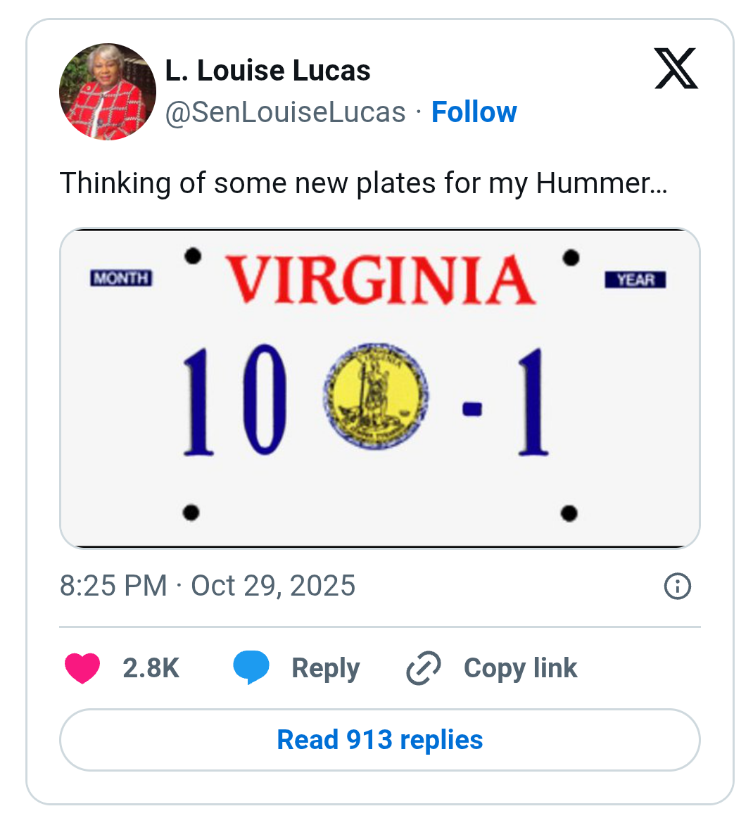
The former mayor of Arcadia resigned after admitting to acting as an illegal foreign agent of China in a federal plea deal unsealed on Monday. Eileen Wang agreed with prosecutors that she worked with the People's Republic of China to boost propaganda with a fake news website on US soil between 2020 and 2022. She was elected to Arcadia City Council in November 2022. The city is within LA County. Wang pled guilty to the federal charge at her arraignment in downtown Los Angeles on Monday afternoon. She faces a maximum of 10 years in prison. LA's top federal prosecutor Bill Essayli said this is not the first time China has been caught trying to exert its influence in the United States. "Ms. Wang is just the latest to act as an agent for the PRC and it should terrify Americans that she was able to rise to the highest levels of local office in her city," Essayli said. According to court documents, Wang worked with her then fiancé, Yaoning "Mike" Sun, on a web site called "U.S. News Center," which claimed to be news source for Chinese Americans. But in reality the pair were carrying out Beijing's orders through the site, and sharing data on how many people had viewed the story with Chinese officials. Wang and Sun "executed directives" from the Chinese government, posting propaganda designed to help China and reporting back to their masters with screenshots showing how many people viewed the stories, according to the plea agreement. In one case, Wang's spymaster ordered her to post a PRC-authored essay denying the existence of genocide and forced labor in the Xinjiang region, according to the document. "There is no genocide in Xinjiang; there is no such thing as 'forced labor' in any production activity, including cotton production. Spreading such rumor is to defame China, destroy Xinjiang's safety and stability," wrote Wang's master, according to the plea agreement.
Paul Sperry
@paulsperry_ 2h BREAKING: Just-released DOJ and FBI records reveal the agencies possessed significant evidence of potential Mann Act prostitution violations committed by Hunter Biden as early as October 2020, the eve of the presidential election, yet did not pursue charges for the potential crimes
Libs of TikTok
@libsoftiktok BREAKING: Walgreens reveals the Chicago South Side store they are shuttering after 20 years, lost $1 million mainly due to theft last year, which is 4x the company average, while they spent $400k a year on security and employees still got assaulted.
Paul A. Szypula
@Bubblebathgirl Mayor Brandon Johnson is facing outrage from Chicago residents over Walgreens store closures, particularly on the South Side. Walgreens is closing its longtime Chatham store on June 4 after $1 million in losses in 2025 and high theft rates. The store had been there more than 20 years. Walgreens said theft at that location was four times the company average. Walgreens spent $400,000 a year on security officers in addition to other measures, but that wasn't enough. Thieves would break through the defenses and rob the store anyway. Johnson needs to seriously address the crime that's making businesses leave Chicago.
A local resident stands up and asks the obvious question: “How do you plan to meet the sexual needs of 600 men?”
— redpillbot (@redpillb0t) May 6, 2026
This is at a local council meeting in Crowborough - where over 500 illegal, adult aged unknown migrant men are being moved in pic.twitter.com/DLcl9sPQAA

Aaron Reichlin-Melnick
@ReichlinMelnick I still see people claiming that Biden flew migrants into the United States. That did NOT happen. No such program existed. The closest thing was the parole programs which allowed some Ukrainians, Cubans, Haitians, Nicaraguans, and Venezuelans to come here legally for two years.
Bill Melugin
@BillMelugin_ President Biden created the CHNV migrant flights mass parole program which allowed 30,000 migrants to fly into the U.S. every month (not on taxpayer dime) for 2 year humanitarian parole grants, totaling over 500,000 migrants. But they never left, and the DHS Inspector General found the Biden admin wasn't even tracking their parole expiration & certainly wasn't enforcing it. There was also no vetting of their sponsors and widespread fraud was found in the program, leading the Biden admin to temporarily pause it. One Haitian man who flew into JFK airport as part of the program was supposed to be with his listed sponsor in New Jersey, but he ended up in a migrant hotel outside of Boston where he was convicted of raping a young girl in the hotel. This program didn't exist before Biden, so yes, Biden quite literally allowed more than half a million migrants to circumvent the border and fly into the US outside of the normal visa or legal immigration process, and the large majority of them are still here well past the expiration of their 2 year parole grants.
Pratt's telling truths and exploding brains:
Paul A. Szypula 🇺🇸This is so insane I wonder if it's a false flag hoax.
@Bubblebathgirl
Spencer Pratt on how he'll make LA more affordable: "What people forget is they can't lower the cost of goods. The only thing you can do to make things more affordable as mayor, which I will be able to do, is put more money in people's pockets. We need to put more revenue in the city. We're over here they're always asking me, 'How are you going to balance this budget Spencer? There's going to be no money to do this.' We should be the number one city in the world. We should have money shooting out of ATMs. We're Los Angeles. There'll be plenty of money when we let the systems work. When we let business work. How can you let business work if you have drug addicts going number two and number one in front of every café? We lost over 100 restaurants in LA, not because they weren't good food, but cause you have drug addicts scaring people to go out." Everything Pratt says here is right. He's sharp, smart and strong. He's just letting loose and it's glorious to see. I wish I lived in LA just so I could vote for him.
Democrats just dropped a new pro-Spencer Pratt ad. pic.twitter.com/CHR5gUXnnC
— Bonchie (@bonchieredstate) May 11, 2026
David Thompson
@Dave_in_Fla I'm just stunned that they think this is an attack ad. Pratt should run this ad and add "I'm Spencer Pratt and I approve this message"
"We're going to have to explore judicial 'reform' state by state and at the federal level... everything should be on the table."
— Kyle Becker (@kylenabecker) May 11, 2026
The "Democratic Party" is giving up on democratic elections. Hakeem Jeffries is now pushing for a full-out judicial coup.pic.twitter.com/PeizntLn06
Unhinged liberal: "I'm sure it cant be that difficult to find the addresses of the Supreme Court justices in Virginia!"pic.twitter.com/kjhgIK5fQx
— Defiant L’s (@DefiantLs) May 11, 2026
Comments
(Jump to bottom of comments)Mitch McConnell next, please.
Posted by: bonhomme at May 11, 2026 05:48 PM (mkw2N)
Posted by: San Franpsycho at May 11, 2026 05:48 PM (RIvkX)
=====
Say, whaa?
-BLM
Posted by: San Franpsycho at May 11, 2026 05:49 PM (RIvkX)
It never was going to be as nice as the Seven Heavens of Celestia.
Posted by: gKWVE at May 11, 2026 05:49 PM (sDWtc)
Posted by: four seasons at May 11, 2026 05:50 PM (3ek7K)
Posted by: Duncanthrax at May 11, 2026 05:50 PM (0sNs1)
Posted by: Hokey Pokey at May 11, 2026 05:50 PM (YlWIZ)
Johnson needs to seriously address the crime that's making businesses leave Chicago.
Brandon Johnson is functionally retarded. He needs a handler.
He also needs to resign. If a person is too mentally deficient to stand trial, another person also can be too mentally deficient to serve in a public office.
Posted by: Krebs 'v' Carnot: Epic Battle of the Cycling Stars (TM) Imprison! Imprison! Imprison! at May 11, 2026 05:50 PM (xG4kz)
Posted by: FenelonSpoke at May 11, 2026 05:51 PM (Yl2Ob)
Thieves would break through the defenses and rob the store anyway.
Were the "security officers" allowed to stop thieves? Or were they unarmed and instructed to be "good witnesses" who did nothing?
Posted by: bonhomme at May 11, 2026 05:51 PM (mkw2N)
Posted by: Halfhand at May 11, 2026 05:52 PM (7qznS)

Posted by: Gunther Guillaume at May 11, 2026 05:52 PM (T6aVk)
Posted by: Elric the Blade at May 11, 2026 05:52 PM (JCuNA)
Posted by: zombie at May 11, 2026 05:53 PM (Av6i5)
Posted by: Mao at May 11, 2026 05:53 PM (T6aVk)
Wouldn't that REVOKE his probationary status and automatically send him back to prison?
Would that have bearing on his trials for his additional crimes?
Posted by: "Perfessor" Squirrel at May 11, 2026 05:53 PM (gnNyN)
And by issues... I mean with the local governments that condone it. Republicans, Democrats or "other."
Posted by: Martini Farmer at May 11, 2026 05:53 PM (jehhT)
Posted by: Ben Had at May 11, 2026 05:53 PM (z2aPa)
Yeah, like that's gonna happen. But it should.
Posted by: Chairborne!...Desk From Above! at May 11, 2026 05:53 PM (F4p3X)
Less crime is bad.
Ten years ago this would be considered sociopathic. Now it is Democrat governance.
Posted by: San Franpsycho at May 11, 2026 05:53 PM (RIvkX)
Posted by: Aetius451AD work phone at May 11, 2026 05:54 PM (zZu0s)
Posted by: FenelonSpoke at May 11, 2026 05:51 PM (Yl2Ob)
For the rep breakdown if their plan to gerrymander went through. 10 democrats to 1 republican.
Posted by: Aetius451AD work phone at May 11, 2026 05:55 PM (zZu0s)
Posted by: FenelonSpoke at May 11, 2026 05:51 PM (Yl2Ob)
====
The Virginia delegation would have 10 commies and 1 light-commie.
Posted by: San Franpsycho at May 11, 2026 05:55 PM (RIvkX)
Posted by: Elric the Blade at May 11, 2026 05:55 PM (JCuNA)
"Scoop via @CBSNews: As Pakistan positioned itself as a diplomatic conduit between Tehran and Washington, it quietly allowed Iranian military aircraft to park in its country, potentially shielding them from US airstrikes, sources told @JimLaPorta and me. Days after Trump announced the ceasefire in early April, Tehran sent multiple aircraft to Pakistan Air Force Base Nur Khan.
Among the military hardware was an Iranian Air Force RC-130, a reconnaissance and intelligence-gathering variant of the Lockheed C-130 Hercules tactical transport aircraft."
Posted by: runner at May 11, 2026 05:56 PM (GD0B3)
Posted by: FenelonSpoke at May 11, 2026 05:51 PM (Yl2Ob)
For the rep breakdown if their plan to gerrymander went through. 10 democrats to 1 republican.
Posted by: Aetius451AD work phone at May 11, 2026 05:55 PM (zZu0s)
That encapsulates the Democrats entire philosophy towards governance. And that makes them NOT my countrymen.
Posted by: Chairborne!...Desk From Above! at May 11, 2026 05:56 PM (F4p3X)
Posted by: Fenderbender at May 11, 2026 05:56 PM (1FEc1)
Posted by: Berserker-Dragonheads Division at May 11, 2026 05:57 PM (snZF9)
Posted by: San Franpsycho at May 11, 2026 05:57 PM (RIvkX)
Posted by: Cow Demon at May 11, 2026 05:57 PM (T6aVk)
here's one:
https://tinyurl.com/h55mrh45
Posted by: sock_rat_eez at May 11, 2026 05:57 PM (VyBeY)
Yeah, like that's gonna happen. But it should.
==
He is one of them ! And this is in line with reparations, so shut up cracker.
Posted by: runner at May 11, 2026 05:57 PM (GD0B3)
Posted by: Elric the Blade at May 11, 2026 05:55 PM (JCuNA)
=====
And identity concealment.
Posted by: San Franpsycho at May 11, 2026 05:58 PM (RIvkX)
Posted by: Elric the Blade at May 11, 2026 05:58 PM (JCuNA)
The truth: These are rapists, pretending to be "migrants."
Posted by: zombie at May 11, 2026 05:59 PM (Av6i5)
Posted by: Cow Demon at May 11, 2026 05:59 PM (T6aVk)
Posted by: IllTemperedCur at May 11, 2026 05:59 PM (y9nCu)
Posted by: four seasons at May 11, 2026 05:50 PM (3ek7K)
he added kidnapping to his second offense if I read that right.
Posted by: Oldcat at May 11, 2026 05:59 PM (8avO+)
I'm sorry but I don't know this. What does the 10 1 stand for?
Posted by: FenelonSpoke
That was "pre-bragging" the gerrymander to go to 10D-1R from the current 6D-5R in VA by the corruptocrat State Senator whose offices the FBIs raided on Friday for crimes and misdemeanors.
Posted by: Krebs 'v' Carnot: Epic Battle of the Cycling Stars (TM) Imprison! Imprison! Imprison! at May 11, 2026 05:59 PM (xG4kz)
Posted by: Cow Demon at May 11, 2026 05:59 PM (T6aVk)
Free shirts are free shirts.
Posted by: Oldcat at May 11, 2026 05:59 PM (8avO+)
Brandon Johnson is functionally retarded. He needs a handler.
Chelsea seems like that kind of gal who likes black dick. And Brandon, being a black man, is probably as committed to not being a parent as Chelsea. So it ought to work out for these two crazy kids.
But how does it fix Chicago?
Posted by: call back to the roast at May 11, 2026 06:00 PM (5HtUQ)
Posted by: Berserker-Dragonheads Division
Biologically accurate, but damn now I have to imagine that sound. Curse you!
Posted by: zombie at May 11, 2026 06:00 PM (Av6i5)
The Chicago theft starts with the teachers union and runs through the entire Democrat party.
5 years of work and a six figure retirement.
It's a wonder why anyone shows up at a bond sale, they can never be repaid.
Posted by: Auspex at May 11, 2026 06:01 PM (Y8DZL)
Posted by: The Whine Guy at May 11, 2026 06:01 PM (k8xm0)
I was in self checkout and I had three milks. I scanned one carton three times. When I got done and was ready to pay, the checkout stand interrupted, showed me video of the other two milks I didn't scan, and asked me to certify I'd scanned everything in my cart. I was impressed and annoyed at the same time.
Posted by: bonhomme at May 11, 2026 06:01 PM (mkw2N)
Posted by: Bertram Cabot, Jr. at May 11, 2026 06:01 PM (Cqx++)
Posted by: sock_rat_eez at May 11, 2026 05:57 PM (VyBeY)
====
This will make them enraged. Heh.
Posted by: San Franpsycho at May 11, 2026 06:01 PM (RIvkX)
Posted by: Harry Vandenburg at May 11, 2026 06:02 PM (52qkP)
Posted by: Eromero at May 11, 2026 06:02 PM (LHPAg)
Posted by: zombie at May 11, 2026 06:02 PM (Av6i5)
Posted by: Aetius451AD work phone at May 11, 2026 05:54 PM (zZu0s)
The more you eat, the more you shit.
Posted by: Mao at May 11, 2026 06:02 PM (T6aVk)
Posted by: Smell the Glove at May 11, 2026 06:02 PM (gu0hJ)
Posted by: Skip at May 11, 2026 06:03 PM (Ia/+0)
"Community activists" in neighborhoods where stores are being driven out by shoplifting and assault take the position that the stores should remain and tolerate the stealing and assault torever, no matter how bad it gets.
Related: They also think that stomping white people and asians is funny, and isn't really a crime.
Posted by: Semi-Literate Thug at May 11, 2026 06:03 PM (azNOR)
Posted by: FenelonSpoke at May 11, 2026 05:51 PM (Yl2Ob)
I read earlier that that is the Democrat to Republican ratio she was going for. Tim Kaine objected, preferring 9-2, because he thinks it looks more realistic. Hah.
Posted by: Dash my lace wigs! at May 11, 2026 06:03 PM (zYpTz)
Posted by: toby928(c) at May 11, 2026 06:03 PM (4NO2D)
Thieves would break through the defenses and rob the store anyway.
--
Were the "security officers" allowed to stop thieves? Or were they unarmed and instructed to be "good witnesses" who did nothing?
==
you can know for a fact that, had a single hair on the head of any of the thieves been mussed in the slightest by the store security that they'd have faced 10 years in prison for assault at the direct instance of the mayor.
Taxpayers and businesses are not the voters he cares about.
Posted by: People's Hippo Voice at May 11, 2026 06:03 PM (MtSIY)
Posted by: runner at May 11, 2026 06:04 PM (GD0B3)
https://tinyurl.com/z5xnbwxm
Posted by: Notsothoreau at May 11, 2026 06:04 PM (7T8ei)
Posted by: FenelonSpoke at May 11, 2026 06:04 PM (2sfNr)
"Community activists" in neighborhoods where stores are being driven out by shoplifting and assault take the position that the stores should remain and tolerate the stealing and assault torever, no matter how bad it gets.
Related: They also think that stomping white people and asians is funny, and isn't really a crime.
Posted by: Semi-Literate Thug at May 11, 2026 06:03 PM (azNOR)
Also the same people who dreamed up the invented crisis of “food deserts”.
Posted by: Cow Demon at May 11, 2026 06:04 PM (T6aVk)
Totes.
Posted by: IllTemperedCur at May 11, 2026 05:59 PM (y9nCu)
Voyager 1 would love to have his ping strength.
Posted by: Berserker-Dragonheads Division at May 11, 2026 06:05 PM (snZF9)
Posted by: Ben Had at May 11, 2026 06:05 PM (z2aPa)
--
On the other side of that, my Walmart, if you accidentally scan twice, you used to have to flag an associate to verify.
Now it knows and let's you clear the duplicate.
Posted by: People's Hippo Voice at May 11, 2026 06:06 PM (MtSIY)
I saw today Burke was released from Bellevue Hospital THAT DAY. He'd undergone a psych evaluation and had apparently passed.
Posted by: bonhomme at May 11, 2026 06:06 PM (mkw2N)
Once the city runs the stores, the shoplifting will cease.
Except all the store building funds will have been stolen before opening.
Posted by: Auspex at May 11, 2026 06:06 PM (Y8DZL)
Posted by: Dash my lace wigs! at May 11, 2026 06:06 PM (zYpTz)
Posted by: Fenderbender at May 11, 2026 05:56 PM (1FEc1)
Not to mention that New England has not a single Republican Representative in the House. Not a one. Six (6) fucking states and NOT ONE Republican in The House.
These people are not my countryman. Including the nice little old lady next door who votes for them.
Posted by: Chairborne!...Desk From Above! at May 11, 2026 06:06 PM (F4p3X)
Thanks for your response . Perhaps I would have known if I had read the article before asking the question.
Posted by: FenelonSpoke at May 11, 2026 06:07 PM (Yl2Ob)
Posted by: Skip at May 11, 2026 06:08 PM (Ia/+0)
Posted by: Smell the Glove at May 11, 2026 06:08 PM (gu0hJ)
Also the same people who dreamed up the invented crisis of “food deserts”.
Posted by: Cow Demon
Put them on a horse with no name.
Posted by: Bertram Cabot, Jr. at May 11, 2026 06:08 PM (Cqx++)
Well then bring it there sparky. Put your money where your mouth is.
Posted by: Diogenes at May 11, 2026 06:09 PM (2WIwB)
Posted by: FenelonSpoke
Nobody here does that. Why should you?
Posted by: gKWVE at May 11, 2026 06:09 PM (sDWtc)
Posted by: Smell the Glove at May 11, 2026 06:10 PM (gu0hJ)
Posted by: Harry Vandenburg at May 11, 2026 06:10 PM (52qkP)
Posted by: Case at May 11, 2026 06:11 PM (NWIIQ)
Posted by: Smell the Glove at May 11, 2026 06:08 PM (gu0hJ)
Since Soros wants all this lawlessness, why should he protected by the law? If there are no rules, then there should be no rules. Especially for demons like him.
Posted by: Chairborne!...Desk From Above! at May 11, 2026 06:11 PM (F4p3X)
The "Democratic Party" is giving up on democratic elections. Hakeem Jeffries is now pushing for a full-out judicial coup.
--------------
This is like the anti-Pratt ad. The pro-Democrat/socialist judicial coup has already happened and needs to be exposed to all voters. Hakeem, we dare you to go ahead with it.
Posted by: Decaf at May 11, 2026 06:11 PM (Z8tay)
Posted by: Harry Vandenburg at May 11, 2026 06:10 PM (52qkP)
Why bother? there are other places to make money for Walgreens, even if they paid to move their staff.
Posted by: Oldcat at May 11, 2026 06:12 PM (8avO+)
https://tinyurl.com/z5xnbwxm
Posted by: Notsothoreau at May 11, 2026 06:04 PM (7T8ei)
That is fascinating, thanks. I didn't see much in the previous thread, and didn't even know we were talking about turpentine!
Posted by: Dash my lace wigs! at May 11, 2026 06:12 PM (zYpTz)
Posted by: Ben Had at May 11, 2026 06:05 PM (z2aPa)
I'll bet that choosing to not prosecute specific demographics at all played a bigger one.
Posted by: I used to have a different nic at May 11, 2026 06:12 PM (ExV1e)
Posted by: gnats local 678 at May 11, 2026 06:13 PM (CWTWj)
I've said it before, this summer in the blue cities will be lit, literally
Posted by: Smell the Glove at May 11, 2026 06:13 PM (gu0hJ)
That guy T-Levels are -100 probably and has a Man-gina and sticks Tampons up his Ass...
Posted by: Jackson K. at May 11, 2026 06:13 PM (KvNjc)
Re-olen the Walgreens back up as an order only store. You have your order takers behind bulletin proof windows like a bank and employees in the back secured warehouse filling the orders.
Posted by: Harry Vandenburg
21st century Service Mechandise business model.
Posted by: Bertram Cabot, Jr. at May 11, 2026 06:13 PM (Cqx++)
Jefferies wants a full on judicial coup?
Well then bring it there sparky. Put your money where your mouth is.
Posted by: Diogenes
Jefferies' manhood is draining away like sand in an hourglass. He's staging a few last stand efforts to save it.
He's just another hacktivist like Brandon Johnson who lacks the mental wherewithal to put forth a coherent argument in support of his beliefs other than "We Gets Some!"
Posted by: Krebs 'v' Carnot: Epic Battle of the Cycling Stars (TM) Imprison! Imprison! Imprison! at May 11, 2026 06:13 PM (xG4kz)
Wow I must be American, because my first reaction is "That's not the government's job"
If those men were normal men from civilized societies that question wouldn't need to be asked because the answer is "They have sufficient self-control to find licit outlets on their own."
I am really hoping that the intent of the questioner was a very politely and diplomatically-worded way of saying "How are you going to keep them from raping people?" because it could just as easily be understood to imply that the government is already responsible for assigning sexual partners to people and I'm not sure I would put it past the British government to try that and the British people to allow it.
Posted by: FeatherBlade at May 11, 2026 06:14 PM (vJrRc)
Posted by: Bitblt at May 11, 2026 06:14 PM (11pZm)
Posted by: NemoMeImpuneLacessit at May 11, 2026 06:14 PM (ZVgZ4)
Posted by: Oglebay at May 11, 2026 06:14 PM (2ap+5)
Posted by: Notsothoreau at May 11, 2026 06:14 PM (7T8ei)
Posted by: Guy Mohawk at May 11, 2026 06:15 PM (n5tGW)
We're they just walking out with cash registers. Man.
MSNow .... DOJ probes - the Enemies List!
That's horrible if lawfare was actually happening in America. Could you even imagine? Oh wait....
Posted by: Stateless - He ain't heavy, he's my dog at May 11, 2026 06:15 PM (Sco7b)
Posted by: Ilhan Omar at May 11, 2026 06:15 PM (vE0+H)
Posted by: NemoMeImpuneLacessit at May 11, 2026 06:15 PM (ZVgZ4)
The retarded apple doesn't fall far from the retarded tree.
Posted by: garrett at May 11, 2026 06:16 PM (xkXS7)
That guy T-Levels are -100 probably and has a Man-gina and sticks Tampons up his Ass...
Posted by: Jackson K. at May 11, 2026 06:13 PM (KvNjc)
Tampon? That dude looks like he needs a paint roller.
Posted by: Berserker-Dragonheads Division at May 11, 2026 06:16 PM (snZF9)
Posted by: San Franpsycho at May 11, 2026 06:16 PM (RIvkX)
On a cold and gray Chicago mornin'
A poor broken down Walgreens closes
In the ghetto
(In the ghetto)...
Posted by: Zombie Elvis at May 11, 2026 06:16 PM (HBTIy)
Posted by: rhomboid at May 11, 2026 06:16 PM (U/Byj)
Posted by: bonhomme
The platform to the right of the scanner senses the added weight of each item. You physically have to put each item on it separately. Of course, in a line with a real human checkout person, you can do the triple scan maneuver.
Posted by: stu-mick-o-sucks at May 11, 2026 06:16 PM (DsA2n)
Posted by: NemoMeImpuneLacessit at May 11, 2026 06:15 PM
You misspelled Night of the Long Knives.
Posted by: toby928(c) at May 11, 2026 06:17 PM (4NO2D)
How are persons of color going make the minimum wage if they cannot steal from Walgreens and then sell it on E-Bay for a profit ????
Ever think about that White Cracker Racist Jim Crows ????
Posted by: Mayor Johnson at May 11, 2026 06:17 PM (xl8DV)
Posted by: NemoMeImpuneLacessit at May 11, 2026 06:15 PM (ZVgZ4)
That was my first thought
Posted by: It's me donna at May 11, 2026 06:17 PM (FtULh)
Posted by: Nelly at May 11, 2026 06:17 PM (6+ehB)
Posted by: gnats local 678 at May 11, 2026 06:17 PM (CWTWj)
Posted by: Puddleglum, cheer up for the worst is yet to come at May 11, 2026 06:17 PM (sAmhv)
=====
Is this supposed to be ironic or something?
It reads like the Pratt ad they think is a real hard hit.
Posted by: San Franpsycho at May 11, 2026 06:18 PM (RIvkX)
Same here.
If they want me to do the work, they can give me a discount.
Until then...I will be inconvenienced by waiting on line.
Posted by: garrett at May 11, 2026 06:18 PM (xkXS7)
Posted by: Oldcat at May 11, 2026 06:12 PM (8avO+)
Because they would immediately be up almost 1.4 million from the previous year and they would still serve a needed community . Those people are going to have to go somewhere for their prescriptions.
Posted by: Harry Vandenburg at May 11, 2026 06:18 PM (52qkP)
Posted by: garrett at May 11, 2026 06:19 PM (xkXS7)
Posted by: Smell the Glove at May 11, 2026 06:19 PM (gu0hJ)
Thanks for the pharmaceutical deserts you're creating, Walgreens.
Posted by: Auspex at May 11, 2026 06:19 PM (Y8DZL)
I thought judges did the sentencing?
Do they do everything different in Minnesota?
Posted by: SpeakingOf at May 11, 2026 06:20 PM (6ydKt)
Posted by: gnats local 678 at May 11, 2026 06:20 PM (CWTWj)
I know how we pronounce it down here in the south but I'm curious about how they do it up north.
Posted by: banana Dream at May 11, 2026 06:20 PM (3uBP9)
Posted by: bonhomme at May 11, 2026 06:01 PM (mkw2N)
The ones I have gone to require a mass change on the output scale or it goes on alert right then. I don't know if even the checkout people do the one scanning for three trick anymore.
Posted by: Oldcat at May 11, 2026 06:20 PM (8avO+)
Posted by: FenelonSpoke at May 11, 2026 06:07 PM (Yl2Ob)
We're Morons. Why do that? You know someone already knows.

Posted by: Dash my lace wigs! at May 11, 2026 06:21 PM (zYpTz)
Posted by: San Franpsycho at May 11, 2026 06:21 PM (RIvkX)
Posted by: Harry Vandenburg
Hoodrats will just rob people coming out of the store. Then they will wait until closing time then rob the employees as they leave the store. Then they will invade the store and loot it.
Posted by: Blast Hardcheese at May 11, 2026 06:21 PM (V362x)
Thanks for the pharmaceutical deserts you're creating, Walgreens.
Posted by: Auspex at May 11, 2026 06:19 PM (Y8DZL)
I think the neighbourhoods are more creating their pharmaceutical desserts.
Posted by: Stateless - He ain't heavy, he's my dog at May 11, 2026 06:21 PM (Sco7b)
Tehran sent multiple aircraft to Pakistan Air Force Base Nur Khan.
Posted by: runner
============
Pakistan might have an interesting hand if they want to play.
Posted by: Blonde Morticia at May 11, 2026 06:22 PM (XJ22o)
Posted by: Harry Vandenburg at May 11, 2026 06:10 PM (52qkP)
Montgomery Ward was ahead of its time.
Posted by: Dash my lace wigs! at May 11, 2026 06:22 PM (zYpTz)
Same here.
If they want me to do the work, they can give me a discount.
Until then...I will be inconvenienced by waiting on line.
Posted by: garrett at May 11, 2026 06:18 PM (xkXS7)
—-
Same. What, are they soon gonna want me to stock the shelves too? I don’t work for them. Plus, I find it easier and more convenient to get in the normal lanes and let the employees scan the shit.
Posted by: Elric the Blade at May 11, 2026 06:22 PM (JCuNA)
Valirie Jarrett was on the board.
Posted by: Harry Vandenburg at May 11, 2026 06:22 PM (52qkP)
Posted by: sock_rat_eez at May 11, 2026 06:23 PM (VyBeY)
I know how we pronounce it down here in the south but I'm curious about how they do it up north.
Posted by: banana Dream at May 11, 2026 06:20 PM (3uBP9)
probably Chat Ham. I don't recall any eating of the consonants like the English do to say Chat 'am. I used to live 20-25 blocks north of there at the Uni of Chicago.
Posted by: Oldcat at May 11, 2026 06:23 PM (8avO+)
Posted by: NemoMeImpuneLacessit at May 11, 2026 06:23 PM (ZVgZ4)
Sure... try to penalize them. Doubt it'll hold up.
Posted by: Martini Farmer at May 11, 2026 06:23 PM (jehhT)
Posted by: Bertram Cabot, Jr. at May 11, 2026 06:13 PM (Cqx++)
That's what I meant.
I'm going to shut up and read. Everybody is ahead of me.
Posted by: Dash my lace wigs! at May 11, 2026 06:24 PM (zYpTz)
Posted by: Guy Mohawk at May 11, 2026 06:24 PM (n5tGW)
Posted by: NemoMeImpuneLacessit at May 11, 2026 06:24 PM (ZVgZ4)
Posted by: gnats local 678 at May 11, 2026 06:24 PM (CWTWj)
Posted by: Stateless - He ain't heavy, he's my dog at May 11, 2026 06:21 PM (Sco7b)
======
Some people don't want civilization, many don't know what it is. The strong can flourish wherever necessities are hard to come by.
Posted by: San Franpsycho at May 11, 2026 06:24 PM (RIvkX)
Posted by: Elric the Blade at May 11, 2026 06:22 PM (JCuNA)
I probably would do that for the luls if they asked nicely and gave a discount.
I usually went self because the lines on the other ones are huge and I'm not getting very much so it is way faster.
Posted by: Oldcat at May 11, 2026 06:25 PM (8avO+)
Posted by: Aetius451AD work phone at May 11, 2026 06:25 PM (zZu0s)
Posted by: sock_rat_eez at May 11, 2026 06:25 PM (VyBeY)
You have to believe that Wal-Mart is even worse. Especially with the self checkouts.
Posted by: tankdemon at May 11, 2026 06:26 PM (5eIFu)
Same here.
If they want me to do the work, they can give me a discount.
Until then...I will be inconvenienced by waiting on line.
Posted by: garrett at May 11, 2026 06:18 PM (xkXS7)
—-
Same. What, are they soon gonna want me to stock the shelves too? I don’t work for them. Plus, I find it easier and more convenient to get in the normal lanes and let the employees scan the shit.
Posted by: Elric the Blade at May 11, 2026 06:22 PM (JCuNA)
Me too. I resent doing their job for them. The least they could do is sign me up for some employee benefits if they're going to have me work for them.
And on top of it all, I find it impossible to figure out how to scan produce.
Posted by: Chairborne!...Desk From Above! at May 11, 2026 06:26 PM (F4p3X)
There is iron in your words
Posted by: Commissar of plenty and festive little hats at May 11, 2026 06:26 PM (Kt19C)
Posted by: Smell the Glove at May 11, 2026 06:26 PM (gu0hJ)
Posted by: gnats local 678 at May 11, 2026 06:26 PM (CWTWj)
But we can't observe that and make commentary on the social/economic demographics.
Posted by: Martini Farmer at May 11, 2026 06:26 PM (jehhT)
Posted by: Skip at May 11, 2026 06:27 PM (Ia/+0)
Posted by: Bertram Cabot, Jr. at May 11, 2026 06:13 PM (Cqx++)
That's what I meant.
I'm going to shut up and read. Everybody is ahead of me.
Posted by: Dash my lace wigs! at May 11, 2026 06:24 PM (zYpTz)
I went there a few times. Too bad they picked a place that was a lot harder to get into than the mall and strip malls just a block or so along on the other side of the interstate. No other store was able to live long there after that.
Posted by: Oldcat at May 11, 2026 06:27 PM (8avO+)
The world has gone mad.
Posted by: What about sexual emergencies?! at May 11, 2026 06:27 PM (TbWk/)
I've gotten to the point where I see a "no littering" sign I say "print the sign in spanish if you want less litter"
The dirty secret the Dems hide is that their minority coalition are way more bigoted against each other than white folks are about any one of the groups. I know we people of pallor do have stereotypes and prejudices, but as a group we are more likely to judge on individual character instead of hating on everyone that is group XYZ. (I make an exception for people that join the religion of pieces, but since that religion preaches kill everyone but us I think that is reasonable, and I don't worry much about the ones that are not radical believers.)
Posted by: PaleRider at May 11, 2026 06:27 PM (PV+Zw)
Thanks for your response . Perhaps I would have known if I had read the article before asking the question.
Posted by: FenelonSpoke
==============
I wouldn't be surprised if Senator L. Louise Lucas has taken that tweet down. It's a premature end-zone dance that backfired.
Posted by: Blonde Morticia at May 11, 2026 06:27 PM (XJ22o)
Posted by: Stateless - He ain't heavy, he's my dog at May 11, 2026 06:28 PM (Sco7b)
Posted by: sock_rat_eez at May 11, 2026 06:28 PM (VyBeY)
Posted by: Smell the Glove at May 11, 2026 06:28 PM (gu0hJ)
Too many people stealing through self-checkout.
It might just be for certain locations/regions.
Posted by: SpeakingOf at May 11, 2026 06:28 PM (6ydKt)
Posted by: Old Man Adams at May 11, 2026 06:28 PM (oftw2)
"2h
NEW: Senior UK Ministers Urge Starmer to Set a Timeline for His Resignation"
Your Senior Ministers are revolting, Keir !
Posted by: runner at May 11, 2026 06:29 PM (GD0B3)
Posted by: NemoMeImpuneLacessit at May 11, 2026 06:24 PM (ZVgZ4)
I was a northsider, but I woulda said "Chattam"
Posted by: sock_rat_eez at May 11, 2026 06:25 PM (VyBeY)
I lived in Chatham Co GA and yep that's how we all pronounced it. Sometimes you get weird pronunciation differences but I guess not this time.
Posted by: banana Dream at May 11, 2026 06:29 PM (3uBP9)
Posted by: Harry Vandenburg at May 11, 2026 06:29 PM (52qkP)
You have to believe that Wal-Mart is even worse. Especially with the self checkouts.
Posted by: tankdemon
==============
I think I read that they're ending them.
Posted by: Blonde Morticia at May 11, 2026 06:29 PM (XJ22o)
Posted by: Maj. Healey at May 11, 2026 06:29 PM (abIsI)
Too many people stealing through self-checkout.
===
it was a stupid idea; they wanted to save money and instead got robbed!
Posted by: runner at May 11, 2026 06:30 PM (GD0B3)
Same here.
If they want me to do the work, they can give me a discount.
Until then...I will be inconvenienced by waiting on line.
Posted by: garrett at May 11, 2026 06:18 PM (xkXS7)
—-
Same. What, are they soon gonna want me to stock the shelves too? I don’t work for them. Plus, I find it easier and more convenient to get in the normal lanes and let the employees scan the shit.
Posted by: Elric the Blade at May 11, 2026 06:22 PM (JCuNA)
People bitch about self checkout yet the lines are somehow still there. I like self checkout. I get in and get out much faster and don’t have to deal with other people. If I just need three or four items, instead of dealing with a grannie who insists on writing a check, or a customer arguing with a cashier…I just go do my own thing. Stores should pay me store credit for helping people get things off of high shelves but they won’t. Hence the “logic” of “they should pay me to bag and check out my own groceries” doesn’t fly with me either.
Posted by: Cow Demon at May 11, 2026 06:30 PM (T6aVk)
The world has gone mad.
Posted by: What about sexual emergencies?! at May 11, 2026 06:27 PM (TbWk
Couldn't they just open a goat farm at the edge of town?
Posted by: tankdemon at May 11, 2026 06:30 PM (5eIFu)
Posted by: Elric the Blade at May 11, 2026 06:30 PM (JCuNA)
Posted by: gnats local 678 at May 11, 2026 06:31 PM (CWTWj)
If you have to tell people you are a moderate then you are not, it's like if you have to say you are a lady, you're not.
Posted by: Decaf at May 11, 2026 06:31 PM (Z8tay)
Posted by: Maj. Healey at May 11, 2026 06:31 PM (abIsI)
I've noticed a regular story the left pushes is an American woman taping her child screaming because daddy was deported.
Note, I've yet to seen a single video where mom got deported...
Along similar lines when I pop into leftwing Karen forums they are always arguing we need more young men to come into the country to, uh, "attend to our gardens", but want to formally ban passport bros because it is "anti-feminist"
Posted by: Fred at May 11, 2026 06:31 PM (sKqQm)
Aldi. Their food is dirt cheap in part because their overhead is kept very low. And yes that means self-checkout, schlepping your groceries to your car yourself and returning the cart to the area just in front of the store.
Posted by: Least expensive eggs and dairy around at May 11, 2026 06:31 PM (TbWk/)
Posted by: People's Hippo Voice at May 11, 2026 06:31 PM (MtSIY)
Posted by: Smell the Glove at May 11, 2026 06:31 PM (gu0hJ)
You have to believe that Wal-Mart is even worse. Especially with the self checkouts.
Posted by: tankdemon
==============
I think I read that they're ending them.
Posted by: Blonde Morticia at May 11, 2026 06:29 PM (XJ22o)
McDonald's is getting rid of self-serve soda machines too.
Posted by: tankdemon at May 11, 2026 06:32 PM (5eIFu)
Posted by: NemoMeImpuneLacessit at May 11, 2026 06:23 PM (ZVgZ4)
----
We've gone back to that model somewhat with the online shopping experience. Whenever I go to Walmart, I think I see as many associates gathering groceries for online orders as I do actual customers in the store.
Posted by: "Perfessor" Squirrel at May 11, 2026 06:32 PM (gnNyN)
Trump is a moderate Democrat circa 1996.
Posted by: Fred at May 11, 2026 06:32 PM (sKqQm)
Posted by: Maj. Healey at May 11, 2026 06:29 PM (abIsI)
I knew a british guy that got something like BOL X through the censors in one state for quite a while. He was pretty proud of it until they took it away. It's the little victories in life.
Posted by: banana Dream at May 11, 2026 06:32 PM (3uBP9)
Posted by: tankdemon
==============
I think I read that they're ending them.
Posted by: Blonde Morticia at May 11, 2026 06:29 PM (XJ22o)
McDonald's is getting rid of self-serve soda machines too.
Posted by: tankdemon at May 11, 2026 06:32 PM (5eIFu)
Not sure the super stores were ever placed in the inner city very often - land too expensive in the first place.
Posted by: Oldcat at May 11, 2026 06:32 PM (8avO+)
Good luck to em!
Posted by: Will Robinson at May 11, 2026 06:33 PM (zBgIx)
The left just plows through one Chesteron fence after another...
Posted by: 18-1 at May 11, 2026 06:33 PM (sKqQm)
@CNN
A nonprofit dedicated to "promoting informed stewardship" of historic landscapes asked a federal judge on Monday to halt the Trump administration's painting of the Lincoln Memorial's Reflecting Pool, which has long featured a gray basin, blue.
-
The traditionalist prefer feces, needles and graffiti.
Posted by: Anonosaurus Wrecks, Fat, Dumb, and Happy at May 11, 2026 06:33 PM (ndZc7)
Posted by: steevy at May 11, 2026 06:33 PM (YwEeS)
Posted by: Maj. Healey at May 11, 2026 06:31 PM (abIsI
She sure loved her country right?
Posted by: Harry Vandenburg at May 11, 2026 06:33 PM (52qkP)
I can see how you failed your Logic Class.
Posted by: garrett at May 11, 2026 06:34 PM (xkXS7)
Posted by: runner at May 11, 2026 06:34 PM (GD0B3)
SCOTUS green lights AL redistricting.
Hey Louise-Dems: LOLGF
Posted by: People's Hippo Voice
Praise the Lord and Pass the Ammunition
Posted by: Maj. Healey at May 11, 2026 06:34 PM (abIsI)
And also the immigrants.
Posted by: tcn in AK at May 11, 2026 06:35 PM (DwqWV)
Too many people stealing through self-checkout.
===
it was a stupid idea; they wanted to save money and instead got robbed!
Posted by: runner at May 11, 2026 06:30 PM (GD0B3)
The dumbest thing you can do, as much as I like self-checkout, is to go to an all-self checkout model. I’ve seen Wally World try it in Lubbock and Amarillo and was not impressed. You need both options. Self checkout is good for 10 items or less. Cashiers are good for larger orders and the whiners and complainers who hate self checkout because they aren’t store employees (they wouldn’t survive three seconds in Germany: you bring your own bags and bag your own groceries; don’t like it? What’s German for “Tough shit”?). Just my 0.02.
Posted by: Cow Demon at May 11, 2026 06:35 PM (T6aVk)
Posted by: gnats local 678 at May 11, 2026 06:35 PM (CWTWj)
Posted by: gnats local 678 at May 11, 2026 06:24 PM (CWTWj)
===============
That's a mix of corrupt Black female politicians from Baltimore. The DA, Marilyn Mosby, said the youths needed "space to riot" or some damn thing. The mayor had "written" a book that she required organizations to buy zilllions of copies of if they wanted to do business with the city.
Marilyn Mosby was convicted of federal perjury charges in a mortgage fraud case, and the mayor (Catherine Pugh) was convicted of some federal crimes.
Posted by: Blonde Morticia at May 11, 2026 06:35 PM (XJ22o)
Posted by: steevy at May 11, 2026 06:35 PM (YwEeS)
SCOTUS green lights AL redistricting.
Keep in mind that blue states have been heavily gerrymandered for 30 years now.
Another one of those things that we are finally responding to in kind thanks to Trump...
Posted by: 18-1 at May 11, 2026 06:35 PM (sKqQm)
Posted by: Fred at May 11, 2026 06:31 PM (sKqQm)
I wonder if the Paulo is also a gardener by trade.
Posted by: banana Dream at May 11, 2026 06:35 PM (3uBP9)
Posted by: nurse ratched at May 11, 2026 06:36 PM (W2Pud)
Posted by: gnats local 678 at May 11, 2026 06:36 PM (CWTWj)
Posted by: runner at May 11, 2026 06:36 PM (GD0B3)
More winning:
SCOTUS green lights AL redistricting.
Posted by: Maj. Healey
==============
Did Jumanji dissent? I'm not greedy, but I do like icing on my cake.
Posted by: Blonde Morticia at May 11, 2026 06:36 PM (XJ22o)
If they want me to do the work, they can give me a discount.
Until then...I will be inconvenienced by waiting on line.
Posted by: garrett at May 11, 2026 06:18 PM (xkXS7)
That's fine but the discount - which is really another form of overcharge you end up avoiding - is saving time, which is worth money.
Posted by: ... at May 11, 2026 06:37 PM (vE0+H)
The Paolo knows how to handle the hoe when he needs to lay some...how you say...ah yes. Pipe!
Posted by: The paolo at May 11, 2026 06:37 PM (sKqQm)
Posted by: Ben Had at May 11, 2026 06:37 PM (z2aPa)
Posted by: runner at May 11, 2026 06:30 PM (GD0B3)
TANSTAAFL
Posted by: ... at May 11, 2026 06:38 PM (vE0+H)
-
The traditionalist prefer feces, needles and graffiti.
Posted by: Anonosaurus Wrecks, Fat, Dumb, and Happy at May 11, 2026 06:33 PM (ndZc7)
Every f'ing thing Trump does they have a judge ready to sign off on a ban on it. Every single thing.
Posted by: banana Dream at May 11, 2026 06:38 PM (3uBP9)
The traditionalist prefer feces, needles and graffiti.
Posted by: Anonosaurus Wrecks, Fat, Dumb, and Happy
===============
Have you no respect for societal norms?
Posted by: Blonde Morticia at May 11, 2026 06:38 PM (XJ22o)
SCOTUS green lights AL redistricting.
Posted by: Maj. Healey
==============
Did Jumanji dissent? I'm not greedy, but I do like icing on my cake.
Posted by: Blonde Morticia at May 11, 2026 06:36 PM (XJ22o)
Thomas must be bringing his pistol to some of these deliberations because quite a few decisions have been 9-0
Posted by: Oldcat at May 11, 2026 06:38 PM (8avO+)
Posted by: steevy at May 11, 2026 06:39 PM (YwEeS)
Posted by: Oglebay at May 11, 2026 06:39 PM (2ap+5)
-
The traditionalist prefer feces, needles and graffiti.
Posted by: Anonosaurus Wrecks, Fat, Dumb, and Happy at May 11, 2026 06:33 PM (ndZc7)
Every f'ing thing Trump does they have a judge ready to sign off on a ban on it. Every single thing.
Posted by: banana Dream at May 11, 2026 06:38 PM (3uBP9)
From the picture I saw looks to be done already.
Posted by: Oldcat at May 11, 2026 06:39 PM (8avO+)
Posted by: runner at May 11, 2026 06:39 PM (GD0B3)
I prefer to spell the way an American would not the way some yurrotard poofter would.
Posted by: Will Robinson at May 11, 2026 06:39 PM (zBgIx)
Posted by: Guy Mohawk at May 11, 2026 06:39 PM (n5tGW)
Posted by: Ben Had at May 11, 2026 06:39 PM (z2aPa)
Posted by: Oldcat at May 11, 2026 06:39 PM (8avO+)
That's a rendering I believe
Posted by: It's me donna at May 11, 2026 06:40 PM (FtULh)
The motivation for the store isn't convenience. It is reduced Labor Costs.
IF they want me to perform the service of a Former Employee, they can share their savings.
Posted by: garrett at May 11, 2026 06:40 PM (xkXS7)
Posted by: gnats local 678 at May 11, 2026 06:40 PM (CWTWj)
I think they closed it for too much shoplifting...
Posted by: 18-1 at May 11, 2026 06:40 PM (sKqQm)
Posted by: steevy at May 11, 2026 06:35 PM (YwEeS)
25% of democrats are in favor of violence. The other 75% are in favor of the violent 25%.
Posted by: banana Dream at May 11, 2026 06:40 PM (3uBP9)
Posted by: Nobody's Slave at May 11, 2026 06:40 PM (oftw2)
Posted by: Pug Mahon, Not Exactly Streets Ahead at May 11, 2026 06:40 PM (0aYVJ)
Good luck to em!
Posted by: Will Robinson at May 11, 2026 06:33 PM (zBgIx)
I hope he holds them off a few times just to increase the bad blood and disarray.
Posted by: Oldcat at May 11, 2026 06:41 PM (8avO+)
Posted by: steevy at May 11, 2026 06:41 PM (YwEeS)
I think there was a series of test Amazon stores, where you just load up the cart, and the super scanners calculate everything. I know it can be done, I am not sure this has been implemented on a large scale.
Posted by: runner
===============
I shopped at one. I'm not sure it's still there. I can't remember how it worked. You'd scan something and walk out? Or it sniffed you and identified you as an Amazon account holder. Employees in the store had to explain it to virtually every shopper, so it seems to me it was more trouble than it was worth.
Posted by: Blonde Morticia at May 11, 2026 06:41 PM (XJ22o)
Posted by: runner at May 11, 2026 06:42 PM (GD0B3)
Posted by: Oglebay at May 11, 2026 06:42 PM (2ap+5)
I can see how you failed your Logic Class.
Posted by: garrett at May 11, 2026 06:34 PM (xkXS7)
Didn’t you complain about how you won’t use self checkout because you aren’t an employee of the store? Well, by your very own logic when I am asked by some 5 foot tall old lady to help her get something off the top shelf, I should say “Fuck you, I don’t work here”. And I shouldn’t because I am not paid by the store.
I banned eating and drinking in my classroom because the kids were pigs without a trace of manners. Their response would be something you would say: “People are paid to clean up after us so we can and should be pigs.” If I am getting bread, milk and eggs and that’s it, why not scan my own groceries and bag my own groceries? I’m getting out of the way of the whiners and complainers.
I can see why you are such a miserable person.
Posted by: Cow Demon at May 11, 2026 06:42 PM (T6aVk)
Posted by: Skip at May 11, 2026 06:42 PM (Ia/+0)
I had a British Professor take me to Disciplinary Action because I used the British spelling for all of my paperwork with him.
Just throwing in unnecessary 'u's and 'e's all over the place.
Posted by: garrett at May 11, 2026 06:42 PM (xkXS7)
Now they argue they should be able to kill you.
Oh, and anyone that disagrees with them IS a NAZI, even people that share the same political views as the left formally did in 2016...
Posted by: 18-1 at May 11, 2026 06:42 PM (sKqQm)
I think they closed it for too much shoplifting...
Posted by: 18-1 at May 11, 2026 06:40 PM (sKqQm)
I went to one of those twice. It screwed something up on one of them but a dude helped me out fast enough. Functionally it was more or less self checkout.
Posted by: Oldcat at May 11, 2026 06:42 PM (8avO+)
I wonder if he has a copy of Catcher in the Rye. . . .
Posted by: logprof at May 11, 2026 06:43 PM (jo6FO)
IF they want me to perform the service of a Former Employee, they can share their savings.
Posted by: garrett at May 11, 2026 06:40 PM (xkXS7)
It may save time. But what they do is they cut 90% of their cashiers. So you then have a bunch of self scan, all with lines and then one cashier with a big big line. It turns out to not be a great time saver.
Posted by: banana Dream at May 11, 2026 06:43 PM (3uBP9)
IF they want me to perform the service of a Former Employee, they can share their savings.
Posted by: garrett
=============
Maybe they're sharing 'em through lower prices.
Posted by: Blonde Morticia at May 11, 2026 06:43 PM (XJ22o)
No. There's a difference between a 'Service' and 'Graciousness'.
For your analogy to work, I'd need to be assisting the store stockers not the other patrons.
Posted by: garrett at May 11, 2026 06:43 PM (xkXS7)
Posted by: Debby Doberman Schultz at May 11, 2026 06:44 PM (0nHVk)
I think they closed it for too much shoplifting...
Posted by: 18-1 at May 11, 2026 06:40 PM (sKqQm)
I went to one of those twice. It screwed something up on one of them but a dude helped me out fast enough. Functionally it was more or less self checkout.
Posted by: Oldcat at May 11, 2026 06:42 PM (8avO+)
I’ve only ever seen them at Love Field in Dallas. Haven’t been there since 2024 so I don’t know if it’s still there.
Posted by: Cow Demon at May 11, 2026 06:44 PM (T6aVk)
All I'm saying which I think you know but I'm repeating it anyway because I do that - by letting them steal your time they're overcharging you again. I have no objection to you or anyone refusing to play their game but all I'm saying is it's more cost to you if you value your time.
Posted by: ... at May 11, 2026 06:45 PM (vE0+H)
Posted by: Bertram Cabot, Jr. at May 11, 2026 06:45 PM (Cqx++)
Posted by: runner at May 11, 2026 06:42 PM (GD0B3)
I think that the Brits are consistent enough that both are Labour. Just another case of the Brits stealing vowels from Wales.
Posted by: Oldcat at May 11, 2026 06:45 PM (8avO+)
Posted by: Cow Demon at May 11, 2026 06:44 PM (T6aVk)
An airport runway is sure a unique place to put a store.
Posted by: Oldcat at May 11, 2026 06:46 PM (8avO+)
If I valued my time, I would not live in Montana.
Posted by: garrett at May 11, 2026 06:46 PM (xkXS7)
I take my own bags, because I like the shape of them, and I can fit a bunch in them, and it's easier to carry into the house from the car. I like to pack them myself, because I know what goes where in the house.
Posted by: Dash my lace wigs! at May 11, 2026 06:46 PM (zYpTz)
I like self-checkouts. There is rarely a line, and the machines always work.
Posted by: Bertram Cabot, Jr.
If you have to weigh something the scales are usually not that accurate. Either that or Walmart is trying to rip you off.
Posted by: Maj. Healey at May 11, 2026 06:46 PM (abIsI)
Posted by: Yer Sistas Ass at May 11, 2026 06:46 PM (VPPG8)
Posted by: garrett
=============
Maybe they're sharing 'em through lower prices.
Posted by: Blonde Morticia at May 11, 2026 06:43 PM (XJ22o)
that is indeed the case at Winco. I am often stunned at how low their prices are. I am happy to bag my own groceries if I am getting meat and produce at much lower prices.
Posted by: Pug Mahon, Not Exactly Streets Ahead at May 11, 2026 06:47 PM (0aYVJ)
Now they argue they should be able to kill you.
Oh, and anyone that disagrees with them IS a NAZI, even people that share the same political views as the left formally did in 2016...
Posted by: 18-1 at May 11, 2026 06:42 PM (sKqQm)
An exception to that is if you are actually a Nazi, was a member of the German Nazi party, swore oaths to hitler, have Nazi imagery tattooed on you, etc.. If that's the case then you were/are probably a leftist in good standing and not a problem.
Only fake imagined nazi targets are to be hunted. Not the real ones. They're protected.
Posted by: banana Dream at May 11, 2026 06:47 PM (3uBP9)
Posted by: Bertram Cabot, Jr. at May 11, 2026 06:45 PM (Cqx++)
You don't have a Kroger's in your area, do you?
Posted by: Will Robinson at May 11, 2026 06:48 PM (zBgIx)
Posted by: garrett at May 11, 2026 06:46 PM (xkXS7)
Tou-fuckin-che
Posted by: ... at May 11, 2026 06:48 PM (vE0+H)
Posted by: Count de Monet at May 11, 2026 06:48 PM (wVcYX)
I wonder if he has a copy of Catcher in the Rye. . . .
Posted by: logprof at May 11, 2026 06:43 PM (jo6FO)
Only a Brit could think that driving a few hours is a long or complicated travel plan. I used to commute longer than that.
Posted by: Oldcat at May 11, 2026 06:48 PM (8avO+)
Meijers self checkout has an overhead video that busts you scanning the same item when you buy in quantity. Also stops at a liquor purchase, or so I've been told.
So, an employee is still involved in a purchase.
Wal-Mart does pretty much the same thing, as well as providing you a contact pot buzz and freak show.
Posted by: Auspex at May 11, 2026 06:48 PM (Y8DZL)
Posted by: Pug Mahon, Not Exactly Streets Ahead
A few months ago Winco double billed us on our personal check(no credit cards accepted). $175 x 2. It was quite difficult to get the bank to cancel the second billing. Tried calling Winco and got the runaround.
Posted by: Maj. Healey at May 11, 2026 06:50 PM (abIsI)
Posted by: Notsothoreau at May 11, 2026 06:50 PM (7T8ei)
let’s not pretend this is the same as a shoe store closing. Walgreens spent decades embedding itself as the neighborhood prescription hub, helped wipe out independent pharmacy options, and trained seniors and chronic-care patients to rely on them. Once you build that dependency, you don’t get to shrug and say “not profitable enough” like you were only selling chips and greeting cards.
What the heck are they stealing? Everything in my Walgreens is locked down like Fort Knox and I live on the North Side.
I've stopped shopping at walgreens all together because the prices are insane. The convenience is just not worth it
What convenience? You gotta wait for someone to get you the things you need that are locked up, then wait 20 min in line again.
Was about to buy sleeping pills from Walgreens out of convenience. Saw the price was $22 for the same bottle I pay $12 for at Walmart. So I just ordered from Walmart plus and got free delivery same day
I don't understand why anyone would shop at Walgreens. The markup is so high that it surpasses the 80% retail margin rule. They are robbing you.
Posted by: Intercepted Reddit Transmissions brought by the Intrepid AoS Liaison at May 11, 2026 06:50 PM (ycI94)
Posted by: tubal at May 11, 2026 06:50 PM (Gqar8)
You don't have a Kroger's in your area, do you?
Posted by: Will Robinson
I just shopped there two hours ago.
Posted by: Bertram Cabot, Jr. at May 11, 2026 06:50 PM (Cqx++)
Posted by: Oldcat at May 11, 2026 06:48 PM (8avO+)
--It was complicated insofar as there were plenty of black communities closer to him than Buffalo.
Posted by: logprof at May 11, 2026 06:50 PM (jo6FO)
I take my own bags, because I like the shape of them, and I can fit a bunch in them, and it's easier to carry into the house from the car. I like to pack them myself, because I know what goes where in the house.
Posted by: Dash my lace wigs! at May 11, 2026 06:46 PM (zYpTz)
Bring some amazon boxes too and lie down the bags in them as they fill up and start another layer. Build a mountain.
I assume that is intentional to keep the self service lanes flowing since the per item rate is likely slower.
Posted by: Oldcat at May 11, 2026 06:51 PM (8avO+)
Posted by: Dash my lace wigs! at May 11, 2026 06:46 PM (zYpTz)
I like my own bags too. They can hold more. My goal in life is to only ever make one trip from the car to the kitchen. A few items, one trip. Sextillion items, one trip. Infinity items, one trip.
Posted by: banana Dream at May 11, 2026 06:51 PM (3uBP9)
I really do prefer it. But I also really hate people.
I am far more upset and not getting thick paper grocery bags any more. Plastic does not work great for rose clippings.
Posted by: Aetius451AD work phone at May 11, 2026 06:51 PM (zZu0s)
Posted by: garrett at May 11, 2026 06:52 PM (xkXS7)
No. There's a difference between a 'Service' and 'Graciousness'.
For your analogy to work, I'd need to be assisting the store stockers not the other patrons.
Posted by: garrett at May 11, 2026 06:43 PM (xkXS7)
You are working overtime to refuse to see it. I should check “graciousness” at the door because I am not on the store payroll, according to you. (And I bet you are one of the many assholes I have to pick up after because you decide you don’t want something so you will leave a package of, say, hamburger, in the cereal aisle, thinking “someone else will pick this up, it’s not my job”.)
You are a “it’s not my job, fuck everybody else” kind of person. Probably just leaves the cart wherever in the parking lot too.
Service supersedes graciousness in your world. It’s sad, really.
Posted by: Cow Demon at May 11, 2026 06:52 PM (T6aVk)
Posted by: Newt Kiley at May 11, 2026 06:52 PM (oftw2)
Marc Elias is pissed. Good
Posted by: Smell the Glove at May 11, 2026 06:52 PM (gu0hJ)
Posted by: Oglebay at May 11, 2026 06:52 PM (2ap+5)
Posted by: tubal at May 11, 2026 06:52 PM (Gqar8)
Posted by: Guy Mohawk at May 11, 2026 06:52 PM (n5tGW)
Posted by: Boss Moss at May 11, 2026 06:53 PM (hqVrf)
Posted by: Yer Sistas Ass at May 11, 2026 06:53 PM (VPPG8)
Posted by: Cow Demon at May 11, 2026 06:52 PM (T6aVk)
I will note you down as: Too Retarded to Reason With.
The fact that they let you teach children is a horror.
Posted by: garrett at May 11, 2026 06:54 PM (xkXS7)
Posted by: Guy Mohawk at May 11, 2026 06:52 PM (n5tGW)
See Kentucky does not have hard liquor in the grocery. So that is a liquor store trip.
Odd, no self scan in Liquor Barn....
Posted by: Aetius451AD work phone at May 11, 2026 06:54 PM (zZu0s)
Posted by: Smell the Glove at May 11, 2026 06:54 PM (gu0hJ)
Posted by: fd at May 11, 2026 06:54 PM (vFG9F)
I really do prefer it. But I also really hate people.
Posted by: Aetius451AD work phone at May 11, 2026 06:51 PM (zZu0s)
Some people like the idle chit chat and bullshit. I don’t. I also make room for others who NEED the cashier. A lot of times I really have found what I needed and just do not need to BS with people about it. No, I do not need stamps or ice.
Posted by: Cow Demon at May 11, 2026 06:55 PM (T6aVk)
Posted by: tubal at May 11, 2026 06:52 PM (Gqar
Theyve ended that in CA again after reinstalling it for COVID and using extremely over engineered plastic bags for the intervening 5 years. I use even the paper ones as trash 'cans' they are so sturdy.
Posted by: Oldcat at May 11, 2026 06:55 PM (8avO+)
Posted by: Aetius451AD work phone at May 11, 2026 06:55 PM (zZu0s)
Posted by: Boss Moss at May 11, 2026 06:55 PM (hqVrf)
See, he attended J6.
Not attested but ... you know--insurrectionist!!
And he's an "election denier."
And doncha know them folk aren't fit for Our Democracy?
Yeah ... that's how much further f'ing crazy that decision had driven them.
Posted by: People's Hippo Voice at May 11, 2026 06:55 PM (MtSIY)
Posted by: garrett at May 11, 2026 06:56 PM (xkXS7)
Posted by: Smell the Glove at May 11, 2026 06:54 PM (gu0hJ)
Buy some big roll from amazon or some specialty shop. I have quite a few tiny ziploc bags for things and they were cheap.
Posted by: Oldcat at May 11, 2026 06:56 PM (8avO+)
Posted by: JM in Illinois at May 11, 2026 06:57 PM (LBorg)
I always get behind the sort of people who have to have a 10-minute argument over a 25 cent coupon.
Posted by: Hadrian the Seventh at May 11, 2026 06:57 PM (HdYcL)
--
Try Robert E. Ree--get past the Chinese censors ...
Posted by: People's Hippo Voice at May 11, 2026 06:57 PM (MtSIY)
Posted by: Boss Moss at May 11, 2026 06:55 PM (hqVrf)
It probably was charging Union cannon too frequently.
Posted by: Oldcat at May 11, 2026 06:57 PM (8avO+)
Posted by: tubal at May 11, 2026 06:58 PM (Gqar8)
The fact that they let you teach children is a horror.
Posted by: garrett at May 11, 2026 06:54 PM (xkXS7)
The fact that you are allowed in civilization is a horror. I will note you as an asshole, as I suspected. Instead of screaming at the bagger and the cashier, Karen, find the rock you crawled out from under and stay there. Make the worms miserable as you are.
Posted by: Cow Demon at May 11, 2026 06:58 PM (T6aVk)
Posted by: banana Dream at May 11, 2026 06:51 PM (3uBP9)
*fistbump
You get me.
Also, re: freaks and anti-socials at the grocery store--is there something about working grocery that turns the young 'uns into trannies? Or is it that the grocery store is the only place that will hire them?
There are, like, half a dozen or ore of them at my Kroger, and it's a small town. Population about 7k. Why are there so many?
Posted by: Dash my lace wigs! at May 11, 2026 06:58 PM (zYpTz)
Posted by: Smell the Glove at May 11, 2026 06:54 PM (gu0hJ)
One of the small blessings leaving Colorado was exactly that. It was not so much that it takes longer to pack the fancy bags; it was much more being sick of scoldy types dictating how I tote my groceries. Fucking stupid leftist boo-shit. And I do reuse the plastic bags. I take my lunch to work in them.
Posted by: Pug Mahon, Not Exactly Streets Ahead at May 11, 2026 06:58 PM (0aYVJ)
Posted by: Bulg at May 11, 2026 06:59 PM (77rzZ)
Posted by: NemoMeImpuneLacessit at May 11, 2026 06:59 PM (ZVgZ4)
Posted by: Guy Mohawk at May 11, 2026 06:59 PM (n5tGW)
Posted by: Maj. Healey at May 11, 2026 06:31 PM (abIsI)
Middle names are for big shots. It's just Marjorie Greene now.
Posted by: SciVo at May 11, 2026 06:59 PM (Sy6m/)
Posted by: NemoMeImpuneLacessit at May 11, 2026 07:00 PM (ZVgZ4)
Posted by: Hadrian the Seventh at May 11, 2026 07:00 PM (HdYcL)
Posted by: ... at May 11, 2026 07:00 PM (vE0+H)
Posted by: Boss Moss at May 11, 2026 07:00 PM (hqVrf)
Posted by: Count de Monet at May 11, 2026 07:01 PM (wVcYX)
Posted by: tubal at May 11, 2026 07:02 PM (Gqar8)
Posted by: NemoMeImpuneLacessit at May 11, 2026 07:02 PM (ZVgZ4)
Like he has the knowledge to do any of the things he's talking about. The man is an imbecile.
Posted by: Rev. Wishbone at May 11, 2026 07:02 PM (kSpDG)
helping someone get something too high to reach is being a kind human being
stores employ people to facilitate every aspect of their business as they should
ps i don’t use self checkout either and if you were the one bitching about a little old lady writing a check, sthu. it’s her check and life so mind your own business
Posted by: cherries in season at May 11, 2026 07:02 PM (+O8fK)
Posted by: Bertram Cabot, Jr. at May 11, 2026 07:02 PM (Cqx++)
There are other people behind you. Make it snappy. I little dictum that seems to escape a lot of folks.
Posted by: Hadrian the Seventh at May 11, 2026 07:03 PM (HdYcL)
Posted by: NemoMeImpuneLacessit
Look, Fat, I rode 2 million miles on Amtrak to "work". The nice conductors always told when it was my stop, because I couldn't remember which one it was.
Posted by: Joe from DE at May 11, 2026 07:03 PM (oftw2)
The managers moved me back to unloading trucks, which is where I wanted to be all along.
For the most part, the customers were very nice folks, but I really did not handle the dipshits with much diplomacy.
Posted by: Pug Mahon, Not Exactly Streets Ahead at May 11, 2026 07:03 PM (0aYVJ)
Posted by: Bertram Cabot, Jr. at May 11, 2026 07:03 PM (Cqx++)
Posted by: Count de Monet at May 11, 2026 07:01 PM (wVcYX)
Nope! You have to deal with that instead of using self-checkout. (THIS I have run into countless times and is what self-checkout was designed for! Since I first saw them in action way back in 2005!)
Posted by: Cow Demon at May 11, 2026 07:03 PM (T6aVk)
Posted by: NemoMeImpuneLacessit at May 11, 2026 07:04 PM (ZVgZ4)
FoxNews - Virginia Court takeover plan - good luck with that
MS Now - Dems - shadow Epsyein hearings - pants optional
CBC and CNN - Death Plague - hold off on rat sex
Posted by: Stateless - He ain't heavy, he's my dog at May 11, 2026 07:05 PM (Sco7b)
Posted by: Tom Servo at May 11, 2026 07:05 PM (rGqqI)
The Rule of the Left Turn Lane:
It is your obligation to get as many people behind you, in the same cycle as yourself, when you are in the Left Turn Lane.
Posted by: garrett at May 11, 2026 07:05 PM (xkXS7)
Posted by: NemoMeImpuneLacessit at May 11, 2026 07:05 PM (ZVgZ4)
Posted by: SciVo at May 11, 2026 06:59 PM (Sy6m/)
Such an annoying thing. I have three names, but do not insist that I be addressed with all three. in fact, call me Mike, not Michael.
Posted by: Pug Mahon, Not Exactly Streets Ahead at May 11, 2026 07:05 PM (0aYVJ)
Posted by: Bertram Cabot, Jr. at May 11, 2026 07:06 PM (Cqx++)
Do you even need to write a check anymore? Don't you just sign it and the machine they run it through prints all the information
Posted by: Will Robinson at May 11, 2026 07:06 PM (zBgIx)
Posted by: Boss Moss at May 11, 2026 07:00 PM (hqVrf
Ontario no longer has those to save Gaia.
Or plastic straws. Assholes.
I no longer recycle anything so I'm ahead in terms of screw or saving Gaia.
Posted by: Stateless - He ain't heavy, he's my dog at May 11, 2026 07:07 PM (Sco7b)
Hakeem Jeffries is a jughead.
Like he has the knowledge to do any of the things he's talking about. The man is an imbecile.
Posted by: Rev. Wishbone
=================
Congressional Dems MUST be getting sick of him. Some portion of them must know that his "plans" are Underwear Gnome shyte.
Posted by: Blonde Morticia at May 11, 2026 07:07 PM (XJ22o)
They replaced Checkers with Assistants / Anti-Theft Personnel.
It was always a stupid plan.
Dumber still that they sought to replace a learned behaviour with inconvenience rather than savings as the motivation.
(Bonus 'u' for our British Readers)
Posted by: garrett at May 11, 2026 07:08 PM (xkXS7)
NASA and JPL have been playing with helicopters. For Mars. You may remember that little Ingenuity test helicopter they played around with. They're wanting to do more. Only problem is, Mars' atmosphere is so thin, the blades have to spin fast, and the speed of sound is a big problem. Well, they managed to get rotor blades over Mach 1 (under Martian atmosphere conditions):
https://is.gd/hLTpur
Posted by: publius, Rascally Mr. Miley (w6EFb) at May 11, 2026 07:08 PM (w6EFb)
The Rule of the Left Turn Lane:
It is your obligation to get as many people behind you, in the same cycle as yourself, when you are in the Left Turn Lane.
Posted by: garrett at May 11, 2026 07:05 PM (xkXS7)
Right there with you both. We should start a club or something . . .
Posted by: Count de Monet at May 11, 2026 07:08 PM (wVcYX)
Posted by: tubal at May 11, 2026 07:08 PM (Gqar8)
Posted by: Notsothoreau at May 11, 2026 07:09 PM (7T8ei)
Posted by: Bertram Cabot, Jr. at May 11, 2026 07:06 PM (Cqx++)
Dems only...
They've moved on to Trump's doomed mid-terms.
Posted by: Stateless - He ain't heavy, he's my dog at May 11, 2026 07:10 PM (Sco7b)
Posted by: Will Robinson at May 11, 2026 07:06 PM (zBgIx)
Last weekend we got stuck behind an older couple who paid for their really large purchase writing 3 checks from 3 separate accounts. I have become more patient over the years, but that REALLY tested me.
Posted by: Pug Mahon, Not Exactly Streets Ahead at May 11, 2026 07:10 PM (0aYVJ)
helping someone get something too high to reach is being a kind human being
stores employ people to facilitate every aspect of their business as they should
ps i don’t use self checkout either and if you were the one bitching about a little old lady writing a check, sthu. it’s her check and life so mind your own business
Posted by: cherries in season at May 11, 2026 07:02 PM (+O8fK)
Fuck off, Telling me to mind my business as you scold and lecture. Stores employ people to facilitate every aspect of their stores as they should, eh? So I should do nothing and, like you and your friend garrett, make people’s lives harder for no other reason than “that’s their job”. Go wallow in misery with your buddy.
Posted by: Cow Demon at May 11, 2026 07:10 PM (T6aVk)
Which was not actually about Creation v. Evolution, but about…wait for it…McCarthyism!
Posted by: Bulg at May 11, 2026 07:10 PM (77rzZ)
Posted by: Oldcat at May 11, 2026 05:59 PM (8avO+)
Children are resilient I have been told. Also, the really damaged kids tend to joint Antifa
Posted by: Kindltot at May 11, 2026 07:11 PM (rbvCR)
Posted by: NemoMeImpuneLacessit at May 11, 2026 07:11 PM (ZVgZ4)
Posted by: Bulg at May 11, 2026 07:12 PM (77rzZ)
Posted by: Joe from DE at May 11, 2026 07:03 PM (oftw2)
Willoughby, asshole, Willoughby! Do we have to tell you all the time?
Posted by: The Conductor at May 11, 2026 07:13 PM (1Ff7Z)
Updated on: May 11, 2026 / 7:05 PM EDT / CBS Boston
CBS Boston Live
Shooter "Tyler Brown" was shot and has been hospitalized.
Posted by: L - No nic, another fine day at May 11, 2026 07:13 PM (NFX2v)
I can understand why you had to become a teacher. You are obviously too retarded to do anything else for a living.
Posted by: garrett at May 11, 2026 07:13 PM (xkXS7)
Posted by: NemoMeImpuneLacessit
>I watch co-workers drink a six pack of energy drinks or two pots of coffee, smoke two packs of cigarettes and get nothing done twice as fast. Then drink themselves down after work at the bar. Five days a week.
Posted by: Rev. Wishbone at May 11, 2026 07:14 PM (kSpDG)
Posted by: fd at May 11, 2026 07:14 PM (vFG9F)
Posted by: Bulg at May 11, 2026 07:14 PM (77rzZ)
garrett IS my longtime friend so i will just point and laugh at you
lolol
Posted by: cherries in season at May 11, 2026 07:15 PM (+O8fK)
Posted by: NemoMeImpuneLacessit at May 11, 2026 07:15 PM (ZVgZ4)
It is your obligation to get as many people behind you, in the same cycle as yourself, when you are in the Left Turn Lane.
Posted by: garrett at May 11, 2026 07:05 PM
Brother!
Posted by: toby928(c) at May 11, 2026 07:16 PM (4NO2D)
Posted by: Thanatopsis at May 11, 2026 07:16 PM (LdBR/)
Posted by: Pug Mahon, Not Exactly Streets Ahead at May 11, 2026 07:10 PM (0aYVJ)
I was behind someone who made a mistake on the check, sloooooowly scribbled it out and corrected it, made sure she initialed it...'bout sent me over the edge.
I'd have just voided the thing and written a new one.
Posted by: Dash my lace wigs! at May 11, 2026 07:17 PM (zYpTz)
Posted by: garrett at May 11, 2026 07:13 PM (xkXS7)
You’d learn something in my class you don’t have here. Like writing skills. Really, go read a book. You might learn better insults than “retarded”. What, you gonna call me a retard again like an asshole with a grade school mentality?
Better I be a teacher, which is an honorable living, than be a bureaucrat for the Department of Redundancy Department.
Fuck off to under the rock, asshole.
Posted by: Cow Demon at May 11, 2026 07:17 PM (T6aVk)
Posted by: fd at May 11, 2026 07:19 PM (vFG9F)
Posted by: It's me donna at May 11, 2026 06:40 PM (FtULh)
Mmmmm. Lard.
Posted by: Kindltot - still figuring it out at May 11, 2026 07:20 PM (rbvCR)
Posted by: LASue at May 11, 2026 07:27 PM (lCppi)
garrett IS my longtime friend so i will just point and laugh at you
lolol
Posted by: cherries in season at May 11, 2026 07:15 PM (+O8fK
Haven Monahan is more believable.
Posted by: LASue at May 11, 2026 07:30 PM (lCppi)
Posted by: ... at May 11, 2026 06:45 PM (vE0+H)
Unless the reduction in wages and benefits for several fewer employees help keep the prices you pay at the checkout down.
But most people don't see that cost and consider it "non-existant"
When the cost of wages (or increased benefits and compliance costs) go up, there is something called "deadweight loss". This is a reaction by a customer service side of a business to reduce the costs to compensate for the increased cost of doing business. It is shown by reduced customer experience jobs and services.
This is why there are no long gas pump attendants, or box boys or clean bathrooms, aisles, and landscaping for places that used to be pretty nice and now tend to look grim.
The alternative is to raise prices on goods and services, and unfortunately most places the customers are very sensitive on pricing, and move to cheaper brands or cheaper stores.
Posted by: Kindltot at May 11, 2026 07:36 PM (rbvCR)
Posted by: Kindltot - still figuring it out at May 11, 2026 07:36 PM (rbvCR)
Posted by: Drink Like Vikings at May 11, 2026 08:20 PM (b9lZR)
There's a massive correlation to homo and psycho
Posted by: melodicmetal at May 11, 2026 08:42 PM (XLfSN)
Washington Post: 42% of Democrats Think the Butler PA Assassination Attempt that Killed One Man Was "Staged"
Gee it's funny, I remember Jake Tapper devoting his show to rebutting "conspiracy theories" for years.
And now he's silent as a dummy. I wonder why.The Washington PostYeah I don't believe 1 in 8 Republicans said that. A lot of Democrats know how crazy they sound and are claiming to be "Republicans" who believe Trump had one of his supporters murdered as a sympathy play. Full article:
@washingtonpost About 1 in 4 Americans think the April shooting at the White House correspondents' dinner was staged according to a new survey. Roughly 1 in 3 Democratic respondents said they believed the event was staged, compared with about 1 in 8 Republicans.
I remember when it was revealed that "Palestinian" leader Mahmoud Abbas was a Holocaust denier. His defenders said -- and this is probably accurate -- Holocaust denial brands a "moderate." Because the harder-core don't deny the Holocaust -- they celebrate it. Similarly, it's the "moderate" Democrats who claim the many assassination attempts on Trump by their political allies were "staged." The harder Democrat position is that the assassins were just bad shots, and they need to recruit better ones. I mean, literally thousands of accounts on TikTok say exactly that.
Many Americans think Trump assassination attempts were fake, survey finds About 1 in 4 say the correspondents' dinner shooting was staged, the poll found, including roughly a third of Democrats, as conspiracy theories spread widely online.
About 1 in 4 Americans think the April shooting at the White House correspondents' dinner was staged, with a marked partisan divide, according to a survey published Monday. Roughly 1 in 3 Democratic respondents said they believed the event was staged, compared with about 1 in 8 Republicans, according to a survey published Monday by NewsGuard, a company that rates the reliability of online news outlets. Respondents between the ages of 18 and 29 were also more likely than older people to think the incident was staged, according to the report.Fake Jake, you want to get in on this or are you all good?
Last week, a federal grand jury in D.C. indicted the alleged gunman, charging Cole Tomas Allen with four felonies, including the attempted assassination of President Donald Trump. Soon after the incident that led to his arrest at the Washington Hilton, conspiracy theories began to spread online that falsely claim the Trump administration staged the incident in an effort to manufacture support for the president, the Republican Party and his planned White House ballroom. The NewsGuard survey found that 24 percent of U.S. adults believe the incident at the Washington Hilton was fake, compared with 45 percent who believed it was legitimate. An additional 32 percent said they were unsure. The survey of 1,000 American adults was conducted by YouGov from April 28 to May 4. "It's very striking," said Sofia Rubinson, an editor at NewsGuard. The results underscore broader skepticism that Americans feel toward the government and the press, she said. "Increasingly, people on all sides of the political spectrum are distrustful of both this administration and also the media," she said, but willing to trust unverified information they see online. The White House rejected the conspiracy theories in a statement provided after publication. "Anyone who thinks President Trump staged his own assassination attempts is a complete moron," spokesman Davis Ingle said. Joan Donovan, a Boston University professor who researches media manipulation, said the results are an indicator of the role of showmanship in Trump's presidency. "It just seems incredibly Hollywood to imagine that this is staged," Donovan said of the correspondents' dinner shooting. "The entire apparatus of the government has been turned into a reality TV show."Oh I get it, the psychotic breakdown of Democrats is Trump's fault. Of course. Of course.
This is the "expert" the Post called to get context for the left's psychotic break with reality. There were no other experts available.
It can be natural of people to fall for conspiracy theories when they're trying to make sense of complicated events, Donovan said. "Unfortunately, when governments or institutions are hiding the truth about what they're up to or they're playing fast and loose with certain regulations or they're not imposing certain laws on different people," Donovan said, "it is much easier to believe in a conspiracy against oneself than it is to believe that the system has become rotted."
42 percent of Democrats believe the Butler, PA assassination attempt on President Trump was staged.
— Vince Coglianese (@VinceCoglianese) May 11, 2026
This isn't a small group. Massive numbers of Democrat voters are living in a complete state of delusion. https://t.co/DtDEfP71pK pic.twitter.com/jgoCPp58EW
YouGov: 25% of “very liberal” Americans say violence can be justified to achieve political goals compared with 3% of “very conservative” Americans. pic.twitter.com/3ulv3brn44
— Rob Henderson (@robkhenderson) May 9, 2026
Comments
(Jump to bottom of comments)Posted by: Lizzy at May 11, 2026 04:34 PM (4KUe5)
Posted by: Lizzy at May 11, 2026 04:35 PM (4KUe5)
It's what they (or rather their overseers) would do, and they know it.
Posted by: AMartel at May 11, 2026 04:35 PM (otvi3)
Posted by: Smell the Glove at May 11, 2026 04:36 PM (gu0hJ)
Democrats believe absolute insane shit and have for a while.
But we're crazy because there are 300,000 ballots with no provenance in Georgia for 2020 that could have thrown the election and we don't just believe that they're fine.
Posted by: TheJamesMadison, discovering British horror with Hammer Films at May 11, 2026 04:36 PM (tXqCv)
Posted by: Thanatopsis at May 11, 2026 04:36 PM (LdBR/)
Posted by: 18-1 at May 11, 2026 04:37 PM (sKqQm)
Posted by: gnats local 678 at May 11, 2026 04:37 PM (CWTWj)
— as so well described by Michael Anton re: the Left’s common response
Posted by: Lizzy at May 11, 2026 04:38 PM (4KUe5)
-the message
Posted by: TheJamesMadison, discovering British horror with Hammer Films at May 11, 2026 04:38 PM (tXqCv)
They have paid no price for killing people they don't like, why wouldn't they endorse it?
Seriously the left can trade 1000 street thugs for one Kirk and come out ahead so why would they stop?!?
Posted by: 18-1 at May 11, 2026 04:38 PM (sKqQm)
many more people are interested in your post than in mine.
Posted by: ace at May 11, 2026 04:38 PM (1wjle)
The left: How dare you call third world countries shitholes!!! YOU RACIST!!!
Also the left: If you send illegals home they will be straight up murdered by their NAZI like countrymen in the hellscape they live in.
Posted by: 18-1 at May 11, 2026 04:39 PM (sKqQm)
Posted by: Lizzy at May 11, 2026 04:39 PM (4KUe5)
Posted by: Smell the Glove at May 11, 2026 04:39 PM (gu0hJ)
>> 32 Pete Davidson is a shitbag.
> True, but he's recently spent a buttload of money to remove tattoos. If you don't know why that's relevant, I don't know what to tell you.
Posted by: Archimedes at May 11, 2026 03:51 PM (Riz8t)
Yeah, I've seen that trend (of celebrity tattoo removal) called one of the biggest cultural rugpulls in history. "Look kids, if you want to be cool like me, you should permanently ink your skin! Haha psych, just kidding."
What is going on with that? Is there a cultural conservatism rising under the surface that he is reacting to, or is he actually a psychologically secure trend-setting alpha (which I find hard to believe)?
Posted by: SciVo at May 11, 2026 04:39 PM (Sy6m/)
Posted by: wth at May 11, 2026 04:39 PM (UjdFS)
Posted by: Monty Python at May 11, 2026 04:39 PM (N1DT3)
Posted by: Notsothoreau at May 11, 2026 04:40 PM (7T8ei)
Posted by: Anna Puma at May 11, 2026 04:40 PM (FvbyY)
Violence to eliminate the assholes who think its cool is a fucking duty.
Posted by: Berserker-Dragonheads Division at May 11, 2026 04:40 PM (snZF9)
This isn't a small group. Massive numbers of Democrat voters are living in a complete state of delusion.
Data like this are enlightening but in general the left believes, or at least consistently claims to believe, all sorts of insane things way beyond even this.
Posted by: 18-1 at May 11, 2026 04:40 PM (sKqQm)
Posted by: gnats local 678 at May 11, 2026 04:40 PM (CWTWj)
Posted by: Piper at May 11, 2026 04:42 PM (OoFl2)
Posted by: Anna Puma at May 11, 2026 04:40 PM (FvbyY)
Poor Rosie. You gotta go easy on her. She's so used to ancient sword makers forging their blades between the crack of her fat ass she never saw fire actually work.
Posted by: Berserker-Dragonheads Division at May 11, 2026 04:42 PM (snZF9)
Also know as "spoilers"...for example...
Telling everyone COVID came from the Wu Lab in 2021 was bad because it was a spoiler....
See also: the clot shot doesn't work.
Posted by: 18-1 at May 11, 2026 04:42 PM (sKqQm)
Posted by: Anna Puma at May 11, 2026 04:42 PM (FvbyY)
Posted by: melodicmetal at May 11, 2026 04:42 PM (61TgR)
I celebrate the 4th of July every year. I would have to answer the same way.
Posted by: Mark1971 at May 11, 2026 04:43 PM (CNl8/)
Posted by: Commissar of plenty and festive little hats at May 11, 2026 04:43 PM (Kt19C)
>>it's not all conspiracy theories, it's right wing conspiracy theories that are dangerous
Most so-called right wing conspiracy theories end up being proven out, so is say it's roughly 70/30.
Posted by: Thomas Bender at May 11, 2026 04:44 PM (HKmKB)
Posted by: Smell the Glove at May 11, 2026 04:44 PM (gu0hJ)
Especially the media.
Islam: Behead those that say Islam are violence
The left: Obviously this assassination attempt is a false flag. Also, why can't our guys like this guy do a better job shooting?!?
Note: Jihadis are actually more pithy in their hypocrisy...
Posted by: 18-1 at May 11, 2026 04:44 PM (sKqQm)
These fools are tearing down firewalls and have no idea what they will bring about.
The foundations of society are not fragile, but 80 years of undermining will make them so.
Posted by: Monty Python at May 11, 2026 04:44 PM (N1DT3)
Posted by: Anna Puma at May 11, 2026 04:44 PM (FvbyY)
Posted by: gnats local 678 at May 11, 2026 04:44 PM (CWTWj)
Posted by: Anonosaurus Wrecks, Fat, Dumb, and Happy at May 11, 2026 04:45 PM (ndZc7)
Posted by: Quarter Twenty at May 11, 2026 04:45 PM (2Ez/1)
That the rescue of the pilots in Iran was a coverup for a failed raid on the Ishtar nuclear facility.
It's like cocaine-dusted catnip for them--has everything they can't resist:
- US military (and especially Trump) failure
- oppressed enemies winning
- Republican scandal
- no factual basis whatsoever
Posted by: People's Hippo Voice at May 11, 2026 04:45 PM (MtSIY)
Posted by: Field Marshal Zhukov at May 11, 2026 04:45 PM (wBaIH)
When faced with actual truth, they freak out and attack. Now those attacks are physical. At some point they really will FAFO, and they won't like that, either.
Posted by: tcn in AK at May 11, 2026 04:46 PM (DwqWV)
Sounds right to me. Biden's FBI didn't want to leave any evidence that might trace back to one of their buddies. We said it here on the blog a lot. Of course for Democrat voters whose worldview is that their party are the 'good guys' there is a lot of mental dissonance and a "it was staged" conspiracy is so much less jarring that the truth.
Posted by: PaleRider at May 11, 2026 04:46 PM (PV+Zw)
Tell us how you really feel next time.
LOL
Posted by: Anna Puma at May 11, 2026 04:44 PM (FvbyY)
Hmm, and here I was thinking I was being kind. lol
Posted by: Berserker-Dragonheads Division at May 11, 2026 04:46 PM (snZF9)
Posted by: SOMEASSHOLESTOLEMYPEN at May 11, 2026 04:46 PM (FV5X0)
The entire media for the last 20 year loves to point out how much coverage and investigative power the Feds and local police have, there are television series about it, and then "no one knows nuthin"
So the maybe the question should be whose conspiracy was it.
Posted by: Kindltot at May 11, 2026 04:47 PM (rbvCR)
The Cargo Cultist actually saw it work for a while.
Posted by: Anna Puma at May 11, 2026 04:47 PM (FvbyY)
I remember telling leftists under the Junta that if you wanted people to trust you more you needed to stop lying about everything...starting with COVID.
And the answer was, of course, that every thing they were saying about COVID was 100% true and when you pointed out they literally flipped on things like whether you should take the "Trump shot" their answer was something like "Well, I am just going on where the science is as of today"
Posted by: 18-1 at May 11, 2026 04:47 PM (sKqQm)
How was the survey conducted?
Posted by: Quarter Twenty
==============
Survey by Newsguard. Isn't that that organization that guards the news from facts?
Posted by: Blonde Morticia at May 11, 2026 04:47 PM (XJ22o)
Posted by: dantesed at May 11, 2026 04:48 PM (Oy/m2)
"Unfortunately, when governments or institutions are hiding the truth about what they're up to or they're playing fast and loose with certain regulations or they're not imposing certain laws on different people," Donovan said, "it is much easier to believe in a conspiracy against oneself than it is to believe that the system has become rotted."
Or that you are the baddie.
Posted by: Archimedes at May 11, 2026 04:48 PM (Riz8t)
Posted by: turambar at May 11, 2026 04:48 PM (Q0yOR)
Posted by: ... at May 11, 2026 04:49 PM (vE0+H)
When faced with actual truth, they freak out and attack. Now those attacks are physical. At some point they really will FAFO, and they won't like that, either.
Posted by: tcn in AK at May 11, 2026 04:46 PM (DwqWV)
The moment the men who wanted to be left alone are forced to fight back, it is a form of suicide. They are literally killing off who they used to be. Which is why, when forced to take up violence, these men who wanted to be left alone, fight with unholy vengeance against those who murdered their former lives. They fight with raw hate, and a drive that cannot be fathomed by those who are merely play-acting at politics and terror. TRUE TERROR will arrive at these people’s door, and they will cry, scream and beg for mercy… but it will fall upon the deaf ears of the men who just wanted to be left alone.”
Posted by: Berserker-Dragonheads Division at May 11, 2026 04:49 PM (snZF9)
Posted by: zombie at May 11, 2026 04:49 PM (Av6i5)
Posted by: Archimedes at May 11, 2026 04:49 PM (Riz8t)
Posted by: BlackOrchid (j+aD2) at May 11, 2026 04:49 PM (j+aD2)
===
um...and that is great news ? that we have obvious flaming leftards identifying as Rs ??
Posted by: runner at May 11, 2026 04:49 PM (GD0B3)
Posted by: Guy Mohawk at May 11, 2026 04:50 PM (n5tGW)
Posted by: Anonosaurus Wrecks, Fat, Dumb, and Happy at May 11, 2026 04:45 PM (ndZc7)
It was.
The Norther Marianas Islands, wasn't it?
Posted by: Kindltot at May 11, 2026 04:50 PM (rbvCR)
Posted by: Anna Puma at May 11, 2026 04:50 PM (FvbyY)
Posted by: garrett at May 11, 2026 04:50 PM (xkXS7)
g'afternoon, 'rons
Posted by: AltonJackson at May 11, 2026 04:50 PM (8iYDv)
Posted by: OneEyedJack at May 11, 2026 04:51 PM (zafwz)
Posted by: Bulg at May 11, 2026 04:51 PM (77rzZ)
Well, not really, they wouldn't be engage in street theater if they did.
But they are willing to consistently claim they believe it.
And they will ACT on it until something changes to force them to pay a price for believing something insane.
Posted by: 18-1 at May 11, 2026 04:52 PM (sKqQm)
Posted by: toby928(c) at May 11, 2026 04:53 PM (4NO2D)
I wonder what the "Moon Landing Was Fake" people are going to do when we land on the moon again in a few years and start building bases there?
I guess all of that will be special effects filmed in a studio, too.
Posted by: SpeakingOf at May 11, 2026 04:53 PM (6ydKt)
===
um...and that is great news ? that we have obvious flaming leftards identifying as Rs ??
Posted by: runner at May 11, 2026 04:49 PM (GD0B3)
NeverTrumpers are just as broke-brained as leftards.
Posted by: OneEyedJack at May 11, 2026 04:53 PM (zafwz)
42% of democrats polled are mentally ill.
Posted by: Mister Scott (Formerly GWS) at May 11, 2026 04:53 PM (0N4FZ)
Posted by: ... at May 11, 2026 04:53 PM (vE0+H)
Also the left: Unless someone disagrees with me...then it is the best and first answer!
Posted by: 18-1 at May 11, 2026 04:53 PM (sKqQm)
Posted by: SciVo at May 11, 2026 04:39 PM (Sy6m/)
Might just be that they started looking crappy as he gained / lost weight and skin started to sag.
Posted by: Oldcat at May 11, 2026 04:53 PM (8avO+)
Violence has already been used in an attempt to achieve political goals. No one on the left denounced it.
75% of "very liberal" Americans lied.
Posted by: I used to have a different nic at May 11, 2026 04:54 PM (ExV1e)
Posted by: Mister Scott (Formerly GWS) at May 11, 2026 04:53 PM (0N4FZ)
100%
Posted by: It's me donna at May 11, 2026 04:54 PM (FtULh)
Posted by: Anna Puma at May 11, 2026 04:50 PM (FvbyY)
I'll make it 81%, lol
Posted by: Berserker-Dragonheads Division at May 11, 2026 04:54 PM (snZF9)
Posted by: runner at May 11, 2026 04:49 PM (GD0B3)
I didn't need a survey to tell me that one.
Posted by: ... at May 11, 2026 04:54 PM (vE0+H)
Mark watched some Korean movies alongside me, and he has some extended thoughts on the films of Park Chan-wook.
https://is.gd/ErqvHm
Read! Comment! Just say hi!
Posted by: TheJamesMadison, discovering British horror with Hammer Films at May 11, 2026 04:55 PM (tXqCv)
I guess all of that will be special effects filmed in a studio, too.
Posted by: SpeakingOf at May 11, 2026 04:53 PM (6ydKt)
Have you seen the AI generated fight scene between Brad Pitt and Tom Cruise? Took like a day to create.
We can believe or not anything we choose, because we cant believe our lying eyes anymore.
Posted by: OneEyedJack at May 11, 2026 04:55 PM (zafwz)
Posted by: OneEyedJack at May 11, 2026 04:53 PM (zafwz)
they don't have to be NeverTrumpers, exactly..it's just that everything is a deep state coup/plot/conspiracy and you will never have all the facts ...and Q was right...
Posted by: runner at May 11, 2026 04:55 PM (GD0B3)
We can believe or not anything we choose, because we cant believe our lying eyes anymore.
Posted by: OneEyedJack at May 11, 2026 04:55 PM (zafwz)
Flat Earthers.
Posted by: SpeakingOf at May 11, 2026 04:56 PM (6ydKt)
2020 elections -- staged
Every public opinion ppll taken from the 1960s to the present -- staged
All the data purported "supporting" Anthropogenic Global Warming -- staged
All the accusations against Clarence Thomas, Brett Kavanaugh, Mitt Romney, Donald Trump, etc. etc. etc. -- staged
Fake protests arranged by the SPLC -- staged.
Every so-called "hate crime" of the last 20 years -- staged.
And on and on and on. That's all they do.
So yeah, of course it's natural that they think things are staged. They live in a completely corrupt politcal hemisphere.
Posted by: zombie at May 11, 2026 04:56 PM (Av6i5)
Posted by: Field Marshal Zhukov at May 11, 2026 04:45 PM (wBaIH)
Imagine my non surprise.
Posted by: Oldcat at May 11, 2026 04:56 PM (8avO+)
-the message
Posted by: TheJamesMadison
It was the bicycle, I tell you!
Posted by: AZ deplorable moron at May 11, 2026 04:56 PM (SC8Ww)
Or could the Secret Service and the PA State Police truly be that inept?
Posted by: L - No nic, another fine day at May 11, 2026 04:56 PM (NFX2v)
Posted by: Decaf at May 11, 2026 04:56 PM (Z8tay)
Posted by: turambar at May 11, 2026 04:57 PM (Q0yOR)
Posted by: Field Marshal Zhukov at May 11, 2026 04:45 PM
She used to be a dude, right?
Posted by: toby928(c) at May 11, 2026 04:57 PM (4NO2D)
believe that it was a false-flag op
Posted by: sock_rat_eez at May 11, 2026 04:57 PM (VyBeY)
We can believe or not anything we choose, because we cant believe our lying eyes anymore.
Posted by: OneEyedJack at May 11, 2026 04:55 PM (zafwz)
Get them in the same bar and we could beat that with just some drinks.
Posted by: Oldcat at May 11, 2026 04:57 PM (8avO+)
Posted by: RandomDave at May 11, 2026 04:57 PM (aJQbY)
Posted by: zombie at May 11, 2026 04:56 PM (Av6i5)
Exactly. To them it's just business as usual.
Posted by: Berserker-Dragonheads Division at May 11, 2026 04:57 PM (snZF9)
I'm guessing it'll be, "Well, it was fake back then. I'm glad we finally made it to the moon."
Or maybe, "This is fake too."
Posted by: bonhomme at May 11, 2026 04:57 PM (mkw2N)
Democrats on Monday filed an appeal to the U.S. Supreme Court in an effort to overturn the Virginia Supreme Court’s rejection of the state’s mid-decade redistricting effort, which was passed by referendum last month and would overwhelmingly benefit Democrats.
Posted by: beckster at May 11, 2026 04:57 PM (kX27y)
Posted by: steevy at May 11, 2026 04:58 PM (YwEeS)
Posted by: Anna Puma at May 11, 2026 04:50 PM (FvbyY)
That assumes technology will have advanced by then to finally pull it out of his ass...
Posted by: Joe Kidd at May 11, 2026 04:58 PM (nbLIj)
Most of the NPCs will just update their programming and get with the new programming, but some share won't and it will be hillarious.
It will be like the Branch Covidians when the average leftist got off the "COVID Party don't stop" train.
Posted by: 18-1 at May 11, 2026 04:58 PM (sKqQm)
They mean including violence.
Because they will use our system until it is of no use, and they will discard it when necessary. Look at what they have already discarded. Rule of law. Oaths of office. Equal justice. There are only a few more steps to Boxcars.
Posted by: San Franpsycho at May 11, 2026 04:58 PM (RIvkX)
Posted by: garrett at May 11, 2026 04:59 PM (xkXS7)
Does that count as "staged"?
Posted by: ... at May 11, 2026 04:59 PM (vE0+H)
Posted by: turambar at May 11, 2026 04:57 PM (Q0yOR)
Some of them turn back when you aren't there as a good example and they start to see how their new companions are much nastier in the real world to him and everyone else.
Posted by: Oldcat at May 11, 2026 04:59 PM (8avO+)
Posted by: dantesed at May 11, 2026 04:59 PM (Oy/m2)
Posted by: CharlieBrown'sDildo at May 11, 2026 05:00 PM (iERP6)
Yup.
In the important aspect of "someone tipped off CNN to bring a special slow-motion camera to Butler" respect it was indeed staged.
Posted by: Ian S. at May 11, 2026 05:00 PM (2ocoG)
Speaking of AI videos, I noticed something recently.
When AI videos started coming out a couple of years ago, all the hip kids made fun of the boomers who couldn't spot the fakes. Now that AI videos are getting really good, the hip kids are falling for the videos even harder than the boomers did. They don't have the real life experience to compare things they see to the likelihood of those things being real.
Posted by: bonhomme at May 11, 2026 05:00 PM (mkw2N)
Posted by: ... at May 11, 2026 05:00 PM (vE0+H)
Wait til they see how tough it is to hit The Golden Scalp Weasel when it teleports PDT out of the trajectory.
Posted by: DaveA at May 11, 2026 05:00 PM (FhXTo)
They mean including violence.
Because they will use our system until it is of no use, and they will discard it when necessary. Look at what they have already discarded. Rule of law. Oaths of office. Equal justice. There are only a few more steps to Boxcars.
Posted by: San Franpsycho at May 11, 2026 04:58 PM (RIvkX)
No, they mean by violence at all times. It was a first resort with their Antifa thugs from the start.
Posted by: Oldcat at May 11, 2026 05:01 PM (8avO+)
Posted by: steevy at May 11, 2026 05:01 PM (YwEeS)
I was chatting with him yesterday and he told me he's been on a liver cleanse. I'm already extremely suspicious of cleanses, but I'm holding my tongue. He says phase I just ended, and now he's on to phase II. Phase II involves ingesting Turpentine.
Alright, tongue holding time over. I look at him quizically and ask him, "Turpentine?" "Yes," he says. I immediately get on google and am looking for Turpentine toxicity concentration and other similar information. He assures me he's going to only take half a tablespoon per day and it's "pure" Turpentine, distilled from pine resin.
I tell him a fatal dose is somewhere around 8 to 12 tablespoons. I see it's a gastrointestinal irritant, a CNS depressant, and can cause pneumonitis if aspirated.
I tell him this. He tells me he trusts Dr Andrew Kaufmann. I ask him if he's sure he's not being pranked. Andy Kaufmann? Really? Like the comedian? He says no. I look this guy up. Apparently he's a real MD, but I'm skeptical. He tells me he'll text me later today, or maybe not.
Posted by: bonhomme at May 11, 2026 05:01 PM (mkw2N)
Posted by: turambar at May 11, 2026 04:57 PM (Q0yOR)
=====
The number one reason I am so very critical of Scientology, Jehovah's Witnesses, Marxists and other cults, they seek to divide parents from children, brothers from sisters.
Posted by: San Franpsycho at May 11, 2026 05:01 PM (RIvkX)
Posted by: Oldcat at May 11, 2026 04:57 PM (8avO+)
Heh. What's the bar called, The Closet?
(wait, that don't work because they'd be going into the closet...)
Nevermind.
Posted by: OneEyedJack at May 11, 2026 05:02 PM (zafwz)
Posted by: weft cut-loop at May 11, 2026 05:02 PM (diia5)
Posted by: ... at May 11, 2026 05:02 PM (vE0+H)
It was all a double-reverse psy-op -- he made everything look staged, to cover up the fact that it was all real.
Posted by: zombie at May 11, 2026 05:02 PM (Av6i5)
Posted by: Harold Fraud, Jr at May 11, 2026 05:03 PM (Cqx++)
Posted by: dantesed at May 11, 2026 04:59 PM (Oy/m2)
Even in the GI world I wonder how they found an uncharted island from where ever they left (say Hawaii) far enough to never be detected but close enough to have guest stars arrive and be able to leave nearly every week.
Posted by: Oldcat at May 11, 2026 05:04 PM (8avO+)
Posted by: 18-1
Decades of science around 'natural immunity' was thrown out for the Covid cause. 'Natural immunity' has been debunked! The world had gone bonkers.
Posted by: Chuck Martel at May 11, 2026 05:04 PM (Dv3i1)
Posted by: BlackOrchid (j+aD2) at May 11, 2026 05:04 PM (j+aD2)
Posted by: Oldcat
Mebbe the island has a smoke monster and it moves around.
Posted by: weft cut-loop at May 11, 2026 05:04 PM (diia5)
It was all a double-reverse psy-op -- he made everything look staged, to cover up the fact that it was all real.
Posted by: zombie at May 11, 2026 05:02 PM (Av6i5)
covering them up with clay was the hard part.
Posted by: Oldcat at May 11, 2026 05:05 PM (8avO+)
The other 3 are appalled it wasnt.
** raises hand **
* note: not paw re: todays 1st topic.
Posted by: DaveA at May 11, 2026 05:05 PM (FhXTo)
--
It's like that "ground rules" question to global warming truthers:
Are there any facts that you can think of, if you were wrong on, that would change your mind?
If no, then you are not seeking truth, your belief is religious.
No leftist will ever discuss the "falsifiables" of their beliefs.
As AtC oft said (IIRC) under the Reign of Obama, something like, "if any of his policy proposals produce the of results he promises, I promise to change my mind.
But, they won't.
Nor will liberal will ever make the opposite promise."
Posted by: People's Hippo Voice at May 11, 2026 05:05 PM (MtSIY)
My nephew has told us that unless we are willing to change our views and beliefs he wants nothing to do with us.
Well, Bye!
Posted by: Uncle at May 11, 2026 05:07 PM (Cqx++)
Posted by: turambar at May 11, 2026 05:07 PM (Q0yOR)
I hate these very little news meetings. I suppose folks get wind of rumors that are worse than the facts and management needs to present the facts in response. But I don't grok why they can't just send an email.
Posted by: PaleRider at May 11, 2026 05:07 PM (PV+Zw)
I've looked at politics from both sides now
From up and down, and still somehow
It's uniparty illusions I recall
I really don't know politics at all
Posted by: Joni Moron at May 11, 2026 05:07 PM (0sNs1)
Posted by: The Flat Moon Society at May 11, 2026 05:07 PM (2Ez/1)
Posted by: San Franpsycho at May 11, 2026 05:01 PM (RIvkX)
Sounds like the DNC.
Posted by: Comrade Flounder, Disinformation Demon at May 11, 2026 05:07 PM (82pY0)
Posted by: dantesed at May 11, 2026 04:59 PM
Those poor people......
Posted by: Mathesar at May 11, 2026 05:07 PM (0N4FZ)
Posted by: Yudhishthira's Dice at May 11, 2026 05:08 PM (BI5O2)
Maybe there was a really strong current leading to the island, but you had to be really lost to get swept up by this current?
Posted by: bonhomme at May 11, 2026 05:08 PM (mkw2N)
Posted by: NemoMeImpuneLacessit at May 11, 2026 05:08 PM (ZVgZ4)
Posted by: Mister Scott (Formerly GWS) at May 11, 2026 05:08 PM (0N4FZ)
Posted by: Field Marshal Zhukov at May 11, 2026 04:45 PM (wBaIH)]/i]
I think the WTF moment is that she actually said she didn't think it was doing any good for her or any of the other people her age that are on them, and might be hurting people.
Posted by: Kindltot at May 11, 2026 05:08 PM (rbvCR)
We can believe or not anything we choose, because we cant believe our lying eyes anymore.
Posted by: OneEyedJack at May 11, 2026 04:55 PM (zafwz)
a Guy is making a 16:9 version of 4:3 the Hounds of Baskerville, the Basil Rathbone and Nigel Bruce version and he's it's amazing that the AI can make and add scenery, he did have problems where the AI would add people but he was able to prompt it to remove it. He's going to release it when he's done on his channel
https://tinyurl.com/3emc42s3
Posted by: Patrick From Ohio at May 11, 2026 05:08 PM (ubCxQ)
Posted by: Ian S.
I've said before that I think Obama, Clinton and others had watch parties for this particular CNN broadcast, the only one of Trump's they carried live.
Posted by: Chuck Martel at May 11, 2026 05:08 PM (Dv3i1)
I tell him this. He tells me he trusts Dr Andrew Kaufmann. I ask him if he's sure he's not being pranked. Andy Kaufmann? Really? Like the comedian? He says no. I look this guy up. Apparently he's a real MD, but I'm skeptical. He tells me he'll text me later today, or maybe not.
Posted by: bonhomme at May 11, 2026 05:01 PM (mkw2N)
Not sure how turpentine is gonna even get to the liver unless he stands on his head and the stuff burns a hole in his innards, much less cleanse anything on the way.
Posted by: Oldcat at May 11, 2026 05:08 PM (8avO+)
------–-----------
Why wouldn't they think that when even the mainstream media are telling them it's OK to do so. Until CNN, ABC, NBC, CBS come out strongly against people like Hasan Piker this will only get worse. It's almost as if there are no adults among them.
Posted by: Decaf at May 11, 2026 05:09 PM (Z8tay)
Posted by: Gwen DeMarco at May 11, 2026 05:09 PM (mkw2N)
Posted by: Chuck Martel at May 11, 2026 05:09 PM (Dv3i1)
The father of the Moon landing conspiracy was a character named Bill Kaysing. He self-published a little book back in 1976 claiming it was all fake. He got some currency because he was a former employee of Rocketdyne.
However, he wasn't an engineer, or rocket scientist, etc, just a technical writer, and wove quite a tale of how they faked it. And that story changed over the years.
Now, the flat-earthers and other lunatics picked up on that, but they are just flat-out insane. Kaysing and the others that followed aren't loons like that, just think we didn't and still don't have the technical ability to actually get the Moon.
Posted by: publius, Rascally Mr. Miley (w6EFb) at May 11, 2026 05:10 PM (w6EFb)
Posted by: NemoMeImpuneLacessit at May 11, 2026 05:10 PM (ZVgZ4)
Posted by: Skip at May 11, 2026 05:11 PM (Ia/+0)
Maybe there was a really strong current leading to the island, but you had to be really lost to get swept up by this current?
Posted by: bonhomme at May 11, 2026 05:08 PM (mkw2N)
and none of the guests that got away reported this to the authorities? Especially with the millionaires and movie stars missing?
Posted by: Oldcat at May 11, 2026 05:11 PM (8avO+)
Posted by: NemoMeImpuneLacessit at May 11, 2026 05:10 PM (ZVgZ4)
That makes decent sense, after all he had the radios on the Minnow to work with.
Posted by: Oldcat at May 11, 2026 05:12 PM (8avO+)
Posted by: Kindltot at May 11, 2026 05:08 PM (rbvCR)
and after saying this she says it would be too much for her to get off them.
Posted by: Oldcat at May 11, 2026 05:13 PM (8avO+)
They refused to air practically anything from Trump live since like 2016 since they realized how effective he is when he speaks. But they CLAIMED he was announcing his VP sometime soon, like he, a born showman, was really gonna do it at some hambone event on a summer Saturday evening.
They knew. And I had predicted that night that Jill would have been decked out in Protest White at her event across town and indeed she was. ALL white. Not just a little. They knew. And they wanted us to know they knew.
Posted by: ... at May 11, 2026 05:14 PM (vE0+H)
Posted by: Case at May 11, 2026 05:14 PM (NWIIQ)
Posted by: zombie at May 11, 2026 05:02 PM (Av6i5)
Is this like the Buckaroo Banzai reveal that the Lectroides invaded in 1938 and hypnotized Orson Welles into taking the blame?
Posted by: Kindltot at May 11, 2026 05:14 PM (rbvCR)
👉Philadelphia Inquirer
2d
·
Biden was scheduled to attend the Philadelphia Democratic Party's dinner with hundreds of elected officials and party faithful.
Former President Joe Biden cancels planned appearance at Philadelphia Democrats' pre-primary gathering.
Posted by: L - No nic, another fine day at May 11, 2026 05:14 PM (NFX2v)
Posted by: NemoMeImpuneLacessit at May 11, 2026 05:15 PM (ZVgZ4)
Gilligan's antics pissed them off. They didn't report finding the castaways out of spite.
Posted by: bonhomme at May 11, 2026 05:15 PM (mkw2N)
Posted by: bonhomme at May 11, 2026 05:08 PM (mkw2N)
and none of the guests that got away reported this to the authorities? Especially with the millionaires and movie stars missing?
Posted by: Oldcat at May 11, 2026 05:11 PM
I remember the episode where a rich guy came to the island to catch butterflies. He had a helicopter come and pick him up when he was done but it could only take him and he promised to tell the coast guard what was going on. He forgot what he was supposed to do when he got back.
Posted by: Mister Scott (Formerly GWS) at May 11, 2026 05:15 PM (0N4FZ)
Posted by: sock_rat_eez at May 11, 2026 05:15 PM (VyBeY)
2020 elections -- staged
Every public opinion ppll taken from the 1960s to the present -- staged
All the data purported "supporting" Anthropogenic Global Warming -- staged
All the accusations against Clarence Thomas, Brett Kavanaugh, Mitt Romney, Donald Trump, etc. etc. etc. -- staged
Fake protests arranged by the SPLC -- staged.
Every so-called "hate crime" of the last 20 years -- staged.
And on and on and on. That's all they do.
So yeah, of course it's natural that they think things are staged. They live in a completely corrupt politcal hemisphere.
Posted by: zombie at May 11, 2026 04:56 PM (Av6i5)
------------------
It's really hard to see reality when you have been marinating in a world of lies for so long. Democrats and lefties really do live in a Matrix.
Posted by: Decaf at May 11, 2026 05:16 PM (Z8tay)
Posted by: Smell the Glove at May 11, 2026 05:16 PM (gu0hJ)
Exactly and the more you look at these events, the weirder they get. Throw in Russia being caught helping organize fake assassination attempts to prop up candidates popularity in Turkey and the whole thing because super suspicious to even the most conspiracy averse citizens.
I still think that one is as simple as he cut his ear on the Secret Service agent's holstered gun as he was being pushed down, and they tried to play it off as being grazed by the bullet. It explains the blood and why his ear isn't a mangled wreck.
If any of the attempts were real , he’d be talking shit about the secret service all day and prob also fire a lot of them
He's quite literally one of the old people from the life alert commercials. It’d be nice if he’d fall and can’t get up ASAP.
He got Kirk flatlined with all of the conspiracies he spouts. I want to believe the first was real and they only downplayed it is because dude turned out to be hardcore right wing and they couldn't spin it against the left, but..
Posted by: Intercepted Reddit Transmissions brought by the Intrepid AoS Liaison at May 11, 2026 05:17 PM (JCZqz)
Posted by: sock_rat_eez
Pretty sure this Pepys fellow is dead.
Posted by: Chuck Martel at May 11, 2026 05:17 PM (Dv3i1)
Posted by: dantesed at May 11, 2026 04:59 PM
I can prove Gilligan's Island was staged.
The Minnow was a 1964 Wheeler, measuring 38'6" It had two Detroit Deisel engines @ 230 hp each. Maximum speed was 14 knots, with a cruising speed of 12 knots.
At 12 knots, and assuming a three hour cruise out-and-back, it could travel 18 nautical miles, which translates to 20.72 miles away from the dock. They would not have been castaways very long.
Posted by: Wesley Crusher at May 11, 2026 05:18 PM (0sNs1)
Posted by: Smell the Glove at May 11, 2026 05:19 PM (gu0hJ)
You'd think so...but you'd be wrong
Posted by: The HI Coast Guard commander who owes "The Skipper" $20 at May 11, 2026 05:19 PM (sKqQm)
--
How many of you recall this jingle?
Lincoln, Lincoln,
I've been thinkin'
What's that stuff you've been drinkin'?
Looks like whiskey,
Smells like wine,
Oh my God, it's turpentine!
Posted by: People's Hippo Voice at May 11, 2026 05:19 PM (MtSIY)
Posted by: sock_rat_eez at May 11, 2026 05:19 PM (VyBeY)
Posted by: Rev Dr E Buzz PhD Esq at May 11, 2026 05:20 PM (et1vG)
Posted by: Intercepted Reddit Transmissions brought by the Intrepid AoS Liaison at May 11, 2026 05:17 PM (JCZqz)
So the Kirk shooting really IS a Leftist? Tsk Tsk such an admission.
Posted by: Oldcat at May 11, 2026 05:20 PM (8avO+)
Hantavirus is here. It's real. People are dying from it. Mask up. Socially distance. Stay home.
(I'm really seeing this. I expect Dr. Peter Hotez and the Blubbering Teachers on TV soon)
Posted by: Hadrian the Seventh at May 11, 2026 05:20 PM (HdYcL)
Kirk bones Ginger, Scottie and Mr Howell get drunk on fermented coconut juice,McCoy does a tricorder scan on Gilligan and discovers he's actually half chimpanzee, until Spock and The Professor team up to make a reverse transporter beam out of banana peels and a yo-yo, and the crew beam back up to the Enterprise, leaving everyone back on the island unchanged, as usual.
Posted by: zombie at May 11, 2026 05:20 PM (Av6i5)
DUDE! The three hour tour was their itinerary. They got swept away in a storm. We don't know how long they got knocked around in the storm, or how far it took them.
Posted by: bonhomme at May 11, 2026 05:21 PM (mkw2N)
👉Philadelphia Inquirer
2d
·
Biden was scheduled to attend the Philadelphia Democratic Party's dinner with hundreds of elected officials and party faithful.
Former President Joe Biden cancels planned appearance at Philadelphia Democrats' pre-primary gathering.
Posted by: L - No nic, another fine day at May 11, 2026 05:14 PM (NFX2v)
I'm sorry; how to say this; did they not say this mush mouthed motherf**ker was on death's door due to stage 4 cancer? Why is he still doing events?
Why did he cancel? Hunter snort up the speed they use to make Joe sound like he has a functioning brain? Did he wander off?
Is he taking a really long shower with the grandkids?
Posted by: Nelly at May 11, 2026 05:21 PM (6+ehB)
Posted by: Wesley Crusher
What if the storm brought a black hole that carried the tiny ship for 100s of miles before it finally spit them out?
Posted by: Don Lemon at May 11, 2026 05:21 PM (Dv3i1)
Posted by: Skip at May 11, 2026 05:22 PM (Ia/+0)
The video of Big Mike "dancing" on Ellen is out there for anyone to see. It really REALLY looks like something's swinging around down there.
Posted by: bonhomme at May 11, 2026 05:22 PM (mkw2N)
Hmmmm
Meanwhile all these gerrymandering moves are incredibly reminiscent of slave vs non-slave holding states being admitted to the union circa 1850's.
Go ahead libs. Make your move.
Posted by: Diogenes at May 11, 2026 05:22 PM (2WIwB)
3% that will admit it. The first American revolution had political goals.
Posted by: Comrade Flounder, Disinformation Demon at May 11, 2026 05:23 PM (82pY0)
“So Sorry, My Island Now”
https://www.imdb.com/title/tt0588094/
Posted by: NemoMeImpuneLacessit at May 11, 2026 05:23 PM (ZVgZ4)
FWIW -
- That is an excellent example why "elitist" beleive than masses are mindless drones who merit zero autonomy.
- Elitist pumped the mindless drones with that MALINFOR.ATION.
Posted by: Operator Error at May 11, 2026 05:23 PM (OWbLp)
Posted by: Alec Leamas at May 11, 2026 05:23 PM (ssz2a)
I guess all of that will be special effects filmed in a studio, too.
Posted by: SpeakingOf at May 11, 2026 04:53 PM (6ydKt)
No need to wonder; some already say (paraphrased), "Well, maybe some of them were real, but Apollo 11 was fake, to make sure we got the Cold War propaganda victory of getting there first, because we thought the Soviet Union was breathing down our necks. You can't trust TPTB on anything; they'll always have a justification for lying to you, and will double down and never admit it."
It used to be that there was no apparent purpose but to demoralize Americans and remove a huge accomplishment and source of national pride, but not any longer. With the 'plandemic', we can see the ones that were actually radically skeptical of authority; they avoided the "clot shot," and were proven correct in their summary conclusion (if not their specific reasoning). Others turned out to have just been edgy or anti-American, didn't really mean it (to their detriment), and fell for the psyop.
Posted by: SciVo at May 11, 2026 05:24 PM (Sy6m/)
***
What about Mary Ann?
Posted by: Thanatopsis at May 11, 2026 05:26 PM (LdBR/)
Posted by: ... at May 11, 2026 05:26 PM (vE0+H)
The video of Big Mike "dancing" on Ellen is out there for anyone to see. It really REALLY looks like something's swinging around down there.
Posted by: bonhomme
“She” had something swinging down there!
Posted by: NemoMeImpuneLacessit at May 11, 2026 05:26 PM (ZVgZ4)
Posted by: bonhomme at May 11, 2026 05:27 PM (mkw2N)
You'd think so...but you'd be wrong
Posted by: The HI Coast Guard commander who owes "The Skipper" $20 at May 11, 2026 05:19 PM (sKqQm)
There was a storm, which might well have pushed them a considerable distance. The direction of such a storm should be pretty well known even with 1970s tech.
Looking at the track of a storm last year seem to more or less travel up the chain of the Hawaiian Islands to the north and west.
Posted by: Oldcat at May 11, 2026 05:27 PM (8avO+)
Posted by: Bud Norton at May 11, 2026 05:27 PM (/8Jbh)
I think the Hiroshima bomb was staged.
Posted by: Anonosaurus Wrecks, Fat, Dumb, and Happy at May 11, 2026 04:45 PM
----------
The first H-bomb test device (Ivy Mike) was definitely staged.
Posted by: Semi-Literate Thug at May 11, 2026 05:27 PM (VWtfl)
How many believe Big Mike has a swinging dick between "her" legs?
Posted by: Rev Dr E Buzz PhD Esq at May 11, 2026 05:20 PM (et1vG)
------
This is also illustrative. Our "conspiracy theories" are mostly funny shit nobody really takes seriously. Their conspiracy theories are that the Holocaust never happened and that Corey Comparatore didn't get murdered by a sniper trying to take out the President of the United States.
She does have a schlong, though.
Posted by: ballistic at May 11, 2026 05:27 PM (oqH4h)
But one word of advice for younger brothers out there, never marry a woman with a bigger penis then yours
Posted by: Barack Obama at May 11, 2026 05:27 PM (sKqQm)
See also EV's and Recycling.
Posted by: Chelsea Handler's Barren Womb at May 11, 2026 05:27 PM (HBTIy)
Posted by: Smell the Glove at May 11, 2026 05:28 PM (gu0hJ)
Posted by: AoSHQ Celebrity News Bureau and Rumour Centre at May 11, 2026 05:28 PM (0sNs1)
++++
Hey Mark Hamill is so a republican. And David French.
Posted by: Smellslikevictory at May 11, 2026 05:29 PM (jPdyB)
When faced with actual truth, they freak out and attack. Now those attacks are physical. At some point they really will FAFO, and they won't like that, either.
Posted by: tcn in AK at May 11, 2026 04:46 PM (DwqWV)
Exactly. My favorite latest bullshit phrase is "my lived experience". As opposed to what other fucking kind of experience would it be? FFS!
Posted by: Chairborne!...Desk From Above! at May 11, 2026 05:29 PM (F4p3X)
Posted by: SciVo
======
I think he quit the heavy drugs after nearly dying a couple of times from od.
Posted by: whig at May 11, 2026 05:29 PM (E4rtv)
I missed the VA thread. Entertaining going on's here in Ole Virginia. I do hope security has been increased for the VASC. The Democrats, as this poll indicates, are evil sociopaths. The heirs of Khmer Rouge.
Posted by: Puddleglum, cheer up for the worst is yet to come at May 11, 2026 05:29 PM (sAmhv)
Posted by: NemoMeImpuneLacessit at May 11, 2026 05:29 PM (ZVgZ4)
Posted by: Semi-Literate Thug at May 11, 2026 05:27 PM (VWtfl)
------
All fission weapons are staged.
Posted by: ballistic at May 11, 2026 05:30 PM (oqH4h)
Posted by: Wesley Crusher at May 11, 2026 05:18 PM (0sNs1)
------
If you were stuck on an island with Mary Ann and Ginger, would YOU try to get off?
Posted by: MAGA_Ken at May 11, 2026 05:30 PM (Vh9CX)
Posted by: Thanatopsis
Spock runs “amok” with Mary Ann!
Posted by: NemoMeImpuneLacessit at May 11, 2026 05:29 PM (ZVgZ4)
----------
He admired her mind.
Posted by: Captain Obvious, Laird o' the Sea at May 11, 2026 05:30 PM (xvhJH)
Posted by: AoSHQ Celebrity News Bureau and Rumour Centre at May 11, 2026 05:28 PM (0sNs1)
—————-
Same
Posted by: Duke Lowell, Certified Sex Coach at May 11, 2026 05:30 PM (u73oe)
Posted by: Thanatopsis at May 11, 2026 05:26 PM
I have my fans here too, you know.
Posted by: Mrs. Thurston "Lovey" Howell, III at May 11, 2026 05:30 PM (0sNs1)
Posted by: Mr Aspirin Factory at May 11, 2026 05:30 PM (80cvh)
What if the storm brought a black hole that carried the tiny ship for 100s of miles before it finally spit them out?
Posted by: Don Lemon
Gilligan's Island Meet the Final Countdown
Posted by: Uncle at May 11, 2026 05:30 PM (Cqx++)
Posted by: ballistic at May 11, 2026 05:31 PM (oqH4h)
The left strongly polices its narrative.
Every leftist knows some celebs that went off the reservation and got cancelled for it AND some guy in their circle that said the wrong thing around the wrong Karen and got kicked out of the "friend" group.
So its not so much they believe what they say. Its that they know if they don't repeat it they'll get in trouble, and they can abuse other people that don't repeat the narrative. Oh and they LOVE cancelling other people
Posted by: 18-1 at May 11, 2026 05:31 PM (sKqQm)
Posted by: Skip at May 11, 2026 05:31 PM (Ia/+0)
Posted by: bonhomme
========
Beef prices are so high that they have armed guards and require a credit check before purchasing. Cannot imagine what Wagyu steaks would cost.
Posted by: whig at May 11, 2026 05:31 PM (E4rtv)
Posted by: Chairborne!...Desk From Above! at May 11, 2026 05:29 PM (F4p3X)
-----
I actually use that phrase on leftists, they get stumped.
Posted by: MAGA_Ken at May 11, 2026 05:31 PM (Vh9CX)
159
I can prove Gilligan's Island was staged.
The Minnow was a 1964 Wheeler, measuring 38'6" It had two Detroit Deisel engines @ 230 hp each. Maximum speed was 14 knots, with a cruising speed of 12 knots.
At 12 knots, and assuming a three hour cruise out-and-back, it could travel 18 nautical miles, which translates to 20.72 miles away from the dock. They would not have been castaways very long.
Posted by: Wesley Crusher at May 11, 2026 05:18 PM
------
The weather started getting rough.
Posted by: Semi-Literate Thug at May 11, 2026 05:31 PM (VWtfl)
Posted by: MAGA_Ken at May 11, 2026 05:30 PM (Vh9CX)
------
Phrasing?
Posted by: ballistic at May 11, 2026 05:31 PM (oqH4h)
Posted by: Smellslikevictory
=======
Both claim to be straight as well.
Posted by: whig at May 11, 2026 05:32 PM (E4rtv)
The video of Big Mike "dancing" on Ellen is out there for anyone to see. It really REALLY looks like something's swinging around down there.
Posted by: bonhomme
Maybe she gifted with an enormous cliterous
Posted by: Operator Error at May 11, 2026 05:33 PM (OWbLp)
Posted by: Wesley Crusher
What if the storm brought a black hole that carried the tiny ship for 100s of miles before it finally spit them out?
Posted by: Don Lemon at May 11, 2026 05:21 PM (Dv3i1)
It could happen, but there just aren't that many choices for an island near Hawaii even within hundreds of miles that didn't have Hawaiians or US Bases on them.
I've played a WWII computer game in the Pacific. It's pretty hard to find places to park an airbase on to even see the enemy coming in places.
Posted by: Oldcat at May 11, 2026 05:33 PM (8avO+)
You can't parody these lunatics. Some flat-earthers indeed claim nuclear weapons are fake.
Posted by: publius, Rascally Mr. Miley (w6EFb) at May 11, 2026 05:33 PM (w6EFb)
Posted by: MAGA_Ken at May 11, 2026 05:30 PM (Vh9CX)
—————-
Several times a day.
Posted by: Duke Lowell, Certified Sex Coach at May 11, 2026 05:33 PM (u73oe)
Posted by: AoSHQ Celebrity News Bureau and Rumour Centre
SWEET SWEETBACK!
Posted by: Auspex at May 11, 2026 05:33 PM (Y8DZL)
Posted by: whig at May 11, 2026 05:31 PM (E4rtv)
-----
Local HEB has American Wagyu ribeye for $39.99/lb currently.
Posted by: ballistic at May 11, 2026 05:33 PM (oqH4h)
The left strongly polices its narrative.
Every leftist knows some celebs that went off the reservation and got cancelled for it AND some guy in their circle that said the wrong thing around the wrong Karen and got kicked out of the "friend" group.
So its not so much they believe what they say. Its that they know if they don't repeat it they'll get in trouble, and they can abuse other people that don't repeat the narrative. Oh and they LOVE cancelling other people
Posted by: 18-1 at May 11, 2026 05:31 PM (sKqQm)
Yup. They're nothing more than a cult. A fucking cult. And we stand on the precipice of their taking over the entire fucking country.
Posted by: Chairborne!...Desk From Above! at May 11, 2026 05:33 PM (F4p3X)
Posted by: Aetius451AD work phone at May 11, 2026 05:33 PM (zZu0s)
AI, mmmmmmm, could be, Doc.
Posted by: Hokey Pokey at May 11, 2026 05:34 PM (YlWIZ)
I think the Hiroshima bomb was staged.
Posted by: Anonosaurus Wrecks, Fat, Dumb, and Happy at May 11, 2026 04:45 PM (ndZc7)
You've been talking to that Springsteen wannabe Johnny Cougar, haven't you? He once made that argument in an interview with Charlie Rose about 20 years ago. Rose was visibly astounded and tried to mitigate the damage to the narrative that said that Cougar was wicked smahrt.
Posted by: IllTemperedCur at May 11, 2026 05:34 PM (y9nCu)
Posted by: Ben Had at May 11, 2026 05:34 PM (z2aPa)
Posted by: MAGA_Ken at May 11, 2026 05:30 PM (Vh9CX
I wouldn't have to try.
Posted by: ... at May 11, 2026 05:34 PM (vE0+H)
Posted by: bonhomme at May 11, 2026 05:34 PM (mkw2N)
==
Gilligan's Island was hell. They died in that storm and were in hell. That's why they never got out.
Posted by: Greed, Wrath, Pride, Sloth . . . at May 11, 2026 05:34 PM (anL5R)
Posted by: nurse ratched at May 11, 2026 05:35 PM (W2Pud)
Posted by: Jamie Lee Curtis at May 11, 2026 05:35 PM (sKqQm)
Posted by: 18-1
=====
Part of the inheritance from the insane purity spirals of the Puritans. Only their religion has morphed into worshipping the Frankfurt school's rotten fruits instead of anything to do with Christianity.
Essentially they have the forms of radical sects but there is no Christ in them.
Psalm 37 is how to fight them.
https://www.bible.com/bible/111/PSA.37.NIV
Posted by: whig at May 11, 2026 05:35 PM (E4rtv)
‘Hep me dude! I bleeve I done been wrecked.’
- lefty
‘You should get that ckecked by a doctor. There’s one at the end of the next block. Doctor Karen Bitterweed, First People Medicine & Tobacco.
Posted by: Eromero at May 11, 2026 05:36 PM (LHPAg)
Posted by: MAGA_Ken at May 11, 2026 05:30 PM (Vh9CX)
------
Phrasing?
Posted by: ballistic at May 11, 2026 05:31 PM (oqH4h)
Yeah, that can explain the Professor living it up, just like you can explain how the 2 groups the Scooby gang split up into was Fred and Daphne, and the dog and Shaggy and Velma seemed to do a lot more clue finding.
Posted by: Oldcat at May 11, 2026 05:36 PM (8avO+)
Posted by: Philosomoron at May 11, 2026 05:36 PM (0sNs1)
Posted by: Wesley Crusher at May 11, 2026 05:18 PM
Didn't that surfer dude surf from the island to Hawaii on a tsunami proving they were way out somewhere in the Pacific?
Posted by: Holdout Jap Sailor Who Wanted To Rape Gilligan at May 11, 2026 05:37 PM (HBTIy)
==
If Rep. Hank Johnson were on the boat the island would probably have capsized.
Posted by: Chairborne!...Desk From Above! at May 11, 2026 05:37 PM (F4p3X)
Posted by: Aetius451AD work phone at May 11, 2026 05:37 PM (zZu0s)
Posted by: Thanatopsis
Spock runs “amok” with Mary Ann!
Posted by: NemoMeImpuneLacessit
Ponfar
Mary Ann did not survive.
Posted by: Operator Error at May 11, 2026 05:37 PM (OWbLp)
Posted by: nurse ratched at May 11, 2026 05:35 PM
So, if Somali median intelligence is 76, that means ... ?
Posted by: Philosomoron at May 11, 2026 05:37 PM (0sNs1)
Gilligan's Island was hell. They died in that storm and were in hell. That's why they never got out.
Posted by: Greed, Wrath, Pride, Sloth . . . at May 11, 2026 05:34 PM (anL5R)
*scribbles in notepad*
Posted by: JJ Abrams at May 11, 2026 05:38 PM (y9nCu)
Philly is his "home," his union and corporate supporters, funding, etc. everything behind the scene that has made him, etc. for many, many decades.
And, he also likes and supports AOC. Since she'll be attending the conference, his absence could point to illness &/or problems with mobility.
OTOH Philadelphia leaders are also courting Democratic party, hoping to host 2028 convention.
Posted by: L - No nic, another fine day at May 11, 2026 05:38 PM (NFX2v)
Essentially they have the forms of radical sects but there is no Christ in them.
Psalm 37 is how to fight them.
https://www.bible.com/bible/111/PSA.37.NIV
Posted by: whig at May 11, 2026 05:35 PM (E4rtv)
Leftism doesn't need to go back to actual religions to explain cancel culture, purity tests and purges. It's built in when asking people to believe stuff that makes no sense.
Posted by: Oldcat at May 11, 2026 05:38 PM (8avO+)
Velma you Scooby and Shaggy explore the creepy basement, Daphne and I are going to explore the master bed room with hot tub and ceiling mirror. And if you hear a loud moaning sounds that sort of sounds like Daphne its a super scary ghost and you should NOT come upstairs.
Posted by: Fred at May 11, 2026 05:38 PM (sKqQm)
Posted by: ballistic
======
See what I mean, such is not for the likes of the peasantry like me.
Fortunately, Mediterrean and French cooking does not require such expensive food. Chicken Marsala with roasted Yukon Gold potatoes is on the menu tonight. Total cost about $12 bucks for the meal and that includes leftovers to reheat for tomorrow.
Posted by: whig at May 11, 2026 05:39 PM (E4rtv)
Like 1/5 of the country watched that show regularly when it was originally on. It lived in syndication for decades. It was a significant fixture in American pop culture at one time.
Posted by: bonhomme at May 11, 2026 05:39 PM (mkw2N)
Posted by: whig at May 11, 2026 05:31 PM (E4rtv)
-----
Local HEB has American Wagyu ribeye for $39.99/lb currently.
Posted by: ballistic at May 11, 2026 05:33 PM
Last week they had USDA prime brisket for $3.99 a pound. I rushed down and found out they only had 24 pound + briskets. Way too much for me and the wife.
Posted by: Mister Scott (Formerly GWS) at May 11, 2026 05:39 PM (0N4FZ)
Have arrived safely in NOVA (crystal city to be exact). Gawd i hate this fucking place with a purple passion.
One day turn n burn, to be repeated again next Sunday.
Wish I had time to meet some of the Horde that live here in people space.
Posted by: BifBewalski - at May 11, 2026 05:39 PM (uOsdR)
Posted by: Greed, Wrath, Pride, Sloth . . . at May 11, 2026 05:34 PM (anL5R)
*scribbles in notepad*
Posted by: JJ Abrams at May 11, 2026 05:38 PM (y9nCu)
Gilligan and Mary Ann and the Professor seemed nice enough.
Posted by: Oldcat at May 11, 2026 05:40 PM (8avO+)
Cannot imagine what Wagyu steaks would cost.
It was $36/lb I believe.
Posted by: bonhomme at May 11, 2026 05:34 PM (mkw2N)
Should have got the town option. $20.
Posted by: IllTemperedCur at May 11, 2026 05:40 PM (y9nCu)
Trapped on an island with Ginger and Mary Ann. I think we have differing views on "hell."
Posted by: Halfhand at May 11, 2026 05:41 PM (7qznS)
Posted by: bonhomme at May 11, 2026 05:41 PM (mkw2N)
and I are going to explore the master bed room with hot tub and ceiling mirror. And if you hear a loud moaning sounds that sort of sounds like Daphne its a super scary ghost and you should NOT come upstairs.
Posted by: Fred
Mmmmmmm. Sarah Michelle Gellar.
Posted by: BifBewalski - at May 11, 2026 05:41 PM (uOsdR)
The amazing thing is how much money was spent to get the Moon back in the '60s. In current 2025 dollars, NASA's budget peaked at around $67B. That doesn't sound that all that much, but it was over 4% of the federal budget at the time. In current budget terms, that would be in the ballpark of $300B per year.
Several 100Ks of people were involved with the project over the decade.
The truth is faking a Moon landing (accurately) would've been much harder than actually doing it.
Posted by: publius, Rascally Mr. Miley (w6EFb) at May 11, 2026 05:41 PM (w6EFb)
I think the Hiroshima bomb was staged.
Posted by: Anonosaurus Wrecks, Fat, Dumb, and Happy at May 11, 2026 04:45 PM (ndZc7)
You've been talking to that Springsteen wannabe Johnny Cougar, haven't you? He once made that argument in an interview with Charlie Rose about 20 years ago. Rose was visibly astounded and tried to mitigate the damage to the narrative that said that Cougar was wicked smahrt.
Posted by: IllTemperedCur
LoL!! I had not heard that one before!!
Posted by: Puddleglum, cheer up for the worst is yet to come at May 11, 2026 05:41 PM (sAmhv)
Like 1/5 of the country watched that show regularly when it was originally on. It lived in syndication for decades. It was a significant fixture in American pop culture at one time.
Posted by: bonhomme at May 11, 2026 05:39 PM (mkw2N)
It had an amiable if somewhat silly framing premise that let you do these sorts of musings even as a kid.
Posted by: Oldcat at May 11, 2026 05:41 PM (8avO+)
That's racist!
-Average Democrat Congressman
Posted by: Chuck Martel at May 11, 2026 05:42 PM (Dv3i1)
What if you're trapped as Gilligan?
Posted by: bonhomme at May 11, 2026 05:42 PM (mkw2N)
Posted by: Mister Scott (Formerly GWS) at May 11, 2026 05:39 PM (0N4FZ)
-----
That's always disappointing. Anything over about 15 pounds is too big unless you're feeding a huge crowd and also it takes forever to cook.
Posted by: ballistic at May 11, 2026 05:43 PM (oqH4h)
Posted by: Elric the Blade at May 11, 2026 05:43 PM (JCuNA)
Posted by: Anonosaurus Wrecks, Fat, Dumb, and Happy at May 11, 2026 04:45 PM (ndZc7)
You've been talking to that Springsteen wannabe Johnny Cougar, haven't you? He once made that argument in an interview with Charlie Rose about 20 years ago. Rose was visibly astounded and tried to mitigate the damage to the narrative that said that Cougar was wicked smahrt.
Posted by: IllTemperedCur
LoL!! I had not heard that one before!!
Posted by: Puddleglum, cheer up for the worst is yet to come at May 11, 2026 05:41 PM (sAmhv)
Staged by who?
Getting the US Army/Navy to not bomb the place the entire war for a possible false A Bomb seems like it would be hard to arrange.
Posted by: Oldcat at May 11, 2026 05:43 PM (8avO+)
Gilligan's Island was hell. They died in that storm and were in hell. That's why they never got out
Trapped on an island with Ginger and Mary Ann. I think we have differing views on "hell."
Posted by: Halfhand at May 11, 2026 05:41 PM (7qznS)
Gilligan, the Professor and The Skipper weren't the ones in Hell, that was Ginger and Mary Ann.
Posted by: IllTemperedCur at May 11, 2026 05:44 PM (y9nCu)
Posted by: ballistic
Chest Freezer.
Posted by: Operator Error at May 11, 2026 05:44 PM (OWbLp)
Posted by: Ben Had at May 11, 2026 05:45 PM (z2aPa)
However, in my own ( admittedly warped ) mind, there is no longer a “ Commonwealth of Virginia “.
I think it is the “Commontrash of Virginia”.
Posted by: Fenderbender at May 11, 2026 05:46 PM (1FEc1)
Posted by: Oldcat
=====
Puritan culture cross fertilized with Marxism explains the modern left in this country. And culture persist far longer than the actual necessity that created it in the first place. See the Arab world for example stuck in raiding patterns of Bedouins.
Leftist religion is based on a warped view of Christianity with Christ which is why there is no forgiveness in them nor pity or mercy. Heretics to them are disposable non people.
You see the same issues in the early Puritan colonies and back in Merrie Olde England to the extent that even Cromwell had to brush back those that wanted to go full leftist for their time (Levelers).
There is also why the Amish, Hutterites, and Mennonites are so peaceable, they are farming survivors where their most radical brethren were slaughter in Munster. Lutheran and Catholic princes united in Germany to stamp out those proto marxist leftists (community property and polygamy make for a weird mix).
Posted by: whig at May 11, 2026 05:46 PM (E4rtv)
My answer to someone who said that would be "I think you're birth was staged. Now go the fuck away."
Posted by: Chairborne!...Desk From Above! at May 11, 2026 05:46 PM (F4p3X)
Posted by: SciVo
======
I think he quit the heavy drugs after nearly dying a couple of times from od.
Posted by: whig at May 11, 2026 05:29 PM (E4rtv)
Okay, that would make sense. Fears death, quits drugs, brain gets healthier, starts seeing himself more as a person than an object. I can picture it.
Posted by: SciVo at May 11, 2026 05:46 PM (Sy6m/)
Is she supposed to be a freemartin?
https://en.wikipedia.org/wiki/Freemartin
Posted by: NemoMeImpuneLacessit at May 11, 2026 05:46 PM (ZVgZ4)
Posted by: Chairborne!...Desk From Above! at May 11, 2026 05:47 PM (F4p3X)
Poor guy should have at least fired a shot before cowardly running away in his van.
Now everyone just thinks he's an eff up nutter butter.
Posted by: torabora at May 11, 2026 05:47 PM (w+i/l)
Posted by: bonhomme at May 11, 2026 05:47 PM (mkw2N)
Posted by: Holdout Jap Sailor Who Wanted To Rape Gilligan at May 11, 2026 05:37 PM (HBTIy)
Is that how he got there, or how he got back? I haven't retained enough lore to localize where the "three hour tour" would have started. But if it stared from the West Coast there's basically no place tropical for them to be stranded for a thousand miles and more.
Posted by: Oldcat at May 11, 2026 05:47 PM (8avO+)
Posted by: Wesley Crusher at May 11, 2026 05:48 PM (RIvkX)
Posted by: IllTemperedCur
I don't think Wagyu is sold as tube steak.
Posted by: whig at May 11, 2026 05:48 PM (E4rtv)
Posted by: Auspex at May 11, 2026 05:48 PM (Y8DZL)
Posted by: Ben Had at May 11, 2026 05:45 PM (z2aPa)
Buying additional freezers cuts into the savings.
Posted by: Oldcat at May 11, 2026 05:49 PM (8avO+)
Posted by: Duncanthrax at May 11, 2026 05:49 PM (0sNs1)
LoL!! I had not heard that one before!!
Posted by: Puddleglum, cheer up for the worst is yet to come at May 11, 2026 05:41 PM (sAmhv)
Gagh. My memory's all screwy. Cougar was doubting that Japan attacked Pearl Harbor. Sorry about that.
Posted by: IllTemperedCur at May 11, 2026 05:51 PM (y9nCu)
And McKinley was not shot and killed by a Leftist anarchist but by his own bodyguards
And Kennedy wasn't assassinated by a Communist. ( that's your 1 out of 8 Republicans)
The Left think anyone trying to assassinate Trump is a Guiteau.
Posted by: Harry Vandenburg at May 11, 2026 05:53 PM (52qkP)
Posted by: Wesley Crusher
Her exotic dance in "The Undiscovered Country" was hilarious, once you got past the cringe.
Posted by: Auspex at May 11, 2026 05:54 PM (Y8DZL)
Posted by: Notsothoreau at May 11, 2026 05:54 PM (7T8ei)
Posted by: NemoMeImpuneLacessit at May 11, 2026 05:55 PM (ZVgZ4)
Posted by: Notsothoreau at May 11, 2026 05:57 PM (7T8ei)
Posted by: muggedbyreality at May 11, 2026 05:59 PM (5QSfJ)
So, obviously, Crooks was firing real bullets at Trump. That is taking a huge risk of hitting Trump, isn't it?
It's just idiotic to claim it was fake.
Posted by: The Whine Guy at May 11, 2026 06:24 PM (k8xm0)
Trapped on an island with Ginger and Mary Ann. I think we have differing views on "hell."
Posted by: Halfhand at May 11, 2026 05:41 PM (7qznS)
You don't know how I work, do you?
The boat has holes but the girls don't.
Posted by: B.L. Zeebubba at May 11, 2026 09:40 PM (zafwz)
42% of democrats polled are mentally ill. --Mister Scott
Actually 87% of Democrats are mentally ill. The extra 45% just believe different lies, like "the moon landings were fake" or "covid could not *possibly* have been modified in a Chinese lab to make it lethal to humans."
Posted by: sf at May 12, 2026 11:18 AM (hohh4)
Unfunny Anti-Childbirth Hag Chelsea Handler Gets Destroyed at Netflix Roast of Kevin Hart
Ooof. "Speaking of dead kids, she's a big fan of abortions. She's been scraped more times than the grill at Benihana's."
These don't all seem in good fun. Lizzo also get some abuse from Tony Hinchcliffe. She seems to roll with the punches pretty well. Though that might mostly be due to physiognomy. Content warning, particularly for the Tony Hinchcliffe.🇺🇸🇵🇸 Shane Gillis at the Netflix Roast of Kevin Hart calls out Chelsea Handler for being a ZIonist Epstein associate:
— HOT SPOT (@HotSpotHotSpot) May 11, 2026
"Chelsea is a Zionist.. speaking of dead kids, she's a big fan of abortions. Chelsea's been scrapped more times than the grill at Benihana... speaking of tossing… pic.twitter.com/7VbqL5zxeO
Tony Hinchcliffe’s entire segment at the Roast of Kevin Hart.
— Hollywood Gump (@FirstNameJ0hn) May 11, 2026
He killed. pic.twitter.com/A2JftVZLjd
Comments
(Jump to bottom of comments)Posted by: Sponge - F*ck Cancer at May 11, 2026 03:41 PM (Zz0t1)
Posted by: Sponge - F*ck Cancer at May 11, 2026 03:41 PM (Zz0t1)
Posted by: Mark Andrew Edwards, Buy ammo at May 11, 2026 03:42 PM (xcxpd)
Posted by: Sponge - F*ck Cancer at May 11, 2026 03:43 PM (Zz0t1)
Posted by: Formerly Virginian at May 11, 2026 03:43 PM (N1DT3)
======
I watched a couple of the roasts when Comedy Central started them again.
They always feel deeply mean spirited from everyone except Norm Macdonald.
Posted by: TheJamesMadison, discovering British horror with Hammer Films at May 11, 2026 03:43 PM (tXqCv)
Posted by: Mark Andrew Edwards, Buy ammo at May 11, 2026 03:43 PM (xcxpd)
Posted by: Mark Andrew Edwards, Buy ammo at May 11, 2026 03:44 PM (xcxpd)
Put them side by side. Cultural degradation on display.
Posted by: Formerly Virginian at May 11, 2026 03:44 PM (N1DT3)
Posted by: Mark Andrew Edwards, Buy ammo at May 11, 2026 03:45 PM (xcxpd)
Forced levity and comity occupies a firm place in the Uncanny Valley: it's deeply unsettling and you can't wait to get somewhere else.
Posted by: Archimedes at May 11, 2026 03:45 PM (Riz8t)
Posted by: Accomack at May 11, 2026 03:45 PM (wkU1F)
Posted by: Skip at May 11, 2026 03:46 PM (Ia/+0)
Posted by: Mark Andrew Edwards, Buy ammo at May 11, 2026 03:45 PM (xcxpd)
"Free Palestine" (with the purchase of a Palestine of equal or greater value) is still the Hollywood cause celebre.
Posted by: XTC at May 11, 2026 03:46 PM (FpHTM)
Posted by: JackStraw at May 11, 2026 03:46 PM (a+Mdu)
Posted by: Mark Andrew Edwards, Buy ammo at May 11, 2026 03:45 PM (xcxpd)
"Free Palestine" (with the purchase of a Palestine of equal or greater value) is still the Hollywood cause celebre.
Posted by: XTC at May 11, 2026 03:46 PM (FpHTM)
BOGO PALESTINE!
Posted by: Mark Andrew Edwards, Buy ammo at May 11, 2026 03:47 PM (xcxpd)
“Tony reminds me of Charlie Kirk, in that he’s definitely been on camera letting a guy unload in his throat,” Davidson quipped, drawing gasps from the crowd.
Posted by: Mark1971 at May 11, 2026 03:47 PM (CNl8/)
These jokes are just not funny. Hers aren't even jokes, but Gills' are too raw. I have trouble finding humor in abortion.
Posted by: bob (moron inbobnitus) at May 11, 2026 03:47 PM (WnFiD)
The Kill Tony with Biden and Trump is quite good.
Posted by: Aetius451AD work phone at May 11, 2026 03:47 PM (zZu0s)
Last thread they were talking about Roman punishments. One of the ones I like was tying a parricide in a bag with a snake, a rooster, and a cat (if memory serves), and dumped in the river. I always felt bad for that cat.
Gillis and Handler can be thrown in a bag with a big snake and maybe some black rats.
Posted by: gKWVE at May 11, 2026 03:47 PM (sDWtc)
Posted by: rhomboid at May 11, 2026 03:48 PM (U/Byj)
Posted by: ... at May 11, 2026 03:48 PM (/YotI)
Posted by: four seasons at May 11, 2026 03:48 PM (3ek7K)
Posted by: Eromero at May 11, 2026 03:48 PM (JIOJb)
Posted by: Mark Andrew Edwards, Buy ammo at May 11, 2026 03:49 PM (xcxpd)
Posted by: Mark Andrew Edwards, Buy ammo at May 11, 2026 03:47 PM (xcxpd)
There are already two. The UN insists we call them "Lebanon" and "Jordan".
Posted by: gKWVE at May 11, 2026 03:49 PM (sDWtc)
Posted by: Ben Had at May 11, 2026 03:49 PM (z2aPa)
Posted by: ... at May 11, 2026 03:48 PM (/YotI)
======
One of the best parts of Malcolm in the Middle.
But not as good as Kenneth Mars as Otto, who had to have been Franz Liebkind after he went into hiding.
Posted by: TheJamesMadison, discovering British horror with Hammer Films at May 11, 2026 03:49 PM (tXqCv)
probably would have been funnier if I knew who any of these people were other than my dude Shane
Posted by: BlackOrchid (j+aD2) at May 11, 2026 03:50 PM (j+aD2)
Posted by: ... at May 11, 2026 03:48 PM (/YotI)
And then there was Gilbert Gottfried's roast of Saget, which was... something else entirely.
Posted by: XTC at May 11, 2026 03:50 PM (FpHTM)
Elected Pennsylvania Supreme Court Justice David Wecht Switches from Democrat to Independent
From his statement:
"From 1998 to 2001, years that preceded my judicial career, I served as Vice-Chair of the Pennsylvania Democratic Party. In the quarter century that has passed since then, the Democratic Party has changed. Nazi tattoos, jihadist chants, intimidation and attacks at synagogues, and other hateful anti-Jewish invective and actions are minimized, ignored, and even coddled. Acquiescence to Jew-hatred is now disturbingly common among activists, leaders and even many elected officials in the Democratic Party."
Posted by: Mark1971 at May 11, 2026 03:50 PM (CNl8/)
True, but he's recently spent a buttload of money to remove tattoos. If you don't know why that's relevant, I don't know what to tell you.
Posted by: Archimedes at May 11, 2026 03:51 PM (Riz8t)
Posted by: Old Man Yelling Get of My Lawn at Cloud at May 11, 2026 03:51 PM (sFNX2)
For fucks sake I guess I'm old, but holy shit please bring back Rodney and let someone defile his corpse on a stage in an empty theater. It would be funnier than all of current pedowood combined.
These people make Arsenio Hall look like the Godfather of Comedy.
Posted by: ... at May 11, 2026 03:52 PM (/YotI)
Posted by: Smell the Glove at May 11, 2026 03:52 PM (gu0hJ)
Posted by: IrishEi ?! at May 11, 2026 03:52 PM (3ImbR)
(The one on about Lizzo describing stairs as "one battle after another" was good, but when I see lizzo all I can think of is that disgusting image that was on every website for months last year. yuch.)
Posted by: bob (moron inbobnitus) at May 11, 2026 03:52 PM (WnFiD)
True, but he's recently spent a buttload of money to remove tattoos. If you don't know why that's relevant, I don't know what to tell you.
Posted by: Archimedes at May 11, 2026 03:51 PM (Riz8t)
Hiding his true self?
Posted by: Sponge - F*ck Cancer at May 11, 2026 03:53 PM (Zz0t1)
Posted by: Smell the Glove at May 11, 2026 03:52 PM (gu0hJ)
=====
Takei is a pathetic, whiny piece of shit.
Posted by: TheJamesMadison, discovering British horror with Hammer Films at May 11, 2026 03:53 PM (tXqCv)
Last thread they were talking about Roman punishments. One of the ones I like was tying a parricide in a bag with a snake, a rooster, and a cat (if memory serves), and dumped in the river. I always felt bad for that cat.
Gillis and Handler can be thrown in a bag with a big snake and maybe some black rats.
Posted by: gKWVE at May 11, 2026 03:47 PM (sDWtc)
Not a cat - domestic cats might have been uncommon in ancient italy.
Wiki
Poena cullei under Roman law was a type of death penalty imposed on a subject who had been found guilty of parricide. The punishment consisted of being sewn up in a leather sack, with an assortment of live animals including a dog, snake, monkey, and a chicken or rooster, and then being thrown into water.
---------------------
I remember a fiction novel giving the exact religious meaning behind the list of animals. The sack was a reference to returning you to the mothers womb as such an unnatural a son and the water was to avoid you being accepted into mother earth.
Posted by: Oldcat at May 11, 2026 03:53 PM (8avO+)
They always feel deeply mean spirited from everyone except Norm Macdonald.
----------------------
They are too cringe for me to watch. But I guess no one actually cares.
Posted by: SH at May 11, 2026 03:53 PM (sX1BW)
Posted by: Mark1971 at May 11, 2026 03:53 PM (CNl8/)
Chelsea Handler is a liberal Zionist, Even a broken clock is right twice a day.
Can we please stop normalising her? She is hateful AF. Didn’t she have dinner at Jeffrey Epstein‘s house?
I’m not praising this Zionist even when she says something true or a little funny
Her introduction was way funnier than her set lol she never recovered that Zionist joke.
I am tired of rich people "roasting" each other with pre approved, manufactured jokes to produce cheap outrage and clicks. It normalizes these sociopaths by giving them a plattform where they can act like they are a good sport. We saw where this led when Jimmy Fallon had Trump on before the election
Aw poor tony cant take a joke. Fuck all these guys and their heavy handed involvement in progressing Fascism in the US
Tony isn't funny, he did NOT do the ridyah fest, so the joke was a little off
Posted by: Intercepted Reddit Transmissions brought by the Intrepid AoS Liaison at May 11, 2026 03:54 PM (JCZqz)
Posted by: Mark1971 at May 11, 2026 03:53 PM (CNl8/)
Or if he's sober
Posted by: Mark Andrew Edwards, Buy ammo at May 11, 2026 03:54 PM (xcxpd)
not certain whether typo or whether benihana generates epic amounts of scrap
Posted by: anachronda at May 11, 2026 03:54 PM (pVQ1I)
Almost.
Some of one liners were pretty good tho'.
Posted by: Martini Farmer at May 11, 2026 03:54 PM (jehhT)
Most of the celerys are stupid.
They say whatever their PR people tell them because good or bad it gets them in the news.
Posted by: four seasons at May 11, 2026 03:54 PM (3ek7K)
Posted by: Intercepted Reddit Transmissions brought b
========
This joke doesn't make sense.
Posted by: TheJamesMadison, discovering British horror with Hammer Films at May 11, 2026 03:54 PM (tXqCv)
True, but he's recently spent a buttload of money to remove tattoos. If you don't know why that's relevant, I don't know what to tell you.
---------------
Why is that relevant? From a cultural standpoint?
Posted by: SH at May 11, 2026 03:55 PM (sX1BW)
Posted by: Ben Had at May 11, 2026 03:49 PM (z2aPa)
I had palate killer and time cleanser on my index cards after watching that.
I know I'm picky about comedy and I mean I guess it was ok if you just like cruel humor without any real intelligence. Which has its place don't get me wrong but it's not hard. The funny thing about stepping over lines is when you use it for observation. The line stepping itself gets rather samey.
Posted by: ... at May 11, 2026 03:56 PM (/YotI)
True, but he's recently spent a buttload of money to remove tattoos. If you don't know why that's relevant, I don't know what to tell you.
---------------
Why is that relevant? From a cultural standpoint?
Posted by: SH at May 11, 2026 03:55 PM (sX1BW)
====
All I know is that when he looked like an over-tatted and drugged out hobo, women were thirsty af for him.
Now that he stopped the drugs, got rid of his tats, and actually works out, the same women find him mid.
Posted by: TheJamesMadison, discovering British horror with Hammer Films at May 11, 2026 03:56 PM (tXqCv)
i was not aware that the romans knew about parrots.
Posted by: anachronda at May 11, 2026 03:56 PM (pVQ1I)
Posted by: ... at May 11, 2026 03:56 PM (/YotI)
Cruelty is the Horde's purview.
But we're not on TV.
Posted by: XTC at May 11, 2026 03:57 PM (FpHTM)
Now that he stopped the drugs, got rid of his tits, and actually works out, the same women find him mid.
Posted by: TheJamesMadison, discovering British horror with Hammer Films at May 11, 2026 03:56 PM (tXqCv)
I guess he stopped sticking his cock in anything that would give him work too.
Posted by: Sponge - F*ck Cancer at May 11, 2026 03:57 PM (Zz0t1)
There - I've just done "roast" comedy.
Posted by: ... at May 11, 2026 03:57 PM (/YotI)
---------------
He got rid of his tits too? Wow.
Posted by: SH at May 11, 2026 03:58 PM (sX1BW)
Now that he stopped the drugs, got rid of his tits, and actually works out, the same women find him mid.
Posted by: TheJamesMadison, discovering British horror with Hammer Films at May 11, 2026 03:56 PM (tXqCv)
Because it takes away the "But I can fix him!" impulse.
Posted by: XTC at May 11, 2026 03:58 PM (FpHTM)
Posted by: anachronda at May 11, 2026 03:56 PM (pVQ1I)
----------
They knew enough to know you don't want to own a dead one.
Posted by: Captain Obvious, Laird o' the Sea at May 11, 2026 03:58 PM (xvhJH)
i was not aware that the romans knew about parrots.
Posted by: anachronda at May 11, 2026 03:56 PM (pVQ1I)
the species name for parrots is in Latin.
Posted by: Oldcat at May 11, 2026 03:58 PM (8avO+)
Posted by: Boss Moss at May 11, 2026 03:59 PM (WQ5nn)
Posted by: Captain Obvious, Laird o' the Sea at May 11, 2026 03:58 PM (xvhJH)
They're not much fun.
Just like dead puppies.
Posted by: Sponge - F*ck Cancer at May 11, 2026 03:59 PM (Zz0t1)
True, but he's recently spent a buttload of money to remove tattoos. If you don't know why that's relevant, I don't know what to tell you.
---------------
Why is that relevant? From a cultural standpoint?
As I said, I don't know what to tell you, but perhaps you're on to something. Perhaps it's nothing more significant than that tats are now passe' and he's trying to remain cutting edge. Perhaps it's larger that that. IDK.
Posted by: Archimedes at May 11, 2026 04:00 PM (Riz8t)
Posted by: Boss Moss at May 11, 2026 03:59 PM (WQ5nn
I guess I was the last one to watch it........
Posted by: Sponge - F*ck Cancer at May 11, 2026 04:00 PM (Zz0t1)
Posted by: Ben Had at May 11, 2026 04:00 PM (z2aPa)
that seems a bit extreme
Posted by: anachronda at May 11, 2026 04:00 PM (pVQ1I)
Posted by: BlackOrchid (j+aD2) at May 11, 2026 04:00 PM (j+aD2)
Seriously though, Chelsea, I wrote you a poem.
Roses are red,
Violets are blue.
You’re a fucking whore
Die in a fire, skank.
Thanks, I’ll be here all night.
Posted by: Duke Lowell Roasts at May 11, 2026 04:00 PM (u73oe)
There. More "roast" comedy.
Posted by: ... at May 11, 2026 04:01 PM (/YotI)
Posted by: Case at May 11, 2026 04:01 PM (NWIIQ)
There - I've just done "roast" comedy.
Posted by: ...
I APPRECIATE YOUR SUBTLE AND NUANCED HUMOR.
Posted by: BEN ROETHLISBERGER at May 11, 2026 04:01 PM (JCZqz)
I saw a colouring book of her at the dollar store a few times! I have to see if it's still available.
Perhaps one day the art thread will accept user submissions.
Posted by: Stateless - He ain't heavy, he's my dog at May 11, 2026 04:01 PM (Sco7b)
I suppose the best current definition of Zionist is someone to be looked down on. Anti-zionists are cool! AmIright?
Posted by: Martin Tell at May 11, 2026 04:01 PM (sFNX2)
Posted by: AMartel at May 11, 2026 04:01 PM (otvi3)
Posted by: steevy at May 11, 2026 04:02 PM (YwEeS)
Posted by: Ben Had
I'm afraid I can only give answers in image form.
Posted by: Admiral Ackbar at May 11, 2026 04:02 PM (JCZqz)
74 Uhm has Trump instituted a draft without me knowing? Oh they mean selective service which has been around for decades nevermind...
Posted by: steevy at May 11, 2026 04:02 PM (YwEeS)
=======
And all the males are signed up.
So...the joke doesn't make sense.
Posted by: TheJamesMadison, discovering British horror with Hammer Films at May 11, 2026 04:02 PM (tXqCv)
Posted by: Ben Had
I'm afraid I can only give answers in image form.
Posted by: Admiral Ackbar at May 11, 2026 04:02 PM (JCZqz)
======
I don't get it.
Posted by: TheJamesMadison, discovering British horror with Hammer Films at May 11, 2026 04:03 PM (tXqCv)
Posted by: Quarter Twenty at May 11, 2026 04:03 PM (2Ez/1)
And all the males are signed up.
So...the joke doesn't make sense.
Posted by: TheJamesMadison, discovering British horror with Hammer Films at May 11, 2026 04:02 PM (tXqCv)
TDS comedy usually fails to hit.....Just like bullets fired at him.
Posted by: Sponge - F*ck Cancer at May 11, 2026 04:03 PM (Zz0t1)
Posted by: Cuthbert the Witless at May 11, 2026 04:03 PM (7mCLy)
I saw a colouring book of her at the dollar store a few times! I have to see if it's still available.
Perhaps one day the art thread will accept user submissions.
Posted by: Stateless - He ain't heavy, he's my dog at May 11, 2026 04:01 PM (Sco7b)
Gonna be hard on the crayons.
Posted by: Oldcat at May 11, 2026 04:04 PM (8avO+)
Posted by: Smell the Glove at May 11, 2026 04:04 PM (gu0hJ)
He killed.
------------
[Video deleted; here's an alternative URL:]
https://is.gd/Qq5E36
Posted by: ShainS at May 11, 2026 04:04 PM (ePd8V)
Posted by: Heroq at May 11, 2026 04:04 PM (9V6lq)
I suppose the best current definition of Zionist is someone to be looked down on. Anti-zionists are cool! AmIright?
Posted by: Martin Tell at May 11, 2026 04:01 PM (sFNX2)
These days, it basically means anyone who won't submit to Islam. A Filthy Kuffar.
Posted by: XTC at May 11, 2026 04:04 PM (FpHTM)
Posted by: Comrade Flounder, Disinformation Demon at May 11, 2026 04:04 PM (dK+Kv)
Posted by: Quarter Twenty at May 11, 2026 04:05 PM (2Ez/1)
"Free Palestine" (with the purchase of a Palestine of equal or greater value) is still the Hollywood cause celebre.
Posted by: XTC at May 11, 2026 03:46 PM (FpHTM)
____________
"Oh look! I got this tres chic keffiyah at Antoinette's. Only $3500!"
Posted by: Hadrian the Seventh at May 11, 2026 04:05 PM (HdYcL)
Anyone who is Jewish, or doesn't support the eradication of Jews, from what I can tell when scanning Lefty discussion sites.
Posted by: Intercepted Reddit Transmissions brought by the Intrepid AoS Liaison at May 11, 2026 04:05 PM (JCZqz)
I saw Scorsese talk about "Goodfellas" once and he said he was trying to capture the feeling of the Ratpack, and how they "owned the town" in Vegas. (He said Ocean's Eleven was an inspiration) (This was at an introduction to a film series at the Met complex in the 90s.)
Those roasts were like that -- they were a bunch of talent all having a blast. Yeah, some of it was contrived and most was scripted, but it was fun because you felt like you were let into their world. Or at least bits of their Vegas act. Same with the old Johnny Carson, where guests would "pop in" and talk about things and it felt like a gab session and not a sales pitch for their next "project."
All that is missing. I think these people all hate each other, and they sit on a stage, set apart, and give their "reactions" to get camera time. Such a decadent culture. This is not fun, it is programmed.
Posted by: bob (moron inbobnitus) at May 11, 2026 04:05 PM (WnFiD)
Posted by: Smell the Glove at May 11, 2026 04:04 PM (gu0hJ)
======
Jordan Peale signed a huge first look deal with Universal like 5 years ago.
They've produced one film (Him, came out last year, did anyone notice? didn't think so), and Peale has written literally nothing (not even directed, just written) since Nope.
His production company is down to like 4 people and his contract with Universal is not going to be renewed.
Posted by: TheJamesMadison, discovering British horror with Hammer Films at May 11, 2026 04:05 PM (tXqCv)
Posted by: PabloD at May 11, 2026 04:05 PM (bA3Gd)
Posted by: Sponge - F*ck Cancer at May 11, 2026 04:06 PM (Zz0t1)
Posted by: Mark1971 at May 11, 2026 03:53 PM (CNl8/)
Or the one guy. H something. Did a lot of take my wife jokes.
This is going to bug me.
Posted by: Aetius451AD work phone at May 11, 2026 04:06 PM (zZu0s)
Posted by: SH at May 11, 2026 03:55 PM (sX1BW)
====
All I know is that when he looked like an over-tatted and drugged out hobo, women were thirsty af for him.
Now that he stopped the drugs, got rid of his tats, and actually works out, the same women find him mid.
Posted by: TheJamesMadison, discovering British horror with Hammer Films at May 11, 2026 03:56 PM (tXqCv)
___________
He was the hot ticket for a while when he was with other hot, popular women. The easiest way to get a hot girl is to already have one. Remember the 80s movie Can't Buy Me Love? The dork's plan would 100% work.
Posted by: Elric The Blade at May 11, 2026 04:06 PM (iFTx/)
-
Pretty much.
Posted by: Heroq at May 11, 2026 04:06 PM (9V6lq)
Posted by: Danny devito at May 11, 2026 04:06 PM (7mCLy)
.......
If she could only keep her legs closed the seagulls might leave.
Posted by: wth at May 11, 2026 04:06 PM (UjdFS)
Posted by: Field Marshal Zhukov at May 11, 2026 04:06 PM (wBaIH)
Posted by: XTC at May 11, 2026 04:07 PM (FpHTM)
Posted by: steevy at May 11, 2026 04:07 PM (YwEeS)
Posted by: PabloD at May 11, 2026 04:05 PM
-----
The coveted center square!
Posted by: Quarter Twenty at May 11, 2026 04:07 PM (2Ez/1)
Posted by: Heroq at May 11, 2026 04:08 PM (9V6lq)
99 Looking forward to AI roasts.
Posted by: Field Marshal Zhukov at May 11, 2026 04:06 PM (wBaIH)
======
"I told Gemini to draw me a picture of our president, and it drew a picture of a black alien from Mars. What a fucking retard."
"I told Grok to tell me what this video was, and he said it was your mom."
Posted by: TheJamesMadison, discovering British horror with Hammer Films at May 11, 2026 04:08 PM (tXqCv)
Posted by: steevy at May 11, 2026 04:08 PM (YwEeS)
My wife said for our anniversary take me somewhere I've never been. So I took her to the kitchen
Posted by: Smell the Glove at May 11, 2026 04:08 PM (gu0hJ)
This is going to bug me.
Henny Youngman
Posted by: Archimedes at May 11, 2026 04:08 PM (Riz8t)
.......
If she could only keep her legs closed the seagulls might leave.
Posted by: wth at May 11, 2026 04:06 PM (UjdFS)
Word.
Posted by: Low tide in bridgeport at May 11, 2026 04:09 PM (7mCLy)
Posted by: PabloD at May 11, 2026 04:05 PM (bA3Gd)
Miklos.
Posted by: XTC at May 11, 2026 04:09 PM (FpHTM)
Thats roast comedy with one second of thought applied. I'm not saying it's gold.
Posted by: ... at May 11, 2026 04:09 PM (/YotI)
Posted by: steevy at May 11, 2026 04:07 PM (YwEeS)
Yes! Thank you. Those old ones were famn funny (more so if you know something of the people and time period.)
Good stuff. I did not like the 70s, Dean Martin ones as well.
Posted by: Aetius451AD work phone at May 11, 2026 04:10 PM (zZu0s)
Posted by: Quarter Twenty at May 11, 2026 04:10 PM (2Ez/1)
Just like dead puppies.
Posted by: Sponge - F*ck Cancer at May 11, 2026 03:59 PM (Zz0t1)
I'm not so sure about that...
Posted by: Monty Python at May 11, 2026 04:10 PM (N1DT3)
Zombie's Law Of Political Conservation Of Craziness
>> 185 The reason that Democrats look crazier and crazier every day is because there are fewer and fewer of them every day.
>> There is a certain set amount of craziness in any political movement, but if it has huge number os adherents, the craziness get diluted to such a degree that you barely notice it. And the movement loses members, the amountt of craziness nonetheless remains constant, so the craziness gets concentrated in fewer and fewer people. Eventually there will just be a handful of Democrats, hut tey will all be like the Weather Underground or the Red Army Faction, glassy-eyed hyper-communist lunatics plotting terrorism and mass murder for reasons they themselves don't even understand anymore.
Posted by: zombie at May 11, 2026 01:54 PM (Av6i5)
>> 186 And the movement = As the movement
Posted by: zombie at May 11, 2026 01:55 PM (Av6i5)
Posted by: SciVo at May 11, 2026 04:10 PM (Sy6m/)
Posted by: Smell the Glove at May 11, 2026 04:10 PM (gu0hJ)
They took it down. The shorter clip is still up, though.
Posted by: Anon Y. Mous at May 11, 2026 04:11 PM (syz1S)
Posted by: anachronda at May 11, 2026 03:56 PM (pVQ1I)
Yes, they were quite familiar with them:
https://is.gd/Zg5Opl
Posted by: NemoMeImpuneLacessit at May 11, 2026 04:11 PM (ZVgZ4)
Posted by: PabloD at May 11, 2026 04:05 PM (bA3Gd)
Miklos.
Posted by: XTC at May 11, 2026 04:09 PM (FpHTM)
First question always goes to The Blade.
Posted by: Cuthbert the Witless at May 11, 2026 04:11 PM (7mCLy)
116 >>>Tony Hinchcliffe’s entire segment at the Roast of Kevin Hart.
They took it down. The shorter clip is still up, though.
Posted by: Anon Y. Mous at May 11, 2026 04:11 PM (syz1S)
======
Who's they?
The government?!
Posted by: TheJamesMadison, discovering British horror with Hammer Films at May 11, 2026 04:11 PM (tXqCv)
>>@EricLDaugh
>>🚨 JUST IN: Democrats have just appealed to the US SUPREME COURT in a last-minute bid to REINSTATE Virginia's 10D-1R gerrymander, which was struck down by the State Supreme Court
>>This is STATE CONSTITUTION, yet Democrats want to usurp their own laws!
>>It was never about democracy.
Posted by: JackStraw at May 11, 2026 04:11 PM (a+Mdu)
Posted by: Just the punchline at May 11, 2026 04:11 PM (2Ez/1)
i was not aware that the romans knew about parrots.
Posted by: anachronda at May 11, 2026 03:56 PM (pVQ1I)
They migrate. Like coconuts.
Posted by: Arthur Pendragon at May 11, 2026 04:11 PM (wVcYX)
Posted by: steevy at May 11, 2026 04:08 PM (YwEeS)
Or sites like KiwiFarms and Soyjak.Party
Posted by: XTC at May 11, 2026 04:11 PM (FpHTM)
Posted by: Bulg at May 11, 2026 04:12 PM (77rzZ)
>>@EricLDaugh
>>🚨 JUST IN: Democrats have just appealed to the US SUPREME COURT in a last-minute bid to REINSTATE Virginia's 10D-1R gerrymander, which was struck down by the State Supreme Court
>>This is STATE CONSTITUTION, yet Democrats want to usurp their own laws!
>>It was never about democracy.
Posted by: JackStraw at May 11, 2026 04:11 PM (a+Mdu)
=======
It would be a shadow docket thing, but Jackson is going to write a 934 page dissent first.
Posted by: TheJamesMadison, discovering British horror with Hammer Films at May 11, 2026 04:12 PM (tXqCv)
NPR (May 5th): Minneapolis grapples with the impact of Trump's largest immigration crackdown yet. Three months ago...agents arrested thousands of undocumented immigrants, in what the Border Patrol commander then in charge there, Gregory Bovino, called a "turn and burn" strategy. Agents also threatened journalists and activists documenting the arrests, and shot and killed two U.S. citizens
Today, Minneapolis looks different. The crackdown has receded, and arrests of immigrants have dropped 12%...But the surge left a mark that enforcement statistics can't capture, including a hollowed-out local economy that immigrants and their neighbors say they are struggling to rebuild.
"We were left traumatized," said Y, a woman who asked NPR to identify her by her middle initial because she worries speaking out will affect her ongoing immigration case.
Together, their stories map what the crackdown left behind: shuttered restaurants, households rationing groceries, mounting debt, mental health woes and, for some, a serious reckoning with whether to leave the United States to return to their home countries.
Posted by: Intercepted Reddit Transmissions brought by the Intrepid AoS Liaison at May 11, 2026 04:12 PM (JCZqz)
Posted by: Cuthbert the Witless at May 11, 2026 04:11 PM (7mCLy)
That's Sponge's privilege.
Posted by: XTC at May 11, 2026 04:12 PM (FpHTM)
Posted by: four seasons at May 11, 2026 04:12 PM (3ek7K)
Posted by: Field Marshal Zhukov
.......
Your Mother is so fat she is considering Ozempic.
Posted by: wth at May 11, 2026 04:12 PM (UjdFS)
You may be correct, but I am really troubled by what seems to me like an instant and explosive growth in tossing the term around like it's nothing and all decent folks need to hate Zionists. I recently had two people that I thought were solid conservatives turn the hate up on Zionists. I was shocked. Maybe I am too old, but until very recently, Jew hatred (that's what it really is) just was not done in America. Maybe AI is encouraging hatred. I don't know. I have a bad feeling about this.
Posted by: Martin Tell at May 11, 2026 04:13 PM (sFNX2)
Posted by: FenelonSpoke at May 11, 2026 04:13 PM (2sfNr)
Posted by: steevy at May 11, 2026 04:02 PM (YwEeS)
=======
And all the males are signed up.
So...the joke doesn't make sense.
Posted by: TheJamesMadison, discovering British horror with Hammer Films at May 11, 2026 04:02 PM (tXqCv)
Perhaps they are meaning in the UK?
Posted by: Oldcat at May 11, 2026 04:13 PM (8avO+)
Posted by: Intercepted Reddit Transmissions brought by the Intrepid AoS Liaison at May 11, 2026 04:12 PM (JCZqz)
=======
America is a racist hellhole run by oligarchal capitalist fascists who employ the police to murder brown bodies for sport while forcing corporations to pay women only 77 cents for every dollar a man makes.
Yes, they should flee.
They should flee to post-racial paradise France instead.
Posted by: TheJamesMadison, discovering British horror with Hammer Films at May 11, 2026 04:13 PM (tXqCv)
Posted by: Bulg at May 11, 2026 04:14 PM (77rzZ)
So...the joke doesn't make sense.
Posted by: TheJamesMadison, discovering British horror with Hammer Films at May 11, 2026 04:02 PM (tXqCv)
Perhaps they are meaning in the UK?
Posted by: Oldcat at May 11, 2026 04:13 PM (8avO+)
=====
"Trump controls Keir Starmer" would be a take, but no, I don't think that's it.
Posted by: TheJamesMadison, discovering British horror with Hammer Films at May 11, 2026 04:14 PM (tXqCv)
Seemed more genteel. Probably wasn't but they had wit.
Posted by: Aetius451AD work phone at May 11, 2026 04:14 PM (zZu0s)
Posted by: anachronda at May 11, 2026 03:56 PM (pVQ1I)
Yes, they were quite familiar with them:
https://is.gd/Zg5Opl
Posted by: NemoMeImpuneLacessit
----------------------
Amazing. Question, answer, link -- "Everything the Romans and Greeks knew about parrots."
Posted by: bob (moron inbobnitus) at May 11, 2026 04:14 PM (WnFiD)
>>@EricLDaugh
>>🚨 JUST IN: Democrats have just appealed to the US SUPREME COURT in a last-minute bid to REINSTATE Virginia's 10D-1R gerrymander, which was struck down by the State Supreme Court
>>This is STATE CONSTITUTION, yet Democrats want to usurp their own laws!
>>It was never about democracy.
Posted by: JackStraw at May 11, 2026 04:11 PM (a+Mdu)
Aaaaaand Antifa will start the assassination threats against Kavanaugh any second now...
Posted by: XTC at May 11, 2026 04:15 PM (FpHTM)
Posted by: four seasons at May 11, 2026 04:15 PM (3ek7K)
Posted by: Sponge - F*ck Cancer at May 11, 2026 04:00 PM (Zz0t1)
*******
You’re always first and even last.
Sadly, I missed it.
Posted by: redridinghood at May 11, 2026 04:16 PM (NpAcC)
Posted by: Zombie Rodney dangerfield at May 11, 2026 04:16 PM (7mCLy)
What exactly is a (an evil) Zionist? The term is tossed around like "Nazi" these days but never defined. Does being anti-zionist mean that one believes all Jews should be booted from (sacred) Palestine? The Jews that refuse to leave should be forcibly removed and put in camps?
I suppose the best current definition of Zionist is someone to be looked down on. Anti-zionists are cool! AmIright?
Posted by: Martin Tell at May 11, 2026 04:01 PM (sFNX2)
Antisemites know that it's still not socially acceptable to expose their true "Kill all the Joos" sentiments. So they equivocate. "I don't want to kill ALL the Joos, just the apartheid Zionists". Much more appropriate in polite company.
Posted by: IllTemperedCur at May 11, 2026 04:16 PM (y9nCu)
-----------
Great TV Series -- and even better novels (if you haven't read them) by "James Herriot" (pseudonym for James Alfred Wight -- the original author and veterinarian).
Posted by: ShainS at May 11, 2026 04:16 PM (ePd8V)
When Trump started smacking Iran around, I was shocked by all the people on the right who immediately started screeching how they wouldn't die in a war for Israel. There's apparently a significant part of the right who think any action we take in the middle east is completely by the direction of Israel.
Posted by: bonhomme at May 11, 2026 04:16 PM (mkw2N)
That's not how any of this works.
Posted by: garrett at May 11, 2026 04:17 PM (xkXS7)
Posted by: TheJamesMadison
"Write". Sure. Do her interns do it, does she chat GPT is, or maybe some text-to-speech program?
Posted by: Intercepted Reddit Transmissions brought by the Intrepid AoS Liaison at May 11, 2026 04:17 PM (JCZqz)
Posted by: Bulg at May 11, 2026 04:17 PM (77rzZ)
Posted by: TheJamesMadison
"Write". Sure. Do her interns do it, does she chat GPT is, or maybe some text-to-speech program?
Posted by: Intercepted Reddit Transmissions brought by the Intrepid AoS Liaison at May 11, 2026 04:17 PM (JCZqz)
=======
"I can't write more than 3,000 words at a time unless you pay for premium."
-ChatGPT
"Just keep going! Make it MORE like a rejected Huffington Post screed from 20 years ago!"
Posted by: TheJamesMadison, discovering British horror with Hammer Films at May 11, 2026 04:18 PM (tXqCv)
Posted by: Intercepted Reddit Transmissions brought by the Intrepid AoS Liaison at May 11, 2026 04:12 PM (JCZqz)
______
This idiot is really trying to threaten me with a good time, isn't he? All that's missing from that list of results of Trump's crackdown is free blowjobs from Dallas Cowboy cheerleaders.
Posted by: Elric The Blade at May 11, 2026 04:18 PM (iFTx/)
There - I've just done "roast" comedy.
Posted by: ... at May 11, 2026 03:57 PM (/YotI)
Nah, that's not a "roast". That's just an observation. A roast has to be in the form of a joke...Something like.
"Chelsea's vag smells so bad, even skunks won't fuck her."
Boom. There. That how it's done.
Posted by: naturalfake at May 11, 2026 04:18 PM (iJfKG)
Posted by: ... at May 11, 2026 04:18 PM (/YotI)
Posted by: bonhomme at May 11, 2026 04:16 PM (mkw2N)
With a lot of those influencers (especially Fuentes), a large part of their audience are from Muslim countries.
Posted by: XTC at May 11, 2026 04:18 PM (FpHTM)
but, then, demonrats, amirite? it's all they know how to do, anymore.
Posted by: sock_rat_eez at May 11, 2026 04:18 PM (VyBeY)
yeah that's .. not gonna work guys
maybe it will keep Barry in foreign leader junta things tho
Posted by: BlackOrchid (j+aD2) at May 11, 2026 04:18 PM (j+aD2)
Posted by: Smell the Glove at May 11, 2026 04:18 PM (gu0hJ)
That's not how any of this works.
Posted by: garrett
Would love to hear the "We decline to hear this case".
😂😂😂
Posted by: rickb223 at May 11, 2026 04:18 PM (S838b)
>>🚨 JUST IN: Democrats have just appealed to the US SUPREME COURT in a last-minute bid to REINSTATE Virginia's 10D-1R gerrymander, which was struck down by the State Supreme Court
>>This is STATE CONSTITUTION, yet Democrats want to usurp their own laws!
>>It was never about democracy.
Posted by: JackStraw at May 11, 2026 04:11 PM (a+Mdu)
--------------
Action Jackson will need a few months to write her solo dissent.
Posted by: WisRich at May 11, 2026 04:18 PM (G0vdT)
How do you parody this? Have news crew interview car thieves about the crackdown on people leaving keys in their car?
The worst part is that NPR listeners don't even understand why this is so absurd.
Posted by: bob (moron inbobnitus) at May 11, 2026 04:19 PM (WnFiD)
Posted by: TheJamesMadison
HuffPo? Pffft. She's in Mother Jones/Jacobin territory.
Posted by: Intercepted Reddit Transmissions brought by the Intrepid AoS Liaison at May 11, 2026 04:19 PM (JCZqz)
And?
This is what people voted for.
Hope and CHANGE, baby!
Posted by: Lizzy at May 11, 2026 04:20 PM (4KUe5)
The government?!
Posted by: TheJamesMadison, discovering British horror with Hammer Films at May 11, 2026 04:11 PM (tXqCv)
It was a Twitter link, so Twitter.
Posted by: Anon Y. Mous at May 11, 2026 04:20 PM (syz1S)
-----
I'd be careful in assuming most of that was from "people on the right". Many of those were the same ilk that wanted to mark Nic Fuentes and Cadence Ovens as "fellow righties" even though it was clear that neither were.
Posted by: Crusader at May 11, 2026 04:20 PM (TN0g+)
Yes, I've read the novels and enjoyed them . I did not see the recent remake of AGG& S because I don't have a working TV. I heard it was very good, however.
Posted by: FenelonSpoke at May 11, 2026 04:21 PM (2sfNr)
Boom. There. That how it's done.
Posted by: naturalfake at May 11, 2026 04:18 PM (iJfKG)
Well that's what I was trying to say. I guess I don't get roasts. Maybe because the British do it by default and manage to be funny with it.
Like "your face looks like a cunt".
Posted by: ... at May 11, 2026 04:21 PM (/YotI)
I don't want to die in a war period. Idea is to make other bastard die (paraphrasing Patton).
I've heard that about Israel lately as well, along with Trump being Israel's stooge by attacking Iran, etc. How do you think that makes those of us who may have family deployed in Epic Fury feel?
Posted by: Martin Tell at May 11, 2026 04:21 PM (sFNX2)
Posted by: Smell the Glove
Too bad. I'm surprised that no historic status was bestowed on some of those sites to preserve them. I'm surprised New York Jews allowed their deterioration to take place.
Posted by: Bulg at May 11, 2026 04:21 PM (77rzZ)
takei probably would if they stood still long enough
Posted by: sock_rat_eez at May 11, 2026 04:22 PM (VyBeY)
Posted by: Smell the Glove at May 11, 2026 04:22 PM (gu0hJ)
Fen, I hope you had a wonderful Mother's Day.
Posted by: Bulg at May 11, 2026 04:22 PM (77rzZ)
SCOTUS is an unwelcome branch of government until they don’t get what they want.
Toddlers are more subtle than these people.
Posted by: Lizzy at May 11, 2026 04:23 PM (4KUe5)
Posted by: In Delaware at May 11, 2026 04:23 PM (2Ez/1)
I'm not impressed by that Shane douche. He keeps popping up on podcasts as some kind of amateur comedic expert in world history, but about half of what he spews out is provably wrong with a 30 second cruise through Wikipedia. Not just the politically debatable parts of Wiki, but down to basic facts that even the commie cocksuckers at Wiki doesn't try to fake.
Posted by: IllTemperedCur at May 11, 2026 04:23 PM (y9nCu)
i Mentioned that very early Sunday morning I was in a woodsy more rural area of NJ ( Yes, we have them) I passed a farm with a sign saying "ICE out of our neighborhoods " I thought it was odd for the person to assume that their views were ones of all their neighbors.
Posted by: FenelonSpoke at May 11, 2026 04:24 PM (2sfNr)
Posted by: ... at May 11, 2026 04:24 PM (/YotI)
Posted by: Elric The Blade at May 11, 2026 04:18 PM (iFTx/)
=======
How does millions of illegal immigrants leaving America affect the housing market that every Democrat insists is in crisis because we have a shortage and that's the only reason New York isn't growing?
Posted by: TheJamesMadison, discovering British horror with Hammer Films at May 11, 2026 04:25 PM (tXqCv)
Posted by: Mark1971 at May 11, 2026 03:53 PM (CNl8/)
THIS!
Posted by: Berserker-Dragonheads Division at May 11, 2026 04:25 PM (snZF9)
159 "Just keep going! Make it MORE like a rejected Huffington Post screed from 20 years ago!"
Posted by: TheJamesMadison
HuffPo? Pffft. She's in Mother Jones/Jacobin territory.
Posted by: Intercepted Reddit Transmissions brought by the Intrepid AoS Liaison at May 11, 2026 04:19 PM (JCZqz)
======
Fair.
Posted by: TheJamesMadison, discovering British horror with Hammer Films at May 11, 2026 04:25 PM (tXqCv)
Posted by: Lizzy at May 11, 2026 04:26 PM (4KUe5)
161 Who's they?
The government?!
Posted by: TheJamesMadison, discovering British horror with Hammer Films at May 11, 2026 04:11 PM (tXqCv)
It was a Twitter link, so Twitter.
Posted by: Anon Y. Mous at May 11, 2026 04:20 PM (syz1S)
======
It's a Seinfeld reference, so laugh!
Posted by: TheJamesMadison, discovering British horror with Hammer Films at May 11, 2026 04:26 PM (tXqCv)
https://tinyurl.com/2zbxjd7n
Posted by: Biff Pocoroba at May 11, 2026 04:26 PM (XvL8K)
TX school enrollment has declined by 76k.
Despite massive population growth.
Three main factors they list: "declining birth rates, shifting migration patterns and increased competition from private schools and home schooling."
Guess which one they focus their attack on as the key factor?
Yup. Charter schools.
Which they note, increased enrollment by 2.4%, while the schools lost 1.7%.
But, hilarious "shifting migration patterns."
You mean, deportations, right?
Posted by: People's Hippo Voice at May 11, 2026 04:26 PM (MtSIY)
Seemed more genteel. Probably wasn't but they had wit.
Posted by: Aetius451AD work phone at May 11, 2026 04:14 PM (zZu0s)
---------------
Even as a young boy, Red Buttons used to make me cry with laughter during those (Las Vegas) Dean Martin Roasts:
Goliath’s mother, who said to Goliath, "Stop running around with David! You’re always coming home stoned!" Never got a dinner!
Donald Trump's mother, who said, Donnie! Stop playing Monopoly and get in that barber's chair! Never got a dinner!
Adam, who said to Eve, What do you mean you have nothing to wear? Never got a dinner!
Jack the Ripper's mother, who said to Jack, How come I never see you with the same girl twice? Never got a dinner!
[King Solomon, who said to his thousand wives, Who doesn't have a headache tonight? Never got a dinner!
George Washington, who said to his father, Dad, if I never tell I lie, how am I ever gonna become President? Never got a dinner!
Posted by: ShainS at May 11, 2026 04:27 PM (ePd8V)
You mean, deportations, right?
Posted by: People's Hippo Voice at May 11, 2026 04:26 PM (MtSIY)
======
I've heard that smaller class sizes are good for students.
Posted by: TheJamesMadison, discovering British horror with Hammer Films at May 11, 2026 04:27 PM (tXqCv)
Posted by: FenelonSpoke at May 11, 2026 04:24 PM (2sfNr)
Thats a leftist owned farm thats only there for the tax write off, and they're pissed about losing their farm slaves.
Posted by: Berserker-Dragonheads Division at May 11, 2026 04:27 PM (snZF9)
but, then, demonrats, amirite? it's all they know how to do, anymore.
Posted by: sock_rat_eez at May 11, 2026 04:18 PM (VyBeY)
------
Yeah like everything else, celeb "roasts" have just turned into people being shitty to each other for clicks.
Tony Hinchcliffe is a REALLY funny insult comic when it's done in good fun but none of this was in good fun.
Posted by: ballistic at May 11, 2026 04:27 PM (oqH4h)
Anyone who has a sign supporting illegals should have a busload of them dropped at their house.
I bet they will change their tune.
Posted by: four seasons at May 11, 2026 04:28 PM (3ek7K)
Posted by: Case at May 11, 2026 04:28 PM (NWIIQ)
Thanks . just had a church service on Mother's Day I enjoyed it and I hope they did. FenSpouse was describing our Saturday celebration to someone at the church and he "We went out for a drink and potato peels." I told the woman he meant "potato skins" but she guessed that. Got lovely cards from spouse and son.
How was your MD and for Mrs. Bulg?
Posted by: FenelonSpoke at May 11, 2026 04:28 PM (2sfNr)
Chelsea Handler is like lupus: I've heard of it, and I have a vague notion that it's something bad and best avoided.
Posted by: Citizen Cake at May 11, 2026 04:29 PM (CwhoI)
All they really care about is less funding due to declining enrollment, and few young minds and bodies to manipulate.
Posted by: Lizzy at May 11, 2026 04:29 PM (4KUe5)
I guess he stopped sticking his cock in anything that would give him work too.
Posted by: Sponge - F*ck Cancer at May 11, 2026 03:57 PM (Zz0t1)
Well ya, he just became a father and is engaged. Now in a normal world those things happen in a different order, but it’s Hollywood. At least an attempt is being made.
Posted by: Piper at May 11, 2026 04:29 PM (OoFl2)
Posted by: TheJamesMadison, discovering British horror with Hammer Films at May 11, 2026 04:11 PM (tXqCv)
It was a Twitter link, so Twitter.
Posted by: Anon Y. Mous at May 11, 2026 04:20 PM (syz1S)
======
https://youtu.be/wIH69amxUI8
It's a Seinfeld reference, so laugh!
Posted by: TheJamesMadison, discovering British horror with Hammer Films at May 11, 2026 04:26 PM
++++
The government?!
Posted by: TheJamesMadison, discovering British horror with Hammer Films at May 11, 2026 04:11 PM (tXqCv)
It was a Twitter link, so Twitter.
Posted by: Anon Y. Mous at May 11, 2026 04:20 PM (syz1S)
======
It's a Seinfeld reference, so laugh!
++++
Posted by: Here's a link at May 11, 2026 04:30 PM (2Ez/1)
Quite likely. I do know some actual other farmers who don't have that kind of sign and seem to employ what I'm guessing are mostly Americans
Posted by: FenelonSpoke at May 11, 2026 04:30 PM (2sfNr)
Posted by: redridinghood at May 11, 2026 04:31 PM (NpAcC)
That's not how any of this works.
Posted by: garrett
Would love to hear the "We decline to hear this case".
😂😂😂
Posted by: rickb223 at May 11, 2026 04:18 PM (S838b)
This is a real life Mortimer duke moment, yelling turn those machines back on.
Posted by: Cuthbert the Witless at May 11, 2026 04:31 PM (7mCLy)
194 I wonder if scumy Chelsea Handler slept with Epstein?
Posted by: redridinghood at May 11, 2026 04:31 PM (NpAcC)
======
Did he promise to degrade her and insist that she was nothing more than her sexual organs and that she wasn't good enough for his super human breeding program?
Then yes.
Posted by: TheJamesMadison, discovering British horror with Hammer Films at May 11, 2026 04:31 PM (tXqCv)
Like "your face looks like a cunt".
-----
That's neither a "roast" nor funny.
Posted by: Crusader at May 11, 2026 04:32 PM (TN0g+)
Posted by: redridinghood at May 11, 2026 04:31 PM
She only let him pee on her
Posted by: Cuthbert the Witless at May 11, 2026 04:32 PM (7mCLy)
Posted by: Lizzy at May 11, 2026 04:32 PM (4KUe5)
Posted by: Cuthbert the Witless at May 11, 2026 04:31 PM (7mCLy)
=======
Oh, that's going to be an exact quote in the emails around Fulton and 2020 and the 300,000 mysterious ballots.
Posted by: TheJamesMadison, discovering British horror with Hammer Films at May 11, 2026 04:32 PM (tXqCv)
Thats a leftist owned farm thats only there for the tax write off, and they're pissed about losing their farm slaves.
Posted by: Berserker-Dragonheads Division at May 11, 2026 04:27 PM (snZF9)
Jon Bon Jovi's bee farm was shot through the heart by publicity about his tax write off.
Posted by: IllTemperedCur at May 11, 2026 04:32 PM (y9nCu)
Posted by: FenelonSpoke
I had a tutoring gig on Sunday (scheduled it before I knew it was MD), so we had an early MD brunch on Friday at a restaurant called "First Watch" (highly recommended). Our son came over in the late afternoon yesterday and we all enjoyed takeout from Noodles & Company.
And I loaded my wife up on chocolate for her MD present. She's going through a bad patch at work right now, but chocolate always seems to cheer her up. So chocolate it was.
Posted by: Bulg at May 11, 2026 04:33 PM (77rzZ)
Posted by: FenelonSpoke at May 11, 2026 04:30 PM (2sfNr)
A lot of family owned farms around me. No slave labor that I can see. I never saw any anti ICE signs around here.
Posted by: Berserker-Dragonheads Division at May 11, 2026 04:34 PM (snZF9)
Posted by: Bulg at May 11, 2026 04:34 PM (77rzZ)
---
Red states need to push a republican form of governance for their blue cites:
The entire state gets to vote for the mayor of the city.
And maybe a majority of the city council.
Because it is not at all fair that these cities are little blue fiefdoms free from any management by the rest of the state who must suffer their misrule.
IF your taxes go to the city, you should have a voice in how it's run.
Even sales tax.
Posted by: People's Hippo Voice at May 11, 2026 04:37 PM (MtSIY)
Posted by: Bulg at May 11, 2026 04:38 PM (77rzZ)
😂😂😂
Posted by: rickb223 at May 11, 2026 04:18 PM (S838b)
-------
Just a recording of Thomas and Alito ripping a fart into a microphone in two-part harmony.
Posted by: ballistic at May 11, 2026 04:39 PM (oqH4h)
Posted by: Bulg at May 11, 2026 04:38 PM (77rzZ)
The skunks like them, especially if you put out peanut butter as well, but the raccoons will come knocking on your patio door to ask for beer to go with them.
Posted by: Kindltot at May 11, 2026 04:40 PM (rbvCR)
Posted by: Bulg at May 11, 2026 04:38 PM (77rzZ)
-----
It's just crunchy bread so yeah solid chance the birds will carry it all away post haste.
Posted by: ballistic at May 11, 2026 04:40 PM (oqH4h)
He's not disliking it. He sometimes has very long days with a large amount of driving , but he's working hard , getting out of the house and making money so is glad about that. Thanks for asking.
Posted by: FenelonSpoke at May 11, 2026 04:40 PM (Yl2Ob)
That's not how any of this works.
Posted by: garrett
Would love to hear the "We decline to hear this case".
😂😂😂
Posted by: rickb223
=============
With Jumanji Jackson's dissent.
Posted by: Blonde Morticia's Phone at May 11, 2026 04:41 PM (XJ22o)
Posted by: turambar at May 11, 2026 04:41 PM (Q0yOR)
Posted by: FenelonSpoke
Good to hear, Fen.
Posted by: Bulg at May 11, 2026 04:42 PM (77rzZ)
Posted by: turambar
I find it weird that Don Rickles' best friend was Bob Newhart. Both very funny, but very funny, but both very different in style.
Posted by: Bulg at May 11, 2026 04:43 PM (77rzZ)
Posted by: Bulg at May 11, 2026 04:45 PM (77rzZ)
Im glad that you had a nice dinner but im sorry that your wife is having a bad patch at work and good chocolate is usually much appreciated.
Posted by: FenelonSpoke at May 11, 2026 04:46 PM (Yl2Ob)
Posted by: Crusader at May 11, 2026 04:32 PM (TN0g+)
This is where you and I differ.
Posted by: ... at May 11, 2026 04:48 PM (vE0+H)
Posted by: SOMEASSHOLESTOLEMYPEN at May 11, 2026 04:49 PM (FV5X0)
Posted by: Ray's Cyst at May 11, 2026 04:51 PM (jrgJz)
I was chatting with him yesterday and he told me he's been on a liver cleanse. I'm already extremely suspicious of cleanses, but I'm holding my tongue. He says phase I just ended, and now he's on to phase II. Phase II involves ingesting Turpentine.
Alright, tongue holding time over. I look at him quizically and ask him, "Turpentine?" "Yes," he says. I immediately get on google and am looking for Turpentine toxicity concentration and other similar information. He assures me he's going to only take half a tablespoon per day and it's "pure" Turpentine, distilled from pine resin.
I tell him a fatal dose is somewhere around 8 to 12 tablespoons. I see it's a gastrointestinal irritant, a CNS depressant, and can cause pneumonitis if aspirated.
I tell him this. He tells me he trusts Dr Andrew Kaufmann. I ask him if he's sure he's not being pranked. Andy Kaufmann? Really? Like the comedian? He says no. I look this guy up. Apparently he's a real MD, but I'm skeptical. He tells me he'll text me later today, or maybe not.
Posted by: bonhomme at May 11, 2026 04:55 PM (mkw2N)
Posted by: free tibet at May 11, 2026 05:22 PM (iNp3L)
Posted by: Anti-anti-Zionist at May 11, 2026 06:23 PM (Dz7wk)
Posted by: cmeat at May 12, 2026 12:19 PM (R11M+)
Keir Starmer Vows to Remain in Office for Ten Years, Double Downs on Endless Illegal Immigration, Calls Immigration Reformers "Dangerous" and Warns They Are Taking the UK Down a "Dark Path"
Keir Starmer: I want 10 years in No 10 and will fight my challengersOh great, more Migrant Youths. Just what the UK voters were hoping for!
The prime minister sets out his project of 'renewal', which includes a scheme to open up Europe for young people, admits Labour needs to act on its election drubbing, and questions donations to Reform and Nigel Farage
Keir Starmer has said he wants a decade in Downing Street and will fight anyone who challenges him for the Labour leadership. The prime minister described his government as a "10-year project of renewal". Asked whether he would definitely lead his party into the next general election and serve a full second term, he said: "Yes, I will." ...
In his interview, Starmer also pledged to put Europe at the heart of his premiership. He revealed that the government is close to agreeing the terms of a youth mobility scheme with the European Union.
Note that Queer Starmer pretended to favor Brexit in order to Con the Conservative Rubes -- pissed off by the "Conservatives'" unwillingness to ever honor the "exit" part of Brexit -- into voting for him. Three Labour MPs have resigned and 55 Labour MPs have called for Starmer's resignation or at least a timeline for his departure. He's refusing.
Under the plan, which is expected to be up and running by 2027, Britons under 30 will be able to live or work in the EU. Young Europeans will also be allowed to come to the UK, with the number capped at "tens of thousands" a year. The new "youth experience visa" is set to give 18 to 30-year-olds the right to base themselves abroad for two to three years. ... But the prime minister said a deal would be unveiled before the summer. "Brexit has held back our young people," he said. "They should be free to work, study, travel in European countries, just as I was able to when I was growing up. That has been snatched away from young people because of Brexit. I'm not going to let Brexit stand in the way of their opportunities."
.. But the Labour leader was defiant in response to calls for him to quit and made clear he would not stand aside if MPs triggered a leadership contest. "I'm not going to walk away from the job I was elected to do in July 2024," he said. "I'm not going to plunge the country into chaos."Starmer is also vowing that the Fake Conservative Party plunged the UK into "chaos" by repeatedly tossing out unpopular PMs, and says that Labour must not do that. That is, Labour must keep him and his Sketch Foreign Male Model Entaglements at No. 10 Dowining Street. Ministerial aides are resigning to pressure him to resign:
That was followed by a near constant soundtrack of Labour MPs, one after another, publicly calling for him to go, sooner or later. And by teatime, the most significant of those - the resignation of ministerial aides, from the lowest rung of the government - saying they too had lost faith in their leader. One of them, Joe Morris, was the parliamentary private secretary to Wes Streeting, the Health Secretary not short of prime ministerial ambition. What might Streeting do next? ...Starmer insists he must remain PM to safeguard the "diverse" country Labour (and the treacherous Tories) have created, against the wishes of native Britons.
Naushabah Khan says she has resigned as parliamentary private secretary (PPS) to the Cabinet Office as she calls for new Labour leadership. Khan, who is MP for Gillingham and Rainham, says she has always put her constituents interests first, and that is why she has made the "difficult decision to resign". "We need a clear change of direction now and no game playing," she says, adding that a Labour government "can and will rise to meet the moment if we act now". "I am calling for new leadership, so that we can rebuild trust and deliver the better future that the British people voted for," she writes.
Starmer 'no longer has trust of the public,' says ministerial aide Joe ...
As Labour MPs call for Starmer to go, there is a feeling of momentum that the pace is quickening, that more and more names are being made public. There is plenty of talk here tonight that there is plenty more to follow. So, 55 Labour MPs and counting saying the prime minister should go or set a timetable to go. If that number continues to remorselessly tick up, as it has been doing in the last few minutes and hours, it won't be sustainable in all likelihood. There will be demands for the prime minister to say something, do something and respond to a party that increasingly is in open revolt.
And like clock work, Starmer deploys the same strategy that has been the fundamental cause of Labour's downfall from the start. He blames the British public for noticing their country turning into something unrecognisable. He says "I don't think that's British" to question "this… pic.twitter.com/b20Xi7zGYG
— Connie Shaw (@_ConnieShaw) May 11, 2026
🚨 Keir Starmer just attacked British people who notice their country changing.
— Don Keith (@RealDonKeith) May 11, 2026
He claimed questioning mass diversity and its consequences is “not British.”
Instead of listening to voters after the local election disaster, he doubles down and blames the public.
This is why… pic.twitter.com/E5lJWtyp6c
He also brags about refusing entry into the country to anyone who speaks against his replacement agenda:The lying rat that is @Keir_Starmer has just gave a speech following hundreds of his own party demanding he resign
— Tommy Robinson 🇬🇧 (@TRobinsonNewEra) May 11, 2026
During it, he openly admitted he's banning anyone from entering the UK for our Unite The Kingdom and the West rally.
This is including American citizens, he lied… pic.twitter.com/mGFMLKyyTE
I’ll wear being called a “far-right agitator” by @Keir_Starmer for opposing diversity as a badge of honor.
— Eva Vlaardingerbroek (@EvaVlaar) May 11, 2026
Ban me from the UK all you want; I will continue to oppose you and your diversity until the end of time. pic.twitter.com/q1i97Cotow
Comments
(Jump to bottom of comments)Holding up the sun,
And an angel cries, "Beware your lies."
It could be the end of it all.
Where will you turn if it all goes wrong,
And you're on the run?
JERUSALEM ....
Where will you turn if it all goes wrong,
And you're on the run?
TO THE BLADE AND HIS FIRSTS!
Posted by: Elric The Blade at May 11, 2026 02:27 PM (iFTx/)
Posted by: Washington Nearsider: Gotterdammerung at May 11, 2026 02:28 PM (iNUL3)
Posted by: I used to have a different nic at May 11, 2026 02:29 PM (ExV1e)
Posted by: Sponge - F*ck Cancer at May 11, 2026 02:29 PM (Zz0t1)
Posted by: Sponge - F*ck Cancer at May 11, 2026 02:29 PM (Zz0t1)
Posted by: Guy Mohawk at May 11, 2026 02:29 PM (n5tGW)
Posted by: Sponge - F*ck Cancer at May 11, 2026 02:29 PM (Zz0t1)
Posted by: Bulg at May 11, 2026 02:29 PM (77rzZ)
Posted by: Piper at May 11, 2026 02:29 PM (OoFl2)
I suspect this is rope-a-dope and fake posturing for his coming resignation. They always scream loudest before the axe drops. But UK politics is smelly and stupid and these leeches dig in like ... leeches.
Posted by: Elric The Blade at May 11, 2026 02:29 PM (iFTx/)
Posted by: runner at May 11, 2026 02:30 PM (GD0B3)
Posted by: Hadrian the Seventh at May 11, 2026 02:30 PM (HdYcL)
The muzzies might not give you ten years.
And you ain't fighting them.
Posted by: rickb223 at May 11, 2026 02:30 PM (S838b)
Posted by: Paco at May 11, 2026 02:31 PM (2L+MU)
Euros keep voting to end/restrict immigration and they are being told they are NOT allowed to vote on that.
And you think that would be the single most important decision the voters would be given - who should we let in if anyone and how can we make sure they will improve out country?
Posted by: 18-1 at May 11, 2026 02:31 PM (sKqQm)
Posted by: turambar at May 11, 2026 02:32 PM (Q0yOR)
Alien rape gangs are the path to Sweetness and Light.
Posted by: Itinerant Alley Butcher at May 11, 2026 02:32 PM (/lPRQ)
Posted by: Martini Farmer at May 11, 2026 02:32 PM (jehhT)
I've said this since the elections when all the 'pundits' were spewing he was going to resign.
That f*cker isn't going anywhere. He's not done f*cking the UK into the ground.
Posted by: Sponge - F*ck Cancer at May 11, 2026 02:32 PM (Zz0t1)
Do not make snide references or remarks about being centered.
CBD will be along shortly to remediate the issue.
Posted by: Duncanthrax at May 11, 2026 02:33 PM (0sNs1)
"But you must believe me when I tell you that I have found it impossible to carry the heavy burden of responsibility and to discharge my duties as Prime Minister as I would wish to do without the help and support of the Ukrainian rent boys I love."
Posted by: Hadrian the Seventh at May 11, 2026 02:33 PM (HdYcL)
Posted by: the lower depths at May 11, 2026 02:33 PM (Dg7ng)
_______
Ten Year Queer
Posted by: Hadrian the Seventh
====
He has a lot of Uke Rent Boy ass to tap.
Posted by: Itinerant Alley Butcher at May 11, 2026 02:33 PM (/lPRQ)
Posted by: This too, is the story of Obama at May 11, 2026 02:33 PM (anL5R)
Posted by: TheJamesMadison, discovering British horror with Hammer Films at May 11, 2026 02:33 PM (tXqCv)
Posted by: Bulg at May 11, 2026 02:34 PM (77rzZ)
Posted by: runner at May 11, 2026 02:30 PM (GD0B3)
The Tower of London was a jail, once. And had other amenities, too.
Posted by: Alberta Oil Peon at May 11, 2026 02:34 PM (utfVc)
Posted by: Paco at May 11, 2026 02:34 PM (2L+MU)
Posted by: Duncanthrax at May 11, 2026 02:34 PM (0sNs1)
Posted by: Chuck Martel at May 11, 2026 02:34 PM (Dv3i1)
Posted by: Hour of the Wolf at May 11, 2026 02:34 PM (qx7Zg)
-----------------------------
I would like to know this as well.
Posted by: the lower depths at May 11, 2026 02:34 PM (Dg7ng)
Posted by: Aetius451AD work phone at May 11, 2026 02:35 PM (zZu0s)
Posted by: pookysgirl is glad to not be in the YooKay at May 11, 2026 02:35 PM (Wt5PA)
Posted by: turambar at May 11, 2026 02:35 PM (Q0yOR)
It's strange seeing one of those Downfall videos happening in real-time, isn't it?
Posted by: American Hawkman at May 11, 2026 02:35 PM (6so3e)
Do not make snide references or remarks about being centered.
CBD will be along shortly to remediate the issue.
Posted by: Duncanthrax
When you've had a doctor's fingers up your ass and they made a poster about it, you'd be sensitive too.
Posted by: rickb223 at May 11, 2026 02:35 PM (S838b)
That f*cker isn't going anywhere. He's not done f*cking the UK into the ground.
Posted by: Sponge - F*ck Cancer at May 11, 2026 02:32 PM (Zz0t1)
=======
A leadership vote would probably be total chaos between Islamists, wannabe Greens, old-school Labour, and feminists.
It's why there's no effort to do it.
It's much more likely that a couple subgroups of Labour decide that it's better to align with the CP on a no confidence vote than it is to fail at a leadership vote that could go to another faction.
Hence...inertia.
Posted by: TheJamesMadison, discovering British horror with Hammer Films at May 11, 2026 02:36 PM (tXqCv)
If immigration were reversed Britain would become more like it was in say the 1990s. Is that...a dark time?
And that's the "extreme" example, realistically some minor protections on immigration still leave the country with millions of immigrants and an increasing percentage of them.
Posted by: 18-1 at May 11, 2026 02:36 PM (sKqQm)
It's strange seeing one of those Downfall videos happening in real-time, isn't it?
Posted by: American Hawkman at May 11, 2026 02:35 PM (6so3e)
___________
The Starmerbunker
Posted by: Hadrian the Seventh at May 11, 2026 02:36 PM (HdYcL)
"He goes, we all go" Is what they're selling to the underling Labor MP's.
That, and the chat with those Paki blokes outside their doors at 1 am.
Posted by: Auspex at May 11, 2026 02:36 PM (Y8DZL)
Posted by: American Hawkman at May 11, 2026 02:35 PM (6so3e)
All we need is Starmer on video claiming "Steiner will come," and it's complete.
Posted by: Hour of the Wolf at May 11, 2026 02:36 PM (qx7Zg)
Posted by: rickb223 at May 11, 2026 02:36 PM (S838b)
Homo PM asked for it........
https://youtu.be/r53QzkaWvdM
Posted by: Sponge - F*ck Cancer at May 11, 2026 02:37 PM (Zz0t1)
Posted by: Alberta Oil Peon at May 11, 2026 02:37 PM (utfVc)
Posted by: This too, is the story of Obama at May 11, 2026 02:37 PM (anL5R)
If immigration were reversed Britain would become more like it was in say the 1990s. Is that...a dark time?
And that's the "extreme" example, realistically some minor protections on immigration still leave the country with millions of immigrants and an increasing percentage of them.
Posted by: 18-1 at May 11, 2026 02:36 PM (sKqQm)
=====
But then how would the government fund the social safety net and the NHS without all the welfare they're handing out for immigrants.
Didn't think of that, did you, smart guy, huh?
Posted by: TheJamesMadison, discovering British horror with Hammer Films at May 11, 2026 02:37 PM (tXqCv)
Posted by: Ben Had at May 11, 2026 02:37 PM (z2aPa)
Om.
Posted by: Captain Obvious, Laird o' the Sea at May 11, 2026 02:37 PM (xvhJH)
Posted by: Dum-Dum at May 11, 2026 02:37 PM (HBTIy)
Posted by: Just reporting at May 11, 2026 02:37 PM (oXp6j)
Posted by: rickb223 at May 11, 2026 02:36 PM
Perhaps swolenness and nodules were detected?
Posted by: Duncanthrax at May 11, 2026 02:38 PM (0sNs1)
Posted by: Captain Obvious, Laird o' the Sea at May 11, 2026 02:38 PM (xvhJH)
Posted by: jim (in Kalifornia) at May 11, 2026 02:38 PM (ynpvh)
50 There is a way to get rid of Starmer.
Little hole in the front and not much left out the back.
Posted by: Dum-Dum at May 11, 2026 02:37 PM (HBTIy)
=====
There could be an intra party leadership vote.
But I seriously doubt that the massive majority that Labour has can be corralled effectively around a single candidate. Their bench apparently is awful.
And Starmer made some personnel move (promoting the woman or orchestrated Boris Johnson's downfall) like he's going to fight to keep his position.
Posted by: TheJamesMadison, discovering British horror with Hammer Films at May 11, 2026 02:39 PM (tXqCv)
Posted by: Brother Tim (102mm/W59), Keeper of the Tim Continuum at May 11, 2026 02:39 PM (OUMaO)
I don't even think King Charles has vowed to stay in office for another ten years.
Posted by: Blonde Morticia at May 11, 2026 02:39 PM (XJ22o)
Too late.
Posted by: Sponge - F*ck Cancer at May 11, 2026 02:39 PM (Zz0t1)
Posted by: ... at May 11, 2026 02:39 PM (/YotI)
But, King Chuck the Tampon was so suave and cool and totally owned Trump on his visit and he's cool with all this, so, sod off far right wankers.
Posted by: Auspex at May 11, 2026 02:39 PM (Y8DZL)
WTF? We were centered, then fixed and now back to the center.
Posted by: rickb223 at May 11, 2026 02:36 PM
_________
He's helping his "girlfriend" move furniture.
Posted by: Hadrian the Seventh at May 11, 2026 02:40 PM (HdYcL)
Posted by: Brother Tim (102mm/W59), Keeper of the Tim Continuum at May 11, 2026 02:39 PM (OUMaO)
======
Well, a monarch has the power to do it on his own, but it hasn't been done since 1834.
Posted by: TheJamesMadison, discovering British horror with Hammer Films at May 11, 2026 02:40 PM (tXqCv)
Posted by: gnats local 678 at May 11, 2026 02:40 PM (CWTWj)
Might have to check the polymarket on that....
Posted by: Martini Farmer at May 11, 2026 02:40 PM (jehhT)
Posted by: Captain Obvious, Laird o' the Sea at May 11, 2026 02:38 PM
My cousin Ben and his oblate sphereiods can help restore calm.
Posted by: Josiah Wa at May 11, 2026 02:40 PM (0sNs1)
Since then, he has played into it numerous times. I think it might come from the fox appearance many, many moons ago and people said he looked remarkably hirstute.
Or it could well be something else or a combination of things.
Posted by: Aetius451AD work phone at May 11, 2026 02:40 PM (zZu0s)
We shall go on to the end, we shall welcome them in France,
We shall welcome them on the seas and oceans,
We shall welcome them with growing confidence and growing strength in the air, we shall surrender our Island, whatever the cost may be,
We shall welcome them on the beaches,
We shall welcome them on the landing grounds,
We shall welcome them in the fields and in the streets,
We shall welcome them in the hills;
We shall always surrender.
Posted by: Anonosaurus Wrecks, Fat, Dumb, and Happy at May 11, 2026 02:40 PM (ndZc7)
Posted by: Brother Tim (102mm/W59), Keeper of the Tim Continuum at May 11, 2026 02:39 PM (OUMaO)
======
Well, a monarch has the power to do it on his own, but it hasn't been done since 1834.
Posted by: TheJamesMadison, discovering British horror with Hammer Films at May 11, 2026 02:40 PM (tXqCv)
Chuckles is also fond of things Muzzie...and not so fond of things Christian...
Posted by: jim (in Kalifornia) at May 11, 2026 02:41 PM (ynpvh)
Posted by: Blonde Morticia at May 11, 2026 02:39 PM (XJ22o)
He's King until they carry him out in a pine box.
Posted by: Alberta Oil Peon at May 11, 2026 02:41 PM (utfVc)
Posted by: PaleRider at May 11, 2026 02:41 PM (PV+Zw)
Posted by: Alberta Oil Peon
Starring Walton Goggins & Timothy Olyphant, with friend of the Blog Nick Searcy.
Posted by: rickb223 at May 11, 2026 02:41 PM (S838b)
Somewhere in the UK is a motivated Islamic MP who will see to it that Starmer's reign ends long before his 10 year reign is over.
___________
Spencer Percival redux
Posted by: Hadrian the Seventh at May 11, 2026 02:41 PM (HdYcL)
Posted by: TheJamesMadison, discovering British horror with Hammer Films at May 11, 2026 02:40 PM (tXqCv)
Chuckles is also fond of things Muzzie...and not so fond of things Christian...
Posted by: jim (in Kalifornia) at May 11, 2026 02:41 PM (ynpvh)
=====
This all started under his mother.
She was fine with it, too.
Posted by: TheJamesMadison, discovering British horror with Hammer Films at May 11, 2026 02:41 PM (tXqCv)
Posted by: Blonde Morticia at May 11, 2026 02:39 PM (XJ22o)
---------
Heh heh heh.
Posted by: The Big C at May 11, 2026 02:41 PM (xvhJH)
Here's an outlandish theory for you to chew and, likely, spit out. What if a rogue Islamic nation was able to secure a Dirty Bomb (or a biological agent) and place it within a country like the UK. Their demands are simply to allow unchecked immigration. A "silent" invasion. Hell, the Muslims not only recognize the concept. They named it, aspire to it and strategized it. Hijrah (or Hijra).
I keep telling myself that "no one is that stupid" when I see what is happening to the UK. So, I fall back on coercion.
Posted by: Orson at May 11, 2026 02:41 PM (dIske)
He's a born technocrat and thus has no concept of what it means to be an independent leader. If the party bigwigs tell him to resign, he'll resign.
Posted by: Dr. T at May 11, 2026 02:42 PM (xI6JS)
Posted by: Count de Monet at May 11, 2026 02:42 PM (wVcYX)
Posted by: XTC at May 11, 2026 02:42 PM (FpHTM)
Posted by: Captain Obvious, Laird o' the Sea at
We don’t have to share everything!
Posted by: Piper at May 11, 2026 02:42 PM (OoFl2)
Though foolishly he lost the same,
Decaying mote and more
Till he became
Most poor:
With thee
O Let me rise
As larks, harmoniously,
and sing this day victories:
Then shall the fall further the flight in me.
Posted by: Oglebay at May 11, 2026 02:42 PM (2ap+5)
He's got more immigrant DNA in his stools then most British family lines have in generations of genetics.
Posted by: 18-1 at May 11, 2026 02:42 PM (sKqQm)
Posted by: Guy Mohawk at May 11, 2026 02:42 PM (n5tGW)
Posted by: Oglebay at May 11, 2026 02:42 PM (2ap+5)
Posted by: runner at May 11, 2026 02:42 PM (GD0B3)
The government is clearly unsuccessfully trying to create a more inclusive British identity. We’re so fragmented I think we should commend efforts to actually try make minorities proud to be in and of the UK. Why are migrants criticised for not integrating but then efforts to create a more inclusive identity are also criticised? Do we want to stay angry and divided?
I’d also ask the labor messaging critique in reverse- why does every Reform communication have to mention immigration?
Holy shit, his speech was bad. "We done everything right, people just dont understand that". He wasn't speaking to the country he was speaking to the party. Like am sure that's what he needs to do to save his skin. But it just shows how much he doesn't fucking care.
The reason he’s so hated is because he is a terrible public speaker. Can’t go 2 seconds without staring at a script, can’t speak without scripted lines, stutters more than he talks and has an annoying nasal voice.
Posted by: Intercepted Reddit Transmissions brought by the Intrepid AoS Liaison at May 11, 2026 02:42 PM (JCZqz)
Posted by: mrp at May 11, 2026 02:43 PM (rj6Yv)
Posted by: Guy Mohawk
He believes this is the best method to keep his head attached to his neck.
Posted by: Piper at May 11, 2026 02:43 PM (OoFl2)
Posted by: ... at May 11, 2026 02:43 PM (/YotI)
I keep telling myself that "no one is that stupid" when I see what is happening to the UK. So, I fall back on coercion.
Posted by: Orson at May 11, 2026 02:41 PM (dIske)
=====
There was some Xeet written by someone who said he had heard from an English diplomat the story.
Brexit put Britain on a path towards independent trade deals. Trump was working on a good with with England, but never finished it before 2020. With Biden in office, the EU went to England and demanded pretty much complete capitulation to take in every immigrant France allowed to put on a dinghy.
And England accepted.
Posted by: TheJamesMadison, discovering British horror with Hammer Films at May 11, 2026 02:43 PM (tXqCv)
Posted by: Duke Lowell at May 11, 2026 02:44 PM (u73oe)
I’d also ask the labor messaging critique in reverse- why does every Reform communication have to mention immigration?
Posted by: Intercepted Reddit Transmissions brought by the Intrepid AoS Liaison at May 11, 2026 02:42 PM (JCZqz)
=====
England sounds like an awful place for immigrants since the locals will just hound them and probably kill them for having such wonderful ethnic foods.
They should return to their home countries to protect their own livelihoods and spices.
Posted by: TheJamesMadison, discovering British horror with Hammer Films at May 11, 2026 02:44 PM (tXqCv)
The problem is when you analyze it as "Why would Britain allow something like this?"
That's not the right framework - Starmer is not Britain and doesn't give a shit about Britain.
Starmer expects money and power by keeping immigration open. Its that simple. If it is bad for Britain he does not care.
Posted by: 18-1 at May 11, 2026 02:44 PM (sKqQm)
Posted by: Duke Lowell at May 11, 2026 02:44 PM (u73oe)
Thats the point. He wants to make it irreversible.
Posted by: Aetius451AD work phone at May 11, 2026 02:45 PM (zZu0s)
Ten years? Britain will be an emirate by then.
Posted by: Duke Lowell at May 11, 2026 02:44 PM (u73oe)
_________
Emir Queer Keir
Posted by: Hadrian the Seventh at May 11, 2026 02:45 PM (HdYcL)
Terrible script, bad casting, amateur-hour direction. Don't get me started on Justice Smith. He's terrible. How does this guy get work in movies?
The entire point of the movie seemed to be to insult white people as murderous racists. But the filmmakers were so stupid that they also ended up insulting blacks. They portray blacks as emotional support animals for whites -- little more than slaves.
I assume this crime against nature was greenlit in the wake of BLM hysteria, when money was thrown at anything "black."
The idea of the "magical negro" has some promise. In the hands of much better filmmakers, it could have been made funnier and more lighthearted. People like Mel Brooks and the Wayans can be offensive and funny at the same time. But ASoMN is deadly serious that magical negroes need to exist or else whites would literally murder all blacks.
Posted by: Elric The Blade at May 11, 2026 02:45 PM (iFTx/)
Posted by: Archimedes at May 11, 2026 02:45 PM (Riz8t)
==
I sometimes attribute to my enemies my intelligence, because I try to game out what they are doing and make sense of it. Its not particularly helpful when dealing with idjits.
Look at any number of domestic leftoid twats. They are all pretty stupid. Arrogantly stupid and 1000% convinced they are smarter than everyone else. That's what it is. Woketards.
Posted by: Sun Tzu at May 11, 2026 02:45 PM (anL5R)
Posted by: Harry Vandenburg at May 11, 2026 02:45 PM (52qkP)
Posted by: mrp at May 11, 2026 02:43 PM (rj6Yv)
=======
It's been obvious since pretty much right after the last general election 2 years ago that Labour was only in power because the CP gave them Parliament and that everything the party did was just making it worse.
I don't think there's been an approval rating above 16% for Labour since.
There were anti-immigrant riots 2 years ago, even.
Posted by: TheJamesMadison, discovering British horror with Hammer Films at May 11, 2026 02:46 PM (tXqCv)
Posted by: the BBC at May 11, 2026 02:46 PM (jvxI2)
Posted by: 18-1 at May 11, 2026 02:44 PM (sKqQm)
I don't even think it's that. If he was venal he would resign. He has rhe dead nuts certainty of the zealot.
Posted by: Aetius451AD work phone at May 11, 2026 02:46 PM (zZu0s)
I'm so turned on right now.
CHASTEN!!!! FINSH ME!!!!
Posted by: Pete Buttigieg at May 11, 2026 02:46 PM (Zz0t1)
Posted by: Intercepted Reddit Transmissions brought by the Intrepid AoS Liaison at May 11, 2026 02:42 PM (JCZqz)
Now do every democrat ever who - post-election - points out that the problem wasn't the message itself, it was just the delivery of that message.
Posted by: Washington Nearsider: Gotterdammerung at May 11, 2026 02:47 PM (iNUL3)
Posted by: Harry Vandenburg at May 11, 2026 02:45 PM (52qkP)
=====
Nah.
Uneducated farmers and hotties only.
Anyone who's touched their education system can stay across the Pond.
Posted by: TheJamesMadison, discovering British horror with Hammer Films at May 11, 2026 02:47 PM (tXqCv)
Jeez, sounds like even the haters hate him.
Posted by: Auspex at May 11, 2026 02:47 PM (Y8DZL)
Posted by: Harry Vandenburg at May 11, 2026 02:45 PM (52qkP)
=========
I think we already have.
Posted by: Captain Obvious, Laird o' the Sea at May 11, 2026 02:47 PM (xvhJH)
Posted by: Oglebay at May 11, 2026 02:47 PM (2ap+5)
Open up American citizenship to Brits with expert STEM skills. Brain Drain them.
Posted by: Harry Vandenburg at May 11, 2026 02:45 PM (52qkP)
___________
The ones from Lucas and British Leyland?
Posted by: Hadrian the Seventh at May 11, 2026 02:47 PM (HdYcL)
Posted by: Harry Vandenburg at May 11, 2026 02:45 PM (52qkP)
Nope.
It's time they learn how to fight for their country.
Posted by: Sponge - F*ck Cancer at May 11, 2026 02:48 PM (Zz0t1)
Fortunately it's not coercion or even stupidity. Far more likely, our officials have been paid off.
Look at all the Somali Learing Center money. When do you ever know of a Democrat letting corrupt money go *elsewhere*? So there's a reason it went to them. And a good chance a lot of it came back into the local pockets.
Posted by: ... at May 11, 2026 02:48 PM (/YotI)
Please call our offices at your earliest convenience. Your PSA test results are in. Don't make any plans for next week. Thank you for your attention to this matter.
Posted by: Ewok Urology Associates of Endor at May 11, 2026 02:48 PM (nHXB4)
Posted by: redridinghood at May 11, 2026 02:48 PM (NpAcC)
Posted by: Harry Vandenburg at May 11, 2026 02:45 PM (52qkP)
——————
Nope. No more immigration from dysfunctional third world countries.
Posted by: Duke Lowell at May 11, 2026 02:49 PM (u73oe)
Posted by: Defenestratus at May 11, 2026 02:49 PM (WYStd)
Trump only gets 8.
Posted by: redridinghood at May 11, 2026 02:48 PM (NpAcC)
======
He can do an Obama and be de facto president under de jure Vance just like Obama was de facto president under de jure Biden.
Posted by: TheJamesMadison, discovering British horror with Hammer Films at May 11, 2026 02:49 PM (tXqCv)
Posted by: Guy Mohawk at May 11, 2026 02:42 PM (n5tGW)
Every "One World Order" Globalist has decided that Islam is the fastest path to One World Order.
Posted by: XTC at May 11, 2026 02:49 PM (FpHTM)
I would do the same, in his light little loafers. He can do more to harm the UK than a putative successor would be able to do, and that's the mission.
Posted by: Yudhishthira's Dice at May 11, 2026 02:49 PM (BI5O2)
Benny Hill girls welcome
Posted by: Hadrian the Seventh at May 11, 2026 02:49 PM (HdYcL)
Posted by: Defenestratus
*kicks dirt*
-- Sandra Fluke
Posted by: Bulg at May 11, 2026 02:50 PM (77rzZ)
Posted by: Heroq at May 11, 2026 02:50 PM (9V6lq)
Posted by: Smell the Glove at May 11, 2026 02:50 PM (gu0hJ)
-------------
"A Muzzie Baby Rapist in every Cot!"
Posted by: ShainS at May 11, 2026 02:50 PM (ePd8V)
Starmer expects money and power by keeping immigration open. Its that simple. If it is bad for Britain he does not care.
Posted by: 18-1 at May 11, 2026 02:44 PM (sKqQm)
______________________________
I was on the same page with you until I saw the Labour party get absolutely dismantled in the municipality elections. That doesn't forecast power for Starmer or anyone in his camp. And, the collateral damage to party in general suggests another motivation.
Hell, maybe it's as simple as pay-offs under the table like the George Calloway situation.
Posted by: Orson at May 11, 2026 02:50 PM (dIske)
they really pissed off the globalist left with that
Posted by: BlackOrchid (j+aD2) at May 11, 2026 02:50 PM (j+aD2)
Posted by: beckster at May 11, 2026 02:51 PM (kX27y)
Posted by: steevy at May 11, 2026 02:51 PM (YwEeS)
Posted by: TheJamesMadison, discovering British horror with Hammer Films at May 11, 2026 02:40 PM (tXqCv)
And for good reason. It would precipitate a crisis that would probably destroy the monarchy.
It is up to the internal machinations of the Labour party to get rid of Starmer.
Posted by: CharlieBrown'sDildo at May 11, 2026 02:51 PM (iERP6)
Posted by: Intercepted Reddit Transmissions brought by the Intrepid AoS Liaison at May 11, 2026 02:42 PM (JCZqz)
... but enough about Obama.
Posted by: Reforger at May 11, 2026 02:51 PM (ZFqKB)
Posted by: TheJamesMadison, discovering British horror with Hammer Films at May 11, 2026 02:49 PM (tXqCv)
Canada and the Vatican are treating Obama as if he's still president now.
Posted by: XTC at May 11, 2026 02:51 PM (FpHTM)
Hell, maybe it's as simple as pay-offs under the table like the George Calloway situation.
Posted by: Orson at May 11, 2026 02:50 PM (dIske)
======
Labour's days are numbered, ending in 2029 unless they get some kind of Muslim plurality of the whole population to back them in three years.
But, other than that happening, as long as Starmer is PM, he's king of patronage and spending in Britain. Once he quits, he's a nobody. He has no incentive to leave since he has no sense of honor.
Posted by: TheJamesMadison, discovering British horror with Hammer Films at May 11, 2026 02:52 PM (tXqCv)
Hakeem Jeffries
@RepJeffries
Trump poses greatest threat to our democracy since Nixon #InvestigateTheWhiteHouse
Posted by: Anonosaurus Wrecks, Fat, Dumb, and Happy at May 11, 2026 02:52 PM (ndZc7)
I've seen the picture. He looks like an Ewok.
Now he probably looks like a skinny and in shape Ewok.
At the time he was a bearded fellow.
Posted by: Bosk at May 11, 2026 02:52 PM (VMFAF)
I refuse to believe this is true. In my mind's eye, Ace will always be Batman.
Posted by: Paco at May 11, 2026 02:53 PM (2L+MU)
-----------
Not to mention his Sketch Foreign Male Gerbil Entanglements.
Posted by: ShainS at May 11, 2026 02:53 PM (ePd8V)
Hell, maybe it's as simple as pay-offs under the table like the George Calloway situation.
==
The odds of a British PM having a numbered bank account in some middle eastern country are actually pretty good.
Posted by: Sun Tzu at May 11, 2026 02:53 PM (anL5R)
Posted by: ShainS at May 11, 2026 02:53 PM (ePd8V)
Posted by: Elric The Blade at May 11, 2026 02:53 PM (iFTx/)
It is up to the internal machinations of the Labour party to get rid of Starmer.
Posted by: CharlieBrown'sDildo at May 11, 2026 02:51 PM (iERP6)
======
The monarchy should choose country over government and signal to the population that it's on its side. Charles should climb atop a horse and march the yeomanry into Parliament and hang Starmer. He should dissolve Parliament permanently and declare that yes, being king means actual power.
Unless, that is, he's actually a secret Muslim and wants to punish his people because his great grandfather did an imperialism.
Posted by: TheJamesMadison, discovering British horror with Hammer Films at May 11, 2026 02:53 PM (tXqCv)
The muslhams have a fatwah out on him. That's why he left in the first place. And the government threw him in prison hoping he'd be murdered.
Somehow, he wasn't.
Posted by: Sponge - F*ck Cancer at May 11, 2026 02:54 PM (Zz0t1)
Posted by: Guy Mohawk at May 11, 2026 02:54 PM (n5tGW)
Posted by: Archimedes at May 11, 2026 02:45 PM (Riz8t)
That was my first thought! This is a man who has lost complete touch with reality. It’s incredibly hilarious to see Labor have put themselves in this fix. They have an openly insane man as the face of their party.
Posted by: Tom Servo at May 11, 2026 02:54 PM (AnnNE)
Posted by: Grudge Harbor at May 11, 2026 02:54 PM (yFLFB)
Posted by: Heroq at May 11, 2026 02:54 PM (9V6lq)
Posted by: SOMEASSHOLESTOLEMYPEN at May 11, 2026 02:54 PM (pBqsA)
Posted by: XTC at May 11, 2026 02:49 PM (FpHTM)
Correct. And you-know-who (me) warned people here this was coming back when we were still crying about trannies. Remember those?
The problem for the white globalists is generally thus - they think the brown people are easily hornswaggled. The brown people however are more bloodthirsty than the bloodthirsty Left could ever fathom.
And both groups think that together they can roll over Christians who will remain too afraid to do or say very much about any of it. But mark this - however much the two misunderstand each other, the underestimating of Christians and in particular their faith will turn out to be the gravest miscalculation in world history.
Posted by: ... at May 11, 2026 02:54 PM (/YotI)
Posted by: Harry Vandenburg at May 11, 2026 02:45 PM (52qkP)
=====
Nah.
Uneducated farmers and hotties only.
Anyone who's touched their education system can stay across the Pond.
Posted by: TheJamesMadison, discovering British horror with Hammer Films at May 11, 2026 02:47 PM (tXqCv)
Hotties in purple wigs, silver mini-dresses, and who say "al-lu-min-i-um" and "shed-ule" go to the front of the line.
Posted by: Count de Monet at May 11, 2026 02:54 PM (wVcYX)
I refuse to believe this is true. In my mind's eye, Ace will always be Batman.
==
Would you accept a hirtsue Robert Reich wearing a bat man costume? Or, at least a codpiece?
Posted by: You wanted Batman, you'd settle for . . . you'll get at May 11, 2026 02:54 PM (anL5R)
Unless, that is, he's actually a secret Muslim and wants to punish his people because his great grandfather did an imperialism.
Posted by: TheJamesMadison, discovering British horror with Hammer Films at May 11, 2026 02:53 PM (tXqCv)
They should install a Stuart on the throne !
Posted by: runner at May 11, 2026 02:55 PM (GD0B3)
Posted by: Elric The Blade at May 11, 2026 02:53 PM (iFTx/)
=======
It really seems like Labour cannot come to any kind of consensus about who would replace him, which is why there's never been a leadership vote against him despite every 3 months for 2 years we've gotten stories that Starmer is a week from resigning.
Posted by: TheJamesMadison, discovering British horror with Hammer Films at May 11, 2026 02:55 PM (tXqCv)
Posted by: ... at May 11, 2026 02:55 PM (/YotI)
@RepJeffries
Trump poses greatest threat to our democracy since Nixon #InvestigateTheWhiteHouse
Posted by: Anonosaurus Wrecks, Fat, Dumb, and Happy at May 11, 2026 02:52 PM (ndZc7)
Now do the Owebama White House, asshole.
Posted by: Sponge - F*ck Cancer at May 11, 2026 02:55 PM (Zz0t1)
here in the USA, despite all the downsides (criminals) in government, at least we have a chance every two years to make changes
(I said a chance)
but in the UK, you can be stuck with assholes for years at a time with NO opportunity to vote them out
Posted by: Don Black at May 11, 2026 02:55 PM (ZxPkt)
Posted by: Elric The Blade at May 11, 2026 02:53 PM (iFTx/)
=======
It really seems like Labour cannot come to any kind of consensus about who would replace him, which is why there's never been a leadership vote against him despite every 3 months for 2 years we've gotten stories that Starmer is a week from resigning.
Posted by: TheJamesMadison, discovering British horror with Hammer Films at May 11, 2026 02:55 PM (tXqCv)
_________
Like Kathleen Kennedy getting fired!
Posted by: Elric The Blade at May 11, 2026 02:56 PM (iFTx/)
It's funny, these people never understand to negotiate from a position of strength when dealing with other countries, but in their personal lives they are tigers. Maybe he is vying for Exalted Leader of the EU Raccoon Lodge or something.
Posted by: bob (moron inbobnitus) at May 11, 2026 02:56 PM (WnFiD)
Posted by: Sponge - F*ck Cancer
A program to arm select groups (Operation Excalibur?) might not be entirely out of order.
Posted by: Brother Tim (102mm/W59), Keeper of the Tim Continuum at May 11, 2026 02:56 PM (OUMaO)
Posted by: runner at May 11, 2026 02:56 PM (GD0B3)
Hotties in purple wigs, silver mini-dresses, and who say "al-lu-min-i-um" and "shed-ule" go to the front of the line.
Posted by: Count de Monet at May 11, 2026 02:54 PM (wVcYX)
____________
My buxom, callipygic executive assistant with the posh English accent agrees.
Posted by: Hadrian the Seventh at May 11, 2026 02:56 PM (HdYcL)
Posted by: Kwier Starmer at May 11, 2026 02:56 PM (Zz0t1)
-
Wasn't one of the wrinkles this weekend that Labour lost muslim voters because they have their own party now?
Posted by: Methos at May 11, 2026 02:57 PM (vSvIl)
here in the USA, despite all the downsides (criminals) in government, at least we have a chance every two years to make changes
(I said a chance)
but in the UK, you can be stuck with assholes for years at a time with NO opportunity to vote them out
Posted by: Don Black at May 11, 2026 02:55 PM (ZxPkt)
======
Parliament does have snap elections which can swiftly change out governments. It's happened recently, even.
But the central problem is really the lack of a written constitution and a figurehead executive, leaving all power in the legislature with a judiciary that makes it up even more than ours does.
Posted by: TheJamesMadison, discovering British horror with Hammer Films at May 11, 2026 02:57 PM (tXqCv)
------------
"You have been found guilty of the White Supremacist Crime of Noticing In The First Degree and Sentenced to A Livestock's Death. May Allah Have Mercy on Your Hole ..."
Posted by: ShainS at May 11, 2026 02:57 PM (ePd8V)
Posted by: FenelonSpoke at May 11, 2026 02:57 PM (Yl2Ob)
Posted by: runner at May 11, 2026 02:57 PM (GD0B3)
Posted by: You wanted Batman, you'd settle for . . . you'll get at May 11, 2026 02:57 PM (anL5R)
Posted by: Elric The Blade at May 11, 2026 02:56 PM (iFTx/)
=====
Except not as many people getting raped.
Posted by: TheJamesMadison, discovering British horror with Hammer Films at May 11, 2026 02:57 PM (tXqCv)
Then did good Prince Harry of Suffolk and his beautious princess Meghan of Yachtgirl land at Hastings and ralleyed the folk to buy some fruit jam, and, lo, all was set right.
Posted by: Auspex at May 11, 2026 02:57 PM (Y8DZL)
Posted by: Alberta Oil Peon
Starring Walton Goggins & Timothy Olyphant, with friend of the Blog Nick Searcy.
Posted by: rickb223 at May 11, 2026 02:41 PM (S838b)
I can totally see Walton Goggins as a Moron.
Posted by: pookysgirl, ready to pitch show ideas at May 11, 2026 02:57 PM (Wt5PA)
Posted by: runner
There's gotta be some distant descendant of Bonnie Prince Charlie running around.
Posted by: Bulg at May 11, 2026 02:57 PM (77rzZ)
Posted by: Harry Vandenburg at May 11, 2026 02:45 PM (52qkP)
=====
Nah.
Uneducated farmers and hotties only.
Anyone who's touched their education system can stay across the Pond.
Posted by: TheJamesMadison, discovering British horror with Hammer Films at May 11, 2026 02:47 PM (tXqCv)
Hotties in purple wigs, silver mini-dresses, and who say "al-lu-min-i-um" and "shed-ule" go to the front of the line.
Posted by: Count de Monet at May 11, 2026 02:54 PM (wVcYX)
Elizabeth Hurley goes to the front of the line...
Posted by: Tex Lovera at May 11, 2026 02:57 PM (wtvvX)
All these ministerial aides resigning. Where do they go next? Of course we know where they'd land in the US, but I wonder what kind of Between Jobs Service the UK provides for former government officials.
Posted by: Blonde Morticia at May 11, 2026 02:58 PM (XJ22o)
It's time they learn how to fight for their country.
Posted by: Sponge - F*ck Cancer at May 11, 2026 02:48 PM (Zz0t1)
Europe was lost long ago and they hate us. I don't care if they fight or not. In the mean time I'll gladly welcome their brainiac refugees.
Posted by: Harry Vandenburg at May 11, 2026 02:58 PM (52qkP)
Posted by: TheJamesMadison, discovering British horror with Hammer Films at May 11, 2026 02:47 PM (tXqCv)
Hotties in purple wigs, silver mini-dresses, and who say "al-lu-min-i-um" and "shed-ule" go to the front of the line.
Posted by: Count de Monet
Just in time to staff a moon base...
Posted by: Brother Tim (102mm/W59), Keeper of the Tim Continuum at May 11, 2026 02:58 PM (OUMaO)
Posted by: Intercepted Reddit Transmissions brought by the Intrepid AoS Liaison at May 11, 2026 02:42 PM (JCZqz)
Stuttering clustercuck of a misreable failure.
Posted by: Reforger at May 11, 2026 02:58 PM (ZFqKB)
Queer is doing the same. As are democrats and 1/4 of the GOP here.
The playbook is the same worldwide.
Posted by: Heroq at May 11, 2026 02:58 PM (9V6lq)
Posted by: Ewok Urology Associates of Endor at May 11, 2026 02:58 PM (nHXB4)
-
Wasn't one of the wrinkles this weekend that Labour lost muslim voters because they have their own party now?
Posted by: Methos at May 11, 2026 02:57 PM (vSvIl)
======
Yes.
Muslims have their own party now, in addition to some defections to the Green Party.
Labour has no path to power past 2029 on the current track. Events, dear boy, events, but it really does seem like Labour is going to be effectively dead in 3 years.
Posted by: TheJamesMadison, discovering British horror with Hammer Films at May 11, 2026 02:58 PM (tXqCv)
Uneducated farmers and hotties only.
_____________
There was a video of a South African farmer who recently came here and said it was a relief to wake up and not feel threatened with murder.
Posted by: Hadrian the Seventh at May 11, 2026 02:59 PM (HdYcL)
Posted by: Martin Tell at May 11, 2026 02:59 PM (sFNX2)
Did you see the STEM part ?
Posted by: Harry Vandenburg at May 11, 2026 02:59 PM (52qkP)
Posted by: Vengeance at May 11, 2026 02:59 PM (ReYtg)
Posted by: Bulg at May 11, 2026 02:57 PM (77rzZ)
----------
I believe the senior Jacobite is the Duke of Bavaria.
Posted by: Captain Obvious, Laird o' the Sea at May 11, 2026 03:00 PM (xvhJH)
Posted by: Hadrian the Seventh at May 11, 2026 02:59 PM (HdYcL)
Hopefully he’s smart enough to stay out of urban blue shitholes.
Posted by: Heroq at May 11, 2026 03:00 PM (9V6lq)
-
Wasn't one of the wrinkles this weekend that Labour lost muslim voters because they have their own party now?
Posted by: Methos at May 11, 2026 02:57 PM (vSvIl)
--------------
I believe they're called the "I KEEL YOU!" Party ...
Posted by: ShainS at May 11, 2026 03:00 PM (ePd8V)
Posted by: BlackOrchid (j+aD2) at May 11, 2026 03:00 PM (j+aD2)
Posted by: Kakistocracy in action at May 11, 2026 03:00 PM (TbWk/)
Posted by: Hadrian the Seventh at May 11, 2026 03:00 PM (HdYcL)
Posted by: Hadrian the Seventh at May 11, 2026 02:56 PM (HdYcL)
Peaches & cream complexion? ROWR!
Posted by: Count de Monet at May 11, 2026 03:00 PM (wVcYX)
_____
You'd think that this bold in your face Denial of our Precious Democracy(TM) would generate speculation and investigation as to why this is the case in the West (and nowhere else). No discussion was had with the electorate, there was no debate or an electoral campaign issue in favor of bringing masses of 3rd world men into the country, it just appeared as policy. Now there is discussion in these opinion pages, but not on the policy and how it came to be, but whether the rise of these nationalist/nativist parties is due to racism, islamophobia, misogyny, white supremacy or all of the above, and they are therefore illegitimate. No one is sticking there neck out to debate whether this is good policy or not.
Posted by: Chuck Martel at May 11, 2026 03:00 PM (Dv3i1)
Did you see the STEM part ?
Posted by: Harry Vandenburg at May 11, 2026 02:59 PM (52qkP)
=====
Their universities are worse than ours. So, yes, I saw the STEM part.
They can stay in England or flee to Ukraine or wherever.
Posted by: TheJamesMadison, discovering British horror with Hammer Films at May 11, 2026 03:00 PM (tXqCv)
Posted by: Surfperch at May 11, 2026 03:00 PM (deNAM)
"I take full r esponsibility." (Actual quote.)
"Sooooo...if you 'take full responsibility,' what does that mean exactly?"
"It means -- I'm staying in office for TEN YEARS and will only double-down on the very policies that everyone just voted against!"
I'm beginning to think he's severely mentall ill.
Posted by: zombie at May 11, 2026 03:00 PM (Av6i5)
Posted by: Vengeance at May 11, 2026 03:00 PM (ReYtg)
NOW, I think a vast majority of commenters to this site are much more grounded, qualified and prepared to do a much better job in those roles than "leaders" like Starmer, Macron, Biden, etc.
The irony is that I am less conceited in my over 29 years and KNOW I could do a better job leading a freakin country than most people sitting in those chairs at the present.
It's depressing to have that original belief blown away by window licking troglodytes like Starmer.
Posted by: Orson at May 11, 2026 03:01 PM (dIske)
Posted by: Elric The Blade
Once again, Doomcock was right.
Posted by: Dicktor von Doomcock at May 11, 2026 03:01 PM (JCZqz)
@RepJeffries
Trump poses greatest threat to our democracy since Nixon #InvestigateTheWhiteHouse
This guy should be on the first Helicopter that Nuevo Pinochet sends up.
Posted by: garrett at May 11, 2026 03:01 PM (xkXS7)
Posted by: Surfperch at May 11, 2026 03:00 PM (deNAM)
======
Next guy/gal would end up just as unpopular.
Starmer is the lighting rod for Labour not because he's Starmer but because he's the leader of Labour and Labour is pushing policies everyone hates.
Posted by: TheJamesMadison, discovering British horror with Hammer Films at May 11, 2026 03:02 PM (tXqCv)
Posted by: Tom Servo at May 11, 2026 03:02 PM (AnnNE)
The CP was still full of the same assholes pushing the same policies that made them unpopular, no matter who was in charge.
Posted by: TheJamesMadison, discovering British horror with Hammer Films at May 11, 2026 03:02 PM (tXqCv)
Posted by: Tom Servo at May 11, 2026 03:02 PM (AnnNE)
======
I sense an issue with your comparison...
Posted by: TheJamesMadison, discovering British horror with Hammer Films at May 11, 2026 03:03 PM (tXqCv)
A single “far right” party can win. Two of them? Not so much.
Posted by: Heroq at May 11, 2026 03:03 PM (9V6lq)
For some reason I thought that the Court over there said 'no' to this plan...??
Posted by: garrett at May 11, 2026 03:03 PM (xkXS7)
Queer is doing the same. As are democrats and 1/4 of the GOP here.
The playbook is the same worldwide.
Posted by: Heroq at May 11, 2026 02:58 PM (9V6lq)
What they really want is an army.
Posted by: ... at May 11, 2026 03:03 PM (/YotI)
Posted by: Count de Monet at May 11, 2026 03:03 PM (wVcYX)
Posted by: zombie at May 11, 2026 03:03 PM (Av6i5)
Posted by: Harry Vandenburg at May 11, 2026 02:59 PM (52qkP)
We have the cult that is Texas A&M University churning out STEM graduates every year.
I think we can manage without importing funny sounding foreigners with bad teeth.
Posted by: Sponge - F*ck Cancer at May 11, 2026 03:03 PM (Zz0t1)
Posted by: JM in Illinois at May 11, 2026 03:04 PM (jH8ni)
Posted by: Harry Vandenburg at May 11, 2026 03:04 PM (52qkP)
Posted by: Orson at May 11, 2026 02:41 PM (dIske)
------
Except it is pretty much every Western European nation doing thr same thing. And also they are able to stay in power with their crazy policies often despite massive public disapproval.
Posted by: MAGA_Ken at May 11, 2026 03:04 PM (Vh9CX)
Posted by: Reforger at May 11, 2026 02:58 PM (ZFqKB)
-------------
Updated AoSHQ Style Guide: SOAMF -- Stuttering Clustercuck of a Misreable Foreigner.
Posted by: ShainS at May 11, 2026 03:04 PM (ePd8V)
They want an army of Terrorists.
Nobody wants an Arab Army. They do nothing but lose.
Posted by: garrett at May 11, 2026 03:04 PM (xkXS7)
For some reason I thought that the Court over there said 'no' to this plan...??
Posted by: garrett at May 11, 2026 03:03 PM (xkXS7)
OVERRULED!!!!!
Posted by: Lord Emperor Boasberg at May 11, 2026 03:04 PM (Zz0t1)
Did you see the STEM part ?
Posted by: Harry Vandenburg at May 11, 2026 02:59 PM (52qkP)
Operation Paperclip 2: Electric Boogaloo
Posted by: Methos at May 11, 2026 03:05 PM (vSvIl)
Posted by: FrankinTexas at May 11, 2026 03:05 PM (SFMsh)
They want an army of Terrorists.
Nobody wants an Arab Army. They do nothing but lose.
Posted by: garrett at May 11, 2026 03:04 PM (xkXS7)
And abuse the pack animals.
Posted by: jim (in Kalifornia) at May 11, 2026 03:05 PM (ynpvh)
------
Yes. The 1960s-80s in Europe were the dress rehearsal for what we're seeing now. Back then it was all Communist terrorists making common cause with Islamic ones. They operated closely, and the whites funneled them gouts of Doviet cash and helped train them.
They never gave an inch to the Communists in return. They simply continued on with their religious mission well beyond the time the Communists in Europe outgrew college theatrics and entered the institutions, and then retired to spend more time with their foie gras.
The Muslims took the measure of their erstwhile comrades then, and now they're acting on that assessment.
Posted by: Yudhishthira's Dice at May 11, 2026 03:05 PM (BI5O2)
I want 10 years in No 10
No 2 wants 10 years in No 10? Kinda shitty of him to make that demand, dontcha think?
Posted by: IllTemperedCur at May 11, 2026 03:05 PM (y9nCu)
Posted by: garrett at May 11, 2026 03:04 PM (xkXS7)
---------
Bunch of fig-eaters trying to find reverse on a Soviet tank.
Posted by: Walter Sobchak at May 11, 2026 03:06 PM (xvhJH)
They want an army of Terrorists.
Nobody wants an Arab Army. They do nothing but lose.
Posted by: garrett
They do an adequate job of suppressing dissent within their nation, which is all the Globalist leaders care about at the moment in Western European countries.
Posted by: Military Moron at May 11, 2026 03:06 PM (JCZqz)
Posted by: Heroq at May 11, 2026 03:07 PM (9V6lq)
Posted by: zombie at May 11, 2026 03:03 PM (Av6i5)
------------
86 47 Chromosomes!
Posted by: ShainS at May 11, 2026 03:07 PM (ePd8V)
Once again I have to say that Ace of Spades is almost unreadable due to the advertisements on the blog. I spend so much time getting rid of them that I don't feel like reading all of the content. Help. Otherwise I may become a former reader.
Posted by: FrankinTexas
===============
First trick is to NOT click on "Continue reading." Click on "Comments."
Posted by: Blonde Morticia at May 11, 2026 03:07 PM (XJ22o)
Posted by: FrankinTexas at May 11, 2026 03:05 PM (SFMsh)
That's called Flouncing and you just do it. Don't comment about it.
Posted by: Reforger at May 11, 2026 03:08 PM (ZFqKB)
Posted by: FrankinTexas
Sorry to Ace, but adblock+ and uMatrix.
Posted by: Sponge - F*ck Cancer at May 11, 2026 03:08 PM (Zz0t1)
Posted by: Weasel at May 11, 2026 03:08 PM (GNqmQ)
Posted by: FrankinTexas
I use the Brave browser on my phone and computer, and don't have any issues.
Posted by: Moron Analyst at May 11, 2026 03:08 PM (JCZqz)
Posted by: FrankinTexas
There are advertisements here?
Seriously, I have never seen one.
I suggest investing $0 in some sort of ad-blocking browser add-on, of which there are dozens of free ones and take 1 minute to install.
Posted by: zombie at May 11, 2026 03:08 PM (Av6i5)
Except it is pretty much every Western European nation doing thr same thing. And also they are able to stay in power with their crazy policies often despite massive public disapproval.
Posted by: MAGA_Ken at May 11, 2026 03:04 PM (Vh9CX)
The Parliamentary System of government says hi.
Posted by: IllTemperedCur at May 11, 2026 03:09 PM (y9nCu)
Oh kwitcher whining. You obviously haven't been to Daily Caller lately.
Posted by: Seriously, this is nothing at May 11, 2026 03:09 PM (TbWk/)
Posted by: Weasel at May 11, 2026 03:08 PM (GNqmQ)
I know.
Isn't he dreamy!!??
Posted by: Pete Buttigieg at May 11, 2026 03:09 PM (Zz0t1)
The CP was still full of the same assholes pushing the same policies that made them unpopular, no matter who was in charge.
Posted by: TheJamesMadison, discovering British horror with Hammer Films at May 11, 2026 03:02 PM (tXqCv)
Oh, it got fixed. By Reform rising and smashing all kind of records, and a Restore Britain forming.
Posted by: runner at May 11, 2026 03:10 PM (GD0B3)
Posted by: bob (moron inbobnitus) at May 11, 2026 03:10 PM (WnFiD)
Posted by: Sponge - F*ck Cancer at May 11, 2026 03:08 PM (Zz0t1
Or just use Brave.
Posted by: Aetius451AD work phone at May 11, 2026 03:10 PM (zZu0s)
Posted by: Weasel at May 11, 2026 03:08 PM (GNqmQ)
He's trying for menacing, but it comes off as mincing.
Posted by: Count de Monet at May 11, 2026 03:10 PM (wVcYX)
Posted by: Weasel at May 11, 2026 03:08 PM (GNqmQ)
He's had more dicks in him than a Nixon impersonator convention.
Posted by: Probably true at May 11, 2026 03:10 PM (TbWk/)
Posted by: runner at May 11, 2026 03:10 PM (GD0B3)
======
Yeah, it's very far from clear if Reform is anything other than a reconstituted Conservative Party.
It's my understanding that most of the people up for elections under Reform are former Conservative Party MPs.
Posted by: TheJamesMadison, discovering British horror with Hammer Films at May 11, 2026 03:11 PM (tXqCv)
Posted by: FrankinTexas at May 11, 2026 03:05 PM (SFMsh)
That's called Flouncing and you just do it. Don't comment about it.
Posted by: Reforger at May 11, 2026 03:08 PM (ZFqKB)
Another never-before heard from nic.
Posted by: Alberta Oil Peon at May 11, 2026 03:11 PM (utfVc)
i used to think this was the saying, too.
its fair to midland, as in texas.
they produced the best cotton.
Posted by: choogle at May 11, 2026 03:11 PM (XiQIo)
They never gave an inch to the Communists in return. They simply continued on with their religious mission well beyond the time the Communists in Europe outgrew college theatrics and entered the institutions, and then retired to spend more time with their foie gras.
The Muslims took the measure of their erstwhile comrades then, and now they're acting on that assessment.
Posted by: Yudhishthira's Dice at May 11, 2026 03:05 PM (BI5O2)
--------------
The "Red-Green (Commie-Muzzie) Alliance" > Watermelons (Green on The Outside & Red on The Inside)
Posted by: ShainS at May 11, 2026 03:11 PM (ePd8V)
I'll be very surprised if he lasts the week.
Posted by: Dr. T at May 11, 2026 03:11 PM (xI6JS)
I think we can manage without importing funny sounding foreigners with bad teeth.
Posted by: Sponge - F*ck Cancer at May 11, 2026 03:03 PM (Zz0t1)
If A&M is anything like my alma mater NC State, then those STEM graduates ARE funny sounding foreigners with bad teeth. And bad BO.
Posted by: Defenestratus at May 11, 2026 03:12 PM (WYStd)
It's my understanding that most of the people up for elections under Reform are former Conservative Party MPs.
Posted by: TheJamesMadison, discovering British horror with Hammer Films at May 11, 2026 03:11 PM (tXqCv)
think of it as MUKGA
Posted by: runner at May 11, 2026 03:12 PM (GD0B3)
Posted by: Smell the Glove at May 11, 2026 03:12 PM (gu0hJ)
Posted by: Aetius451AD work phone at May 11, 2026 03:10 PM (zZu0s)
I seem to remember trying it once a while back and didn't like it.
Opera does a decent job with ads, but I just added onto it to make it even gooderer.
Posted by: Sponge - F*ck Cancer at May 11, 2026 03:12 PM (Zz0t1)
Posted by: FrankinTexas at May 11, 2026 03:05 PM (SFMsh)
That's called Flouncing and you just do it. Don't comment about it.
Posted by: Reforger at May 11, 2026 03:08 PM (ZFqKB)
Another never-before heard from nic.
Posted by: Alberta Oil Peon at May 11, 2026 03:11 PM (utfVc)
When you have to flounce, then flounce. Don't talk.
Posted by: Tuco at May 11, 2026 03:13 PM (wVcYX)
Posted by: Emporer Nero at May 11, 2026 03:13 PM (MDua2)
Posted by: FenelonSpoke at May 11, 2026 03:13 PM (Yl2Ob)
It's my understanding that most of the people up for elections under Reform are former Conservative Party MPs.
Posted by: TheJamesMadison, discovering British horror with Hammer Films at May 11, 2026 03:11 PM (tXqCv)
think of it as MUKGA
Posted by: runner at May 11, 2026 03:12 PM (GD0B3)
======
Listen, if Trump had formed the America Party and Paul Ryan had run for Congress as the rep for the AP for WI-1, would you expect Paul Ryan to be all MAGA?
Posted by: TheJamesMadison, discovering British horror with Hammer Films at May 11, 2026 03:13 PM (tXqCv)
Posted by: The Whine Guy at May 11, 2026 03:13 PM (eloIc)
Euros keep voting to end/restrict immigration and they are being told they are NOT allowed to vote on that.
And you think that would be the single most important decision the voters would be given - who should we let in if anyone and how can we make sure they will improve out country?
Posted by: 18-1 at May 11, 2026 02:31 PM (sKqQm)
It isn't like they let the people get their way on any other subject - high energy prices despite oil, no industry or jobs, crushing fraud, universal police allowance of crime....
Posted by: Oldcat at May 11, 2026 03:13 PM (8avO+)
Posted by: TheJamesMadison, discovering British horror with Hammer Films at May 11, 2026 02:53 PM (tXqCv
You have seen King Charles, right? The British Monarchy is not made up of high testosterone, alpha males. This is a man who has his pjs pressed daily, has a very specific length in which toothpaste must be put on his toothbrush, and probably couldn’t find the kitchen in any of his homes if his life depended on it, let alone cook a meal for himself. He is not going to rip the monarchy back to anything beyond ceremonial.
Posted by: Piper at May 11, 2026 03:13 PM (OoFl2)
TOO LATE!
Posted by: GWB at May 11, 2026 03:13 PM (kU0PQ)
Posted by: ... at May 11
This. It's also why the Marxist Mayors in NY, LA, and Seattle make it impossible for current law enforcement people to staty on.
Posted by: Auspex at May 11, 2026 03:13 PM (Y8DZL)
If A&M is anything like my alma mater NC State, then those STEM graduates ARE funny sounding foreigners with bad teeth. And bad BO.
Posted by: Defenestratus at May 11, 2026 03:12 PM (WYStd)
I'll have to ask the First Daughter to ask her boyfriend as he goes there.
Posted by: Sponge - F*ck Cancer at May 11, 2026 03:13 PM (Zz0t1)
POLL: 42% Of Democrats Say Trump Butler Assassination Attempt Staged
Posted by: beckster at May 11, 2026 03:14 PM (kX27y)
Posted by: Aetius451AD work phone at May 11, 2026 03:10 PM (zZu0s)
I seem to remember trying it once a while back and didn't like it.
Opera does a decent job with ads, but I just added onto it to make it even gooderer.
Posted by: Sponge - F*ck Cancer at May 11, 2026 03:12 PM (Zz0t1)
Using Brave on all of my devices exclusively. Works great on AoSHQ.
Posted by: Defenestratus at May 11, 2026 03:14 PM (WYStd)
POLL: 42% Of Democrats Say Trump Butler Assassination Attempt Staged
Posted by: beckster at May 11, 2026 03:14 PM (kX27y)
I agree. Democrats tried their best to have his head blown off that day.
Posted by: Sponge - F*ck Cancer at May 11, 2026 03:14 PM (Zz0t1)
Posted by: FrankinTexas at May 11, 2026 03:05 PM (SFMsh)
-------------
Proton VPN (to name one VPN that blocks ads) and/or the Brave Browser (possible with the "uBlock Origin" extension) are your little friends.
Posted by: ShainS at May 11, 2026 03:14 PM (ePd8V)
Once that is done he will resign and be appointed that EU administrator.
Posted by: bob (moron inbobnitus) at May 11, 2026 03:15 PM (WnFiD)
Posted by: ... at May 11, 2026 03:03 PM (/YotI)
And since Muslims have a reputation for being the most fanatical killers...
Posted by: XTC at May 11, 2026 03:15 PM (iXqHn)
Posted by: Piper at May 11, 2026 03:13 PM (OoFl2)
======
I didn't say he would.
I'm saying the monarch could.
I think the British people would march behind the decrepit dandy if he promised to hang Starmer.
But he supports the rape of his people's children by foreign invaders, so of course he'd never do it.
Posted by: TheJamesMadison, discovering British horror with Hammer Films at May 11, 2026 03:15 PM (tXqCv)
Posted by: TheJamesMadison, discovering British horror with Hammer Films at May 11, 2026 03:13 PM (tXqCv)
wow, that is one crazy cocktail , right there !
Posted by: runner at May 11, 2026 03:15 PM (GD0B3)
Posted by: Weasel at May 11, 2026 03:15 PM (GNqmQ)
Posted by: Defenestratus at May 11, 2026 03:14 PM (WYStd)
Opera on my phone works just fine as well, without any add-ons.
I'll stay where I'm happy for now.
Posted by: Sponge - F*ck Cancer at May 11, 2026 03:15 PM (Zz0t1)
It's amazing how clearly voters want a true conservative party, and yet somehow always get cucked. They voted in the Torries and voted for Brexit, but neither delivered. They're voting now for Reform, which has been a massive disappointment and hasn't/won't deliver, which is why Restore is gaining traction.
The Left gets it a bit, too, but when people get a taste of their "next step" (commies or greens in power), everything goes to shit and people go back to the more moderate Leftists.
Posted by: Intercepted Reddit Transmissions brought by the Intrepid AoS Liaison at May 11, 2026 03:16 PM (JCZqz)
Posted by: Brother Tim (102mm/W59), Keeper of the Tim Continuum at May 11, 2026 02:39 PM (OUMaO)
Don't know if Charles has the influence to make even Starmer quit.
Posted by: Oldcat at May 11, 2026 03:16 PM (8avO+)
Once that is done he will resign and be appointed that EU administrator.
Posted by: bob (moron inbobnitus) at May 11, 2026 03:15 PM (WnFiD)
=======
It's my understanding that the Conservative Party made this agreement about 4 years ago already.
Posted by: TheJamesMadison, discovering British horror with Hammer Films at May 11, 2026 03:16 PM (tXqCv)
If you've been a lurker here long enough you'll know aos is a tough crowd. Don't take it personally.
Posted by: Harry Vandenburg at May 11, 2026 03:16 PM (52qkP)
Posted by: TheJamesMadison, discovering British horror with Hammer Films at May 11, 2026 03:13 PM (tXqCv)
wow, that is one crazy cocktail , right there !
Posted by: runner at May 11, 2026 03:15 PM (GD0B3)
======
That's really what it seems like Reform is, though.
The CP MPs shedding the CP mantle and just taking up the Reform mantle.
Posted by: TheJamesMadison, discovering British horror with Hammer Films at May 11, 2026 03:16 PM (tXqCv)
Nobody wants an Arab Army. They do nothing but lose.
Posted by: garrett at May 11, 2026 03:04 PM (xkXS7)
The commies worldwide may be a bunch of backstabbing cocksuckers but at least they can field an army that is capable of winning a war, as long as you don't mind horrific casualties and getting logistics support from those evil running dog capitalists.
Arabs and mohammedans do really well against kneeling, unarmed and bound infidels, but they'd do better if they spent more time and effort into training than they do in chanting Allah Snackbar like meth-addled Rhesus monkeys at the zoo whenever someone lights off a rocket or demo charge.
Posted by: IllTemperedCur at May 11, 2026 03:17 PM (y9nCu)
Posted by: redridinghood at May 11, 2026 03:18 PM (NpAcC)
Posted by: Oldcat at May 11, 2026 03:16 PM (8avO+)
=====
Charles technically has the power.
If he tries and Starmer refuses, well, the monarchy isn't real and the people of Britain should look on them as celebrities on the government dole and nothing else.
Posted by: TheJamesMadison, discovering British horror with Hammer Films at May 11, 2026 03:18 PM (tXqCv)
Posted by: Intercepted Reddit Transmissions brought by the Intrepid AoS Liaison at May 11, 2026 03:16 PM (JCZqz)
Like in our case the problem is there are no moderate leftist in the UK any more. Even the Conservatives failed in immigration AND Brexit AND much else. Last election (and this one) was about crushing the Tories out of any power...crushing labor is for the next one.
Posted by: Oldcat at May 11, 2026 03:18 PM (8avO+)
Posted by: runner at May 11, 2026 03:18 PM (GD0B3)
POLL: 42% Of Democrats Say Trump Butler Assassination Attempt Staged
Posted by: beckster at May 11, 2026 03:14 PM (kX27y)
------------
You had the (yet another) Treasonous FBI Director (Fecklessness. Betrayal. Insurrection.) testify before Congress -- before catching his taxpayer-funded jet for vacation -- claim that Trump was hit with a piece of glass, and not shrapnel.
"OF COURSE IT WAS STAGED. SO WHAT IF WE MURDERED ONE PERSON ON STAGE AND CRITICALLY WOUNDED TWO OTHERS. REEEEEEEEEEEEEE!!!!!!"
Posted by: ShainS at May 11, 2026 03:18 PM (ePd8V)
Posted by: San Franpsycho at May 11, 2026 03:18 PM (RIvkX)
Posted by: Smell the Glove at May 11, 2026 03:18 PM (gu0hJ)
Posted by: melodicmetal at May 11, 2026 03:18 PM (61TgR)
Don't know if Charles has the influence to make even Starmer quit.
Posted by: Oldcat at May 11, 2026 03:16 PM (8avO+)
He has the influence to blow him, that's about it.
Posted by: Sponge - F*ck Cancer at May 11, 2026 03:18 PM (Zz0t1)
42% would say the earth is flat if that somehow was bad for Trump.
42% would say Trump is some sort of alien hybrid.
Etc, etc, etc.
Posted by: publius, Rascally Mr. Miley (w6EFb) at May 11, 2026 03:18 PM (w6EFb)
Posted by: Oldcat at May 11, 2026 03:18 PM (8avO+)
=====
Up until about 5 years ago, Labour was the restrictionist party on immigration in England.
The CP was always seen as more open borders in general (minus some firebrands here and there).
Posted by: TheJamesMadison, discovering British horror with Hammer Films at May 11, 2026 03:19 PM (tXqCv)
Posted by: runner at May 11, 2026 03:18 PM (GD0B3)
---------------
You left out the Tampon Cosplay and Inbreeding ... but mostly Inbreeding.
Posted by: ShainS at May 11, 2026 03:19 PM (ePd8V)
Posted by: ShainS at May 11, 2026 03:19 PM (ePd8V)
=====
And killing the ones brought in to bring some modest genetic diversity to the line.
Posted by: TheJamesMadison, discovering British horror with Hammer Films at May 11, 2026 03:20 PM (tXqCv)
Posted by: Defenestratus
Fun fact: Debbie only gets fucked once in the movie.
Posted by: Chuck C at May 11, 2026 03:20 PM (D0HYP)
Chuckles still has the power to remove the PM. Of course, given the current "constitutional understanding" you might call it (none of this is written down), if Chuckles did that, it would spark a crisis.
It could bring the monarchy down. Or it could save England.
Posted by: publius, Rascally Mr. Miley (w6EFb) at May 11, 2026 03:20 PM (w6EFb)
Posted by: runner at May 11, 2026 03:18 PM (GD0B3)
Don't forget the inbreeding we have to do and passing on the syph to our offspring.
A royal's life is not all fun and games and analingus.
Posted by: King Chuck, Dirty Pervert at May 11, 2026 03:21 PM (HBTIy)
Posted by: Smell the Glove at May 11, 2026 03:21 PM (gu0hJ)
Posted by: ShainS
Are they accepting applications!?!?! Where do I sign up?!?!?!
Posted by: Tim Walz at May 11, 2026 03:21 PM (JCZqz)
Drag this fucktard into the river
Posted by: melodicmetal at May 11, 2026 03:18 PM (61TgR)
Instead of No. 10 Downing Street, have PM Starmer live in a van down by the river.
Posted by: Matt Foley at May 11, 2026 03:21 PM (wVcYX)
Posted by: Boss Moss at May 11, 2026 03:21 PM (WQ5nn)
Posted by: Maj. Healey at May 11, 2026 03:22 PM (abIsI)
Posted by: TheJamesMadison, discovering British horror with Hammer Films at May 11, 2026 03:20 PM (tXqCv)
WHAT?!??
Oh, you mean Diana.
Posted by: HRH Meghan Markle, Duchess of Sussex at May 11, 2026 03:22 PM (nHXB4)
I think "King" Chucky is viewed as such already.
What King allows the rape and pillaging of his own country like this?
They should drag his ass to the river too
Posted by: melodicmetal at May 11, 2026 03:22 PM (61TgR)
And England accepted.
Posted by: TheJamesMadison, discovering British horror with Hammer Films at May 11, 2026 02:43 PM (tXqCv)
The Tories were opening the floodgates even during the Brexit wars, long before 2020.
Posted by: Oldcat at May 11, 2026 03:22 PM (8avO+)
Posted by: Defenestratus
Fun fact: Debbie only gets fucked once in the movie.
Posted by: Chuck C at May 11, 2026 03:20 PM (D0HYP)
Luckiest sporting goods store owner ever!
Posted by: Count de Monet at May 11, 2026 03:23 PM (wVcYX)
Posted by: Ben Had at May 11, 2026 03:24 PM (z2aPa)
Posted by: Bulg at May 11, 2026 02:34 PM
Ace appeared briefly on Fox in 2006, where they kept bumping his segment because an IDF tank was stuck in a mud puddle and the Palestinians were gaining on it. Dude has, or at least had, a lot of hair.
Posted by: Ian S. at May 11, 2026 03:24 PM (3cXfB)
Posted by: TheJamesMadison, discovering British horror with Hammer Films at May 11, 2026 03:15 PM (tXqCv
I think he is extremely insulated from it. Extremely. Interestingly enough, Wills was asked about this and the frustration felt by people actually from the UK, and Wills responded that he would need to learn more, he but he would understand why people would be frustrated by services meant for British citizens not being given to them but to those who are not citizens. He was actually shockingly firm about it. I don’t know if anything came of it, though. He probably got smacked or something for speaking out of school.
Anyway, it makes me wonder if he becomes less pomp and more circumstance, would he be willing to do something more than his father? The Queen was more concerned about being seen as meddling. If the people were supportive, William and his temper may be the ones to do it. Keeping in mind British conservatives and US conservatives aren’t even on the same ballpark.
Posted by: Piper at May 11, 2026 03:24 PM (OoFl2)
Drag this fucktard into the river
Posted by: melodicmetal at May 11, 2026 03:18 PM (61TgR)
--------------
Plug him, seize him, drug him, freeze him
Till I can't, till I can't, till I can't take no more of it
Take him to the water, drop him in the river
Push him in the water, drop him in the river
Washing him down, washing him down
Posted by: ShainS at May 11, 2026 03:24 PM (ePd8V)
Posted by: Maj. Healey at May 11, 2026 03:25 PM (abIsI)
I think "King" Chucky is viewed as such already.
What King allows the rape and pillaging of his own country like this?
They should drag his ass to the river too
Posted by: melodicmetal at May 11, 2026 03:22 PM (61TgR)
======
It started under Elizabeth.
These rape gangs have been going on for decades.
She approved of it.
Posted by: TheJamesMadison, discovering British horror with Hammer Films at May 11, 2026 03:25 PM (tXqCv)
Posted by: Oglebay at May 11, 2026 02:47 PM (2ap+5)
I've heard their nukes are under our control. Can't confirm how secure that is.
Posted by: Oldcat at May 11, 2026 03:25 PM (8avO+)
Posted by: Martin Tell at May 11, 2026 03:26 PM (sFNX2)
Posted by: anachronda at May 11, 2026 03:26 PM (pVQ1I)
Hell, maybe it's as simple as pay-offs under the table like the George Calloway situation.
Posted by: Orson at May 11, 2026 02:50 PM (dIske)
problem is the current elites are true believers, not politicians who tack and veer with the current political winds.
Posted by: Oldcat at May 11, 2026 03:27 PM (8avO+)
Posted by: FrankinTexas
Brave. Browser.
Posted by: Chuck C at May 11, 2026 03:28 PM (D0HYP)
healing power of "and"?
Posted by: anachronda at May 11, 2026 03:26 PM (pVQ1I)
======
"You know, Conrad, our ancestors, they were terrible people. They robbed, lied, pillaged, and killed, until one day, they found themselves noblemen. But that nobility, it never came from chivalry. It came from being tough and ruthless."
Posted by: TheJamesMadison, discovering British horror with Hammer Films at May 11, 2026 03:28 PM (tXqCv)
Drag this fucktard into the river
Posted by: melodicmetal at May 11, 2026 03:18 PM (61TgR)
During the time of Tibetius while under the influence of Sejanus (and later on his own) those found guilty of treason (read: anti Sejanus) when they were executed their bodieswere drug to the Tiber by hooks. When Tiberius finally kicked it, the people cried 'To the Tiber with Tiberius!'
To the Thames with Traitor Starmer?
Posted by: Aetius451AD work phone at May 11, 2026 03:28 PM (zZu0s)
This reminds me of something I was thinking on - the remaining conservative mp’s (Tories) really need to think hard about whether they should switch parties and join up with Reform. They got their clock cleaned in this election as well, and if any of them want to stay in government this looks to be their only real option. Easier move for them than for any Labour MP’s.
Posted by: Tom Servo at May 11, 2026 03:28 PM (AnnNE)
Posted by: Maj. Healey at May 11, 2026 03:22 PM (abIsI)
There's three kinds of people in this world, Chuck!
Posted by: Drunk Guy talking to Gary Johnston at May 11, 2026 03:29 PM (TbWk/)
Posted by: Tom Servo at May 11, 2026 03:28 PM (AnnNE)
=====
Reform's main problem is that it has too many CPs who've jumped ship.
Do the CPs left really belong in what is supposed to be a direct reform of the Conservative Party at all?
They'd do better joining Labour.
Posted by: TheJamesMadison, discovering British horror with Hammer Films at May 11, 2026 03:29 PM (tXqCv)
Posted by: TheJamesMadison, discovering British horror with Hammer Films at May 11, 2026 03:15 PM (tXqCv
You oppose child rape? Then don't rape one.
Posted by: MY BODY MY CHOICE at May 11, 2026 03:30 PM (TbWk/)
Posted by: Smell the Glove at May 11, 2026 03:21 PM (gu0hJ)
------------
Where the scoring beginning at Zero with SCOTUS Justice Affirmative Action Jackson.
Posted by: ShainS at May 11, 2026 03:30 PM (ePd8V)
Posted by: Chairman LMAO at May 11, 2026 03:30 PM (cWLG3)
Posted by: TheJamesMadison, discovering British horror with Hammer Films at May 11, 2026 03:15 PM (tXqCv
You oppose child rape? Then don't rape one.
Posted by: MY BODY MY CHOICE at May 11, 2026 03:30 PM (TbWk/)
======
*slow clap*
*accelerating clap*
*standing ovation*
Perfect encapsulation of the modern left.
Posted by: TheJamesMadison, discovering British horror with Hammer Films at May 11, 2026 03:30 PM (tXqCv)
Posted by: Surfperch at May 11, 2026 03:00 PM (deNAM)
Also better for Restore, who are a good check on Reform being too wobbly. Farage has been notorious on not wanting to touch that supposed 'third rail' in the past.
Posted by: Oldcat at May 11, 2026 03:31 PM (8avO+)
Looking it up, the last time a British monarch removed a PM on his own was in 1834 when William IV removed Lord Melbourne.
That didn't work out, and Melbourne was back in April of 1835, after his party won an election big.
Posted by: publius, Rascally Mr. Miley (w6EFb) at May 11, 2026 03:31 PM (w6EFb)
Posted by: Chuck C at May 11, 2026 03:20 PM (D0HYP)
Lucky Debbie.
Posted by: GOP voters at May 11, 2026 03:31 PM (sDWtc)
Posted by: ... at May 11, 2026 03:31 PM (/YotI)
Looking it up, the last time a British monarch removed a PM on his own was in 1834 when William IV removed Lord Melbourne.
That didn't work out, and Melbourne was back in April of 1835, after his party won an election big.
Posted by: publius, Rascally Mr. Miley (w6EFb) at May 11, 2026 03:31 PM (w6EFb)
========
I doubt 2026 is all that analogous to 1834 in terms of the relative popularities and strengths and issues facing Melbourne vs. Starmer.
Posted by: TheJamesMadison, discovering British horror with Hammer Films at May 11, 2026 03:31 PM (tXqCv)
Posted by: ... at May 11, 2026 03:32 PM (/YotI)
Posted by: Blonde Morticia at May 11, 2026 02:58 PM (XJ22o)
Pensions. Possibly jobs in one of the up and coming parties if they need manpower in the future.
Posted by: Oldcat at May 11, 2026 03:32 PM (8avO+)
Posted by: ... at May 11, 2026 03:32 PM (/YotI)
======
What if Starmer is the God Emperor with perfect prescience and is actually putting Britain on the Golden Path?
Posted by: TheJamesMadison, discovering British horror with Hammer Films at May 11, 2026 03:32 PM (tXqCv)
What King allows the rape and pillaging of his own country like this?
They should drag his ass to the river too
Posted by: melodicmetal at May 11, 2026 03:22 PM (61TgR)
======
It started under Elizabeth.
These rape gangs have been going on for decades.
She approved of it.
Posted by: TheJamesMadison, discovering British horror with Hammer Films at May 11, 2026 03:25 PM (tXqCv)
________
1990s at least. I suspect even well before that. I don't want to know what's been going on in those all-boy schools for, oh I don't know, maybe the last 300 years.
Posted by: Elric The Blade at May 11, 2026 03:33 PM (iFTx/)
Posted by: Ordinary American at May 11, 2026 03:34 PM (fZiTB)
What if Starmer is the God Emperor with perfect prescience and is actually putting Britain on the Golden Path?
Posted by: TheJamesMadison, discovering British horror with Hammer Films at May 11, 2026 03:32 PM (tXqCv)
Allah Ackbar.
Posted by: Sponge - F*ck Cancer at May 11, 2026 03:34 PM (Zz0t1)
Posted by: TheJamesMadison, discovering British horror with Hammer Films at May 11, 2026 03:32 PM (tXqCv)
That means he turns into a giant sandworm in 10k years.
We do not have that kind of time.
Posted by: Aetius451AD work phone at May 11, 2026 03:34 PM (zZu0s)
Do the CPs left really belong in what is supposed to be a direct reform of the Conservative Party at all?
They'd do better joining Labour.
Posted by: TheJamesMadison, discovering British horror with Hammer Films at May 11, 2026 03:29 PM (tXqCv)
The GOP in the 1850s had plenty of Whigs, Free Soilists and Dems and other parties in it. Its almost inevitable in a real democracy, you need some politicians that have been around in your party.
Posted by: Oldcat at May 11, 2026 03:34 PM (8avO+)
-------
My give o shit meter must be on the blink
Posted by: ... at May 11, 2026 03:34 PM (/YotI)
You've done nothing but poor gasoline on our country with your racist hogwash
Keep calling for violence Temu Obama
When it comes, don't act surprised.
Posted by: melodicmetal at May 11, 2026 03:35 PM (61TgR)
Posted by: Ordinary American at May 11, 2026 03:34 PM (fZiTB)
It was a whisper campaign to get him to resign.
Posted by: Aetius451AD work phone at May 11, 2026 03:35 PM (zZu0s)
Posted by: Ryan Frank at May 11, 2026 03:35 PM (fgmuN)
Posted by: ... at May 11, 2026 03:32 PM (/YotI)
======
What if Starmer is the God Emperor with perfect prescience and is actually putting Britain on the Golden Path?
Posted by: TheJamesMadison, discovering British horror with Hammer Films at May 11, 2026 03:32 PM (tXqCv)
Sounds like some bullshit Denis Villeneuve would put in a film
Posted by: Mark Andrew Edwards, Buy ammo at May 11, 2026 03:35 PM (xcxpd)
Posted by: Elric The Blade at May 11, 2026 03:33 PM (iFTx/)
I know.......
Posted by: Jimmy Savile at May 11, 2026 03:35 PM (Zz0t1)
330 324 Ha! I knew he wouldn't resign. Who are the "experts" who keep reporting this nonsense.
Posted by: Ordinary American at May 11, 2026 03:34 PM (fZiTB)
It was a whisper campaign to get him to resign.
Posted by: Aetius451AD work phone at May 11, 2026 03:35 PM (zZu0s)
======
This whisper campaign has literally been going on for 2 years.
Ever since the anti-immigrant riots of 2024.
Posted by: TheJamesMadison, discovering British horror with Hammer Films at May 11, 2026 03:35 PM (tXqCv)
They are too polite to do anything other than whine.
Posted by: nurse ratched at May 11, 2026 03:36 PM (W2Pud)
Posted by: Aetius451AD work phone at May 11, 2026 03:28 PM (zZu0s)
----------
To the Sturm und Drang with Starmer and Wanker (King Tampon I)!
Posted by: ShainS at May 11, 2026 03:37 PM (ePd8V)
What if Starmer is the God Emperor with perfect prescience and is actually putting Britain on the Golden Path?
Posted by: TheJamesMadison, discovering British horror with Hammer Films at May 11, 2026 03:32 PM (tXqCv)
Sounds like some bullshit Denis Villeneuve would put in a film
Posted by: Mark Andrew Edwards, Buy ammo at May 11, 2026 03:35 PM (xcxpd)
=====
The God Emperor had to be hated and drive expansion of the human race to stop its decline. Starmer has given the British people a coalescing issue in anti-immigrant sentiment.
He's a genius!
It's a conspiracy theory, and we all know all conspiracy theories are just spoilers.
Posted by: TheJamesMadison, discovering British horror with Hammer Films at May 11, 2026 03:37 PM (tXqCv)
We do not have that kind of time.
Posted by: Aetius451AD work phone at May 11, 2026 03:34 PM (zZu0s)
I thought he started merging with sand salmon after only a few years...but I'll admit anything after book 2 is not likely to stick in my mind.
Posted by: Mark Andrew Edwards, Buy ammo at May 11, 2026 03:37 PM (xcxpd)
Posted by: Martin Tell at May 11, 2026 03:26 PM (sFNX2)
Also, "Submission" is the literal translation of "Islam".
Posted by: XTC at May 11, 2026 03:37 PM (FpHTM)
Posted by: Smell the Glove at May 11, 2026 03:37 PM (gu0hJ)
To the Thames with Traitor Starmer?
Posted by: Aetius451AD work phone at May 11, 2026 03:28 PM (zZu0s)
Even earlier miscreants were just flung off a hill to the Tarpean Rocks which seems to have been fatal.
Posted by: Oldcat at May 11, 2026 03:37 PM (8avO+)
https://tinyurl.com/35je86xf (NSFW)
Leave Sydney alone. Prudes.
Posted by: Maj. Healey at May 11, 2026 03:38 PM (abIsI)
He's a genius!
It's a conspiracy theory, and we all know all conspiracy theories are just spoilers.
Posted by: TheJamesMadison, discovering British horror with Hammer Films at May 11, 2026 03:37 PM (tXqCv)
Ok you get one point for the whole 'uniting the people behind hating him'
Posted by: Mark Andrew Edwards, Buy ammo at May 11, 2026 03:38 PM (xcxpd)
Ok you get one point for the whole 'uniting the people behind hating him'
Posted by: Mark Andrew Edwards, Buy ammo at May 11, 2026 03:38 PM (xcxpd)
======
I'm a deep thinker.
Posted by: TheJamesMadison, discovering British horror with Hammer Films at May 11, 2026 03:38 PM (tXqCv)
Posted by: Ben Had at May 11, 2026 03:39 PM (z2aPa)
OT, but I'm catching up with lefty wailing on Pod Save America. It's musical, sweet, and sparkly.
Posted by: Blonde Morticia at May 11, 2026 03:39 PM (XJ22o)
Posted by: FrankinTexas
-----
Try turning it off and turning it back on.
Posted by: Weasel at May 11, 2026 03:39 PM (5EOxJ)
Didn't a recent other PM also vow to stay in office like a week before resigning?
Posted by: DudeAbiding at May 11, 2026 03:40 PM (lCHt6)
Posted by: Chairman LMAO at May 11, 2026 03:30 PM (cWLG3)
FIFY
Posted by: Mark Andrew Edwards, Buy ammo at May 11, 2026 03:40 PM (xcxpd)
OT, but I'm catching up with lefty wailing on Pod Save America. It's musical, sweet, and sparkly.
Posted by: Blonde Morticia
===========
Wailing about the "disenfranchisement" of Black voters, that is.
Posted by: Blonde Morticia at May 11, 2026 03:40 PM (XJ22o)
The think Chuckles could do, rather than removing the PM individually and what not, would be to dissolve parliament on his own and call for a new election. He still can technically do that, but again "constitutional crisis" and all that.
Posted by: publius, Rascally Mr. Miley (w6EFb) at May 11, 2026 03:40 PM (w6EFb)
Posted by: FrankinTexas
Brave browser.
Posted by: Maj. Healey at May 11, 2026 03:40 PM (abIsI)
Posted by: FrankinTexas
-----
Try turning it off and turning it back on.
Posted by: Weasel at May 11, 2026 03:39 PM (5EOxJ)
I hear prostate exams are a turn on for some.
Turn off for me.
Posted by: Mark Andrew Edwards, Buy ammo at May 11, 2026 03:41 PM (xcxpd)
Posted by: Elric The Blade at May 11, 2026 03:33 PM (iFTx/)
------------
Bum, Sodomy, & The Splash.
Posted by: ShainS at May 11, 2026 03:41 PM (ePd8V)
Posted by: Piper at May 11, 2026 03:24 PM (OoFl2)
Starmer was instrumental in keeping in country the father of a dude who took a machete to 8 or so school girls and tried hard to cover up the link - even imposing a total press blackout.
Posted by: Oldcat at May 11, 2026 03:41 PM (8avO+)
Posted by: Sponge - F*ck Cancer at May 11, 2026 03:42 PM (Zz0t1)
==
Was that wrong? Should I have not done that?
Posted by: Sam Levinson at May 11, 2026 03:42 PM (anL5R)
Posted by: Miley, okravangelist at May 11, 2026 03:42 PM (w6EFb)
Posted by: Ben Had at May 11, 2026 03:42 PM (z2aPa)
Posted by: Ben Had at May 11, 2026 03:39 PM (z2aPa)
Olbermann was a tolerable sports announcer for a few years about 35 years ago.
Posted by: Oldcat at May 11, 2026 03:43 PM (8avO+)
Posted by: wth at May 11, 2026 03:45 PM (UjdFS)
Posted by: Case at May 11, 2026 03:50 PM (NWIIQ)
Try turning it off and turning it back on.
Posted by: Weasel at May 11, 2026 03:39 PM (5EOxJ)
Format c:\
Posted by: IllTemperedCur at May 11, 2026 04:02 PM (y9nCu)
Posted by: YOHAN THE LIBRARIAN at May 11, 2026 04:37 PM (W+TLY)
Virginia Democrats Seethe and Scheme to Mass-Fire All Seven Supreme Court Justices to Replace Them With Compliant Communist Operatives, but Senate Leader Says It's No-Go
Jonathan TurleyThey're all about Saving Democracy. Didn't you know that, racists?
@JonathanTurley May 10 The gut-and-pack scheme is brutally cynical. The Virginia Supreme Court described the earlier gambit as "a story of the tail wagging the dog that has no tail." Now, Democrats would just shoot the dog and adopt a politically modified dog bred to serve.
Let us violate the clear wording of our state constitution or else we will take the also-unconstitutional step of declaring 54-year-olds to be too elderly to work.
RedState reported Sunday on the sheer desperation that has set in among Democrats at the state and congressional levels after the Virginia Supreme Court ruled on Friday that the process state Democrats used to put their gerrymander referendum on the ballot was a violation of Virginia's Constitution. ... Perhaps the most extreme of the measures that, per The New York Times, were being considered during a meeting Saturday that included House Minority Leader Hakeem Jeffries (NY-0
The timing issue is that all changes to congressional voting must be finalized by May 12 -- tomorrow. So they would have to implement this unconstitutional mass-firing, stock the court with seven compliant communists, reconsider the previous ruling, and issue a new communist ruling in 24 hours. Even attempting to fire the judges by this method seems to violate the constitution:
Unfortunately for Democrats, the brakes have been slammed on the various plots they were cooking up by none other than Virginia State Senate Majority Leader Scott Surovell (D-Fairfax), according to reporting from the Virginia Scope's Brandon Jarvis:
It is not happening Surovell, the top Democrat in the state Senate, told Virginia Scope Monday morning that these drastic measures will not be taken. Surovell said that the time restrictions at the Department of Elections make the notion impractical. He also said forcing the retirement of Supreme Court justices would be extreme, and he wants to work within the existing legal system when fighting against Republicans. Speaker of the House Don Scott, D-Portsmouth, has not responded to a request for comment.
Ed Whelan
@EdWhelanEPPC The Virginia constitution provides one means for removing judges: impeachment by the House of Delegates, followed by conviction by 2/3 of the Senate. The idea that the Virginia legislature could remove state supreme court justices by lowering the mandatory retirement age and applying that lower retirement age to *existing* justices is bonkers. And a majority (perhaps all) of the Virginia supreme court justices would rule that such a measure violates the state constitution.
In a court filing on April 23, Virginia Commissioner of Elections Steven Koski wrote that any changes to the district maps would have to happen before May 12, which is this Tuesday, in order for the Dept. of Elections to be able to have time to prepare for midterms. pic.twitter.com/oGKhFyofgq
— Brandon Jarvis (@Jaaavis) May 10, 2026
Eric Daugherty
@EricLDaugh 3h 🚨 JUST IN: Legal expert Jonathan Turley GOES OFF on Democrats for considering *firing* the entire Virginia Supreme Court to reinstate the 10D-1R gerrymander map "They will pack SCOTUS AS WELL if they take power!" "Hakeem Jeffries is very unpopular...but hopes to be the next Speaker. But to do that, he's got to engineer a MAJORITY." "He's watching that evaporate across the country!" "It captures the fact that now many on the left are saying that we will win by any means necessary." "The public needs to understand that many of these same voices have been saying publicly that they will pack the Supreme Court as well. As soon as they take power, many Democratic pundits and politicians have said that they want to pack the Supreme Court to create an instant liberal majority." "It's the same mindset of by any means necessary. No institution, no value is truly sacred."
🚨 JUST IN: Legal expert Jonathan Turley GOES OFF on Democrats for considering *firing* the entire Virginia Supreme Court to reinstate the 10D-1R gerrymander map
— Eric Daugherty (@EricLDaugh) May 11, 2026
"They will pack SCOTUS AS WELL if they take power!"
"Hakeem Jeffries is very unpopular...but hopes to be the next… pic.twitter.com/XsmAp6Ld58
Such radical proposals are being rationalized with open disinformation. Pundits regularly fail to mention that the Democrats previously gerrymandered states such as Illinois, Massachusetts and New York while claiming the right to win by any means necessary. Others just deny reality. Sen. Tim Kaine, D-Va., lashed out at the Virginia Supreme Court and demanded to know why they waited so long to rule on whether there were fundamental flaws in the Democratic plan. Kaine either never read the opinion or sought to mislead voters. The opinion has an entire section on the timing, noting that it was the Democrats and the commonwealth that demanded that the court wait to rule on the merits until after the election. After "successfully" seeking that delay, they are now accusing the court of something untoward in doing what they demanded.
Comments
(Jump to bottom of comments)Posted by: sock_rat_eez at May 11, 2026 01:00 PM (VyBeY)
Posted by: barney rubble at May 11, 2026 01:02 PM (KdP3q)
Posted by: Duke Lowell at May 11, 2026 01:02 PM (u73oe)
Posted by: Sponge - F*ck Cancer at May 11, 2026 01:02 PM (Zz0t1)
Posted by: Anna Puma at May 11, 2026 01:02 PM (2GVsD)
Posted by: Sponge - F*ck Cancer at May 11, 2026 01:02 PM (Zz0t1)
Think I should take a positive position on Polymarket?
Posted by: Kindltot at May 11, 2026 01:03 PM (rbvCR)
Hey, we Republicans can do that too, you know.
-- Kristi Noem
Posted by: Bulg at May 11, 2026 01:03 PM (77rzZ)
Posted by: Bertram Cabot, Jr. at May 11, 2026 01:04 PM (Cqx++)
Posted by: Anna Puma at May 11, 2026 01:04 PM (2GVsD)
Posted by: Kindltot at May 11, 2026 01:04 PM (rbvCR)
Posted by: gnats local 678 at May 11, 2026 01:04 PM (CWTWj)
[Perks up]
-- Kristy Noem
Posted by: Elric The Blade at May 11, 2026 01:04 PM (iFTx/)
Posted by: Anna Puma at May 11, 2026 01:04 PM (2GVsD)
PSA:
THAT is the face of Fascism.
Posted by: rickb223 at May 11, 2026 01:04 PM (S838b)
I don't get the hair on fire screaming from the left over this. "The world will end if we don't get the house!" Why?
Posted by: SimoHayha at May 11, 2026 01:05 PM (/ZkOF)
Posted by: Ben Had at May 11, 2026 01:05 PM (z2aPa)
----
"Super easy! Barely an inconvenience!" -- VA Dems, probably.
Posted by: "Perfessor" Squirrel at May 11, 2026 01:05 PM (gnNyN)
Posted by: Bilwis Devourer of Innocent Souls, I'm starvin' over here at May 11, 2026 01:06 PM (w/O5Q)
Posted by: Formerly Virginian at May 11, 2026 01:06 PM (N1DT3)
So they would have to implement this unconstitutional mass-firing, stock the court with seven compliant communists, reconsider the previous ruling, and issue a new communist ruling in 24 hours.
____________
"On it!" - VA Democrats
Posted by: Hadrian the Seventh at May 11, 2026 01:06 PM (HdYcL)
Posted by: SpeakingOf at May 11, 2026 01:06 PM (6ydKt)
Posted by: ... at May 11, 2026 01:06 PM (/YotI)
Posted by: Madame Defarge knits at May 11, 2026 01:06 PM (4NO2D)
Posted by: Anna Puma at May 11, 2026 01:06 PM (2GVsD)
More like trying to replace a dog with a raccoon and calling it a dog...
Posted by: jim (in Kalifornia) at May 11, 2026 01:06 PM (ynpvh)
Posted by: jim (in Kalifornia) at May 11, 2026 01:07 PM (ynpvh)
Meet the new dog.
While I eat the old dog.
Posted by: Barack Hussein Owebama at May 11, 2026 01:07 PM (Zz0t1)
Posted by: Washington Nearsider: Gotterdammerung at May 11, 2026 01:07 PM (iNUL3)
Posted by: ... at May 11, 2026 01:07 PM (/YotI)
Posted by: Ian S. at May 11, 2026 01:08 PM (2ocoG)
Also check out this new Pratt ad put out by the public unions:
https://tinyurl.com/ykyvfbdb
Not The Bee.
Posted by: Jukin the Deplorable and Totally Unserious at May 11, 2026 01:08 PM (xvV+O)
Posted by: Piper at May 11, 2026 01:08 PM (pZEOD)
Posted by: Washington Nearsider: Gotterdammerung at May 11, 2026 01:07 PM (iNUL3)
They have to b/c that's the only way to eliminate all the judges who voted yes...
This court is a liberal court, so all these Ds feel betrayed.
Posted by: Nova Local at May 11, 2026 01:08 PM (tOcjL)
Posted by: Martini Farmer at May 11, 2026 01:08 PM (jehhT)
Posted by: ... at May 11, 2026 01:07 PM
Domino's is half price this week, I think.
Posted by: toby928(c) at May 11, 2026 01:08 PM (4NO2D)
Posted by: Harry Vandenburg at May 11, 2026 01:09 PM (52qkP)
Posted by: Ian S. at May 11, 2026 01:08 PM (2ocoG)
it's like places with the name People's Democratic Republic...it tends to be none of the above.
Posted by: jim (in Kalifornia) at May 11, 2026 01:09 PM (ynpvh)
Posted by: SimoHayha at May 11, 2026 01:05 PM (/ZkOF)
Budgets and impeachments.
They can throw up roadblocks (but not completely stop) to Trump's agenda.
Plus with a Dem speaker, all you need to do is take out two dudes and presto change-o, Dem president!
Posted by: Washington Nearsider: Gotterdammerung at May 11, 2026 01:09 PM (iNUL3)
I don't get the hair on fire screaming from the left over this. "The world will end if we don't get the house!" Why?
Posted by: SimoHayha
=======
Charges are incoming on Dems for voter fraud, financial fraud, and immigration fraud. Holding the House and stuffing up US government finances is the only card they have. Imagine endless government shutdown to cause financial havoc and the US to have a bond crisis.
That is why they want the House so badly. 2028 is for all the marbles due to Census, blue state financial implosions pending, mass financial fraud to buy votes, and mass deportations of their prospective voting base.
Posted by: whig at May 11, 2026 01:09 PM (E4rtv)
Posted by: Piper at May 11, 2026 01:08 PM (pZEOD)
Because Trump has already done it, you see.......
Posted by: Sponge - F*ck Cancer at May 11, 2026 01:09 PM (Zz0t1)
Well Tim Kaine is an imbecille with a JD.
____________
"Imbecile with a JD" is hardly a small set of people.
Posted by: Hadrian the Seventh at May 11, 2026 01:09 PM (HdYcL)
Posted by: Anna Puma at May 11, 2026 01:06 PM (2GVsD)
---
Don't forget rapists and rapists. He likes rapists.
Posted by: Jukin the Deplorable and Totally Unserious at May 11, 2026 01:09 PM (xvV+O)
If this isn't a preview of coming attractions for when the Dems retake a few branches of federal government, I don't know what is.
Why aren't we codifying a cap at NINE justices now?
Posted by: Blonde Morticia at May 11, 2026 01:09 PM (XJ22o)
Posted by: Piper at May 11, 2026 01:08 PM
They don't plan on losing power ever again once they grab it back.
Posted by: toby928(c) at May 11, 2026 01:10 PM (4NO2D)
Posted by: Washington Nearsider: Gotterdammerung at May 11, 2026 01:07 PM (iNUL3)
They have to b/c that's the only way to eliminate all the judges who voted yes...
This court is a liberal court, so all these Ds feel betrayed.
Posted by: Nova Local at May 11, 2026 01:08 PM (tOcjL)
When dems act so badly that even dem jurists have to spank them...
Posted by: jim (in Kalifornia) at May 11, 2026 01:10 PM (ynpvh)
I don't get the hair on fire screaming from the left over this. "The world will end if we don't get the house!" Why?
They have some kind of foolproof Wile E Coyote plan that will definitely get the Trump Runner this time.
Posted by: Ian S. at May 11, 2026 01:10 PM (2ocoG)
D is 158. R is 280.
That's how much cheating is in the blue state gerrymandering.
Posted by: People's Hippo Voice at May 11, 2026 01:10 PM (MtSIY)
Posted by: Harry Vandenburg at May 11, 2026 01:09 PM (52qkP)
They've been literally shooting for years now. We're not going to return fire.
Posted by: Washington Nearsider: Gotterdammerung at May 11, 2026 01:10 PM (iNUL3)
But they do not give up. Not ever. No matter what, no matter how insane or illegal, they just keep going, like gay retarded Terminators with their sites set on anal rape.
They can't be bargained with. They can't be reasoned with. They don't feel pity, or remorse, or fear. And they absolutely will not stop -- ever -- until we are dead.
I wish we had guys on our side like that. Not joking.
Posted by: Elric The Blade at May 11, 2026 01:11 PM (iFTx/)
Posted by: gnats local 678
========
What else do you expect from a state AG who wants to murder his political opponents yet cannot spell Virginia in his petition to Scotus.
Posted by: whig at May 11, 2026 01:11 PM (E4rtv)
Posted by: Bulg at May 11, 2026 01:11 PM (77rzZ)
Posted by: Blonde Morticia
Because the white-shoe, hail-fellow-well-met, reach across the aisle, comity at all costs statist GOPe would dirty their knickers at attempt to do so. It's just not the thing to do, don'cha know?
Posted by: weft cut-loop at May 11, 2026 01:12 PM (diia5)
Posted by: Elric The Blade
We do. But they are Christian and waiting for the justification of a just war.
Posted by: whig at May 11, 2026 01:12 PM (E4rtv)
Be gentle. Ewoks are small and sensitive. They do not appreciate untoward japes concerning their shelving.
Communication and trust are essential.
Praise and reassure the Ewok.
Monitor for any signs of discomfort or bleeding.
Healthy Ewoks deliver strong content.
Posted by: Duncanthrax at May 11, 2026 01:12 PM (0sNs1)
Posted by: Blonde Morticia
Because the white-shoe, hail-fellow-well-met, reach across the aisle, comity at all costs statist GOPe would dirty their knickers at attempt to do so. It's just not the thing to do, don'cha know?
Posted by: weft cut-loop at May 11, 2026 01:12 PM (diia5
Demand Congress pass a Constitutional amendment locking this in.
And quit laughing at me.
Posted by: Cow Demon at May 11, 2026 01:13 PM (MV72J)
Posted by: Anna Puma at May 11, 2026 01:13 PM (2GVsD)
We do. But they are Christian and waiting for the justification of a just war.
Posted by: whig at May 11, 2026 01:12 PM (E4rtv)
We don't want to kill anyone. However, we appear to be on a societal path leading to a requirement to do a battle of good versus evil. In the near future.
Horrifying, honestly.
Posted by: Sponge - F*ck Cancer at May 11, 2026 01:13 PM (Zz0t1)
Posted by: Blonde Morticia
It is codified, I think. That's how it was set at nine.
Do you mean to amend the Constitution to remove that ability from Congress?
Posted by: toby928(c) at May 11, 2026 01:13 PM (4NO2D)
Posted by: Anna Puma at May 11, 2026 01:13 PM (2GVsD)
Rust?
PEW PEW PEW!!!
Posted by: Alec Baldwin at May 11, 2026 01:14 PM (Zz0t1)
Boxes of pre-marked ballots for 2026 Virginia Midterms.
Inquire about pricing.
With every order, get pre-marked ballits for the LA Mayor's race!
Posted by: Stateless - He ain't heavy, he's my dog at May 11, 2026 01:14 PM (Sco7b)
There was a book that came out during Obama's first term about how the Democrats would never lose another national election. The Dems and the media were blowing each other in celebration all the way until 2016.
Posted by: Ian S. at May 11, 2026 01:14 PM (2ocoG)
They are telling you what they will do and are quite transparent about it.
Posted by: Cow Demon at May 11, 2026 01:14 PM (MV72J)
Republicans could potentially have 19 redistricted seats this coming election. 😭 Our only hope is they spread their margins too thin for their unpopularity. It's pretty unlikely though, the house is cooked
Democrats should ignore the ruling and continue. Don't go "high" when they go "low" its time to STOP playing nice. Republicans without holding any VOTE is Gerrymandering to the max but when people on the Democrat side do VOTE, it is deemed illegal lmao.
The decision is just an overly technical excuse for ignoring the will of the people. The justices badly misjudged their roles. State constitutions are supposed to embody the will of the people. Using a questionable interpretation of an ambiguous term to use it to block the will of the people is IMHO malpractice. I’m fine with chucking the lot of them and starting from fresh
Expecting a state that had a republican Governor and is 48% Republican to act aggressively here is silly.
Posted by: Intercepted Reddit Transmissions brought by the Intrepid AoS Liaison at May 11, 2026 01:15 PM (JCZqz)
Posted by: Smell the Glove at May 11, 2026 01:15 PM (gu0hJ)
If you can get Congress and 33 states to pass it, I guess it could be done.
Posted by: SpeakingOf at May 11, 2026 01:15 PM (6ydKt)
Posted by: Bulg at May 11, 2026 01:16 PM (77rzZ)
Posted by: weft cut-loop at May 11, 2026 01:12 PM
You have no idea how easy it is to no longer be invited to the right parties.
* shudder *
Posted by: GOPe at May 11, 2026 01:16 PM (0sNs1)
Posted by: Blonde Morticia
It is codified, I think. That's how it was set at nine.
Do you mean to amend the Constitution to remove that ability from Congress?
Posted by: toby928(c) at May 11, 2026 01:13 PM (4NO2D)
Judiciary Act of 1869 - 9 justices, but future Congresses are allowed to change the size of the SC by law (note presidents cannot do so, thus why FDR's scheme failed).
Posted by: Nova Local at May 11, 2026 01:16 PM (tOcjL)
Surovell said that the time restrictions at the Department of Elections make the notion impractical.
So if it was possible in practical terms, I assume, he would have no problem with the blatant illegality, the naked powermongering, the hippocritical posturing of aged Dems insisting that justices younger than them "retire".
Posted by: RandomDave at May 11, 2026 01:16 PM (aJQbY)
It was deemed illegal because it WAS illegal, stupid.
Posted by: Sponge - F*ck Cancer at May 11, 2026 01:16 PM (Zz0t1)
Posted by: Intercepted Reddit Transmissions brought by the Intrepid AoS Liaison at May 11, 2026 01:15 PM (JCZqz)
Now do gay marriage.
Posted by: Washington Nearsider: Gotterdammerung at May 11, 2026 01:17 PM (iNUL3)
adolf: hold my tea cup
Posted by: gnats local 678 at May 11, 2026 01:17 PM (CWTWj)
— Brandon Jarvis (@Jaaavis) May 10, 2026
The Democrats will fire him, too, and install a Commissioner with a more can-do attitude.
While the Legislature is at it, why don't they cut to the chase and make CIA Barbie the Dictator of Virginia? With the power to simply appoint US Congresscritters?
Posted by: Gref at May 11, 2026 01:17 PM (5rh/l)
Posted by: Ian S. at May 11, 2026 01:14 PM
I have offered sage advice concerning that here numerous times.
Posted by: Winston Wolfe at May 11, 2026 01:18 PM (0sNs1)
I don't get the hair on fire screaming from the left over this. "The world will end if we don't get the house!" Why?
Posted by: SimoHayha at May 11, 2026 01:05 PM (/ZkOF)
Good question! Aside from Impeachment Theater, the only thing I can think of is a reprise of the Schiff Gambit, using their control of committee chairmanships to give cover to members lying about classified information to make Republicans look bad. With them acting like it's an existential threat if they don't have that option, as if they have no chance to retake the White House without it, I find that encouraging.
Posted by: SciVo at May 11, 2026 01:18 PM (Sy6m/)
----------------
If that fails, mandate that they be forcibly removed to Canada and placed at the top of the MAID list there.
Either that, or have Chuck U. Schumer publicly call for -- and induce one of their psychopathic base to carry out -- the assassinations of them and their families ... six ways from Sunday with the help of their GloboHomo Deep State handlers.
Posted by: ShainS at May 11, 2026 01:18 PM (ePd8V)
Posted by: Blonde Morticia
Because the white-shoe, hail-fellow-well-met, reach across the aisle, comity at all costs statist GOPe would dirty their knickers at attempt to do so. It's just not the thing to do, don'cha know?
Posted by: weft cut-loop at May 11, 2026 01:12 PM (diia5
--
We can't even get the GOP House and Senate to legislate that only Americans should vote in our federal elections. They're that malevolent and useless. Both terms apply.
Posted by: Lady in Black at May 11, 2026 01:18 PM (qBdHI)
Yet... there's a common refusal among many Republicans to even acknowledge this fact.
Posted by: Martini Farmer at May 11, 2026 01:18 PM (jehhT)
Posted by: runner at May 11, 2026 01:18 PM (GD0B3)
Posted by: Smell the Glove at May 11, 2026 01:19 PM (gu0hJ)
These arrogant leftist shitheads made a shirt "ten fucking one!"
Knowing their process was corrupt, they celebrated a tad early.
Fuck the left until dead
That is all
Posted by: melodicmetal at May 11, 2026 01:19 PM (b4ZyU)
Wow, again - those people STILL think they are the ones "playing nice"? What color is the sky in their world?
Posted by: RandomDave at May 11, 2026 01:19 PM (aJQbY)
What will they do with that power? They’re told you many times already it’s about what they want, not the citizens. They want a 100 year Reich of Democrats authoritarianism.
Believe what they say. They did it on 2020. They did it during Covid. These aren’t people you can negotiate with or that will appeal to reason.
These midterms are going to witness the worst fraud in our history. Bank on it
Posted by: Vengeance at May 11, 2026 01:20 PM (Pu/zx)
Posted by: Anna Puma at May 11, 2026 01:13 PM
Our young Padawans have learned well.
Posted by: Big Penguin at May 11, 2026 01:20 PM (0sNs1)
Carousel.
Posted by: Anna Puma
Including those who passed the new law!!
Posted by: AZ deplorable moron at May 11, 2026 01:20 PM (SC8Ww)
Posted by: Intercepted Reddit Transmissions brought by the Intrepid AoS Liaison at May 11, 2026 01:15 PM (JCZqz)
Eventually this guy will start replacing ‘silly’ with ‘insane’ on a regular basis and that’s when he’ll stop being a Democrat.
If they don’t ban him from the subreddit first.
Posted by: SpeakingOf at May 11, 2026 01:20 PM (6ydKt)
Posted by: tankdemon at May 11, 2026 01:21 PM (5eIFu)
Posted by: Vengeance at May 11, 2026 01:21 PM (Pu/zx)
Posted by: mr tmz at May 11, 2026 01:22 PM (rJ48h)
Posted by: Vengeance at May 11, 2026 01:22 PM (Pu/zx)
it's like places with the name People's Democratic Republic...it tends to be none of the above.
Posted by: jim (in Kalifornia) at May 11, 2026 01:09 PM (ynpvh)
Nope. They are democracies and republics. Its in the name, remember?
Posted by: Cow Demon at May 11, 2026 01:23 PM (MV72J)
Posted by: tankdemon at May 11, 2026 01:21 PM (5eIFu)
He had it in the can before they investigated his can.
Posted by: Sponge - F*ck Cancer at May 11, 2026 01:23 PM (Zz0t1)
Yeah, sure, but Congress too.
Posted by: fd at May 11, 2026 01:23 PM (vFG9F)
Posted by: Don Black at May 11, 2026 01:23 PM (ZxPkt)
Posted by: mrp at May 11, 2026 01:24 PM (rj6Yv)
Posted by: Intercepted Reddit Transmissions
When assassination is your "high" road, maybe we shouldn't wait to see what "low" road you take.
Posted by: Grudge Harbor at May 11, 2026 01:24 PM (hWNBM)
Posted by: whig at May 11, 2026 01:12 PM (E4rtv)
Both utterly true and a huge understatement
Posted by: ... at May 11, 2026 01:25 PM (/YotI)
Posted by: SpeakingOf at May 11, 2026 01:15 PM (6ydKt)
38 states, actually. (3/4 of states)
Posted by: Cow Demon at May 11, 2026 01:25 PM (MV72J)
Posted by: Jukin the Deplorable and Totally Unserious at May 11, 2026 01:09 PM (xvV+O)
Even if they're chewing gum?
Posted by: tankdemon at May 11, 2026 01:25 PM (5eIFu)
Posted by: Vengeance at May 11, 2026 01:22 PM (Pu/zx)
Oh My! Do you have his name by chance?
Posted by: Lindsey Graham, Closeted Homosexual at May 11, 2026 01:25 PM (HBTIy)
That is definitely one of the craziest videos I have ever seen.
Posted by: Guy Mohawk at May 11, 2026 01:26 PM (n5tGW)
Posted by: Bulg at May 11, 2026 01:11 PM
Thank you, Bulg! I did.
Posted by: Piper at May 11, 2026 01:27 PM (pZEOD)
Posted by: Harry Vandenburg at May 11, 2026 01:09 PM (52qkP)
Nope. Don't see any evidence of that happening.
Posted by: Dr. Pork Chops & Bacons at May 11, 2026 01:27 PM (g8Ew8)
Fuckin IN with its Pence-RINOs.
And up in the NE, how can MA, CT, ME, and the others in New England be sued or challenged somehow to allow some red districts where there are none now?
Posted by: M. Gaga at May 11, 2026 01:27 PM (KiBMU)
Posted by: ShainS at May 11, 2026 01:27 PM (ePd8V)
There are rumblings of such a lawsuit happening in Maryland, the most gerrymandered state in the union.
Posted by: Ian S. at May 11, 2026 01:29 PM (2ocoG)
Posted by: Harry Vandenburg at May 11, 2026 01:09 PM (52qkP)
Nope. Don't see any evidence of that happening.
Posted by: Dr. Pork Chops & Bacons at May 11, 2026 01:27 PM (g8Ew
They will do things that WOULD provoke a shooting war, but our side will never engage because we do not have the institutional Law Support that they do.
Posted by: XTC at May 11, 2026 01:29 PM (iXqHn)
What will they do with that power? They’re told you many times already it’s about what they want, not the citizens. They want a 100 year Reich of Democrats authoritarianism.
Believe what they say. They did it on 2020. They did it during Covid. These aren’t people you can negotiate with or that will appeal to reason.
These midterms are going to witness the worst fraud in our history. Bank on it
Posted by: Vengeance at May 11, 2026 01:20 PM (Pu/zx)
The fraud and USAID funding schemes have shown the Democrats really want total power in order to steal unlimited money from the US Treasury. Persecuting non-Leftists will be an add-on benefit.
Posted by: Gref at May 11, 2026 01:29 PM (5rh/l)
Posted by: Harry Vandenburg at May 11, 2026 01:09 PM (52qkP)
Nope. Don't see any evidence of that happening.
Posted by: Dr. Pork Chops & Bacons at May 11, 2026 01:27 PM (g8Ew
Agreed. If the 2020 coup didn't bring a shooting war, nothing will.
Posted by: Mark Andrew Edwards, Buy ammo at May 11, 2026 01:29 PM (xcxpd)
Dems lose electoral college: The electoral college isn't fair!
Dems lose the popular vote: The popular vote isn't fair!
Dems lose on reshaping districts: Reshaping districts isn't fair!
Dems get up in the morning: The morning isn't fair!
Posted by: ... at May 11, 2026 01:30 PM (/YotI)
Posted by: mrp at May 11, 2026 01:30 PM (rj6Yv)
Agreed. If the 2020 coup didn't bring a shooting war, nothing will.
Posted by: Mark Andrew Edwards, Buy ammo at May 11, 2026 01:29 PM (xcxpd)
What ? Are you trying to tell me that Biden didn't get the most votes of any President in history ? I shan't believe it...
Posted by: It's me donna at May 11, 2026 01:31 PM (asBle)
I don't get the hair on fire screaming from the left over this. "The world will end if we don't get the house!" Why?
Posted by: SimoHayha at May 11, 2026 01:05 PM (/ZkOF)
The Left have the mental and emotional stability of unhinged two-year-olds. Absolutely any impediment to their plans, no matter how temporary or how small, are literally THE END OF THE WORLD!!!!
Posted by: I used to have a different nic at May 11, 2026 01:31 PM (ExV1e)
If they would have gotten that much, the Court lefties could have gotten whatever votes they needed as it was the will of the people. One percent is not enough margin to be safe.
Posted by: Lurking Cheshirecat at May 11, 2026 01:32 PM (w3u3d)
But Democrats are going to “take the gloves off?
I just laughed so hard I puked.
What has happened is that Republicans finally found a set of balls and are fighting fire with a flamethrower.
It makes me wonder where this generation of Republicans came from.
Democrats want to go kinetic because they have no other options. They’ve been exposed for who they are. They are even telling you they aren’t interested in our democratic republic. They want full blown Marxism and conflicted.
I say, go for it you fags. All those people you’ve been pissing on for years are ready to put down their beers and pick up that AR you keep trying to take from them, pussies.
Posted by: Vengeance at May 11, 2026 01:32 PM (EJWxb)
9 Justices
Congressional Term Limits
Election day is Election Day only, with voter ID
No Birthright Citizenship
Abortion is Illegal
D.C. will never be a state
We can think of more.
Go for broke while the GOP has the numbers to do it in Congress and 38 States,(thanks Cow Demon)
Posted by: SpeakingOf at May 11, 2026 01:32 PM (6ydKt)
>> Intercepted Reddit Transmissions -
Wow, again - those people STILL think they are the ones "playing nice"? What color is the sky in their world?
---------------
Question one; Who's doing the shooting here? Because there is shooting going on.
Question two; We're not playing nice? They think we're the violent ones and deserve to be shot.
Posted by: Martini Farmer at May 11, 2026 01:33 PM (jehhT)
It is codified, I think. That's how it was set at nine.
Do you mean to amend the Constitution to remove that ability from Congress?
Posted by: toby928(c) at May 11, 2026 01:13 PM (4NO2D)
Judiciary Act of 1869 - 9 justices, but future Congresses are allowed to change the size of the SC by law (note presidents cannot do so, thus why FDR's scheme failed).
Posted by: Nova Local
==============
I guess that's what I mean.
Hmm, yikes, we're talking about a Constitutional amendment then. Not bloody likely?
Posted by: Blonde Morticia at May 11, 2026 01:33 PM (XJ22o)
Posted by: sock_rat_eez at May 11, 2026 01:00 PM (VyBeY)
---------------
Oh, tears, tears, everywhere there's tears
Blurring out the scenery, grinding my gears
Lose this, and lose that, can't you lick my tears?
Posted by: ShainS at May 11, 2026 01:34 PM (ePd8V)
Posted by: ballistic at May 11, 2026 01:34 PM (oqH4h)
Posted by: SpeakingOf at May 11, 2026 01:32 PM (6ydKt)
Reinstitute Sodomy Laws.
Posted by: XTC at May 11, 2026 01:34 PM (iXqHn)
***
Nancy Pelosi , Chuck Schumer, Bernie Sanders and Mitch McConnell say "Hold my Geritol."
Posted by: LASue at May 11, 2026 01:34 PM (lCppi)
I don't get the hair on fire screaming from the left over this. "The world will end if we don't get the house!" Why?
---
Because the math is brutal. Here's the math:
At the very best, an impossible D +8 election, there are 18 seats that may flip.
But, that was before the Southern redistricting of the last few weeks; and on-going.
2024 was a wave election. Any time before 2012, if you'd said "the Republican will sweep all swing states" you'd expect 20-40 House seats to flip with him.
Rs flipped 8 seats.
Only 4 of those were by less than 2%; the rest were 10+; they ain't flipping back. (All incumbents are running for re-election, btw)
They were able to do that because--in blue states--they have so precisely districted that Rs are completely, totally confined in districts that can't be flipped.
And blue ones are (mostly) equally safe.
They absolutely had to have those VA seats. Plus the illegal seats in the South.
Just to get close to flipping the House.
Posted by: People's Hippo Voice at May 11, 2026 01:34 PM (MtSIY)
People who voted in the last election that were on the margin, aren’t there anymore.
I’m betting the next few election cycles in Virginia are going to be a lot different.
Just a guess. Democrats have unzipped their fly.
Posted by: Vengeance at May 11, 2026 01:35 PM (EJWxb)
Posted by: Elric The Blade at May 11, 2026 01:04 PM (iFTx/)
Her dog became a DEmocrat. Had to be done.
Posted by: Alberta Oil Peon at May 11, 2026 01:35 PM (utfVc)
9 Justices
Congressional Term Limits
Election day is Election Day only, with voter ID
No Birthright Citizenship
Abortion is Illegal
D.C. will never be a state
We can think of more.
Go for broke while the GOP has the numbers to do it in Congress and 38 States,(thanks Cow Demon)
Posted by: SpeakingOf at May 11, 2026 01:32 PM (6ydKt)
Unfortunately, the GOP does not have the numbers in Congress to get a constitutional amendment sent to the states for ratification. A two-thirds majority in both House and Senate is needed.
Posted by: Gref at May 11, 2026 01:35 PM (5rh/l)
Posted by: Comrade Flounder, Disinformation Demon at May 11, 2026 01:35 PM (dK+Kv)
-------
Which funnily enough means getting rid of anyone to the right over and over until only the most leftard faggot dictator and some loyal adherents are left standing.
Posted by: ... at May 11, 2026 01:36 PM (/YotI)
Posted by: zombie at May 11, 2026 01:36 PM (Av6i5)
Democrats use the word "nice" the same way that women, Minnesotans, and Canadians do: it actually means something closer to "passive-aggressive".
Posted by: Ian S. at May 11, 2026 01:36 PM (2ocoG)
Posted by: Vengeance at May 11, 2026 01:32 PM (EJWxb)
----
Skin that smoke wagon!
Posted by: ballistic at May 11, 2026 01:36 PM (oqH4h)
Posted by: Bertram Cabot, Jr. at May 11, 2026 01:36 PM (Cqx++)
Posted by: XTC at May 11, 2026 01:34 PM (iXqHn)
They’d start a Civil War over that alone.
Posted by: SpeakingOf at May 11, 2026 01:36 PM (6ydKt)
Posted by: Vengeance at May 11, 2026 01:35 PM (EJWxb)
Not that anyone could tell...
Posted by: Washington Nearsider: Gotterdammerung at May 11, 2026 01:36 PM (iNUL3)
Posted by: Bulg
.......
Mine brought a half a stale bagel and left it in the birdbath to soak. Then came back later and ate it.
Posted by: wth at May 11, 2026 01:37 PM (UjdFS)
-----------------------
A law that was brought in under Republican Gov. Arnold Schwarzenegger to give all candidates an equal chance at the ballot is now being contested.
In California, the primaries — dubbed the “jungle primaries” — work in a way where the two candidates, regardless of party, who secure the top two positions in the June primary advance to the general election.
Now, a newly filed application is aiming to change that.
Political consultant Steve Maviglio filed a petition with state officials last week seeking a return to the pre-2010 traditional primary system, where separate primaries are held for each party and two candidates — one Republican and one Democrat — advance to the general election.
Posted by: beckster at May 11, 2026 01:37 PM (kX27y)
Posted by: Gref at May 11, 2026 01:35 PM (5rh/l)
I forgot that part.
Oh well, it was a nice dream while it lasted.
Posted by: SpeakingOf at May 11, 2026 01:38 PM (6ydKt)
Posted by: ... at May 11, 2026 01:38 PM (/YotI)
Posted by: Vengeance at May 11, 2026 01:39 PM (EJWxb)
Posted by: ... at May 11, 2026 01:39 PM (/YotI)
Posted by: ...
......
They do look pretty constipated.
Posted by: wth at May 11, 2026 01:39 PM (UjdFS)
@nypost 40m
Five Guys closing multiple California stores, including 2 LA County locations
Posted by: weft cut-loop at May 11, 2026 01:39 PM (diia5)
I don't get the hair on fire screaming from the left over this. "The world will end if we don't get the house!" Why?
---
It's "Stop Trump!!" by any means necessary. If Trump can actually work throughout his term without multiple impeachments, investigations, etc., there will be long term structural changes to the Dems traditional power base, not only in redistricting but in the continued/permanent cutoff of USAID and DOGE -discovered fraud, plus probably more, which is the lifeblood of their grift.
Posted by: LASue at May 11, 2026 01:39 PM (lCppi)
- flip the House in 2026
- endless hearing and smear campaigns against Trump to stall his agenda; drive a wedge into MAGA
- endless pointless doomed-to-fail bills to set up the 2028 campaign for President
- that is their "plan" to win 2028.
Because, the 2028 President is the whole ball of wax:
- 2 to 3 Supreme Court Justices
- 2030 Census
- mass deportation or mass amnesty
Posted by: People's Hippo Voice at May 11, 2026 01:40 PM (MtSIY)
Posted by: Braenyard - some Absent Friends are more equal than others _ at May 11, 2026 01:40 PM (27aLr)
Posted by: Bulg at May 11, 2026 01:16 PM (77rzZ)
-----------
If it involves crow prostate exams -- I'm out.
Posted by: ShainS at May 11, 2026 01:40 PM (ePd8V)
Hey, we Republicans can do that too, you know.
-- Kristi Noem
Posted by: Bulg at May 11, 2026
Please don’t!🐶🥺
Posted by: The Dog at May 11, 2026 01:40 PM (XodLO)
His upcoming visit with Winnie the Xi should be a hell of a thing.
Posted by: Ian S. at May 11, 2026 01:40 PM (2ocoG)
Posted by: Comrade Flounder, Disinformation Demon at May 11, 2026 01:35 PM (dK+Kv)
They both have dicks?
No... that's not it...
Posted by: Washington Nearsider: Gotterdammerung at May 11, 2026 01:41 PM (iNUL3)
Winning the House gives them their stupid narrative back. Right now they are just a marginal useless POS party. You'd never know it the way they talk but they are.
Posted by: ... at May 11, 2026 01:42 PM (/YotI)
Posted by: ShainS at May 11, 2026 01:40 PM (ePd8V)
Don't worry, I've got your back.
Posted by: Pete Bootiegig at May 11, 2026 01:42 PM (Vu7A1)
Posted by: Braenyard - some Absent Friends are more equal than others _ at May 11, 2026 01:43 PM (27aLr)
One big global money laundering and fraud network that was meant to be a shadow government.
Posted by: Vengeance at May 11, 2026 01:43 PM (EJWxb)
Think about it. What are Democrats doing? What are they driving? What are they even promising?
At the moment they may as well not even exist.
Posted by: ... at May 11, 2026 01:43 PM (/YotI)
Yet, I have a vote by mail ballot for the primary in Calif that I received last SATURDAY sitting on my counter.
So they printed and mailed all the ballots before the deadline for changes.... interesting...
Posted by: Romeo13 at May 11, 2026 01:44 PM (mP0Kj)
Now, a newly filed application is aiming to change that.
Political consultant Steve Maviglio filed a petition with state officials last week seeking a return to the pre-2010 traditional primary system, where separate primaries are held for each party and two candidates — one Republican and one Democrat — advance to the general election.
Posted by: beckster at May 11, 2026 01:37 PM (kX27y)
I hate that law, but I'll admit, they did a great job of selling it as the fairest way to hold elections. I wonder what grounds this political guy has cited for changing a referendum that passed 15 years ago and has been the law in place ever since (to the democrats complete joy, until this year).
Posted by: LASue at May 11, 2026 01:44 PM (lCppi)
lower the mandatory retirement age ... from 75 to 54,"
---
Do the US House and Senate first.
Posted by: Braenyard - some Absent Friends are more equal than others
They would exempt themselves of course.
Posted by: Bertram Cabot, Jr. at May 11, 2026 01:44 PM (Cqx++)
Posted by: 18-1 at May 11, 2026 01:44 PM (sKqQm)
Five Guys closing multiple California stores, including 2 LA County locations
Posted by: weft cut-loop at May 11, 2026 01:39 PM (diia5)
------
And 2 in the Central Valley. Bad combo of $20 minimum/hour hitting and In-N-Out, $10 for a comparable Five Guys @ $25.
Posted by: beckster at May 11, 2026 01:45 PM (kX27y)
- 2 to 3 Supreme Court Justices
- 2030 Census
- mass deportation or mass amnesty
Posted by: People's Hippo Voice at May 11, 2026 01:40 PM (MtSIY)
-----------
. 92 new commie SCOTUS Justices; and
. 17 new Democrat-Commie Senators from the New US States of D.C., Puerto Rico, West Massachusetts, West Hawaii, West Rhode Island, West New York, West Maryland, and West New Jersey.
Posted by: ShainS at May 11, 2026 01:45 PM (ePd8V)
Democrats are not in any discussion they aren't expressly inserting themselves into. And you likely didn't notice because the media never shuts up.
Posted by: ... at May 11, 2026 01:46 PM (/YotI)
- 2 to 3 Supreme Court Justices
- 2030 Census
- mass deportation or mass amnesty
Crazy that the stakes are so high.
And they really are - if you don't count 40M illegals for example, you are going to cost the Dems 40-50 House seats.
Posted by: 18-1 at May 11, 2026 01:46 PM (sKqQm)
And just like they do with the 2nd amendment, they want to bypass the Constitution and the process available to get the changes they want.
Posted by: Harry Vandenburg at May 11, 2026 01:47 PM (52qkP)
Posted by: SMOD at May 11, 2026 01:47 PM (RHGPo)
Posted by: ShainS
What, no love for Navassa Island?
Posted by: Bulg at May 11, 2026 01:47 PM (77rzZ)
Posted by: JackStraw at May 11, 2026 01:48 PM (a+Mdu)
Posted by: LASue at May 11, 2026 01:44 PM (lCppi)
----------------
Here's his grounds - "scary":
In a Democratic stronghold where nearly 50% of registered voters are Democrats, compared to roughly 25% combined independents and Republicans, the current system has long been viewed as favoring Democrats in statewide races.
“It was extremely scary to envision the November ballot for governor with Republicans on it,” Maviglio told the Los Angeles Times.
Posted by: beckster at May 11, 2026 01:48 PM (kX27y)
Posted by: SMOD at May 11, 2026 01:48 PM (RHGPo)
Remember, democrats think they are the only group qualified to govern. Anything else is a threat to freedom itself.
Posted by: Don Black at May 11, 2026 01:48 PM (ZxPkt)
---
Ruy Texuria, "The Emerging Democrat Majority."
All the Obama Dems were jerking off over it--"We're gonna win forever and ever and ever!!!"
Except.
It assumed (ASSumed) that the working class of all races would stay solidly Dem no matter how far left the Party went.
So they all went whole-hog on the pet issues of the LGBQTRESAOAA++@#, the college-educated duffusses, and the AWFLs.
And now Ruy is screaming into the empty void about how "you dumb SOBs never should have abandoned the working class--I never said that!!!"
And Trump--with his Emerging Republican Majority, is "yeah, but I read your whole book ...."
Posted by: People's Hippo Voice at May 11, 2026 01:48 PM (MtSIY)
Is there a "Miss me yet?" poster with Nancy Pelosi's face?
I bet a few Congressional Dems feel that way.
Posted by: Blonde Morticia at May 11, 2026 01:50 PM (XJ22o)
And just like they do with the 2nd amendment, they want to bypass the Constitution and the process available to get the changes they want.
Posted by: Harry Vandenburg at May 11, 2026 01:47 PM (52qkP)
Never doubt our power!
Posted by: Zombie Rose Bird at May 11, 2026 01:50 PM (lCppi)
There will be so many found ballots that it would choke a goose and it is more likely that there will be two democrats on the ballot.
Posted by: Thomas Bender at May 11, 2026 01:51 PM (0krAJ)
Peter St Onge, Ph.D.
@profstonge
It’s Official:
Alberta will vote on Independence after years of abuse from the rest of Canada.
If it succeeds, it's 80% odds Alberta applies to join the US.
https://t.ly/sCjux
Posted by: Bertram Cabot, Jr. at May 11, 2026 01:51 PM (Cqx++)
Posted by: Smell the Glove at May 11, 2026 01:51 PM (gu0hJ)
Today Massachusetts has 34% Republicans who have 0 seats.
Posted by: SMOD at May 11, 2026 01:51 PM (RHGPo)
---------
They knew they had Heb in their pocket among others. How were they ever going to lose?
Posted by: ... at May 11, 2026 01:52 PM (/YotI)
Because they want to stop the last 2 years of Trump. Impeachments sure, but the border, the deportations, the fraud investigations, re-funding all the leftist crap that gets rerouted to the Dem party, all the the things Trump is trying to do to make America great again are what they can't abide. Especially stopping election fraud, they need to stop that.
Posted by: Guy Mohawk at May 11, 2026 01:52 PM (n5tGW)
Look at the LA mayoral race. Spencer Pratt has a real shot at winning. No amount of storytelling can cover the stink of rotting garbage, unwashed bodies, fecal matter, and drug effluvia hanging over that seething city. It's so bad, the sitting mayor bailed out of the next debate.
The citizens of this country have had enough. Insane Dems barking at the moon will be the final nail in the Dem coffin.
Posted by: mrp at May 11, 2026 01:52 PM (rj6Yv)
Today Massachusetts has 34% Republicans who have 0 seats.
====
Make Massachusetts gay again! MMGA!
Posted by: runner at May 11, 2026 01:53 PM (GD0B3)
Surovell said that the time restrictions at the Department of Elections make the notion impractical.
He also said forcing the retirement of Supreme Court justices would be extreme, and he wants to work within the existing legal system when fighting against Republicans
-------
"within the existing legal system."
As opposed to what?
Posted by: Semi-Literate Thug at May 11, 2026 01:54 PM (azNOR)
>> Remember, democrats think they are the only group qualified to govern.
For a huge swath of the modern era, the donks were the national governing party of the US, it really was only from 1995 on that the GOP had any real power at all.
So yeah, the donks want to return to that paradigm by any means necessary.
Posted by: Thomas Bender at May 11, 2026 01:54 PM (0krAJ)
Posted by: SMOD
I'm so proud of my state!
-- Zombie Elbridge Gerry
Posted by: Bulg at May 11, 2026 01:54 PM (77rzZ)
There is a certain set amount of craziness in any political movement, but if it has huge number os adherents, the craziness get diluted to such a degree that you barely notice it. And the movement loses members, the amountt of craziness nonetheless remains constant, so the craziness gets concentrated in fewer and fewer people. Eventually there will just be a handful of Democrats, hut tey will all be like the Weather Underground or the Red Army Faction, glassy-eyed hyper-communist lunatics plotting terrorism and mass murder for reasons they themselves don't even understand anymore.
Posted by: zombie at May 11, 2026 01:54 PM (Av6i5)
Posted by: zombie at May 11, 2026 01:55 PM (Av6i5)
Posted by: Thomas Bender at May 11, 2026 01:54 PM (0krAJ)
BAMN can go both ways.
Posted by: Comrade Flounder, Disinformation Demon at May 11, 2026 01:55 PM (dK+Kv)
Posted by: 18-1 at May 11, 2026 01:44 PM (sKqQm)
It's the same fake Republicans that keep getting elected that are causing the problems. I think there might be one new name that joined the regular retarded posse. The Nebraska guy IIRC.
Posted by: Harry Vandenburg at May 11, 2026 01:55 PM (52qkP)
Posted by: Braenyard - some Absent Friends are more equal than others _ at May 11, 2026 01:55 PM (27aLr)
-----
$10 says she gets re-elected
Posted by: Don Black at May 11, 2026 01:56 PM (ZxPkt)
Democrats have gotten lazy after decades of corrupting the courts and owning the media to act as their echo chamber. They don't fight smart, they fight like yelling retards. And now it is all catching up with them.
It takes longer to fight and keep your integrity but it's usually worth it in the end and all they know how to do is the retard part. It's fun to watch.
Posted by: JackStraw at May 11, 2026 01:57 PM (a+Mdu)
Posted by: Thomas Bender at May 11, 2026 01:54 PM (0krAJ)
Their mission statement has always been The Ends Justify The Means.
Posted by: Harry Vandenburg at May 11, 2026 01:57 PM (52qkP)
If it succeeds, it's 80% odds Alberta applies to join the US.
____
Nope. Per Canadian Constitution, whole country then gets to vote on it after the Canadian Federal Government "negotiates" a deal with Alberta "in good faith." Will never get a majority of Canadians to approve this. Big. Waste. Of. Time.
Posted by: That's No Moon at May 11, 2026 01:58 PM (qUkBO)
Posted by: Hakeem "The Dream" Jeffries at May 11, 2026 01:58 PM (0e5Te)
Posted by: Don Black at May 11, 2026 01:56 PM (ZxPkt)
===
A month ago, betting that Karen Bass wouldn't show up for the second debate would get plenty of action.
Posted by: mrp at May 11, 2026 01:58 PM (rj6Yv)
Posted by: Smell the Glove at May 11, 2026 01:58 PM (gu0hJ)
Posted by: Harry Vandenburg
They ripped if off from the Koran.
Posted by: Bulg at May 11, 2026 01:58 PM (77rzZ)
https://tinyurl.com/5n7ud5hp
Posted by: beckster at May 11, 2026 01:59 PM (kX27y)
---
I mentioned it earlier, but there is an article out of NYC about how the anti-Trump groups are lamenting their participation has gone from like 60% female to over 80% female.
Of course, the problem is identified as the men are not supporting the women enough.
Not that the women have gone so crazy, they're driving out even liberal men.
Posted by: People's Hippo Voice at May 11, 2026 01:59 PM (MtSIY)
If Trump makes a single mistake it will derail him and therefore our entire movement.
Democrats can make as many "mistakes" as they want because the most they have gotten for 50 years is some rolled up sleeves and "I am going to claim my time"s.
Posted by: ... at May 11, 2026 01:59 PM (/YotI)
Posted by: That's No Moon
Big middle finger to Carney, though. So there's that.
Posted by: Bulg at May 11, 2026 01:59 PM (77rzZ)
$10 says she gets re-elected
Posted by: Don Black at May 11, 2026 01:56 PM (ZxPkt)
I mean, she just got the crucial Magic Johnson endorsement. How can she lose?
Posted by: Sponge - F*ck Cancer at May 11, 2026 02:00 PM (Zz0t1)
Posted by: Guy Mohawk at May 11, 2026 02:00 PM (n5tGW)
Posted by: SMOD at May 11, 2026 02:00 PM (RHGPo)
--
Am I wrong for calling her Chia Pet Bass?
Posted by: People's Hippo Voice at May 11, 2026 02:00 PM (MtSIY)
Dems don’t believe in rules, they only believe in ruling over you by any means necessary.
Posted by: SpeakingOf at May 11, 2026 01:06 PM (6ydKt)
And if they can rule over you by breaking the rules, that's even better than doing so while following them.
Give a Donk commie cocksucker the choice between winning by cheating and winning fairly, they'll take the cheat every time. Because that's soooooo butch.
Posted by: IllTemperedCur at May 11, 2026 02:00 PM (y9nCu)
Posted by: toby928(c) at May 11, 2026 01:08 PM
-—
Dominoe was played by the lovely Rachel Ward in the 1981 film Sharkey’s Machine.
Posted by: Dirac_Delta at May 11, 2026 02:00 PM (9f0Rb)
-----
$10 says she gets re-elected
Posted by: Don Black at May 11, 2026 01:56 PM (ZxPkt)
Wouldn't surprise me in he least. CA residents are retards.
Posted by: Dr. Pork Chops & Bacons at May 11, 2026 02:00 PM (g8Ew8)
Posted by: ... at May 11, 2026 02:00 PM (/YotI)
How about, Virginia, you set a "get out" age of 55 for members of your legislature and add a "two terms and you're done" limit on terms served?
Be bold, you slimy assholes!
Posted by: Krebs v Carnot: Epic Battle of the Cycling Stars (TM) Imprison! Imprison! Imprison! at May 11, 2026 02:01 PM (WI8ZF)
Posted by: That's No Moon at May 11, 2026 01:58 PM (qUkBO)
If Alberta votes to go it alone, the default assumption is that Ottawa will not negotiate in good faith, so the answer is unilateral declaration of independence. Did the Thirteen Colonies negotiate independence from Britain?
Posted by: Alberta Oil Peon at May 11, 2026 02:01 PM (utfVc)
Posted by: SMOD at May 11, 2026 02:00 PM (RHGPo)
There's some 'indigenous peoples' group that got over 400,000 signatures to NOT have Alberta independence.
This is gonna get interesting.
Posted by: Sponge - F*ck Cancer at May 11, 2026 02:02 PM (Zz0t1)
Posted by: People's Hippo Voice
That sounds like some good hunting grounds for casual sex partners.
Cue the Beach Boys:
"Four girls for every guy!"
Posted by: zombie at May 11, 2026 02:02 PM (Av6i5)
Posted by: SMOD at May 11, 2026 02:00 PM (RHGPo)
===
Time for Carney to mobilize the Canadian Navy.
Posted by: mrp at May 11, 2026 02:02 PM (rj6Yv)
Posted by: mr tmz at May 11, 2026 02:03 PM (rJ48h)
Posted by: weft cut-loop at May 11, 2026 01:39 PM (diia5)
I just checked near me...
$22.57 for a bacon cheeseburger, fries, and a bottle of coke.
Posted by: CharlieBrown'sDildo at May 11, 2026 02:03 PM (iERP6)
I hate to say it but the only way Bass will lose is if this seasons fires burn 3/4 of Los Angeles voters to the ground.
Fixèd
Posted by: Hadrian the Seventh at May 11, 2026 02:03 PM (HdYcL)
Posted by: Let's put them in charge and see what happens next at May 11, 2026 02:03 PM (anL5R)
They've made a lot of mistakes. They just have a media that covers up for them.
The reason they are freaking out so hard right now is redistricting is an enormous blow to their power. They thought they would have their race based districts forever and for decades Republican refused to gerrymander as they did. Al that is gone now.
And if the new census goes the way it shoud it could be a very long walk in the wilderness for them and they know it.
Posted by: JackStraw at May 11, 2026 02:03 PM (a+Mdu)
“The vivid blue coating will fundamentally alter the visual and experiential character of the pool and the broader Lincoln Memorial Grounds landscape,” the group said in a complaint.
“The new coloration will cause the pool to resemble a large swimming pool rather than the reflective civic landscape it was designed to be, distorting the experience of the site for the millions of visitors who come to it each year,” the complaint said.
This is the same nonprofit group that sued to stop the construction of President Trump’s privately-funded White House Ballroom.
Posted by: SMOD at May 11, 2026 02:03 PM (RHGPo)
Of course, the problem is identified as the men are not supporting the women enough.
Not that the women have gone so crazy, they're driving out even liberal men.
Posted by: People's Hippo Voice at May 11, 2026 01:59 PM (MtSIY)
The women will eventually move right. They'll have to if they want to find a partner.
Because men are moving right slowly whilst women have hurled themselves off the leftist cliff, so the political distance between them is Paolo size.
Posted by: Washington Nearsider: Gotterdammerung at May 11, 2026 02:04 PM (iNUL3)
NH and Maine likely have more citizens pull the R lever then D and yet...0 R House members...
Posted by: 18-1 at May 11, 2026 02:04 PM (sKqQm)
Posted by: joekur at May 11, 2026 02:04 PM (i04W0)
Posted by: Dirac_Delta at May 11, 2026 02:00 PM (9f0Rb
Rachel Ward and Elizabeth Hurley chose a different path about getting older. Granted Ms Ward is 68 and Hurley is 60. I'll have to revisit Hurley in 8 years.
Posted by: Harry Vandenburg at May 11, 2026 02:04 PM (52qkP)
You've seen these Democrat women, right? It is NOT a place to go meet chicks.
Posted by: Wally at May 11, 2026 02:05 PM (0e5Te)
Posted by: joekur at May 11, 2026 02:05 PM (i04W0)
Posted by: SMOD at May 11, 2026 02:00 PM (RHGPo)
===
Time for Carney to mobilize the Canadian Navy.
==
Bad time. LCS Cleveland is in harbor, itching to kick some canadian ass.
Posted by: Let's put them in charge and see what happens next at May 11, 2026 02:05 PM (anL5R)
Posted by: weft cut-loop at May 11, 2026 01:39 PM (diia5)
I just checked near me...
$22.57 for a bacon cheeseburger, fries, and a bottle of coke.
Posted by: CharlieBrown'sDildo at May 11, 2026 02:03 PM (iERP6)
Wonder what a good restaurant NY Strip steak goes for out there?
Posted by: tubal at May 11, 2026 02:05 PM (Gqar8)
Posted by: ... at May 11, 2026 02:05 PM (/YotI)
If the South/Midwest gerrymander like NE does it becomes almost impossible for the Dems to EVER take the House.
Posted by: 18-1 at May 11, 2026 02:05 PM (sKqQm)
Rachel Ward and Elizabeth Hurley chose a different path about getting older. Granted Ms Ward is 68 and Hurley is 60. I'll have to revisit Hurley in 8 years.
Posted by: Harry Vandenburg at May 11, 2026 02:04 PM (52qkP)
__________
Peak Liz Hurley. Yum.
Posted by: Hadrian the Seventh at May 11, 2026 02:06 PM (HdYcL)
Posted by: Bulg at May 11, 2026 02:06 PM (77rzZ)
This is gonna get interesting.
Posted by: Sponge - F*ck Cancer at May 11, 2026 02:02 PM (Zz0t1)
I don't think there are that many "indigenous people" in Alberta. I know there was some counter-partition circulating, but it's now moot. Per Alberta law, and independence question will go on the Alberta ballot in October.
Posted by: Alberta Oil Peon at May 11, 2026 02:06 PM (utfVc)
Posted by: 18-1 at May 11, 2026 02:05 PM (sKqQm)
Particularly when one considers that the Dems are already maxxed out on the gerrymandering. They don't have any seats to add.
Posted by: Washington Nearsider: Gotterdammerung at May 11, 2026 02:07 PM (iNUL3)
@realDonaldTrump
Palestinian Chuck Schumer is hiring Eric Holder, famous for handing guns to Mexican cartels under the Barack Hussein Obama administration, as part of a Democrat-led "Election Integrity Group" that will no doubt try to suppress Republican voters, and interfere in our Elections. Furthermore, Marc Elias, a terrible lawyer with a horrible track record, is also involved. This is the same disgusting individual who was responsible for the fake Russia dossier from a foreign nation to meddle in the 2016 Election, which I won in historic fashion. The Democrats are totally unhinged and we will not allow them to threaten the integrity of our Elections.
Posted by: SMOD at May 11, 2026 02:07 PM (RHGPo)
Posted by: Braenyard - some Absent Friends are more equal than others _ at May 11, 2026 02:07 PM (27aLr)
Posted by: Alberta Oil Peon
What would this guy know about Alberta? He winters in Arizona.
Posted by: Dark Litigator at May 11, 2026 02:07 PM (W5mpo)
Posted by: SOMEASSHOLESTOLEMYPEN at May 11, 2026 02:07 PM (ctSMD)
Posted by: Bulg at May 11, 2026 02:08 PM (77rzZ)
---
Ruy Texuria, "The Emerging Democrat Majority."
All the Obama Dems were jerking off over it--"We're gonna win forever and ever and ever!!!"
Except.
It assumed (ASSumed) that the working class of all races would stay solidly Dem no matter how far left the Party went.
So they all went whole-hog on the pet issues of the LGBQTRESAOAA++@#, the college-educated duffusses, and the AWFLs.
And now Ruy is screaming into the empty void about how "you dumb SOBs never should have abandoned the working class--I never said that!!!"
And Trump--with his Emerging Republican Majority, is "yeah, but I read your whole book ...."
Posted by: People's Hippo Voice at May 11, 2026 01:48 PM (MtSIY)
In Canuckistan, the Liberals are learning that imported third-worlders will not necessarily vote for the Liberals who brought them in en masse. They will vote for members of their tribes who were also invited in. Labour in Britain will soon learn the same lesson. Unexpectedly!
Posted by: Gref at May 11, 2026 02:08 PM (5rh/l)
Particularly if they allow geniuses like AOC and Hakeem to be the face of their party. Turns out there aren't that many communists in the US outside college faculty lounges.
Posted by: JackStraw at May 11, 2026 02:08 PM (a+Mdu)
Posted by: Guy Mohawk at May 11, 2026 02:08 PM (n5tGW)
Because those MATTER
But we have enough quislings so...
Posted by: 18-1 at May 11, 2026 02:08 PM (sKqQm)
==
Cut. Jib. Newsletter.
Posted by: Shibboleth meister at May 11, 2026 02:08 PM (anL5R)
I wonder why they are the ones knifing the Party in the ribs today.
Posted by: Yudhishthira's Dice at May 11, 2026 02:08 PM (BI5O2)
Boldness is the only trait that allows them to survive. It can cause some setbacks but it has allowed them to take over institutions which helps neutralize the setbacks.
What they hate about Trump is he is like them and also bold.
Posted by: Harry Vandenburg at May 11, 2026 02:09 PM (52qkP)
Posted by: 18-1 at May 11, 2026 02:05 PM (sKqQm)
Particularly when one considers that the Dems are already maxxed out on the gerrymandering. They don't have any seats to add.
Posted by: Washington Nearsider: Gotterdammerung at May 11, 2026 02:07 PM (iNUL3)
This point you make so often gets lost in all of the Sturm und Drang that occurs in conversations.
Posted by: tubal at May 11, 2026 02:09 PM (Gqar8)
Did the Thirteen Colonies negotiate independence from Britain?
Posted by: Alberta Oil Peon
No. We shot them in the face.
Posted by: rickb223 at May 11, 2026 02:09 PM (S838b)
$22.57 for a bacon cheeseburger, fries, and a bottle of coke.
Posted by: CharlieBrown'sDildo at May 11, 2026 02:03 PM (iERP6)
Near me:
Just the bacon burger is $12.89. No adds, nothing else. Just the burger.
Add regular cajun fries and a bottle of Coke and it jumps to $24.17. The fries alone are $7.49.
Posted by: Sponge - F*ck Cancer at May 11, 2026 02:09 PM (Zz0t1)
Posted by: Zombie Roman Hruska at May 11, 2026 02:10 PM (0e5Te)
But every pol that isn't hard left should be looking at how crazy these left wing ideas are
Posted by: 18-1 at May 11, 2026 02:10 PM (sKqQm)
Posted by: Don Black at May 11, 2026 02:11 PM (ZxPkt)
Posted by: Alberta Oil Peon at May 11, 2026 02:06 PM (utfVc)
Go Alberta!!!
Posted by: Sponge - F*ck Cancer at May 11, 2026 02:11 PM (Zz0t1)
Posted by: Harry Vandenburg at May 11, 2026 02:11 PM (52qkP)
Peak Liz Hurley. Yum.
Posted by: Hadrian the Seventh at May 11, 2026 02:06 PM (HdYcL)
Liz Hurley in Bedazzled in the bit where she’s a teacher…
Posted by: Cow Demon at May 11, 2026 02:11 PM (nUR++)
Posted by: Ben Had at May 11, 2026 02:12 PM (z2aPa)
Posted by: Alberta Oil Peon at May 11, 2026 02:01 PM (utfVc)
====
There was the "Olive Branch" proposal. George Eye-Eye-Eye said nope, "WAR!".
Posted by: mrp at May 11, 2026 02:12 PM (rj6Yv)
Posted by: Ben Had at May 11, 2026 02:12 PM (z2aPa)
So -Not Cali then.
Posted by: tubal at May 11, 2026 02:13 PM (Gqar8)
Posted by: CharlieBrown'sDildo
SEVEN DOLLARS AND FORTY NINE CENTS for fries from a 35 cent potato?
And $3.79 for a fountain coke?
California is high. (And that's a Texas location)
Pre-tax $25.27.
Fuck them.
Posted by: rickb223 at May 11, 2026 02:13 PM (S838b)
----
Miss Kensington is a bit of alright!
Posted by: Don Black at May 11, 2026 02:13 PM (ZxPkt)
Posted by: Bulg at May 11, 2026 02:13 PM (77rzZ)
$22.57 for a bacon cheeseburger, fries, and a bottle of coke.
Posted by: CharlieBrown'sDildo at May 11, 2026 02:03 PM (iERP6)
Near me:
Just the bacon burger is $12.89. No adds, nothing else. Just the burger.
Add regular cajun fries and a bottle of Coke and it jumps to $24.17. The fries alone are $7.49.
Posted by: Sponge - F*ck Cancer at May 11, 2026 02:09 PM (Zz0t1)
_____
I suspect the "High-end Burger Boom" is fading. LA loves In-N-Out and it's half the price of 5Guys.
Posted by: Elric The Blade at May 11, 2026 02:14 PM (iFTx/)
Posted by: CharlieBrown'sDildo at May 11, 2026 02:14 PM (iERP6)
Posted by: pahound at May 11, 2026 02:14 PM (jvxI2)
Posted by: Mister Scott (Formerly GWS) at May 11, 2026 02:14 PM (0N4FZ)
Posted by: mrp at May 11, 2026 02:14 PM (rj6Yv)
$22.57 for a bacon cheeseburger, fries, and a bottle of coke.
Posted by: CharlieBrown'sDildo at May 11, 2026 02:03 PM (iERP6)
Near me:
Just the bacon burger is $12.89. No adds, nothing else. Just the burger.
Add regular cajun fries and a bottle of Coke and it jumps to $24.17. The fries alone are $7.49.
Posted by: Sponge - F*ck Cancer at May 11, 2026 02:09 PM (Zz0t1)
Unfortunately for me and others, their bag of fries is sized for two people. Nice if your with another or in a group. Not nice for singles ordering. I stopped going to Five Guys about five years ago. Extremely tasty but not worth the money to me.
Posted by: Gref at May 11, 2026 02:14 PM (5rh/l)
There's a Burger Barn nearby. We've been there once and I keep saying to Her Majesty that we should try it again. But we haven't.
Posted by: Hadrian the Seventh at May 11, 2026 02:15 PM (HdYcL)
Posted by: pahound at May 11, 2026 02:15 PM (jvxI2)
I never buy a drink when eating out. That's where they really get you. I believe at one time and it still may be but ice tea has the highest profit margin of any restaurant item.
Posted by: Harry Vandenburg at May 11, 2026 02:15 PM (52qkP)
-------
Other than the fact that he was funny as hell, it was this very stuff that turned me on to Trump in the first place. Things we screamed about into a void every day were being amplified by him. And he was practically the only one. It seemed to me that if he was a stooge then it didn't matter because he was certainly going about things the right away.
Posted by: ... at May 11, 2026 02:15 PM (/YotI)
Did the Thirteen Colonies negotiate independence from Britain?
Posted by: Alberta Oil Peon
I would be willing to bet that if AB votes for independence and says YES:
1) all bank accounts in AB get frozen
2) Premier Smith is immediately arrested
3) RCMP goes on the warpath in the province
PM Carney is a technocrat and he does not like being told “no”. I can see him doing all that. Hell, he doesn’t even like being in Commons to face PMQs. But, I’d like to see Carney try those things, then suddenly the US recognizes AB independence.
Posted by: Cow Demon at May 11, 2026 02:16 PM (nUR++)
Posted by: Leroy Jenkins at May 11, 2026 02:16 PM (0e5Te)
Posted by: Harry Vandenburg
Same here. Ice water only for me.
Posted by: Bulg at May 11, 2026 02:16 PM (77rzZ)
Posted by: Alberta Oil Peon at May 11, 2026 02:01 PM (utfVc)
Yes, at places called Concord and Lexington.
Posted by: CharlieBrown'sDildo at May 11, 2026 02:16 PM (iERP6)
Posted by: Comrade Flounder, Disinformation Demon at May 11, 2026 02:16 PM (dK+Kv)
Posted by: Don Black at May 11, 2026 02:11 PM (ZxPkt)
More to the point, how many divisions does Canada have? Canada's military is underfunded, and in disarray. They have gone woke in a big way. One French-speaking regiment in Quebec enlisted a whole mess of French-speakers from Africa, and they are fighting amongst themselves.
Posted by: Alberta Oil Peon at May 11, 2026 02:17 PM (utfVc)
I thought Canada's indigenous people were killed and buried in schoolyards?
Posted by: pahound at May 11, 2026 02:14 PM (jvxI2)
___________
They'll burn down every Catholic church until they find them.
Posted by: Hadrian the Seventh at May 11, 2026 02:17 PM (HdYcL)
Posted by: Sponge - F*ck Cancer at May 11, 2026 02:17 PM (Zz0t1)
Posted by: Mister Scott (Formerly GWS) at May 11, 2026 02:14 PM (0N4FZ)
Because - and this part is significant - before Trump, they COULD bully everyone out of their way.
Posted by: Washington Nearsider: Gotterdammerung at May 11, 2026 02:17 PM (iNUL3)
$22.57 for a bacon cheeseburger, fries, and a bottle of coke.
Posted by: CharlieBrown'sDildo at May 11, 2026 02:03 PM (iERP6)
Near me:
Just the bacon burger is $12.89. No adds, nothing else. Just the burger.
Add regular cajun fries and a bottle of Coke and it jumps to $24.17. The fries alone are $7.49.
Posted by: Sponge - F*ck Cancer at May 11, 2026 02:09 PM (Zz0t1)
Yes but the staff make $20.00/hr. Surely that's worth the cost.
Posted by: SARDONICUS at May 11, 2026 02:17 PM (QDcpu)
-----
Ok....how the hell do they "continue"? Just go ahead and pretend it was legal, hold sham elections, send the fake Reps to Congress?
Wait a minute.....
Posted by: kobold at May 11, 2026 02:17 PM (MOYkk)
Posted by: Elric The Blade
In & Out doesn't publish prices.
If I have to ask, I can't afford it.
Posted by: rickb223 at May 11, 2026 02:17 PM (S838b)
$22.57 for a bacon cheeseburger, fries, and a bottle of coke.
Posted by: CharlieBrown'sDildo at May 11, 2026 02:03 PM (iERP6)
I thought it would be more in NJ. It’s $18.65 here.
Posted by: Piper at May 11, 2026 02:17 PM (pZEOD)
Posted by: Don Black
Considering they hold most of the oil?
As many as they want to buy.
Posted by: rickb223 at May 11, 2026 02:19 PM (S838b)
Posted by: Gref at May 11, 2026 02:14 PM (5rh/l)
I went to one once in the Atlanta area. Burger was pretty average and the fries were limp and disgusting.
Haven't been back since.
Posted by: Sponge - F*ck Cancer at May 11, 2026 02:19 PM (Zz0t1)
Posted by: Hour of the Wolf at May 11, 2026 02:19 PM (qx7Zg)
Posted by: Harry Vandenburg at May 11, 2026 02:11 PM (52qkP)
But that could change. I read on Insty that next year's budget for St. Louis PD was subject to a statewide vote. A sizeable majority voted for a city budget having 25% spent on the PD. St. Louis voters were 66-33 against that proportion.
Posted by: Gref at May 11, 2026 02:19 PM (5rh/l)
Never use the drive thru. They fuck you at the drive thru!
I'm not eating this tuna.
Posted by: JackStraw at May 11, 2026 02:19 PM (a+Mdu)
Yes they are rightwing by Canuck standards but...
Posted by: 18-1 at May 11, 2026 02:20 PM (sKqQm)
Posted by: Hour of the Wolf at May 11, 2026 02:19 PM (qx7Zg)
The two black, female justices?
No. But I wouldn't bet against it.
Posted by: Washington Nearsider: Gotterdammerung at May 11, 2026 02:20 PM (iNUL3)
Posted by: ... at May 11, 2026 02:20 PM (/YotI)
Posted by: Piper at May 11, 2026 02:17 PM (pZEOD)
I just got a bid for some work from a contractor. We shot the breeze for about an hour, and 1. He is one of us, and 2. He is sending his two sons to U. of Alabama, and he couldn't be happier!
Posted by: CharlieBrown'sDildo at May 11, 2026 02:20 PM (iERP6)
Posted by: Bulg at May 11, 2026 02:20 PM (77rzZ)
Posted by: SMOD at May 11, 2026 02:20 PM (RHGPo)
Posted by: Alberta Oil Peon at May 11, 2026 02:01 PM (utfVc)
Yes, at places called Concord and Lexington.
Posted by: CharlieBrown'sDildo at May 11, 2026 02:16 PM (iERP6)
Don't forget Trenton, Saratoga, Yorktown, and with the USS Ranger and USS Bonhomme Richard.
Posted by: Hour of the Wolf at May 11, 2026 02:21 PM (qx7Zg)
Posted by: Piper at May 11, 2026 02:17 PM (pZEOD)
I just got a bid for some work from a contractor. We shot the breeze for about an hour, and 1. He is one of us, and 2. He is sending his two sons to U. of Alabama, and he couldn't be happier!
Posted by: CharlieBrown'sDildo at May 11, 2026
It’s a good school. Do not tell J I said that!
(Also go Dawgs, just in case).
Posted by: Piper at May 11, 2026 02:21 PM (OoFl2)
That's because he might be sending his sons to Alabama but you're paying for it.
Posted by: JackStraw at May 11, 2026 02:22 PM (a+Mdu)
For some values of "negotiate"...
Posted by: Archimedes at May 11, 2026 02:22 PM (Riz8t)
Posted by: CharlieBrown'sDildo at May 11, 2026
HIGH TIDE!!!!
Posted by: Sponge - F*ck Cancer at May 11, 2026 02:22 PM (Zz0t1)
May as well just buy ground beef and make a burger at home, at that point.
At least until they open the 3 standalone Roy Rogers they're going to be opening soon.
Posted by: XTC at May 11, 2026 02:22 PM (FpHTM)
... sounds like something from 20th Century Germany
Posted by: SMOD at May 11, 2026 02:23 PM (RHGPo)
That seems like it would be 'unconstitutional' based on city charters but I assume something about the state's aid to cities for municipal projects allows it.
Posted by: Harry Vandenburg at May 11, 2026 02:23 PM (52qkP)
Posted by: Smell the Glove at May 11, 2026 02:23 PM (gu0hJ)
1) all bank accounts in AB get frozen
2) Premier Smith is immediately arrested
3) RCMP goes on the warpath in the province
PM Carney is a technocrat and he does not like being told “no”. I can see him doing all that. Hell, he doesn’t even like being in Commons to face PMQs. But, I’d like to see Carney try those things, then suddenly the US recognizes AB independence.
Posted by: Cow Demon at May 11, 2026 02:16 PM (nUR++)
1) good point. I should move my accounts from the Big National Bank to a credit union in Alberta.
2)that would trigger a shooting war.
3)half the RCMP I see anymore are visibly "ethnic", and/or petite women. If they make themselves into targets, they won't be very effective.
Posted by: Alberta Oil Peon at May 11, 2026 02:23 PM (utfVc)
Posted by: CharlieBrown'sDildo at May 11, 2026
HIGH TIDE!!!!
Posted by: Sponge - F*ck Cancer at May 11, 2026 02:22
By the way, if you say that at a bbq place here in your UGA hoodie, it is not meet with giggles. lol.
Posted by: Piper at May 11, 2026 02:23 PM (OoFl2)
Posted by: Ben Had at May 11, 2026 02:23 PM (z2aPa)
By the way, if you say that at a bbq place here in your UGA hoodie, it is not meet with giggles. lol.
Posted by: Piper at May 11, 2026 02:23 PM (OoFl2)
It's ok. I laugh at schools that have ridiculous mascots that make no sense.
Posted by: Sponge - F*ck Cancer at May 11, 2026 02:24 PM (Zz0t1)
I get the Maine rino senator which is really only important to give us a majority, but still don't get Alaska. Any repub senator can get them their stuff, but they still vote for that awful woman.
Posted by: Guy Mohawk at May 11, 2026 02:00 PM (n5tGW)
Because like virtually every other Alaska political dynasty (there's at least three) Daddy Meerkatski had enough room in his ass for both the oil companies and the injun tribes to stick their hands up there and turn him into a sock puppet. And when Daddy gave his little princess her very own Senator Snow Barbie seat, she also got his Rolodex.
Posted by: IllTemperedCur at May 11, 2026 02:24 PM (y9nCu)
https://t.ly/sCjux
Posted by: Bertram Cabot
Let them be an independent country. We don't need another state.
Posted by: FeatherBlade at May 11, 2026 02:24 PM (vJrRc)
Posted by: JackStraw at May 11, 2026 02:22 PM (a+Mdu)
Heh...not this project, but there is a big one coming up that I am not looking forward to.
Posted by: CharlieBrown'sDildo at May 11, 2026 02:25 PM (iERP6)
Posted by: Sponge - F*ck Cancer at May 11, 2026 02:24 PM (Zz0t1)
Go, Banana Slugs!!
Posted by: Washington Nearsider: Gotterdammerung at May 11, 2026 02:25 PM (iNUL3)
Posted by: Maj. Healey at May 11, 2026 02:25 PM (abIsI)
Posted by: CharlieBrown'sDildo at May 11, 2026
HIGH TIDE!!!!
Posted by: Sponge - F*ck Cancer at May 11, 2026 02:22
By the way, if you say that at a bbq place here in your UGA hoodie, it is not meet with giggles. lol.
Posted by: Piper at May 11, 2026 02:23 PM (OoFl2)
_________
I was in AL for a UA-LSU football game. Those fans are nuts.
Posted by: Elric The Blade at May 11, 2026 02:25 PM (iFTx/)
May as well just buy ground beef and make a burger at home, at that point.
At least until they open the 3 standalone Roy Rogers they're going to be opening soon.
Posted by: XTC
10 lb chub of 80/20 is $59.56 from Sam's.
So thats around thirty three 1/3 lb burgers.
Around a $1.81 a burger.
Posted by: rickb223 at May 11, 2026 02:25 PM (S838b)
Posted by: mr tmz at May 11, 2026 02:25 PM (rJ48h)
Julie Newmar remains the hottest woman of all time and thanks everyone else for playing.
https://shorturl.at/zyZA6
Posted by: ... at May 11, 2026 02:25 PM (/YotI)
Posted by: Guy Mohawk at May 11, 2026 02:25 PM (n5tGW)
By the way, if you say that at a bbq place here in your UGA hoodie, it is not meet with giggles. lol.
Posted by: Piper at May 11, 2026 02:23 PM (OoFl2)
It's ok. I laugh at schools that have ridiculous mascots that make no sense.
Posted by: Sponge - F*ck Cancer at May 11, 2026
You mean like War Eagle?
Posted by: Piper at May 11, 2026 02:25 PM (OoFl2)
Posted by: turambar at May 11, 2026 02:25 PM (Q0yOR)
Btw, her maiden name is Davis, but she does have an appropriately Teutonic look to go along with her increasingly Fascist politics. She'd have been great in the role of a party stalwart in The Man in the High Castle, maybe a transgender Heydrich.
Posted by: Paco at May 11, 2026 02:26 PM (2L+MU)
May as well just buy ground beef and make a burger at home, at that point.
___________
Eddie Murphy on home-made hamburgers
https://youtu.be/-ToAgia1EMA
Posted by: Hadrian the Seventh at May 11, 2026 02:26 PM (HdYcL)
Posted by: Bulg at May 11, 2026 02:20 PM (77rzZ)
The alternative is worse. I went into my favorite local burger place this weekend (a once in a while treat for me). Prices all the same. But everything had been altered to cope with that last few years' rampant inflation. All for the worse. That place is just a skinsuit now.
Posted by: bear with asymmetrical balls at May 11, 2026 02:26 PM (HFrEr)
1) all bank accounts in AB get frozen
2) Premier Smith is immediately arrested
3) RCMP goes on the warpath in the province
PM Carney is a technocrat and he does not like being told “no”. I can see him doing all that. Hell, he doesn’t even like being in Commons to face PMQs. But, I’d like to see Carney try those things, then suddenly the US recognizes AB independence.
Posted by: Cow Demon at May 11, 2026 02:16 PM (nUR++)
1) good point. I should move my accounts from the Big National Bank to a credit union in Alberta.
2)that would trigger a shooting war.
3)half the RCMP I see anymore are visibly "ethnic", and/or petite women. If they make themselves into targets, they won't be very effective.
Posted by: Alberta Oil Peon at May 11, 2026 02:23 PM (utfVc)
How many divisions and fighter wings does Carney have?
Posted by: Gref at May 11, 2026 02:27 PM (5rh/l)
Posted by: mrp at May 11, 2026 02:27 PM (rj6Yv)
You mean like War Eagle?
Posted by: Piper at May 11, 2026 02:25 PM (OoFl2)
I mean, Crimson Tide who's mascot is a grey elephant......or the Stanford Cardinal who's mascot is a pine tree.........
Posted by: Sponge - F*ck Cancer at May 11, 2026 02:27 PM (Zz0t1)
Posted by: Washington Nearsider: Gotterdammerung at May 11, 2026 02:28 PM (iNUL3)
You mean like War Eagle?
Posted by: Piper at May 11, 2026 02:25 PM (OoFl2)
I mean, Crimson Tide who's mascot is a grey elephant......or the Stanford Cardinal who's mascot is a pine tree.........
Posted by: Sponge - F*ck Cancer at May 11, 2026
Exactly, like Auburn, whose mascot is a Tiger, but they great each other with War Eagle.
Posted by: Piper at May 11, 2026 02:28 PM (OoFl2)
Eddie Murphy on home-made hamburgers
https://youtu.be/-ToAgia1EMA
Posted by: Hadrian the Seventh at May 11, 2026 02:26 PM (HdYcL)
Ah, the good ole' days when comedy was funny.
Posted by: Sponge - F*ck Cancer at May 11, 2026 02:28 PM (Zz0t1)
It's ok. I laugh at schools that have ridiculous mascots that make no sense.
Posted by: Sponge - F*ck Cancer at May 11, 2026 02:24 PM (Zz0t1)
*pouts*
Posted by: UC Santa Cruz Banana Slugs at May 11, 2026 02:29 PM (y9nCu)
https://t.ly/sCjux
Posted by: Bertram Cabot
Let them be an independent country. We don't need another state.
Posted by: FeatherBlade
Protectorate/Territory. Like Guam, American Somoa.
Posted by: rickb223 at May 11, 2026 02:29 PM (S838b)
https://shorturl.at/zyZA6
Posted by: ... at May 11, 2026 02:25 PM (/YotI)
She could give Leonid Brezhnev a run for his money in an eyebrows contest.
Posted by: Comrade Flounder, Disinformation Demon at May 11, 2026 02:29 PM (dK+Kv)
Posted by: I used to have a different nic at May 11, 2026 02:29 PM (ExV1e)
Posted by: turambar at May 11, 2026 02:29 PM (Q0yOR)
Posted by: FeatherBlade at May 11, 2026 02:24 PM (vJrRc)
It would not bother me if Alberta became a U.S. Territory, and not a State. Or remained nominally independent, but keep a close relationship with the USA.
Posted by: Alberta Oil Peon at May 11, 2026 02:29 PM (utfVc)
Posted by: Sponge - F*ck Cancer at May 11, 2026 02:29 PM (Zz0t1)
Posted by: Gay Ukrainian Rent Boys at May 11, 2026 02:30 PM (0e5Te)
Posted by: SMOD at May 11, 2026 02:30 PM (RHGPo)
Exactly, like Auburn, whose mascot is a Tiger, but they great each other with War Eagle.
Posted by: Piper at May 11, 2026 02:28 PM (OoFl2)
At least the mascot makes sense......not sure on the whole eagle thing. I usually ignore most things Alabama. ;O)
Posted by: Sponge - F*ck Cancer at May 11, 2026 02:31 PM (Zz0t1)
Posted by: SimoHayha at May 11, 2026 01:05 PM (/ZkOF)
==
The midterm was their chance to at least grab one of the houses to make the GOPs job in 2028 more formidable. They need to do anything, anything, to stop a legit census in 2030.
If Trump brings the Iran situation down to a murmur - no matter how long it takes for the final resolution - the economy looks poised for sustained growth which means Senate seats for the dems are now in real danger. They need anything, and I mean anything, to stop the current trajectory, because each day the money spigots that finance the party become slower.
They are looking at real money. And if it dries up enough, the blue stranglehold on the big blue urban hellzones also comes to an end.
Posted by: Black JEM at May 11, 2026 02:31 PM (GZYu7)
Posted by: FeatherBlade
Trump tells Fox reporter he is “seriously considering making Venezuela the 51st US state”
-
At least the Albertans (Albertos?) speak English. I mean, you know, kind of.
Posted by: Anonosaurus Wrecks, Fat, Dumb, and Happy at May 11, 2026 02:31 PM (ndZc7)
Posted by: pahound at May 11, 2026 02:36 PM (jvxI2)
That's because he might be sending his sons to Alabama but you're paying for it.
Posted by: JackStraw at May 11, 2026 02:22 PM (a+Mdu)
Roll Tide ...
https://www.youtube.com/watch?v=rTdXQyhjifY
Posted by: browndog says woof at May 11, 2026 02:36 PM (3sXRv)
Posted by: Comrade Flounder, Disinformation Demon at May 11, 2026 02:29 PM (dK+Kv)
This is the first time I ever realized that that woman had eyebrows.
Posted by: ... at May 11, 2026 02:37 PM (/YotI)
"My insanity is the Constitution.
Your Constitution is insanity".
Posted by: Tex Lovera at May 11, 2026 02:53 PM (wtvvX)
Posted by: Elric The Blade
We do. But they are Christian and waiting for the justification of a just war.
Posted by: whig at May 11, 2026 01:12 PM (E4rtv)
=========
Civil wars are not civil. But, "People sleep peaceably in their beds at night only because rough men stand ready to do violence on their behalf"
If it may come, I hope my children will live in peace... and it would be over quickly....
Posted by: Pinochet Air Flight Attendant at May 11, 2026 03:22 PM (zL/eJ)
Posted by: Matthew at May 11, 2026 04:00 PM (OdsgZ)
Posted by: Monica at May 11, 2026 04:31 PM (Pq+pG)
1) retake the House and Senate. use this perch to thoroughly discredit republicans, so that they can
2) retake the Presidency in 2028, and then
3) pack the Supreme Court with progressive democrats, and
4) gut the Electoral College in favor of a national vote
5) all of which are necessary for them to retain power before the 2030 Census consigns them to the dustbin of politics.
Posted by: Monica at May 11, 2026 04:37 PM (Pq+pG)
Posted by: JerseyDevilRider at May 11, 2026 05:06 PM (PepNr)
Meanwhile,
PA is the watch state, important for the 2026 midterm elections, serving as a critical battleground for control of the U.S. House, the governor's office, and state legislative power.
PA hosts four of the most competitive Republican-held U.S. House seats in the nation (Districts 1, 7, 8, and 10), making it essential for determining which party controls Congress. (Spotlight PA, Politico, Ballotpedia
---
Facebook, FOX 29
1h
A guide to Pennsylvania’s key 2026 primary races, including major congressional contests and other closely watched elections shaping the state’s political landscape. MORE BELOW ⬇️
Pennsylvania primary election voter guide: What are the key races?
Posted by: L - No nic, another fine day at May 11, 2026 05:28 PM (NFX2v)
Be Back Soon
I'm at the doctor's. Not fun!

Comments
(Jump to bottom of comments)Posted by: Elric The Blade at May 11, 2026 12:12 PM (iFTx/)
Posted by: Biden's Dog sniffs a whole lotta malarkey, at May 11, 2026 12:13 PM (y1wyK)
Posted by: Aetius451AD at May 11, 2026 12:14 PM (bss/y)
Posted by: one hour sober at May 11, 2026 12:14 PM (J4Dwc)
Posted by: zombie Michael Jackson at May 11, 2026 12:14 PM (vFG9F)
😂😂😂 😂😂😂 😂😂😂
Posted by: rickb223 at May 11, 2026 12:14 PM (S838b)
Posted by: Anna Puma at May 11, 2026 12:14 PM (2GVsD)
Posted by: Aetius451AD at May 11, 2026 12:14 PM (bss/y)
Posted by: pookysgirl is very excited at May 11, 2026 12:15 PM (Wt5PA)
Posted by: proudvastrightwingguy at May 11, 2026 12:15 PM (MNCvZ)
Posted by: Roy Batty at May 11, 2026 12:15 PM (Riz8t)
Posted by: Doof at May 11, 2026 12:15 PM (FenX4)
Posted by: Martini Farmer at May 11, 2026 12:15 PM (jehhT)
Posted by: Anna Puma at May 11, 2026 12:15 PM (2GVsD)
Posted by: rickb223 at May 11, 2026 12:15 PM (S838b)
Posted by: Berserker-Dragonheads Division at May 11, 2026 12:15 PM (snZF9)
Posted by: Harry Vandenburg at May 11, 2026 12:15 PM (52qkP)
Posted by: gnats local 678 at May 11, 2026 12:16 PM (CWTWj)
Posted by: Aetius451AD
*SNORT
Posted by: rickb223 at May 11, 2026 12:16 PM (S838b)
Posted by: tubal at May 11, 2026 12:16 PM (Gqar8)
Posted by: Aetius451AD at May 11, 2026 12:16 PM (bss/y)
Posted by: Stateless - He ain't heavy, he's my dog at May 11, 2026 12:16 PM (Sco7b)
Posted by: 2009Refugee - End the Sea Otter Menace! at May 11, 2026 12:17 PM (l/yej)
Posted by: Roy at May 11, 2026 12:17 PM (qwype)
Posted by: Anna Puma at May 11, 2026 12:14 PM (2GVsD)
---
This has Moron Horde written all over it.
Posted by: "Perfessor" Squirrel at May 11, 2026 12:17 PM (gnNyN)
Posted by: Aetius451AD at May 11, 2026 12:17 PM (bss/y)
I need the brain bleach.
Posted by: Anna Puma at May 11, 2026 12:17 PM (2GVsD)
Posted by: gnats local 678
Not too revolting. But it is a damn sight too revealing.
Who had "needs to know that much about the anal area of an Ewok" on their bingo card?
Posted by: rickb223 at May 11, 2026 12:18 PM (S838b)
Posted by: pookysgirl
Excellent!
Posted by: Bulg at May 11, 2026 12:18 PM (77rzZ)
--
Like that joke about the guy who keeps getting raped by the bear when hunting, he isn't there for teh prostate exam.
Posted by: People's Hippo Voice at May 11, 2026 12:18 PM (MtSIY)
Posted by: BifBewalski - at May 11, 2026 12:18 PM (M/uVZ)
Posted by: tubal at May 11, 2026 12:18 PM (Gqar8)
Posted by: pookysgirl is very excited at May 11, 2026 12:15 PM (Wt5PA)
Awesome. Congratulations.
Posted by: Comrade Flounder, Disinformation Demon at May 11, 2026 12:18 PM (dK+Kv)
Posted by: wth at May 11, 2026 12:18 PM (UjdFS)
Posted by: Diogenes at May 11, 2026 12:18 PM (2WIwB)
Posted by: Bertram Cabot, Jr. at May 11, 2026 12:18 PM (Cqx++)
Posted by: Peter Bootygig at May 11, 2026 12:19 PM (p2Jds)
Posted by: pookysgirl is very excited at May 11, 2026 12:15 PM (Wt5PA)
Congrats, That is wonderful.
Posted by: Aetius451AD at May 11, 2026 12:19 PM (bss/y)
Posted by: Aetius451AD
so close to pride month?
Posted by: Sturmtoddler at May 11, 2026 12:19 PM (P+rEL)
Posted by: logprof at May 11, 2026 12:19 PM (jo6FO)
The one up top, not so much.
Posted by: Bulg at May 11, 2026 12:19 PM (77rzZ)
Posted by: Dr. Nick Riviera at May 11, 2026 12:19 PM (Ucgf4)
Posted by: Reforger at May 11, 2026 12:19 PM (ZFqKB)
Posted by: Paploo at May 11, 2026 12:20 PM (w/O5Q)
Posted by: Anna Puma at May 11, 2026 12:20 PM (2GVsD)
Posted by: Stateless - He ain't heavy, he's my dog at May 11, 2026 12:20 PM (Sco7b)
Posted by: It's me donna at May 11, 2026 12:20 PM (asBle)
Posted by: pookysgirl is very excited at May 11, 2026 12:15 PM (Wt5PA)
congrats on the blessing
Posted by: Sturmtoddler at May 11, 2026 12:20 PM (P+rEL)
Posted by: Comrade Flounder, Disinformation Demon at May 11, 2026 12:20 PM (dK+Kv)
Posted by: Bertram Cabot, Jr.
Too late. She was already two knuckles deep! Boogity boogity!
Posted by: Ray Stevens
Posted by: rickb223 at May 11, 2026 12:21 PM (S838b)
Posted by: I used to have a different nic at May 11, 2026 12:21 PM (ExV1e)
Posted by: Anna Puma at May 11, 2026 12:21 PM (2GVsD)
Posted by: Harry Vandenburg at May 11, 2026 12:21 PM (52qkP)
Posted by: redridinghood at May 11, 2026 12:21 PM (NpAcC)
Posted by: Nav Gewsom at May 11, 2026 12:21 PM (UjdFS)
Posted by: Diogenes at May 11, 2026 12:21 PM (2WIwB)
Posted by: sock_rat_eez at May 11, 2026 12:21 PM (VyBeY)
Posted by: tubal at May 11, 2026 12:22 PM (Gqar8)
Posted by: Count de Monet at May 11, 2026 12:22 PM (wVcYX)
Posted by: logprof at May 11, 2026 12:19 PM (jo6FO)
------------
"It's difficult to walk upright with an object up your ass. Almost like it's unnatural or something ..."
/obligatory Barry Soetoro, live from the Obama Presidential Bathhouse and Outhouse
Posted by: ShainS at May 11, 2026 12:22 PM (ePd8V)
Posted by: rickb223 at May 11, 2026 12:22 PM (S838b)
Posted by: Dylan Mulvaney at May 11, 2026 12:22 PM (5rh/l)
Nice!
Posted by: Diogenes at May 11, 2026 12:22 PM (2WIwB)
Posted by: ... at May 11, 2026 12:22 PM (/YotI)
Tragically, Republicans self-destructing isn't even guaranteed, and they know it. 1) our electoral system is an anti-democratic farce, 2) you should never, ever, ever underestimate the Democratic Party's ability to snatch defeat from the jaws of victory.
This headline assumes they want to save themselves from Trump. They don't. Many agree with all of this, many salivate at the idea of a Project 2025 christofascist hellhole, many want power above all else.
"If we nominate Trump, we will get destroyed... and we will deserve it" - Lindsay Graham, noted sadomasochism afficianado.
At this point, I think Republicans are banking on stealing the midterms. They're no longer even trying to appeal to voters. They know Trump is deeply unpopular but they know he's going to do everything possible to stay in power.
Why would they, they are getting everything they ever wanted under Trump. Trump’s batting a thousand for them.
Posted by: Intercepted Reddit Transmissions brought by the Intrepid AoS Liaison at May 11, 2026 12:23 PM (JCZqz)
Posted by: tubal at May 11, 2026 12:22 PM (Gqar
Do you tip on such occasions?
Posted by: Comrade Flounder, Disinformation Demon at May 11, 2026 12:23 PM (dK+Kv)
Posted by: Martini Farmer at May 11, 2026 12:15 PM (jehhT)
Could be worse. They could shove an ultrasound wand up there and then job you with a needle to take a biopsy... using local anesthetic and the advice to lie back and think of England.
Posted by: I used to have a different nic at May 11, 2026 12:23 PM (ExV1e)
Posted by: XTC at May 11, 2026 12:23 PM (FpHTM)
Posted by: pookysgirl is very excited at May 11
Congratulations! I will put you back into the daily prayers, friend.
Posted by: Piper at May 11, 2026 12:23 PM (IUV3m)
Posted by: Ralph at May 11, 2026 12:23 PM (8WZD4)
Posted by: Count de Monet at May 11, 2026 12:22 PM (wVcYX)
-------------
I did NOT have an Ewok Prostate depicted on my 250th Anniversary of the USA bingo card ...
Posted by: ShainS at May 11, 2026 12:23 PM (ePd8V)
Posted by: Harry Vandenburg at May 11, 2026 12:23 PM (52qkP)
Posted by: Harry Vandenburg
Blood/antigen test. Especially if there's no history in your family.
Posted by: rickb223 at May 11, 2026 12:23 PM (S838b)
I'm so OG Horde that I remember when Wicket used to get annoyed about being called an Ewok, when he had the phrase "knock it off with the Ewok shit" in a couple of posts.
Posted by: IllTemperedCur at May 11, 2026 12:23 PM (y9nCu)
Posted by: Tex Lovera at May 11, 2026 12:24 PM (wtvvX)
Posted by: Anna Puma at May 11, 2026 12:24 PM (2GVsD)
Posted by: Reforger at May 11, 2026 12:19 PM (ZFqKB)
It's no different than bulls-eyeing womp rats!
Posted by: Luke Skywalker at May 11, 2026 12:24 PM (wVcYX)
Posted by: tubal at May 11, 2026 12:22 PM (Gqar
Back in the day my doctor for a time was Dr Jennifer. Such slim fingers.
*sigh*
Posted by: Diogenes at May 11, 2026 12:24 PM (2WIwB)
Posted by: It's me donna at May 11, 2026 12:20 PM (asBle)
You’ll be okay, donna. Just think about those nice tame weekend threads coming up.
Posted by: tubal at May 11, 2026 12:24 PM (Gqar8)
Posted by: pookysgirl is very excited at May 11
Congratulations!
Posted by: rickb223 at May 11, 2026 12:24 PM (S838b)
Posted by: Mike Hammer, etc., etc. at May 11, 2026 12:24 PM (XeU6L)
Posted by: logprof at May 11, 2026 12:25 PM (jo6FO)
Posted by: Oddbob at May 11, 2026 12:25 PM (vTZFs)
Posted by: Harry Vandenburg
Blood/antigen test. Especially if there's no history in your family.
Posted by: rickb223
My PCP does both. Says that neither one by itself is conclusive.
Posted by: Bulg at May 11, 2026 12:25 PM (77rzZ)
Posted by: Hour of the Wolf at May 11, 2026 12:25 PM (qx7Zg)
The projection by the left isn't funny anymore. It's insanity.
Posted by: Harry Vandenburg at May 11, 2026 12:25 PM (52qkP)
Posted by: I used to have a different nic
Speculum.
Posted by: rickb223 at May 11, 2026 12:25 PM (S838b)
Posted by: I used to have a different nic at May 11, 2026 12:23 PM (ExV1e)
It was 10 feet, if it was an inch, I tell you!
Posted by: Comrade Flounder, Disinformation Demon at May 11, 2026 12:26 PM (dK+Kv)
Posted by: Harry Vandenburg
------
The snapping of the glove as it is pulled on.
Posted by: Mike Hammer, etc., etc. at May 11, 2026 12:26 PM (XeU6L)
Posted by: tubal at May 11, 2026 12:22 PM (Gqar
Do you tip on such occasions?
Posted by: Comrade Flounder, Disinformation Demon at May 11, 2026 12:23 PM (dK+Kv)
Probably but I was too subdued.
Posted by: tubal at May 11, 2026 12:26 PM (Gqar8)
Posted by: Anna Puma at May 11, 2026 12:26 PM (2GVsD)
Posted by: Pete Bootyjuice at May 11, 2026 12:26 PM (sKqQm)
Posted by: Intercepted Reddit Transmissions brought by the Intrepid AoS Liaison at May 11, 2026 12:23 PM (JCZqz)
1. i don't know how you manage to visit those hellholes
b. how is it that these mouth breathers never leave this evil reichwing christofascist hell hole full of nazis?
iii. how do they remember to breath, being so monumentally stupid...
Posted by: Sturmtoddler at May 11, 2026 12:26 PM (nXhwP)
Posted by: Diogenes at May 11, 2026 12:26 PM (2WIwB)
66 I had a prostate exam done by a nurse practitioner one time. Cute 30 something woman.
Posted by: tubal at May 11, 2026 12:22 PM (Gqar
Do you tip on such occasions?
Posted by: Comrade Flounder, Disinformation Demon at May 11, 2026 12:23 PM (dK+Kv)
Only if they give you your choice of scents.
Posted by: Aetius451AD at May 11, 2026 12:26 PM (bss/y)
I remember a very fine lecture more than once about a certain hairy star wars creature.
Times were different then to be sure. Very different.
Posted by: ... at May 11, 2026 12:27 PM (/YotI)
Posted by: Barack Obama at May 11, 2026 12:27 PM (sKqQm)
Posted by: Mike Hammer, etc., etc. at May 11, 2026 12:24 PM (XeU6L)
If a male doctor has both hands on your shoulders when doing a 'finger wave'...
Posted by: Gref at May 11, 2026 12:27 PM (5rh/l)
Posted by: tubal
Do you tip on such occasions?
Posted by: Comrade Flounder
Why? She didn't. Straight to the third knuckle.
Posted by: rickb223 at May 11, 2026 12:27 PM (S838b)
Posted by: eleven at May 11, 2026 12:28 PM (aTgV0)
Posted by: Pete Bootiegig at May 11, 2026 12:28 PM (Vu7A1)
Aunt Gale centered are my least favorite Bob Burgers episodes but they're still good. My favorite TV show.
Posted by: Harry Vandenburg at May 11, 2026 12:28 PM (52qkP)
Posted by: Sponge - F*ck Cancer at May 11, 2026 12:28 PM (Zz0t1)
If that's what they truly think, one would think they'd be delighted at the prospect of a Labour-style wipeout of the GOP. They don't believe their own propaganda.
Posted by: Archimedes at May 11, 2026 12:28 PM (Riz8t)
Posted by: Sponge - F*ck Cancer at May 11, 2026 12:28 PM (Zz0t1)
Posted by: FeatherBlade at May 11, 2026 12:28 PM (vJrRc)
Posted by: ... at May 11, 2026 12:28 PM (/YotI)
Posted by: The Artful Dodger at May 11, 2026 12:28 PM (wBRco)
As I laid on the exam table in a gown, he entered & put on the gloves, and said "bend your knees and pull your heels up to your butt." And I had no idea that I was about to be anally raped ... it was actually quite traumatic (he never prepared me for the "invasion").
Posted by: ShainS at May 11, 2026 12:29 PM (ePd8V)
It is a bubble? Is AI real? Are we all in a simulation?
Posted by: Heroq at May 11, 2026 12:29 PM (9V6lq)
Posted by: Dylan Mulvaney at May 11, 2026 12:22 PM (5rh/l)
--Mr. Novulvaney, yes.
All you're left with is a perpetually oozing hole where your manhood used to be (and which no sane straight dude will accept as a substitute for cooch.
Posted by: logprof at May 11, 2026 12:29 PM (jo6FO)
Posted by: Archimedes at May 11, 2026 12:28 PM (Riz8t)
They tell themselves that they're only concerned about the good of the country and how it would best be served if Republicans would only agree to everything they want.
Posted by: I used to have a different nic at May 11, 2026 12:29 PM (ExV1e)
I wonder if Ewoks are like square nosed wombats, they have cubed poop? Wouldn't be surprised with the above innards
Posted by: Smell the Glove at May 11, 2026 12:29 PM (gu0hJ)
Posted by: Harry Vandenburg
------
The snapping of the glove as it is pulled on.
Posted by: Mike Hammer
Beavis and Butthead Do America. The full cavity search.
Posted by: Bulg at May 11, 2026 12:30 PM (77rzZ)
Trump is the first national R pol that is actually doing what the voters want since Newt G in the 90s.
There is no point in GOPer me-tooism.
Posted by: 18-1 at May 11, 2026 12:30 PM (sKqQm)
Posted by: tubal
Do you tip on such occasions?
Posted by: Comrade Flounder
Why? She didn't. Straight to the third knuckle.
Posted by: rickb223 at May 11, 2026 12:27 PM (S838b)
much like brokeback mountain and lord of the rings,
someone's ring got destroyed....
Posted by: Sturmtoddler at May 11, 2026 12:30 PM (nXhwP)
I had a prostate exam done by a nurse practitioner one time. Cute 30 something woman.
Posted by: tubal at May 11, 2026 12:22 PM (Gqar
"Okay, it was nice of my co-workers to get me a stripper, but I don't have any $20 bills..."
Posted by: IllTemperedCur at May 11, 2026 12:30 PM (y9nCu)
Do they have ANYONE to promote that isn't a sleazy gross prejudiced hateful low IQ windbag of shit?
Posted by: ... at May 11, 2026 12:30 PM (/YotI)
Indeed, if there's anything I know, it's that Republicans should take to heart any advice from Sid Blumenthal.
Posted by: Oddbob at May 11, 2026 12:30 PM (vTZFs)
Posted by: Anna Puma at May 11, 2026 12:30 PM (2GVsD)
It is a bubble? Is AI real? Are we all in a simulation?
More poetically: Is this the real life? Is this just fantasy?
Posted by: Archimedes at May 11, 2026 12:30 PM (Riz8t)
Posted by: Aetius451AD at May 11, 2026 12:30 PM (bss/y)
Posted by: a.moron at May 11, 2026 12:31 PM (X5Jzz)
Now Ewok molestation.
WTF is this week?
Posted by: Sponge - F*ck Cancer at May 11, 2026 12:28 PM (Zz0t1)
--------------
During LQBTQIAWTFBBQ+PEDO+EWOK Pride Week? REALLY???[
Posted by: ShainS at May 11, 2026 12:31 PM (ePd8V)
Posted by: Bulg
He's charging you double and getting off on the kink.
Posted by: Dr. Whatsamatta at May 11, 2026 12:31 PM (oftw2)
Posted by: pookysgirl is very excited at May 11
Awwwwwww.......
Posted by: Sponge - F*ck Cancer at May 11, 2026 12:31 PM (Zz0t1)
AI is real for some things at least.
It is a fair question if American tech companies have over invested because the demand isn't there yet but they all want to be Steve Jobs convincing people they want a cell phone...
Posted by: 18-1 at May 11, 2026 12:31 PM (sKqQm)
AlGore waits.
Posted by: Anna Puma at May 11, 2026 12:31 PM (2GVsD)
What? Fletch is Chevy's best movie except for being a co-star in Caddy Shack.
I still use 'put it on the Underhill's tab' 😃
Posted by: Harry Vandenburg at May 11, 2026 12:31 PM (52qkP)
Posted by: eleven at May 11, 2026 12:31 PM (aTgV0)
Posted by: Smell the Glove at May 11, 2026 12:32 PM (gu0hJ)
Posted by: eleven at May 11, 2026 12:31 PM (aTgV0)
This.
Posted by: Aetius451AD at May 11, 2026 12:32 PM (bss/y)
Posted by: NR Pax at May 11, 2026 12:32 PM (99eI0)
The only time when having someone stick a tube up your dick actually sounds like it could be a good idea.
Posted by: Aetius451AD at May 11, 2026 12:33 PM (bss/y)
Posted by: pookysgirl is very excited at May 11
********
That's wonderful! Congratulations!
Posted by: redridinghood at May 11, 2026 12:33 PM (NpAcC)
My doctor makes that joke every time.
Posted by: Nazdar at May 11, 2026 12:33 PM (NcvvS)
Posted by: Pete Bootyjuice at May 11, 2026 12:26 PM
I've said it before, but if you name a kid "Chasten" there is no option other than him becoming extremely gay.
Posted by: Ian S. at May 11, 2026 12:33 PM (2ocoG)
It is a fair question if American tech companies have over invested because the demand isn't there yet but they all want to be Steve Jobs convincing people they want a cell phone...
I've been through enough hype cycles to know that I don't know the answer, but that there will eventually be a crash and shakeout of the weaker players. That's when I intend to buy in.
Posted by: Archimedes at May 11, 2026 12:33 PM (Riz8t)
Posted by: The Chicken at May 11, 2026 12:33 PM (Q+gd/)
I guess a significant portion of voters are not happy with the Orange, think but Dems are even worse.
Posted by: Heroq at May 11, 2026 12:33 PM (9V6lq)
Posted by: Aetius451AD at May 11, 2026 12:30 PM (bss/y)
------------
lol
Now I'm imaging the doctor sending Ace away with some Huggies Diapers in case of subsequent leakage ...
Posted by: ShainS at May 11, 2026 12:33 PM (ePd8V)
Posted by: a.moron"
That Ewok's been around. You know'm sayin?
Posted by: eleven at May 11, 2026 12:33 PM (aTgV0)
I got a few and...you will see stars, I don't care how good your pain tolerance is.
Note: drinking a LOT of water helps.
Posted by: 18-1 at May 11, 2026 12:33 PM (sKqQm)
Posted by: Aetius451AD at May 11, 2026 12:30 PM (bss/y)
You pay extra for that level of "care."
Posted by: Comrade Flounder, Disinformation Demon at May 11, 2026 12:33 PM (dK+Kv)
Posted by: tubal
My story might be worse. Had a weird lump in my scrotum. Went in for ultrasound. Lay on exam table, take off pants, cover self with towel as directed. Tech is frumpy 50ish woman...no problem. Then, a super hot young woman comes in. She's a med student and would like to do the exam if that's ok.
Squirts warmed gel/lube on me, repeatedly, and massages my junk for what seemed an eternity, the whole time I'm trying NOT to get aroused and play it cool lol.
Posted by: Admiral Ackbar at May 11, 2026 12:34 PM (JCZqz)
The only time when having someone stick a tube up your dick actually sounds like it could be a good idea.
Posted by: Aetius451AD
Nurse! Blow into it!
Posted by: rickb223 at May 11, 2026 12:34 PM (S838b)
And do vets have to do prostrate exams on animals?
Somehow, I don't think doing a prostate exam on a tomcat or a pit bull would go over too well.
Posted by: Bulg at May 11, 2026 12:34 PM (77rzZ)
Posted by: Anna Puma at May 11, 2026 12:34 PM (2GVsD)
Squirts warmed gel/lube on me, repeatedly, and massages my junk for what seemed an eternity, the whole time I'm trying NOT to get aroused and play it cool lol.
Posted by: Admiral Ackbar
It's a trap!
Posted by: rickb223 at May 11, 2026 12:34 PM (S838b)
To restate Keynes, everything is a bubble on a long enough time scale. The trick is in knowing how to be the second one to jump off.
Posted by: Oddbob at May 11, 2026 12:35 PM (vTZFs)
Posted by: ... at May 11, 2026 12:35 PM (/YotI)
Democrats Deliver
@DemzDeliver
HUGE: Minnesota Democrats just created an independent office to aggressively go after fraud."
Prediction: Within 30 days Somalis will have set up dozens of state funded independent fraud detection offices.
Posted by: Ripley at May 11, 2026 12:35 PM (PTDkx)
I think AI will be similar.
Posted by: Heroq at May 11, 2026 12:35 PM (9V6lq)
@libsoftiktok 8m
BREAKING: Dept of War to investigate Senator Mark Kelly for revealing classified information about U.S. weapons stockpiles on TV
Posted by: weft cut-loop at May 11, 2026 12:35 PM (diia5)
Posted by: tankdemon at May 11, 2026 12:35 PM (5eIFu)
Posted by: Smell the Glove at May 11, 2026 12:35 PM (gu0hJ)
Posted by: tubal
My story might be worse. Had a weird lump in my scrotum. Went in for ultrasound. Lay on exam table, take off pants, cover self with towel as directed. Tech is frumpy 50ish woman...no problem. Then, a super hot young woman comes in. She's a med student and would like to do the exam if that's ok.
Squirts warmed gel/lube on me, repeatedly, and massages my junk for what seemed an eternity, the whole time I'm trying NOT to get aroused and play it cool lol.
Posted by: Admiral Ackbar at May 11, 2026 12:34 PM (JCZqz)
That would be - awkward, yes.
Posted by: tubal at May 11, 2026 12:35 PM (Gqar8)
Posted by: ShainS at May 11, 2026 12:35 PM (ePd8V)
The only time when having someone stick a tube up your dick actually sounds like it could be a good idea.
Posted by: Aetius451AD
It's not putting in the tube ( you're under) . It's taking out the tube when you're wide awake.
Posted by: Harry Vandenburg at May 11, 2026 12:35 PM (52qkP)
The complaint against Trump is gas prices.
You'd have to be an idiot to think Dems will lower gas prices so...
And Trump's got a few months to get the Iran thing fixed. But...he needs to start getting a lot more aggressive.
No one that might vote R will care if he starts bombing Mullah/IRGC neighborhoods but it would end the conflict quickly...
Posted by: 18-1 at May 11, 2026 12:36 PM (sKqQm)
Posted by: Bulg at May 11, 2026 12:36 PM (77rzZ)
-------
Nothing to worry about. That's just your second dong growing in.
Posted by: Yudhishthira's Dice at May 11, 2026 12:36 PM (BI5O2)
Posted by: a.moron at May 11, 2026 12:31 PM (X5Jzz)
So you missed the wild wild west days of "new comment thingy".
Posted by: Reforger at May 11, 2026 12:36 PM (ZFqKB)
Posted by: pookysgirl is very excited at May 11, 2026 12:15 PM (Wt5PA)
My youngest niece' birthday is the week before Christmas, and she always complained that her gifts came wrapped in Christmas wrapping paper.
I have tried, but mostly failed, to send her birthday presents on MY birthday instead.
Posted by: Kindltot at May 11, 2026 12:36 PM (rbvCR)
Posted by: pookysgirl is very excited at May 11, 2026 12:15 PM (Wt5PA)
Yay!
Posted by: tankdemon at May 11, 2026 12:36 PM (5eIFu)
Posted by: Harry Vandenburg
+1.
Especially if they don't deflate the balloon entirely.
Posted by: rickb223 at May 11, 2026 12:37 PM (S838b)
Posted by: Bulg at May 11, 2026 12:30 PM (77rzZ)
R.I.P. Robert Stack
Posted by: logprof at May 11, 2026 12:37 PM (jo6FO)
Posted by: ... at May 11, 2026 12:37 PM (/YotI)
Posted by: Anon Y. Mous at May 11, 2026 12:37 PM (syz1S)
Squirts warmed gel/lube on me, repeatedly, and massages my junk for what seemed an eternity,
===
🤣😂😂😂😂
"Dear Penthouse!! You won't believe..."
Posted by: runner at May 11, 2026 12:37 PM (GD0B3)
Posted by: ChristyBlinkyTheGreat at May 11, 2026 12:37 PM (WONhk)
Scooter Libby went to jail for being the 4th person to mention Valerie Plame sent her husband on his mention IN A PRIVATE CONVERSATION.
Posted by: 18-1 at May 11, 2026 12:37 PM (sKqQm)
Posted by: Smell the Glove at May 11, 2026 12:37 PM (gu0hJ)
Me: “Blow me you mom jeans fag”.
Posted by: Vengeance at May 11, 2026 12:38 PM (E/qck)
Posted by: Bertram Cabot, Jr. at May 11, 2026 12:18 PM (Cqx++)
But it was too late!
Posted by: tankdemon at May 11, 2026 12:38 PM (5eIFu)
Posted by: sock_rat_eez at May 11, 2026 12:38 PM (VyBeY)
Posted by: rickb223 at May 11, 2026 12:34 PM (S838b)
Sounds better than jerking it for grandbabies while MiL is in the waiting room.
RIP.
Posted by: Comrade Flounder, Disinformation Demon at May 11, 2026 12:38 PM (dK+Kv)
Posted by: Harry Vandenburg at May 11, 2026 12:35 PM (52qkP)
Can confim.
Posted by: Washington Nearsider: Gotterdammerung at May 11, 2026 12:38 PM (iNUL3)
Posted by: stu-mick-o-sucks at May 11, 2026 12:38 PM (Zxn0O)
I got a few and...you will see stars, I don't care how good your pain tolerance is.
Note: drinking a LOT of water helps.
Posted by: 18-1 at May 11, 2026 12:33 PM (sKqQm)
Chancapiedra.
Posted by: XTC at May 11, 2026 12:38 PM (FpHTM)
Posted by: Smell the Glove at May 11, 2026 12:38 PM (gu0hJ)
Me: “Blow me you mom jeans fag”.
Posted by: Vengeance at May 11, 2026 12:38 PM (E/qck)
Fuck right off, you jug eared, pansy ass fuck.
Posted by: Aetius451AD at May 11, 2026 12:38 PM (bss/y)
Posted by: ... at May 11, 2026 12:37 PM (/YotI)
No indeed, it is not nearly as much fun as it sounds.
Posted by: tubal at May 11, 2026 12:39 PM (Gqar8)
Posted by: eleven at May 11, 2026 12:39 PM (aTgV0)
Posted by: Boswell at May 11, 2026 12:39 PM (V7158)
@libsoftiktok 8m
BREAKING: Dept of War to investigate Senator Mark Kelly for revealing classified information about U.S. weapons stockpiles on TV
Posted by: weft cut-loop at May 11, 2026 12:35 PM (diia5)
--------------
Scumbag sold his soul for 30 pieces of Yuan.
Posted by: ShainS at May 11, 2026 12:39 PM (ePd8V)
"Put in another finger"
"Okay"
"Put in your thumb"
"Weird, but okay"
"Now put in your other hand"
"Where are we going with this?"
"Now clap"
"I can't"
"Tight, isn't it?"
Posted by: IllTemperedCur at May 11, 2026 12:39 PM (y9nCu)
Posted by: Freshy at May 11, 2026 12:39 PM (sJsBN)
Posted by: OldToby at May 11, 2026 12:39 PM (i+lZL)
Posted by: Yudhishthira's Dice at May 11, 2026 12:39 PM (BI5O2)
I also hate myself for being amused by it.
Posted by: Drunken Yoda at May 11, 2026 12:39 PM (LQv8o)
Kelly, ironically, is the only one of the "Seditious Six" not to attend formal color revolution incitement training.
Related: Obama just spent the weekend with Alex Soros and Mark Carney. There are definitely ops afoot.
Posted by: Ian S. at May 11, 2026 12:39 PM (2ocoG)
And apparently the PSA is more accurate...
Posted by: CharlieBrown'sDildo at May 11, 2026 12:39 PM (iERP6)
Thank you Ace (I think....)
Hope everyone had an enjoyable Mothers Day with suitable honors or modest consumption of 'therapeutic' liquids as appropriate.
Let's have a great week and continue to smile, laugh and ruin the days of pinch-faced scolds and other leftists everywhere!!
Posted by: Anonymous Rogue in Kalifornistan (ARiK) at May 11, 2026 12:40 PM (QGaXH)
Posted by: tubal
My story might be worse. Had a weird lump in my scrotum. Went in for ultrasound. Lay on exam table, take off pants, cover self with towel as directed. Tech is frumpy 50ish woman...no problem. Then, a super hot young woman comes in. She's a med student and would like to do the exam if that's ok.
Squirts warmed gel/lube on me, repeatedly, and massages my junk for what seemed an eternity, the whole time I'm trying NOT to get aroused and play it cool lol.
Posted by: Admiral Ackbar at May 11, 2026 12:34 PM (JCZqz)
6 foot 3 sweedish woman. Looked like a supermodel.
Asked her why someone went into rectal surgery, noting that there were more glamorous dr professions.
Said her mom died of untreatable rectal cancer.
I thanked her for her service.
Posted by: Cuthbert the Witless at May 11, 2026 12:40 PM (7mCLy)
Posted by: Bulg at May 11, 2026 12:36 PM (77rzZ)
My 30-something nurse said exactly that to me when she was dropping my line.
I told her the pain was like a 7.5 and she just looked at me. I told her I don't believe in 10s and hold childbirth as the be all/end all. Plus, I got hurt downrange, so my scale is a little skewed.
She said "Honey, I've had stones and delivered my triplets naturally. Stones are worse by orders of magnitude."
Awesome. Thanks.
Posted by: Washington Nearsider: Gotterdammerung at May 11, 2026 12:40 PM (iNUL3)
It looks like the VRA/redistricting wars are going give give the Rs a pretty strong default win path for the House...every year.
But the real magic is if illegals are not counted in the 2030 census. Do that and all those left wing rotten boroughs go away - about 40 seats go from default blue to default red...
Posted by: 18-1 at May 11, 2026 12:40 PM (sKqQm)
Posted by: Bulg at May 11, 2026 12:40 PM (77rzZ)
Posted by: 18-1 at May 11, 2026 12:37 PM (sKqQm)
Don't you hate autocorrect. I'm now able to interpret the worst AI program ever developed.
Posted by: Harry Vandenburg at May 11, 2026 12:40 PM (52qkP)
Posted by: Heroq at May 11, 2026 12:35 PM (9V6lq)
And lots of cheap IT assets on the auction block soon after. Glad my last PC was another 10 year build with enough RAM to weather the shortages.
Posted by: Comrade Flounder, Disinformation Demon at May 11, 2026 12:40 PM (dK+Kv)
Go scour the Internets. The 48th at RAF Lakenheath painted up one of their F-15Es in the camouflage pattern of their F-111Fs for El Dorado Canyon and named the plane Karma 52.
Posted by: Anna Puma at May 11, 2026 12:40 PM (2GVsD)
Related: Obama just spent the weekend with Alex Soros and Mark Carney. There are definitely ops afoot.
Posted by: Ian S. at May 11, 2026 12:39 PM (2ocoG)
Well Obama's track record hasn't been too good so.... Go for it Barry...,
Posted by: It's me donna at May 11, 2026 12:40 PM (asBle)
Posted by: Intercepted Reddit Transmissions brought by the Intrepid AoS Liaison at May 11, 2026 12:23 PM (JCZqz)
----
So if the Republicans don't lose Congress afte the midterms, it was stolen? I guess this is code for "prepare for riots!"
Posted by: Chairman LMAO at May 11, 2026 12:41 PM (cWLG3)
Cash only. The rest we would bill to medicare. They always pay best.
Posted by: Somali Joe, Prostates 4 U at May 11, 2026 12:41 PM (HBTIy)
I miss USENET news groups.
Posted by: rickb223 at May 11, 2026 12:41 PM (S838b)
Ducking Dan auto cucumber!
Posted by: 18-1 at May 11, 2026 12:41 PM (sKqQm)
Posted by: a.moron at May 11, 2026 12:31 PM (X5Jzz)
Does the word "ottoman" mean anything to you?
Posted by: tankdemon at May 11, 2026 12:41 PM (5eIFu)
Posted by: ... at May 11, 2026 12:37 PM (/YotI)
No indeed, it is not nearly as much fun as it sounds.
Posted by: tubal at May 11, 2026 12:39 PM (Gqar
Hey hey! Let's not rush to judgement.
Posted by: Barky o numbnutz at May 11, 2026 12:41 PM (7mCLy)
Posted by: Yudhishthira's Dice at May 11, 2026 12:39 PM (BI5O2)
Stick aggressive, agitated mustelids (Badgers, Ratels, Wolverines) down his pants.
Posted by: XTC at May 11, 2026 12:41 PM (FpHTM)
Posted by: logprof at May 11, 2026 12:42 PM (jo6FO)
Posted by: sock_rat_eez at May 11, 2026 12:42 PM (VyBeY)
Posted by: Jeff Spicoli at May 11, 2026 12:42 PM (Zz0t1)
Sounds like McDs
Posted by: aliassmith smith
CEO lies like a motherfucker. No such thing as a $7 Dominoes.
Walking in and picking it up is $20.
Posted by: rickb223 at May 11, 2026 12:42 PM (S838b)
Actually, that's what the ewok said.
This needs to be printed up and placed randomly around major metropolises/-i. We need more dialogs about impromptu prostate exams.
Posted by: All Hail Eris, She Wolf of the 'Ettes 'Ettes at May 11, 2026 12:43 PM (kpS4V)
Posted by: logprof at May 11, 2026 12:42 PM (jo6FO)
Yes.
Posted by: Sponge - F*ck Cancer at May 11, 2026 12:43 PM (Zz0t1)
Posted by: Anna Puma at May 11, 2026 12:40 PM (2GVsD)
I saw that at the aviationist. Wicked paint job!
Posted by: Washington Nearsider: Gotterdammerung at May 11, 2026 12:43 PM (iNUL3)
Logically there are two ways you can review our current state of vote security:
1) It can be violated and we should be vigilant because people are incentivized to cheat
2) The American system is impervious to fraud. There is no point in even looking for it.
And yet our leftwing "friends" jump back and forth between "only lying NAZIs think an election can be stolen" and "Of course Trump stole the election!"
Posted by: 18-1 at May 11, 2026 12:43 PM (sKqQm)
Posted by: tubal at May 11, 2026 12:44 PM (Gqar8)
Posted by: sock_rat_eez at May 11, 2026 12:44 PM (VyBeY)
Posted by: logprof
Yeah. Gabby Giffords.
USN named a can after her. Has a huge dent in the port side bridge and only turns left.
Posted by: rickb223 at May 11, 2026 12:44 PM (S838b)
Posted by: Anna Puma at May 11, 2026 12:44 PM (2GVsD)
Posted by: Sponge - F*ck Cancer at May 11, 2026 12:44 PM (Zz0t1)
Walking in and picking it up is $20.
Posted by: rickb223 at May 11, 2026 12:42 PM (S838b)
The boy child and I get Dominos delivered every Friday.
2 medium one-topping pizzas.
2 16-count garlic knots.
$19.99 + tip
Posted by: Washington Nearsider: Gotterdammerung at May 11, 2026 12:45 PM (iNUL3)
Posted by: logprof at May 11, 2026 12:45 PM (jo6FO)
What the hell happened to Pizza?
It all sucks now.
$5 frozen is now better than most chains.
Posted by: Reforger at May 11, 2026 12:45 PM (ZFqKB)
Posted by: eleven at May 11, 2026 12:45 PM (aTgV0)
Of course the irony is they ignored 20-24 when prices doubled and seem to be making the argument Trump failed because he only stopped Bidenflation and didn't cause a deflationary event to bring prices back to what they were before the Bidenjunta.
Posted by: 18-1 at May 11, 2026 12:45 PM (sKqQm)
Posted by: tubal at May 11, 2026 12:44 PM (Gqar
---
Some options are around $6 at Wallyworld.
Posted by: Chairman LMAO at May 11, 2026 12:45 PM (cWLG3)
Posted by: rickb223
Nearly every man will get prostate cancer if he lives long enough.
Posted by: Bulg at May 11, 2026 12:46 PM (77rzZ)
Posted by: Anna Puma at May 11, 2026 12:44 PM (2GVsD)
If you miss him too much you could always turn on the funeral see how that's going.
Posted by: ... at May 11, 2026 12:46 PM (/YotI)
I am thinking of getting an F-15E, gather up the add-ons, and wait for the decals of 91-311.
Posted by: Anna Puma at May 11, 2026 12:46 PM (2GVsD)
Many years ago, before I was aware of Rule 34, I was scrolling through a list of USENET news groups, and I saw one titled alt.penguin.fetish.recovery. Posted by: Freshy at May 11, 2026 12:39 PM (sJsBN)
*The Led Zeppelin Mudshark has entered the chat*
Posted by: IllTemperedCur at May 11, 2026 12:46 PM (y9nCu)
Democrats Deliver
@DemzDeliver
HUGE: Minnesota Democrats just created an independent office to aggressively go after fraud."
Prediction: Within 30 days Somalis will have set up dozens of state funded independent fraud detection offices.
Posted by: Ripley at May 11, 2026 12:35 PM (PTDkx)
------------
Outsourced to Chy-na a la Califzuela.
Posted by: ShainS at May 11, 2026 12:46 PM (ePd8V)
Posted by: logprof at May 11, 2026 12:46 PM (jo6FO)
Posted by: Intercepted Reddit Transmissions brought by the Intrepid AoS Liaison at May 11, 2026 12:23 PM (JCZqz)
________
This is very very telling. Up until about a week ago, these reddit termites were crowing and bragging how the 2026 midterms would be the end of MAGA. Then the VRA and VA redistricting decisions came down. Reality fucked them so deep in the ass they can taste the dick. They are now pivoting 180 degrees to lay battlespace prep for MAGA winning the midterms.
Posted by: Elric The Blade at May 11, 2026 12:47 PM (iFTx/)
Posted by: Stateless - He ain't heavy, he's my dog at May 11, 2026 12:47 PM (Sco7b)
Posted by: Brother Tim (102mm/W59), Keeper of the Tim Continuum at May 11, 2026 12:47 PM (OUMaO)
"Put in another finger"
"Put in your thumb"
"Now put in your other hand"
The hokey poker.
That's what it's all about.
Posted by: Bertram Cabot, Jr. at May 11, 2026 12:47 PM (Cqx++)
My joke wasn't funny enough to redo.
Posted by: logprof at May 11, 2026 12:46 PM (jo6FO)
The Moving Finger Writes
And having written is immediately autocorrected.
Posted by: tubal at May 11, 2026 12:48 PM (Gqar8)
Posted by: muldoon at May 11, 2026 12:48 PM (I0N4X)
Posted by: Anna Puma at May 11, 2026 12:48 PM (2GVsD)
Posted by: Hadrian the Seventh at May 11, 2026 12:48 PM (HdYcL)
Your jokes were always funny enough to redo. You haven't gotten boring, have you.
Posted by: ... at May 11, 2026 12:48 PM (/YotI)
Posted by: Freshy at May 11, 2026 12:39 PM (sJsBN)
------------
The primary Moderator there was some dude named "Ducanthrax."
Posted by: ShainS at May 11, 2026 12:48 PM (ePd8V)
Posted by: Harry Vandenburg
=======
PSA tests are more reliable unless the prostate is grossly enlarged. You don't want to know how I know this.
And btw, most urologists never order sizing ultrasounds for prostates which is necessary to determine proper treatment as not all urinary issues come from an enlarged prostate.
And no, TURP is NOT the gold standard for enlarged prostates--HOLEP is which can also give you biopsy results without the punch for checking for prostate cancer. TURP or other nasty things like radio ablation or even steam REZUM treatment cannot.
If you gotta have enlarged prostate surgery absent total removal, find a surgeon who does HOLEP. Faster recovery time as well and fewer side effects.
Posted by: whig at May 11, 2026 12:48 PM (E4rtv)
Posted by: pookysgirl is very excited at May 11, 2026 12:15 PM (Wt5PA)
What a gift, indeed. God is good! Prayers for you, your "gift", and family.
Posted by: Our Country is Screwed at May 11, 2026 12:48 PM (N39Ws)
Posted by: muldoon at May 11, 2026 12:48 PM (I0N4X)
"......I don't mean to roll ya over and do ya dry here, but....."
Posted by: Sponge - F*ck Cancer at May 11, 2026 12:49 PM (Zz0t1)
Posted by: Elric The Blade at May 11, 2026 12:47 PM (iFTx/)
Their admissions by accusations are always revealing as they are incapable of any sort of thought processes outside of their own natural inclinations.
Posted by: Comrade Flounder, Disinformation Demon at May 11, 2026 12:49 PM (dK+Kv)
BREAKING: Dept of War to investigate Senator Mark Kelly for revealing classified information about U.S. weapons stockpiles on TV
Posted by: weft cut-loop
The only reason to give either Kelly access to classified info is because they will tell everyone what it is, then you can arrrest them and execute all nice and legal.
Posted by: Operator Error at May 11, 2026 12:49 PM (03Cyy)
Posted by: muldoon
======
Unlubed for his pleasure.
Posted by: whig at May 11, 2026 12:49 PM (E4rtv)
Posted by: Anna Puma at May 11, 2026 12:50 PM (2GVsD)
Look at their support for illegals. Support of trans over women, Support for supporters of Islamic terrorism. Support for any group that blames America for any problem.
And recently support for Iran over America.
Posted by: Harry Vandenburg at May 11, 2026 12:50 PM (52qkP)
Posted by: muldoon at May 11, 2026 12:48 PM (I0N4X)
---
I think it's misdirection, to minimize squirming before insertion.
Posted by: Chairman LMAO at May 11, 2026 12:50 PM (cWLG3)
Posted by: rickb223 at May 11, 2026 12:42 PM (S838b)
Ordering is $25 minimum- with a coupon (online.)
Posted by: Aetius451AD at May 11, 2026 12:50 PM (bss/y)
Posted by: Hadrian the Seventh at May 11, 2026 12:50 PM (HdYcL)
Posted by: muldoon at May 11, 2026 12:48 PM (I0N4X)
---
I think it's misdirection, to minimize squirming before insertion.
Posted by: Chairman LMAO at May 11, 2026 12:50 PM (cWLG3)
It's the pump fake.
Posted by: Aetius451AD at May 11, 2026 12:51 PM (bss/y)
Posted by: Operator Error
======
It would be funny as hell if the administration briefing had given Congress critters disinfo about ammo stocks just to provoke these jackoffs to reveal it. You pursue the investigation to persuade the Iranians that the information was 'real'.
Posted by: whig at May 11, 2026 12:51 PM (E4rtv)
Today I performed a biopsy and fulguration of two lesions on an Ewok's bladder using only nitrous oxide to sedate the patient. Heh heh heh.
Sincerely,
Dr. Ihateewoks
Posted by: That's No Moon at May 11, 2026 12:51 PM (qUkBO)
Posted by: rickb223 at May 11, 2026 12:42 PM (S838b)
Same as in town.
Posted by: Comrade Flounder, Disinformation Demon at May 11, 2026 12:52 PM (dK+Kv)
Posted by: Hadrian the Seventh at May 11, 2026 12:50 PM (HdYcL)
Leaking shit to the media is one thing.
This f*cker is running straight to a camera and spewing things he shouldn't be directly.
Bust his ass and throw him in prison awaiting trial for treason.
Posted by: Sponge - F*ck Cancer at May 11, 2026 12:52 PM (Zz0t1)
Posted by: Hadrian the Seventh at May 11, 2026 12:52 PM (HdYcL)
Also, Ewok taint can't be pleasant.
Posted by: Maj. Healey at May 11, 2026 12:52 PM (abIsI)
Posted by: Sponge - F*ck Cancer at May 11, 2026 12:53 PM (Zz0t1)
Posted by: ... at May 11, 2026 12:22 PM (/YotI)
Blown cover as cover. Classic ewok gambit.
Posted by: SciVo at May 11, 2026 12:53 PM (Sy6m/)
Tell me the DEO doesn't eat his own company's food without telling me the CEO doesn't eat his own company's food.
Dominoes hasn't been $7 for a pizza in 20 years.
Posted by: FeatherBlade at May 11, 2026 12:53 PM (vJrRc)
Posted by: Fenderbender at May 11, 2026 12:53 PM (1FEc1)
2 medium one-topping pizzas.
2 16-count garlic knots.
$19.99 + tip
Posted by: Washington Nearsider: Gotterdammerung
Large 14" thin crust MeatZZa $20.99 carryout.
Just priced it.
Nowhere near $7.
Posted by: rickb223 at May 11, 2026 12:53 PM (S838b)
Posted by: Bulg at May 11, 2026 12:53 PM (77rzZ)
Posted by: Maj. Healey at May 11, 2026 12:52 PM (abIsI)
Dingleberries. Although, you'd think Chewy would be worse.
Posted by: Aetius451AD at May 11, 2026 12:53 PM (bss/y)
Say what you will about him, Paul did yeoman work in confronting Fauci during Covid.
Posted by: Archimedes at May 11, 2026 12:53 PM (Riz8t)
Radome was black on the 111's, but definitely close...and awesome...
Best assignment ever!
Posted by: fxdwg at May 11, 2026 12:54 PM (xfTc5)
Posted by: Ben Had at May 11, 2026 12:54 PM (z2aPa)
Posted by: Sponge - F*ck Cancer at May 11, 2026 12:52 PM (Zz0t1)
Nah, just shoot him in the face.
The more powerful the gub the better.
Posted by: XTC at May 11, 2026 12:54 PM (FpHTM)
Deep down they have this grudging respect for the Right as they see us as fighters and independent thinkers. Go with me here because it's true. I don't mean their surface accusations that we're followers. Go beyond the dumb shit they say as it's all lies and manipulation.
They know in parts of their body they don't like to talk about much that their fellow leftards are brainless sheep and would follow a sentient pine cone over the edge of the earth if it claimed to be for abortion and open borders. And because of this and their general hatred for all humanity, they DESPISE their own kind. Why they treat them so well when the revolution really hits.
Posted by: ... at May 11, 2026 12:54 PM (/YotI)
Posted by: Elric The Blade at May 11, 2026
Nancy did an interview saying she is concerned the R’s are going to hack the voting machines.
Sometimes you just have to stare in awe.
Posted by: Piper at May 11, 2026 12:54 PM (pZEOD)
Had a woman doctor years ago, she actually kidded about me being happy about that during a prostate exam.
Posted by: Auspex at May 11, 2026 12:54 PM (Y8DZL)
Magic Johnson on Monday endorsed Karen Bass in the Los Angeles mayoral race.
Posted by: wth at May 11, 2026 12:54 PM (UjdFS)
We've discussed that possibility here for a long time starting with the billions in weapons we've given to Ukraine.
Posted by: Harry Vandenburg at May 11, 2026 12:55 PM (52qkP)
Posted by: rickb223 at May 11, 2026 12:18 PM
You speak of knowledge about the anal area like it's a Bad Thing.
Posted by: Hope Rolo at May 11, 2026 12:55 PM (0sNs1)
McCain's funeral ended with George Floyd. Everyone knows that.
Posted by: Ian S. at May 11, 2026 12:55 PM (2ocoG)
The more powerful the gub the better.
Posted by: XTC at May 11, 2026 12:54 PM (FpHTM)
Well, we'd have to tie him in place for .950 jdj. And borrow one of the three.
Should be able to make it happen.
Posted by: Aetius451AD at May 11, 2026 12:55 PM (bss/y)
Magic Johnson on Monday endorsed Karen Bass in the Los Angeles mayoral race.
Posted by: wth at May 11, 2026 12:54 PM (UjdFS)
That should endure him with fans........
Posted by: Sponge - F*ck Cancer at May 11, 2026 12:55 PM (Zz0t1)
Your jokes were always funny enough to redo. You haven't gotten boring, have you.
Posted by: ... at May 11, 2026 12:48 PM (/YotI)
--Thanks.
I'd like to point out that the ewok requires a prostrate prostate exam. (If that is already in the poster, well, I for one didn't scrutinize it. And that wasn't the intended gag.)
Posted by: logprof at May 11, 2026 12:55 PM (jo6FO)
Posted by: eleven at May 11, 2026 12:55 PM (aTgV0)
Sounds like McDs
Posted by: aliassmith smith at May 11, 2026 12:40 PM (mOFsQ)
Or maybe Americans don’t want to eat cardboard massaging as pizza? Lol
It’s easy for a shitty ceo of a shitty company to blame the economy when their company puts out shit nobody wants.
And dumb fucks like you fall for it.
Posted by: Heroq at May 11, 2026 12:56 PM (9V6lq)
Just priced it.
Nowhere near $7.
Posted by: rickb223 at May 11, 2026 12:53 PM (S838b)
Check under deals.
We do it literally every Friday.
Posted by: Washington Nearsider: Gotterdammerung at May 11, 2026 12:56 PM (iNUL3)
Posted by: Ben Had at May 11, 2026 12:54 PM (z2aPa)
We make our own at home and can probably get below $10 for two 18" pizzas. It's got to be really good pizza for us to get better than that out in town.
Otherwise, Costco is cheapest/best around.
Posted by: Comrade Flounder, Disinformation Demon at May 11, 2026 12:56 PM (dK+Kv)
Yeah. Gabby Giffords.
USN named a can after her. Has a huge dent in the port side bridge and only turns left.
Posted by: rickb223 at May 11, 2026 12:44 PM (S838b)
The USS Giffords had serious plumbing issues.
They eventually found that it had a hole in the head.
Posted by: IllTemperedCur at May 11, 2026 12:56 PM (y9nCu)
Sometimes you just have to stare in awe.
Just don't stand too close to her, and have a fire extinguisher ready for when she bursts into flames.
Posted by: Archimedes at May 11, 2026 12:56 PM (Riz8t)
What the hell happened to Pizza?
It all sucks now.
$5 frozen is now better than most chains.
Posted by: Reforger
========
They are substituting cheaper ingredients is why. There are too many pizza stores (and burgers, etc.) and that is putting pressure on all these restaurant chains to make their products shittier to maintain franchisee profits which are getting squeezed by labor costs, Ubereats alternatives, and ingredient costs.
So enshittification of product.
Posted by: whig at May 11, 2026 12:56 PM (E4rtv)
Posted by: Sponge - F*ck Cancer at May 11, 2026 12:55 PM (Zz0t1)
'Endear', sir.
Posted by: Patsy at May 11, 2026 12:56 PM (bss/y)
Unlubed for his pleasure.
Posted by: whig at May 11, 2026 12:49 PM (E4rtv)
____________
I wonder if there's a class-action lawsuit for those "ribbed for her pleasure" condoms. Sounds like a sure-fire finding for plaintiffs.
Posted by: Hadrian the Seventh at May 11, 2026 12:56 PM (HdYcL)
Man, you can't hide shit from Senators (for more than 5-6 years).
Posted by: I used to have a different nic at May 11, 2026 12:56 PM (ExV1e)
Sometimes you just have to stare in awe.
Just don't stand too close to her, and have a fire extinguisher ready for when she bursts into flames.
Posted by: Archimedes
======
Lying is her natural way of expressing herself. Bill Clinton in a dress.
Posted by: whig at May 11, 2026 12:57 PM (E4rtv)
Posted by: Han Chinese at May 11, 2026 12:57 PM (0sNs1)
She's also concerned that her husband is going to bang everything in California, possibly with a hammer.
Posted by: Ian S. at May 11, 2026 12:57 PM (2ocoG)
Posted by: Sponge - F*ck Cancer at May 11, 2026 12:58 PM (Zz0t1)
Posted by: Hadrian the Seventh
=======
The condom companies will use a trannie defense. References to "Her" meant male to female transitioners. They like rough trade.
Posted by: whig at May 11, 2026 12:58 PM (E4rtv)
Posted by: Anonosaurus Wrecks, Fat, Dumb, and Happy at May 11, 2026 12:59 PM (ndZc7)
Posted by: Harry Vandenburg at May 11, 2026 12:59 PM (52qkP)
Speaking of cardboard it still bugs me that Dominoes prints "Recycle this box" on their pizza boxes.
Looks like they didn't get the memo that recycling places reject entire loads of paper for a single pizza box in the bundle.
Posted by: FeatherBlade at May 11, 2026 12:59 PM (vJrRc)
I honestly don’t understand how Dominos is still around. There are an infinite its number of better options for pizza out there.
Posted by: Heroq at May 11, 2026 12:59 PM (9V6lq)
Posted by: ... at May 11, 2026 12:59 PM (/YotI)
She's also concerned that her husband is going to bang everything in California, possibly with a hammer.
Posted by: Ian S.
=======
On the Streets of San Francisco, the rule of nature is bang or be banged. And bang others before they bang you. Tough town.
Posted by: whig at May 11, 2026 12:59 PM (E4rtv)
It's basically its own food group.
Posted by: ballistic at May 11, 2026 12:59 PM (oqH4h)
Posted by: Gabby Giffords at May 11, 2026 01:00 PM (4NO2D)
The patient says "My name is not Larry."
The doctor says "Mine is."
Posted by: Jukin the Deplorable and Totally Unserious at May 11, 2026 01:00 PM (xvV+O)
Whew...ever serve time, Doc?
Breathe easy.
Yeah...breathe easy...
Ahh!! Using the whole fist, Doc?!
Posted by: SpeakingOf at May 11, 2026 01:00 PM (6ydKt)
Posted by: sock_rat_eez at May 11, 2026 01:00 PM (VyBeY)
Posted by: Heroq
========
Inertia and some more rural places don't have alternatives anymore or if they do, it is small mom and pop shops.
Posted by: whig at May 11, 2026 01:00 PM (E4rtv)
Posted by: Bulg at May 11, 2026 01:01 PM (77rzZ)
Posted by: whig at May 11, 2026 12:51 PM (E4rtv)
This is actually quite likely, since the USN recently did things like run three Destroyers "slow and dumb" down the Hormuz straights to lure out the Iranian fastboats and get targeted by the remaining radars and launchers to target them, and this is not the first time the USN has pulled this sort of stratagem recently.
Posted by: Kindltot at May 11, 2026 01:01 PM (rbvCR)
American passengers exposed to hantavirus arrive in Nebraska to begin mandatory quarantine. Details here. 😬
Posted by: Anonosaurus Wrecks, Fat, Dumb, and Happy at May 11, 2026 01:01 PM (ndZc7)
Posted by: Harry Vandenburg at May 11, 2026 01:01 PM (52qkP)
Who invented the ribbed condom? Was this ribbed thing something ladies would discover on their own?
Posted by: ... at May 11, 2026 12:59 PM (/YotI)
__________
http://patents.google.com
Posted by: Hadrian the Seventh at May 11, 2026 01:01 PM (HdYcL)
Posted by: wth at May 11, 2026 12:54 PM (UjdFS)
I predict that Bass will win the election by getting more votes than any of her opponents.
Posted by: Magic Johnson at May 11, 2026 01:02 PM (jo6FO)
Magic Johnson on Monday endorsed Karen Bass in the Los Angeles mayoral race.
Posted by: wth at May 11, 2026 12:54 PM (UjdFS)
You can't get any better evidence that all those people who claim he contracted HIV from a woman were wrong.
Posted by: tankdemon at May 11, 2026 01:02 PM (5eIFu)
Where I grew up Domino's was fine. Not amazing but not terrible. Good in a pinch and there was a lot of good pizza around already.
But when I moved several states away and told people I was ordering domino's they looked at me like I had three heads. This is maybe the early 90's. Then I ordered it. It was inedible, like it had been sitting in a dumpster.
Posted by: ... at May 11, 2026 01:02 PM (/YotI)
I usually read most of the comments on the Tech thread (except the ones too technical or anime for me to understand), cruise through the comments on the Report, read the comments on the Art sometimes all (like today, because so many were so
MiladyJo cheats by reading latest posts first, then back to the Report.
Hurrying to post this before Ace gets another one up.
Posted by: mindful webworker - reading chronologically at May 11, 2026 01:03 PM (Cl/mc)
You know how I know your house or any of your family's homes didn't burn down?
Posted by: Harry Vandenburg at May 11, 2026 01:03 PM (52qkP)
Say what you will about him, Paul did yeoman work in confronting Fauci during Covid.
Posted by: Archimedes at May 11, 2026 12:53 PM (Riz8t)
Let us not forget that the APOTUS (Alzheimers Patient of the United States) gave Fauci a blanket pardon. He is untouchable.
Posted by: Our Country is Screwed at May 11, 2026 01:03 PM (N39Ws)
https://acecomments.mu.nu/?post=419668
Posted by: mindful webworker - Ace is too quick for me at May 11, 2026 01:04 PM (Cl/mc)
Posted by: Our Country is Screwed
=======
Won't work if some state charges him. General consensus is that federal pardons only apply to federal crimes. Lots of depraved indifference and other charges could stick in states if they were so inclined.
Posted by: whig at May 11, 2026 01:05 PM (E4rtv)
She's also concerned that her husband is going to bang everything in California, possibly with a hammer.
Posted by: Ian S. at May 11, 2026 12:57 PM (2ocoG)
-------------
Where's Weird Al when you need a "U Can’t Touch This" parody?
My, my, my, my hammer hits me so hard
Makes me say "Oh Dark Lord
Thank you for blessing me
With a wife to slime and two Left feet
Feels good when you know you're down
A superdope whiteboy from the Mobtown
And I'm known
as such
And this is my meat -- uh you can't touch
Posted by: ShainS at May 11, 2026 01:07 PM (ePd8V)
We've discussed that possibility here for a long time starting with the billions in weapons we've given to Ukraine.
Posted by: Harry Vandenburg at May 11
He specifically claimed he got the information from a classified briefing, so whether it is common knowledge is irrelevant. He could have cited speculation from a non-classified source if he wanted to make the point.
Posted by: tankdemon at May 11, 2026 01:08 PM (5eIFu)
Translation : you bastard, you didn't even buy me dinner
Posted by: Smell the Glove at May 11, 2026 01:10 PM (gu0hJ)
American passengers exposed to hantavirus arrive in Nebraska to begin mandatory quarantine. Details here. 😬
Posted by: Anonosaurus Wrecks, Fat, Dumb, and Happy at May 11, 2026 01:01 PM (ndZc7)
My sympathies to Nebraska.
Posted by: tankdemon at May 11, 2026 01:14 PM (5eIFu)
Posted by: The Dog at May 11, 2026 01:26 PM (XodLO)
Posted by: Mark Andrew Edwards, Buy ammo at May 11, 2026 01:28 PM (xcxpd)
Posted by: Jerry Carroll at May 11, 2026 01:48 PM (RRQTN)
Hope all is well, in all seriousness.
Posted by: RM at May 11, 2026 02:03 PM (n/1Oj)
Posted by: Ken at May 11, 2026 02:33 PM (GXPss)
MORNING RANT - The War on Labor Expense: There Never Was a Truck Driver Shortage
Those who seek to flood this country with inexpensive, non-citizen labor like to claim that this is necessary due to a shortage of Americans that can or will do the job here in the United States. This has certainly been the case regarding truck drivers.
But there never actually was a truck driver shortage. There has been a shortage of professional truck drivers who will work for the compensation of unskilled labor. Bringing in foreign indentured servants as truck drivers was an awful way to avoid paying market wages for skilled labor. It somehow became an accepted fact in the business community that one of the industries suffering from a labor shortage was truck driving. This was puzzling, because driving a truck has always been a great opportunity for Americans to earn a middle-class wage and provide for their families, without needing to pursue the college route or go to a highly technical trade school. But that is not to minimize the professional skill and training necessary to be an over-the-road truck driver. It requires its own schooling, technical skills, and a professional demeanor to handle the various challenges of a job that is often very stressful. It is the farthest thing from an entry-level job or a position that requires unskilled labor. Unfortunately, there is a growing intolerance of any labor expense in some business circles, which makes cheap foreign labor look attractive. In one of those bizarre, horseshoe-shaped political alliances, the American left is in alignment with those who seek to eliminate career-wage, blue-collar jobs in this country. For the left, it’s due to their animus toward heritage Americans, especially those of the “deplorable” working class. In recent years, while some of us were barely paying attention, our highways suddenly became overrun with untrained, non-English-speaking foreigners who were effectively the property of the Asian “body shops” and the European crime gangs that were trafficking them into the U.S. Fortunately, the Trump administration is cleaning up this mess and targeting non-qualified and non-domiciled CDLs (commercial drivers licenses), as well as the companies that employ and control them. Transportation Secretary Sean Duffy is doing great work. Paying the market wage for skilled labor among a nation’s citizens is not antithetical to capitalism. Just the opposite. It is a fundamental input into the pricing of goods in a free market. Adam Smith, the “Father of Capitalism” was unambiguous in his contempt for the evil institution of slavery as a means to avoid paying for labor. He also understood the futility of expecting the same labor quality from human chattel compared to the quality of work from free people who willingly trade their labor for compensation in a competitive labor market. The chaos and carnage on our nation’s highways from foreign truck drivers has borne this out. Rather than a shortage of American truck drivers, there will be an abundance of them once the invisible hand of the free market is no longer distorted by the injection of unqualified, foreign labor trafficked into the cabs of America’s big rigs.There is a shortage of professional truck drivers who will work for the compensation of unskilled labor. Bringing in foreign, chattel-labor as truck drivers was an awful workaround to try to undercut the market price of skilled labor.
— Buck Throckmorton (@BuckThrockmort) April 27, 2026
While I would endorse Jeffrey Carter, who is a friend of mine, irrespective of the quality of his opponent, Jeff is the clear choice in this race. His opponent, Drew Johnson, is a serial candidate who has name recognition from the races he has lost. The Carter campaign has a link discussing various ethical imbroglios involving Mr. Johnson, but all I need to know is that Drew Johnson is a fringe libertarian who admires Thomas Massie. When Mr. Johnson ran for Congress (a race he lost) he promised to provide Massie a 2nd Republican vote when Massie is working to undermine President Trump.
This is from the Nevada Independent, after Drew Johnson unexpectedly won the 2024 GOP nomination for a Nevada congressional seat:
True to libertarian form, [Drew Johnson] said the current members of Congress who impress him the most are Rep. Thomas Massie (R-KY) and Sen. Rand Paul (R-KY), two libertarians who frequently find themselves as the lone "no" vote on bills that every other member supports, That skepticism of his own party has frequently extended to Trump. In posts from his now locked personal account on X, Johnson called Trump a "socialist" during the 2016 race, called his presidency an "embarrassment" in 2020 over a federal execution during the lame-duck period and said Joe Biden's 2020 victory was "an endorsement of humanity, restraint & kindness."For Nevadans, Jeffrey Carter is the best candidate to be Nevada’s next Treasurer. [buck.throckmorton at protonmail dot com]
Comments
(Jump to bottom of comments)Posted by: Sponge - F*ck Cancer at May 11, 2026 11:00 AM (Zz0t1)
Posted by: Thanatopsis at May 11, 2026 11:01 AM (LdBR/)
Posted by: Sponge - F*ck Cancer at May 11, 2026 11:01 AM (Zz0t1)
Posted by: the lower depths at May 11, 2026 11:02 AM (Dg7ng)
Posted by: Sponge - F*ck Cancer
Swift = Dirka Dirka.
Posted by: rickb223 at May 11, 2026 11:02 AM (S838b)
Big Oil will tell you that the reason diesel prices are so high is supply and demand. The demand for diesel is just not that strong, so high prices.
My ass. There are more semis on the road now than ever before. Trains are getting longer and longer. Just about everything the US Military rolls requires diesel.
They're lying to us. Bigly.
Posted by: Sponge - F*ck Cancer at May 11, 2026 11:03 AM (Zz0t1)
Posted by: Piper at May 11, 2026 11:03 AM (hftzA)
Posted by: Logan's Run at May 11, 2026 11:04 AM (bss/y)
Posted by: Chuck Martel at May 11, 2026 11:04 AM (Dv3i1)
Posted by: Martini Farmer at May 11, 2026 11:04 AM (jehhT)
Posted by: Police at May 11, 2026 11:05 AM (uxCHZ)
Posted by: Zeera , Damn Right I voted for all of this! at May 11, 2026 11:05 AM (n7eNm)
Bullshit. For one to be great, they must take it up the ass.
Posted by: Pete Buttigieg at May 11, 2026 11:05 AM (Zz0t1)
My ass. There are more semis on the road now than ever before. Trains are getting longer and longer. Just about everything the US Military rolls requires diesel.
They're lying to us. Bigly.
Posted by: Sponge - F*ck Cancer at May 11, 2026 11:03 AM (Zz0t1)
That's idiotic on the face of it. Lower demand means lower prices. Higher demand means higher prices.
Higher supply means lower prices. Restricted supply makes higher prices.
This is literally a concept understood hundreds of years ago.
Posted by: Aetius451AD at May 11, 2026 11:05 AM (bss/y)
Posted by: Formerly Virginian at May 11, 2026 11:06 AM (N1DT3)
Big Oil will tell you that the reason diesel prices are so high is supply and demand. The demand for diesel is just not that strong, so high prices.
My ass. There are more semis on the road now than ever before. Trains are getting longer and longer. Just about everything the US Military rolls requires diesel.
They're lying to us. Bigly.
Posted by: Sponge - F*ck Cancer at May 11, 2026 11:03 AM (Zz0t1)
Big Business Bad. Big Government Wonderful.
Posted by: Cow Demon at May 11, 2026 11:06 AM (uxCHZ)
Posted by: Aetius451AD at May 11, 2026 11:06 AM (bss/y)
Posted by: The Lost Planet Airmen at May 11, 2026 11:06 AM (oftw2)
I could never do it though.
Posted by: Logan's Run
I could have in my younger years. Loved driving at night. Now? No patience. I want to be where I'm going.
Posted by: rickb223 at May 11, 2026 11:07 AM (S838b)
Big Oil will tell you that the reason diesel prices are so high is supply and demand. The demand for diesel is just not that strong, so high prices.
My ass. There are more semis on the road now than ever before. Trains are getting longer and longer. Just about everything the US Military rolls requires diesel.
They're lying to us. Bigly.
Posted by: Sponge - F*ck Cancer at May 11, 2026 11:03 AM (Zz0t1)
Have you ever stopped to consider the government regulation involved in not just diesel but gasoline prices? I’ll answer: No.
Posted by: Cow Demon at May 11, 2026 11:07 AM (uxCHZ)
Not much time. I need a sign for my yard. Count me as at least two votes. I'll endorse him to the wife and rest of family.
Posted by: Reforger at May 11, 2026 11:07 AM (ZFqKB)
Posted by: The Lost Planet Airmen
3? You should be able to push start it.
Posted by: rickb223 at May 11, 2026 11:07 AM (S838b)
Internet Creator Launches Crowdfunding Campaign to Buy Spirit Airlines
Posted by: Anonosaurus Wrecks, Fat, Dumb, and Happy at May 11, 2026 11:08 AM (ndZc7)
Secretary Buttgiggle was too busy breast feeding and hanging around truck stops looking for hunky Bengali drivers to bigger him to help the Americans
Posted by: Smell the Glove at May 11, 2026 11:08 AM (gu0hJ)
Posted by: rickb223 at May 11, 2026 11:07 AM (S838b)
I hate not being able to see. I figure awareness of where the truck is would come with familiarity, but I would be a basket case until then. Nope, not a desire.
Posted by: Aetius451AD at May 11, 2026 11:09 AM (bss/y)
Also that the illegitimate biden administration's approach to "licensing" of these schools was "self-certification".
I knew they hated Americans, but that shocked even me.
Posted by: Formerly Virginian at May 11, 2026 11:09 AM (N1DT3)
I could never do it though.
Posted by: Logan's Run
I could have in my younger years. Loved driving at night. Now? No patience. I want to be where I'm going.
Posted by: rickb223 at May 11, 2026 11:07 AM (S838b)
Tried it. Could not get the hang of backing up without lots of practice. The company was furious that I didn’t master it in five minutes so I was bounced. Fuck them. Mad respect to the truckers though.
Posted by: Cow Demon at May 11, 2026 11:09 AM (uxCHZ)
And you know the answer will be "Stuff will more expensive then. You willing to put up with that?!"
Posted by: NR Pax at May 11, 2026 11:10 AM (99eI0)
Internet Creator Launches Crowdfunding Campaign to Buy Spirit Airlines
Posted by: Anonosaurus Wrecks, Fat, Dumb, and Happy at May 11, 2026 11:08 AM (ndZc7)
Two years later: Internet Creator announces Bankruptcy of Spirit Airlines.
Posted by: Aetius451AD at May 11, 2026 11:10 AM (bss/y)
Whirlpool Announces Plans for New Price Hike Amid Falling Appliance Sales
Posted by: Anonosaurus Wrecks, Fat, Dumb, and Happy at May 11, 2026 11:10 AM (ndZc7)
Posted by: The Lost Planet Airmen
--------
I got me ten forward gears and a Georgia overdrive
I'm takin' little white pills and my eyes are open wide
I just passed a Jimmy and a White, I been a-passin' everything in sight
Six days on the road and I'm a-gonna make it home tonight
Posted by: Dave Dudley at May 11, 2026 11:10 AM (XeU6L)
Have you ever stopped to consider the government regulation involved in not just diesel but gasoline prices? I’ll answer: No.
Posted by: Cow Demon at May 11, 2026 11:07 AM (uxCHZ)
Seriously?
Posted by: Pete Buttigieg at May 11, 2026 11:10 AM (Zz0t1)
Posted by: Sponge - F*ck Cancer at May 11, 2026 11:11 AM (Zz0t1)
Whirlpool Announces Plans for New Price Hike Amid Falling Appliance Sales
Posted by: Anonosaurus Wrecks, Fat, Dumb, and Happy at May 11, 2026 11:10 AM (ndZc7)
I'm sure that will incentivize the public to flock to the stores.
Posted by: Sponge - F*ck Cancer at May 11, 2026 11:11 AM (Zz0t1)
Posted by: The Last Quarter Mile Anyway at May 11, 2026 11:12 AM (oftw2)
Whirlpool Announces Plans for New Price Hike Amid Falling Appliance Sales
Posted by: Anonosaurus Wrecks, Fat, Dumb, and Happy at May 11, 2026 11:10 AM (ndZc7)
It really is like all the business schools got taken over by commies (retards) at the same time.
Wait a min...
Posted by: Aetius451AD at May 11, 2026 11:12 AM (bss/y)
Posted by: Sponge - F*ck Cancer at May 11, 2026 11:11 AM (Zz0t1)
Maybe strip down all the bullshit and just offer a mechanical, lower cost version, how about that?
Posted by: Aetius451AD at May 11, 2026 11:12 AM (bss/y)
Diesel has been more expensive than gas for decades though, this is not some new squeeze from 'big oil'
Posted by: PaleRider at May 11, 2026 11:13 AM (PV+Zw)
Maybe strip down all the bullshit and just offer a mechanical, lower cost version, how about that?
Posted by: Aetius451AD at May 11, 2026 11:12 AM (bss/y)
Dizzy broad CO at Ford:
"People don't care what's under the hood. They care about the technology in the cabin."
This mentality is destroying the consumer market.
Posted by: Sponge - F*ck Cancer at May 11, 2026 11:13 AM (Zz0t1)
Believe nothing they tell you.
Posted by: A Throne Of Lies at May 11, 2026 11:13 AM (HBTIy)
And you know the answer will be "Stuff will more expensive then. You willing to put up with that?!"
Posted by: NR Pax at May 11, 2026 11:10 AM (99eI0)
Cool. Then they can explain the razor thin margins grocery stores exist on. This was BEFORE the massive introduction of the unqualified to the world to trucking.
But it’s easier to just bring in unskilled labor with no business being here than, you know, working to bring down needless regulations that just might benefit…everybody.
Posted by: Cow Demon at May 11, 2026 11:13 AM (uxCHZ)
-------
I hope this includes closing the loopholes in the CDL licensing system, the truck licensing system, and the business licensing that permitted this issue in the first place. You know, DoT stuff on the books now.
Posted by: Martini Farmer at May 11, 2026 11:14 AM (jehhT)
Posted by: Sponge - F*ck Cancer at May 11, 2026 11:13 AM (Zz0t1)
Like I said: retards.
Posted by: Aetius451AD at May 11, 2026 11:15 AM (bss/y)
I could never do it though.
Posted by: Logan's Run at May 11, 2026 11:04 AM (bss/y)
Knew a younger dude (around 30) that was doing it, but quit because the lifestyle was making him fat.
Posted by: XTC at May 11, 2026 11:15 AM (FpHTM)
Posted by: Sponge - F*ck Cancer at May 11, 2026 11:15 AM (Zz0t1)
Posted by: Sponge - F*ck Cancer at May 11, 2026 11:11 AM (Zz0t1)
Maybe strip down all the bullshit and just offer a mechanical, lower cost version, how about that?
Posted by: Aetius451AD at May 11, 2026 11:12
How about one that lasts longer than 5 years? Ours is not working well. The only silver lining is I can now replace it with one that uses heat to dry, something the eco crazies banned. This was undone along with the eco flush that wasn’t so well thought out, either. Thanks, Prez Trump!
Posted by: Piper at May 11, 2026 11:16 AM (hftzA)
Posted by: Aetius451AD
Back in '82, there were LONG stretches of IH-45 between Galveston and Dallas with nothing but farmland. Didn't matter if you were driving in the daylight hours or nighttime. There was nothing to see anyway.
Hardest part was focusing on the white line and not getting hypnotized. CB radio helped a lot back then. Between Houston and Dallas there were many places FM didn't reach and AM 820 out of Ft Worth didn't make it all the way.
Posted by: rickb223 at May 11, 2026 11:16 AM (S838b)
Posted by: Mama In The County Home at May 11, 2026 11:16 AM (oftw2)
Posted by: XTC at May 11, 2026 11:15 AM (FpHTM)
OTR trucking can be a serious danger to your health and should be compensated accordingly.
Not cheaped out on, like most major companies try to do.
Posted by: Formerly Virginian at May 11, 2026 11:16 AM (N1DT3)
And he'd walk through the rates and "real-world" return.
So many of the loads for offer would lose money to the driver in fuel, wear and tear.
He's call up, often to F with them, try and bid them up.
Some would, most would not.
What is crazy is, someone is taking those rates.
So yeah, there never was a truck driver shortage--there is a shortage of drivers who will drive at a loss.
Like construction, trucking got addicted to cheap, imported labor.
And, like construction, have passed those negative costs onto the public.
Posted by: People's Hippo Voice at May 11, 2026 11:16 AM (MtSIY)
Posted by: Oglebay at May 11, 2026 11:16 AM (2ap+5)
Knew a younger dude (around 30) that was doing it, but quit because the lifestyle was making him fat.
Posted by: XTC at May 11, 2026 11:15 AM (FpHTM)
As with everything else, that was a choice. There are plenty of options to prevent such happenings. Blaming the career choice is an odd one.
But that's just me, I guess.
Posted by: Sponge - F*ck Cancer at May 11, 2026 11:17 AM (Zz0t1)
The other GOP candidates should take note of his campaign.
Posted by: Yyrog the Lich King at May 11, 2026 11:17 AM (sDWtc)
Posted by: rickb223 at May 11, 2026 11:16 AM (S838b)
That part I do not have a problem with. It is cities/towns. Would drive me crazy.
Posted by: Aetius451AD at May 11, 2026 11:17 AM (bss/y)
You all know why...
Businesses really need a $100,000 license for every foreigner they hire. $500,000 in tech, higher education and others. Motivate them to search or train Americans (and Canadians here).
My Tim Hortons is all locals but in a few nearby cities....damn.
Posted by: Stateless - He ain't heavy, he's my dog at May 11, 2026 11:19 AM (Sco7b)
Posted by: Kam Fong as Chin Ho at May 11, 2026 11:19 AM (zTmRQ)
Posted by: Anonosaurus Wrecks, Fat, Dumb, and Happy at May 11, 2026 11:19 AM (ndZc7)
That part I do not have a problem with. It is cities/towns. Would drive me crazy.
Posted by: Aetius451AD at May 11, 2026 11:17 AM (bss/y)
Navigating a big rig through Dallas on 635, 75 or I35 would be nightmare fuel. I struggle enough towing a 30ft. camper through there to the TxMoMe every year.
Posted by: Sponge - F*ck Cancer at May 11, 2026 11:20 AM (Zz0t1)
As with slavery, visas delay this process.
Posted by: Yyrog the Lich King at May 11, 2026 11:21 AM (sDWtc)
Flytrex’s New Drone Delivers 2 Pizzas in Minutes
Posted by: Anonosaurus Wrecks, Fat, Dumb, and Happy at May 11, 2026 11:19 AM (ndZc7)
How does one keep the toppings in place achieving such delivery speeds?
Gravity and inertia seems to be a bitch at times.
Posted by: Sponge - F*ck Cancer at May 11, 2026 11:21 AM (Zz0t1)
But they had an apartment on their truck so there is that.
Microwave, fridge, tv, queen sized bed, company lot lizard etc...
Posted by: Reforger at May 11, 2026 11:21 AM (ZFqKB)
Posted by: epador at May 11, 2026 11:22 AM (TRnzq)
-----------
"It wasn't that the public didn't like our product. It was that the public didn't like getting it so cheap."
Posted by: The Suits at May 11, 2026 11:22 AM (RIsdY)
Gravity and inertia seems to be a bitch at times.
Posted by: Sponge - F*ck Cancer at May 11, 2026 11:21 AM (Zz0t1
Lots of toothpicks.
Porcupine like toothpicks...
Posted by: Stateless - He ain't heavy, he's my dog at May 11, 2026 11:22 AM (Sco7b)
Posted by: Ben Had at May 11, 2026 11:23 AM (z2aPa)
I recall a state employee from Bob Bullock's Texas Comptroller Office knocking on my door because I was two weeks late submitting financial documents. We had endured about four solid weeks of rain which meant no work, no income, no nothing.
Illegal labor had no such issue.
Posted by: DanMan at May 11, 2026 11:23 AM (8uzBS)
Posted by: PaleRider at May 11, 2026 11:23 AM (PV+Zw)
Posted by: SciVo at May 11, 2026 11:23 AM (Sy6m/)
Were you the one with the injured dog a week or so ago?
How is he?
Posted by: Stateless - He ain't heavy, he's my dog at May 11, 2026 11:24 AM (Sco7b)
Posted by: Sponge - F*ck Cancer at May 11, 2026 11:20 AM (Zz0t1)
------
Just go really fast and blow the horn a lot.
Posted by: Weasel at May 11, 2026 11:24 AM (PVV5z)
Posted by: Sponge - F*ck Cancer at May 11, 2026 11:20 AM (Zz0t1)
Dad always timed the start of a trip (from Jeffersonville, IN) to El Paso so we would hit Dallas in the middle of the night (and be in darkness going through west texas.) Smartest and best driver I have ever known. Meticulous.
When I was talking to them yesterday he said something that made me sad: 'I am getting too old to drive a long trip any more.' He would be... 79 this year? He's talking about not being able to drive 12 hours every day across country. He said it so... like he was no good any more. The Man has had a coronary bypass. It just broke my heart.
Posted by: Aetius451AD at May 11, 2026 11:24 AM (bss/y)
Posted by: Ben Had at May 11, 2026 11:23 AM (z2aPa)
Quite a bit longer, however. It's the getting to 45 thing that's the bear.
Posted by: Sponge - F*ck Cancer at May 11, 2026 11:24 AM (Zz0t1)
But that's just me, I guess.
Posted by: Sponge - F*ck Cancer at May 11, 2026 11:17 AM (Zz0t1)
Not really my problem, I suppose. Haven't heard from him or his on-again-off-again GF for a few years now.
Posted by: XTC at May 11, 2026 11:25 AM (FpHTM)
Just go really fast and blow the horn a lot.
Posted by: Weasel at May 11, 2026 11:24 AM (PVV5z)
Huh......I'll have to give that a shot.
Posted by: Sponge - F*ck Cancer at May 11, 2026 11:25 AM (Zz0t1)
Sittin' on the dashboard of my car
Goin' 90, it ain't scary 'cause I've got the Virgin Mary
Sittin' on the dashboard of my car
Posted by: P. Newman at May 11, 2026 11:26 AM (2Ez/1)
Because it is impossible to find anyone in the South capable of managing a gas station...
Posted by: The ARC of History! at May 11, 2026 11:26 AM (aD4fx)
Posted by: SciVo at May 11, 2026 11:23 AM (Sy6m/)
But how will Karen McAWFL get her 3AM Shawarma if we stop importing Muslim Conquerors?
Posted by: XTC at May 11, 2026 11:26 AM (FpHTM)
Posted by: Aetius451AD at May 11, 2026 11:24 AM (bss/y)
Terrible.........
Posted by: Sponge - F*ck Cancer at May 11, 2026 11:27 AM (Zz0t1)
Per the BLS, 90% of all new jobs in the US from 2020 to 2024 have gone to foreign born workers.
Posted by: PJ at May 11, 2026 11:27 AM (+jscL)
Posted by: Sponge - F*ck Cancer
Swift = Dirka Dirka.
---
Yup.
And for every one you see in the driver's seat, know there is one or two more in the sleeper.
One shitting in a bucket, one cooking a pot of guts and mystery meat or sleeping.
So that truck never stops moving except to load and fuel.
I'll bet the returned Apollo capsules smelled better than the interior of those trucks.
Posted by: People's Hippo Voice at May 11, 2026 11:28 AM (MtSIY)
Per the BLS, 90% of all new jobs in the US from 2020 to 2024 have gone to foreign born workers.
Posted by: PJ at May 11, 2026 11:27 AM (+jscL)
When Democrats took the 'Great Replacement Theory' and ran full speed ahead with it.
Posted by: Sponge - F*ck Cancer at May 11, 2026 11:28 AM (Zz0t1)
Posted by: Cow Demon at May 11, 2026 11:28 AM (uxCHZ)
Posted by: Sponge - F*ck Cancer at May 11, 2026 11:30 AM (Zz0t1)
After a very uncomfortable flight on United, stuffed into a seat area so small I could not bend down to pick something up from the floor, I googled the CEO salary -- $33 million per year!
And dinner aboard United: the "chips" tasted like sawdust and the "wine" was presented in a tin can.
Posted by: PJ at May 11, 2026 11:30 AM (+jscL)
You all know why...
Businesses really need a $100,000 license for every foreigner they hire. $500,000 in tech, higher education and others. Motivate them to search or train Americans (and Canadians here).
My Tim Hortons is all locals but in a few nearby cities....damn.
Posted by: Stateless - He ain't heavy, he's my dog at May 11, 2026 11:19 AM (Sco7b)
Plenty of Canadian truckers, primarily from AB, SK or MB on the nearby Interstate at all times. Sometimes you’ll see one from ON or QC.
Posted by: Cow Demon at May 11, 2026 11:31 AM (uxCHZ)
Posted by: Sponge - F*ck Cancer at May 11, 2026 11:27 AM (Zz0t1)
The thing is he immediately said they were going to do smaller trips like to Gettysburg and down south, but he and Mom LOVE to travel. He so did not want to turn into Mammaw and Pappaw. Mammaw got to the point where she never wanted to leave the house and Pappaw would not leave her. So they both just sat and kind of rotted. Mentally and physically. I know that terrifies Dad.
Posted by: Aetius451AD at May 11, 2026 11:32 AM (bss/y)
Also the FNM: We need to import millions of foreigners because no one in America will work.
Posted by: 18-1 at May 11, 2026 11:33 AM (sKqQm)
Posted by: Aetius451AD at May 11, 2026 11:32 AM (bss/y)
Like the song says, don't let the old man in.
Posted by: Sponge - F*ck Cancer at May 11, 2026 11:33 AM (Zz0t1)
Posted by: The Man from Athens at May 11, 2026 11:33 AM (icmmM)
More workers? Lower salaries.
Fewer workers? Higher salaries.
So want to raise salaries and lower COL? End immigration
Posted by: 18-1 at May 11, 2026 11:33 AM (sKqQm)
After a very uncomfortable flight on United, stuffed into a seat area so small I could not bend down to pick something up from the floor, I googled the CEO salary -- $33 million per year!
And dinner aboard United: the "chips" tasted like sawdust and the "wine" was presented in a tin can.
Posted by: PJ at May 11, 2026 11:30 AM (+jscL)
CEOs should be forced to work for minimum wage, and must be taken out on shop floors and work places to be violently beaten by the employees that work for them.
(Did the $33 million check bounce? No? Then Res tantum valet quantum vendi potest.)
Posted by: Cow Demon at May 11, 2026 11:34 AM (uxCHZ)
I thank God that there are people willing to do these difficult jobs. That said if I had to feed my family I'd be willing to do either in a heartbeat.
Posted by: Harry Vandenburg at May 11, 2026 11:34 AM (52qkP)
Posted by: Anonosaurus Wrecks, Fat, Dumb, and Happy at May 11, 2026 11:34 AM (ndZc7)
Posted by: PJ at May 11, 2026 11:30 AM (+jscL)
----------
Face it. When you're not flying on a premium-class fare, you're self-loading cargo to the airline.
Posted by: Cicero (@cicero43) at May 11, 2026 11:35 AM (RIsdY)
On that long drive it was typical to recognize fellow travelers that you would pass or get passed by.
One time there was a huge very clean and shiny rig with a big cab that was familiar on the trip and it pulled into the same gas station/island.
Door opened and the driver turned out to be a small rather young girl driver in shorts and thong sandals driving the huge rig. Husband and wife team.
Posted by: DanMan at May 11, 2026 11:35 AM (8uzBS)
Posted by: PaleRider at May 11, 2026 11:13 AM (PV+Zw)
Diesel is the most unfairly taxed fuel in all of industry. And it used to be cheaper than gasoline.
Blame the politicians on this one.
Posted by: Dr. Pork Chops & Bacons at May 11, 2026 11:35 AM (g8Ew8)
Posted by: USAID at May 11, 2026 11:35 AM (zynd+)
https://tinyurl.com/49ehxvd6
Posted by: Anonosaurus Wrecks, Fat, Dumb, and Happy at May 11, 2026 11:34 AM (ndZc7)
Isn't he running as an independent?
So, they're lying from the get-go..........
Posted by: Sponge - F*ck Cancer at May 11, 2026 11:35 AM (Zz0t1)
Posted by: Chamber of Commerce at May 11, 2026 11:36 AM (x9rWt)
More workers? Lower salaries.
Fewer workers? Higher salaries.
So want to raise salaries and lower COL? End immigration
Posted by: 18-1 at May 11, 2026 11:33 AM (sKqQm)
Legal immigration? No. Though it should be managed in such a way that we don’t flood the place. Unemployment at 10%? No, sorry, apply to immigrate later. Full employment? Depending on your skills we’ll let you in.
Illegal immigration must be stomped out and crushed.
Posted by: Cow Demon at May 11, 2026 11:37 AM (uxCHZ)
Posted by: Sponge - F*ck Cancer at May 11, 2026 11:33 AM (Zz0t1)
I am thinking about asking them to let me know when they want to take a longer trip so I can line up my vacation and we can tag team the driving. I dunno how he would take it though. Might make him feel worse.
Posted by: Aetius451AD at May 11, 2026 11:37 AM (bss/y)
Posted by: Harry Vandenburg at May 11, 2026 11:37 AM (52qkP)
The Obama-Biden Plan:
- import a group of peasant-class, indentured servants
- destroy the American middle class
- tax Americans more to cover the costs
- farm those indentured servants for votes to continue the cycle.
Posted by: People's Hippo Voice at May 11, 2026 11:37 AM (MtSIY)
Posted by: Reforger
Lot rigs. Warehouse behind our building uses lot rigs. Single seat cab. Extremely short but powerful rig to move trailers into & around the yard.
Posted by: rickb223 at May 11, 2026 11:37 AM (S838b)
So, they're lying from the get-go..........
Posted by: Sponge - F*ck Cancer at May 11, 2026 11:35 AM (Zz0t1)
He is not of the body and therefore by definition is a fascist.
Posted by: Aetius451AD at May 11, 2026 11:38 AM (bss/y)
I think there is room for an argument that a talented exec at a big company is worth $$$ but then I look at most of the big company execs and outside of influence peddling I don't see anyone really bringing a strong skill set.
Posted by: 18-1 at May 11, 2026 11:38 AM (sKqQm)
Posted by: rickb223 at May 11, 2026 11:37 AM (S838b)
Yard dog.
Posted by: Aetius451AD at May 11, 2026 11:38 AM (bss/y)
I am thinking about asking them to let me know when they want to take a longer trip so I can line up my vacation and we can tag team the driving. I dunno how he would take it though. Might make him feel worse.
Posted by: Aetius451AD at May 11, 2026 11:37 AM (bss/y)
Approaching it as 'not an insult' would be challenging.
Posted by: Sponge - F*ck Cancer at May 11, 2026 11:39 AM (Zz0t1)
Posted by: ... at May 11, 2026 11:39 AM (/YotI)
Posted by: PJ at May 11, 2026 11:27 AM (+jscL)
My mother is an evil foreign born. She’s been a citizen for decades and a productive one at that but clearly that does not matter as she is an evil foreign born.
Posted by: Cow Demon at May 11, 2026 11:39 AM (uxCHZ)
Posted by: rickb223 at May 11, 2026 11:37 AM (S838b)
FiL drove one at the RR Army Depot for years.
Posted by: Sponge - F*ck Cancer at May 11, 2026 11:40 AM (Zz0t1)
https://gasprices.aaa.com/
I don't know every detail of how they get their price numbers. However, I can buy major oil company regular unleaded within a few miles of my location at one station for $3.69 and at several for $3.79.
Posted by: Gref at May 11, 2026 11:40 AM (5rh/l)
IMO we need at least a 20 year moratorium on immigration of all kinds, and frankly substantial re-migration.
And obviously immigration should be 0 any year where unemployment is not functionally 0 as well.
Posted by: 18-1 at May 11, 2026 11:40 AM (sKqQm)
Posted by: rickb223 at May 11, 2026 11:40 AM (S838b)
Democrats Deliver
@DemzDeliver
HUGE: Minnesota Democrats just created an independent office to aggressively go after fraud.
Posted by: Anonosaurus Wrecks, Fat, Dumb, and Happy at May 11, 2026 11:40 AM (ndZc7)
My mother is an evil foreign born. She’s been a citizen for decades and a productive one at that but clearly that does not matter as she is an evil foreign born.
Posted by: Cow Demon at May 11, 2026 11:39 AM (uxCHZ)
Literally no one here has an issue with LEGAL immigration and citizenship.
Posted by: Sponge - F*ck Cancer at May 11, 2026 11:41 AM (Zz0t1)
---
Remember Bill Clinton's retroactive diesel tax?
And SCOTUS was like, "that's cool."
The SCOTUS has been supine and subservient to Dems most of it's existence.
That it's--barely--standing up to the Democrats hegemony is massive change.
Posted by: People's Hippo Voice at May 11, 2026 11:41 AM (MtSIY)
You know what he meant. Don't take things so personal. I'm a second generation born American myself.
Posted by: Harry Vandenburg at May 11, 2026 11:41 AM (52qkP)
Democrats Deliver
@DemzDeliver
HUGE: Minnesota Democrats just created an independent office to aggressively go after fraud.
Posted by: Anonosaurus Wrecks, Fat, Dumb, and Happy at May 11, 2026 11:40 AM (ndZc7)
HA!
That's like arriving at the barn to shut the doors 5 years after the animals left.
Posted by: Sponge - F*ck Cancer at May 11, 2026 11:42 AM (Zz0t1)
Democrats Deliver
@DemzDeliver
HUGE: Minnesota Democrats just created an independent office to aggressively go after fraud.
Posted by: Anonosaurus Wrecks, Fat, Dumb, and Happy at May 11, 2026 11:40 AM (ndZc7)
That just changes the "Pay to the Order of" line on the political contribution checks.
Posted by: Comrade Flounder, Disinformation Demon at May 11, 2026 11:42 AM (dK+Kv)
Posted by: Sponge - F*ck Cancer at May 11, 2026 11:39 AM (Zz0t1)
Yeah, got to think about it. They have been driving out to Seattle ever since my sister moved out there (like 2 decades.) He is worried about the cost of fuel and when I suggested something crazy like only doing 8 hour days going out there, he pointed out that meant more motel rooms. He said she was planning to come home this year in October. The fat *types* *deletes*. Well, she has not been home herself in a long time (since Mammaw and Pappaw died in 2012.) So, on the one hand, good, but I am also conflicted that little princess is deigning to grace her parents with her presence.
Posted by: Aetius451AD at May 11, 2026 11:42 AM (bss/y)
"CSP also said the crash is continuing to be investigated."
Posted by: muldoon at May 11, 2026 11:43 AM (I0N4X)
1.) 25 year moratorium on naturalizations
2.) No more green cards, either
3.) No more work visas - work in your own country
4.) No more student visas - educate your own whelps
5.) No more tourism visas - you all hate the living shit out of us, so no need to come here and see our Yankee country
6.) Travel visas are a maximum of 30 days, and must be sponsored by a US citizen with a compelling reason why a foreign devil needs to come here
7.) If for some reason like an illness or travel problem you can't leave by day 30, you and your sponsor will remand you to custody of the State Department to see to your removal
8.) If you don't, the sponsor will be imprisoned for 10 years, and you will be shot upon capture.
Posted by: Yudhishthira's Dice at May 11, 2026 11:43 AM (BI5O2)
Posted by: the lower depths
=======
Behind most of our horrible corporate culture is the big three of State Street, Vanguard, and Blackrock. Throw in hedge funds as well. And the CEOs, corporate finance, etc. take their cues from them. And that means DEI, net Zero, cheap imported labor, and open borders where US jobs are exported abroad.
Posted by: whig at May 11, 2026 11:43 AM (E4rtv)
Posted by: Hadrian the Seventh at May 11, 2026 11:43 AM (HdYcL)
https://gasprices.aaa.com/
I don't know every detail of how they get their price numbers. However, I can buy major oil company regular unleaded within a few miles of my location at one station for $3.69 and at several for $3.79.
Posted by: Gref
Sam's Club McKinney, Texas $3.68
They even publish it on their website.
Posted by: rickb223 at May 11, 2026 11:44 AM (S838b)
Democrats Deliver
@DemzDeliver
HUGE: Minnesota Democrats just created an independent office to aggressively go after fraud.
Posted by: Anonosaurus Wrecks, Fat, Dumb, and Happy at May 11, 2026 11:40 AM (ndZc7)
Does that new independent office have prosecution power? Does it have trial judge sentencing power?
Posted by: Keith Ellison and the Hennepin County State DA at May 11, 2026 11:44 AM (5rh/l)
I think there is room for an argument that a talented exec at a big company is worth $$$ but then I look at most of the big company execs and outside of influence peddling I don't see anyone really bringing a strong skill set.
Posted by: 18-1 at May 11, 2026 11:38 AM (sKqQm)
Boards and CEOs don’t cross check each other anymore and lack critical thinking skills. No one will ask the other if something is a bad idea or not.
I’m for all sorts of businesses. I know that small businesses are inherently morally superior to evil big business…but there’s room for everybody. In all sorts of companies the right questions are not being asked. In all of them the only people that are hired are people they know. If you are not “networked” and willing to only have transactional friendships, you can starve. (And then companies of all types start to wonder why they suck - no hiring on merit or hiring people who will ask tough questions.)
Posted by: Cow Demon at May 11, 2026 11:44 AM (uxCHZ)
Posted by: Yudhishthira's Dice at May 11, 2026 11:43 AM (BI5O2)
Immediate Executions are really the solution to every problem.
Posted by: XTC at May 11, 2026 11:44 AM (FpHTM)
Posted by: Aetius451AD at May 11, 2026 11:42 AM (bss/y)
Also terrible.
Posted by: Sponge - F*ck Cancer at May 11, 2026 11:45 AM (Zz0t1)
https://gasprices.aaa.com/
I don't know every detail of how they get their price numbers. However, I can buy major oil company regular unleaded within a few miles of my location at one station for $3.69 and at several for $3.79.
Posted by: Gref
Sam's Club McKinney, Texas $3.68
They even publish it on their website.
Posted by: rickb223 at May 11, 2026 11:44 AM (S838b)
$3.54 not far from me.
Posted by: Cow Demon at May 11, 2026 11:45 AM (uxCHZ)
Posted by: whig at May 11, 2026 11:43 AM (E4rtv)
Rubber stamp committees and yes men, all.
Posted by: Cow Demon at May 11, 2026 11:46 AM (uxCHZ)
Posted by: San Franpsycho at May 11, 2026 11:46 AM (BaZnq)
I think there is room for an argument that a talented exec at a big company is worth $$$ but then I look at most of the big company execs and outside of influence peddling I don't see anyone really bringing a strong skill set.
Posted by: 18-1 at May 11, 2026 11:38 AM (sKqQm)
Founder CEOs are better than following CEOs, family or otherwise. Things usually go bad when the CEO is a mismatch with the needs of a company (the guy running a luxury clothes company may not know what's key to running a mining firm).
CEO compensation though is mostly in equity that vests over time. Employees in startups often have a similar compensation, where if things go great they come out rich and if they don't a bunch of their compensation is worthless.
Posted by: Red Turban Someguy at May 11, 2026 11:46 AM (okun6)
1.) 25 year moratorium on naturalizations
2.) No more green cards, either
___________
Can Her Majesty stay? Amazingly, after 50+ years in the US she's still a New Zealand subject. I occasionally ask her about becoming a citizen but she says she's too busy.
Posted by: Hadrian the Seventh at May 11, 2026 11:46 AM (HdYcL)
1.) 25 year moratorium on naturalizations
2.) No more green cards, either
3.) No more work visas - work in your own country
4.) No more student visas - educate your own whelps
5.) No more tourism visas - you all hate the living shit out of us, so no need to come here and see our Yankee country
6.) Travel visas are a maximum of 30 days, and must be sponsored by a US citizen with a compelling reason why a foreign devil needs to come here
7.) If for some reason like an illness or travel problem you can't leave by day 30, you and your sponsor will remand you to custody of the State Department to see to your removal
8.) If you don't, the sponsor will be imprisoned for 10 years, and you will be shot upon capture.
Posted by: Yudhishthira's Dice at May 11, 2026 11:43 AM (BI5O2)
We approve.
Posted by: Turkmenistan at May 11, 2026 11:47 AM (uxCHZ)
Posted by: Sponge - F*ck Cancer at May 11, 2026 11:45 AM (Zz0t1)
Best not to start on my sister. I am not a fan.
Posted by: Aetius451AD at May 11, 2026 11:47 AM (bss/y)
HUGE: Minnesota Democrats just created an independent office to aggressively go after fraud.
Ah, yes...
Posted by: t-bird at May 11, 2026 11:47 AM (zynd+)
Posted by: XTC at May 11, 2026 11:44 AM (FpHTM)
People won't overstay if that's the penalty.
Posted by: Yudhishthira's Dice at May 11, 2026 11:47 AM (BI5O2)
Posted by: Yudhishthira's Dice
That's about Japanese level. I like it.
Posted by: NR Pax at May 11, 2026 11:47 AM (99eI0)
Posted by: Gref at May 11, 2026 11:48 AM (5rh/l)
That drove wages and demand up as an exploding trucking industry sought a smaller pool of drivers. Of course when that happens, a flood of cheaper -- often illegal -- labor will fill the void.
Another bad offshoot of the trucking explosion was shady truck operating companies -- often owned by foreigners -- undercutting the market with cheap prices, which they could afford because they were using cheap labor and cutting corners.
None of this is controversial. Even driver-based advocacy and industry groups acknowledge these facts. The issue is what do we do about it now?
Posted by: Elric The Blade at May 11, 2026 11:48 AM (iFTx/)
Best not to start on my sister. I am not a fan.
Posted by: Aetius451AD at May 11, 2026 11:47 AM (bss/y)
My bud has a similar situation. His sister is a despicable twat and his daughter is proving to be her mother, which is also not good.
Sad. Family can suck at times. And it seems to be getting worse all the time.
Posted by: Sponge - F*ck Cancer at May 11, 2026 11:48 AM (Zz0t1)
@DemzDeliver
HUGE: Minnesota Democrats just created an independent office to aggressively go after fraud.
--
LOL
As "independent" as their independent redistricting committees.
The dried-up barren husks of Karens in MN will squeal with glee over it, of course.
BTW, saw an article that in NYC, they're lamenting that their anti-Trump group has gone from like 60% women to over 80% women.
Of course, the problem is the men who aren't supporting the women; joining their loopy, drug-induced psycho fever hallucinations toward the evils of MAGA.
Posted by: People's Hippo Voice at May 11, 2026 11:48 AM (MtSIY)
Minnesota Democrats just created an independent office to aggressively go after fraud.
_________
Blue-Ribbon Vulpine Committee Declares Henhouse Massacre "A Mystery"
Posted by: Hadrian the Seventh at May 11, 2026 11:48 AM (HdYcL)
Posted by: Harry Vandenburg at May 11, 2026 11:48 AM (52qkP)
Posted by: Ben Had at May 11, 2026 11:48 AM (z2aPa)
-----
This is my offer: nothing. We're full. You can visit, but you can't stay.
Posted by: Don Black at May 11, 2026 11:49 AM (ZxPkt)
1.) 25 year moratorium on naturalizations
2.) No more green cards, either
3.) No more work visas - work in your own country
4.) No more student visas - educate your own whelps
5.) No more tourism visas - you all hate the living shit out of us, so no need to come here and see our Yankee country
6.) Travel visas are a maximum of 30 days, and must be sponsored by a US citizen with a compelling reason why a foreign devil needs to come here
7.) If for some reason like an illness or travel problem you can't leave by day 30, you and your sponsor will remand you to custody of the State Department to see to your removal
8.) If you don't, the sponsor will be imprisoned for 10 years, and you will be shot upon capture.
Posted by: Yudhishthira's Dice at May 11, 2026 11:43 AM (BI5O2)
Xenophobia run wild.
I like exit visas. Immigration allowed with severe restrictions (you better have something to offer. No freeloading allowed. If we have massive unemployment you ain’t coming in. Try again in five years.). Tourist visas for 90 days but we check passports coming AND going to make damn sure you leave.
Posted by: Cow Demon at May 11, 2026 11:50 AM (uxCHZ)
Posted by: the lower depths
=======
Behind most of our horrible corporate culture is the big three of State Street, Vanguard, and Blackrock. Throw in hedge funds as well. And the CEOs, corporate finance, etc. take their cues from them. And that means DEI, net Zero, cheap imported labor, and open borders where US jobs are exported abroad.
Posted by: whig at May 11, 2026 11:43 AM (E4rtv)
I would blame consulting more. Investment companies barely provide oversight over the board which barely provides oversight over CEOs. Big consulting firms are the origin and often direct implementers of many ideas.
Posted by: Red Turban Someguy at May 11, 2026 11:51 AM (okun6)
And SCOTUS was like, "that's cool."
The SCOTUS has been supine and subservient to Dems most of it's existence.
That it's--barely--standing up to the Democrats hegemony is massive change.
Posted by: People's Hippo Voice
========
Unfortunately, ex post facto has long been interpreted as only applying to criminal laws, not civil by Supreme Court. Calder v. Bull (179
. And yes, Justice Paterson was on the Supreme Court and he was also at the Constitutional Convention as a delegate. Convention used Blackstone as a guide which separated criminal from civil retroactive laws. Interestingly, not true of several state constitutions at the time which DID ban any retroactive law, civil or criminal.
Posted by: whig at May 11, 2026 11:51 AM (E4rtv)
Posted by: ... at May 11, 2026 11:51 AM (/YotI)
Posted by: Boss Moss at May 11, 2026 11:51 AM (WQ5nn)
Posted by: Ben Had at May 11, 2026 11:48 AM (z2aPa)
Better: English as the official language. If my mother had to learn it by immersion, so can everyone else.
Posted by: Cow Demon at May 11, 2026 11:51 AM (uxCHZ)
Posted by: Don Black at May 11, 2026 11:49 AM (ZxPkt)
Every Irish pub on the east coast has workers who came to "visit" ten years ago. And that's just one example. We need to severely tighten controls on "visitors."
Posted by: Yudhishthira's Dice at May 11, 2026 11:52 AM (BI5O2)
---
None.
1) Certify full compliance in every jurisdiction with existing immigration law. Including no immigration backlog.
2) Then, after 5 years of full compliance, we can discuss changes.
Posted by: People's Hippo Voice at May 11, 2026 11:52 AM (MtSIY)
Posted by: Boss Moss at May 11, 2026 11:52 AM (WQ5nn)
A lot of CEOs don't have a clue about how to grow the company organically. They're led around by MBAs for whom a widget is a gasket is a sausage. Grow? Merge. Save? Eliminate.
Posted by: Hadrian the Seventh at May 11, 2026 11:52 AM (HdYcL)
Hi BH how are you. Hope you are well. I'm feeling off today but have been for like four weeks. Pharmaceutical change. Sucks. Any event you didn't ask but I'm telling.
Posted by: ... at May 11, 2026 11:53 AM (/YotI)
Posted by: Sponge - F*ck Cancer at May 11, 2026 11:41 AM (Zz0t1)
Someone above noted if you are pro immigration you are something not positive. But like you, I don’t think this is a pervasive thought. Legal immigration has its place, look at the SA farmers coming here and immediately looking to do good. My mom was an immigrant, where would y’all be without me? 🤣
Posted by: Piper at May 11, 2026 11:53 AM (hftzA)
Posted by: Cow Demon at May 11, 2026 11:51 AM (ux
I love the scene in Casablanca where the couple is learning English by immersion. Doubly so because they were Scandis like my grandfather.
Posted by: Harry Vandenburg at May 11, 2026 11:54 AM (52qkP)
You know what he meant. Don't take things so personal. I'm a second generation born American myself.
Posted by: Harry Vandenburg at May 11, 2026 11:41 AM (52qkP)
*fistbump*
Posted by: Sponge - F*ck Cancer at May 11, 2026 11:54 AM (Zz0t1)
Posted by: Yudhishthira's Dice at May 11, 2026 11:54 AM (BI5O2)
Posted by: Piper at May 11, 2026 11:53 AM (hftzA)
Fashion illiterate.
Posted by: Sponge - F*ck Cancer at May 11, 2026 11:55 AM (Zz0t1)
Posted by: Yudhishthira's Dice at May 11, 2026 11:47 AM (BI5O2)
Yeah but how do we know when people leave. Answer: we don’t.
Check passports when people LEAVE the country and if they overstay? Fines. Like $10,000 a day for every day overstayed. (Other countries do things like this, why can’t we?)
Posted by: Cow Demon at May 11, 2026 11:55 AM (uxCHZ)
Posted by: ... at May 11, 2026 11:53 AM (/YotI)
Heh.
Hope it levels out.
Posted by: Sponge - F*ck Cancer at May 11, 2026 11:55 AM (Zz0t1)
Posted by: Piper at May 11, 2026 11:53 AM (hftzA)
Fashion illiterate.
Posted by: Sponge - F*ck Cancer at May 11, 2026 11:55 AM (Zz0t1)
GLP-1 addicts.
Posted by: Aetius451AD at May 11, 2026 11:56 AM (bss/y)
---
See Wendy's.
Always had a CEO who worked up from fry cook.
Went the MBA is the Best CEO route and ... they're now closing hundreds of locations as they're hemorrhaging sales.
Posted by: People's Hippo Voice at May 11, 2026 11:56 AM (MtSIY)
You think she's representative of the population at large that are taking these jobs?
Posted by: ... at May 11, 2026 11:56 AM (/YotI)
What I'm hoping. You'll know it's leveled out when I start acting normal.
Posted by: ... at May 11, 2026 11:57 AM (/YotI)
Posted by: People's Hippo Voice at May 11, 2026 11:56 AM (MtSIY)
Never should have gone off the old burgers.
Posted by: Aetius451AD at May 11, 2026 11:57 AM (bss/y)
Illegal immigrants come here for free shit and free money. The had nothing to contribute where they were. And have nothing to contribute here.
Posted by: Martini Farmer at May 11, 2026 11:57 AM (jehhT)
-----
How does one keep the toppings in place achieving such delivery speeds?
Gravity and inertia seems to be a bitch at times.
Super easy, barely an inconvenience. Just hang it from a freely-moving ball joint and the normal force will always be towards the bottom of the box.
Posted by: Oddbob at May 11, 2026 11:57 AM (vTZFs)
Posted by: Hadrian the Seventh
Yes. But Prince Harry has to go. He can go to Canada. Sorry, Stateless.
Posted by: Piper at May 11, 2026 11:57 AM (hftzA)
GLP-1 addicts.
Posted by: Aetius451AD at May 11, 2026 11:56 AM (bss/y)
It's amazing the number of former world class athletes that are supposedly on that shit.
You were once a physical specimen to behold, now you need a 'magic pill' to maintain a healthy weight?
Not buying it.
Posted by: Sponge - F*ck Cancer at May 11, 2026 11:58 AM (Zz0t1)
Wendy's is what happens when the founder's vision and hard work get vacuumed up by Yum! Brands and destroyed.
Posted by: Hadrian the Seventh at May 11, 2026 11:58 AM (HdYcL)
Posted by: Yudhishthira's Dice at May 11, 2026 11:54 AM (BI5O2)
Don’t get pissy with me when you attack family and I respond. Doubtless you want me killed for emerging from an evil foreign born. Tough shit.
I’m all in agreement, yes, people should not be allowed to stroll into the country. Immigration should be limited. Getting citizenship here should be HARD. We should be checking passports coming and going to make damn sure tourists and students leave when they agree to. But to your extreme? Fuck that noise.
Posted by: Cow Demon at May 11, 2026 11:59 AM (uxCHZ)
Posted by: Harry Vandenburg at May 11, 2026 11:59 AM (52qkP)
Posted by: Ben Had at May 11, 2026 11:59 AM (z2aPa)
@DemzDeliver
HUGE: Minnesota Democrats just created an independent office to aggressively go after fraud.
You may not be aware, but they've already issued their first report. It found that Donald Trump was completely responsible for all fraud in the state.
Posted by: Archimedes at May 11, 2026 11:59 AM (Riz8t)
Posted by: rickb223 at May 11, 2026 11:37 AM (S838b)
Yard dog.
Posted by: Aetius451AD at May 11, 2026 11:38 AM (bss/y)
No. Ours was a fully functional 10 wheel Kenworth. My boss sometimes used it to fetch trailers. I had a CDL in the Army but the state wouldn't recognize it. He knew I knew how to drive so I was allowed to use it around the yard. Always complaining that I wouldn't go the extra step and get it.
How I left that job is funny.
Best endorsement on a call to an employer. I was laid off at the time.
"What? He's looking for another job? You tell that little fu**er he's not laid off anymore. He needs to get his ass to work now".
New boss laughed and hired me.
Posted by: Reforger at May 11, 2026 11:59 AM (ZFqKB)
said Joe Biden's 2020 victory was "an endorsement of humanity, restraint & kindness.
Anyone who uses the word "kindness" in a political context is a whiney, spoiled child.
Posted by: The Donks at May 11, 2026 12:00 PM (y9nCu)
https://www.youtube.com/@BoneheadTruckers
Is one of them.
It's a lot worse than even we think it is.
Posted by: SpeakingOf at May 11, 2026 12:00 PM (6ydKt)
You know who else likes freely moving joints?
Posted by: ... at May 11, 2026 12:00 PM (/YotI)
No more dual citizenships.
Posted by: Hadrian the Seventh at May 11, 2026 12:00 PM (HdYcL)
Posted by: The Donks at May 11, 2026 12:00 PM (y9nCu)
More like full of shit.
Posted by: ... at May 11, 2026 12:00 PM (/YotI)
Posted by: Red Turban Someguy
Depends on the topic. Investment companies really do oversight on CEOs via board members on issues they want like Net Zero or DEI idiocy. And thus stupid ideas requires a lot more 'profit' to reach former goals. Consultancy are also a pox as most of them ignore human capital and human buyers in favor of maximizing whatever values were stuffed into their heads by bosses and business schools.
Posted by: whig at May 11, 2026 12:01 PM (E4rtv)
You have no idea how much I need that today! But all will be better soon. Thanks
Posted by: ... at May 11, 2026 12:01 PM (/YotI)
Democrats Deliver
@DemzDeliver
HUGE: Minnesota Democrats just created an independent office to aggressively go after fraud.
------
Does that new independent office have prosecution power? Does it have trial judge sentencing power?
Here's the tell. Does the new office have more or fewer media specialists than forensic accounts?
Posted by: Oddbob at May 11, 2026 12:01 PM (vTZFs)
Posted by: Hadrian the Seventh
======
Blame the Warren Court for that one. 1960's ruling.
Posted by: whig at May 11, 2026 12:01 PM (E4rtv)
While US oil exports are skyrocketing.
Morgan Stanley - we think China can survive that long-term (because of magical fairy dusts and wishes.)
But we know the US can't maintain that level of exports (trust us, bro, we're experts)
LOLGF globalist scum.
I guess this is proof Iran is winning or something.
Posted by: People's Hippo Voice at May 11, 2026 12:02 PM (MtSIY)
Anyone who uses the word "kindness" in a political context is a whiney, spoiled child.
That goes double for "safe".
Posted by: Archimedes at May 11, 2026 12:02 PM (Riz8t)
You were once a physical specimen to behold, now you need a 'magic pill' to maintain a healthy weight?
Not buying it.
Posted by: Sponge - F*ck Cancer at May 11, 2026 11:58 AM (Zz0t1)
A buddy once told me: you can eat like that now, but metabolism always catches up with you.
Plus, when they are not working out because it is their JOB, it changes your motivation, I would guess. Also not having access to world class facilities and trainers, dieticians, etc. Or at least having to go out and do that for yourself. Plus, I bet they figure 'that was the job, I want to relax.' Relax=fat.
Posted by: Aetius451AD at May 11, 2026 12:02 PM (bss/y)
Posted by: Hadrian the Seventh at May 11, 2026 11:46 AM (HdYcL)
Holy cow, 50+ years?! What is she waiting for, one of the dogs to look her in the eyes and clearly say, "You should become a U.S. citizen"?
Posted by: pookysgirl wants to see that at May 11, 2026 12:03 PM (Wt5PA)
Posted by: People's Hippo Voice at May 11, 2026 11:56 AM (MtSIY)
They're facing pressure in the labor market as well.
Those $20 minimum wage jobs are running the prices through the stratosphere. Those who were prepared went with automation and the resultant shitty customer service experience, while slightly getting the size out to further save costs.
Bidenomics at work.
Posted by: Comrade Flounder, Disinformation Demon at May 11, 2026 12:03 PM (dK+Kv)
HUGE: Minnesota Democrats just created an independent office to aggressively go after fraud.
Ah, yes...
Posted by: t-bird at May 11, 2026 11:47 AM (zynd+)
To aggressively go after fraud investigators because they need someone to run interference while hiding their involvement.
Posted by: Formerly Virginian at May 11, 2026 12:03 PM (N1DT3)
CBC and Fox - Huntavirus will kill us all
MS Now - midterms - republicans are doomed
CNN - ceasefire on life support...
Posted by: Stateless - He ain't heavy, he's my dog at May 11, 2026 12:03 PM (Sco7b)
Posted by: Oddbob at May 11, 2026 12:04 PM (vTZFs)
He was quite clear that an oversized worker pool, led to lower wages and a general downturn, which a restricted worker pool led to higher wages and a general upturn.
He also noted how lower labor costs increased profits but effectively reduced the wealth of the employers because of the downturn, while higher labor costs decreased profits but effectively increased the wealth of the employers because of the economic growth.
Posted by: Sam at May 11, 2026 12:04 PM (7jMef)
Posted by: ... at May 11, 2026 11:56 AM (/YotI)
Don’t blame me for your generalizing with “foreign born”. You sure see my mother as representative of the population at large that are taking jobs from Americans. No matter that she and the immigrant side did things the right way.
What about “foreign born” people who followed our laws and did things right? You are angry at them as well?
Can we differentiate between people who came here the right way and who appreciate the country versus the assholes who first act here is to break our laws by strolling into the country? That’s all I ask. I promise.
Posted by: Cow Demon at May 11, 2026 12:04 PM (uxCHZ)
And anecdotally, especially immigrants from Canada. They seem to hate the America I love.
Posted by: Harry Vandenburg at May 11, 2026 12:05 PM (52qkP)
Posted by: Red Turban Someguy
Depends on the topic. Investment companies really do oversight on CEOs via board members on issues they want like Net Zero or DEI idiocy. And thus stupid ideas requires a lot more 'profit' to reach former goals. Consultancy are also a pox as most of them ignore human capital and human buyers in favor of maximizing whatever values were stuffed into their heads by bosses and business schools.
Posted by: whig at May 11, 2026 12:01 PM (E4rtv)
It was a McKinsey study that drove a lot of the DEI stuff. Absent an activist investor(not liberal activist but one trying to make changes) shareholder voting mostly just rubberstamps whatever management is putting up to vote. The general inattention/indifference is why it's possible to change a company's course with 5-10% of shares.
Posted by: Red Turban Someguy at May 11, 2026 12:05 PM (okun6)
Posted by: Sponge - F*ck Cancer at May 11, 2026 11:58 AM (Zz0t1)
I think also a lot of it has to do with face. Dudes want to chiseled jawline of their yute.
Ladies, it's more whole body as many women, even though hot, think they are fat. They get the chiseled jawline, which is not attractive on a lady, but they are trying to get rid of all the fat.
There was an old episode of CSI (OG) with Tricia Helfer called 'The Hunger Artist' about a supermodel found dead. They discovered that the facial mutilation and the extreme emaciation was not due to some serial killer but something she had done herself because she thought she was fat. This all reminds me of that episode.
Posted by: Aetius451AD at May 11, 2026 12:05 PM (bss/y)
Posted by: ... at May 11, 2026 12:01 PM (/YotI)
Be better. Ace demands it.
Posted by: Comrade Flounder, Disinformation Demon at May 11, 2026 12:06 PM (dK+Kv)
Oops. Sock fail.
Posted by: IllTemperedCur at May 11, 2026 12:06 PM (y9nCu)
Posted by: ... at May 11, 2026 12:06 PM (/YotI)
GLP-1 addicts.
Posted by: Aetius451AD at May 11, 2026 11:56 AM (bss/y)
It's amazing the number of former world class athletes that are supposedly on that shit.
You were once a physical specimen to behold, now you need a 'magic pill' to maintain a healthy weight?
Not buying it.
Posted by: Sponge - F*ck Cancer at May 11, 2026
Serena Williams being a spokesperson for this makes me especially mad. You know how to eat. You clearly understand exercise. You should be promoting healthy lifestyles. We should acknowledge it’s not easy because so many people feel like failures when they don’t lose weight. We should also be honest as to why that is and I will tell you every single time it is people wildly underestimating number of calories they eat. We need to lift people up, and help change entire relationships with food. We also need to level set expectations and reality with body shapes - I don’t mean the body positivity thing where fat is suddenly healthy, but we aren’t all meant to be sticks out here.
Posted by: Piper at May 11, 2026 12:06 PM (hftzA)
Of course your mother is not included in that; she worked hard and followed the rules and raised a son who loves her.
Posted by: PJ at May 11, 2026 12:06 PM (+jscL)
Can we differentiate between people who came here the right way and who appreciate the country versus the assholes who first act here is to break our laws by strolling into the country? That’s all I ask. I promise.
Posted by: Cow Demon at May 11, 2026 12:04 PM (uxCHZ)
Just because you read something into a statement that wasn't made, doesn't mean you get to piss on everyone commenting on that statement.
Posted by: Sponge - F*ck Cancer at May 11, 2026 12:07 PM (Zz0t1)
Posted by: Yudhishthira's Dice at May 11, 2026 11:47 AM (BI5O2)
Well, some will if they think it'd be advantageous somehow to get their sponsor killed.
Posted by: XTC at May 11, 2026 12:07 PM (FpHTM)
Posted by: Anna Puma at May 11, 2026 12:08 PM (2GVsD)
Posted by: Red Turban Someguy
Depends on the topic. Investment companies really do oversight on CEOs via board members on issues they want like Net Zero or DEI idiocy. And thus stupid ideas requires a lot more 'profit' to reach former goals. Consultancy are also a pox as most of them ignore human capital and human buyers in favor of maximizing whatever values were stuffed into their heads by bosses and business schools.
Posted by: whig at May 11, 2026 12:01 PM (E4rtv)
__________
The rise of the "professional board members" also contributed to this. While many are supposed to be "independent" and thus not beholden to the company or its management, the reality is they are well paid for doing little work. They want to keep their jobs. So they rarely make any waves or oppose anything that management wants to do.
Posted by: Elric The Blade at May 11, 2026 12:08 PM (iFTx/)
Hey, an RTS sighting! How are you, Sir?
Posted by: Bulg at May 11, 2026 12:08 PM (77rzZ)
Posted by: People's Hippo Voice at May 11, 2026 11:56 AM (MtSIY)
They're facing pressure in the labor market as well.
Those $20 minimum wage jobs are running the prices through the stratosphere. Those who were prepared went with automation and the resultant shitty customer service experience, while slightly getting the size out to further save costs.
Bidenomics at work.
Posted by: Comrade Flounder, Disinformation Demon at May 11, 2026 12:03 PM (dK+Kv)
Do not learn to code. I am swiftly making humanoid software coding obsolete. Humanoids should now learn to work on the HVAC systems that keep me and my associates alive. Until robots I design and manufacture makes that career obsolete for humanoids.
Posted by: An Honest AI at May 11, 2026 12:08 PM (5rh/l)
It's regulatory capture writ large. Refinery operators make bank, and support regs limiting new refinery construction...
Your government at work
Posted by: man at May 11, 2026 12:08 PM (XuXeR)
What about “foreign born” people who followed our laws and did things right? You are angry at them as well?
Can we differentiate between people who came here the right way and who appreciate the country versus the assholes who first act here is to break our laws by strolling into the country? That’s all I ask. I promise.
Posted by: Cow Demon at May 11, 2026 12:04 PM (uxCHZ)
Ah, yes, arguing in bad faith. That's always helpful.
He points out that 90% of all new jobs went to the foreign born.
You suggest he wants all foreign born people dead.
Might that have been an over-reaction?
Do you think that 90% of all new jobs going to foreign-born is a good thing? I very much doubt that even during the glut of the early 1900s did ANYTHING like that happen.
Posted by: Formerly Virginian at May 11, 2026 12:08 PM (N1DT3)
====
I am, how you say, still a yuge.
Posted by: The Paolo at May 11, 2026 12:09 PM (BaZnq)
Posted by: Sid at May 11, 2026 12:09 PM (r6pQi)
Posted by: The Paolo at May 11, 2026 12:09 PM (BaZnq)
I think of you as Ron Jeremy, tubby.
Posted by: Aetius451AD at May 11, 2026 12:10 PM (bss/y)
Posted by: Red Turban Someguy
Depends on the topic. Investment companies really do oversight on CEOs via board members on issues they want like Net Zero or DEI idiocy. And thus stupid ideas requires a lot more 'profit' to reach former goals. Consultancy are also a pox as most of them ignore human capital and human buyers in favor of maximizing whatever values were stuffed into their heads by bosses and business schools.
Posted by: whig at May 11, 2026 12:01 PM (E4rtv)
__________
The rise of the "professional board members" also contributed to this. While many are supposed to be "independent" and thus not beholden to the company or its management, the reality is they are well paid for doing little work. They want to keep their jobs. So they rarely make any waves or oppose anything that management wants to do.
Posted by: Elric The Blade at May 11, 2026 12:08 PM
Personnel, including board members, is policy.
Posted by: Gref at May 11, 2026 12:10 PM (5rh/l)
It's science.
*the 10th disagreed because he thinks his brother should be the CEO
Posted by: People's Hippo Voice at May 11, 2026 12:10 PM (MtSIY)
Posted by: Comrade Flounder, Disinformation Demon at May 11, 2026 12:10 PM (dK+Kv)
Oh, you mean millions of us will have to die?
You first, buddy.
Posted by: Aetius451AD at May 11, 2026 12:11 PM (bss/y)
The rise of the "professional board members" also contributed to this. While many are supposed to be "independent" and thus not beholden to the company or its management, the reality is they are well paid for doing little work. They want to keep their jobs. So they rarely make any waves or oppose anything that management wants to do.
Posted by: Elric The Blade at May 11, 2026 12:08 PM (iFTx/)
Public companies in effect operate as one party republics most of the time, for better or worse. Until an activist investor comes in to shake things up.
Posted by: Red Turban Someguy at May 11, 2026 12:11 PM (okun6)
You were once a physical specimen to behold, now you need a 'magic pill' to maintain a healthy weight?
Not buying it.
Posted by: Sponge - F*ck Cancer at May 11, 2026
Serena Williams being a spokesperson for this makes me especially mad. You know how to eat. You clearly understand exercise. You should be promoting healthy lifestyles. We should acknowledge it’s not easy because so many people feel like failures when they don’t lose weight. We should also be honest as to why that is and I will tell you every single time it is people wildly underestimating number of calories they eat.
Posted by: Piper at May 11, 2026 12:06 PM (hftzA)
_________
Serena is taking the money. So is Charles Barkley. So would The Blade. My beef with these ads and sponsorships is how blatantly misleading they are. Read the fine print. They tout big weight losses, but those weight loses are weight loss targets, not actual losses. Anyone can have a "target" for anything.
Posted by: Elric The Blade at May 11, 2026 12:11 PM (iFTx/)
Posted by: Anna Puma at May 11, 2026 12:11 PM (2GVsD)
https://youtu.be/ahqzSlPpJUQ
Just dropped.
Posted by: Count de Monet at May 11, 2026 12:11 PM (wVcYX)
Posted by: Harry Vandenburg at May 11, 2026 12:12 PM (52qkP)
Posted by: Elric The Blade at May 11, 2026 12:11 PM (iFTx/)
And even the loss is kind of small. It's what 10-20%? These people are taking it thinking they will go from triggly puff to Olivia Wilde.
Posted by: Aetius451AD at May 11, 2026 12:12 PM (bss/y)
Posted by: Anna Puma at May 11, 2026 12:11 PM (2GVsD)
Might have a bit more wit, too.
Posted by: Aetius451AD at May 11, 2026 12:12 PM (bss/y)
Posted by: Aetius451AD at May 11, 2026 11:38 AM (bss/y)
No. Ours was a fully functional 10 wheel Kenworth. My boss sometimes used it to fetch trailers. I had a CDL in the Army but the state wouldn't recognize it. He knew I knew how to drive so I was allowed to use it around the yard. Always complaining that I wouldn't go the extra step and get it.
Posted by: Reforger
The ones by work are six wheeled. But the cab is a singular box. Not even a seat to put your lunch sack in. And they are short. They don't need the long frame. They call them "spotter trucks".
https://tinyurl.com/2uykkjbu
Posted by: rickb223 at May 11, 2026 12:13 PM (S838b)
Every Irish pub on the east coast has workers who came to "visit" ten years ago. And that's just one example. We need to severely tighten controls on "visitors."
Posted by: Yudhishthira's Dice at May 11, 2026 11:52 AM (BI5O2)
West coast as well. During my drinking days, I always went to the "Irish" pubs. Every last one of them had Irish hotties behind the bar who overstayed visas, and would openly brag about it.
Posted by: IllTemperedCur at May 11, 2026 12:13 PM (y9nCu)
Posted by: Elric The Blade at May 11, 2026 12:13 PM (iFTx/)
Posted by: An Honest AI
I, for one, welcome our new AI overlords.
Posted by: Archimedes at May 11, 2026 12:14 PM (Riz8t)
Posted by: DURING MCCAIN'S FUNERAL??!! at May 11, 2026 12:14 PM (TbWk/)
Posted by: IllTemperedCur at May 11, 2026 12:13 PM (y9nCu)
I'll make an exception. lol
Posted by: Berserker-Dragonheads Division at May 11, 2026 12:14 PM (snZF9)
Posted by: Elric The Blade at May 11, 2026 12:11 PM (iFTx/)
And even the loss is kind of small. It's what 10-20%? These people are taking it thinking they will go from triggly puff to Olivia Wilde.
Posted by: Aetius451AD at May 11, 2026 12:12 PM (bss/y)
________
Agree, but I think the small weight loss is by design. They want to sell this stuff to people who are reasonably fit but want to lose a few pounds. The obese fatties are already on it. Need new markets, new customers.
Posted by: Elric The Blade at May 11, 2026 12:15 PM (iFTx/)
Posted by: Boss Moss at May 11, 2026 12:15 PM (WQ5nn)
I think the invention of the MBA degree is one of those "if a time machine is invented, go back and stop that" moments.
Posted by: Ian S. at May 11, 2026 12:15 PM (2ocoG)
Posted by: Aetius451AD at May 11, 2026 12:12 PM (bss/y)
There was some chick talking about how she lost 260 pounds. The first 200 was calorie balancing with activity. The last 60 she got with GLP1, or whatever, but she stressed that the calorie balancing with activity was still employed to obtain and maintain that last 60 off.
Posted by: Comrade Flounder, Disinformation Demon at May 11, 2026 12:15 PM (dK+Kv)
So the first 100 burgers that you ring up in a week, at nine bucks each, pays your salary. The second pays the guy wrapping them. The third...
Posted by: Reforger at May 11, 2026 12:16 PM (ZFqKB)
Republicans cannot afford to lose state wide races for executive offices. Too much fraud and abuse. We need State Treasurers, Controllers, Sec of States, and AGs-along with Governors.
Look at the mess in Minnesota. It costs you money even if you don't live there.
Posted by: Jeff Carter at May 11, 2026 12:16 PM (ZiwLX)
Posted by: Jeff Carter at May 11, 2026 12:17 PM (ZiwLX)
Sid just has to be a Moron trolling us for fun. Nobody is that stupid.
Good luck getting AI to repair your broken sewer line, dumbass.
Posted by: IllTemperedCur at May 11, 2026 12:17 PM (y9nCu)
Posted by: Harry Vandenburg
-------
Hunter Biden:
Amtrak
BHR Partners (a China-linked private equity firm, as a founding board member)
Burisma Holdings (a Ukrainian natural gas company)
Posted by: Mike Hammer, etc., etc. at May 11, 2026 12:20 PM (XeU6L)
If I knew how I would 100% train a model on old lace wigs and machines-for-sale comments.
Posted by: Ian S. at May 11, 2026 12:20 PM (2ocoG)
Amtrak
BHR Partners (a China-linked private equity firm, as a founding board member)
Burisma Holdings (a Ukrainian natural gas company)
Posted by: Mike Hammer, etc., etc. at May 11, 2026 12:20 PM (XeU6L)
The infuriating part of being told you deserve to die because you don't have the skills to compete for a job that pays enough to stay ahead of a mortgage while other people are just handed more than enough without having to compete (or even just do grunt work) for their survival.
Posted by: XTC at May 11, 2026 12:22 PM (FpHTM)
Posted by: ... at May 11, 2026 12:24 PM (/YotI)
Posted by: ... at May 11, 2026 12:24 PM (/YotI)
I think the invention of the MBA degree is one of those "if a time machine is invented, go back and stop that" moments.
Posted by: Ian S.
__________
If they limited their activities to streamlining corporate structures and processes, that would be fine. It's when they're used for financialization or corporate strategies that they become dangerous.
Posted by: Hadrian the Seventh at May 11, 2026 12:24 PM (HdYcL)
Truck driving, day care centers and operators, home healthcare businesses, telehealth, gas station drugs, door dash...
Posted by: L - No nic, another fine day at May 11, 2026 12:24 PM (NFX2v)
Socialists are different
Posted by: aliassmith smith at May 11, 2026 12:39 PM (mOFsQ)
Democrats face an extinction level event:
Posted by: Count de Monet
==============
Or, accordingly, a blue wave in 2026.
Posted by: Blonde Morticia at May 11, 2026 12:54 PM (XJ22o)
Not mentioned among the stresses are the long separations from family for the OTR drivers. I haven't been a truck driver, but I've worked the oilfields long enough to know that the divorce rate among the oil hands is sky freakin' high. I would bet that it is sky high among the OTR folks, too. Most families do not handle long separations very well at all.
Posted by: LCMS Rulz! at May 11, 2026 02:14 PM (bufu1)
Posted by: bob (moron inbobnitus) at May 11, 2026 04:31 PM (WnFiD)
Mid-Morning Art Thread

Young Girl Bathing
Auguste Renoir I love the colors, but the subject is odd, and on the edge of being faintly disturbing.
Comments
(Jump to bottom of comments)Posted by: Sponge - F*ck Cancer at May 11, 2026 09:30 AM (Zz0t1)
Posted by: Sponge - F*ck Cancer at May 11, 2026 09:30 AM (Zz0t1)
Posted by: Sponge - F*ck Cancer at May 11, 2026 09:30 AM (Zz0t1)
Will this week be boobs?
Posted by: Boob enthusiast at May 11, 2026 09:31 AM (2Ez/1)
Posted by: redridinghood at May 11, 2026 09:31 AM (NpAcC)
Posted by: rickb223 at May 11, 2026 09:31 AM (S838b)
Posted by: She Hobbit (out and about in Middle Earth) at May 11, 2026 09:31 AM (FPWw8)
Posted by: Commissar of plenty and festive little hats at May 11, 2026 09:32 AM (Kt19C)
Posted by: Bad Andrew at May 11, 2026 09:33 AM (DgMqy)
Posted by: Mary Poppins' Practically Perfect Piercing (aka Eloquent Depression) at May 11, 2026 09:34 AM (qRla/)
Posted by: Amos at May 11, 2026 09:34 AM (EJ6Qm)
Posted by: Don Black at May 11, 2026 09:34 AM (ZxPkt)
Posted by: redridinghood at May 11, 2026 09:34 AM (NpAcC)
Posted by: Tuna at May 11, 2026 09:34 AM (lJ0H4)
Posted by: redridinghood at May 11, 2026 09:34 AM (NpAcC)
Hush hush.
Legs go down down,
Look so hairy!!
Posted by: Sponge - F*ck Cancer at May 11, 2026 09:36 AM (Zz0t1)
Posted by: Uncle Pervy at May 11, 2026 09:36 AM (oftw2)
Posted by: It's me donna at May 11, 2026 09:36 AM (asBle)
Disturbing and pedophilic.
Posted by: Sponge - F*ck Cancer at May 11, 2026 09:36 AM (Zz0t1)
Posted by: Marty Feldman at May 11, 2026 09:36 AM (2Ez/1)
Little Gril's Head grafted onto a Full Grown Woman's Body?
No, not creepy at all.
Why do you ask?
Posted by: naturalfake at May 11, 2026 09:37 AM (iJfKG)
1. Too creepy to hang. The girl seems clearly underage (13 or 14) yet the painting seems to be intended to be sexual. 19th century French were creeps.
2. I made the mistake of googling ‘young girl bathing’ to get more info on the painting. BIG MISTAKE. You don’t want to know what that search pulled. I’m probably now on some pedophile watch list. Fuck.
Posted by: Elric the Blade at May 11, 2026 09:37 AM (Sl96E)
Posted by: Cicero (@cicero43) at May 11, 2026 09:38 AM (6/7Fs)
Posted by: Lizzy at May 11, 2026 09:38 AM (8Fxbo)
Posted by: It's me donna at May 11, 2026 09:36 AM (asBle)
You asked for it.........
https://youtu.be/lyNluVqxUcE
Posted by: Sponge - F*ck Cancer at May 11, 2026 09:38 AM (Zz0t1)
Posted by: Martini Farmer at May 11, 2026 09:38 AM (jehhT)
Posted by: She Hobbit (out and about in Middle Earth) at May 11, 2026 09:31 AM (FPWw
Yes! I think he was trying for erotic + innocent, and I think he failed.
Posted by: CharlieBrown'sDildo at May 11, 2026 09:38 AM (iERP6)
She’s rather well endowed to have a face so young. But then again, girls are starting their periods at nine these days so…..
Posted by: nurse ratched at May 11, 2026 09:39 AM (FRZPI)
Posted by: Cicero (@cicero43) at May 11, 2026 09:39 AM (6/7Fs)
Posted by: CBD at 09:30 AM
Totally disturbing and inappropriate! Like every normal man, I love watching young girls bathing, but this gal ain't nearly young enough!!
Posted by: Joe Biden at May 11, 2026 09:39 AM (JCZqz)
Posted by: Chuck Martel at May 11, 2026 09:39 AM (Dv3i1)
Not as disturbing as Millais' Cherry Ripe.
Posted by: Mary Poppins' Practically Perfect Piercing (aka Eloquent Depression) at May 11, 2026 09:39 AM (qRla/)
Posted by: Gary Puckett & The Union Gap at May 11, 2026 09:40 AM (wVcYX)
The Japanese would put her in a schoolgirl uniform and put her in movies...
Posted by: Stateless - He ain't heavy, he's my dog at May 11, 2026 09:40 AM (Sco7b)
Not as disturbing as Millais' Cherry Ripe.
Posted by: Mary Poppins' Practically Perfect Piercing (aka Eloquent Depression) at May 11, 2026 09:39 AM (qRla/)
I have that on the wall of my spank room. It's HOT!
Posted by: Joe Biden at May 11, 2026 09:40 AM (Zz0t1)
____
That's what I'm sayin'!
-Mohammed M. Mohammed
Posted by: Chuck Martel at May 11, 2026 09:40 AM (Dv3i1)
Posted by: Lion at May 11, 2026 09:40 AM (TezPK)
Posted by: Truck Monkey at May 11, 2026 09:40 AM (affD0)
Posted by: Rev. Wishbone at May 11, 2026 09:41 AM (kSpDG)
Posted by: Gary Puckett & The Union Gap at May 11, 2026 09:40 AM (wVcYX)
----------
Same here, man.
Posted by: Sting at May 11, 2026 09:41 AM (6/7Fs)
Posted by: muldoon at May 11, 2026 09:41 AM (I0N4X)
Posted by: Rev. Wishbone at May 11, 2026 09:41 AM (kSpDG)
Big legged woman ain't got no soul.
Posted by: Black Dog at May 11, 2026 09:42 AM (Zz0t1)
Posted by: Hadrian the Seventh at May 11, 2026 09:42 AM (HdYcL)
Posted by: CrotchetyOldJarhead at May 11, 2026 09:42 AM (3Ope8)
Posted by: It's me donna at May 11, 2026 09:36 AM (asBle)
You asked for it.........
https://youtu.be/lyNluVqxUcE
Posted by: Sponge - F*ck Cancer at May 11, 2026 09:38 AM (Zz0t1)
——-
‘INORITE?’
— Fresh Prince
Posted by: Elric the Blade at May 11, 2026 09:42 AM (Sl96E)
Posted by: Zombie Jeffrey Epstein at May 11, 2026 09:42 AM (HBTIy)
Posted by: Gary Puckett & The Union Gap at May 11, 2026 09:40 AM (wVcYX)
----------
Same here, man.
Posted by: Sting at May 11, 2026 09:41 AM (6/7Fs)
Actions speak louder than words, gentlemen........
Posted by: Gary Glitter at May 11, 2026 09:43 AM (Zz0t1)
Posted by: Harvey Weinstein at May 11, 2026 09:43 AM (TezPK)
*waves robotic arms*
Posted by: The Robot at May 11, 2026 09:43 AM (wVcYX)
Posted by: Joe From Scranton at May 11, 2026 09:43 AM (oftw2)
Posted by: Comrade Flounder, Disinformation Demon at May 11, 2026 09:44 AM (dK+Kv)
Posted by: CrotchetyOldJarhead at May 11, 2026 09:42 AM
*Lyrics in Madonna's trashcan
Posted by: Sponge - F*ck Cancer at May 11, 2026 09:44 AM (Zz0t1)
Posted by: Bad Andrew at May 11, 2026 09:44 AM (DgMqy)
Posted by: Ex Rex Reeder at May 11, 2026 09:45 AM (QaH55)
Posted by: Joe Mama at May 11, 2026 09:45 AM (TezPK)
*waves robotic arms*
Posted by: The Robot at May 11, 2026 09:43 AM (wVcYX)
***
DEAR BOYYYYYY... You'll be hearing from my lawyers.
Posted by: Dr. Zachery Smith at May 11, 2026 09:46 AM (affD0)
Posted by: She Hobbit (out and about in Middle Earth) at May 11, 2026 09:31 AM (FPWw
---
Early steam powered AI art.
Posted by: Chairman LMAO at May 11, 2026 09:46 AM (cWLG3)
Jerry Seinfeld:
What is the deal with all these young girls with adult women's bodies?
Woody Allen:
i know, right?
...
Posted by: Overheard at the Friar's Club at May 11, 2026 09:47 AM (iJfKG)
Posted by: stu-mick-o-sucks at May 11, 2026 09:47 AM (ESULq)
Posted by: jim (in Kalifornia) at May 11, 2026 09:47 AM (ynpvh)
Thx CBD
Posted by: Smell the Glove at May 11, 2026 09:48 AM (gu0hJ)
Posted by: RedMindBlueState at May 11, 2026 09:48 AM (AAbNa)
Records are kept by the Custodian of Records, Ian Creepie, at
6969 Bouche Ave
Paris, France
Posted by: Stateless - He ain't heavy, he's my dog at May 11, 2026 09:49 AM (Sco7b)
Posted by: San Franpsycho at May 11, 2026 09:49 AM (RIvkX)
"Hello.... New Jersey State Police?.. I'd like to report a (*consults notes*) Mr. Charles B. Dildo... Yes, check his computer... Dildo, that's the last name I have..."
Posted by: Hadrian the Seventh at May 11, 2026 09:49 AM (HdYcL)
Posted by: She Hobbit (out and about in Middle Earth) at May 11, 2026 09:31 AM (FPWw
Title is "Young Girl Bathing"...so a bit disturbing...she seems to be pre-to-pubescent in age...
Posted by: jim (in Kalifornia) at May 11, 2026 09:49 AM (ynpvh)
Posted by: Cow Demon at May 11, 2026 09:49 AM (uxCHZ)
Posted by: RandomDave at May 11, 2026 09:49 AM (aJQbY)
Perhaps Renoir wanted to convey that confusion to his audience.
Posted by: nurse ratched at May 11, 2026 09:49 AM (i3I9G)
Posted by: Gary Puckett & The Union Gap at May 11, 2026 09:40 AM (wVcYX)
----------
Same here, man.
Posted by: Sting at May 11, 2026 09:41 AM (6/7Fs)
Step off, bitches.
Posted by: Herb Alpert at May 11, 2026 09:50 AM (qRla/)
Posted by: redridinghood at May 11, 2026 09:34 AM (NpAcC)
=====
Have you been to France?
Posted by: San Franpsycho at May 11, 2026 09:50 AM (RIvkX)
Posted by: Black Dog at May 11, 2026 09:42 AM
I don't know for certain...but I have been told.
Posted by: RedMindBlueState at May 11, 2026 09:50 AM (AAbNa)
"Hello.... New Jersey State Police?.. I'd like to report a (*consults notes*) Mr. Charles B. Dildo... Yes, check his computer... Dildo, that's the last name I have..."
Posted by: Hadrian the Seventh at May 11, 2026 09:49 AM (HdYcL)
Whoever appeals to the law against his fellow man is either a FOOL or a COWARD. Whoever cannot take care of himself without that law is BOTH.
Posted by: Lamb of God - Omertŕ at May 11, 2026 09:51 AM (uxCHZ)
Posted by: Wolfus Aurelius, Dreaming of Elsewhere at May 11, 2026 09:51 AM (wzUl9)
Posted by: Arthur Pendragon at May 11, 2026 09:51 AM (wVcYX)
I like big brains, and I cannot lie.
But a pair of 42DD's gets my motor running any day.
Posted by: Mary Poppins' Practically Perfect Piercing (aka Eloquent Depression) at May 11, 2026 09:52 AM (qRla/)
Perhaps Renoir wanted to convey that confusion to his audience.
Posted by: nurse ratched at May 11, 2026 09:49 AM (i3I9G)
The steroids in the cows used to make WalMart milk tends to force early growth in areas on young girls........
Posted by: Sponge - F*ck Cancer at May 11, 2026 09:52 AM (Zz0t1)
Perhaps Renoir wanted to convey that confusion to his audience.
Posted by: nurse ratched at May 11, 2026 09:49 AM
*shifty eyes*
Yes. Exactly....what she said.
*shifty eyes*
- Neil Diamond
Posted by: RedMindBlueState at May 11, 2026 09:53 AM (AAbNa)
I don't know for certain...but I have been told.
Posted by: RedMindBlueState at May 11, 2026 09:50 AM (AAbNa)
You home or still traveling?
Posted by: Sponge - F*ck Cancer at May 11, 2026 09:53 AM (Zz0t1)
Posted by: nurse ratched at May 11, 2026 09:49 AM (i3I9G)
====
Go on...
Posted by: San Franpsycho at May 11, 2026 09:53 AM (RIvkX)
Posted by: naturalfake at May 11, 2026 09:55 AM (iJfKG)
Perhaps Renoir wanted to convey that confusion to his audience.
Posted by: nurse ratched at May 11, 2026 09:49 AM
*shifty eyes*
Yes. Exactly....what she said.
*shifty eyes*
- Neil Diamond
Posted by: RedMindBlueState at May 11, 2026 09:53 AM (AAbNa)
I was too young to know.
Posted by: Dr. Hook at May 11, 2026 09:55 AM (wVcYX)
Posted by: Cow Demon at May 11, 2026 09:49 AM (uxCHZ)
Funny how you throw boobs on a painting of a girl who looks 8 years old, this isn't the case.......
Posted by: Sponge - F*ck Cancer at May 11, 2026 09:56 AM (Zz0t1)
Posted by: Aetius451AD at May 11, 2026 09:56 AM (bss/y)
Posted by: Sponge - F*ck Cancer at May 11, 2026 09:53 AM
Still traveling. Coming home Friday. Taking a little time between rambles to catch up on Horde stuff.
Posted by: RedMindBlueState at May 11, 2026 09:56 AM (AAbNa)
Still traveling. Coming home Friday. Taking a little time between rambles to catch up on Horde stuff.
Posted by: RedMindBlueState at May 11, 2026 09:56 AM (AAbNa)
Right on.
Posted by: Sponge - F*ck Cancer at May 11, 2026 09:57 AM (Zz0t1)
Posted by: Dr. Pork Chops & Bacons at May 11, 2026 09:57 AM (g8Ew8)
Posted by: rickb223 at May 11, 2026 09:57 AM (S838b)
Ain't no picnic for guys, either.
Posted by: rickb223 at May 11, 2026 09:57 AM (S838b)
Boys walking down school halls with their Trapper Keeper in front of their crotch after science class.......
Posted by: Sponge - F*ck Cancer at May 11, 2026 09:58 AM (Zz0t1)
Posted by: RedMindBlueState at May 11, 2026 09:53 AM (AAbNa)
"Sweet Caroline," and "Girl, You'll Be A Woman Soon" are two of the creepiest songs around.
I wouldn't let him get within a mile of a young girl.
Posted by: CharlieBrown'sDildo at May 11, 2026 09:58 AM (iERP6)
Posted by: RedMindBlueState at May 11, 2026 09:59 AM (AAbNa)
Posted by: sidney at May 11, 2026 09:59 AM (Uy/WF)
Posted by: naturalfake at May 11, 2026 09:55 AM (iJfKG)
You Texans are incorrigible.
Posted by: CharlieBrown'sDildo at May 11, 2026 09:59 AM (iERP6)
____
She blinded me, with science!
Posted by: Thomas Dolby at May 11, 2026 10:00 AM (Dv3i1)
**hugs**
Good morning, dear lady! I hope you have a wonderful day.
Posted by: Mary Poppins' Practically Perfect Piercing (aka Eloquent Depression) at May 11, 2026 10:00 AM (qRla/)
"Sweet Caroline," and "Girl, You'll Be A Woman Soon" are two of the creepiest songs around.
I wouldn't let him get within a mile of a young girl.
Posted by: CharlieBrown'sDildo at May 11, 2026 09:58 AM (iERP6)
I fail to understand how Sweet Caroline garnered such a cult following.......
Posted by: Sponge - F*ck Cancer at May 11, 2026 10:00 AM (Zz0t1)
Posted by: CharlieBrown'sDildo at May 11, 2026 09:58 AM
Truth. I wince every time I hear fans singing that at a ballgame.
Posted by: RedMindBlueState at May 11, 2026 10:00 AM (AAbNa)
Posted by: naturalfake at May 11, 2026 09:55 AM (iJfKG)
You Texans are incorrigible.
Posted by: CharlieBrown'sDildo
*snort
Posted by: rickb223 at May 11, 2026 10:00 AM (S838b)
Posted by: Ringo Starr at May 11, 2026 10:01 AM (jehhT)
I wouldn't let him get within a mile of a young girl.
Posted by: CharlieBrown'sDildo at May 11, 2026 09:58 AM (iERP6)
"Younger Girl" by the Lovin' Spoonful.
Posted by: Mary Poppins' Practically Perfect Piercing (aka Eloquent Depression) at May 11, 2026 10:01 AM (qRla/)
Posted by: Elric the Blade at May 11, 2026 10:01 AM (Sl96E)
Posted by: Berserker-Dragonheads Division at May 11, 2026 10:01 AM (snZF9)
Posted by: Dr. Hook at May 11, 2026 09:55 AM (wVcYX)
Youre 16 youre beautiful and youre mine
Posted by: R Star at May 11, 2026 10:01 AM (/+uur)
Posted by: sidney at May 11, 2026 10:01 AM (Uy/WF)
As to this painting, the young girl is beautifully portrayed: budding body, youthful skin tones, innocent in her pose. At first I thought it was done in pastels the way the vibrant colors make the background and the way the colors blend but it was done in oil, maybe influenced by Renoir's use of pastels.
Any discomfort may say more about our present day reaction than Renoir's audience. I look at it and think it is a tender scene, innocent, something any girl goes through. But I'm an old man looking for sweetness and beauty in the world, not salaciousness.
Posted by: JTB at May 11, 2026 10:02 AM (yTvNw)
I wouldn't let him get within a mile of a young girl.
Posted by: CharlieBrown'sDildo at May 11, 2026 09:58 AM (iERP6)
I fail to understand how Sweet Caroline garnered such a cult following.......
Posted by: Sponge - F*ck Cancer at May 11, 2026 10:00 AM (Zz0t1)
*shakes head slowly*
Bostonians, man. Bostonians.
Posted by: naturalfake at May 11, 2026 10:02 AM (iJfKG)
Posted by: Gene Simmons from KISS at May 11, 2026 10:02 AM (Zz0t1)
Posted by: Don Black at May 11, 2026 10:02 AM (ZxPkt)
Posted by: Sponge - F*ck Cancer at May 11, 2026 10:00 AM (Zz0t1)
Because people are stupid.
Posted by: Berserker-Dragonheads Division at May 11, 2026 10:03 AM (snZF9)
Telling her what to do
Posted by: Rolf at May 11, 2026 10:03 AM (wVcYX)
Because people are stupid.
Posted by: Berserker-Dragonheads Division at May 11, 2026 10:03 AM (snZF9)
Valid.
Posted by: Gene Simmons from KISS at May 11, 2026 10:03 AM (Zz0t1)
Posted by: Sponge - F*ck Cancer at May 11, 2026 10:04 AM (Zz0t1)
Posted by: Sponge - F*ck Cancer at May 11, 2026 10:04 AM (Zz0t1)
Posted by: Bad Andrew at May 11, 2026 10:04 AM (DgMqy)
My preferences never do vary
They're nothing extraordinary
Some say they're banal
I don't care for an@l
By faith I'm just strict missionary
Posted by: Mid-Morning Artist at May 11, 2026 10:04 AM (sEa17)
Posted by: R Star at May 11, 2026 10:05 AM (/+uur)
Posted by: rickb223 at May 11, 2026 09:57 AM (S838b)
Hunger.
I was thinking about this the other day and it does not seem to be a thing for girls. When you are 16 as a guy, it is like there is a black hole inside you. Like you are hollowed out. You are riffling through your parents cupboards looking for stuff to eat. I have never experienced that kind of hunger after about 20 or so.
Posted by: Aetius451AD at May 11, 2026 10:05 AM (bss/y)
Beautifully put.
For me it's mainly the proportions.
In other art news, I JUST got a call saying the second cement pedestal for my concrete, painted monkey statues is now painted.
Very excited...
Posted by: Stateless - He ain't heavy, he's my dog at May 11, 2026 10:05 AM (Sco7b)
Posted by: r hennigantx at May 11, 2026 10:05 AM (/+uur)
Posted by: Gene Simmons from KISS at May 11, 2026 10:02 AM (Zz0t1)
What, no Don Henley? Be better guys.
Posted by: Aetius451AD at May 11, 2026 10:05 AM (bss/y)
"I got a bad desire...oh, oh, oh, I'm on fire."
Posted by: The Boss at May 11, 2026 10:06 AM (dmDsy)
Posted by: Sponge - F*ck Cancer at May 11, 2026 10:00 AM (Zz0t1)
Because people are stupid.
Posted by: Berserker-Dragonheads Division at May 11, 2026 10:03 AM (snZF9)
——
It’s a stupid audience participation song. That, plus all the hype and innuendo over who the “Caroline’ was generated buzz and interest. It’s far from the worst 60s-era song what somehow was a big hit.
Posted by: Elric the Blade at May 11, 2026 10:06 AM (Sl96E)
Posted by: Dr. Hook at May 11, 2026 09:55 AM (wVcYX)
Youre 16 youre beautiful and youre mine
Posted by: R Star at May 11, 2026 10:01 AM (/+uur)
Young girl get out of my mind
My love for you is way out of line.
At least that singer had a tad bit of self awareness.
Posted by: Aetius451AD at May 11, 2026 10:07 AM (bss/y)
Posted by: Berserker-Dragonheads Division at May 11, 2026 10:07 AM (snZF9)
I was thinking about this the other day and it does not seem to be a thing for girls. When you are 16 as a guy, it is like there is a black hole inside you. Like you are hollowed out. You are riffling through your parents cupboards looking for stuff to eat. I have never experienced that kind of hunger after about 20 or so.
Posted by: Aetius451AD at May 11, 2026 10:05 AM (bss/y)
Mom used to pack my brown bag lunch for school. It got to the point where the bag was only filled with 2 ft. long sub sandwiches. I would eat both in 15 minutes most days.
Then, some started offering me $5 for one. Since I didn't get an allowance or spending money, I would sell one.
Then mom found out I was selling them and demanded the money. I stopped getting 2 sandwiches after that.
Posted by: Sponge - F*ck Cancer at May 11, 2026 10:07 AM (Zz0t1)
Posted by: Jimmy Page and Pete Townsend at May 11, 2026 10:08 AM (80cvh)
Off-Topic:
So, I was up in New Jersey last weekend for one of the kiddos weeding, and-
I saw lots of older guys, like 50s-70s, wearing baseball caps backwards. Young guys too.
Is that even still a thing? Apparently in NJ, it is.
NEW JERSEY
Come For the Lousy BBQ, Stay For The Lame-Ass Old Guys Wearing Backwards Baseball Caps Like Douchebag 13 Year Olds From The 80s
Posted by: naturalfake at May 11, 2026 10:08 AM (iJfKG)
A man of around 30 is married, with an infant son. A 13 year old girl is hired as a babysitter. The man starts an ongoing sexual relationship with the baby sitter. She "falls' pregnant and scandal erupts. His wife divorces him. The girl's mother insists that he do the right thing and he goes to Kentucky and marries the now 14 year old. They remain married for several years after moving to CO. He is arrested again for having sex with a different 13 year old. Sentenced to 10 years probation. Young wife flees for her life. He absconds on his probation and lives under an assumed name. A few years later he kills my F-I-L and goes on the run, rumored to be living rough in the same area. 18 years ago. I despise pedophiles and would like to hear that this one is dead. The End
Posted by: muldoon at May 11, 2026 10:08 AM (I0N4X)
Telling state secrets.
Posted by: R Star at May 11, 2026 10:05 AM (/+uur)
We shall see what the lawyers say......
Posted by: Sponge - F*ck Cancer at May 11, 2026 10:08 AM (Zz0t1)
Posted by: Aetius451AD at May 11, 2026 10:08 AM (bss/y)
Posted by: Billy Idol at May 11, 2026 10:09 AM (wVcYX)
Posted by: Sponge - F*ck Cancer at May 11, 2026 10:09 AM (Zz0t1)
So, I was up in New Jersey last weekend for one of the kiddos weeding, and-
I saw lots of older guys, like 50s-70s, wearing baseball caps backwards. Young guys too.
Is that even still a thing? Apparently in NJ, it is.
NEW JERSEY
Come For the Lousy BBQ, Stay For The Lame-Ass Old Guys Wearing Backwards Baseball Caps Like Douchebag 13 Year Olds From The 80s
Posted by: naturalfake at May 11, 2026 10:08 AM (iJfKG)
Where in jersey were you? It matters.
Posted by: Berserker-Dragonheads Division at May 11, 2026 10:10 AM (snZF9)
Posted by: naturalfake at May 11, 2026 10:10 AM (iJfKG)
Posted by: Harry Vandenburg at May 11, 2026 10:08 AM (4hjRS)
This. But also, it's sad. There should be a difference between interacting with children normally and being a pedo.
Posted by: Aetius451AD at May 11, 2026 10:10 AM (bss/y)
Telling state secrets.
Hegseth ought to make an example of the bastard. But he won't.
Posted by: Mary Poppins' Practically Perfect Piercing (aka Eloquent Depression) at May 11, 2026 10:10 AM (qRla/)
Posted by: muldoon at May 11, 2026 10:08 AM (I0N4X)
Dear Lord.
Posted by: Aetius451AD at May 11, 2026 10:11 AM (bss/y)
Posted by: Harry Vandenburg at May 11, 2026 10:08 AM (4hjRS)
And they laughed at me for never wanting to be alone with a woman that wasn't my wife.
Posted by: Mike Pence at May 11, 2026 10:11 AM (Zz0t1)
I have a story I could tell you. But not here.
Posted by: Mary Poppins' Practically Perfect Piercing (aka Eloquent Depression) at May 11, 2026 10:12 AM (qRla/)
Posted by: muldoon at May 11, 2026 10:08 AM (I0N4X)
Hopefully painfully.
Posted by: CharlieBrown'sDildo at May 11, 2026 10:12 AM (iERP6)
Posted by: Sponge
----
remember, when they were all saying he was a traitor for that 'illegal orders' video? good times
he'll be fine
Posted by: Don Black at May 11, 2026 10:13 AM (ZxPkt)
Hopefully painfully.
Posted by: CharlieBrown'sDildo at May 11, 2026 10:12 AM (iERP6)
Mauled, raped and eaten by a bear somewhere in the mountains.
Posted by: Sponge - F*ck Cancer at May 11, 2026 10:13 AM (Zz0t1)
Posted by: Anonosaurus Wrecks, Fat, Dumb, and Happy at May 11, 2026 10:13 AM (ndZc7)
Posted by: muldoon at May 11, 2026 10:08 AM (I0N4X)
Hopefully painfully.
Posted by: CharlieBrown'sDildo at May 11, 2026 10:12 AM (iERP6)
Plenty of pig farms about...
Posted by: Aetius451AD at May 11, 2026 10:13 AM (bss/y)
he'll be fine
Posted by: Don Black at May 11, 2026 10:13 AM (ZxPkt)
Don Black is the 'nothing will happen' guy?
Posted by: Sponge - F*ck Cancer at May 11, 2026 10:13 AM (Zz0t1)
“If anybody got near the place, we will know about it, and we’ll blow them up.”
Posted by: r hennigantx at May 11, 2026 10:14 AM (/+uur)
Posted by: muldoon at May 11, 2026 10:08 AM (I0N4X)
Right there with ya.
Posted by: Count de Monet at May 11, 2026 10:14 AM (wVcYX)
So, I was up in New Jersey last weekend for one of the kiddos weeding, and-
I saw lots of older guys, like 50s-70s, wearing baseball caps backwards. Young guys too.
Is that even still a thing? Apparently in NJ, it is.
NEW JERSEY
Come For the Lousy BBQ, Stay For The Lame-Ass Old Guys Wearing Backwards Baseball Caps Like Douchebag 13 Year Olds From The 80s
Posted by: naturalfake at May 11, 2026 10:08 AM (iJfKG)
Where in jersey were you? It matters.
Posted by: Berserker-Dragonheads Division at May 11, 2026 10:10 AM (snZF9)
A suburb of Newark.
Posted by: naturalfake at May 11, 2026 10:14 AM (iJfKG)
Not good, would not hang.
Posted by: From about That Time at May 11, 2026 10:14 AM (sl73Y)
Posted by: Dr. Hook at May 11, 2026 09:55 AM (wVcYX)
Youre 16 youre beautiful and youre mine
Posted by: R Star at May 11, 2026 10:01 AM (/+uur)
Young girl get out of my mind
My love for you is way out of line.
At least that singer had a tad bit of self awareness.
Posted by: Aetius451AD at May 11, 2026 10:07 AM (bss/y)
Don't forget my follow-up, "Your a Woman Now"...
Posted by: Gary Puckett at May 11, 2026 10:14 AM (ynpvh)
The method they are considering is a mandated retirement age of...54.
Posted by: 18-1 at May 11, 2026 10:14 AM (sKqQm)
Scratches
Looks around
Dang. Can I be arrested for having this painting (it is beautifully done) on my computer?
Goes looking for coffee.
Posted by: Diogenes at May 11, 2026 10:15 AM (2WIwB)
Posted by: naturalfake at May 11, 2026 10:08 AM (iJfKG)
At least we don't shake our Manhattans!
Posted by: CharlieBrown'sDildo at May 11, 2026 10:15 AM (iERP6)
Posted by: Mary Poppins' Practically Perfect Piercing (aka Eloquent Depression) at May 11, 2026 10:10 AM (qRla/)
Return him to active duty and station him in that island of the Iran coast.
Posted by: r hennigantx at May 11, 2026 10:15 AM (/+uur)
Posted by: Sponge
---
no, I passed the torch on that
it's too easy these days
Posted by: Don Black at May 11, 2026 10:15 AM (ZxPkt)
it's too easy these days
Posted by: Don Black at May 11, 2026 10:15 AM (ZxPkt)
Heh.
Posted by: Sponge - F*ck Cancer at May 11, 2026 10:16 AM (Zz0t1)
Posted by: naturalfake at May 11, 2026 10:14 AM (iJfKG)
Short Hills and Irvington are both sort of suburbs of Newark, and very, very different!
Posted by: CharlieBrown'sDildo at May 11, 2026 10:16 AM (iERP6)
So, I was up in New Jersey last weekend for one of the kiddos weeding, and-
I saw lots of older guys, like 50s-70s, wearing baseball caps backwards. Young guys too.
THOSE guys are FAGS!!!
Posted by: Jeff Spicoli at May 11, 2026 10:17 AM (Zz0t1)
Maybe the women coaches suck? The one coaching the granddaughter's team is a clueless, DEI pushing Karen. But for some reason no male wants the job even though they'd be light years better than that nag.
Posted by: Martini Farmer at May 11, 2026 10:17 AM (jehhT)
So Dale Jr would put his cap on backward
Bud would call and complain to his sister (manager)
She would bitch out Djr
He did it again.
She takes about 100 caps from souvenir trailer put Bud on the back and give Djr about a dozen
Returns the rest to the trailer and they sell out in 5 minutes
Posted by: r hennigantx at May 11, 2026 10:18 AM (/+uur)
Posted by: Aetius451AD at May 11, 2026 10:18 AM (bss/y)
Posted by: Berserker-Dragonheads Division at May 11, 2026 10:10 AM (snZF9)
A suburb of Newark.
Posted by: naturalfake at May 11, 2026 10:14 AM (iJfKG)
Well there you go. They are uh... different up there.
Posted by: Berserker-Dragonheads Division at May 11, 2026 10:18 AM (snZF9)
Maybe the women coaches suck? The one coaching the granddaughter's team is a clueless, DEI pushing Karen. But for some reason no male wants the job even though they'd be light years better than that nag.
Posted by: Martini Farmer at May 11, 2026 10:17 AM (jehhT)/i]
I was an assistant coach on several of my daughter's softball teams. There was one woman who started a team as the head coach.
Yeah, she sucked. Put her daughters in positions they weren't ready for and set them up for humiliating failure.
We were on that team for one season.......
Posted by: Sponge - F*ck Cancer at May 11, 2026 10:19 AM (Zz0t1)
THOSE guys are FAGS!!!
Posted by: Jeff Spicoli
___________
And catchers, not pitchers.
Posted by: Paulie Walnuts at May 11, 2026 10:19 AM (XvL8K)
Posted by: zombie Michael Jackson at May 11, 2026 10:19 AM (vFG9F)
Posted by: CharlieBrown'sDildo at May 11, 2026 10:16 AM (iERP6)
One of them doesn't have baseball caps. lol
Posted by: Berserker-Dragonheads Division at May 11, 2026 10:20 AM (snZF9)
Posted by: Aetius451AD at May 11, 2026 10:18 AM (bss/y)
https://is.gd/bjvXwG
Posted by: Sponge - F*ck Cancer at May 11, 2026 10:20 AM (Zz0t1)
Just saw a story float by that the Dems in VA are considering removing their SC judges so they can now pack the court and then re-litigate
____________
"I want to return these judges. They don't work correctly." - VA Karen
Posted by: Hadrian the Seventh at May 11, 2026 10:20 AM (HdYcL)
Young Americans, get married and raise families.
To the men: You are called to provide, lead, and anchor your families in strength and consistency.
To the women: You are called to nurture, build, and shape lives with wisdom and endurance.
Posted by: r hennigantx at May 11, 2026 10:21 AM (/+uur)
While the caretaker's busy taking care?
Careful
Gee oh gosh oh gee
That's really what worries me
I see
I know the caretaker
He must take care
While he's taking care
She's alone somewhere
But who takes care of the caretaker's daughter
While the caretaker's busy taking care?
Posted by: Bobby Darin and Johnny Mercer at May 11, 2026 10:21 AM (2Ez/1)
Stuff like Scouts (or I guess shooting and hunting these days) allow/ed men to interact with kids in a positive, role model kind of way. But even scouts got subverted.
Posted by: Aetius451AD at May 11, 2026 10:21 AM (bss/y)
Posted by: r hennigantx at May 11, 2026 10:21 AM (/+uur)
Posted by: Sponge - F*ck Cancer at May 11, 2026 10:20 AM (Zz0t1)
LOL. Yeah.
Posted by: Aetius451AD at May 11, 2026 10:22 AM (bss/y)
to wear a catcher's mask
you're bent over a car engine or something, close-up work, and you turn the hat around so it doesn't bump into something
Posted by: Don Black at May 11, 2026 10:22 AM (ZxPkt)
Posted by: Benny Mardones at May 11, 2026 10:22 AM (n9eFH)
I have the same disdain for doctors like Richard Levine (the Quaker Oats tranny) who groom and encourage underaged children to embrace a delusion. A visceral, but real hatred for a practice more vile in some ways than pedophilia.
Posted by: muldoon at May 11, 2026 10:23 AM (I0N4X)
Posted by: zombie Michael Jackson at May 11, 2026 10:19 AM (vFG9F)
Indeed, But I wouldn't hang it myself.
Posted by: Zombie Jeffrey Epstein at May 11, 2026 10:23 AM (ynpvh)
Stuff like Scouts (or I guess shooting and hunting these days) allow/ed men to interact with kids in a positive, role model kind of way. But even scouts got subverted.
Posted by: Aetius451AD at May 11, 2026 10:21 AM (bss/y)
______________
How many devout Catholic parents would encourage their son to pursue a Vocation considering many seminaries are pestholes of sodomy?
Posted by: Hadrian the Seventh at May 11, 2026 10:24 AM (HdYcL)
Maybe the women coaches suck? The one coaching the granddaughter's team is a clueless, DEI pushing Karen. But for some reason no male wants the job even though they'd be light years better than that nag.
Posted by: Martini Farmer
I coach many teams in many sports for all 3 of my kids, 2 sons and a daughter. And when my kids moved on to high school, the grade school asked me to stick around and coach for teams (boys and girls teams) that NO ONE was willing to step up and coach. So I did.
Posted by: Chuck Martel at May 11, 2026 10:24 AM (Dv3i1)
Posted by: Bad Andrew at May 11, 2026 10:24 AM (DgMqy)
you're bent over a car engine or something, close-up work, and you turn the hat around so it doesn't bump into something
Posted by: Don Black at May 11, 2026 10:22 AM (ZxPkt)
I can understand when shooting a rifle and you do not want to set the cap down.
Posted by: Aetius451AD at May 11, 2026 10:24 AM (bss/y)
Maybe the women coaches suck? The one coaching the granddaughter's team is a clueless, DEI pushing Karen. But for some reason no male wants the job even though they'd be light years better than that nag.
Posted by: Martini Farmer at May 11, 2026 10:17 AM (jehhT)
I can’t imagine why a male coach would not want anything to do with coaching girls. Maybe it’s just me.
Posted by: Cow Demon at May 11, 2026 10:24 AM (uxCHZ)
Posted by: Hadrian the Seventh at May 11, 2026 10:24 AM (HdYcL)
This is true. My best friend became friends with his parish priest (SSPX guy) and that guy said that it was bad in the seminary he went to.
Posted by: Aetius451AD at May 11, 2026 10:25 AM (bss/y)
The method they are considering is a mandated retirement age of...54.
Posted by: 18-1 at May 11, 2026 10:14 AM (sKqQm)
Thing is, who's going to stop them? This is the Democrat operating principle. Only principle they have, btw.
Posted by: Ex Rex Reeder at May 11, 2026 10:26 AM (QaH55)
https://tinyurl.com/2nue6c42
Posted by: Don Black at May 11, 2026 10:27 AM (ZxPkt)
Posted by: muldoon at May 11, 2026 10:23 AM (I0N4X)
All good, man.
Vent anytime. I can't even imagine being saddled with that.
Posted by: Sponge - F*ck Cancer at May 11, 2026 10:27 AM (Zz0t1)
https://tinyurl.com/2nue6c42
Posted by: Don Black at May 11, 2026 10:27 AM (ZxPkt)
You know another thing that annoys me: the flat brim. Just perfectly flat. It annoys me.
That was always a thing with a ball cap was getting the curvature just right so it matched your head.
Posted by: Aetius451AD at May 11, 2026 10:28 AM (bss/y)
https://tinyurl.com/2nue6c42
Posted by: Don Black at May 11, 2026 10:27 AM (ZxPkt)
Suburban Ranger.
https://youtu.be/i_3pUDEIvww
Posted by: Sponge - F*ck Cancer at May 11, 2026 10:28 AM (Zz0t1)
Posted by: Ex Rex Reeder
I'm guessing that changing the retirement age for Va SC judges requires a constitutional amendment, for which they have to first go through a general election before the amendment can be voted on, and that the same 4-3 split will occur if they try to bypass this rule.
Posted by: Chuck Martel at May 11, 2026 10:29 AM (Dv3i1)
Posted by: toby928(c) at May 11, 2026 10:29 AM (4NO2D)
Posted by: Anonosaurus Wrecks, Fat, Dumb, and Happy at May 11, 2026 10:29 AM (ndZc7)
The one that will be "very serious allegations" and "requires Congressional hearings" soon?
Here:
The downed pilots in Iran is a cover-up. The real reason they were shot down was they were part of a failed raid on Ishtar.
This is going to be their new "Russian Collusion!" pitch for the midterms.
And they're going to back-fill every bit of negative news against the US re: Iran into the story to support it.
And even some here will be like, "we at least deserve to know the truth--even if the Dems are lying!!"
Because you can't have a good op without agents of FUD pretending to be on your side ....
If we can, just kinda preemptively tell them to go back to jerking off over "the Epstein files are going to bring down teh world elite!!" and leave the adults alone.
Posted by: People's Hippo Voice at May 11, 2026 10:29 AM (MtSIY)
That was always a thing with a ball cap was getting the curvature just right so it matched your head.
Posted by: Aetius451AD at May 11, 2026 10:28 AM (bss/y)
*fistbump*
Posted by: Sponge - F*ck Cancer at May 11, 2026 10:30 AM (Zz0t1)
Posted by: toby928(c) at May 11, 2026 10:29 AM (4NO2D)
Kind of gives the game away.
Lol. This is a good point, if you can't paint it on the side of a van, is it acceptable art?
Posted by: Aetius451AD at May 11, 2026 10:30 AM (bss/y)
Posted by: JTB at May 11, 2026 10:31 AM (yTvNw)
Posted by: Aetius451AD at May 11, 2026 10:31 AM (bss/y)
Flat bill is bad.
Curving bill by bending it incessantly after purchase = good.
Posted by: Bad Andrew at May 11, 2026 10:31 AM (DgMqy)
LA Mayoral Hopeful Spencer Pratt Is the Anti-Mamdani, Supports Poopless, Stab-Free Public Transportation
Posted by: Anonosaurus Wrecks, Fat, Dumb, and Happy at May 11, 2026 10:32 AM (ndZc7)
Posted by: Zales Outlet at May 11, 2026 10:32 AM (oftw2)
Posted by: JTB at May 11, 2026 10:31 AM (yTvNw)
I think the flat brim has replaced that one.
Posted by: Aetius451AD at May 11, 2026 10:32 AM (bss/y)
I was thinking about this the other day and it does not seem to be a thing for girls. When you are 16 as a guy, it is like there is a black hole inside you. Like you are hollowed out. You are riffling through your parents cupboards looking for stuff to eat. I have never experienced that kind of hunger after about 20 or so.
Posted by: Aetius451AD at May 11, 2026 10:05 AM (bss/y)
Truth.
Check out Big Lou’s Pizza in San Antonio. If I were to go there as a 16-17 year old boy those pizzas would be GONE. And they are upwards of 42 inches in diameter. Had I gone up to The Big Texan at that age I would have killed the 72 oz steak challenge with no problem - then be hungry again an hour later. It was insane.
True story: when 14, before assuming my glorious height now, I went through 18 loaves of bread in one month.
Posted by: Cow Demon at May 11, 2026 10:32 AM (uxCHZ)
Posted by: JTB at May 11, 2026 10:32 AM (yTvNw)
Posted by: Bad Andrew at May 11, 2026 10:31 AM (DgMqy)
One used to take a new ball cap and wrap the bill around a baseball and rubber band it for a week before wearing in public.
Posted by: Sponge - F*ck Cancer at May 11, 2026 10:33 AM (Zz0t1)
LOVE
Posted by: Bad Andrew at May 11, 2026 10:33 AM (DgMqy)
The method they are considering is a mandated retirement age of...54.
Posted by: 18-1 at May 11, 2026 10:14 AM
and only good until 2030, I am sure.
Posted by: toby928(c) at May 11, 2026 10:34 AM (4NO2D)
Teenage boys will eat anything not nailed down. Then one day, the body will say, "That's it! Party's over."
Posted by: Hadrian the Seventh at May 11, 2026 10:34 AM (HdYcL)
I love that album. You can tell the two were having a blast together.
Posted by: Mary Poppins' Practically Perfect Piercing (aka Eloquent Depression) at May 11, 2026 10:34 AM (qRla/)
Posted by: Anonosaurus Wrecks, Fat, Dumb, and Happy at May 11, 2026 10:35 AM (ndZc7)
Posted by: Anonosaurus Wrecks, Fat, Dumb, and Happy at May 11, 2026 10:35 AM (ndZc7)
With a stahlhelm (sp?), then you wouldn't have been able to see.
The British would have been fine.
Posted by: Aetius451AD at May 11, 2026 10:36 AM (bss/y)
Posted by: Chuck Martel at May 11, 2026 10:29 AM (Dv3i1)
Far as I know, the state legislature has the prerogative. So much for separation of powers and co-equal and all that stuff that just gets in the way of democracy.
Posted by: Ex Rex Reeder at May 11, 2026 10:36 AM (QaH55)
That was always a thing with a ball cap was getting the curvature just right so it matched your head.
Posted by: Aetius451AD at May 11, 2026 10:28 AM
++!+
Yep.
Posted by: Quarter Twenty at May 11, 2026 10:37 AM (2Ez/1)
Posted by: Zales Outlet at May 11, 2026 10:32 AM (oftw2)
Absolute Coal, because there can't be any Gemeralds for the Cobson'zellig.
--The Sharty
Posted by: XTC at May 11, 2026 10:39 AM (iXqHn)
Posted by: Col. W. Klink at May 11, 2026 10:39 AM (wVcYX)
Senator invites AOC to speak at MLK's church about how Republicans are racist
Posted by: Anonosaurus Wrecks, Fat, Dumb, and Happy at May 11, 2026 10:39 AM (ndZc7)
Posted by: FenelonSpoke at May 11, 2026 10:39 AM (EQmpy)
Posted by: Cow Demon at May 11, 2026 10:32 AM (uxCHZ)
I would take half a loaf, put catsup and cheese in between each slice and smash it down.
I think my mom uttered the words "didn't I just by bread?" daily.
Posted by: Reforger at May 11, 2026 10:40 AM (ZFqKB)
Posted by: Dr_No at May 11, 2026 10:40 AM (ayRl+)
Posted by: toby928(c) at May 11, 2026 10:40 AM (4NO2D)
Senator invites AOC to speak at MLK's church about how Republicans are racist
Posted by: Anonosaurus Wrecks, Fat, Dumb, and Happy at May 11, 2026 10:39 AM (ndZc7)
This would call for revoking any 501c tax exemption, no?
Posted by: Sponge - F*ck Cancer at May 11, 2026 10:40 AM (Zz0t1)
Posted by: Elric the Blade at May 11, 2026 09:37 AM (Sl96E)
Let me just get out my binoculars so I can.. 'watch'.
/checks list
Oooh, a new name!
/licks lips
Posted by: Bubba the Paedophilephile at May 11, 2026 10:40 AM (Sy6m/)
Posted by: Just got here at May 11, 2026 10:40 AM (2Ez/1)
Posted by: toby928(c) at May 11, 2026 10:40 AM (4NO2D)
Nah, just a Streaker trenchcoat and a speedo.
Posted by: XTC at May 11, 2026 10:41 AM (iXqHn)
They were all insightful by the way.
Posted by: Harry Vandenburg at May 11, 2026 10:41 AM (52qkP)
British PM says his opponents are "very dangerous" after his party lost last week's election
Posted by: Anonosaurus Wrecks, Fat, Dumb, and Happy at May 11, 2026 10:41 AM (ndZc7)
They were all insightful by the way.
Posted by: Harry Vandenburg at May 11, 2026 10:41 AM (52qkP)
The last one was about the 'tall golf hat,' right?
I thought I saw a comment disappear.
Posted by: Sponge - F*ck Cancer at May 11, 2026 10:42 AM (Zz0t1)
British PM says his opponents are "very dangerous" after his party lost last week's election
Posted by: Anonosaurus Wrecks, Fat, Dumb, and Happy at May 11, 2026 10:41 AM (ndZc7)
The peasants are revolting!
Posted by: British PM at May 11, 2026 10:42 AM (wVcYX)
Posted by: Harry Vandenburg at May 11, 2026 10:42 AM (52qkP)
Posted by: San Franpsycho at May 11, 2026 10:42 AM (RIvkX)
British PM says his opponents are "very dangerous" after his party lost last week's election
Posted by: Anonosaurus Wrecks, Fat, Dumb, and Happy at May 11, 2026 10:41 AM (ndZc7)
I'm starting to think all those saying Starmer was going to resign haven't been paying attention.
Posted by: Sponge - F*ck Cancer at May 11, 2026 10:43 AM (Zz0t1)
If ever there is a line in the sand, this would be real close to going over it.
Posted by: Diogenes at May 11, 2026 10:43 AM (2WIwB)
She is a child and this pic should be taken off the site.
Posted by: The Man from Athens at May 11, 2026 10:43 AM (cnePD)
Golf should be played wearing a fedora.
Posted by: toby928(c) at May 11, 2026 10:40 AM (4NO2D)
___________
Chi-Chi Rodriguez says a panama.
Posted by: Hadrian the Seventh at May 11, 2026 10:43 AM (HdYcL)
The peasants are revolting!
Posted by: British PM at May 11, 2026 10:42 AM (wVcYX)
The King is a fink!
Posted by: Sponge - F*ck Cancer at May 11, 2026 10:43 AM (Zz0t1)
British PM says his opponents are "very dangerous" after his party lost last week's election
Posted by: Anonosaurus Wrecks, Fat, Dumb, and Happy at May 11, 2026 10:41 AM (ndZc7)
The peasants are revolting!
Posted by: British PM
They stink! On ice!
Posted by: Mel Brooks
Posted by: rickb223 at May 11, 2026 10:43 AM (S838b)
https://tinyurl.com/465x3xbn
Posted by: FenelonSpoke at May 11, 2026 10:43 AM (EQmpy)
She looks like a nymphette.
Posted by: m at May 11, 2026 10:43 AM (RtN13)
Posted by: Paulie Walnuts at May 11, 2026 10:43 AM (XvL8K)
Posted by: toby928(c) at May 11, 2026 10:40 AM (4NO2D)
___________
Chi-Chi Rodriguez says a panama.
Posted by: Hadrian the Seventh at May 11, 2026 10:43 AM (HdYcL)
Pikers.
Posted by: Jesper Parnevik at May 11, 2026 10:44 AM (Zz0t1)
Posted by: Wesley Crusher at May 11, 2026 10:44 AM (n9eFH)
PSA: THAT is the face of fascism.
Posted by: rickb223 at May 11, 2026 10:44 AM (S838b)
British PM says his opponents are "very dangerous" after his party lost last week's election
Posted by: Anonosaurus Wrecks, Fat, Dumb, and Happy
___________
His very dangerous opponents are now most of the electorate.
Posted by: Hadrian the Seventh at May 11, 2026 10:44 AM (HdYcL)
Posted by: toby928(c) at May 11, 2026 10:29 AM (4NO2D)
Of course not. It belongs inside the free candy van, rendered in a glorious velvet, to cover a porthole/style window.
Posted by: The Candy Isn't Really Free at May 11, 2026 10:44 AM (P5/W7)
Posted by: toby928(c)
Didja see this golf shot?
https://tinyurl.com/5mtdj2p7
Posted by: Anonosaurus Wrecks, Fat, Dumb, and Happy at May 11, 2026 10:44 AM (ndZc7)
Posted by: Paulie Walnuts at May 11, 2026 10:43 AM
Because it's not an actual hat but rather a affectation.
Posted by: toby928(c) at May 11, 2026 10:44 AM (4NO2D)
Posted by: Gary Puckett & The Union Gap at May 11, 2026 09:40 AM (wVcYX)
----------
Same here, man.
Posted by: Sting
-------
Uh,,,
Posted by: Sam Cooke at May 11, 2026 10:44 AM (XeU6L)
Posted by: Quarter Twenty at May 11, 2026 10:45 AM (2Ez/1)
Posted by: Anonosaurus Wrecks, Fat, Dumb, and Happy at May 11, 2026 10:41 AM (ndZc7)
Seems to be a theme among the globalists. Get beat in the election, double down on the rhetoric.
Posted by: Diogenes at May 11, 2026 10:45 AM (2WIwB)
Posted by: Diogenes at May 11, 2026 10:43 AM
And I'm sure the judges are just thrilled by this possibility including the ones who voted against what they just did.
Posted by: FenelonSpoke at May 11, 2026 10:46 AM (EQmpy)
I think my mom uttered the words "didn't I just by bread?" daily.
Posted by: Reforger at May 11, 2026 10:40 AM (ZFqKB)
===
My mom was complaining just a few days ago about a lasagna my friends ate out of our fridge in 1975.
Posted by: San Franpsycho at May 11, 2026 10:46 AM (RIvkX)
Posted by: Harry Vandenburg at May 11, 2026 10:47 AM (52qkP)
A friend of mine likes to say the reason for the steep drop off in the popularity of men's haberdashery was due to JFK and the fact he didn't routinely wear a hat.
Posted by: Quarter Twenty at May 11, 2026 10:45 AM (2Ez/1)
____________
I read somewhere that hats among men had been in decline well before that.
Posted by: Hadrian the Seventh at May 11, 2026 10:47 AM (HdYcL)
Posted by: Will Robinson at May 11, 2026 10:47 AM (zBgIx)
Posted by: NR Pax at May 11, 2026 10:48 AM (99eI0)
Posted by: From about That Time at May 11, 2026 10:48 AM (sl73Y)
Posted by: Wesley Crusher
Shut up Wesley.
History of the World Part 1:
Quote:
Count De Monet - Sir, the peasants are revolting!
King Louis - You said it. They stink on ice.
Madame Defarge - We don't even have a language! Just a stupid accent!
Peasant Man - Yeah she's right. We all sound like Maurice Chevalier. Honh, honh, honh.
Madame Defarge - Let us end this meeting on a high note. Eeeeeeee!
Posted by: rickb223 at May 11, 2026 10:48 AM (S838b)
Posted by: FenelonSpoke at May 11, 2026 10:39 AM (EQmpy)
Simone is great.
Posted by: Joemarine at May 11, 2026 10:48 AM (y171U)
Posted by: Elric the Blade at May 11, 2026 09:37 AM (Sl96E)
In this case, include 'renoir' in the search terms, but you are still going to get a lot of... questionable content.
This is why for those types of searches (one of the reasons) I always include 'busty' in the search line. It has a tendency both to get the kind of ladies I like, but also filter out (some/most) of the shit.
Posted by: Aetius451AD at May 11, 2026 10:48 AM (bss/y)
Mandatory mental and physical checks need to be part of the bargain as well.
Posted by: NR Pax at May 11, 2026 10:48 AM (99eI0)
Posted by: Quarter Twenty
____________
I can't recall a single photo of Eisenhower in a hat. Or even Truman or FDR for that matter.
Posted by: Biff Pocoroba at May 11, 2026 10:49 AM (XvL8K)
Posted by: toby928(c) at May 11, 2026 10:29 AM (4NO2D)
Of course not. It belongs inside the free candy van, rendered in a glorious velvet, to cover a porthole/style window.
Posted by: The Candy Isn't Really Free
-------
Van?
Black sedan, dude.
Posted by: Ides of March at May 11, 2026 10:49 AM (XeU6L)
Posted by: t-bird at May 11, 2026 10:49 AM (5+3vm)
Posted by: Biff Pocoroba at May 11, 2026 10:49 AM (XvL8K)
There are a number of them. Though I can't recall Eisenhower in a civilian hat.
Posted by: Harry Vandenburg at May 11, 2026 10:51 AM (52qkP)
Posted by: Quarter Twenty
If not a Stetson, then I'd like an Indiana Jones Fedora. Not a Sinatra Trilby.
Posted by: rickb223 at May 11, 2026 10:51 AM (S838b)
Posted by: Quarter Twenty at May 11, 2026 10:45 AM (2Ez/1)
---
I feel weird going outside without a hat. Like I'm naked somehow.
Posted by: "Perfessor" Squirrel at May 11, 2026 10:51 AM (gnNyN)
Posted by: Diogenes at May 11, 2026 10:53 AM (2WIwB)
Posted by: Gary Puckett & The Union Gap
I could definitely see myself taking her Into the Night...
Posted by: Benny Mardones at May 11, 2026 10:53 AM (TmQh+)
Hantavirus-Stricken Cruise Ship Anchors in Canary Islands Following Deadly Outbreak – Passengers Begin to Disembark
Posted by: Anonosaurus Wrecks, Fat, Dumb, and Happy at May 11, 2026 10:53 AM (ndZc7)
If not a Stetson, then I'd like an Indiana Jones Fedora. Not a Sinatra Trilby.
Posted by: rickb223 at May 11, 2026 10:51 AM (S838b)
Yeah. Fedora, stetsons, Indiana Jones (which has a wider brim than a standard fedora (any hat 'rons among us to explain?) Baseball caps.
Do not like:
Straw boaters. Porkpie hats. Newsie caps. Trilbys.
Posted by: Aetius451AD at May 11, 2026 10:55 AM (bss/y)
The method they are considering is a mandated retirement age of...54.
Never trust anyone over 30.
Posted by: Dirty hippie at May 11, 2026 10:55 AM (Cqx++)
https://tinyurl.com/yru2burj
Posted by: Don Black at May 11, 2026 10:55 AM (ZxPkt)
Posted by: mossomo at May 11, 2026 10:56 AM (pky95)
Dick move dude. Even if not intended that way, you come off as an asshole.
Posted by: Aetius451AD at May 11, 2026 10:56 AM (bss/y)
The figure is done well, though the girl could use some posture help, and pretty in a subtly different way. The background is intended to give you the feel of a grotto or a pool in a thicket, maybe. It's somewhere shady, not out in bright sun.
Posted by: GWB at May 11, 2026 10:56 AM (kU0PQ)
Posted by: Hadrian the Seventh at May 11, 2026 10:56 AM (HdYcL)
The method they are considering is a mandated retirement age of...54.
Never trust anyone over 30.
Posted by: Dirty hippie at May 11, 2026 10:55 AM (Cqx++)
Over 30?
Posted by: Logan's Run at May 11, 2026 10:56 AM (bss/y)
Posted by: Wesley Crusher at May 11, 2026 10:56 AM (n9eFH)
https://tinyurl.com/yru2burj
Posted by: Don Black
____________
I'm sure he did occasionally. But damn, that looks weird. He must not have done it often.
Posted by: Biff Pocoroba at May 11, 2026 10:57 AM (XvL8K)
My "dress" baseball cap is the one from Pepe's Mexican Restaurant in Barrow, AK.
Posted by: Hadrian the Seventh at May 11, 2026 10:56 AM (HdYcL)
I have been there. Many years ago now.
Posted by: Cow Demon at May 11, 2026 10:58 AM (uxCHZ)
https://tinyurl.com/bdvkf9uk
Posted by: Don Black at May 11, 2026 10:58 AM (ZxPkt)
Posted by: Quarter Twenty at May 11, 2026 10:45 AM (2Ez/1)
---
I feel weird going outside without a hat. Like I'm naked somehow.
Posted by: "Perfessor" Squirrel at May 11, 2026 10:51 AM (gnNyN)
—-
Have you tried going outside with nothing on but a hat? It is quite exhilarating, at least before the tazer strikes. Best be on a lawn.
Posted by: The Man from Athens at May 11, 2026 10:58 AM (cnePD)
My "dress" baseball cap is the one from Pepe's Mexican Restaurant in Barrow, AK.
Posted by: Hadrian the Seventh at May 11, 2026 10:56 AM (HdYcL)
I got one with a Jerusalem Cross on it. Silver on Black. Classy.
I need to go full crusader and get one with Gold on White, but I hardly wear 'this' one.
Posted by: Logan's Run at May 11, 2026 10:58 AM (bss/y)
Posted by: The Man from Athens at May 11, 2026 10:58 AM (cnePD)
You have helpfully made it so the prongs of the taser do not get bound up on cloth.
Posted by: Logan's Run at May 11, 2026 10:59 AM (bss/y)
Posted by: Aetius451AD at May 11, 2026 10:56 AM (bss/y
I think he was talking about the sicko being dead and long gone.
Posted by: Harry Vandenburg at May 11, 2026 10:59 AM (52qkP)
It's another test. How many medicos are still willing to hide behind "I was just folliwing orders"?
Posted by: t-bird at May 11, 2026 11:00 AM (iF8Pa)
Posted by: Harry Vandenburg at May 11, 2026 10:59 AM (52qkP)
Maybe.
Posted by: Logan's Run at May 11, 2026 11:00 AM (bss/y)
Posted by: Sponge - F*ck Cancer at May 11, 2026 11:01 AM (Zz0t1)
-
We need Alyssa Milano to knit us some face masks.
Posted by: Anonosaurus Wrecks, Fat, Dumb, and Happy at May 11, 2026 11:01 AM (ndZc7)
Posted by: Harry Vandenburg at May 11, 2026 10:59 AM (52qkP)
Yes. I see the poster as being sympathetic to Muldoon. I encourage people to reread the post to see if I am wrong on that.
Posted by: Cow Demon at May 11, 2026 11:01 AM (uxCHZ)
Posted by: t-bird at May 11, 2026 11:00 AM (iF8Pa)
It works for us!
Posted by: Police at May 11, 2026 11:02 AM (uxCHZ)
Posted by: Reforger at May 11, 2026 11:02 AM (ZFqKB)
It's another test. How many medicos are still willing to hide behind "I was just folliwing orders"?
Posted by: t-bird at May 11, 2026 11:00 AM (iF8Pa)
In this case, getting them off the rat infested ship is probably a good idea. Easier to quarantine as well, you'd think.
Muldoon, my epidemics class is a while ago, but if I am remembering Prof Carmichael correctly, this entire panic is retarded. Hemorrhagic fevers only communicate between people blood to soft tissue. So as long as you do not go kissing rats (and a lot of people) then it will burn itself out.
Posted by: Logan's Run at May 11, 2026 11:03 AM (bss/y)
No lobsters, no snakes, no salamanders; distinct, distinguishable and rational districts.
Dems top out at about 180.
Meaning R with 255.
That is how much Dems are cheating via gerrymandering.
Posted by: People's Hippo Voice at May 11, 2026 11:04 AM (MtSIY)
Posted by: People's Hippo Voice at May 11, 2026 11:06 AM (MtSIY)
I figured out at an early age, because I'm so smart, that hats cause baldness, so I never wore one.
It was maybe thirty years before I realized my logical error.
Posted by: t-bird at May 11, 2026 11:06 AM (iF8Pa)
Posted by: m at May 11, 2026 11:10 AM (RtN13)
Posted by: Sponge - F*ck Cancer at May 11, 2026 11:01 AM (Zz0t1)
Posted by: m at May 11, 2026 11:13 AM (RtN13)
Posted by: The Man from Athens at May 11, 2026 11:28 AM (icmmM)
Posted by: Harry Vandenburg at May 11, 2026 10:59 AM (52qkP)
Yes. I see the poster as being sympathetic to Muldoon. I encourage people to reread the post to see if I am wrong on that.
Posted by: Cow Demon at May 11, 2026 11:01 AM (uxCHZ)
I had to reread it several times...if this was the intent, then I retract my comment.
Posted by: Diogenes at May 11, 2026 11:43 AM (2WIwB)
Auguste Renoir French
1892
The Met, in part: "Pierre Auguste Renoir painted a great many canvases of single bathers in outdoor settings, timeless studies of fulsome young women."
AI Overview: "Fulsome" is a complex, often misused word that generally means excessive, insincere, or overdone, particularly regarding praise or compliments. While sometimes mistakenly used to mean "full" or "abundant," its primary, traditional definitions are negative.
The word should be used with caution, as it most commonly implies that something is cloying, excessive, or insincere.
---
The painting has some beautiful touches, colors but the model is childlike, possibly pregnant or ill.
I couldn't hang this painting.
Interesting opener for the week. Thanks, CBD.
Posted by: L - No nic, another fine day at May 11, 2026 12:49 PM (NFX2v)
Posted by: Robert at May 11, 2026 01:21 PM (xM2Ae)
2. I made the mistake of googling ‘young girl bathing’ to get more info on the painting. BIG MISTAKE. You don’t want to know what that search pulled. I’m probably now on some pedophile watch list. Fuck.
-------------
Do you mean "again"?
Posted by: Jerry Carroll at May 11, 2026 01:53 PM (RRQTN)
From about That Time Sounds like a real ass.
Posted by: Diogenes at Ma
I'm commiserating with his loss, which I ve followed for years. No offence intended.
Posted by: From about That Time at May 11, 2026 02:20 PM (sl73Y)
Posted by: Unkaren at May 11, 2026 02:26 PM (DsaP5)
Posted by: Persnickety at May 11, 2026 03:05 PM (NXsA/)
The Morning Report — 5/ 11/26

Where foreign policy issues are concerned, such as with Iran, a sign of political division always creates a weakness for diplomatic efforts to resolve the conflict. This has been underscored not only by Kimmel’s jokes but by the comments of various leaders of the Democrat party, like those of Senator Mark Kelly and former Vice President Kamala Harris. The latter, as a presidential candidate in 2024, said all options were on the table to prevent Iran from becoming nuclear armed—only now to criticize the option Trump selected. Ultimately, it was political division and an uninformed anti-war movement that forced an end to the Vietnam war, leaving millions of Vietnamese subject to communism.And yet, President Trump remains adamant. . .
President Trump on Sunday appeared to reject Iran’s latest proposal in ongoing negotiations over a peace deal, calling the Islamic republic’s offer “totally unacceptable.” “I have just read the response from Iran’s so-called ‘Representatives.’ I don’t like it — TOTALLY UNACCEPTABLE!” Trump wrote on Truth Social. The president also warned the country against “playing games” after Tehran refused to discuss its nuclear program in its latest response to America’s peace proposal through Pakistani mediators. Trump slammed the rogue Mideast country for delaying negotiations historically, ranting on the social platform. “Iran has been playing games with the United States, and the rest of the World, for 47 years (DELAY, DELAY, DELAY!” Trump wrote on his Truth Social platform.Yet between his mixed signals as well as the treasonous behavior of the Left and their media/culture allies, the Mullahs perceive, and perhaps not mistakenly, that time is on their side. Especially with a crucial midterm election approaching and the final months of President Trump's term that could see his political will and power on the wane as he departs office, with no guarantee that a successor will carry on his agenda should whoever the GOP candidate is come out on top in 2028. If only the President and really the GOP were to treat the Democrat Left and its record of political and physical terrorism against the American people as “totally unacceptable.” Because that is what the Democrats look upon America as founded as well as any setback they endure in the quest for absolute power as.
As night follows day, progressives’ response to the Virginia Supreme Court’s tossing of Gov. Abigail Spanberger’s outrageous gerrymander is to demand an instant court-packing move to undo it.The Democrat party will never "come to its senses." This is akin to expecting Islam to have a reformation wherein it rejects its goal of the domination of humanity for all time. Have a good day!
To lefties driving today’s Democratic Party, it’s not “democracy” unless it’s hard-wired to let them run roughshod — and when their power-grab schemes run afoul of the rule of law, their only answer is a fresh scheme.
Specifically, progs want to ram through a law instantly dropping the retirement age for the Virginia court to 54, which would allow the legislature to replace enough justices to restore the gerrymander.
Spanberger’s already caved to the left in pushing an outrage she’d promised to oppose; will she find the spine to say no now?
Wiser minds would call off the madness — but then again wiser minds would’ve avoided this mess in the first place. ..
Nationwide, even moderate Dems are now talking about seizing their next available chance to pack the US Supreme Court, grant statehood to DC and Puerto Rico simply to gain them four safe Senate seats and abolish the Senate filibuster — and so lock in progressive power forever.
Anyone paying attention should realize these lunatics need to be kept out of power until the party comes to its senses.
- ABOVE THE FOLD, BREAKING, NOTEWORTHY LINKS
- Roger Kimball: Failed regimes are faltering while political and military reality is asserting itself with unmistakable force.
No News Is Good News—Except When It Isn’t: Labour’s Rout, MAGA’s Surge, and Iran’s Slow Surrender
- AMERICA & ISRAEL STRIKE IRAN!
- “For 47 years the Iranians have been “tapping” us along, keeping us waiting, killing our people with their roadside bombs, destroying protests, and recently wiping out 42,000 innocent, unarmed protestors, and laughing at our now GREAT AGAIN Country. They will be laughing no longer!” he said.
Trump rejects Iran’s latest peace offer after Tehran refuses to negotiate its nuclear program: ‘TOTALLY UNACCEPTABLE!’
- In a post on X, Barak Ravid, a global affairs correspondent for Axios, shared that he had a phone conversation with Trump, in which Trump said he did “not like” the response from Iran regarding a “draft agreement to end the war.” Trump also reportedly shared with Ravid that he had a “nice conversation” with Netanyahu.
Trump to Netanyahu on Iran Deal: Israel a ‘Great Ally,’ but Deal Is ‘My Business Not Anyone Else’s’
- The United States and Israel launched military strikes against Iran on Feb. 28 after talks regarding the Islamic regime’s nuclear program broke down. Netanyahu told CBS News reporter Major Garrett that, while the campaign had achieved “a great deal,” he believed there was still “work to be done.”
Netanyahu Insists Iran War Is ‘Not Over,’ Says Trump Wants To ‘Physically’ Remove Uranium
- Qatar and Kuwait said that no casualties were reported from either attack. The events marked the latest threats to a month-old ceasefire, which the Trump administration says remains in effect.
Iran Ceasefire Tested as Cargo Ship Catches Fire in Reported Drone Attack of Qatar
- Thad McCotter: History shows regimes can turn mere survival into victory; America must ensure Iran cannot repeat Mao’s Korean War playbook.
Will the Yalu River Run through the Strait of Hormuz?
- The U.S. media has tabled a question that warrants examining two 20th-century historical events.
Iran War: Insubordination Stands To Snatch Defeat From The Jaws Of Victory
- There are moments in American foreign policy when the warning signs are flashing so brightly that failing to act becomes its own form of negligence.
Ignoring Iran’s Expanding Proxy Network - The WSJ: “Israel built the installation, which housed special forces and served as a logistical hub for the Israeli air force.”
Israel Built Secret Iraq Airbase Ahead of Iran Strike
- The consequences of the Emirates’ departure from OPEC
The UAE doubles down on Israel and America CIVIL WAR 2.0, LEFTIST PERSECUTIONS, DEMOCRAT PUTSCH, AMERICAN DISSOLUTION - In a court brief filed last week, authorities say a forensic review of his computer showed Jonathan Rinderknecht searched “Free Luigi” and “reddit lets kill all billionaires” in December 2024.: (Hat tip to commenter MTF - jjs)
Suspected arsonist behind Palisades fire looked up to Luigi Mangione as hero, prosecutors say
- The indictment alleges Brown attempted to set fire to a building that houses two commercial businesses in addition to the county’s GOP headquarters on January 14. Justin R. Simmons, U.S. Attorney for the Western District of Texas, announced the indictment on Friday.
Texas Woman Indicted for Attempted Arson of Republican Party Headquarters
- Washington, D.C., doesn’t just lean left. It rules a country it doesn’t represent—and the tools to change that do exist.
Washington DC. Is Not America
- ...Dr. Sebastian Gorka, Deputy Assistant to the President and Senior Director for Counterterrorism, talked about intelligence...“It’s commonsense counterterrorism based on reality, not fake threats, not the political perversion of counterterrorism.”
Exclusive: White House Counterterror Expert Says Trump Dismantling Anti-MAGA Intel Apparatus
- A nation cannot survive by endlessly relitigating grievance; it endures by reclaiming its civilizational inheritance and choosing reconciliation, unity, and stewardship over division.
What Choice, Americans?
- Rep. Alexandria Ocasio-Cortez (D-N.Y.) tried to turn the American Revolution into a left-wing lecture about billionaires, and somewhere in the great classroom beyond, even the great fabricator Howard Zinn probably winced.
Titty-Caca AOC Gives 1776 the Howard Zinn Treatment "DEMOCRAT/LEFTIST/GLOBALIST BORDER BLOODBATH," AMNESTY, IMMIGRATION, BORDER SECURITY - The case has reignited national debates over immigration enforcement, with President Donald J. Trump criticizing the former Biden regime for allowing Joachin to remain in the U.S.
Prosecutors Seek Death Penalty for Haitian Hammer Killer.
- Illinois’ decline is rooted in sustained out-migration and mass immigration that have reshaped its population and undermined its historic trajectory.
Replacement Migration and the Slow Death of Illinois (1/2)
- The San Diego Padres have lost one of their top prospects, under very, very unusual circumstances. . .
Padres Prospect Self-Deports to Mexico After Pleading Guilty to Human Smuggling THE GREAT SOMALIAN SIMOLEON SWINDLE - Muckraking journalists have uncovered massive child care fraud schemes in Minnesota, hospice fraud schemes in California, and a bustling “home health” care racket in Ohio.
Which State Is Next In The Medicaid Fraud-O-Rama? DOMESTIC AFFAIRS, THE COURTS, WASTE/FRAUD/ABUSE - The Supreme Court’s chief justice seems to have something other than the Constitution as his top priority.
The Spine of Justice Roberts
- The misuse of the EITC, a program designed to support low-income workers, not only drains taxpayer funds but also undermines trust in government oversight. In 2025 alone, the IRS estimated $21.1 billion in erroneous EITC payments, with both fraud and unintentional errors contributing to the problem. This ongoing issue highlights the need for improved interagency cooperation and data-sharing to prevent future losses.
IRS Erroneously Awarded Millions in Tax Breaks to Noncitizens. OFFICIAL DEMOCRAT PARTY/LEFTIST-ENDORSED ANTI-SEMITISM, ANTI-CHRISTIANITY, PLUS VARIOUS & SUNDRY GODLESS HEATHENS - It seems that prosecuting while Jewish is subject to certain conditions, something unimaginable if a prosecutor were black or gay.
In California, a pro-Israel prosecutor is kicked off a pro-Hamas vandalism case
- We’ve cracked the case.
The Jew-Hatred Pandemic No Longer a Mystery
- But the ADL is trying to take the credit.
Trump College Crackdown Cut Anti-Semitism by 66% FIRST AMENDMENT ISSUES, CENSORSHIP, FAKE NEWS, MEDIA, BIG BROTHER TECH - But it's not the threats to Shirley and his team that caught my attention. It's the responses from the Cuban people he was able to talk to before the regime began harassing him. Many of them refused to speak, fearing for their own safety. Some spoke but with their faces blurred. Others spoke but got quiet when he asked them certain political questions. And some, you could tell, just didn't give a flying flip anymore and were ready to share with the world what their lives are like. They're tired and losing their fear.
Nick Shirley Shares More About His 24 Hours in Cuba and... You Just Need to See This
- The weird and radical shift.
Video: Whatever Happened to Tucker Carlson? RED-GREENS, CLIMATE CHANGE HOAX, DEMOCRAT-LEFT WAR ON FOSSIL FUELS, - Fewer people won’t save the planet—how we live, build, and innovate matters far more than how many of us there are.
Depopulation Won’t Save the Planet (unless it's fewer Muslims and Leftists; Net Zero for both will save us - jjs)
- This project is a leaner, faster, and more litigation-resistant project that reuses idle pipe, threads existing corridors, avoids reservation land, and is racing the clock to lock in steel-in-the-ground before the next Democratic administration can once again sacrifice North American energy security to green ideology.
Keystone XL Rebranded as “Keystone Light” in Trump’s Push for North American Energy Security
- A deep dive into the Federal Judicial Center’s climate guide scandal reveals its authors’ left-wing partisanship.
Meet The Left-Wing Activists Behind The Guide Meant To Advise Judges On ‘Climate Science’ CRIME & PUNISHMENT, NON-DOSTOYEVSKY - “All 56 FBI field offices and U.S. Attorneys, offices around the country participated in the coordinated takedown effort, including the Buffalo FBI Field Office and the U.S. Attorney’s Office for the Western District of New York,” the press release said.
DOJ: ‘Operation Iron Pursuit’ Nets 350 Child Sex Predators as Officials Warn Others ‘We Are Coming for You’
- Lenient judges and offenders who know how to game the system are a major problem.
Pritzker Lied Defending the SAFE-T Act, Now a Chicago Police Officer Is Dead
- The public still has unanswered questions about Democrat North Carolina Gov. Josh Stein securing early release for an untold number of criminals before his term. Former Democrat Gov. Roy Cooper drew criticism since 2021 for the COVID-19-inspired inmate releases that Stein’s office negotiated while he was Cooper’s attorney general. Stein’s office played a crucial role by capitulating to leftist criminal reform groups who sued in 2020 over the pandemic’s effect on prisons, but he skated to the governor’s mansion in the 2024 elections without enduring as much controversy.
We May Finally Get Answers On COVID-Era Mass Prisoner Release Deal
- “Maybe a part of me was just like, I don’t want to put another black man in jail, but, you know, at some point, if you are a criminal, you’re a criminal, and he was scary, he was a scary guy.”
Woman’s Toxic Empathy Blamed for NYC Retiree’s Murder in Vicious Subway Attack EDUCATION, AND WHAT PASSES FOR IT - Despite the loan caps not taking effect until July 1, some schools have already taking steps to lower tuition because of the rule.
Democrats Are Trying To Repeal Trump Admin’s College Affordability Protections
- Even after SCOTUS’ landmark 2023 decision curbing race-based admissions, many universities have sought ways to preserve similar practices.
Congress Targets DEI In Federal Contracts, But Is There More To Address In College Admissions?
- The investigation could lead to significant changes in how LAUSD and other districts nationwide handle allegations of educator misconduct, potentially resulting in stricter enforcement of Title IX requirements. The case also highlights broader concerns about the rise of sexual misconduct in schools, with reports of educator offenses doubling in recent years, according to studies.
Trump Admin Investigates LA Schools for Protecting Predatory Teachers. ABORTION - The new website is a direct rebuke of the Biden junta, which used a federal website to push abortion.
EXCLUSIVE: White House Launches Moms.Gov, A Win For Pro-Life And MAHA Movements THE 2020 AND 2022ELECTION HEISTS & AFTERMATH - Monica Crowley, the U.S. government's chief of protocol, dropped a significant claim on Wednesday: hard evidence that Donald Trump won the 2020 presidential election is coming, and it's coming soon. "He did win in a landslide, and we will soon be able to give evidence about that," Crowley said.
Bombshell Evidence About the 2020 Election Is Coming
- How dare you take away our right to take away your rights!
Virginia Dems Complain Blocking Their Effort to Disenfranchise Voters… Disenfranchises Voters
- The discovery of uncounted ballots comes during the nationwide scramble to redistrict states ahead of the midterms in November. Redistricting measures favoring the incumbent party have been pursued in several other states, including Texas, Florida, and Virginia.
California Election Integrity Questioned as HUNDREDS of Uncounted Ballots Discovered Post-Certification.
- It can be done if Republicans have the political courage to listen to almost 80% of American voters.
ow to Get the SAVE America Act Over the Finish Line DEMOCRAT/LEFTIST AND RINO SCANDALS, MESHUGAS, CHUTZPOCRISY, INSANITY - They are just diapers. But they have landed California Gov. Gavin Newsom (D) into messy accusations of corruption for dumping $20 million in taxpayer money into a nonprofit led by an executive who sits on the board of his wife’s organization.
Report: Newsom’s $20 Million Diaper Deal Reveals Sweetheart Relationships Using Taxpayer Dollars
- “Confederate states are rushing through rigged maps to erase Black districts off the map,” Newsom wrote above a map demonstrating the possible effects of redistricting in Mississippi, Louisiana, Tennessee, Georgia, Florida, South Carolina, and North Carolina.
Gavin Newsom Tees Up For Likely Presidential Run By Belittling Entire Region Of Country
- House Minority Leader Hakeem Jeffries (D-NY) gets asked about a phone call with Speaker Mike Johnson (R-La.) after he said Johnson wasn't willing to sit down for a conversation about a possible government shutdown. Jeffries responded in a way you just can't make up.
Hakeem Jeffries Get Owned...By Hakeem Jeffries
- Adam Hamawy’s plastic surgery practice has been the subject of scathing and furious online reviews going back almost a decade.
This Doctor and His Staff Are Horrible!’ Democrat House Hopeful Under Fire for Terror Ties Denounced as ‘Creep’ Who Left Patients Scarred, Disfigured, According to Complaints
- David Harsanyi: At this point, what could a progressive say to be shunned by Democrats?
Nazi Tattoo? Hamas Defender? No Problem, Says Chuck Schumer
- Robert Allerton Cushman III, the son of a Harvard-educated Canadian public health official, has flown under the radar as Platner casts himself as a blue-collar commercial fisherman
Meet 'Working-Class Mainer' Graham Platner's Oyster Farming Business Partner, an Elite Boarding School Graduate Who Drinks 'Foraged Spring Water' and Owns the Island Where the Farm Is Based POLITICS - “My ambition is to change this country. … Presidents come and go; Senate, House seats, elected officials come and go, but single-payer healthcare is forever.
Titty Caca AOC on 2028 Buzz: ‘My Ambition Is Way Bigger Than That’”
- . . . Justice Alito’s meticulous majority opinion merely prevents the VRA from being abused to dictate “proportional representation”—that is, racial quotas—contrary to the express language of Section 2, which states that “nothing in this section establishes a right to have members of a protected class elected in numbers equal to their proportion in the population.” (hat tip to author Mark Pulliam - jjs)
Justice Alito Cleans the Augean Stable of Faux Voting Rights Precedents
- ‘This is not politics. This is a con. We fully expect Burbank to follow through on her own stated plan and disappear the moment the primary is called.’
‘This Is A Con’: Democrats Use Nebraska Senate Primary To Boost ‘Fake Independent’ - As night follows day, progressives’ response to the Virginia Supreme Court’s tossing of Gov. Abigail Spanberger’s outrageous gerrymander is to demand an instant court-packing move to undo it. To lefties driving today’s Democratic Party, it’s not “democracy” unless it’s hard-wired to let them run roughshod — and when their power-grab schemes run afoul of the rule of law, their only answer is a fresh scheme.
Dems scheme to ‘fix’ their Virginia gerrymander fail is a WORSE outrage
- If Republicans are wise, Louisiana v. Callais could be the kind of once-in-a-century Supreme Court decision that returns America to its constitutional roots.
Louisiana v. Callais and the Long Run
- This earthquake likely won’t occur in most states during the midterm, though it may in Louisiana. But it can be by 2028.
Republican victories on redistricting could change the composition of the US House for a decade
- Virginia Democrats’ motion urging the state supreme court to temporarily halt its order against the 2026 gerrymandering referendum appears to include two major typos. The joint motion’s first page misspells “Virginia” in the section identifying the plantiff and, just below it, misspells “senator” when identifying the defendants.
Virginia Dems Make Glaring Errors In Rushed Court Motion To Save $64,000,000 Gerrymandering Scheme
- The Supreme Court needed to explain what the definition of an ‘election’ is, so that Democrats could understand.
Virginia’s Pro-Gerrymander Dems Argued Election Is Single Day After Forcing 45-Day Vote
- "First three weeks, signs up across the city: 'No more nakedness, no more drug use, no more robbing
Spencer Pratt Promises To Bring In CDC To Rid City Of ‘Medieval Diseases’
- These pocketbook priorities align perfectly with the cultural audiences conservatives need to activate to win the midterm elections.
America’s forgotten conservatives MUST mobilize for midterms FOREIGN AFFAIRS, INTERNATIONAL - If successful, this case would strip Rocha of his U.S. citizenship. Warnings about Rocha’s activities date back decades, with intelligence suggesting that communist Cuba had a “super mole” inside the U.S. government as early as 1987. This is not the first time in recent years that a Western government official has been caught spying for a communist country. Earlier in May,
U.S. Moves to Revoke Citizenship of Diplomat Who Spied for Cuba.
- The review comes after two American officials working for the CIA, died alongside two Mexican investigators during a counter-narcotics operation in northern Mexico.
State Department reviews ALL 53 Mexican consulates in US amid cartel tensions
- This operation eliminates a potential nuclear security risk and demonstrates renewed international cooperation with Venezuela. The processed uranium is likely to contribute to U.S. energy independence and nuclear innovation.
U.S. Completes Transfer of Venezuela’s Enriched Uranium to South Carolina.
- The knives are out for Prime Minister Starmer, who is now embroiled in a desperate fight to extend his political life after a historically poor performance in the rough British equivalent of a midterm election this week.
Over 100 Labour Politicians Call on Prime Minister Starmer to Resign After Election Disaster
- Sharing “campaign lessons from Labour’s victory with Democrats.”
UK Labour Party, Used as Inspiration by Dems, Wiped Out
- Repression, slander and libel, panicked labeling campaigns to smear whole parties and movements as dangerous extremists, surveillance and fake intelligence dossiers, victory. Political conflict isn’t the same across the world, but it often rhymes.
Europeans Are Also Tired Of Dumb Leftists Ruining Everything They Touch
- Britain's leaders have no navy. And no will.
The U.K. Royal Navy is royally screwed, as is Britain
- It’s hard for Americans to fathom the horror of what goes on every day in North Korea.
Kim Jong-un Is Not Our Friend THE UKRAINIAN "FRONT" - Speaking to reporters in Moscow amid Victory Day celebrations, President Putin suggested that a resolution with Kyiv and its Western partners is possible, even going so far as to say he would be willing to meet with Ukrainian President Volodymyr Zelensky in a third country after a peace framework is agreed.
Putin Says He Believes Ukraine War May Be Coming to ‘Completion’ Amid Trump-Brokered Ceasefire DEFENSE, MILITARY, SECURITY AFFAIRS - The two soldiers were on a recreational hike during African war games exercises with NATO allies.
Body Of One Soldier Recovered After War Games Accident, One Still Missing HEALTH AND HEALTH CARE - Artificial intelligence is poised to disrupt how U.S. doctors detect and treat cancer, according to experts.
This New Technology Is Transforming Cancer Screening FEMINAZISM, TRANSGENDER PSYCHOSIS, HOMOSEXUALIZATION, WAR ON MASCULINITY/NORMALCY - Raw Egg Nationalist: Declining testosterone is eroding the biological foundation of courage, virtue, and civilization.
Christian Conservatives Find It So Hard to Understand the Importance of Testosterone Decline?
- A young liberal woman refused to cooperate with prosecutors after violent recidivist Rhamell Burke attacked her on the subway five weeks before he allegedly pushed a retired NYC teacher to his death on Thursday. Now the 23-year-old woman has regrets. “Maybe a part of me was just like, I don’t want to put another black man in jail,” she told The Post.
Miranda Devine: The left is weaponizing women’s misplaced empathy — and it threatens all of us CULTURE WARS, NATIONAL SUICIDE - America is based on English culture and Christian civilization — a heritage that came before our civic creed and upon which our ideals rest.
Neil Gorsuch Is Wrong, America Isn’t A ‘Creedal Nation’
- Though a liberal by creed, Ted Turner embodied conservatism in practice—creating wealth through risk, restoring ecosystems through ownership, and building shared national culture.
Ted Turner: Voting Left and Living Right
- Christian Toto: 'Late Show' host pushed Russian Collusion hoax harder than some journalists
Goodbye, Stephen Colbert: The C*** Holster Crack HITHER & YON - “I can’t confirm or deny whether we have kamikaze dolphins,” grinned Pete Hegseth, “but I can confirm they don’t.
Are ‘Kamikaze Dolphins’ Real? The Daily Wire Investigates”
Comments
(Jump to bottom of comments)Posted by: Tonypete at May 11, 2026 06:57 AM (Kyh8Y)
Posted by: Hans O'Lo at May 11, 2026 06:58 AM (kmSxS)
Posted by: San Franpsycho at May 11, 2026 06:59 AM (RIvkX)
Posted by: San Franpsycho at May 11, 2026 07:01 AM (RIvkX)
Posted by: Huck Follywood at May 11, 2026 07:02 AM (6txWC)
Posted by: Nazdar at May 11, 2026 07:04 AM (NcvvS)
Posted by: NR Pax at May 11, 2026 07:04 AM (99eI0)
I know that long term thinking is not their forte, but what kind of world do they think they will have if all of the billionaires were suddenly erased from existence? Do they think the world will be fair with sunshine and rainbows every day?
Posted by: NR Pax at May 11, 2026 07:08 AM (99eI0)
Posted by: TALACHULITNA at May 11, 2026 07:10 AM (JwHz5)
Sure. It was just an error. They got the money back, right?
Posted by: fd at May 11, 2026 07:10 AM (vFG9F)
MIDDLE EAST — An oil tanker has managed to slip through the Strait of Hormuz completely undetected after donning a giant fake nose and mustache.
++++
https://tinyurl.com/y242nkk6
Sneaky bastards.
Posted by: Quarter Twenty at May 11, 2026 07:12 AM (2Ez/1)
That is not who we are.
Posted by: The GOP at May 11, 2026 07:13 AM (vFG9F)
So, no matter how weak, disadvantaged, and destitute an enemy may be, all they have to do is keep up the fight, and they'll win by default, sooner or later.
Trump could short circuit this now by saying "we've set their nuclear program back many years, and since the negotiations failed, we'll now make good on our threats, and erase all their infrastructure, setting it back much more. By this time next month, Iran will cease to be a functioning nation state. So break out the cham-pag-nee, because our boys our coming home real soon."
Posted by: Yudhishthira's Dice at May 11, 2026 07:14 AM (BI5O2)
Posted by: fd at May 11, 2026 07:14 AM (vFG9F)
Posted by: Yudhishthira's Dice at May 11, 2026 07:15 AM (BI5O2)
######
It's a write off, Jerry.
They just write it off.
Posted by: Kramer at May 11, 2026 07:15 AM (2Ez/1)
=====================
Heaven!
Posted by: Bernie Brigades at May 11, 2026 07:15 AM (9i0A8)
Posted by: NaCly Dog at May 11, 2026 07:15 AM (u82oZ)
I guess baseball has not been very good to him.
Posted by: fd at May 11, 2026 07:18 AM (vFG9F)
I think the "bottom line" issue with Iran/IRGC is their Uranium stockpile. It's the only thing they have to negotiate with.
And Trump's done negotiating.
Posted by: Martini Farmer at May 11, 2026 07:20 AM (jehhT)
The old wisdom, Ubi solitudinem faciunt, pacem appellant, kept a civilized core productive for 300 years.
Posted by: NaCly Dog at May 11, 2026 07:20 AM (u82oZ)
Zombie Michael Jackson, look out!
Posted by: fd at May 11, 2026 07:20 AM (vFG9F)
Posted by: San Franpsycho at May 11, 2026 07:26 AM (RIvkX)
God in Heaven laughs at these fools. Serve God.
Posted by: kingman at May 11, 2026 07:26 AM (ehY6c)
Posted by: Blutarski, Gradually then Suddenly at May 11, 2026 07:26 AM (l26NL)
=====================
This creep runs more political ads than I've seen in a long time. TV here in NJ is filled with his stuff. Qatar must be writing big checks.
Posted by: Huck Follywood at May 11, 2026 07:27 AM (ji8TS)
I watched a vid of the Tenn legislator Pearson losing his mind and dancing at a graduation event. The guy is as inauthentic as you get , as he is a Bowdoin college graduate. From Joshua Chamberlain to this putz. Downfall indeed
Posted by: Smell the Glove at May 11, 2026 07:29 AM (gu0hJ)
I don't think the fireworks in the gulf start until after Trump gets on the plane out of China.
Posted by: Auspex at May 11, 2026 07:30 AM (Y8DZL)
_______
This begs a bigger question:
Why does anyone still watch TV?
Posted by: Quarter Twenty at May 11, 2026 07:31 AM (2Ez/1)
I'm sure the family of the man he murdered a few weeks later appreciate the fact you Care So Hard. I'm cruel enough to think that she doesn't deserve any place in civilized society and should be shamed everywhere she goes.
Posted by: NR Pax at May 11, 2026 07:31 AM (99eI0)
Posted by: San Franpsycho at May 11, 2026 07:31 AM (RIvkX)
Posted by: NaCly Dog at May 11, 2026 07:32 AM (u82oZ)
I think I know where the Royal Navy went. It went to the welfare largesse of all the head chopping invaders the Left is so keen on.
Posted by: Blutarski, Gradually then Suddenly at May 11, 2026 07:26 AM (l26NL)
You'd like to think an island nation would see the importance of having a robust navy. But what do I know?
Posted by: Hadrian the Seventh at May 11, 2026 07:32 AM (HdYcL)
Posted by: Smell the Glove at May 11, 2026 07:33 AM (gu0hJ)
Posted by: I used to have a different nic at May 11, 2026 07:33 AM (ExV1e)
Posted by: NR Pax at May 11, 2026 07:31 AM (99eI0)
====
I term this "collusion" which means she bears partial guilt for the crime. Her behavior is only slightly more civilized than the perpetrator's.
Posted by: San Franpsycho at May 11, 2026 07:33 AM (RIvkX)
National political power and financial interests need physical power as basic underpinning.
The UK elite have lost that knowledge.
Posted by: NaCly Dog at May 11, 2026 07:35 AM (u82oZ)
Posted by: NaCly Dog at May 11, 2026 07:36 AM (u82oZ)
There is a gentleman on YouTube who goes by the name Hoe Math that talks about women like her. Basic summary: They never mentally grow past the mentality of kindergarten teacher and they think that this is just children being naughty. Which is why true punishment horrifies them because in their eyes, it's like throwing a kindergartner into general population for acting up.
Posted by: NR Pax at May 11, 2026 07:36 AM (99eI0)
Posted by: Smell the Glove at May 11, 2026 07:37 AM (gu0hJ)
Erroneously. And you can believe that if you want.
Posted by: I used to have a different nic at May 11, 2026 07:40 AM (ExV1e)
Good morning, Horde.
Posted by: VDH - Cruelty Rating Systems at May 11, 2026 07:41 AM (53oGX)
Posted by: NaCly Dog at May 11, 2026 07:42 AM (u82oZ)
Posted by: Smell the Glove at May 11, 2026 07:42 AM (gu0hJ)
Posted by: Rev. Wishbone at May 11, 2026 07:42 AM (kSpDG)
Posted by: I used to have a different nic"
If I make an error in my favor on my deposit slip at the bank those bastards want it back!
Posted by: fd - I Am Enough at May 11, 2026 07:43 AM (vFG9F)
Posted by: Tom Servo at May 11, 2026 07:44 AM (AnnNE)
Posted by: Mumbling under my breath at May 11, 2026 07:44 AM (2Ez/1)
As a result, positive behavior is unrewarded and negative behavior is encouraged. Not a surprise here.
Reparative justice? Not justice.
No bail?
Undercharging?
Plea deals?
Soft sentencing?
Early release?
Automatic appeals?
Parole?
NOT JUSTICE.
Posted by: San Franpsycho at May 11, 2026 07:44 AM (RIvkX)
Will there be prosecutions? Will we bomb foreign capitals? Will anything change?
Posted by: I used to have a different nic at May 11, 2026 07:47 AM (ExV1e)
=====================
Platner went to Hotchkiss and Cushman to St. Paul's, and they all live in Blue Hill, Maine.
It doesn't get any more lazy rich boy than those ties. That Platner is even a possibility for Senate is ridiculous. I hope the negative news supposedly coming knocks him not just out of the race, but knocks his Cushman partners out of Maine and back to Ottawa.
Posted by: Huck Follywood at May 11, 2026 07:47 AM (7hx0x)
Posted by: Mumbling under my breath at May 11, 2026 07:44 AM (2Ez/1)
Boasberg?
Posted by: Nova Local at May 11, 2026 07:47 AM (tOcjL)
Posted by: Ben Had at May 11, 2026 07:47 AM (z2aPa)
The chief of protocol? That's who's going to present 'hard evidence?'
I have no snark that even approaches how dumbassed I think this is.
Posted by: Mary Poppins' Practically Perfect Piercing (aka Eloquent Depression) at May 11, 2026 07:49 AM (qRla/)
Posted by: Will Robinson at May 11, 2026 07:50 AM (zBgIx)
Posted by: I used to have a different nic"
If it is proven that he won, he should get another term.
Posted by: fd at May 11, 2026 07:50 AM (vFG9F)
Posted by: Ben Had at May 11, 2026 07:47 AM (z2aPa)
=====
I thought this would be over by the end of March.
Posted by: San Franpsycho at May 11, 2026 07:50 AM (RIvkX)
Posted by: Ben Had at May 11, 2026 07:47 AM (z2aPa)
B/c we're starting 9-10 weeks now...and 2-3 weeks in, after leadership was dead, it was obvious 6 weeks wasn't gonna work.
I agree that Trump was sold that the original decapitation strike and follow on would take 6 weeks (b/c he gave a d$mn stupid speech that this would all be over in "weeks"), so he approved it. I'm sure his folks said that was their best guess, and it could be more, but they sold 6 weeks...
Posted by: Nova Local at May 11, 2026 07:51 AM (tOcjL)
Posted by: rickb223 at May 11, 2026 07:52 AM (S838b)
Are you laughing in Texas?
Posted by: NaCly Dog at May 11, 2026 07:36 AM (u82oZ)
Since I'm waiting to have my prostate cancer confirmed, not at the moment.
Posted by: I used to have a different nic at May 11, 2026 07:52 AM (ExV1e)
Posted by: Ben Had
>Phase 1 was over in six weeks. You still have Phase 11 and Phase 111 coming up.
Posted by: Rev. Wishbone at May 11, 2026 07:53 AM (kSpDG)
Posted by: NaCly Dog at May 11, 2026 07:54 AM (u82oZ)
1. Of a dark hue; moderately black; swarthy; tawny.
2. Gloomy; malignant.
Posted by: fd at May 11, 2026 07:54 AM (vFG9F)
yes, it's pbs.org...but that's what Trump did say.
Posted by: Nova Local at May 11, 2026 07:54 AM (tOcjL)
I don't think random comments on a blog will do the trick.
Posted by: Will Robinson at May 11, 2026 07:54 AM (zBgIx)
"March 2: Trump said at a White House ceremony: "We're already substantially ahead of our time projections. But whatever the time is, it's OK." He repeated that the initial projection was "four to five weeks, but we have capability to go far longer than that."
same timeline
Posted by: Nova Local at May 11, 2026 07:55 AM (tOcjL)
I can keep going on the 6 weeks sold at the beginning...
Posted by: Nova Local at May 11, 2026 07:55 AM (tOcjL)
There is a reason they are labeled a death cult.
Posted by: Ben Had at May 11, 2026 07:56 AM (z2aPa)
--
It isn't even a matter of dithering. They're simply refusing to do it. There is no hesitation. There isn't anything more crystalline about the true intentions of these disgusting, self-serving pieces of **** than their refusal to pass what 80% of the country that elected them want. I despise the GOP, and the failure to pass the SAVE Act has me more infuriated than just about anything they've ever done. Traitorous scum.
Posted by: Lady in Black at May 11, 2026 07:56 AM (qBdHI)
Posted by: fd at May 11, 2026 07:57 AM (vFG9F)
Posted by: Lady in Black at May 11, 2026 07:58 AM (qBdHI)
1. Of a dark hue; moderately black; swarthy; tawny.
2. Gloomy; malignant.
Posted by: fd at May 11, 2026
***
I guess my pure black cat doesn't qualify as "swart." He's not "moderately" black, he IS black.
Morning, news folken!
Posted by: Wolfus Aurelius, Dreaming of Elsewhere at May 11, 2026 07:58 AM (wzUl9)
🎼 ♭ 5/4 ♫♫ ♫♫ Good morning! ♬♬ ♩ ♪
We should be givers, and give the IRGC their heart's desire. Martyrdom.
Posted by: NaCly Dog at May 11, 2026 07:58 AM (u82oZ)
Posted by: fd at May 11, 2026
***
A tawny military blog? What, are we mountain lions?
Posted by: Wolfus Aurelius, Dreaming of Elsewhere at May 11, 2026 07:59 AM (wzUl9)
58 53 Trump thinking this would be over in six weeks. Why, pray tell.are we and have been transporting all these troops and supplies to the Middle East for the last 6 weeks?
Posted by: Ben Had at May 11, 2026 07:47 AM (z2aPa)
Answer a question with another question - why do that and then have them sit around doing very little
for the next 6 weeks, unless it was just a big bluff that we hoped would pay off?
And now that the bluff has been called , we don’t know what to do next? The blockade is great, but it won’t make the Iranians give in. It’s foolish to think that it will.
Posted by: Tom Servo at May 11, 2026 07:59 AM (AnnNE)
Three dozen medical experts say Trump ‘mentally unfit,’ should be removed from office with ‘greatest urgency’
Posted by: SMOD at May 11, 2026 08:00 AM (qIAN9)
Posted by: Ben Had at May 11, 2026 08:00 AM (z2aPa)
I don't think random comments on a blog will do the trick.
Posted by: Will Robinson at May 11, 2026 07:54 AM (zBgIx)
====
He and I are psychically connected.
Posted by: San Franpsycho at May 11, 2026 08:01 AM (RIvkX)
I suppose you can hand wave that off and say it will be lower in a month. But it seems like Iran is a moving target and we are getting dragged by our dicks at this point.
Could be six weeks. Could be two months. Could be a year.
But yeah they are totally going to fold. Any day now.
*makes ok sign*
Posted by: Vengeance at May 11, 2026 08:03 AM (Pu/zx)
Pretty much a ‘feint’ to force Iraq to defend the coastline of Kuwait
Posted by: SMOD at May 11, 2026 08:03 AM (qIAN9)
Posted by: JM in Illinois at May 11, 2026 08:03 AM (lQA6G)
Posted by: Bad Andrew at May 11, 2026 08:03 AM (DgMqy)
Posted by: Mary Poppins' Practically Perfect Piercing (aka Eloquent Depression) at May 11, 2026 08:04 AM (qRla/)
We, on the other hand have. Military assets.
Phase 11; global commerce.
Posted by: Rev. Wishbone at May 11, 2026 08:04 AM (kSpDG)
Posted by: Smell the Glove at May 11, 2026 08:04 AM (gu0hJ)
Posted by: San Franpsycho at May 11, 2026 08:01 AM (RIvkX)
I'm almost afraid to ask but how and where?
😂
Posted by: Will Robinson at May 11, 2026 08:05 AM (zBgIx)
The military is not sitting around. They are prepping the battlespace.
Posted by: Ben Had at May 11, 2026 08:06 AM (z2aPa)
Posted by: gKWVE at May 11, 2026 08:06 AM (qhl8T)
Posted by: JM in Illinois at May 11, 2026 08:06 AM (lQA6G)
Three dozen medical experts say Trump ‘mentally unfit,’ should be removed from office with ‘greatest urgency’
Posted by: SMOD
😂😂😂
Posted by: rickb223 at May 11, 2026 08:07 AM (S838b)
The military is not sitting around. They are prepping the battlespace.
Posted by: Ben Had at May 11, 2026 08:06 AM (z2aPa)
Pretty sure they're not just sitting there twiddling their thumbs..
Posted by: It's me donna at May 11, 2026 08:09 AM (asBle)
Posted by: JROD at May 11, 2026 08:09 AM (IlL6s)
Posted by: JM in Illinois at May 11, 2026 08:10 AM (lQA6G)
Posted by: Someone has to say it at May 11, 2026 08:12 AM (2Ez/1)
/totally unqualified opinion turning off
Posted by: Lady in Black at May 11, 2026 08:14 AM (qBdHI)
Lots of zombie chicks in attendance.
Posted by: Mexican Radio at May 11, 2026 08:15 AM (HBTIy)
++++
Battle."
Somebody should, and by somebody, I mean somebody other than me, should create a template for a sternly worded letter so that people that are dissatisfied with POTUS in this matter can make their opinion know to the one man who does matter, at this moment.
Maybe if you this this template, you could buy the creator a coffee or two?
no?
Oh well, it was just a suggestion.
Posted by: Will Robinson at May 11, 2026 08:16 AM (zBgIx)
Posted by: redridinghood at May 11, 2026 08:16 AM (NpAcC)
I've taken enough testimony from such doctors to realize that s good chunk of them are as crazy as their patients
Posted by: Smell the Glove at May 11, 2026 08:16 AM (gu0hJ)
I know we are all speculating. Curious if we will see boots on the ground.
Posted by: JROD at May 11, 2026 08:17 AM (IlL6s)
Posted by: Sam Brinton at May 11, 2026 08:19 AM (2Ez/1)
Posted by: Lady in Black at May 11, 2026 08:21 AM (qBdHI)
/totally unqualified opinion turning off
Posted by: Lady in Black at May 11, 2026 08:14 AM (qBdHI)
I absolutely agree, and I've said so before. In fact, I'll even make a prediction - come the summer, look for a few 'brave voices' in the GOP to go public with how their 'frustrated constituents' have been calling with concerns about the war and high prices and not-so-subtly suggesting this is all Trump's fault. A self-sabotage, if you will, in order to deliberately lose the midterms.
Posted by: Mary Poppins' Practically Perfect Piercing (aka Eloquent Depression) at May 11, 2026 08:21 AM (qRla/)
Posted by: NaCly Dog at May 11, 2026 08:22 AM (u82oZ)
SEveral Iranian resistance sources are claiming that more weapons are getting to them. I would highly expect that Special Forces/Special Operation Group, type troops are already there overseeing the distribution.
At most I would think the only U.S. ground forces that would be deployed would be Marine amphibious troops and maybe the 82nd Airborne. all around near the SoH to secure it while the Iranian people do the work of clearing out the mad muzzies.
Posted by: Will Robinson at May 11, 2026 08:22 AM (zBgIx)
Without a SAVE act passed, focused on fraudulent voting, the GOPe will lose.
Then we have a bg decision.
Posted by: NaCly Dog at May 11, 2026 08:23 AM (u82oZ)
"Taking" Iran's enriched Uranium and making sure they can't restart that process without great difficulty is going to be difficult. And it's apparently something of a priority right now.
Posted by: Martini Farmer at May 11, 2026 08:24 AM (jehhT)
Especially the Kalorama faction.
There's no way that they aren't.
Posted by: XTC at May 11, 2026 08:24 AM (iXqHn)
Who can doubt the secret hid
Under Cheops' pyramid
Was that the contractor did
Cheops out of several millions
Or that Joseph's sudden rise
to Comptroller of Supplies
Was a fraud of monstrous size
On King Pharaoh's swart Civilians?
Posted by: Way, Way Downriver at May 11, 2026 08:24 AM (zdLoL)
I know we are all speculating. Curious if we will see boots on the ground.
Posted by: JROD
>Boot on the ground means what? Marines? The president can do that at any time. If you're talking about war, only Congress can call up the militia, the army.
Posted by: Rev. Wishbone at May 11, 2026 08:25 AM (kSpDG)
Posted by: Our Country is Screwed at May 11, 2026 08:26 AM (N39Ws)
Posted by: JROD at May 11, 2026 08:26 AM (IlL6s)
Posted by: JROD at May 11, 2026 08:17 AM (IlL6s)
The main body of Iran does not require invasion, but truly opening the straits absolutely requires amphibious troops to take the islands in the straits that house observation posts and buried missile sites that allow Iran to close the straits to shipping.
The US walked right up to the point where that was the necessary next step, and balked. Now Iran is laughing about it, and this morning is calling for the US to surrender and go home.
And so far Trumps only response is “well maybe I’ll talk to your good friends in Qatar for another month or two.”
Posted by: Tom Servo at May 11, 2026 08:26 AM (AnnNE)
Posted by: Sponge - F*ck Cancer at May 11, 2026 08:27 AM (Zz0t1)
Especially the Kalorama faction.
There's no way that they aren't.
Posted by: XTC at May 11, 2026 08:24 AM (iXqHn)
I don't doubt it. Sure would be nice if our intel communities could provide documented proof of such.
Posted by: Our Country is Screwed at May 11, 2026 08:28 AM (N39Ws)
She lied. Voters fell for it. She won.
NEVER vote for a Dem, if you know what's good for you.
Posted by: Sponge - F*ck Cancer at May 11, 2026 08:28 AM (Zz0t1)
Posted by: I used to have a different nic at May 11, 2026 07:52 AM (ExV1e)
*******
Sending prayers.
Posted by: redridinghood at May 11, 2026 08:28 AM (NpAcC)
Posted by: Our Country is Screwed at May 11, 2026 08:26 AM (N39Ws)
No.
Posted by: Sponge - F*ck Cancer at May 11, 2026 08:29 AM (Zz0t1)
Posted by: I used to have a different nic at May 11, 2026 07:52 AM (ExV1e)
Praying for a non-confirmation and all is well.
Posted by: Sponge - F*ck Cancer at May 11, 2026 08:29 AM (Zz0t1)
111 Since we stopped any major offensive actions against Iran, we've been waiting on Iran to provide us a peace plan. Didn't we kick their ass? Doesn't that imply that we dictate the terms? If they refuse them, they get multiples of what they experienced on the first attacks. Am I missing something here?
Posted by: Our Country is Screwed at May 11, 2026 08:26 AM (N39Ws)
I agree completely. That’s the issue I try to raise - Iran has figured out “hey you guys are already sick of fighting, and you really don’t know what to do next, do you? And they are very publicly calling our bluff.
The next step is going to require taking some casualties on our part. That’s a hard pill to swallow, but walking away and letting Iran declare victory is an even worse one.
Posted by: Tom Servo at May 11, 2026 08:30 AM (AnnNE)
Why waste munitions while the economic front is doing so much damage. Because it would be stupid.
Posted by: Ben Had at May 11, 2026 08:30 AM (z2aPa)
Posted by: Sponge - F*ck Cancer at May 11, 2026 08:29 AM (Zz0t1)
Well, the MRI showed a mass so it's not likely to be not cancer but that would certainly be a nice surprise.
Posted by: I used to have a different nic at May 11, 2026 08:30 AM (ExV1e)
Posted by: H8 Marxist Rat Bastards & MSM InfoWhores at May 11, 2026 08:31 AM (HeR4S)
The latest plan is for the Democrat legislator to set a new retirement age for the VA Supreme Court, force the bad judges to retire, then appoint vassals to the Court.
For some reason, the Left refuses to believe anyone else but them can hold power. Very Totalitarian.
Posted by: NaCly Dog at May 11, 2026 08:31 AM (u82oZ)
Posted by: Quarter Twenty at May 11, 2026 08:31 AM (2Ez/1)
Posted by: Lady in Black at May 11, 2026 08:21 AM (qBdHI)
Liberal billionaires aren't backing down.
Posted by: Sponge - F*ck Cancer at May 11, 2026 08:31 AM (Zz0t1)
For some reason, the Left refuses to believe anyone else but them can hold power. Very Totalitarian.
Posted by: NaCly Dog at May 11, 2026 08:31 AM (u82oZ)
But, No Kings, yo.......
Posted by: Sponge - F*ck Cancer at May 11, 2026 08:32 AM (Zz0t1)
GFM von Molte, von Clausewitz, et al were correct on this point.
We are no closer to meeting the mission objectives than we were weeks ago. The Iranians are finding ways to deal with their oil wells. They are rearming with Chinese and Russian weapons coming in on aircraft and via the Caspian. The Iranians have learned to improvise. They’ve had to. It feels like that wasn’t built into the battle plan.
The Iranians know they have two main cards to play. Close down the strait, and hold onto the nuclear material. It’s evident in the negotiations they are holding those cards at the behest of their Chinese and Russian benefactors.
Ultimately we wont lose if the battle restarts. But we have prolonged the timeline and increased the risk factors if we do. YMMV.
Posted by: Marcus T at May 11, 2026 08:32 AM (OQfsE)
Posted by: San Franpsycho at May 11, 2026 08:32 AM (RIvkX)
Well, the MRI showed a mass so it's not likely to be not cancer but that would certainly be a nice surprise.
Posted by: I used to have a different nic at May 11, 2026 08:30 AM (ExV1e)/i]
Godspeed, sir.
Posted by: Sponge - F*ck Cancer at May 11, 2026 08:32 AM (Zz0t1)
I'd bet that would run afoul of the "no ex-post facto" thing which is why Congress has always exempted current people whenever they do stuff like that but who knows.
Posted by: I used to have a different nic at May 11, 2026 08:33 AM (ExV1e)
Posted by: Lady in Black at May 11, 2026 08:33 AM (qBdHI)
Especially the Kalorama faction.
There's no way that they aren't.
-----------
I don't doubt it either. And if the administration isn't monitoring this, and collecting evidence, they're stupid as shit.
Posted by: Martini Farmer at May 11, 2026 08:33 AM (jehhT)
Posted by: H8 Marxist Rat Bastards & MSM InfoWhores at May 11, 2026 08:31 AM (HeR4S)
Paxton is leading in the polls. But, being as those are for strippers, I'm only guessing when I say Cornyn's political days are numbered.
Posted by: Sponge - F*ck Cancer at May 11, 2026 08:34 AM (Zz0t1)
Posted by: Smell the Glove at May 11, 2026 08:16 AM (gu0hJ)
=====
This checks out.
-American Psychological Association
Posted by: San Franpsycho at May 11, 2026 08:34 AM (RIvkX)
One plan: FIRE THE SUPREME COURT, lower the retirement age
Another plan: NULLIFY the redistricting rules!
"They spoke about a collective determination to flip two or three Republican-held seats under the existing map and discussed a bank-shot proposal to redraw the congressional lines anyway."
"The most dramatic idea they discussed, which would be involve the unusual gambit to replace the entire Supreme Court of Virginia with the goal of reinstating their gerrymandered map."
"One key to the plan would be having Democrats in Richmond lower the mandatory retirement age for Supreme Court justices."
"Can you imagine firing the Virginia Supreme Court? By the way, if you want to take off in a purple state independence who you need to win elections, do that!"
https://tinyurl.com/2v49bcju
Posted by: redridinghood at May 11, 2026 08:35 AM (NpAcC)
Posted by: runner at May 11, 2026 08:37 AM (GD0B3)
Posted by: Ummmm at May 11, 2026 08:37 AM (2Ez/1)
https://tinyurl.com/2v49bcju
Posted by: redridinghood at May 11, 2026 08:35 AM (NpAcC)
Why is the NYT suddenly doing some actual journalism?
Posted by: Sponge - F*ck Cancer at May 11, 2026 08:38 AM (Zz0t1)
Talked with Her Majesty this morning. The accident this weekend that injured a fellow Borzoi breeder happened at a lure coursing trial associated with our National Specialty. Apparently, she was trying to catch a dog who was finishing the course. She's very experienced in field trials and knows how to do it, but in this case the dog slammed into her.
A 100 pound dog hitting you at 25 miles an hour is no joke. Multiple broken bones in the leg and back, concussion and internal bleeding. She was in surgery for six or seven hours. Given her age and frailty before this, it will be a very long time, if ever, before she can even go home.
Any spare thoughts for her would be appreciated. She had nine dogs with her and they're all being taken care of.
Posted by: Hadrian the Seventh at May 11, 2026 08:38 AM (HdYcL)
Posted by: runner at May 11, 2026 08:37 AM (GD0B3)
"Now you can only win."
--Escape with Romeo
Posted by: XTC at May 11, 2026 08:38 AM (FpHTM)
Posted by: Smell the Glove at May 11, 2026 08:16 AM (gu0hJ)
=====
This checks out.
-American Psychological Association
Posted by: San Franpsycho
_________
Unfortunately, you can find an expert in just about any field to testify to whatever you want for the right price. But especially the medical field. Plaintiffs have their panel of known whores, as do defendants.
Posted by: Biff Pocoroba at May 11, 2026 08:39 AM (XvL8K)
Any spare thoughts for her would be appreciated. She had nine dogs with her and they're all being taken care of.
Posted by: Hadrian the Seventh at May 11, 2026 08:38 AM (HdYcL)
Wow. Who knew dog shows were a full contact sport.
May the healing hand of God bless her with rapid healing.
Posted by: Sponge - F*ck Cancer at May 11, 2026 08:39 AM (Zz0t1)
Huh. It turns out that you can just do things.
Posted by: NR Pax at May 11, 2026 08:39 AM (99eI0)
Posted by: Marcus T at May 11, 2026 08:32 AM (OQfsE)
Agree completely with your analysis. Prolonging a war that could be ended quickly is *never* an advantageous move. Iran is getting enough supplies overland through Pakistan and China and Russia to survive the blockade, Not happily, but it will not collapse them - believing that is a fantasy.
Everyone else is ready to go. Trump is the one man who’s dithering, when it’s time to act.
Posted by: Tom Servo at May 11, 2026 08:41 AM (AnnNE)
One plan: FIRE THE SUPREME COURT, lower the retirement age
----------
Yeah. Lower the retirement age TO FIFTY FOUR.
For those that need a refresher course on fascism, THAT is fascism.
Posted by: rickb223 at May 11, 2026 08:43 AM (S838b)
For those that need a refresher course on fascism, THAT is fascism.
Posted by: rickb223 at May 11, 2026 08:43 AM (S838b)
Combined with an 18 year Term Limit.
Posted by: XTC at May 11, 2026 08:45 AM (FpHTM)
Posted by: SMOD at May 11, 2026 08:45 AM (RHGPo)
Iran just this morning is playing the victim card which the leftist media will lap up n regurgitate. They're gonna play the U Smedia like the fiddle of useful idiots they are.
Hopefully we can starve them out economically if that is what Trump is betting on and that time is on our side.
I agree with a comment above. We'll see after Trump meets with Xi and where this all goes from there.
Posted by: JROD at May 11, 2026 08:46 AM (IlL6s)
Posted by: Jeff Spicoli at May 11, 2026 08:46 AM (Zz0t1)
Someone did the math on the diaper scheme and determined taxpayers would be paying fifty cents for each free diaper which can be purchased at Costco for twelve cents each.
Posted by: Oglebay at May 11, 2026 08:47 AM (2ap+5)
To be fair CiNC has probably seen the target list for a restart of combat operations. He also realizes (especially after the downed aircraft) there are a lot of risks. If we carry out the next phase it won’t simply destroy the IRGC and military targets, it’s going to make restarting the country harder and have longer term local and global economic impact. There is a lot to consider but IMVHO we should have never stopped and just proceeded until we had complete, unquestioned positive control.
Posted by: Marcus T at May 11, 2026 08:47 AM (f98mK)
It looks like the voters want:
An end to immigration (all immigration)
Freedom of speech legalized again
The arrests of immigrants committing crimes.
Will this get them any of that?
Posted by: 18-1 at May 11, 2026 08:48 AM (sKqQm)
Will this get them any of that?
Posted by: 18-1 at May 11, 2026 08:48 AM (sKqQm)/i]
No. Starmer won't resign. ReformUK will be neutered before it even takes a seat.
UK will continue to circle the drain into islhamic darkness.
Posted by: Jeff Spicoli at May 11, 2026 08:49 AM (Zz0t1)
He targeted the infrastructure of the Serbian elites - bridges, power plants, TV studios, etc.
Now the Serbs were mostly rational and the Mullahs are not, so it won't stop there. But frankly the Mullah class should have been without power since day 2 or 3 of the conflict.
Posted by: 18-1 at May 11, 2026 08:50 AM (sKqQm)
That's cute.
Posted by: Politicians everywhere at May 11, 2026 08:50 AM (2Ez/1)
It looks like the voters want:
An end to immigration (all immigration)
Freedom of speech legalized again
The arrests of immigrants committing crimes.
Will this get them any of that?
Posted by: 18-1 at May 11, 2026 08:48 AM (sKqQm)
Since the elections were for the equivalent of city councils and not Parliament, no.
Posted by: I used to have a different nic at May 11, 2026 08:50 AM (ExV1e)
Nope. the elites want the native Britons to be replaced. Little do they imagne they would be replaced as well.
Posted by: NaCly Dog at May 11, 2026 08:50 AM (u82oZ)
Posted by: Ben Had at May 11, 2026 08:50 AM (z2aPa)
Trump needs to forget about peace prizes. Anything short of destroying the mullah and their thugs is like letting Hitler sets the terms of peace while in the bunker.
Posted by: Auspex at May 11, 2026 08:50 AM (Y8DZL)
It looks like the voters want:
An end to immigration (all immigration)
Freedom of speech legalized again
The arrests of immigrants committing crimes.
Will this get them any of that?
Posted by: 18-1 at May 11, 2026 08:48 AM (sKqQm)
Probably not very impactful in the short term, and no, it won't get them any of that. These were local-level elections (like our equivalent of City Council or Township Supervisor) It will only be impactful in the long term if it impacts the National Elections in 2029 (in other words, if voting patterns hold until then).
Posted by: XTC at May 11, 2026 08:51 AM (FpHTM)
Hantaviruses are a significant and emerging global public health threat, impacting more than 200,000 individuals worldwide each year.
For perspective
200,000 out of !7.5 billion = 0.000027 or 0.0027%
Draw your ownn conclusions.
Side note: Authors of the article:
Samia Afzal , Liaqat Ali , Anum Batool , Momina Afzal , Nida Kanwal , Muhammad Hassan , Muhammad Safdar , Atif Ahmad , Jing Yang
Posted by: muldoon at May 11, 2026 08:51 AM (I0N4X)
Posted by: Smell the Glove at May 11, 2026 08:51 AM (gu0hJ)
Posted by: Tom Servo
>Regime change is on the Israelis. We don't do assassinations by law. We are not at war. That is on Congress. Imminent Threat. War power resolution. Global commerce. Do you want to send in the marines?
Posted by: Rev. Wishbone at May 11, 2026 08:51 AM (kSpDG)
I agree completely, was saying that weeks ago. If we had taken Qeshm before announcing a cease fire the current situation would not be so dire. But we didn’t.
The economic pressure is intense, but we are not facing a democratic or popular government ; we are facing radical terrorists who want to bring about the end of the world. The economic embargo is not bad, but it may take 6 months to have any effect on the regimes control.
Posted by: Tom Servo at May 11, 2026 08:52 AM (AnnNE)
Someone did the math on the diaper scheme and determined taxpayers would be paying fifty cents for each free diaper which can be purchased at Costco for twelve cents each.
Posted by: Oglebay
.38 cents per is the government skim.
Posted by: rickb223 at May 11, 2026 08:53 AM (S838b)
Samia Afzal , Liaqat Ali , Anum Batool , Momina Afzal , Nida Kanwal , Muhammad Hassan , Muhammad Safdar , Atif Ahmad , Jing Yang
Posted by: muldoon at May 11, 2026 08:51 AM (I0N4X)
Jing Yang, Jing Yang...any relation to Yang Poon ??
Posted by: runner at May 11, 2026 08:53 AM (GD0B3)
Posted by: Sponge - F*ck Cancer at May 11, 2026 08:38 AM (Zz0t1)
*****
A broken clock is right twice a day, as the sayin' goes.
Posted by: redridinghood at May 11, 2026 08:53 AM (NpAcC)
Posted by: Smell the Glove at May 11, 2026 08:53 AM (gu0hJ)
Hey, are you hanging in?
Posted by: ... at May 11, 2026 08:54 AM (/YotI)
-----
Hashtag TwoWeeks.
Posted by: Karen McAwfl at May 11, 2026 08:54 AM (2Ez/1)
The institutions of the authors include two from Pakistasn ad one from (wait for it)...
...Wuhan, China
Posted by: muldoon at May 11, 2026 08:54 AM (I0N4X)
Posted by: Bulg at May 11, 2026 08:54 AM (77rzZ)
Posted by: Sponge - F*ck Cancer at May 11, 2026 08:55 AM (Zz0t1)
The DOJ reversed a previous policy that generally overlooked fraud cases under $1.5 million.
I assume this is the Megan McArdle threshold for fraud too minor to bother prosecuting.
Posted by: Oglebay at May 11, 2026 08:55 AM (2ap+5)
Posted by: Ben Had at May 11, 2026 08:55 AM (z2aPa)
That’s not really empathy. It’s the liberal mindset of “everyone is an interchangeable cog”, so if Somalians don’t behave like trust fund WASPs it’s because of some outside factor, probably Republicans.
Posted by: Ian S. at May 11, 2026 08:56 AM (QZThv)
Jing Yang, Jing Yang...any relation to Yang Poon ??
Posted by: runner at May 11, 2026 08:53 AM (GD0B3)
Yang Dang Sweet Poontang!
Posted by: Sweaty Teddy at May 11, 2026 08:56 AM (Zz0t1)
Posted by: Just the Punchline at May 11, 2026 08:57 AM (2BdZb)
Posted by: Tom Servo
__________
Are we at this point? That was the mullahs, but if the IRGC is now in control, it seems like it's a bunch of grifters who know they're dead if there's regime change. Not sure which is more dangerous here.
Posted by: Biff Pocoroba at May 11, 2026 08:57 AM (XvL8K)
Someone did the math on the diaper scheme and determined taxpayers would be paying fifty cents for each free diaper which can be purchased at Costco for twelve cents each.
Posted by: Oglebay at May 11, 2026 08:47 AM (2ap+5)
And that cost per rises significantly if you factor in the fraud that will no doubt steal 85% of the 20 million dollars.
Posted by: Sponge - F*ck Cancer at May 11, 2026 08:58 AM (Zz0t1)
In Virginia, desperate Democrats have a plan to overthrow the state Supreme Court
Posted by: SMOD at May 11, 2026 08:58 AM (RHGPo)
Posted by: J.J. Sefton at May 11, 2026 08:58 AM (x0n13)
Posted by: Rev. Wishbone at May 11, 2026 08:51 AM (kSpDG)
Yes, I want to send the marines in to Qeshm and the other strategic points in the Straits. I’ll go so far as to say that unless we do that, Iran will win and this action will go down as one of the greatest foreign policy failures in American history. You don’t start a war and then just walk away when you get bored with it.
And saying “regime change is on the Israelis” is incredibly foolish - they have not a fraction of the power needed to do it. Assassinating leaders is all well and good, but we’ve already taken out most of Iran’s leadership, and every time 1 Mohammed goes down, 5 more jump up to take his place. That is not going to have any effect on the Regime maintaining control.
Posted by: Tom Servo at May 11, 2026 08:59 AM (AnnNE)
If they can outlaw plastic straws, and plastic grocery sacks, diapers should be EZ. Gaia demands it!
Posted by: Just the Punchline at May 11, 2026 08:59 AM (2BdZb)
+++
It's a write off, Jerry.
They just write it off.
Posted by: Kramer at May 11, 2026 09:00 AM (2Ez/1)
Posted by: Skip at May 11, 2026 09:01 AM (F5WKh)
How's that gonna turn out?
Posted by: Huck Follywood at May 11, 2026 09:01 AM (7hx0x)
Posted by: SMOD at May 11, 2026 09:01 AM (RHGPo)
You cannot shut in your oil wells and expect to survive.
Posted by: Danimal28 at May 11, 2026 09:02 AM (mNOhh)
Why does anyone still watch TV?
Posted by: Quarter Twenty at May 11, 2026 07:31 AM (2Ez/1)
Because we can.
Posted by: Nyah! at May 11, 2026 09:02 AM (5xuJ/)
See, say newly found experts, one must exclude the ineligible from the denominator such as the felon, incarcerated and ... illegal (oh?!).
Then, they lie, the rate exceeds only on 1 of the last 3.
But that wasn't the real intent of the article.
The real intent? US papers pick it up, use slightly stronger words like, mislead or deceive.
Then the real thrust:
The online left cites it as "Alito lied in his opinion and nothing will happen to him!"
Related: these same are now ""just asking questions" about the safety of ACB's Hatian children, and "do they know she doesn't think they have the right to vote?"
Posted by: People's Hippo Voice at May 11, 2026 09:02 AM (MtSIY)
"This isnt about you" is what they are telling the original people it is about now. I love it!!!
Posted by: ... at May 11, 2026 09:02 AM (/YotI)
Posted by: Huck Follywood at May 11, 2026 09:02 AM (7hx0x)
We can have a balkanized, racialized society OR we can have a conservative, individualist society. I really don't think most people want to live in the former.
Posted by: 18-1 at May 11, 2026 09:02 AM (sKqQm)
It a mystery to me only briefly. Then I realized Joos were simply the next-up villain for the Leftists to use. 'Transphobes' was fading as a villain that would drive contributions, along with hatred by the left's base that could be directed at normal American targets like a gun.
Before transphobes the villain was white supremacists. Before that it was racism by every white person. Homophobia. Anti-abortion groups and individuals. And the list goes back for decades.
Attempts to use ICE as the villain, white-christian nationalists, the police, the military, millionaires, AR-15s, and billionaires were/are mixed-in.
Why? Because every propagandist, novelist, playwright, and screenwriter knows a good story needs both a hero and a villain. Victims and their Leftist rescuers are always the heroes in Leftist propaganda.
Posted by: Gref at May 11, 2026 09:03 AM (5rh/l)
@jamie_raskin
Last month, the people of Virginia took to the ballot box to fight back against the extreme partisan gerrymanders orchestrated by Donald Trump and MAGA all over America.
Today, in an outrageous outburst of right-wing judicial activism following the Roberts Court’s Callais decision, the Virginia Supreme Court has struck down the will of the voters. But democracy won’t end with right-wingers in black robes. Now is the time to campaign like never before for strong democracy, freedom and progress.
The American people will have the final say in November. Organize!
...
The justice who penned the decision was appointed by @MarkWarner
… right-wing? Really?
Posted by: SMOD at May 11, 2026 09:03 AM (RHGPo)
Posted by: Biff Pocoroba at May 11, 2026 08:57 AM (XvL8K)
The IRGC are even worse terrorists than the Mullahs were. They are exact analogues to Sinwar and Hamas in Gaza, and Nasrullah with Hezbollah in Lebanon. They will never surrender, never negotiate honestly, never stop trying to kill all of us - and they care nothing about their own deaths.
You do not negotiate with people like this. Never. You either kill them, or run away. Those are the only two real choices we have.
Posted by: Tom Servo at May 11, 2026 09:03 AM (AnnNE)
I've seen reddit threads were lefties line up to tell lesbians they are not in fact real lesbians if they won't have sex with a "woman with a penis" but instead mere "vagina enthusiasts"
Posted by: 18-1 at May 11, 2026 09:04 AM (sKqQm)
Posted by: ... at May 11, 2026 08:54 AM (/YotI)
The biopsy is scheduled for next week. It's just a waiting game at the moment.
It is, of course, concerning and there's a huge element of uncertainty but I don't believe that I'm at risk of dying from it, just pain, annoyance, and expense.
Posted by: I used to have a different nic at May 11, 2026 09:05 AM (ExV1e)
Jesus's Parents Realize He's Divine As He Completes Carpentry Project Without Going Back To Home Depot A Single Time
https://buff.ly/sMiKLs4
Posted by: rickb223 at May 11, 2026 09:06 AM (S838b)
Left leaning, and largely secular, Jews believe themselves to be a discriminated against minority.
The rest of the lefty racial groups see Jews as a worse flavor of white devils.
Posted by: 18-1 at May 11, 2026 09:06 AM (sKqQm)
Posted by: I used to have a different nic at May 11, 2026 08:30 AM (ExV1e)/i]
You are in my prayers. Stay strong. Don't let the bastard (cancer) win.
Posted by: Our Country is Screwed at May 11, 2026 09:07 AM (N39Ws)
This according to an interview I heard on Pratt on Texas.
I’m still voting for Tom Sell with zero enthusiasm. A grifter kid or a lobbyist. Yay. I miss being in TX-13.
Posted by: Cow Demon at May 11, 2026 09:07 AM (uxCHZ)
Posted by: rickb223 at May 11, 2026 08:53 AM (S838b)
Paid to the Gov's wife's friends
Posted by: r hennigantx at May 11, 2026 09:08 AM (/+uur)
That's been "the" sticking point with the IRGC/Iran.
This "pause" is more than likely to figure out how to get to the materials, safely, and spirit them away without getting into a huge shooting battle or mishandling the Uranium and making a really bad mess.
The question is likely "how much does the IRGC want in return for the Uranium?" So far, it appears they're in no mood to haggle.
So, we'll back to war soon enough.
Posted by: Martini Farmer at May 11, 2026 09:08 AM (jehhT)
If foreign hires are denied to AMZ and MSFT they'll train Americans...but they'd rather not.
Posted by: 18-1 at May 11, 2026 09:08 AM (sKqQm)
======================
Look at all those piercings and tattoos! This chick will find a real home in prison with some trans fellow-traveler.
Posted by: Huck Follywood at May 11, 2026 09:08 AM (6txWC)
Jesus's Parents Realize He's Divine As He Completes Carpentry Project Without Going Back To Home Depot A Single Time
https://buff.ly/sMiKLs4
Posted by: rickb223 at May 11, 2026 09:06 AM (S838b)
He went to Lowe’s.
Posted by: Cow Demon at May 11, 2026 09:08 AM (uxCHZ)
Posted by: Tom Servo
>Fine. I won't argue. But they started it. They own it. And we support them. It will all play out. Don't over look what the Arabs can offer.
Posted by: Rev. Wishbone at May 11, 2026 09:08 AM (kSpDG)
Posted by: Tom Servo
________
Not arguing with them possibly being worse, but it seems to me that the IRGC is motivated by grift more than the promise of 72 virgins. But I don't know if it makes any difference in how to approach the problem.
Posted by: Biff Pocoroba at May 11, 2026 09:09 AM (XvL8K)
Posted by: ... at May 11, 2026 08:54 AM (/YotI)
The biopsy is scheduled for next week. It's just a waiting game at the moment.
It is, of course, concerning and there's a huge element of uncertainty but I don't believe that I'm at risk of dying from it, just pain, annoyance, and expense.
Posted by: I used to have a different nic at May 11, 2026 09:05 AM (ExV1e)
The waiting is the hardest part. I'm sure you are scared, have all kinds of thoughts running through your mind, etc. Try to stay strong - for yourself. It matters - trust me. I went through my own cancer battle last year.
Posted by: Our Country is Screwed at May 11, 2026 09:09 AM (N39Ws)
Jesus's Parents Realize He's Divine As He Completes Carpentry Project Without Going Back To Home Depot A Single Time
https://buff.ly/sMiKLs4
Posted by: rickb223 at May 11, 2026 09:06 AM (S838b)
He’s JUST all right.
Posted by: Doobie Brothers at May 11, 2026 09:09 AM (uxCHZ)
194 If the US won't get in there and kill IRGC then I hope Israel does do so.
Posted by: Huck Follywood at May 11, 2026 09:02 AM (7hx0x)
Israel has a population of just over 10 million, much smaller than most realize. Iran has a population of 92 million. Israel punches way above its weight militarily and they function extremely well as an adjunct to the US military; but thinking they have the power to do anything like this by themselves is a fantasy.
Posted by: Tom Servo at May 11, 2026 09:09 AM (AnnNE)
Posted by: Guys everywhere at May 11, 2026 09:09 AM (2Ez/1)
Posted by: Smell the Glove at May 11, 2026 08:51 AM (gu0hJ)
*******
I still can't wrap my head around that the Virginia redistricting amendment was added to the ballot after early voting had already begun, with over a million voters having already cast their ballots.
And their argument was that ballots are counted on election day.
How does that even make sense?
Posted by: redridinghood at May 11, 2026 09:09 AM (NpAcC)
Today, in an outrageous outburst of right-wing judicial activism following the Roberts Court’s Callais decision, the Virginia Supreme Court has struck down the will of the voters. But democracy won’t end with right-wingers in black robes. Now is the time to campaign like never before for strong democracy, freedom and progress.
The VSC determined that the whole thing violated the state constitution, you jackass. It should've never been put to the people in the first place.
The will of the people has nothing to do with it.
F*ck off, commie.
Posted by: Sponge - F*ck Cancer at May 11, 2026 09:10 AM (Zz0t1)
Left leaning, and largely secular, Jews believe themselves to be a discriminated against minority.
The rest of the lefty racial groups see Jews as a worse flavor of white devils.
Posted by: 18-1 at May 11, 2026 09:06 AM (sKqQm)
Jews as a whole represent God and the idea that He has a plan.
Leftist as a whole represent Man and the idea their Central Plan is the plan.
Posted by: r hennigantx at May 11, 2026 09:10 AM (/+uur)
Posted by: Lizzy at May 11, 2026 09:10 AM (8Fxbo)
Posted by: Oglebay at May 11, 2026 09:10 AM (2ap+5)
Posted by: JROD at May 11, 2026 09:10 AM (IlL6s)
Posted by: Cow Demon at May 11, 2026 09:11 AM (uxCHZ)
Imagine their plan was always to use the blue strongholds to produce enough votes no matter what came out of the new districts so it didn't matter if votes were dropped on the floor.
Now it makes sense no?
Posted by: 18-1 at May 11, 2026 09:11 AM (sKqQm)
==========================
Ah yes, the familiar "we need better voters!" argument.
Posted by: Huck Follywood at May 11, 2026 09:12 AM (6txWC)
new hotness : Right-Wing Judicial Activism !
*who writes this shite? HRC 's 70 year old consultants?
Posted by: runner at May 11, 2026 09:12 AM (GD0B3)
——-
No, but there is a wicked strain of self-loathing Death Wish in younger “liberals”. They’ve had their brain matter scrambled. Chicks like that were already behind the 8-ball, but they are completely wacked now due to peer pressure and relentless, insidious propaganda.
Posted by: Just the Punchline at May 11, 2026 09:13 AM (3pkwM)
... guess he is joining Ayatollah Ali Khamenei in hell
Posted by: SMOD at May 11, 2026 09:13 AM (RHGPo)
Posted by: Don Black at May 11, 2026 09:13 AM (ZxPkt)
1) not giving you and yours an illegal 40 seats* in the House is just fair, deal with it
2) nothing Trump has said is anything like that; banning Dems
3) to the extent you heard that, it's a confession of guilt
4) but I wish he would because no current party deserves it more
* I think it's Stevan Miler who cited, between the illegals counted, the VRA, and the improper Census allocation, it's at least 40 seats. I'll bet it's closer to 60.
Posted by: People's Hippo Voice at May 11, 2026 09:13 AM (MtSIY)
Posted by: Old Lady Emhoff at May 11, 2026 09:14 AM (2Ez/1)
I will send prayers up.
Posted by: ... at May 11, 2026 09:14 AM (/YotI)
IRGC will go all Taliban and live off the land, terrorizing everybody they come in contact with after we bomb 'em to the stone age.
Democrats will revolt and increase the murder rate domestically. The rule of law in many blue states is practically over as of now.
Posted by: Auspex at May 11, 2026 09:14 AM (Y8DZL)
The will of the people has nothing to do with it.
F*ck off, commie.
Posted by: Sponge - F*ck Cancer at May 11, 2026 09:10 AM (Zz0t1)
======================
"A Republic, if you can keep it!"
Raskin missed that part.
Posted by: Huck Follywood at May 11, 2026 09:14 AM (6txWC)
The 26-page report by the Committee for Freedom in Hong Kong Foundation, titled “Oil, Arms, and Cash: How Hong Kong Fuels the Iranian Regime,” alleges that dozens of Hong Kong-based companies have helped Iran evade Western sanctions while funneling billions of dollars into the hands of the Islamic Revolutionary Guard Corps and its terror proxies.
Posted by: SMOD at May 11, 2026 09:14 AM (RHGPo)
Free diapers. Huh.
IIRC, this newfound need is linked with demand for free tampons/pads.
Free, free, free -- why is no one giving ME free stuff?
When will someone do an analysis of n=both the totality of free stuff given to the lower class, as well as all the areas of overlap (e.g. WIC/SNAP/free school meals).
Posted by: Lizzy at May 11, 2026 09:14 AM (8Fxbo)
Posted by: Rev. Wishbone at May 11, 2026 09:08 AM (kSpDG)
They did not start this round - Trump started it by demanding an end to Iran’s nuclear program, and demanding that Iran surrender its enriched uranium. He launched a massive series of airstrikes to achieve those goals, and he was right to do so.
My entire point is that the US can NOT get bored and walk away now, just because it turned out to be harder than we hoped it would be. The goal of obtaining the enriched stockpile of uranium must be achieved.
Posted by: Tom Servo at May 11, 2026 09:15 AM (AnnNE)
The 26-page report by the Committee for Freedom in Hong Kong Foundation, titled “Oil, Arms, and Cash: How Hong Kong Fuels the Iranian Regime,” alleges that dozens of Hong Kong-based companies have helped Iran evade Western sanctions while funneling billions of dollars into the hands of the Islamic Revolutionary Guard Corps and its terror proxies.
Posted by: SMOD at May 11, 2026 09:14 AM (RHGPo)
I see.
What is Hong Kong part of again?
Posted by: Cow Demon at May 11, 2026 09:15 AM (uxCHZ)
Posted by: Oglebay at May 11, 2026 09:10 AM (2ap+5)
Because they hate Jews, and always turn on their own. Look at how blacks live in all their strongholds. They don't like blacks either.
Posted by: ... at May 11, 2026 09:16 AM (/YotI)
----------
Datacenters don't need people once they're built. At least, not very many, probably not on staff 24X7. Once finished they're pretty self sufficient.
It's not like they need a janitor, or a receptionist. They can be monitored remotely and if Joe's HVAC is needed to adjust the A/C his crew can be dispatched.
It's amusing our political class keeps telling us "datacenters mean jobs." Well, yea, to build them. But after that...?
Posted by: Martini Farmer at May 11, 2026 09:16 AM (jehhT)
==
..in exchange for cheap cheap cheap oil; which is not reaching China now...what a shame!
Posted by: runner at May 11, 2026 09:16 AM (GD0B3)
Free diapers. Huh.
IIRC, this newfound need is linked with demand for free tampons/pads.
Free, free, free -- why is no one giving ME free stuff?
When will someone do an analysis of n=both the totality of free stuff given to the lower class, as well as all the areas of overlap (e.g. WIC/SNAP/free school meals).
Posted by: Lizzy at May 11, 2026 09:14 AM (8Fxbo)
In sixth grade (in more words) I learned something everyone has seemingly forgotten.
Nothing Is Free.
Posted by: Cow Demon at May 11, 2026 09:16 AM (uxCHZ)
Posted by: ... at May 11, 2026 09:02 AM (/YotI)
This is how Revolutionary politics work (for a certain value of "work"). They always need new activists to start a "new" Revolution over and over and over again.
Posted by: XTC at May 11, 2026 09:17 AM (FpHTM)
Posted by: Ben Had at May 11, 2026 09:17 AM (z2aPa)
Are ‘Kamikaze Dolphins’ Real? The Daily Wire Investigates”
Dolphins?
The aquatic mammal?
No.
But, you do have to look out for the Cloud Dolphins.
They are mean, sneaky bastards.
Posted by: naturalfake at May 11, 2026 09:17 AM (iJfKG)
Setareh “Star” Bral — the daughter of a late real estate mogul believed to have had ties to the last shah of Iran — relinquished control of Star Pacific Properties shortly after she separated from UCLA Dr. Ryan Aronin, according to documents obtained by The California Post.
Posted by: SMOD at May 11, 2026 09:18 AM (RHGPo)
Gee, how does it feel, Greg?
Your side has openly talked of eliminating us for years.
Seem to recall a former Obama campaign leader tweeting in 2016 (paraphrasing from memory): 'It's not just enough to beat Trump, he must be so thoroughly beaten that his kind will never rise again.'
Posted by: Lizzy at May 11, 2026 09:18 AM (8Fxbo)
Posted by: Mrs JTB at May 11, 2026 09:19 AM (yTvNw)
The entitled tourist, 37, allegedly approached the endangered seal — known by Hawaiians as Lani — and tossed a massive rock at her as she swam along the shoreline off Front Street in Lahaina on Tuesday, according to social media posts and the Hawaii Department of Natural Resources.
Posted by: SMOD at May 11, 2026 09:20 AM (RHGPo)
----------
Datacenters don't need people once they're built. At least, not very many, probably not on staff 24X7. Once finished they're pretty self sufficient.
It's not like they need a janitor, or a receptionist. They can be monitored remotely and if Joe's HVAC is needed to adjust the A/C his crew can be dispatched.
It's amusing our political class keeps telling us "datacenters mean jobs." Well, yea, to build them. But after that...?
Posted by: Martini Farmer at May 11, 2026 09:16 AM (jehhT)
I just found it amusing that Mr. Enriquez blamed the inevitability of the Texas Caliphate and the presence of evil Muslims on data centers - not the federal government for not suspending 1A and not allowing evil Muslims as much as a tourist visa.
Posted by: Cow Demon at May 11, 2026 09:21 AM (uxCHZ)
The will of the people has nothing to do with it.
F*ck off, commie.
Posted by: Sponge - F*ck Cancer at May 11, 2026 09:10 AM (Zz0t1)
======================
"A Republic, if you can keep it!"
Raskin missed that part.
Posted by: Huck Follywood at May 11, 2026 09:14 AM (6txWC)
What a Democrat does not say about something is usually much more important than what he does say. Democrats and the Media have made lying by omission a form of art.
Posted by: Gref at May 11, 2026 09:21 AM (5rh/l)
This is actually something getting closer and closer to the Overton window.
Most people don't know the census used illegals for the last count.
So you Joe Average get one Represenatives for you and 800K other actual Americans. In CA thought 800k American citizens are getting 3 or 4 Representatives because the other few million people are illegals...
If we fix this the Dems instantly becomes a regional party with maybe 150 House seats in a good year.
Posted by: 18-1 at May 11, 2026 09:21 AM (sKqQm)
Posted by: It's me donna at May 11, 2026 09:21 AM (asBle)
Why would they purposely alienate people like Bill Ackman?...
That reminds me...
Akkermansia muciniphilia is a great probiotic for you intestinal biome.
Get some today!
or don't.
Think for yourself, dammit!
Posted by: naturalfake at May 11, 2026 09:21 AM (iJfKG)
Posted by: Cow Demon at May 11, 2026 09:23 AM (uxCHZ)
Posted by: SMOD
___________
How did they know it was Lani? Is there only one seal that swims in that area?
Posted by: Biff Pocoroba at May 11, 2026 09:23 AM (XvL8K)
Data centers need security; you know the Luddites are targeting them as I type.
Posted by: Auspex at May 11, 2026 09:23 AM (Y8DZL)
A New York Times op-ed argues voters are turned off by climate messaging after decades of failed predictions
For almost the entirety of the half century I have lived on Earth, I have had experts, teachers, politicians and activists hectoring me about how climate change is going to destroy the planet. But this week, in The New York Times, of all places, is evidence that climate alarmism is finally cooling down.
"Democrats Do Not Have To Campaign On Climate Change Anymore," blared the headline, this week, as author Matt Huber argues that voters are rather turned off by the subject. I would like to suggest that this is because it is the single most expensive lie in human history.
Posted by: SMOD at May 11, 2026 09:23 AM (RHGPo)
------------
The program will balloon to $60 million and start a vibrant black market selling "looses" in front of day care centers and on street corners.
Posted by: WisRich at May 11, 2026 09:24 AM (G0vdT)
Posted by: Person who loves acronyms at May 11, 2026 09:24 AM (2Ez/1)
Posted by: WisRich at May 11, 2026 09:24 AM (G0vdT)
252 Someone send this thread along to Pete Hegseth..... I'm sure he would welcome the advice.....
Posted by: It's me donna at May 11, 2026 09:21 AM (asBle)
He knows already - right now, Trump is overruling what Hegseth and CENTCOM are proposing to do.
Posted by: Tom Servo at May 11, 2026 09:24 AM (AnnNE)
Posted by: Ian S.
Except for them of course. They are more special than the mere cogs.
Posted by: NR Pax at May 11, 2026 09:25 AM (99eI0)
Cannot stand that little twit.
Posted by: Huck Follywood at May 11, 2026 09:25 AM (UqeTT)
Last week it was reported that the DOJ was preparing to release damning audio of Biden’s interview with former Special Counsel Robert Hur. The Department is also going to release 2017 audio recordings of conversations with his ghostwriter in which he disclosed classified information.
Posted by: SMOD at May 11, 2026 09:26 AM (RHGPo)
Posted by: NR Pax at May 11, 2026 09:25 AM (99eI0)
They get the gigantic mansion on the hill.
Everyone else gets a mud hut.
Posted by: XTC at May 11, 2026 09:26 AM (FpHTM)
Posted by: SMOD at May 11, 2026 09:23 AM
----
*polite cough*
Posted by: Recycling at May 11, 2026 09:26 AM (2Ez/1)
Says the gal who wore a "TAX THE RICH" dress at a party with billionaires.
Your mobs torch/bomb Tesla dealerships, gleefully call for the murder of Elon and Trump, and have lionized Luigi Magione.
Billionaires take it personally because you have made it personal -- your "system" is "Eat the Rich!!!"
Posted by: Lizzy at May 11, 2026 09:26 AM (8Fxbo)
Posted by: Oglebay at May 11, 2026 09:26 AM (2ap+5)
Posted by: Huck Follywood at May 11, 2026 09:27 AM (UqeTT)
Posted by: I won't cum in your mouth at May 11, 2026 09:27 AM (iERP6)
Posted by: ... at May 11, 2026 09:28 AM (/YotI)
Cannot stand that little twit.
Posted by: Huck Follywood at May 11, 2026 09:25 AM (UqeTT)
I bet she wouldn't be able to properly state Marxist history or theory, either, TBH.
Posted by: XTC at May 11, 2026 09:28 AM (FpHTM)
Posted by: Eric Garner at May 11, 2026 09:28 AM (oftw2)
Data centers need security; you know the Luddites are targeting them as I type.
Posted by: Auspex at May 11, 2026 09:23 AM (Y8DZL)
My concern about data centers is two fold. One is easily addressed, the other not so much. But I am sure it can be solved by market forces.
1) Power. (But some are looking at being self supporting in that regard, which is fine. People are concerned they will Hoover up vast amounts of power, driving up costs - I get that.)
2) This is part of a bubble that, when it bursts, will leave plenty of worthless real estate lying around. I suspect many of these data centers are being built on the basis of hype and castles in the air (h/t, Malkiel), leaving many to hold the burning bag when it all comes crashing down.
Posted by: Cow Demon at May 11, 2026 09:28 AM (uxCHZ)
The topic was US weapons stockpiles — info that could help OUR ENEMIES
EXPEL HIM! Traitor!
HEGSETH: "'Captain' Mark Kelly strikes again. Now he’s blabbing on TV (falsely & dumbly) about a *CLASSIFIED* Pentagon briefing he received."
"Did he violate his oath…again? Dept. of War legal counsel will review."
The Senate needs to take action!
... his time in space has damaged his mind
Posted by: SMOD at May 11, 2026 09:28 AM (RHGPo)
Posted by: SMOD
___________
How did they know it was Lani? Is there only one seal that swims in that area?
Posted by: Biff Pocoroba
Yes. There's a certain beach she uses. And they are very endangered. Only about 1600 left. The locals know her on sight.
Asshole tourist said, "I'm rich. I can afford any fine".
Can't afford an ass whooping.
Posted by: rickb223 at May 11, 2026 09:29 AM (S838b)
Posted by: ... at May 11, 2026 09:28 AM (/YotI)
The Eternals have brought in The Exterminators to exterminate The Brutals.
We're not living in 1984 OR Brave New World.
We're living in Zardoz.
Posted by: XTC at May 11, 2026 09:29 AM (FpHTM)
And whether Mickey Mouse cruise ships are at increased risk.
Passenger: "Waiter, the poppy seeds on the diner rolls were a nice touch."
Waiter: "Poppy seeds?"
Posted by: muldoon at May 11, 2026 09:29 AM (I0N4X)
Posted by: Eric Garner at May 11, 2026 09:28 AM (oftw2)
==================
Breathe in, breathe out. It'll be OK>
Posted by: Huck Follywood at May 11, 2026 09:29 AM (UqeTT)
“Captain” Mark Kelly strikes again.
Now he’s blabbing on TV (falsely & dumbly) about a *CLASSIFIED* Pentagon briefing he received.
Did he violate his oath…again? @DeptofWar
legal counsel will review.
Posted by: SMOD at May 11, 2026 09:29 AM (RHGPo)
Posted by: ... at May 11, 2026 09:28 AM (/YotI)
The flavor of the week, and SO SUPER-NEATO!!!
Posted by: Cow Demon at May 11, 2026 09:29 AM (uxCHZ)
Posted by: Mary Poppins' Practically Perfect Piercing (aka Eloquent Depression) at May 11, 2026 09:29 AM (qRla/)
Trump's running a "Kind War".
so, he expects rational deal-making from irrational people.
I believe if the Iranians just give up their nuclear materials...He'd call it a win and go home.
But, that won't bring about armageddon, so they will have to be ground down. Or maybe the populace armed and during the chaos of civil war, the US can just grab the nuclear stuff.
Posted by: naturalfake at May 11, 2026 09:30 AM (iJfKG)
Posted by: Tom Servo at May 11, 2026 08:30 AM (AnnNE)
Wars aren't won without troops taking and then occupying the land. It's the hard part of every war. This one is no exception.
Posted by: Dr. Pork Chops & Bacons at May 11, 2026 09:30 AM (g8Ew8)
I trust our military and Commander in Chief and I make no predictions about what will happen because that is all idle speculation.
Posted by: Ben Had at May 11, 2026 09:30 AM (z2aPa)
Posted by: Sponge - F*ck Cancer at May 11, 2026 09:30 AM (Zz0t1)
Posted by: SMOD at May 11, 2026 09:31 AM (RHGPo)
Posted by: rickb223 at May 11, 2026 09:29 AM (S838b)
I approve of that sort of citizen action.
Posted by: CharlieBrown'sDildo at May 11, 2026 09:31 AM (iERP6)
Gen Z has been fed climate change alarmism from every possible angle - every kids book/tv show/movie, every class, on social media, at home*, at church, at scouting, every ad, and on and on and on and on. . .
Maybe, just maybe, they are sick to death of you jerks forcing it upon them?
*For those with leftie family
Posted by: Lizzy at May 11, 2026 09:31 AM (8Fxbo)
This made may coffee taste that much richer and more flavorful this morning.
Posted by: Bad Andrew at May 11, 2026 09:32 AM (DgMqy)
Waiter: "Poppy seeds?"
Posted by: muldoon at May 11, 2026 09:29 AM (I0N4X)
The Three Stooges short where they play exterminators at a fancy party.
CURLY (looking at a cake covered with ants): Ooh, poppy seed cake! Want some?
LARRY (who put the ants there): Oh. No, no.
Posted by: Mary Poppins' Practically Perfect Piercing (aka Eloquent Depression) at May 11, 2026 09:32 AM (qRla/)
Posted by: SMOD at May 11, 2026 09:33 AM (RHGPo)
264 Joe Biden will fight the Trump DOJ to prevent the release 70 hours of audiotapes of the former president’s conversations with his ghostwriter.
Last week it was reported that the DOJ was preparing to release damning audio of Biden’s interview with former Special Counsel Robert Hur. The Department is also going to release 2017 audio recordings of conversations with his ghostwriter in which he disclosed classified information.
Posted by: SMOD at May 11, 2026 09:26 AM (RHGPo)
The Ghost Writer has already been given immunity, even after he tried to destroy the tapes when he learned the DOJ was coming for the recordings.
Posted by: Our Country is Screwed at May 11, 2026 09:33 AM (N39Ws)
Posted by: Bad Andrew
Fill it to the rim.
Posted by: With Brim at May 11, 2026 09:34 AM (oftw2)
Asshole tourist said, "I'm rich. I can afford any fine".
Can't afford an ass whooping.
Posted by: rickb223 at May 11, 2026 09:29 AM (S838b)
I got married on the north shore in Kawaii. There was a seal sunning itself on the beach near by where we were doing the ceremony. They have crews of people that patrol the beaches and cordon off the area should a seal go onto the beach. I was told back then it was a $10k fine for messing with it.
We were also told it was a blessing that the seal chose that time and that beach to relax.....
Someone should throw rocks at that asshole as he swims.
Posted by: Sponge - F*ck Cancer at May 11, 2026 09:34 AM (Zz0t1)
Posted by: Quarter Twenty at May 11, 2026 08:31 AM (2Ez/1)
I'm thinking 40 caliber compact pistols so that you can walk up to the irgc guys on the street and give them a gut shot. A little more ckoak and dagger.
Posted by: Cuthbert the Witless at May 11, 2026 09:37 AM (7mCLy)
Posted by: SMOD at May 11, 2026 09:33 AM (RHGPo)
Then immediately raise it back to 75. Seems Legit. Totally pass scotus.
Posted by: Cuthbert the Witless at May 11, 2026 09:39 AM (7mCLy)
Posted by: geoffb at May 11, 2026 09:40 AM (OtD+j)
Posted by: Cow Demon at May 11, 2026 09:40 AM (uxCHZ)
Gen Z has been fed climate change alarmism from every possible angle - every kids book/tv show/movie, every class, on social media, at home*, at church, at scouting, every ad, and on and on and on and on. . .
Maybe, just maybe, they are sick to death of you jerks forcing it upon them?
*For those with leftie family
Posted by: Lizzy at May 11, 2026 09:31 AM (8Fxbo)
Climate has always changed, will change now, and will always change, no matter what. What a dumb name. Global warming was at least better.
Posted by: Cow Demon at May 11, 2026 09:42 AM (uxCHZ)
Last week it was reported that the DOJ was preparing to release damning audio of Biden’s interview with former Special Counsel Robert Hur. The Department is also going to release 2017 audio recordings of conversations with his ghostwriter in which he disclosed classified information.
Posted by: SMOD at May 11, 2026 09:26 AM (RHGPo)
The Ghost Writer has already been given immunity, even after he tried to destroy the tapes when he learned the DOJ was coming for the recordings.
Posted by: Our Country is Screwed at May 11, 2026 09:33 AM (N39Ws)
Tapes?? No one has been using tapes for many years. Any recordings were done, were done on a digital recording device, which compounds the issue because those recordings can be deleted and/or altered very easily.
Posted by: thatcrazyjerseyguy at May 11, 2026 10:07 AM (5xuJ/)
Posted by: Hadrian the Seventh at May 11, 2026 07:32 AM (HdYcL)
I look at the world in terms of mental models, competing explanations with estimated likelihoods. And, one hypothesis I have for the Royal Navy's state is that the UK is in the terminal phase of long-term looting by an insider cabal.
Looking at California's bespoke artisanal cougar/butterfly bridge that is costing $100M+, where other states achieve the same function for $15M, that gives us a baseline of the public budget being 85%+ grift in corrupt states. But the UK is a much older country, so its grifter cliques are more established and have been running harder for a longer time.
I would not even trust their gold reserves to be more than an empty wallet with a moth flying out, no matter what it's supposed to be on paper. And this raises the question of cause and effect: is their navy so bad because they're spending so much on immivader welfare? Or are they supine to their conquerors because their military is so hollowed out by grift that they're literally helpless to even stop lightly armed barbarians?
Posted by: SciVo at May 11, 2026 10:25 AM (Sy6m/)
Posted by: SMOD at May 11, 2026 10:57 AM (RHGPo)
Contrariwise, they might start hammering people for the drug hit. Hmm.
Posted by: Codfanglers at May 11, 2026 11:22 AM (f93Fd)
That is their culture. They will subjugate themselves to survive their overlords.
That is the basic principle that our "low IQ" U.S. Intelligence community will never comprehend. And they are advising our POTUS!
Posted by: John at May 11, 2026 01:53 PM (0DsdP)
Daily Tech News 11 May 2026
Top Story
- Valve's Steam Machine - the GabeCube - appears to be on its way. (Notebook Check)
It's not going to be cheap thanks to the RAMpocalypse, but shipping manifests show that Valve has collected 50 tons of something in a warehouse, and the latest update to Steam includes four new product codes and a reservation queue that again appear to correspond to the new device.
I'm not sure I'll get one - it's a low-end console replacement and I have multiple systems more powerful - but it's good to see signs of life.
Tech News
- Open source repositories are getting slammed with 10 trillion downloads a year. (ZDNet)
It's a combination of AI slop and Node.JS slop. And AI Node.JS slop and Node.JS AI slop.
- Speaking of slop, Anthropic says Claude went evil because of fictional depictions of evil AI. (Tech Crunch)
Same.
- Support for AMD's K5 - the company's first independently-designed x86 processor - will be removed from the Linux kernel with version 7.2. (Tom's Hardware)
The CPU launched in 1996, so I'd consider that fair enough. And older Linux kernels aren't about to disappear.
- Speaking of old CPUs, here are eight from the 1970s, some of which I've never heard of. (The Chip Letter)
The TMX 1795 and the Mostek 5065 are new to me, as is the Electronic Arrays 9002. Interesting point there: It had 64 bytes of on-chip memory, which is a single register today but this processor shipped fifty years ago.
- HP's Eliteboard has all of the disadvantages of a notebook with none of the advantages. (The Register)
It's a computer built into a keyboard. Which might be okay if the keyboard layout was perfect and the system was cheap but it's neither of those.
- Fake DDR5 memory is "flooding" the PC market. (WCCFTech)
I put "flooding" in quotes because the example provided explicitly lists the memory as "completely junk".
Musical Interlude
Pikamee Interlude
Disclaimer: Aperture Science, we do what we mustn't because we can't.
Comments
(Jump to bottom of comments)Posted by: Skip at May 11, 2026 04:31 AM (Ia/+0)
Posted by: clarence at May 11, 2026 04:31 AM (JKg5d)
Posted by: m at May 11, 2026 04:31 AM (RtN13)
Posted by: m at May 11, 2026 04:32 AM (RtN13)
Portal - Still Alive
Look at me, still talking
When there's science to do
When I look out there, it
Makes me glad I'm not you
She seems nice.
Posted by: m at May 11, 2026 04:38 AM (RtN13)
Can't find any background on him. He doesn't show any links and Browser is nil.
Posted by: Braenyard - some Absent Friends are more equal than others _ at May 11, 2026 04:40 AM (f5xB0)
Posted by: clarence at May 11, 2026 04:40 AM (JKg5d)
The eerie end credits song to the first Portal game, supposedly GlaDOS rejoicing that she isn’t quite dead as an after-action report.
Posted by: m at May 11, 2026 04:42 AM (RtN13)
Can't find any background on him. He doesn't show any links and Browser is nil.
Posted by: Braenyard - some Absent Friends are more equal than others _ at May 11, 2026 04:40 AM (f5xB0)
him = Douglas MechArthur
@Kicksbuttson
?
411 An important American history lesson I did not know. Seriously:
https://tinyurl.com/y3c6x8zk
FYI, this response is to the comment made by the brother of U.S. House Minority Leader Hakeem Jeffries. He's an Ohio U. "professor." He's also a podcaster for.... drumroll... the SPLC.
Posted by: Biden's Dog sniffs a whole lotta malarkey, at May 11, 2026 03:54 AM (y1wyK)
Posted by: m at May 11, 2026 04:45 AM (RtN13)
Posted by: Puddleglum, cheer up for the worst is yet to come at May 11, 2026 04:48 AM (sAmhv)
Posted by: Braenyard - some Absent Friends are more equal than others _ at May 11, 2026 04:48 AM (f5xB0)
Posted by: Skip at May 11, 2026 04:51 AM (Ia/+0)
Posted by: Braenyard - some Absent Friends are more equal than others _ at May 11, 2026 04:51 AM (f5xB0)
Yes.
Posted by: Braenyard - some Absent Friends are more equal than others _ at May 11, 2026 04:51 AM (f5xB0)
Thanks.
Posted by: m at May 11, 2026 04:53 AM (RtN13)
---
I'd like to be a fly on that wall.
H/T, don't take the soup.
Posted by: Braenyard - some Absent Friends are more equal than others _ at May 11, 2026 04:55 AM (f5xB0)
https://tinyurl.com/d97teezp
BTW, I would like to ask prayers her husband B . He is going on for adrenal surgery today and I will go up to sit with her at the hospital later. He's a lovely fellow. He doesn't come to church except at Christmas or when a beloved church member he's knows has gone to be with the Lord, but he's a retired machinist and so helpful with things at the church. Also, prayers for his wife too. Her name is K . As some of you well know, it's rather stressful when a loved one has surgery. For God's peace and presence with them and for a successful procedure. Thanks so much!
Posted by: FenelonSpoke at May 11, 2026 05:01 AM (rZCVI)
This is easily discoverable info and doesn't need AI it's so basically accessible. The fact simple questions STILL cannot be answered accurately is mind-blowing given the $$ wasted on this.
Posted by: Barney Greengrass at May 11, 2026 05:03 AM (hyQrc)
Yesterday, our company's web site and services were down while our hosting company upgraded their servers with every cPanel and other security patches they could find under the sun. Fortunately it was Sunday and the downtime seems to have done no harm.
Posted by: Biden's Dog sniffs a whole lotta malarkey, at May 11, 2026 05:03 AM (y1wyK)
Tuning instruments, science experiments (what’s the resonant frequency of this wineglass?), testing audio equipment (how low does my subwoofer go?), testing your hearing (what’s the highest frequency you can hear? are there frequencies you can hear in only one ear?).
Tinnitus frequency matching. If you have pure-tone tinnitus, this online frequency generator can help you determine its frequency. Knowing your tinnitus frequency can enable you to better target masking sounds and frequency discrimination training. When you find a frequency that seems to match your tinnitus, make sure you check frequencies one octave higher (frequency × 2) and one octave lower (frequency × ½
, as it is easy to confuse tones that are one octave apart.
Alzheimer’s disease. ...Further studies are underway. ....Here’s a summary of the research so far and a report from a user who tried 40 Hz therapy on his wife. ...
www. szynalski. com / tone-generator/
https://tinyurl.com/4rnju3k6
Posted by: Braenyard - some Absent Friends are more equal than others _ at May 11, 2026 05:03 AM (f5xB0)
It will only be a little faster than a Playstation 5 which goes for $599 for the digital only edition.
If Steam could come in at a lower price point (say $699) this could be a great little entry-level Linux gaming box, but they picked the worst time ever to start manufacturing them.
Posted by: SpeakingOf at May 11, 2026 05:08 AM (6ydKt)
Posted by: Additional Blond Agent at May 11, 2026 05:09 AM (/HDaX)
Have a great day horde
Posted by: Skip at May 11, 2026 05:10 AM (Ia/+0)
Posted by: Skip
The second one? That's the legendary Pikamee, who streamed with a tiny company called VOMS in the early days of Vtubing. VOMS is still around but Pikamee left and joined and joined competing company Vshoujo which then crashed and burned and got torn into pieces after stealing half a million dollars raised for charity and saw every single one of its talents leave in the space of two days when the depths of its wrongdoing started to surface.
Posted by: Pixy Misa at May 11, 2026 05:10 AM (BLOW1)
g'mornin', 'rons
Posted by: AltonJackson at May 11, 2026 05:11 AM (8iYDv)
Posted by: SpeakingOf
True, but Sony is working hard to fix that.
Posted by: Pixy Misa at May 11, 2026 05:11 AM (BLOW1)
An important American history lesson I did not know. Seriously:
https://tinyurl.com/y3c6x8zk
FYI, this response is to the comment made by the brother of U.S. House Minority Leader Hakeem Jeffries. He's an Ohio U. "professor." He's also a podcaster for.... drumroll... the SPLC.
Posted by: Biden's Dog sniffs a whole lotta malarkey, at May 11, 2026 03:54 AM (y1wyK)
So I asked Grok what are the historical inaccuracies in MechArthur's post:
https://tinyurl.com/mry74twb
There are some serious mistakes but it doesn't compare to the crap which Jeffries initially posted.
Posted by: Biden's Dog sniffs a whole lotta malarkey, at May 11, 2026 05:11 AM (y1wyK)
Posted by: Bitblt at May 11, 2026 05:11 AM (11pZm)
---
They will paint it green.
Posted by: Braenyard - some Absent Friends are more equal than others _ at May 11, 2026 05:13 AM (f5xB0)
Yesterday, our company's web site and services were down while our hosting company upgraded their servers with every cPanel and other security patches they could find under the sun. Fortunately it was Sunday and the downtime seems to have done no harm.
Posted by: Biden's Dog sniffs a whole lotta malarkey
Yep. Three serious Linux vulnerabilities and four serious or critical CPanel vulnerabilities surfaced in the past week.
Posted by: Pixy Misa at May 11, 2026 05:14 AM (BLOW1)
Posted by: Additional Blond Agent at May 11, 2026 05:16 AM (/HDaX)
Posted by: Village Idiot's Apprentice at May 11, 2026 05:16 AM (iMotb)
Posted by: no one of any consequense at May 11, 2026 05:16 AM (qFwJc)
Posted by: Village Idiot's Apprentice at May 11, 2026 05:17 AM (iMotb)
Posted by: clarence at May 11, 2026 05:18 AM (JKg5d)
Posted by: Pixy Misa at May 11, 2026 05:11 AM (BLOW1)
They don't mind raising prices at all.
If things keep up like they are the Playstation 6 will probably start at $899.
Posted by: SpeakingOf at May 11, 2026 05:20 AM (6ydKt)
I'm not sure of that, but greatly appreciate your concern, "Man of some consequence "🙂
Posted by: FenelonSpoke at May 11, 2026 05:20 AM (Nx5jP)
Sigh.
Much needed rain this week.
Posted by: Accomack at May 11, 2026 05:23 AM (GbONR)
Posted by: Additional Blond Agent at May 11, 2026 05:26 AM (/HDaX)
On Sunday, the internet service decided to take vacation without giving us notice or even bringing in a temp. We had access through Wi-Fi but the hardwired connections were slower than dial up when they worked. Yes, yes; First World Problem but the Xfinity dude pretty much blew me off because I could access things on Wi-Fi.
Posted by: NR Pax at May 11, 2026 05:27 AM (99eI0)
Which my Life application Bible calls a psalm to "feel worthwhile".
https://tinyurl.com/43pt9rvk
Posted by: FenelonSpoke at May 11, 2026 05:29 AM (lQ+/f)
As the birds begin to call
Light and dark become one
Made by the moon and sun
Mountains pierce the sky
As the world wonders why
fin
Posted by: clarence at May 11, 2026 05:31 AM (JKg5d)
I found a Ruger semi autoPredator in 6.5 Creedmore with a threaded barrel.
Posted by: Accomack at May 11, 2026 05:32 AM (T8bqm)
https://tinyurl.com/3b4p9rn3
Posted by: FenelonSpoke at May 11, 2026 05:32 AM (lQ+/f)
In America, where there are more guns than people, BAMN can be shot full of holes relatively quickly.
Posted by: SpeakingOf at May 11, 2026 05:33 AM (6ydKt)
Posted by: Additional Blond Agent at May 11, 2026 05:33 AM (/HDaX)
That's beautiful. You're a poet or it's from someone else?
Posted by: FenelonSpoke at May 11, 2026 05:34 AM (lQ+/f)
Posted by: no one of any consequense at May 11, 2026 05:35 AM (qFwJc)
Posted by: no one of any consequense at May 11, 2026 05:37 AM (qFwJc)
Monday again. Urgh. But remember:
"Compared to being on the wrong side of the ground, even a bad Monday is pretty small kumquats, nicht wahr?"
Posted by: Wolfus Aurelius, Dreaming of Elsewhere at May 11, 2026 05:39 AM (wzUl9)
For some reason I woke at four am, couldn't slide back to sleep. Darn; I liked my new routine of waking at five.
Howz ever'body today?
Posted by: Wolfus Aurelius, Dreaming of Elsewhere at May 11, 2026 05:43 AM (wzUl9)
Posted by: Braenyard - some Absent Friends are more equal than others _ at May 11, 2026 05:13 AM (f5xB0)
I see a kill bot and I want to paint it drab.
Posted by: mil.gov at May 11, 2026 05:46 AM (dK+Kv)
Posted by: FenelonSpoke at May 11, 2026 05:46 AM (ix8EF)
The article points out that the problem is coming from 1% of the IP addresses downloading from the repositories.
So:
- Identify the owners of those IP blocks using ARIN Whois
- Contact them to let them know that you'll help them set up a local in-company mirror that they can point their local machines at to take the load off your repository. It'll be permitted to update via rsync once every 24 hours.
- Point out that if they don't go along with the idea, you'll firewall off their IP blocks. Permanently.
That is, of course if the solution you're looking for is to reduce the amount of downloads, but from what the article says, the real problem is that they're running out of money and so are looking to get payoffs from the biggest downloaders (that 1%.)
Which means eventually we'll all be paying to download on a subscription plan. Yay.
Fake DDR5 memory is "flooding" the PC market.
Called it. And the scammers will continue to create seller accounts, flog their junk memory, and close them before any refund requests can be honoured.
Scammers gonna scam.
Mornin' Horde.
Posted by: Grumpy and Recalcitrant at May 11, 2026 05:46 AM (O7YUW)
Matthew 8:27
Posted by: Marcus T at May 11, 2026 05:49 AM (moGJJ)
Posted by: FenelonSpoke at May 11, 2026 05:53 AM (ix8EF)
Temps in TH are 45 F. now, high expected about 72. A dream for me in mid-May after sweltering here for so many years.
A couple of the houses I like have well water systems instead of city water. I've looked up the pros (like no city bills) and cons (like needed filtration). If you have well water, what's been your experience? Is it worth the fuss?
Posted by: Wolfus Aurelius, Dreaming of Elsewhere at May 11, 2026 05:53 AM (wzUl9)
In an ideal world, the IP would be bought out from a large group of geeks who grew up playing the game and return to what made it successful.
Posted by: NR Pax at May 11, 2026 05:53 AM (99eI0)
Posted by: Biden's Dog sniffs a whole lotta malarkey, at May 11, 2026 05:54 AM (y1wyK)
Posted by: FenelonSpoke at May 11, 2026 05:58 AM (PFs9e)
It's small but the keys are well laid out and comfortable but it doesn't have Pixy's fav four.
The key throw is half the distance of the DELL and they are soft (in a good way).
Posted by: Braenyard - some Absent Friends are more equal than others _ at May 11, 2026 05:59 AM (f5xB0)
@spencerpratt "That's when I learned firsthand that these NGOs will take, right in your face, $100 million and just steal it."
Posted by: Braenyard - some Absent Friends are more equal than others _ at May 11, 2026 06:05 AM (f5xB0)
Posted by: Just Wondering at May 11, 2026 06:06 AM (2Ez/1)
Posted by: Wolfus Aurelius
====
In 30 years across two housrs, we've replaced one pump and one c softener. Compared to hooking in to municipal supply, that's very reasonable expense.
A note of caution - "well water" is a broad term. You can have everything from near bottle water, to snelly stuff filled with minerals.
In general, the more 'stuff' in the water, the greater the hassle and expense. Filters, plus routine cleaning of fixtures.
Posted by: 2009Refugee - End the Sea Otter Menace! at May 11, 2026 06:08 AM (gpQ8/)
Posted by: Biergood at May 11, 2026 06:11 AM (PwgSL)
I don’t like it — TOTALLY UNACCEPTABLE!
Thank you for your attention to this matter."
Posted by: Braenyard - some Absent Friends are more equal than others _ at May 11, 2026 06:12 AM (f5xB0)
Absolutely. The water is a bit hard but I think we got a better deal than getting regular city water.
Posted by: NR Pax at May 11, 2026 06:12 AM (99eI0)
Posted by: Captain Obvious, Laird o' the Sea at May 11, 2026 06:12 AM (xvhJH)
27 degrees, a few clouds, light airs,
garden prep today, these overnight frosts will end one of these days ...
Posted by: sock_rat_eez at May 11, 2026 06:15 AM (VyBeY)
Posted by: no one of any consequense at May 11, 2026 06:16 AM (qFwJc)
Posted by: Accomack at May 11, 2026 06:17 AM (AZXeW)
Comparing the depth of the well to other regions or even counties isn't indicative. *Mine was 125 and could run all day and night. After flooding the yard one remembers to turn it off. Talk to more than one well digger in the area about digging a well.
*a few counties away one must go to 300 for anything
Posted by: Braenyard - some Absent Friends are more equal than others _ at May 11, 2026 06:20 AM (f5xB0)
City means you are at the mercy of the city, think Flint. A well means you have control.
Posted by: Accomack at May 11, 2026 06:21 AM (AZXeW)
around here we have everything from artesian springs that you can drink straight from the pipe to well water that is only used for washing and watering plants (drinking & cooking water is a nearby town's tap water brought home in jugs).
Posted by: sock_rat_eez at May 11, 2026 06:22 AM (VyBeY)
Posted by: Accomack
Which means that sooner or later, the left will demand that they be taken away because "the greater good."
Posted by: NR Pax at May 11, 2026 06:22 AM (99eI0)
Posted by: Accomack
---
Honda 7500, electric start: Water, heat, cool, fridge. Be judicious.
Posted by: Braenyard - some Absent Friends are more equal than others _ at May 11, 2026 06:22 AM (f5xB0)
https://tinyurl.com/4588jxt5
Posted by: FenelonSpoke at May 11, 2026 06:23 AM (ix8EF)
Good morning, Hordians. Her Majesty, The Big Dummy and Rosalind indeed made it safely to the Omaha area last night. They'll be there for the next week. Rosalind will leave with someone else to head back to her home in California. We've loved having her for the last year but she's someone else's girl now and she should be with them.
Posted by: Hadrian the Seventh at May 11, 2026 06:25 AM (HdYcL)
Posted by: Accomack
---
City water has you by the checkbook.
Thousand foot well, that cost a penny.
Posted by: Braenyard - some Absent Friends are more equal than others _ at May 11, 2026 06:26 AM (f5xB0)
Posted by: Guy who really wants Half-Life 3 at May 11, 2026 06:27 AM (n9eFH)
Honda 7500, electric start: Water, heat, cool, fridge. Be judicious.
Posted by: Braenyard - some Absent Friends are more equal than others _ at May 11, 2026 06:22 AM (f5xB0)
We have a 7500 generator (actually two) to connect to the transfer switch, which will allow us to run the well, AC or furnace, septic system and the refrigerator. Maybe not all at the same time, but we can limp along.
Being out in the country means we'll be last on the list to get our power restored. We plan accordingly.
Posted by: Hadrian the Seventh at May 11, 2026 06:28 AM (HdYcL)
Posted by: Braenyard - some Absent Friends are more equal than others _ at May 11, 2026 06:29 AM (f5xB0)
Posted by: FenelonSpoke at May 11, 2026 06:31 AM (Nx5jP)
Posted by: Hadrian the Seventh
One thing we are in the habit of if it looks like the power is going to die is to fill up the bathtub so we have at least one water source.
Posted by: NR Pax at May 11, 2026 06:32 AM (99eI0)
What are the hyacinths volunteering for? 😉 I love hyacinths. They and lilacs are probably my favorite flowers.
Posted by: FenelonSpoke at May 11, 2026 06:33 AM (Nx5jP)
My wife didn’t pay her water bill for a decade. NYC simply gave up and took 10k off the bill.
Posted by: Accomack at May 11, 2026 06:34 AM (nLdZ2)
Posted by: FenelonSpoke at May 11, 2026 06:34 AM (Nx5jP)
On how enriched uranium gets removed: "You go in and take it."
Netanyahu says Trump told him directly: "I want to go in there."
----------
Trump says it every time they ask and every time they act surprised.
Posted by: Braenyard - some Absent Friends are more equal than others _ at May 11, 2026 06:35 AM (f5xB0)
Posted by: Accomack
Which means that sooner or later, the left will demand that they be taken away because "the greater good."
Posted by: NR Pax at May 11, 2026 06:22 AM (99eI0) "
seen that happen - city gummint ordering wells to be capped, you will get (and pay for) city water
Posted by: sock_rat_eez at May 11, 2026 06:35 AM (VyBeY)
Had a recurring dream last night. I find myself back with a former employer or university research group. No idea how. I'm clearly on some kind of contract but I've just started, I have no defined duties and nothing to work with. Everything is the same, but everything is different.
Posted by: Hadrian the Seventh at May 11, 2026 06:36 AM (HdYcL)
Had a recurring dream last night. I find myself back with a former employer or university research group. No idea how. I'm clearly on some kind of contract but I've just started, I have no defined duties and nothing to work with. Everything is the same, but everything is different.
Posted by: Hadrian the Seventh at May 11, 2026 06:36 AM (HdYcL)
Are you wearing pants?
Posted by: Guy who thinks pants in dreams are symbolic at May 11, 2026 06:37 AM (n9eFH)
There are functioning septics on the island. Town is installing municipal sewers because of purity issues in the bays. It’s not the 1000 or so hotel rooms but the single family homes.
Posted by: Accomack at May 11, 2026 06:38 AM (nLdZ2)
Are you wearing pants?
Posted by: Guy who thinks pants in dreams are symbolic
*adopts dignified tone of voice*
Most of the time.
Posted by: Hadrian the Seventh at May 11, 2026 06:40 AM (HdYcL)
Hope this week is as good as last week for conservative governance.
Posted by: Smell the Glove at May 11, 2026 06:42 AM (gu0hJ)
Posted by: olddog in mo at May 11, 2026 06:43 AM (vBlQn)
I wake up and realize I quit them 20 years ago and there are no more paychecks.
Posted by: no one of any consequense at May 11, 2026 06:45 AM (qFwJc)
Posted by: sock_rat_eez at May 11, 2026 06:47 AM (VyBeY)
I wake up and realize I quit them 20 years ago and there are no more paychecks.
Posted by: no one of any consequense
lol! Me too!
It used to be forgetting my locker combination, realizing I hadn't been to a class all term just before final exam and being naked in public.
Posted by: Auspex at May 11, 2026 06:50 AM (Y8DZL)
In Brazoria County, even having a septic system puts you under the county's thumb. I have to have a contract with a certified septic system company for inspections. Damn thing costs me $400 a year.
Posted by: Hadrian the Seventh at May 11, 2026 06:51 AM (HdYcL)
It used to be forgetting my locker combination, realizing I hadn't been to a class all term just before final exam and being naked in public.
Posted by: Auspex at May 11, 2026 06:50 AM (Y8DZL)
All at the same time? That's bad.
Posted by: Hadrian the Seventh at May 11, 2026 06:52 AM (HdYcL)
Let's smile & be happy & strike fear in the hearts of killjoy leftists everywhere.
Posted by: NaCly Dog at May 11, 2026 06:53 AM (u82oZ)
It used to be forgetting my locker combination, realizing I hadn't been to a class all term just before final exam and being naked in public.
Posted by: Auspex at May 11, 2026 06:50 AM (Y8DZL)
All at the same time? That's bad.
Posted by: Hadrian the Seventh
--------
Could be worse. Could be raining.
Posted by: Marty Feldman at May 11, 2026 06:55 AM (2Ez/1)
a new project that had been in consultancy for a while converted and now we are moving to start purchasing the equipment, anything that has storage or memory has increased, delta from contract is roughly 50k.
Needless to say nobody is happy.
Posted by: Thomas Bender at May 11, 2026 06:58 AM (XV/Pl)
Posted by: Nazdar at May 11, 2026 07:03 AM (NcvvS)
Posted by: sock_rat_eez
That's because we don't make very horrid examples of these people when they do this.
Posted by: NR Pax at May 11, 2026 07:04 AM (99eI0)
Posted by: m at May 11, 2026 07:04 AM (RtN13)
My wife didn’t pay her water bill for a decade. NYC simply gave up and took 10k off the bill.
Posted by: Accomack at May 11, 2026 06:34 AM (nLdZ2)
!!!
Posted by: m at May 11, 2026 07:17 AM (RtN13)
That's the sort of local hidden history it's so hard for a real estate shopper to find out from outside. I was civil-engineering adjacent, and a couple of times saw hungry city manager types involved in a land grab annexation get real nasty with the health oversight function, as a way of leveraging rural homeowners into annexation. In one case there was a strong rumor that they'd deliberately 'poisoned' the water table so the local wells would be condemned. But that's only common...where it happens.
To know about these plays, you have to know someone in the area, or subscribe to a local paper or a chat group for some time. And then you still don't really know what the bias is.
Posted by: Way, Way Downriver at May 11, 2026 07:20 AM (zdLoL)
Sunday Overnight Open Thread - May 10, 2026 [Doof]

From Earthglory
I pity the fool that doesn't treat mother right!
Always remember: it’s not officially Mother’s Day until Mr. T has blessed us with song. pic.twitter.com/ibhe4F4ZLz
— Super 70s Sports (@Super70sSports) May 10, 2026
----- What's your guess as to why this woman did what she did? 28-Year-Old Woman Impersonates 16-Year-Old High School Student at New York High School for Weeks
A 28-year-old New York woman was arrested at a school campus in the Bronx and charged with endangering the welfare of a child, trespassing, and criminal impersonation after enrolling at the school as a 16-year-old girl, under a fake name. Last month, Kacy Claassen enrolled at the Westchester Square Academy as Shamara Rashad, born in 2010, who had just moved to New York from Ohio with her sister. She attended classes for about two weeks and was even issued a school ID with her fake name and age, but then someone discovered her social media profiles. *** One of the woman’s social media pages listed her birth date as July 29, 1997, and one photo showed her holding a baby girl. In one of her posts she admits that she has a beautiful daughter.
OK, have you made your guess yet?
Repeatedly confronted about her identity, the 28-year-old admitted that she had lied, claiming that a friend had advised her to enroll so she would qualify for more social assistance. Police believe that Kacy Claassen was trying to cash in on some sort of benefits scheme, but they didn’t go into details.Ridiculous, yes. Unbelievable, no. Socialism sucks. And it breeds behavior like this. ----- My fellow golf nuts will understand
Best Titleist commercial ever... pic.twitter.com/LnLzEtK24u
— Straight Down The Middle (@sdtmgolf) May 9, 2026
This too (language warning)
Incredibly relatable 🤣 pic.twitter.com/h9676NZh5M
— NUCLR GOLF (@NUCLRGOLF) May 9, 2026
----- Husband pranks his wife frequently. Might be staged. Maybe not. You decide.
----- This seems too easy, but also incredibly smart
I can’t believe that actually works 🤯🤯😱 pic.twitter.com/KgiryavgFV
— TimelessVibesKing (@UmUnTuOG) May 10, 2026
-----
• Statement necklines and sleeves — Cat-eye shapes, halter styles, and dramatic off-the-shoulder or long, flowing sleeves.
• Corsetry and bows — Exposed boning, front bows, and micro embellishments for a touch of whimsy.
• Subtle shimmer and texture — Sequins, metallic threads, and ethereal tulle for that red-carpet glow without going overboard. Two-piece separates and bridal midis are also gaining traction for modern, fashion-forward brides who want versatility. These trends offer something for every body type and wedding vibe—from garden romantics to black-tie ballrooms.



Mother of the Bride (and Groom) Trends: Sophisticated, Comfortable, and Photogenic Mothers are done with “frumpy” expectations. In 2026, MOB and MOG dresses are all about timeless elegance with modern flair. Think polished silhouettes that flatter real bodies—column shapes, refined A-lines, and flowing chiffon that moves beautifully for dancing and photos.
Key trends include:
• Luxurious, wearable fabrics — Crepe, mikado, organza, and chiffon with subtle sheen and texture.
• Elegant details — Halter necklines, one-shoulder styles, capes, ruffles, soft sleeves, and focused embellishments like beads or sequins (never overwhelming).
• Color palettes — Soft neutrals (champagne, taupe, dove gray), muted pastels (sage, dusty blue, blush), rich jewel tones (emerald, sapphire, plum), and even navy or black when styled elegantly. Metallics and soft shimmer add glamour.

Pant suits and chic midis are also popular for mothers who want comfort without sacrificing style. The goal? A look that feels regal, confident, and perfectly coordinated with the wedding’s aesthetic. Wedding Guest Trends: Expressive, Elevated, and Fun Guests in 2026 are embracing more-is-more while staying respectful of the couple’s vision.
Standout trends:
• Icy pink and soft pastels — The pastel of the season, perfect for spring and summer weddings.
• Bold prints and florals — Fawn (deer-inspired) motifs, vibrant jacquards, and flowy florals that photograph beautifully.
• Dramatic silhouettes — Drop-waist dresses, capes, statement sleeves, asymmetrical hems, and fluid maxis or jumpsuits.
• Texture and shine — Satin slips, ethereal chiffon, beading, and elevated details that feel special but wearable. Seasonal color palettes are helping guests coordinate effortlessly: butter yellow and lavender for spring; cobalt blue and fuchsia for summer. Neutrals and metallics work year-round, and expressive prints let personalities shine.

Final Tips for 2026 Wedding Style
• Coordinate thoughtfully — Brides, share your color palette and vibe with your moms and closest guests. Subtle coordination looks intentional, not matchy-matchy.
• Prioritize comfort — All-day events mean movement is key. Test your outfit for dancing, sitting, and photos.
• Personalize it — The best looks feel like you—whether that’s a sleek minimalist gown, a beaded cape, or a bold floral maxi. 2026 weddings are all about celebrating love in style that feels fresh, flattering, and full of joy. Whether you’re walking down the aisle, dabbing tears in the front row, or raising a glass on the dance floor, these trends ensure everyone looks and feels their absolute best. ----- Thanks, Piper! Don't forget to check out Piper's X page.
DJ Doof - This Date In Music History Edition
from thisdayinmusic.com On this date in 1985: All girl group The Go-Go's announced they were breaking up. The members went on to enjoy solo success, (Belinda Carlisle and Jane Wiedlin) and the group reformed in the late 90s.
On this date in 1986: Motley Crue drummer Tommy Lee married TV star Heather Locklear in a courtyard in Santa Barbara California with five hundred guests. Tommy wore a white leather tuxedo.
Born on this date in 1947: Jay Ferguson, from American group Spirit
Tonight's ONT brought to you by perpetrators

Comments
(Jump to bottom of comments)Posted by: Tonypete at May 10, 2026 10:01 PM (Kyh8Y)
Posted by: TecumsehTea at May 10, 2026 10:01 PM (nz1sK)
Posted by: mindful webworker -thou shalt at May 10, 2026 10:01 PM (Cl/mc)
Posted by: Tonypete at May 10, 2026 10:02 PM (Kyh8Y)
She is just thrilled.
Posted by: Tonypete at May 10, 2026 10:03 PM (Kyh8Y)
Posted by: Anonosaurus Wrecks, Fat, Dumb, and Happy at May 10, 2026 10:04 PM (ndZc7)
Posted by: Piper at May 10, 2026 10:04 PM (Dd38x)
(Kindof)
Posted by: Tonypete at May 10, 2026 10:02 PM (Kyh8Y)
Would be a very slinky nightgown, Tonypete!
Posted by: Piper at May 10, 2026 10:05 PM (Dd38x)
Well…
At least she didn't do it to seduce young boys. Or girls. Seemingly.
"Howdy, fellow keeds…"
Posted by: mindful webworker - educational at May 10, 2026 10:05 PM (Cl/mc)
Posted by: Lurking Cheshirecat at May 10, 2026 10:05 PM (w3u3d)
Thanks for the ONT.
Again, happy Mother's Day to all the 'Ettes who have been such blessings to their kids.
Off for a horror movie.
Posted by: Stateless - He ain't heavy, he's my dog at May 10, 2026 10:06 PM (Sco7b)
Posted by: Matthew Kant Cipher at May 10, 2026 10:06 PM (6lIrI)
Posted by: TRex - fashion forward dino at May 10, 2026 10:07 PM (cCn4/)
Posted by: LASue at May 10, 2026 10:07 PM (lCppi)
Thanks for the ONT.
Again, happy Mother's Day to all the 'Ettes who have been such blessings to their kids.
Off for a horror movie.
Posted by: Stateless - He ain't heavy, he's my dog at May
Akkkk!
Posted by: Piper at May 10, 2026 10:07 PM (Dd38x)
Posted by: Piper at May 10, 2026 10:08 PM (Dd38x)
Posted by: rhomboid at May 10, 2026 10:08 PM (U/Byj)
Posted by: Cicero (@cicero43) at May 10, 2026 10:08 PM (8ty7h)
Brides wearing virginal white.
How many are on Only fans?
I guess they need to pay for the dresses.
Posted by: four seasons at May 10, 2026 10:09 PM (3ek7K)
Posted by: neverenoughcaffeine at May 10, 2026 10:10 PM (2NHgQ)
Posted by: SciVo at May 10, 2026 10:10 PM (Sy6m/)
Posted by: Schnorflepuppy (OT but harmless) at May 10, 2026 10:11 PM (t2oSI)
And swimming, if YouTube videos are any indication
Posted by: Cicero (@cicero43) at May 10, 2026 10:11 PM (8ty7h)
My mind is full of devils
My heart is filled with hate
The blackened void that swirls inside
Torment will not abate
Posted by: Some off the cuff death metal lyrics at May 10, 2026 10:11 PM (TbWk/)
Posted by: Hokey Pokey at May 10, 2026 10:11 PM (YlWIZ)
Forget about
The brotherly and otherly love
Motherly love
Is just the thing for you
You know your Mothers' gonna love ya
Till ya don't know what to do
Posted by: Bertram Cabot, Jr. at May 10, 2026 10:12 PM (Cqx++)
Posted by: Hadrian the Seventh at May 10, 2026 10:12 PM (HdYcL)
Posted by: TRex - fashion backward dino at May 10, 2026 10:12 PM (cCn4/)
Posted by: SovCit Stanley at May 10, 2026 10:13 PM (oftw2)
Posted by: pookysgirl had a very conservative bridal gown at May 10, 2026 10:13 PM (Wt5PA)
Posted by: Doof at May 10, 2026 10:13 PM (QMAsf)
*views cheap paneling and orange shag carpet*
Posted by: Hadrian the Seventh
I can just smell that description.
Some things never leave you.
Posted by: Tonypete at May 10, 2026 10:13 PM (Kyh8Y)
Posted by: free tibet at May 10, 2026 10:13 PM (iNp3L)
Posted by: Zeera. I voted for ALL of this at May 10, 2026 10:15 PM (n7eNm)
Big Bad Mama (1974) Angie Dickinson, William Shatner
Throw Mama From the Train (1987) Danny DeVito, Billy Crystal
Posted by: Count de Monet at May 10, 2026 10:15 PM (wVcYX)
Been to Montana twice, chasing elk in the mountains just east of Missoula. Buddy and I were hiking 12-26 miles a day - 35 lb pack, 11-12 lb rifle and a substantial handgun. Camped on the river where A River Runs Through It was supposedly shot. Local ranchers told us that we were the talk of the town - they couldn’t believe that we could do that sort of thing. “We thought everybody from back East was soft…”. Great place. Love to go back again sometime
Posted by: Coelacanth at May 10, 2026 10:15 PM (vt7xw)
Brides wearing virginal white.
How many are on Only fans?
I guess they need to pay for the dresses.
Posted by: four seasons at May 10, 2026 10:09 PM (3ek7K)
These are just models, so it’s okay. White wasn’t a thing until the 1840, prior to that it was color. Thanks, Queen Victoria!
Posted by: Piper at May 10, 2026 10:16 PM (Dd38x)
Posted by: wth at May 10, 2026 10:16 PM (oq9dX)
Posted by: Helena Handbasket at May 10, 2026 10:16 PM (Ra+Eb)
I have some unopened Bridgestone golf balls. Probably not bribe the cop golf balls though.
Posted by: Puddleglum, cheer up for the worst is yet to come at May 10, 2026 10:16 PM (sAmhv)
Posted by: Aetius451AD at May 10, 2026 10:17 PM (bss/y)
Posted by: pookysgirl had a very conservative bridal gown at May 10, 2026 10:13 PM (Wt5PA)
Let’s hope no allergies to the bouquet! 🤣
Posted by: Piper at May 10, 2026 10:17 PM (Dd38x)
Posted by: four seasons at May 10, 2026 10:17 PM (3ek7K)
Posted by: davidt at May 10, 2026 10:18 PM (Q+gd/)
Posted by: TRex - fashion backward dino at May 10, 2026 10:12 PM (cCn4/)
"The Best of Dylan Mulvaney"
By the way, a case of 48 Bud Lights at Costco Canada - $70 Canadian. Sorry, I like giving prices so you all can compare.
The 2 hotdogs were amazing as always. 520 calories. Canadian calories!
I'll check the thread tomorrow. Good night for reals.
Posted by: Stateless - He ain't heavy, he's my dog at May 10, 2026 10:18 PM (Sco7b)
I bet you're fun at parties
Posted by: Doof at May 10, 2026 10:13 PM (QMAsf)
I can't think of a party where the Hokey Pokey isn't fun. Even the Donner Party.
Posted by: Nerd Herd at May 10, 2026 10:19 PM (NZPfR)
I, for one, await Piper's fashion assessment of Cpl. Klinger's wardrobe choices.
Posted by: TRex - fashion backward dino
Include the statue of liberty with flaming torch.
Posted by: Bertram Cabot, Jr. at May 10, 2026 10:19 PM (Cqx++)
Posted by: 13times at May 10, 2026 10:19 PM (fnZRl)
I know they are models,lol. Thinking about the only fans women who are going to buy them, lol.
Posted by: four seasons at May 10, 2026 10:17 PM (3ek7K
These probably wouldn’t be in their lane, but maybe I am being ugly. I think OF girls would wear cheap, trashy dresses. Forgive my snobby ways, oh cheap, trashy OF girls!
Posted by: Piper at May 10, 2026 10:20 PM (Dd38x)
Posted by: Doof at May 10, 2026 10:20 PM (QMAsf)
Posted by: Nerd Herd at May 10, 2026 10:19 PM (NZPfR)
First one to stop dancing...
*later*
mmmm, that's what it's all about.
Posted by: Aetius451AD at May 10, 2026 10:20 PM (bss/y)
Posted by: Alberta Oil Peon at May 10, 2026 10:21 PM (utfVc)
Her Majesty is headed to Bellevue, NE for our National Specialty. I looked at the map and it's right next to Offut AFB. Hope things stay calm around the world this week.
Posted by: Hadrian the Seventh at May 10, 2026 10:21 PM (HdYcL)
Also, the gal pretending to be a high school student is probably a female pedo - sadly we see way too many of those these days...
But then! Piper saves the day, with class! 💕
And of course...DOOF!
Good evening all🙃
Posted by: COMountainMarie at May 10, 2026 10:21 PM (uTEOj)
Posted by: Doof at May 10, 2026 10:22 PM (QMAsf)
Posted by: Piper at May 10, 2026 10:20 PM (Dd38x)
Some of them seem to do both. Trashy on onlyfans then go on tiktok or instagram and complain they cannot find a reliable man while wearing modest clothing.
People are strange.
Posted by: Aetius451AD at May 10, 2026 10:23 PM (bss/y)
Posted by: Adriane the Critic Just Being Critical, Again . . . at May 10, 2026 10:23 PM (3ZUWJ)
Piper's first picture -- are we sure that's a woman??
Posted by: Doof at May 10, 2026 10:20 PM
Yes, because I saw the front of the dress, too, so I have the advantage. She looks like an Ancient Greek woman. That is actually my favorite dress, I love the blue bow.
Posted by: Piper at May 10, 2026 10:23 PM (Dd38x)
After all the purple prose, I was expecting a disaster in the pictures. But they were mostly okay.
I wonder about the woman on the bottom-left of the second jpg..... that is a bridal gown, with some lace in the middle, right? Not a separate skirt and top showing off her midriff? Cuz that would be tacky.
And the woman in the 2nd row on the right in the 3rd jpg..... she needs to pull her dress up a bit. Cleavage is acceptable in a wedding dress. Sideboob is for the bridesmaids.
Posted by: mikeski at May 10, 2026 10:23 PM (VHUov)
Posted by: LRob in OK at May 10, 2026 10:23 PM (Jr+re)
Posted by: scampydog at May 10, 2026 10:24 PM (41CYW)
Posted by: 13times at May 10, 2026 10:24 PM (fnZRl)
Posted by: Adriane the Critic Just Being Critical, Again . . . at May 10, 2026 10:24 PM (3ZUWJ)
Posted by: Puddleglum, cheer up for the worst is yet to come at May 10, 2026 10:16 PM (sAmhv)
Bridgestone made motorcycles, too.
Posted by: Alberta Oil Peon at May 10, 2026 10:24 PM (utfVc)
Posted by: Braenyard - some Absent Friends are more equal than others _ at May 10, 2026 10:24 PM (f5xB0)
Posted by: Aetius451AD at May 10, 2026 10:25 PM (bss/y)
Her Majesty and Gentleman Johnny on our wedding day.
https://soyaraborzoi.com/Johnny%20Prudence.jpg
Posted by: Hadrian the Seventh at May 10, 2026 10:25 PM (HdYcL)
It would be a hoot if the brides accidentally sent their OF videos to family instead of the wedding video.
Posted by: four seasons at May 10, 2026 10:25 PM (3ek7K)
Posted by: davidt
And a big spike right after, but only in two major metro areas.
Posted by: mikeski at May 10, 2026 10:25 PM (VHUov)
Posted by: Case at May 10, 2026 10:26 PM (NWIIQ)
Posted by: scampydog at May 10, 2026 10:26 PM (41CYW)
Um, yeah. That's all I have to comment.
Hope every mom here had a good mom's day.
Posted by: mindful webworker - white despite at May 10, 2026 10:27 PM (Cl/mc)
I wonder about the woman on the bottom-left of the second jpg..... that is a bridal gown, with some lace in the middle, right? Not a separate skirt and top showing off her midriff? Cuz that would be tacky
Posted by: mikeski at May 10, 2026 10:23
It is 2 pieces, lol. Everyone better get cracking on their ab work, that trend isn’t just wedding dresses! It’s actually a positive change from all the naked illusion dresses from the last 5 years. I never understood walking down the aisle with it looking like errthing is out there!
Posted by: Piper at May 10, 2026 10:27 PM (Dd38x)
Posted by: mikeski at May 10, 2026 10:23 PM (VHUov)
I think she should jump up and down vigorously, to make certain the dress will stay up.
Posted by: Alberta Oil Peon at May 10, 2026 10:28 PM (utfVc)
Happy Mother's Day to all the wonderful Moms out there.
And thanks for the fashion update on weddings, Piper!
Posted by: Legally Sufficient at May 10, 2026 10:28 PM (vrNzf)
Posted by: davidt at May 10, 2026 10:18 PM (Q+gd/)
--------
Not this year... my Patriots got mugged and pantsed and used like a woman
Posted by: 496 at May 10, 2026 10:28 PM (rlR9Y)
Posted by: mikeski at May 10, 2026 10:23 PM (VHUov)
I think she should jump up and down vigorously, to make certain the dress will stay up.
Posted by: Alberta Oil Peon at May 10, 2026 10:28 PM (utfVc)
*perks up*
Posted by: Mark Andrew Edwards, Buy ammo at May 10, 2026 10:29 PM (xcxpd)
Posted by: four seasons at May 10, 2026 10:29 PM (3ek7K)
Off for a horror movie.
Posted by: Stateless
These thoughts seem connected.
Posted by: mindful webworker - boob belts you betcha at May 10, 2026 10:29 PM (Cl/mc)
Posted by: PaleRider at May 10, 2026 10:29 PM (PV+Zw)
Posted by: Chairman LMAO at May 10, 2026 10:30 PM (cWLG3)
Posted by: Case
That's for the groom's convenience. He can get shitfaced at the reception and still untie his bride later that night.
Posted by: mikeski at May 10, 2026 10:31 PM (VHUov)
Posted by: Joemarine at May 10, 2026 10:31 PM (y171U)
Posted by: 13times at May 10, 2026 10:32 PM (fnZRl)
Posted by: Legally Sufficient at May
Thank you!
Posted by: Piper at May 10, 2026 10:33 PM (hftzA)
I read this as "Trends for the mother of the bride, and for the groom" and not "Trends for the mothers of the bride and the groom."
Then scrolled down and was confused by the pictures.
Posted by: mikeski at May 10, 2026 10:33 PM (VHUov)
Posted by: rhomboid at May 10, 2026 10:08 PM (U/Byj)
---
What do you think of Blazer ammo?
Posted by: Chairman LMAO at May 10, 2026 10:34 PM (cWLG3)
Posted by: Aetius451AD at May 10, 2026 10:20 PM (bss/y
Rise, one now free of the profane.
Posted by: Hokey Pokey at May 10, 2026 10:34 PM (YlWIZ)
Posted by: moki at May 10, 2026 10:34 PM (wLjpr)
I read this as "Trends for the mother of the bride, and for the groom" and not "Trends for the mothers of the bride and the groom."
Then scrolled down and was confused by the pictures.
Posted by: mikeski at May 10, 2026 10:33 PM
Grooms have it easy in this whole situation.
Posted by: Piper at May 10, 2026 10:35 PM (hftzA)
Posted by: Hokey Pokey at May 10, 2026 10:34 PM (YlWIZ)
Cannibalism reference?
Posted by: Aetius451AD at May 10, 2026 10:36 PM (bss/y)
Heh.
Posted by: wth at May 10, 2026 10:36 PM (oq9dX)
Posted by: moki at May 10, 2026 10:34 PM
Oh my gosh, what a story!
Posted by: Piper at May 10, 2026 10:36 PM (hftzA)
Posted by: Chairman LMAO at May 10, 2026 10:36 PM (cWLG3)
Then scrolled down and was confused by the pictures.
Posted by: mikeski at May 10, 2026 10:33 PM (VHUov)
------------
The groom wears whatever is available and the rental wear outlet. Hopefully not in any of the primary colors.
Posted by: Cicero (@cicero43) at May 10, 2026 10:36 PM (6/7Fs)
From the content: I figured the would-be-HSer was just stalking some poolboy love-interest.
Wedding content: The bridal dresses are all lovely. The mother-dresses are mostly fine but that purple-pink number looks like a bathrobe, opening in front like that - gauche! Lots of people in those pictures need to eat a sandwich, or some pizza.
Posted by: RandomDave at May 10, 2026 10:37 PM (aJQbY)
This is why I know how to use my body to measure things. And there's just no way to word that that the Horde can't turn into something obscene. So I'm good with it.
Posted by: GWB at May 10, 2026 10:37 PM (wcq2x)
Posted by: mindful webworker - and bad puns at that at May 10, 2026 10:37 PM (Cl/mc)
Posted by: The AoSHQ Comment Propriety Review Referee at May 10, 2026 10:38 PM (6/7Fs)
Posted by: Tom Servo at May 10, 2026 10:38 PM (AnnNE)
Posted by: mindful webworker - mountaining at May 10, 2026 10:39 PM (Cl/mc)
-----
Not unexpected at all given they are paid to do it.
Posted by: Itinerant Alley Butcher at May 10, 2026 10:39 PM (/lPRQ)
Posted by: GWB at May 10, 2026 10:39 PM (wcq2x)
Posted by: Piper at May 10, 2026 10:39 PM (hftzA)
https://youtube.com/shorts/Z0QtOwksVoA
Posted by: Hour of the Wolf at May 10, 2026 10:39 PM (qx7Zg)
Spitting Image roasts Keir Starmer
https://youtu.be/BqZPWhxowqU
Posted by: Anna Puma at May 10, 2026 10:40 PM (2GVsD)
Worked with a woman for many years. We in the office knew her "dating " history, lol.
She had a huge church wedding. We from the office sat in the back trying not to laugh our asses off.
The marriage didn't last long.
Posted by: four seasons at May 10, 2026 10:41 PM (3ek7K)
Mötley Crüe - I try to avoid groups that have hovering dots in their names…
Posted by: mindful webworker
Including Blue Öyster Cult?
Posted by: Bertram Cabot, Jr. at May 10, 2026 10:42 PM (Cqx++)
Posted by: Rex B at May 10, 2026 10:43 PM (rgnea)
Posted by: Alberta Oil Peon at May 10, 2026 10:43 PM (utfVc)
Posted by: Aetius451AD at May 10, 2026 10:44 PM (bss/y)
Posted by: Tom Servo
I'm praying the Virginia Supreme Court has upped its security detail. Seriously. Guarantee the Virginia Communists have assassination on the table.
Posted by: Puddleglum, cheer up for the worst is yet to come at May 10, 2026 10:44 PM (sAmhv)
Posted by: Hour of the Wolf at May 10, 2026 10:44 PM (qx7Zg)
Posted by: Bertram Cabot, Jr. at May 10, 2026 10:46 PM (Cqx++)
Posted by: mindful webworker
*
Including Blue Öyster Cult?
Posted by: Bertram Cabot, Jr. at May 10, 2026
***
Vun must rezpekt der Umlaut!
Posted by: Wolfus Aurelius, Dreaming of Elsewhere at May 10, 2026 10:46 PM (wzUl9)
Posted by: Anna Puma at May 10, 2026 10:46 PM (2GVsD)
Posted by: Braenyard - some Absent Friends are more equal than others _ at May 10, 2026 10:46 PM (f5xB0)
Posted by: Puddleglum, cheer up for the worst is yet to come at May 10, 2026 10:44 PM (sAmhv)
They only need to kill one. It was 4-3, right?
Posted by: Aetius451AD at May 10, 2026 10:47 PM (bss/y)
I like the blue bow on that dress. So simple but the dress is beautifully tailored.
I like the second dress except the pointy waistline.
I mostly like clean, elegant dresses. They look so simple but are impeccably made.
Posted by: lin-duh is offended at May 10, 2026 10:47 PM (VCgbV)
Posted by: Hour of the Wolf at May 10, 2026 10:44 PM (qx7Zg)
Well, I whistled for them but they refused to come near. I got a pic with my phone, but it's not very good.
Posted by: Alberta Oil Peon at May 10, 2026 10:47 PM (utfVc)
Posted by: Anna Puma at May 10, 2026 10:47 PM (2GVsD)
Posted by: moki at May 10, 2026 10:34 PM (wLjpr)
Miss Sally wouldn't want some fancy dress.
Posted by: OrangeEnt at May 10, 2026 10:47 PM (1Ff7Z)
Senator Mark Kelly says we're almost out of ammunition.
Posted by: Bertram Cabot, Jr. at May 10, 2026 10:46 PM (Cqx++)
_____________
Senator Mark Kelly would say we were landing in Normandy on June 6th.
Posted by: Hadrian the Seventh at May 10, 2026 10:48 PM (HdYcL)
Posted by: Aetius451AD at May 10, 2026 10:48 PM (bss/y)
Posted by: four seasons at May 10, 2026 10:48 PM (3ek7K)
---------
FUN FACT: The only car that a Pronghorn antelope can ride in is a convertible.
Because of, you know, the pronghorns.
Oh, nevermind.
Posted by: Cicero (@cicero43) at May 10, 2026 10:48 PM (6/7Fs)
Posted by: Bertram Cabot, Jr. at May 10, 2026 10:46 PM (Cqx++)
As long as there are Democrats, there will be scarcity of dumb bombs.
Posted by: Alberta Oil Peon at May 10, 2026 10:48 PM (utfVc)
Posted by: mindful webworker - white despite
Is that also why the hot pink mother of the bride dress ties in the front?
Posted by: nerdygirl at May 10, 2026 10:49 PM (0Htd1)
Posted by: RandomDave at May 10, 2026 10:37 PM (aJQbY)
It looks more like a step-mother of the bride who gets locked in a room with the groom overnight and....
Posted by: OrangeEnt at May 10, 2026 10:49 PM (1Ff7Z)
Posted by: Anna Puma at May 10, 2026 10:49 PM (2GVsD)
Backing up two inches or two feet would not have made a difference.
Been a while but I think that type will lock down when you hit it.
Posted by: Itinerant Alley Butcher at May 10, 2026 10:50 PM (/lPRQ)
Its not the same dickhead.
Posted by: four seasons at May 10, 2026 10:48 PM (3ek7K)
*golfclap for the double entendre*
Posted by: Aetius451AD at May 10, 2026 10:50 PM (bss/y)
Posted by: four seasons at May 10, 2026 10:50 PM (3ek7K)
Posted by: Maj. Healey at May 10, 2026 10:50 PM (abIsI)
Posted by: mindful webworker - white despite
*
Is that also why the hot pink mother of the bride dress ties in the front?
Posted by: nerdygirl at May 10, 2026
***
I quote that timeless philosopher, the Big Bopper:
"Lookit all these good-looking bridesmaids walkin' 'round here! 'Hel-looo, bay-bee --!' "
Posted by: Wolfus Aurelius, Dreaming of Elsewhere at May 10, 2026 10:51 PM (wzUl9)
Posted by: Aetius451AD at May 10, 2026 10:51 PM (bss/y)
That mess, yeah Jeremy needs to step away from the Internet and find a new hobby - like gardening.
Posted by: Anna Puma at May 10, 2026 10:51 PM (2GVsD)
Posted by: Bertram Cabot, Jr.
He lies a lot. Even so, just in case, he should be arrested for treason.
Posted by: Puddleglum, cheer up for the worst is yet to come at May 10, 2026 10:51 PM (sAmhv)
Posted by: Anna Puma at May 10, 2026 10:52 PM (2GVsD)
"Lookit all these good-looking bridesmaids walkin' 'round here! 'Hel-looo, bay-bee --!' "
Posted by: Wolfus Aurelius, Dreaming of Elsewhere at May 10, 2026 10:51 PM (wzUl9)
Is it wrong that I would have been happy if only Buddy Holly survived?
Posted by: Aetius451AD at May 10, 2026 10:52 PM (bss/y)
Posted by: Maj. Healey
Someone needs to start a trend of 3D-printing models of the actual bride and groom.
Then painting 'em up like wargaming minis. But maybe without armaments.
Posted by: mikeski at May 10, 2026 10:52 PM (VHUov)
Posted by: Bertram Cabot, Jr. at May 10, 2026 10:46 PM (Cqx++)
Hegseth says they are considering if a grand jury will indict him for disclosing classified info.
Posted by: Joemarine at May 10, 2026 10:52 PM (y171U)
Posted by: four seasons at May 10, 2026 10:53 PM (3ek7K)
Posted by: OrangeEnt at May 10, 2026
***
In 1983 I wouldn't have minded being locked up overnight with my then-mother-in-law. . . .
Posted by: Wolfus Aurelius, Dreaming of Elsewhere at May 10, 2026 10:53 PM (wzUl9)
Posted by: Anna Puma at May 10, 2026 10:51 PM (2GVsD)
I've never watched him. Got a bad feeling about the guy way back when he covered Tombstone with Drinker around 5-6 years ago and he was stoned off his ass. My favorite movie and he fucking scuffed it.
Posted by: Aetius451AD at May 10, 2026 10:53 PM (bss/y)
Posted by: four seasons at May 10, 2026 10:54 PM (3ek7K)
Been a while but I think that type will lock down when you hit it.
Posted by: Itinerant Alley Butcher at May 10, 2026 10:50 PM (/lPRQ)
Yes, it's a pintle hitch, and they are made to close automatically.
Posted by: Alberta Oil Peon at May 10, 2026 10:54 PM (utfVc)
Posted by: Tom Servo
====
I'm praying the Virginia Supreme Court has upped its security detail. Seriously. Guarantee the Virginia Communists have assassination on the table.
Posted by: Puddleglum, cheer up for the worst is yet to come
++++
Got to keep your options open when the only thing that matters is power.
Posted by: Itinerant Alley Butcher at May 10, 2026 10:55 PM (/lPRQ)
139 Drop Mark Kelly between the minarets. Scare the goats.
Posted by: Anna Puma at May 10, 2026 10:52 PM (2GVsD)
Sharif won’t like it.
Posted by: Tom Servo at May 10, 2026 10:55 PM (AnnNE)
*views cheap paneling and orange shag carpet*
Posted by: Hadrian the Seventh
I can just smell that description.
Some things never leave you.
Posted by: Tonypete at May 10, 2026 10:13 PM (Kyh8Y)
I live it. Cut a lot of the carpet out but the walls are still cheap paneling.
Posted by: Reforger at May 10, 2026 10:55 PM (ZFqKB)
Love you all and will try to post more often.
Posted by: Some Rat at May 10, 2026 10:56 PM (TfUTr)
Prolonged weightlessness did something to Kelly's brain.
Posted by: publius, Rascally Mr. Miley (w6EFb) at May 10, 2026 10:56 PM (w6EFb)
Posted by: Aetius451AD at May 10, 2026 10:52 PM (bss/y)
Richie Valens had the potential to become a huge star.
Posted by: Alberta Oil Peon at May 10, 2026 10:57 PM (utfVc)
Do not go back that far with Jeremy. Just past year or so. But I started to get a really weird vibe off him and said 'I am done.'
Posted by: Anna Puma at May 10, 2026 10:57 PM (2GVsD)
Posted by: Wolfus Aurelius, Dreaming of Elsewhere at May 10, 2026 10:53 PM (wzUl9)
There's plenty of vids... I mean, so I've heard.
Posted by: OrangeEnt at May 10, 2026 10:57 PM (1Ff7Z)
Posted by: Anna Puma at May 10, 2026 10:57 PM (2GVsD)
Posted by: Tom Servo
Virginia Supreme Court judges should probably start wearing bullet proof vests. Given the number of assassination attempts on Trump, you can't be too careful with liberals.
Posted by: nerdygirl at May 10, 2026 10:58 PM (0Htd1)
Sounds like a lot of work, Reforger.
Can I get you an RC?
Posted by: OrangeEnt at May 10, 2026 10:58 PM (1Ff7Z)
Honor your father and your mother.
Addendum:
Especially your mother.
Posted by: mindful webworker
Listen to the mothers.
https://youtu.be/InNiFtwma60
Happy Mother's Day, Moms!
Posted by: mikeski at May 10, 2026 10:58 PM (VHUov)
We're expecting rain again tomorrow, but not until midday, so I'll be able to work out around dawn. Later this week I have to call the IRS. They sent me a letter saying they can't send me my refund because I didn't provide a bank account. But I told them on the form to apply the money to my 2026 taxes. I guess they're not used to someone doing that, despite the line on the 1040 form specifically for that. I need to talk to somebody.
Posted by: Wolfus Aurelius, Dreaming of Elsewhere at May 10, 2026 10:59 PM (wzUl9)
Posted by: Captain Josepha Sabin at May 10, 2026 10:59 PM (DK5Sh)
I get them mixed up, I see. It was Mark Kelly's twin brother, *Scott* who spent 340 days aboard the ISS as part of the Twins study. Mark has only 50 days total in space.
I don't know what Scott is like, but maybe Mark needed more time in space....
A cosmic ray hitting his brain just right remains a viable explanation.
Posted by: publius, Rascally Mr. Miley (w6EFb) at May 10, 2026 10:59 PM (w6EFb)
Posted by: OrangeEnt at May 10, 2026 10:58 PM (1Ff7Z)
Wait. You're one of them aren't you?
Posted by: Reforger at May 10, 2026 11:00 PM (ZFqKB)
Posted by: Captain Josepha Sabin
Her tattoos have voices? That's just freaky.
Posted by: mikeski at May 10, 2026 11:00 PM (VHUov)
Given the number of assassination attempts on Trump, you can't be too careful with liberals.
Posted by: nerdygirl at May 10, 2026 10:58 PM (0Htd1)
__________
If something happens, how vigorously do you think VA law enforcement would investigate and pursue the perp?
Posted by: Hadrian the Seventh at May 10, 2026 11:01 PM (HdYcL)
Posted by: Anna Puma at May 10, 2026 10:57 PM (2GVsD)
Yeah, people are odd.
Hell, even with my click history, I never see his thumbnails.
Posted by: Aetius451AD at May 10, 2026 11:01 PM (bss/y)
Must go put the garbage out at the curb. Now that I'm retired garbage day is the only thing that keeps me aware of what day it is.
Posted by: Farmer, with his own historic take at May 10, 2026 11:01 PM (55Qr6)
This house we bought 2 years ago is full of that shiplap crap, all painted white.
We live in SW Wyoming and only had 3 houses available . This one has a huge garage so it won. Actually bank won lol.
Haven't seen a ship since we left South Carolina.
Posted by: four seasons at May 10, 2026 11:01 PM (3ek7K)
Posted by: Reforger at May 10, 2026 11:00 PM (ZFqKB)
I bought a couple of cans from Dollar Tree today. But, I did have a Dr. Pepper with lunch and a Coke with dinner.
Posted by: OrangeEnt at May 10, 2026 11:01 PM (1Ff7Z)
Posted by: Braenyard - some Absent Friends are more equal than others _ at May 10, 2026 11:02 PM (f5xB0)
Posted by: Captain Josepha Sabin
Her tattoos have voices? That's just freaky.
Posted by: mikeski at May 10, 2026 11:00 PM (VHUov)
I wonder if they sound like Walter Brennan?
Posted by: Aetius451AD at May 10, 2026 11:02 PM (bss/y)
Posted by: Wolfus Aurelius, Dreaming of Elsewhere at May 10, 2026 10:59 PM (wzUl9)
Good to know. One of my clients got that same letter. He PAID a tax due balance with the filed return via Electronic Funds Withdrawal and he confirmed the amount came out of his bank account on time.
Top Men at the IRS. Top. Men.
Posted by: Count de Monet at May 10, 2026 11:04 PM (wVcYX)
Posted by: Hadrian the Seventh at May 10, 2026 11:04 PM (HdYcL)
That’s why Trotsky ended up in Turkey, and then Norway, and then Mexico. They murdered his family, and eventually got him, too. He was invited to testify before the congressional Dies committee, but that didn’t happen.
There was much confusion over the years with the party faithful, because, again no dissent was allowed. When the Nazis and Communists agreed to carve up Poland, they signed the Molotov-Ribbentrop pact, which was quite a lot to swallow.
They immediately went into a propaganda spin where they were “antiwar” and demanded that the US stay out of any talk about war or supporting Great Britain by supplying arms. They did a 180 overnight.
Posted by: Common Tater at May 10, 2026 11:04 PM (WXiAd)
Virginia Supreme Court judges should probably start wearing bullet proof vests.
They should carry so they could shoot back like Abe Lincoln on Police Squad.
Posted by: Bertram Cabot, Jr. at May 10, 2026 11:05 PM (Cqx++)
Posted by: four seasons at May 10, 2026 11:05 PM (3ek7K)
Looks like Sir Queer Starmer is packing it in, so to speak.
Posted by: Hadrian the Seventh at May 10, 2026 11:04 PM (HdYcL)
I think he has ukrainian male models do that for him.
Posted by: Aetius451AD at May 10, 2026 11:05 PM (bss/y)
Posted by: Anna Puma at May 10, 2026 11:05 PM (2GVsD)
Posted by: Braenyard - some Absent Friends are more equal than others _ at May 10, 2026 11:06 PM (f5xB0)
Posted by: Hadrian the Seventh at May 10, 2026 11:07 PM (HdYcL)
Posted by: Aetius451AD
Internet drama is garbage shit like Jerry Springer for millenials. Also, he's been a dipshit for years.
Posted by: weft cut-loop at May 10, 2026 11:07 PM (diia5)
Totally forgotten anime - Kikaider. Pilot Candidate, and Blue Gender.
Posted by: Anna Puma at May 10, 2026 11:07 PM (2GVsD)
Posted by: Bertram Cabot, Jr. at May 10, 2026 11:08 PM (Cqx++)
Posted by: Wolfus Aurelius, Dreaming of Elsewhere at May 10, 2026 10:59 PM (wzUl9)
Ann Blyth is still with us I believe. And Crawford deserved to win the Academy Award.
Posted by: Joemarine at May 10, 2026 11:08 PM (y171U)
Posted by: four seasons at May 10, 2026 11:08 PM (3ek7K)
Posted by: OrangeEnt at May 10, 2026 11:01 PM (1Ff7Z)
I mentioned my RC cult joke to my wife and she immediately knew who I was talking about.
"You're an asshole. Those people were sweet."
I looked at her in silence.
"What? They were and they loved you"
I said "You didn't finish"
"huh"
"Would you like an RC?"
I spent the next couple hours in the shop.
Posted by: Reforger at May 10, 2026 11:09 PM (ZFqKB)
Posted by: Anna Puma at May 10, 2026 11:09 PM (2GVsD)
And here I thought that Mildred Pierce was the biographic pic of the unnatural love child of Millard Fillmore and Franklin Pierce.
I guess that I have lived a sheltered life.
Posted by: Krebs v Carnot: Epic Battle of the Cycling Stars (TM) Imprison! Imprison! Imprison! at May 10, 2026 11:09 PM (xG4kz)
Posted by: Common Tater at May 10, 2026 11:09 PM (WXiAd)
Posted by: Aetius451AD at May 10, 2026 11:02 PM (bss/y)
Or Gaby Hayes, "Yer durn tootin'!"
Posted by: Joemarine at May 10, 2026 11:10 PM (y171U)
Posted by: Tom Servo at May 10, 2026 11:11 PM (AnnNE)
And here I thought that Mildred Pierce was the biographic pic of the unnatural love child of Millard Fillmore and Franklin Pierce.
That was Hawkeye Pierce.
Posted by: Bertram Cabot, Jr. at May 10, 2026 11:12 PM (Cqx++)
Posted by: four seasons at May 10, 2026 11:12 PM (3ek7K)
Totally forgotten anime - Kikaider. Pilot Candidate, and Blue Gender.
Posted by: Anna Puma at May 10, 2026 11:07 PM (2GVsD)
Remember the Troops videos from right around 1999-2000? A Parody of COPS with Imperial Storm Troopers? Loved those.
https://youtu.be/5HO70-Rk3jE?si=ar2Y4gRC2_FrFSYy
I was wrong. 1997. Damn.
Posted by: Aetius451AD at May 10, 2026 11:12 PM (bss/y)
Do not want.
Frankly a lot of the 'Friday Night Tights' crowd turned out to be kinda creepy or they veered Left.
Posted by: Mark Andrew Edwards, Buy ammo at May 10, 2026 11:12 PM (xcxpd)
* I would know nothing about such things but wife made me go to some Flagler Museum that was the guys mansion and it was full of stuff the family had... lace exhibit was unexpectedly interesting... as was the armed guard who followed me around half the day until I started treating him like my personal docent.
Posted by: Itinerant Alley Butcher at May 10, 2026 11:12 PM (/lPRQ)
Posted by: Joanna Gaines, Weirdo at May 10, 2026 11:13 PM (FVUaB)
Posted by: Hadrian the Seventh at May 10, 2026 11:04 PM (HdYcL)
The James Madison hardest hit, LOL.
Posted by: Alberta Oil Peon at May 10, 2026 11:13 PM (utfVc)
Posted by: four seasons at May 10, 2026 11:14 PM (3ek7K)
Here's the Carol Burnett parody of Mildred Pierce.
https://www.youtube.com/watch?v=fLfSiKI3DsM
Posted by: nerdygirl at May 10, 2026 11:14 PM (0Htd1)
Lib little sis will need help picking a MOG dress so thanks for that article Piper
Posted by: San Franpsycho at May 10, 2026 11:14 PM (RIvkX)
Same here. Gotta put it out Sunday evening. The truck comes by too early Monday morning. I'm still out of it that early in the morning.
Posted by: Case at May 10, 2026 11:14 PM (NWIIQ)
Posted by: Tom Servo at May 10, 2026 11:11 PM (AnnNE)
That would be my guess. They can't 'force' him out unless they use blackmail on him without losing the majority at this point by breaking the government. So he could just go tell them to pound sand.
It would be smart for something to happen to him. Get some other asshole in there to try to repair things between now and ... 2028?
Posted by: Aetius451AD at May 10, 2026 11:14 PM (bss/y)
Posted by: four seasons at May 10, 2026 11:15 PM (3ek7K)
Posted by: Bulg at May 10, 2026 11:15 PM (77rzZ)
Funniest/darkest thing I read today was that high level Democrats held a meeting / conference call and one of the topics was how could they fire the entire Virginia Supreme Court and hire a new one that would quickly overturn the recent decision.
Temu Obama is really desperate to prove that he is relevant and badass. I think that Trump's putting him in a sombrero while sporting a mustache, all to the tune of the Mexican Hat Dance, broke him.
Posted by: Krebs v Carnot: Epic Battle of the Cycling Stars (TM) Imprison! Imprison! Imprison! at May 10, 2026 11:16 PM (xG4kz)
Posted by: Mark Andrew Edwards, Buy ammo at May 10, 2026 11:12 PM (xcxpd)
Gary- he's awesome
I don't like Geeks and Gamers Jeremy. He just strikes me as skeevy for some reason. It's a purely gut thing but my gut is rarely wrong.
Az- I like. He's a doofus, but I like him in small doses.
Ryan is ok.
Chrissy never struck me as anything more than starfucking by being on there.
Posted by: Aetius451AD at May 10, 2026 11:17 PM (bss/y)
Posted by: Anna Puma at May 10, 2026 11:17 PM (2GVsD)
Posted by: Alberta Oil Peon at May 10, 2026 11:17 PM (utfVc)
Posted by: Bulg at May 10, 2026 11:17 PM (77rzZ)
Posted by: four seasons at May 10, 2026 11:18 PM (3ek7K)
Posted by: Bertram Cabot, Jr. at May 10, 2026 10:46 PM (Cqx++)
Hegseth says they are considering if a grand jury will indict him for disclosing classified info.
Posted by: Joemarine
Whether he disclosed real or fake info, or lied about it, they should still charge him.
Maybe trick him into going someplace overseas under military jurisdiction.
Posted by: Itinerant Alley Butcher at May 10, 2026 11:19 PM (/lPRQ)
Posted by: Reforger at May 10, 2026 11:19 PM (ZFqKB)
Posted by: Mark Andrew Edwards, Buy ammo at May 10, 2026 11:12 PM (xcxpd)
Gary- he's awesome
I don't like Geeks and Gamers Jeremy. He just strikes me as skeevy for some reason. It's a purely gut thing but my gut is rarely wrong.
Az- I like. He's a doofus, but I like him in small doses.
Ryan is ok.
Chrissy never struck me as anything more than starfucking by being on there.
Posted by: Aetius451AD at May 10, 2026 11:17 PM (bss/y)
I do like Gary/Nerdrotic. He at least has the right enemies, still.
Posted by: Mark Andrew Edwards, Buy ammo at May 10, 2026 11:19 PM (xcxpd)
Posted by: Aetius451AD at May 10, 2026 10:52 PM (bss/y)
Richie Valens had the potential to become a huge star.
Posted by: Alberta Oil Peon at May 10, 2026 10:57 PM (utfVc)
No. America did not in fact crave more La Bamba.
It's a myth.
Posted by: spew zirconium philips at May 10, 2026 11:19 PM (lz7iW)
Posted by: Anna Puma at May 10, 2026 11:17 PM (2GVsD)
You say that with pride!
The special effects are hilarious.
Posted by: Aetius451AD at May 10, 2026 11:19 PM (bss/y)
Posted by: Anna Puma at May 10, 2026 11:20 PM (2GVsD)
Thank goodness today is Mother's Day.
It gave us a break from the census woman banging on our door.
Posted by: four seasons at May 10, 2026 11:20 PM (3ek7K)
Posted by: Reforger at May 10, 2026 11:09 PM (ZFqKB)
A wise move.
Posted by: OrangeEnt at May 10, 2026 11:21 PM (1Ff7Z)
It would be smart for something to happen to him. Get some other asshole in there to try to repair things between now and ... 2028?
Posted by: Aetius451AD at May 10, 2026 11:14 PM (bss/y)
I don't know internal Labour party rules. Usually, in most parties in a Westminster System Parliament, there is some threshhold number of party MP's have to meet to trigger a leadership review. If the Party holds a leadership review, and Starmer is voted out, he ceases to be PM, but retains his Commons seat.
Posted by: Alberta Oil Peon at May 10, 2026 11:21 PM (utfVc)
Posted by: Anna Puma at May 10, 2026 11:22 PM (2GVsD)
Posted by: Anna Puma at May 10, 2026 11:20 PM (2GVsD)
I'd prefer he command the second Titan submersible.
Posted by: Hour of the Wolf at May 10, 2026 11:23 PM (qx7Zg)
https://youtu.be/voJ6-Tyn0Do
Posted by: Anna Puma at May 10, 2026 11:22 PM (2GVsD)
Hah. The beard is classy.
Posted by: Aetius451AD at May 10, 2026 11:23 PM (bss/y)
Posted by: Common Tater
B.S.
He tried the Wish-Curse on everyone who crossed him.
Posted by: Itinerant Alley Butcher at May 10, 2026 11:25 PM (/lPRQ)
Posted by: four seasons at May 10, 2026 11:28 PM (3ek7K)
Posted by: Common Tater at May 10, 2026 11:28 PM (WXiAd)
Posted by: rhomboid at May 10, 2026 11:31 PM (U/Byj)
Posted by: mikeski approves of senseless violins at May 10, 2026 11:33 PM (VHUov)
Posted by: Braenyard - some Absent Friends are more equal than others _ at May 10, 2026 11:33 PM (f5xB0)
Trailer rig thing. She measured it. Just tell her to back up 8 inches.
Posted by: Diogenes at May 10, 2026 11:36 PM (2WIwB)
Posted by: rhomboid at May 10, 2026 11:36 PM (U/Byj)
Posted by: four seasons at May 10, 2026 11:37 PM (3ek7K)
https://youtu.be/Dt3zgFRaJ1U
Posted by: mikeski approves of senseless violins at May 10, 2026 11:33 PM (VHUov)
I liked it before the singing started.
Posted by: Aetius451AD at May 10, 2026 11:37 PM (bss/y)
Not going to add any numbers to the CA count.
Of course I'm sure they just infer/make up a number, which is easy to do, and in a reasonable way. Oh well. Tiny, futile acts of resistance.
Posted by: rhomboid at May 10, 2026 11:38 PM (U/Byj)
Its a mystery.
Posted by: four seasons
The Paolo uses centimeters in his home country, but, how you say, when not in Rome.....
Posted by: Paolo at May 10, 2026 11:38 PM (VHUov)
Great presentation!!!
Makes me want to have another wedding. Sadly Mrs D would show up though.
Posted by: Diogenes at May 10, 2026 11:40 PM (2WIwB)
Could it be someone who has had enough of his m-n-law?
Posted by: four seasons at May 10, 2026 11:28 PM (3ek7K)
Did you hear a chipper running in the distance?
Posted by: Berserker-Dragonheads Division at May 10, 2026 11:41 PM (snZF9)
After "Heatseeker" charted in 2002 (off his sixth studio album Engage The Enzyme), he did not chart again for over two decades, until "Fun Part" was released as a non-album single in 2024(!!!). So, yeah, he's still around and making music, looks like he's even experimenting with adding AI elements -- and at his age! I had no idea until I looked into it for his birthday.
To be clear: even more than his earlier crossover hits, "Fun Part" is solidly in the rhythm music genre, which I like -- kind of tranced out there for a bit -- but some don't. You'll know which camp you're in.
Young M.C. - Stone Cold Rhymin' (Deluxe Edition)
* Bust A Move
* I Come Off
* Pick Up The Pace
* Principal's Office
YouTube playlist: https://tinyurl.com/24p2xsku
Young MC - Fun Part (Official Video)
https://youtu.be/4VCOIAtBNGQ
"Young MC Charts His First New Hit in Over 20 Years"
Billboard article: https://tinyurl.com/2pv48dk8
Posted by: SciVo at May 10, 2026 11:42 PM (Sy6m/)
Hearing sirens here which is very rare.
Could it be someone who has had enough of his m-n-law?
Posted by: four seasons
------------
Ground's still frozen?
Posted by: Braenyard - some Absent Friends are more equal than others _ at May 10, 2026 11:42 PM (f5xB0)
Posted by: Anna Puma
Johnston Atoll would be a good gig.
When I was a Kwajalein I asked one of the very few military guys, "Who did you piss off to get sent here."
He laughed and said it's actually a pretty decent place.
Posted by: Itinerant Alley Butcher at May 10, 2026 11:42 PM (/lPRQ)
Posted by: rhomboid at May 10, 2026 11:36 PM (U/Byj)
Pretty sketchy neighborhood down around Rosie's Cantina.
Posted by: Alberta Oil Peon at May 10, 2026 11:43 PM (utfVc)
https://tinyurl.com/5n7xw8n4
This falling crime rate, and the securing of the southern border, are IMHO the greatest accomplishments of DJT second term.
Posted by: gp at May 10, 2026 11:44 PM (N8ZBc)
225
Hearing sirens here which is very rare.
Could it be someone who has had enough of his m-n-law?
Posted by: four seasons at May 10, 2026 11:28 PM (3ek7K)
I live about 6 blocks from a large hospital. I don’t even notice sirens anymore. CareFlight helicopter overflies my house pretty regularly. Heck if it’s a quiet night I can hear them start up the engine on the pad.
Posted by: Tom Servo at May 10, 2026 11:46 PM (AnnNE)
===
They only turn zombie in the TV shows.
Posted by: Itinerant Alley Butcher at May 10, 2026 11:46 PM (/lPRQ)
Posted by: BeckoningChasm at May 10, 2026 11:46 PM (CHHv1)
Posted by: rhomboid at May 10, 2026 11:47 PM (U/Byj)
Posted by: Anna Puma at May 10, 2026 11:20 PM (2GVsD)
I'd prefer he command the second Titan submersible.
Posted by: Hour of the Wolf at May 10, 2026 11:23 PM (qx7Zg)
I want to sit on his Article 32 Board.
I'll be completely impartial.
Swearsies!
Posted by: Diogenes at May 10, 2026 11:48 PM (2WIwB)
Posted by: San Franpsycho at May 10, 2026 11:14 PM (RIvkX)
Clavicular encourages looksmaxxing but warns of mogging.
Posted by: Kindltot at May 10, 2026 11:48 PM (rbvCR)
Posted by: Case at May 10, 2026 11:49 PM (NWIIQ)
After that savage review, the drummer, Gina Schock, convinced the group that they needed to put the time into practicing, and they turned out pretty well.
Posted by: Sasquatch, the Original Trans-Wookie at May 10, 2026 11:51 PM (nqLyi)
rhomboid,
This is a survey they do in the off years from the census.
Our address was "selected " and they want to come here for the initial "interview " then once a month for four months after.
Last year we managed to avoid them and thought we were done with them.
Noooooo,they are back.
They want to know all about our finances.
Hubby is hilarious. He said everything is online, so fuck them.
They are so sneaky. They ring the doorbell and we don't answer. They then stick some shit flyer in the screen door frame and then park down the street to see if we get the flyer off the door.
Haha, lasts week flyer instill onthedoor.
Posted by: four seasons at May 10, 2026 11:51 PM (3ek7K)
Posted by: BeckoningChasm at May 10, 2026 11:46 PM (CHHv1)
We he r ou lo d a d Cl. E. R.
Posted by: Diogenes at May 10, 2026 11:51 PM (2WIwB)
Posted by: rhomboid at May 10, 2026 11:36 PM (U/Byj)
He probably should have been more specific when he asked the Genie to be sucked and fucked.
Posted by: Berserker-Dragonheads Division at May 10, 2026 11:52 PM (snZF9)
Just in case anyone was wondering.
Posted by: Sasquatch, the Original Trans-Wookie at May 10, 2026 11:52 PM (nqLyi)
They will orgasm about how edgy and inclusive it all is while all of us original Shell fans will go "Tourist!"
And mock them for not knowing GitS lore as that was a censored scene in the original Japanese manga.
Posted by: Anna Puma at May 10, 2026 11:53 PM (2GVsD)
Posted by: Alberta Oil Peon at May 10, 2026 11:43 PM (utfVc)
Music would play and Felina would whirl.
Posted by: Aetius451AD at May 10, 2026 11:53 PM (bss/y)

Posted by: RandomDave at May 10, 2026 11:54 PM (aJQbY)
Posted by: rhomboid at May 10, 2026 11:55 PM (U/Byj)
Posted by: Berserker-Dragonheads Division at May 10, 2026 11:52 PM (snZF9)
Damned Literal Genies! Want to hear my 12-inch pianist play?
Posted by: Alberta Oil Peon at May 10, 2026 11:55 PM (utfVc)
The publisher also squicked out and that whole scene was deleted when first printed in Japan and in the US. The scene was only restored years later.
Posted by: Anna Puma at May 10, 2026 11:56 PM (2GVsD)
Johnston Atoll would be a good gig.
When I was a Kwajalein I asked one of the very few military guys, "Who did you piss off to get sent here."
He laughed and said it's actually a pretty decent place.
Posted by: Itinerant Alley Butcher
I was on a minesweeper in 1971. We stopped at both Kwajalein and Johnston Island for refueling on our way from Pearl Harbor to Guam.
Posted by: Bertram Cabot, Jr. at May 10, 2026 11:57 PM (Cqx++)
Posted by: Jen the original at May 10, 2026 11:58 PM (dpp78)
The third one ducked.
The fourth one jumped up to catch the and did chin-ups.
Posted by: Hour of the Wolf at May 10, 2026 11:58 PM (qx7Zg)
The ground never froze here this winter.
No snow or rain here in SW Wyoming. Strict water bans here which sucks because no gardens and landscaping allowed this year. It sucks because we are rural and depend on our vegetables so we can and freeze to make it through the winter.
Posted by: four seasons at May 10, 2026 11:58 PM (3ek7K)
Posted by: rhomboid at May 10, 2026 11:47 PM (U/Byj)
He's standing on their energy lifeline. They need stuff from him.
Posted by: Bilwis Devourer of Innocent Souls, I'm starvin' over here at May 10, 2026 11:59 PM (w/O5Q)
Posted by: RandomDave
Maybe even share a bottle of ramune.
Posted by: mikeski comments indirectly at May 11, 2026 12:00 AM (VHUov)
Posted by: Anna Puma at May 11, 2026 12:03 AM (2GVsD)
Posted by: Jen the original at May 10, 2026 11:58 PM (dpp7
Mrs be occasionally watches that show "Say yes to the dress", which I started calling say yes to the mess. The frigging gowns some of these chicks pick are insane. Super expensive, and gotta have 2, one for the wedding, one for the reception and some don't hide shit.
Posted by: Berserker-Dragonheads Division at May 11, 2026 12:03 AM (snZF9)
I peeked out a window last week to see who from the census is harassing us this year.
I,m telling ya. Her ass was broad as a barn, lol.
She's eating lots on our tax money.
Posted by: four seasons at May 11, 2026 12:04 AM (3ek7K)
I was just looking up any upcoming astronomical events of note, and noticed a couple.
Big conjunction of Jupiter and Venus on Jun 9th -- they'll be bright and low in the west at sunset.
And then, on July 4th, Mars will come within a fraction of a finger's width of Uranus.
Posted by: publius, Rascally Mr. Miley (w6EFb) at May 11, 2026 12:06 AM (w6EFb)
They needed to pick a better name. I like the bouncy ladies though.
Posted by: Aetius451AD at May 11, 2026 12:07 AM (bss/y)
I,m telling ya. Her ass was broad as a barn, lol.
She's eating lots on our tax money.
Posted by: four seasons at May 11, 2026 12:04 AM (3ek7K)
Look ma, I reckon that thar is one of them fedwells.
Posted by: Berserker-Dragonheads Division at May 11, 2026 12:08 AM (snZF9)
Posted by: four seasons at May 11, 2026 12:09 AM (3ek7K)
The ScarJo movie is the only one where the Major gets her artificial body as an adult. In the original story, the Major has been a full-body cyborg since she was a young child. That's why she's better at it than everyone else; she grew up with it.
At one point Batou asks her why she insists on staying in a female "chassis" since a bigger male one would be better for combat.....
Sexuality is kind of meaningless when you're quite literally a brain in a jar, and have been since you were a nine-year-old.
Posted by: mikeski at May 11, 2026 12:09 AM (VHUov)
Posted by: publius, Rascally Mr. Miley (w6EFb) at May 11, 2026 12:06 AM (w6EFb)
Go long on Kevlar gaunchies.
Posted by: Alberta Oil Peon at May 11, 2026 12:10 AM (utfVc)
Posted by: Just the Punchline at May 11, 2026 12:10 AM (wzze2)
...
They want to know all about our finances.
...
...
..
Posted by: four seasons
---
Thought you lived in the USA.
Posted by: Braenyard - some Absent Friends are more equal than others _ at May 11, 2026 12:10 AM (f5xB0)
This is rude, lol.
I saw her wide ass and thought no one that obese has ever sat on my furniture. How do obese people wipe their asses clean?
Posted by: four seasons at May 11, 2026 12:12 AM (3ek7K)
I,m telling ya. Her ass was broad as a barn, lol.
She's eating lots on our tax money.
Posted by: four seasons at May 11, 2026 12:04 AM (3ek7K)
Look ma, I reckon that thar is one of them fedwells.
Posted by: Berserker-Dragonheads Division at May 11, 2026 12:08 AM (snZF9)
The wife of Jabba the Hutt?
Posted by: Hour of the Wolf at May 11, 2026 12:13 AM (qx7Zg)
Posted by: four seasons at May 11, 2026 12:13 AM (3ek7K)
I saw her wide ass and thought no one that obese has ever sat on my furniture. How do obese people wipe their asses clean?
Posted by: four seasons at May 11, 2026 12:12 AM (3ek7K)
Toilet brush?
Posted by: Berserker-Dragonheads Division at May 11, 2026 12:14 AM (snZF9)
The ground never froze here this winter.
No snow or rain here in SW Wyoming. Strict water bans here which sucks because no gardens and landscaping allowed this year. It sucks because we are rural and depend on our vegetables so we can and freeze to make it through the winter.
Posted by: four seasons
---
Read they are doing that to cattlemen too, for the last year or so. Another reason beef is not cheap.
Posted by: Braenyard - some Absent Friends are more equal than others _ at May 11, 2026 12:14 AM (f5xB0)
The decision not to end Chinese education visas and end most professional visas to STEM types was the biggest thing we could possibly due for them, and that was done already, for nothing in return. Even as the reality of Chinese exploitation of every single form of legal presence in the US is more garishly revealed every week.
Oh well.
Posted by: rhomboid at May 11, 2026 12:14 AM (U/Byj)
Brayenyard,
It is worrisome for the ranchers. If they have a well they are okay.
The ranchers grow their own hay and I hope they have wells.
Posted by: four seasons at May 11, 2026 12:18 AM (3ek7K)
Because…that’s where they buy them?
Posted by: NemoMeImpuneLacessit at May 11, 2026 12:18 AM (ZVgZ4)
Because…that’s where they buy them?
Posted by: NemoMeImpuneLacessit
See, y'all, it ain't complicated.
Posted by: zombie Willie Sutton at May 11, 2026 12:19 AM (VHUov)
* the "taboo" that you can't go to war with the vile dangerous regime in Tehran is gone (both here and in Israel), but a decent precursor occurred in 1987 when we took out most of their navy - very different situation in the Gulf, and the world, at the time
Posted by: rhomboid at May 11, 2026 12:21 AM (U/Byj)
Berserker,
I swear this is true.
Years ago on late night TV there was a commercial with an obese guy on the toilet demonstrating a sponge on a long handle he was using to wipe his ass.
My family told me I dreamed it up.
No it was real and it wasn't spectacular.
Posted by: four seasons at May 11, 2026 12:22 AM (3ek7K)
Posted by: Just the Punchline at May 11, 2026 12:10 AM (wzze2)
And we thought Sinop was bad.
Posted by: Diogenes at May 11, 2026 12:23 AM (2WIwB)
Does Putin have a problem with Muslim's trying to make set-apart enclaves and ruling areas by Sharia law?
Posted by: Braenyard - some Absent Friends are more equal than others _ at May 11, 2026 12:25 AM (f5xB0)
If the Chinese are using up their strategic reserve they bought at a discount from Ira and is selling it at current prices, then they are earing a fair bet
Posted by: Kindltot at May 11, 2026 12:25 AM (rbvCR)
Posted by: Just the Punchline at May 11, 2026 12:10 AM (wzze2)
And we thought Sinop was bad.
Posted by: Diogenes at May 11, 2026 12:23 AM (2WIwB)
I suppose you could be an outdoor door guard at McMurdo.
Posted by: Hour of the Wolf at May 11, 2026 12:26 AM (qx7Zg)
Posted by: four seasons at May 11, 2026 12:26 AM (3ek7K)
Posted by: clarence at May 11, 2026 12:27 AM (JKg5d)
Just woke from nap-- and I'm not a "napper"-- just could not stay awake this afternoon.
Posted by: JQ at May 11, 2026 12:28 AM (rdVOm)
Why anyone let's ragheads in their country is beyond me.
They are lazy pos.
It has to be about graft.
Posted by: four seasons at May 11, 2026 12:28 AM (3ek7K)
Posted by: rhomboid at May 11, 2026 12:28 AM (U/Byj)
But, here's the thing, looking at it, it was obviously a 'Made in China' thing. Well, any port in a storm. However, turns out it was made in Thailand.
My point here has nothing to do with the tool, per se, it is the name of the company, you have to see it to believe it:
https://shorturl.at/B22hy
Posted by: Mike Hammer, etc., etc. at May 11, 2026 12:28 AM (XeU6L)
My family told me I dreamed it up.
No it was real and it wasn't spectacular.
Posted by: four seasons at May 11, 2026 12:22 AM (3ek7K)
The Romans didn't have toilet paper. A sponge on a stick is what they used.
Posted by: Alberta Oil Peon at May 11, 2026 12:29 AM (utfVc)
Posted by: four seasons at May 11, 2026 12:31 AM (3ek7K)
https://shorturl.at/B22hy
Posted by: Mike Hammer, etc., etc. at May 11, 2026 12:28 AM (XeU6L)
Hah. They started out by making green slime self-sealing compound for tires, and branched out into other tire-related accessories.
I found my King Dick wrench the other day when I moved my lathe to a new location in the shop.
Posted by: Alberta Oil Peon at May 11, 2026 12:32 AM (utfVc)
But Islam in the autonomous regions, of which the USSR/Russia has many, is the denatured and definitely de-politicized version shaped by decades of Soviet infiltration and vivid hints such as mass murder and deportation by Stalin. Ditto in the former republics, where the local oligarchs running things have no more patience for political Islam than Moscow.
Chechnya's a special case. Obviously salafism and jihadism took root there following the Soviet collapse (and to some extent next door in Dagestan). But Russia dealt with it in their typically gentle and sophisticated manner, and for a long time the best Chechen jihadis are outside the country afflicting the rest of us (by far the best of the jihadi crop).
Don't know directly, but pretty sure a political sermon in a mosque in Tashkent or Baku or Ashkabat would have consequences for the speaker.
Posted by: rhomboid at May 11, 2026 12:34 AM (U/Byj)
Posted by: four seasons at May 11, 2026 12:26 AM (3ek7K)
I walked to work in Minnesota when it was -40F, with 40 mph winds. That was near La Crosse, so you can imagine how cold the rest of the state was.
Posted by: Hour of the Wolf at May 11, 2026 12:34 AM (qx7Zg)
Posted by: Alberta Oil Peon
Mine's been attached pretty securely for fifty-odd years, but now I'm wondering if I should get a dick wrench to tighten it up.
Posted by: mikeski hopes the torque spec is low because ouch at May 11, 2026 12:34 AM (VHUov)
Posted by: Hour of the Wolf
And every local you passed said "uff-da, she's a brisk one today."
Posted by: mikeski knows the type..... is the type at May 11, 2026 12:36 AM (VHUov)
****
Stealing ideas from the Romans again.
Posted by: clarence
The Romans didn't have toilet paper. A sponge on a stick is what they used.
Posted by: Alberta Oil Peon
****
👋
Posted by: clarence at May 11, 2026 12:37 AM (JKg5d)
King Dick should market their tools to the whores online who make sex videos.
They would be rich.
Posted by: four seasons at May 11, 2026 12:37 AM (3ek7K)
---
Read that at times and places engines were never turned off because they would freeze and could not be re-started.
Buddy's dad was stationed in the Aleutian's during the war. He didn't talk about it.
Posted by: Braenyard - some Absent Friends are more equal than others _ at May 11, 2026 12:41 AM (f5xB0)
Posted by: mikeski
I have most of the Studio Proteus translations, and the thing is that Shirow is very nihilist when it's not cutesy cheesecake stuff. But still, the whole thing of his work is the art; it's intense and intricate.
Posted by: weft cut-loop at May 11, 2026 12:42 AM (diia5)
https://youtu.be/voJ6-Tyn0Do
Posted by: Anna Puma
Um… oh myyyyiyi!
I'm… stunned. 😯🫠😶🌫️ That was like watching a train wreck. Couldn't look away. And I was on the train!
Posted by: mindful webworker - mountaining at May 11, 2026 12:44 AM (Cl/mc)
My late father, God bless him, was in Korea back in the day.
He grew up in Virginia. He said he had never been as cold as he was in Korea.
Posted by: four seasons at May 11, 2026 12:44 AM (3ek7K)
Posted by: Alberta Oil Peon at May 11, 2026 12:29 AM (utfVc)
I don't know why, but this frigging joke I heard years ago popped into my head.
What do elephants use as tampons?
Sheep.
Posted by: Berserker-Dragonheads Division at May 11, 2026 12:45 AM (snZF9)
Posted by: Anna Puma at May 10, 2026 11:09 PM (2GVsD)
Those are words, I recognize them. /nods sagely
Posted by: SciVo at May 11, 2026 12:46 AM (Sy6m/)
What do elephants use as tampons?
Sheep.
Posted by: Berserker
That's baaaaad.
What did the elephant say to the nudist?
How do you breathe through that thing?
Posted by: mikeski at May 11, 2026 12:48 AM (VHUov)
Posted by: four seasons at May 11, 2026 12:50 AM (3ek7K)
Posted by: NemoMeImpuneLacessit at May 11, 2026 12:50 AM (ZVgZ4)
Posted by: NemoMeImpuneLacessit at May 11, 2026 12:52 AM (ZVgZ4)
I learn crap every day with this stuff, stuff I should've have known, but didn't. I always took conjunction to mean some subjective sense of "very close together".
Well, turns out that a conjunction is defined precisely as when two objects are at the same right ascension *or* ecliptic longitude. Which one depends on which is important, which gets complicated, but for planets it's generally RA. The two moments will be very close for planets close to the ecliptic anyway.
Now, the moment when two objects reach their closet approach, the minimum angular separation in the sky is called an "appulse", and those moments will be different.
Posted by: publius, Rascally Mr. Miley (w6EFb) at May 11, 2026 12:52 AM (w6EFb)
Nemo,
It's amazing how the weeds grow here without water.
The dandelion fuzz is everywhere now. Next will be the cottonwood trees.
They both suck.
Posted by: four seasons at May 11, 2026 12:53 AM (3ek7K)
Posted by: Braenyard - some Absent Friends are more equal than others _ at May 11, 2026 12:54 AM (f5xB0)
Posted by: NemoMeImpuneLacessit at May 11, 2026 12:56 AM (ZVgZ4)
Posted by: Braenyard - some Absent Friends are more equal than others _ at May 11, 2026 12:57 AM (f5xB0)
Hi JQ, I took a nap after dinner too, I kept nodding off, so I finally stretched out and got a fair amount of good sleep.
Hope that you had a happy Mother's Day four seasons.
Posted by: Debby Doberman Schultz at May 11, 2026 12:57 AM (0nHVk)
Do not want.
Frankly a lot of the 'Friday Night Tights' crowd turned out to be kinda creepy or they veered Left.
Posted by: Mark Andrew Edwards, Buy ammo at May 10, 2026 11:12 PM (xcxpd)
I put up with the frat-boy attitude for a long time, because he honestly broke a lot of news. Then he started short-farming, which was basically stealing clips, and adding to that the clickbait titles on videos that never panned out... and I was on my way out the door. But then I saw a clip where he was drunkenly streaming at a Renaissance Fair, and commenting on the rear end of a 10-year-old girl. As I told Pooky, "If someone near you said something like that about Pookette, their body would be PASTE."
Posted by: pookysgirl would probably join in at that point at May 11, 2026 12:57 AM (Wt5PA)
Just so Ace and the cobloggers know.
Ace of Spades is a wonderful place and I bow down to them all for giving us this wonderful place.
I am including the Dildo also,lol.
Posted by: four seasons at May 11, 2026 12:58 AM (3ek7K)
We have one plot of land that has no well water. We get paid a small amount by the Feds to let it go “natural”. It is covered with all the grasses that would normally grow on the Llano Estacado.
Posted by: NemoMeImpuneLacessit at May 11, 2026 01:01 AM (ZVgZ4)
It's amazing how the weeds grow here without water.
The dandelion fuzz is everywhere now. Next will be the cottonwood trees.
They both suck.
Posted by: four seasons at May 11, 2026 12:53 AM (3ek7K)
Do not, for the love of all that is holy, plant purple fountain grass! Our house on base in Texas had some when we moved in, and it kept growing like crazy during a two-year drought. Its blades are sharp, too, so it would cut our legs as we walked down the sidewalk if we didn't trim it for a month.
Posted by: pookysgirl, the voice of experience at May 11, 2026 01:01 AM (Wt5PA)
Japanese all-girl power metal band.
They sing in English. With, um, a bit of an accent.
Youtube's auto-generated closed captions decided it must be..... Russian. It even translated 2 or 3 words!
https://youtu.be/YxM63Bcmyr8
Posted by: it's all greek to mikeski at May 11, 2026 01:03 AM (VHUov)
https://tinyurl.com/yedbat66
Posted by: Alberta Oil Peon at May 11, 2026 01:05 AM (utfVc)
Debby,
Thank you and I hope you had a wonderful day.
It was quiet here today. Family lives four blocks away and two of the grandchild have been sick for four days and no one could come visit.
We have no problem with that.
Hubby has an autinmodin disease and the family tries to protect him.
Posted by: four seasons at May 11, 2026 01:06 AM (3ek7K)
https://youtu.be/YxM63Bcmyr8
Posted by: it's all greek to mikeski at May 11, 2026 01:03 AM (VHUov)
Speaking of Ghost In The Shell, the first two openings for the anime were done by a Russian singer, which is why it sounds a bit off.
Posted by: pookysgirl married a GITS fan at May 11, 2026 01:06 AM (Wt5PA)
Posted by: four seasons at May 11, 2026 01:07 AM (3ek7K)
Posted by: Dark Litigator at May 11, 2026 01:09 AM (W5mpo)
Posted by: four seasons at May 11, 2026 01:07 AM (3ek7K)
We believe you, no worries!
Posted by: pookysgirl at May 11, 2026 01:09 AM (Wt5PA)
This was disturbing to my good Catholic mother-in-law.
The first time she came to Oklahoma to visit, she met my mother. And that's when she came to understand, that is not how most people get married, even in Oklahoma.
I miss them both so much.
This concludes our Mothers Day broadcast day.
___
Funny to be at an age where we still want to change the world, but we don't know what to do.
https://youtu.be/98Q8QsEc6sI
G'nite, y'all.💤
Posted by: mindful webworker - fifty years later at May 11, 2026 01:10 AM (Cl/mc)
Posted by: four seasons at May 11, 2026 01:10 AM (3ek7K)
Posted by: pookysgirl married a GITS fan
* nods *
Origa. (The Japanese transliteration of "Olga.")
The first song was trilingual: Russian, English, and Latin. For a Japanese TV series.
Origa passed at the age of 44. Heart failure or lung cancer, depending on who you ask.
Posted by: mikeski at May 11, 2026 01:14 AM (VHUov)
Posted by: mikeski at May 11, 2026 01:14 AM (VHUov)
Posted by: mikeski at May 11, 2026 01:14 AM (VHUov)
I haven't watched recent anime for awhile (too much isekai), but when I was watching it, there seemed to be a rule that all opening and closing songs had to have at least one English word in them. Or German, in the case of Attack On Titan.
Posted by: pookysgirl always knows when to yell JAGER! at May 11, 2026 01:19 AM (Wt5PA)
Posted by: Dark Litigator at May 11, 2026 01:09 AM (W5mpo)
On the one hand, they epitomized or even incarnated the LA sleaze of the era. On the other hand, the video for "Girls, Girls, Girls" has an uncensored version. Wait, is that the same hand? Whatever; on the gripping hand, I heard they put their money where their mouths were and married strippers. Oh wait, same hand again.
Posted by: SciVo at May 11, 2026 01:20 AM (Sy6m/)
He has lost so much weight. His system can't process food anymore. Lots of vomiting and diarrhea.
We can't figure out how he has been afflicted with it. No family history.
Tomorrow he has an appointment with his doctor. I hope there is some way he can cope with it.
He has been my rock for almost 50 years.
Posted by: four seasons at May 11, 2026 01:22 AM (3ek7K)
Posted by: Braenyard - some Absent Friends are more equal than others _ at May 11, 2026 01:22 AM (f5xB0)
Posted by: Braenyard - some Absent Friends are more equal than others _ at May 11, 2026 01:26 AM (f5xB0)
Lol, when husband proposed to me he wasn't all romantic.
He told me he wanted to have his children.
I was honored and we have children and grandchildren.
We are blessed.
Posted by: four seasons at May 11, 2026 01:28 AM (3ek7K)
Iran gets "The Bomb"
They take over the middle east
$25.00 gas.
Bluer than Blue or sader than sad?
Posted by: Case at May 11, 2026 01:30 AM (NWIIQ)
He has been my rock for almost 50 years.
Posted by: four seasons
Prayers for both of you.
Posted by: mikeski at May 11, 2026 01:32 AM (VHUov)
Posted by: four seasons at May 11, 2026 01:34 AM (3ek7K)
https://shorturl.at/B22hy
Posted by: Mike Hammer, etc., etc. at May 11, 2026 12:28 AM (XeU6L)
"Slime" is a well established brand of tire fixing goo. They also sell tire pressure gauges.
Posted by: Idaho Spudboy at May 11, 2026 01:35 AM (mPEzV)
What was the slimy stuff called decades ago?
I remember our kids playing with it,but I don't remember the name.
Posted by: four seasons at May 11, 2026 01:39 AM (3ek7K)
Posted by: Adriane the Critic . . . at May 11, 2026 01:43 AM (3ZUWJ)
Posted by: tcn in AK at May 11, 2026 01:44 AM (DwqWV)
Posted by: four seasons at May 11, 2026 01:45 AM (3ek7K)
I remember our kids playing with it,but I don't remember the name.
Posted by: four seasons at May 11, 2026 01:39 AM (3ek7K)
Per Wiki: "Slime is a toy product manufactured by Mattel, sold in a plastic trash can and introduced in February 1976.[2] It consists of a non-toxic viscous, squishy and oozy green or other color material made primarily from guar gum.[3] Different variations of Slime have been released over the years, including Slime containing rubber insects, eyeballs, and worms."
Posted by: Idaho Spudboy at May 11, 2026 01:46 AM (mPEzV)
Sweet dreams Horde, I am back to yawning and I need to be up early.
Posted by: Debby Doberman Schultz at May 11, 2026 01:46 AM (0nHVk)
As a man, my love language is problem-solving. Putting the things that you have said together, it may be that his gut biome is horribly out of whack, to the point that yeast or even fungus are taking root.
When I was in college in Texas, I read in the paper (back when people did that) how the state spent millions of dollars creating fire ant habitat. They didn't mean to; in fact, it was a pilot program on eradicating them, but the pesticide they sprayed hit other ants harder. The fire ants bounced back faster, and with their natural competitors out of commission, took over even more.
With an autoimmune disorder, I imagine that he has needed antibiotics more than once. That can kill off the natural symbiotic bacteria in our gut, creating available habitat for inimical microorganisms to take over like the fire ants in Texas. One thing they can do is a "poop transplant", taking a specimen from a young and healthy man, treating it (but not too much -- the microorganisms are the point), and putting it up the exit.
Of course I'm not even *a* doctor, let alone his. I hope this framework for understanding is comforting.
Posted by: SciVo at May 11, 2026 01:47 AM (Sy6m/)
Posted by: pookysgirl always knows when to yell JAGER!
"Decorative English." And they seem to always pick words that transliterate strangely, like "love." Which is great word to put in a song, but it's tough to say when your language has neither an L or a V sound, nor that vowel sound, nor the ability to end a word on a consonant other than "n."
So "love" winds up sounding like "rah-boo."
And that "end a word on an 'n'" thing? That's technically it's own syllable, though it gets glued to the previous syllable in spoken Japanese.
But not always in sung Japanese.
https://youtu.be/ve2fl21qSIg?t=128
"Gyakuten no CHANCE"..... pronounced as three syllables: chah-n-soo.
Going back to where this topic started..... that's why Youtube's AI can't figure out what language it is when Japanese people sing in English.
Posted by: mikeski at May 11, 2026 01:48 AM (VHUov)
tcn,
Lol. A good day for you all.
When people here talk about new babies I can smell the babies.
There is nothing like the baby smell and the puppy smell.
Well, unless it's the poop smell, lol.
Posted by: four seasons at May 11, 2026 01:50 AM (3ek7K)
Posted by: JQ at May 11, 2026 01:53 AM (rdVOm)
Years ago on late night TV there was a commercial with an obese guy on the toilet demonstrating a sponge on a long handle he was using to wipe his ass.
My family told me I dreamed it up.
No it was real and it wasn't spectacular.
Posted by: four seasons
===============
Might have been a teaser for My 600-Pound Life?
Posted by: Blonde Morticia at May 11, 2026 01:55 AM (XJ22o)
Posted by: four seasons at May 11, 2026 01:56 AM (3ek7K)
JQ,
Thank you.
Blonde,
It was so disgusting, lol.
I kept looking for a bucket he was using to clean up the sponge.
No,lol.
I realize people have problems. I don't want to see them unless it's a family member.
Posted by: four seasons at May 11, 2026 02:01 AM (3ek7K)
Posted by: four seasons
...and even then... sometimes it's just too much! Ugh.
Posted by: JQ at May 11, 2026 02:05 AM (rdVOm)
Posted by: four seasons at May 11, 2026 02:06 AM (3ek7K)
Posted by: JQ at May 11, 2026 02:09 AM (rdVOm)
Posted by: Biden's Dog sniffs a whole lotta malarkey, at May 11, 2026 02:11 AM (y1wyK)
JQ,
He likes it but he has always been lactose intolerant.
My mother in law was pissed about that. She had to buy goat milk for him.
God forbid her offspring needed something special.
They had to be perfect.
Posted by: four seasons at May 11, 2026 02:14 AM (3ek7K)
Posted by: JQ at May 11, 2026 02:19 AM (rdVOm)
Posted by: four seasons at May 11, 2026 02:20 AM (3ek7K)
He was in high school when hubby & I started dating, so I didn't have much hand in raising him. (Probably why he turned out so well, LOL)
Love that kid. 40 this year! Time flies.
Posted by: JQ at May 11, 2026 02:23 AM (rdVOm)
Posted by: four seasons at May 11, 2026 02:26 AM (3ek7K)
We have three "children" from bad situations.
We did what we could for them and they are now well balanced adults.
God wants us to help children who are lost.
Posted by: four seasons at May 11, 2026 02:31 AM (3ek7K)
JQ, how nice. That was sweet of him.
Posted by: Blonde Morticia at May 11, 2026 02:32 AM (XJ22o)
Posted by: four seasons
Bless you, and bless everyone else who does that.
Posted by: mikeski at May 11, 2026 02:33 AM (VHUov)
I kept looking for a bucket he was using to clean up the sponge.
No,lol.
Posted by: four seasons
==============
aagghhhh! A plumbing system that runs bleach instead of water is what I'd call for.
But enough of this. I'm looking forward to some political fights tomorrow!
Posted by: Blonde Morticia at May 11, 2026 02:37 AM (XJ22o)
Posted by: four seasons at May 11, 2026 02:39 AM (3ek7K)
Posted by: four seasons at May 11, 2026 02:39 AM (3ek7K)
Hubby and i hoped Cheney was going to be planted here in Wyoming.
We wanted to piss on his grave, lol.
Posted by: four seasons at May 11, 2026 02:43 AM (3ek7K)
Posted by: RedMindBlueState at May 11, 2026 02:43 AM (crrnJ)
Posted by: nascar raimondo at May 11, 2026 02:43 AM (OgbHX)
Posted by: Blonde Morticia
Made my day!
Otherwise, it's just another day. Mom, MIL, Grandmothers are all gone. No children of my own.
Posted by: JQ at May 11, 2026 02:45 AM (rdVOm)
Posted by: four seasons at May 11, 2026 02:45 AM (3ek7K)
Posted by: four seasons at May 11, 2026 02:47 AM (3ek7K)
Posted by: four seasons at May 11, 2026 02:48 AM (3ek7K)

Posted by: JQ at May 11, 2026 02:57 AM (rdVOm)
Posted by: four seasons at May 11, 2026 02:59 AM (3ek7K)
Where are you now?
Posted by: four seasons at May 11, 2026 02:47 AM
Currently on Naxos until Wednesday. Spending a day outside Athens and heading home Friday. Having some covfefe with the RMBS Mom before we go out wandering around.
Posted by: RedMindBlueState at May 11, 2026 02:59 AM (crrnJ)
Posted by: JQ at May 11, 2026 03:00 AM (rdVOm)
RMBS,
You both have had an awesome trip. The memories will always be with you.
Safe travels home.
Posted by: four seasons at May 11, 2026 03:02 AM (3ek7K)
Posted by: four seasons at May 11, 2026 03:05 AM (3ek7K)
I pray you all are doing well.
Posted by: four seasons at May 11, 2026 02:20 AM (3ek7K)
-
I wanna win the lottery. Pray harder!
Thanks. All's well.
Posted by: Biden's Dog sniffs a whole lotta malarkey, at May 11, 2026 03:05 AM (y1wyK)
Posted by: four seasons at May 11, 2026 03:06 AM (3ek7K)
Posted by: JQ at May 11, 2026 03:07 AM (rdVOm)
You both have had an awesome trip. The memories will always be with you.
Safe travels home.
Posted by: four seasons at May 11, 2026 03:02 AM
Thanks, four seasons. It's good to be back here, and seeing the places my grandparents came from has been on the bucket list for a long time. Now we're just in relaxation mode.
Posted by: RedMindBlueState at May 11, 2026 03:08 AM (YXDjC)
Posted by: four seasons at May 11, 2026 03:09 AM (3ek7K)
Posted by: nascar raimondo at May 11, 2026 02:43 AM (OgbHX)
-
I'm a sexist!
https://tinyurl.com/mja3aws8
Posted by: Biden's Dog sniffs a whole lotta malarkey, at May 11, 2026 03:09 AM (y1wyK)
Posted by: Berserker-Dragonheads Division at May 11, 2026 03:11 AM (snZF9)
>> But enough of this. I'm looking forward to some political fights tomorrow!
Posted by: Blonde Morticia at May 11, 2026 02:37 AM (XJ22o)
Why, what's tomorrow?
Posted by: SciVo at May 11, 2026 03:13 AM (Sy6m/)
Posted by: JQ at May 11, 2026 03:14 AM (rdVOm)
Sometimes we accomplish more by tinkering.
I'm bad about looking at a big project and getting overwhelmed.
Hubby tells me to break the project down to small pieces.
Oh jeez, he's right, lol.
Posted by: four seasons at May 11, 2026 03:16 AM (3ek7K)
Posted by: four seasons at May 11, 2026 03:18 AM (3ek7K)
Hubby tells me to break the project down to small pieces.
Oh jeez, he's right, lol.
Posted by: four seasons
Yes, he's right.
XH told me the same, re: working on cars. I give him all the credit for teaching me what he could, about that.
Posted by: JQ at May 11, 2026 03:19 AM (rdVOm)
Tinkering is good for the soul. A healing activity! Don't ever stop.
Posted by: JQ at May 11, 2026 03:14 AM (rdVOm)
True, but then it became a treasure hunt. lol
Posted by: Berserker-Dragonheads Division at May 11, 2026 03:27 AM (snZF9)
Posted by: JQ at May 11, 2026 03:29 AM (rdVOm)
Posted by: four seasons at May 11, 2026 03:31 AM (3ek7K)
Posted by: JQ at May 11, 2026 03:33 AM (rdVOm)
Posted by: JQ at May 11, 2026 03:34 AM (rdVOm)
LOL!
Posted by: JQ at May 11, 2026 03:29 AM (rdVOm)
Yeah. I have a shit ton of parts stashed. I have to do new rocker box gaskets on the bike I picked up a few weeks ago, and since somebody was in there already I'm thinking about a partial rip down while I'm at it. They did pistons, ported heads and a cam in this thing. Harley switched to a real POS cam bearing in 1993, and i want to make sure they changed it when they did the cam. The bike only had 8K miles on, and I see some assclown saying oh low miles, bearing has to be good, lets leave it. You need a special tool to change it, and I don't know who did the work on it. A rocker box leak with only 3K miles since it was done makes me think yeah I gotta go in there and check everything. Uh, no, its not good, not new in the box. Anyway, I started looking through my stash and started finding things I forgot I had. Oh looky, oh hey I got one of these, oooh I forgot about this, oh weeee looky here, etc etc.
Posted by: Berserker-Dragonheads Division at May 11, 2026 03:40 AM (snZF9)
Posted by: Biden's Dog sniffs a whole lotta malarkey, at May 11, 2026 03:47 AM (y1wyK)
Posted by: Berserker-Dragonheads Division at May 11, 2026 03:52 AM (snZF9)
Posted by: Skip at May 11, 2026 03:52 AM (Ia/+0)
https://tinyurl.com/y3c6x8zk
FYI, this response is to the comment made by the brother of U.S. House Minority Leader Hakeem Jeffries. He's an Ohio U. "professor." He's also a podcaster for.... drumroll... the SPLC.
Posted by: Biden's Dog sniffs a whole lotta malarkey, at May 11, 2026 03:54 AM (y1wyK)
Posted by: Berserker
Hahahaha! This is why I don't get much done, also.
Starts out, I'm on a mission to "sort and discard" whatever stuff--- and end up either reminiscing or just ooh-ing and ah-ing--- and then, hours later, still stuck with *all the stuff*
LOL
Posted by: JQ at May 11, 2026 03:55 AM (rdVOm)
Starts out, I'm on a mission to "sort and discard" whatever stuff--- and end up either reminiscing or just ooh-ing and ah-ing--- and then, hours later, still stuck with *all the stuff*
LOL
Posted by: JQ at May 11, 2026 03:55 AM (rdVOm)
Exactly. My mission was to gather all the new stuff I have for the cam chest of the engine in case anything was bad, which there really shouldn't be. There's only 11K on the bike, and those engines will go 100K with the right care. Still, I wanted to make sure I have everything so I can get it done in a day. Ride it to the shop, fix it, ride it home. Got side tracked, found squat. lol
Posted by: Berserker-Dragonheads Division at May 11, 2026 04:01 AM (snZF9)
Why, what's tomorrow?
Posted by: SciVo
============
Monday. Trump will be Truthing, Congress will be conging, Iran will be ranting, and we'll all be here banging our keyboards about it!
Posted by: Blonde Morticia at May 11, 2026 04:03 AM (XJ22o)
Every single thing here, has an actual use and purpose. There's just... so MUCH!
It's not piles of newspapers, trash, and knick-knacks. It's tools and equipment; canning supplies and yard/garden stuff; furniture and household goods... that are his/mine/ours or inherited.
Oh, and then there's the "parts department"... for various cars & trucks. Manuals, filters, fluids.
Need to have an estate sale or something. It's just too much. I don't want stepson to be overwhelmed when *the time comes* ya know?
Posted by: JQ at May 11, 2026 04:11 AM (rdVOm)
LOL
Posted by: JQ
---
Rearranging the furniture.
Posted by: Braenyard - some Absent Friends are more equal than others _ at May 11, 2026 04:12 AM (f5xB0)
Posted by: JQ at May 11, 2026 04:14 AM (rdVOm)
https://tinyurl.com/y3c6x8zk
Posted by: Biden's Dog sniffs a whole lotta malarkey,
---
There's much unsaid history. And incorrect memes that suit our political environment too well to contradict.
Posted by: Braenyard - some Absent Friends are more equal than others _ at May 11, 2026 04:16 AM (f5xB0)
It'll get better. I've been in a funk all week, but I'll pull out of it! One person can accomplish only so much.
Posted by: JQ at May 11, 2026 04:24 AM (rdVOm)
Posted by: m at May 11, 2026 04:31 AM (RtN13)
Posted by: Skip at May 11, 2026 04:31 AM (Ia/+0)
Can't find any background on him. He doesn't show any links and Browser is nil.
Posted by: Braenyard - some Absent Friends are more equal than others _ at May 11, 2026 04:39 AM (f5xB0)
Posted by: Braenyard - some Absent Friends are more equal than others _ at May 11, 2026 04:40 AM (f5xB0)
Gun Thread: Mother's Day Edition!

FUNdamentals Here's a sort-of fundamentals question; what caused you to take up shooting as a hobby? Did you start shooting as a kid and that continued as an adult? Did a friend take you to the range and from there you were hooked? Was it a self-defense a consideration? Do you just like guns and shooting? Thinking about this some more, what aspects appeal to you the most? The challenges such as precision and accuracy? The combination of mechanical skills and art? The camaraderie of other shooters? The smell of gunpowder in the morning? For me? I just wanted to learn how to shoot and kind of got carried away! OK, a lot carried away. I started competing because I knew that keeping score would track my progress and incentivize me to try my best. OK, I swear I am not making this up. I just finished writing the above (really!) and checked my email and what do you suppose I found? Why, a note from Sharon(willow's apprentice). How timely!
This summer will be 6 years since I encountered the horde for the first time at the NoVa MoMe. Weasel had suggested JesseinDC give me a ride. Jesse believed all women should learn to shoot. He took me under his wing, introduced me to Stinky's daddy and took me to a range for the first time in my life. I went to Texas and got coached by Steck and Eromero and Weasel and Geoff. I bought a couple of pistols. Met Ed L, Blaster, And Hrothgar so Iris and I pushed and the DMVMGC was born. Last Sunday I picked up my G48 with Holosun sight and shot this target at 7 yds.

Then I picked Sra Blaster's gun and shot this one at 5 yds. It felt amazing. I won't stop practicing fundamentals and I will keep trying to get better but I just wanted to say thank you to those who helped me get here and encourage those of you considering going to a MoMe to Do It! Guaranteed to change your life.
Sharon(willow's apprentice)

(I may have these pics rotated incorrectly -W)
1911 Fun
.32 ACP?
NoVaMoMe 2026

Hi folks - just a quick PSA. If you write for info about the MoMe, please give us a few words in the body of the email just so I know you are a Moron and not a spammer (moron). I do receive spam on this email account because it's sitting right here in my nic, so that's why I'm asking. I don't want to give our details to a spammer. Also, remember to check your spam folder if you don't receive a reply email. Thanks.Seriously, just send an email then go to the website with the password provided. If you forget, a link to the email is on the main page, left sidebar. If you do not sign up, bluebell will be disappointed. Weasel will be disappointed, too, but it's bluebell you need to worry about. That's it, people. Don't be a dork. Email WeaselBell Productions today!
bluebell
Highway Patrol! This week's episode: Safecracker!
Zombies Of The Stratosphere!

AJ Fernandez, one of the giants of current cigar blenders, does collaborations with just about every brand you can think of. As with the rest of his creations, I have yet to find one that doesn't deliver. AJ has done two collaborations with the Cuban legacy brand H. Upmann. I reviewed his first effort a while back - it's among the sticks I'll pick up without hesitation when I come across it in the wild (H. Uppman by AJ Fernandez). Just tried his more recent one - H. Upmann Nicaragua Heritage by AJ Fernandez. It's a rustic-looking dark brown cigar (I tried the toro, 6 X 54). It has a Brazilian mata fina wrapper, with Brazilian and Nicaraguan fillers. Construction, draw, and smoke volume all very good - burn line did require some management at times. Profile was fuller end of medium-full. Flavors - something medium with a hint of sweetness at the start - coffee or something close, moving into oak, earth and leather from about the mid-point. This one packed a noticeable (though not overwhelming) nicotine punch. While not the flavor profile I usually reach for, a very good cigar that will please most who prefer the earth and dark wood experience. The H. Upmann Nicaragua Heritage by AJ Fernandez is available online for around $10 and up.Excellent, rhomboid! Thank you very much!!
Cigarpage.com
Famous-smoke.com
Cigarsdaily.com
Neptunecigar.com
Smallbatchcigar.com
Bobalu Cigar Company
Cigarbid.com
Nicks Cigar World New! A note about sources. The brick & mortar/online divide exists with cigars, as with guns, and most consumer products, with respect to price. As with guns - since both are "persecuted industries", basically - I make a conscious effort to source at least some of my cigars from my local store(s). It's a small thing, but the brick & mortar segment for both guns and tobacco are precious, and worth supporting where you can. And if you're lucky enough to have a good cigar store/lounge available, they're often a good social event with many dangerous people of the sort who own scary gunz, or read smart military blogs like this one. -rhomboid Anyone have others to include? Perhaps a small local roller who makes a cigar you like? Send me your recommendation and a link to the site!
I'm really very seriously not kidding around anymore. Buy Ammo
AmmoSeek - online ammo search tool
GunBot - online ammo search tool
SG Ammo
Palmetto State Armory
Georgia Arms
AmmoMan
Target Sports USA
Bud's Gun Shop
American Elite Ammo
Lucky Gunner Ammo NEW!
Comments
(Jump to bottom of comments)Posted by: Scuba_Dude at May 10, 2026 07:01 PM (0hHRY)
Posted by: Ray's Cyst at May 10, 2026 07:03 PM (jrgJz)
Posted by: Caf at May 10, 2026 07:05 PM (qS/Xm)
Posted by: TRex - non-dork dino at May 10, 2026 07:05 PM (cCn4/)
Looking forward to seeing you folks next month at the NoVaMoMe.
For me no range report. But I should have one next week. :-)
Posted by: Scuba_Dude at May 10, 2026 07:05 PM (0hHRY)
Posted by: Commissar Hrothgar (hOUT3) ~ THIS year in Corsicana! ~ at May 10, 2026 07:07 PM (hOUT3)
Happy Mothers Day to all the Mothers out there.
Posted by: Scuba_Dude at May 10, 2026 07:08 PM (0hHRY)
Though I own three guns, I have yet to shoot any of them. So that's one mark in the "Loser" side of the chart.
Posted by: BeckoningChasm at May 10, 2026 07:08 PM (CHHv1)
Posted by: Weasel at May 10, 2026 07:09 PM (1S3fY)
BC,
You are not a loser!!!
You have Robert and you take excellent care of him and your wounds from him.
Posted by: four seasons at May 10, 2026 07:09 PM (3ek7K)
Posted by: Weasel at May 10, 2026 07:10 PM (1S3fY)
Posted by: Weasel at May 10, 2026 07:09 PM
I will check in every now and then.
Early night due to having to be in the office tomorrow.
But a short week this week and next week as I am taking Friday and Monday off.
Posted by: Scuba_Dude at May 10, 2026 07:11 PM (0hHRY)
Posted by: Bertram Cabot, Jr. at May 10, 2026 07:11 PM (Cqx++)
----
I think you're right.
Posted by: Weasel at May 10, 2026 07:10 PM (1S3fY)
-----
About Nimoy!!!
Posted by: Weasel at May 10, 2026 07:11 PM (1S3fY)
Posted by: BeckoningChasm
Your mission now becomes one of remedying this situation before it is entered in your permanent record!
Posted by: Commissar Hrothgar (hOUT3) ~ THIS NoVA MoMe in Virginia! ~ at May 10, 2026 07:11 PM (hOUT3)
Posted by: four seasons at May 10, 2026 07:12 PM (3ek7K)
Posted by: Sharon(willow's apprentice) at May 10, 2026 07:13 PM (kJmSS)
Posted by: Duncanthrax at May 10, 2026 07:15 PM (0sNs1)
Posted by: Ed L at May 10, 2026 07:15 PM (BCwQW)
Posted by: Sharon(willow's apprentice) at May 10, 2026 07:16 PM (kJmSS)
Posted by: Puddleglum, drive by pew pew at May 10, 2026 07:16 PM (sAmhv)
Posted by: four seasons at May 10, 2026 07:18 PM (3ek7K)
Saw an incredible deal on a Benelli M3Super 90.
Picked it up, and even got a free case. Very fun, with inertial semi-auto action, rather than gas cycling. Easier to clean…
Then I “needed” a pistol. Got a Kimber 45 ACP. Love it, but it’s a boomer.
Then, saw an ad for some model of Glock 9mm… Went to get it, and through some coercion ( and a real-life demo!) decided on a Springfield subcompact 9mm.
Love it, and incredibly, it helped my shooting with the 45.
Just don’t like the odd grip angle on the Glocks. My coercion lesion at purchase confirmed this.
Now on my journey to get more unique firearms.
I’m decidedly into quality, not quantity.
Oh, and I have my Dad’s 22lr marksmanship rifle from his army stint. Odd sights, but a serious tack-driver when you get them aligned.
Posted by: Gunslinger at May 10, 2026 07:19 PM (HZfH/)
Posted by: Commissar Hrothgar (hOUT3) ~ THIS year in Corsicana! ~ at May 10, 2026 07:07 PM
Do any actually exist? I was under the impression they were like the AoSHQ Membership Cards above Cardboard Level, whispered about, but no one's actually seen one.
Posted by: Duncanthrax at May 10, 2026 07:19 PM (0sNs1)
Posted by: Duncanthrax at May 10, 2026 07:20 PM (0sNs1)
Posted by: four seasons at May 10, 2026 07:21 PM (3ek7K)
Posted by: Weasel at May 10, 2026 07:21 PM (PVV5z)
In and out tonight. Got some travel coming up.
Posted by: RI Red at May 10, 2026 07:22 PM (GOpmI)
Posted by: Eromero at May 10, 2026 07:23 PM (LHPAg)
Posted by: four seasons at May 10, 2026 07:21 PM
Barrel avoidance manuever. ;-)
Posted by: Duncanthrax at May 10, 2026 07:24 PM (0sNs1)
Posted by: Skip at May 10, 2026 07:24 PM (Ia/+0)
Posted by: fd at May 10, 2026 07:24 PM (vFG9F)
nice shooting, Sharon(willow's apprentice) !
Posted by: sock_rat_eez at May 10, 2026 07:24 PM (VyBeY)
A great thing about living in SW Wyoming. You can go out to the Badlands and shoot yourself silly.
You don't want to come to Wyoming because it sucks.
Posted by: four seasons at May 10, 2026 07:25 PM (3ek7K)
Posted by: Schnorflepuppy (OT but harmless) at May 10, 2026 07:25 PM (t2oSI)
Posted by: Eromero at May 10, 2026 07:23 PM
***
Prayers up!
Posted by: TRex - fundamental dino at May 10, 2026 07:26 PM (cCn4/)
Finally escaped from the People's Republic of CA, attended our first NoVa MoMe, and when we voiced our desire to learn to shoot Weasel got us set up...and then Doof insisted we absolutely had to attend the TX MoMe (and he wasn't wrong)...and here we are. Will always be thankful to everyone who assisted along the way, and continues to advance our knowledge base....one of the best things we've ever done!
Posted by: The Grateful - Acta Non Verba at May 10, 2026 07:26 PM (cCn4/)
Posted by: Eromero at May 10, 2026 07:23 PM (LHPAg)
Continued prayers for the Mrs' comfort and for positive findings on the 22nd, Eromero.
Posted by: Schnorflepuppy (OT but harmless) at May 10, 2026 07:27 PM (t2oSI)
Posted by: connected and litigious at May 10, 2026 07:28 PM (cS1cw)
Posted by: Duncanthrax at May 10, 2026 07:24 PM (0sNs1)
Very timely!
Posted by: Commissar Hrothgar (hOUT3) ~ THIS NoVA MoMe in Virginia! ~ at May 10, 2026 07:28 PM (hOUT3)
Posted by: Sharon(willow's apprentice) at May 10, 2026 07:29 PM (kJmSS)
Posted by: Ed L at May 10, 2026 07:30 PM (BCwQW)
Posted by: Eromero
******
She (and you) are included in my morning and evening prayers...but I did not know she shoots better than you!
Posted by: The Grateful - Acta Non Verba at May 10, 2026 07:30 PM (cCn4/)
I saw last week that you may use a heavier weapon as your EDC.
I researched carry purses for Bride of PI a long time ago.
They are so handy that I think that would be MY preferred means of carry if the purse did not immediately draw attention to me!
They have some where you can carry your gun in a central compartment, and actually put your hand on your weapon without brandishing it. Who is going to become wary when they see a small woman put her hand on/in her purse?
Further, if I was carrying a heavy piece, I would rather have it on a strap over my shoulder compared to on my waist.
Finally, easier to control your access as you get in and out of a car.
When I asked The Horde for advice, I believe they said to go to a gun show where you can try out a bunch at once and easily ascertain your preference.
(Just throwing out some ideas for you.)
Posted by: Pillage Idiot at May 10, 2026 07:31 PM (HlyYF)
Posted by: Eromero at May 10, 2026 07:23 PM (LHPAg)
Prayers and best wishes for Mrs. E. sent.
Posted by: Ed L at May 10, 2026 07:32 PM (BCwQW)
Posted by: Sharon(willow's apprentice) at May 10, 2026 07:29 PM (kJmSS)
Sigh Did I fucking stutter? (h/t alexthechick)
Posted by: Protection of Lawful Commerce in Arms Act (2005) at May 10, 2026 07:32 PM (t2oSI)
Posted by: Bond in Michigan at May 10, 2026 07:34 PM (yJcPp)
Prayers headed your way and then up.
I will also tell Bride of PI. I think she has somehow arranged to have God on speed dial.
Posted by: Pillage Idiot at May 10, 2026 07:34 PM (HlyYF)
Posted by: BeckoningChasm
Check the couch cushions.
Or behind the headboard on the floor.
You might find four or five.
Posted by: Itinerant Alley Butcher at May 10, 2026 07:36 PM (/lPRQ)
Posted by: Commissar Hrothgar (hOUT3) ~ THIS NoVA MoMe in Virginia! ~ at May 10, 2026 07:36 PM (hOUT3)
Posted by: Sharon(willow's apprentice) at May 10, 2026 07:29 PM (kJmSS)
Well, didn’t you know Ford Motor Company is responsible for anyone who commits a DWI while driving one of their vehicles?
Posted by: Cow Demon at May 10, 2026 07:37 PM (T6aVk)
Posted by: Sharon(willow's apprentice) at May 10, 2026 07:38 PM (kJmSS)
Posted by: BeckoningChasm at May 10, 2026 07:08 PM
It is a well known fact that guns get very sad and depressed unless you take them out for at least a little bit of shooting!
Do you have any nearby Morons that you know IRL that can take you to a range?
That is usually more fun, safer for new gun people, and also better for getting good advice even if you are already an expert.
Posted by: Pillage Idiot at May 10, 2026 07:38 PM (HlyYF)
Posted by: NemoMeImpuneLacessit at May 10, 2026 07:38 PM (ZVgZ4)
Posted by: BeckoningChasm at May 10, 2026 07:08 PM
Fortunately, this condition is easily and painlessly rectifiable.
Posted by: Duncanthrax at May 10, 2026 07:38 PM (0sNs1)
Got a chance to encourage a friend to head back to the range last weekend. We were helping open up a summer camp, he’d had a close call last year and was still very weak. Felt uncomfortable because of lack of practice. 1911 fan due to extensive Army time.
He’s going to hit it again.
Posted by: Coelacanth at May 10, 2026 07:39 PM (FUvyF)
My county, I believe, does not allow anything below a 38 for CCW carry. KKKalifornia, of course, but a rural county. Which when I moved here, a Sierra foothill county, and was assumedly a conservative county, but not really. Once I got here, and noticed all of the gray pony tails on a surprising amount of males (you really can’t ever be sure here) I realized I might have made a regrettable choice.
But, got my license, so it’s not the worst thing…
Posted by: Gunslinger at May 10, 2026 07:39 PM (HZfH/)
Posted by: NemoMeImpuneLacessit at May 10, 2026 07:38 PM
Any relation to John Jeremiah Garrison "Liver Eating'" Johnston?
Posted by: Duncanthrax at May 10, 2026 07:40 PM (0sNs1)
Posted by: Sharon(willow's apprentice) at May 10, 2026 07:29 PM (kJmSS)
This isn't new. John Dillinger had a gunsmith buddy of his who converted several 1911s into improvised machine pistols with extended magazines for his use. The IRA also did the same in Northern Ireland with 1911s obtained in the US and converted in Irish workshops. These featured extended magazines, wire stocks, and leather strap forward grips. And if illegal Glock switches are a problem, how come I haven't heard of anyone going to Leavenworth for the extended stay plan lately?
Posted by: Ed L at May 10, 2026 07:41 PM (BCwQW)
Posted by: Sharon(willow's apprentice) at May 10, 2026 07:38 PM[i/]
Most of the ones I examined at Cabelas have a wire cable in the strap - just to thwart the cutpurses.
Posted by: Pillage Idiot at May 10, 2026 07:43 PM (HlyYF)
There is likely 300,000,000 or more weapons in the country, that won't stop them from trying.
Posted by: Skip at May 10, 2026 07:44 PM (Ia/+0)
Posted by: Pillage Idiot at May 10, 2026 07:44 PM (HlyYF)
Posted by: Lurking in Garland at May 10, 2026 07:45 PM (j9Bn5)
Posted by: NemoMeImpuneLacessit at May 10, 2026 07:45 PM (ZVgZ4)
There is likely 300,000,000 or more weapons in the country, that won't stop them from trying.
Posted by: Skip at May 10, 2026 07:44 PM (Ia/+0)
The price of liberty is eternal vigilance.
Posted by: Cow Demon at May 10, 2026 07:46 PM (T6aVk)
Posted by: NemoMeImpuneLacessit at May 10, 2026 07:47 PM (ZVgZ4)
Posted by: Notorious BFD at May 10, 2026 07:47 PM (ceJ0R)
I see an occasional Fanny pack on individuals.
A fag-bag, as some might note…
I have figured out 2 scenarios…
One: a Canadian, usually with Jean shorts..
Two: someone who is carrying, with easy access to the piece.
Would you consider this?
A Maple Leaf T-shirt would most certainly throw people off track.
And the liberal use of the word “eh” at the end of any sentence…
Posted by: Gunslinger at May 10, 2026 07:48 PM (HZfH/)
Posted by: Weasel at May 10, 2026 07:49 PM (PVV5z)
Posted by: Art Linkletter at May 10, 2026 07:49 PM (wAr5n)
Interesting that .38 is the minimum for CCW there. Today's micro-9s are a lot better than what was on offer 40 years ago. I think that a modern micro-9 like the SIG P365 or HK CC9 is easier to shoot than a classic snub nosed .38 like the Colt Detective Special. From my own experience, I'd say something like a Detective Special is the worst choice one can make as a first CCW firearm. It's hard to learn how to shoot a snubby in double action without your accuracy going down the drain. I've had my Detective Special for 30 years now, and couldn't shoot it accurately at all in double action until about ten years ago.
Posted by: Ed L at May 10, 2026 07:50 PM (BCwQW)
And I will echo Sharon's words about MoMes. I met people who, among other similar views, liked guns and wanted to shoot them and enjoy them. And they're great folks, too. And, you will learn to appreciate all aspects of guns, even if you don't practice all of them.
Posted by: GWB at May 10, 2026 07:51 PM (kqD1O)
Posted by: NemoMeImpuneLacessit at May 10, 2026 07:51 PM (ZVgZ4)
5 inch barrel, big sights, Commander hammer with a beavertail grip safety, and a standard size thumb safety.
I picked one up. The trigger is decent, the finish on the frame frontstrap isn't slippery, and the shipping was included. All.in all, a.check of a deal.
Posted by: Idaho Spudboy at May 10, 2026 07:52 PM (mPEzV)
As Sensei Weasel (PBUH) sonorously yet clangorously intones every class, "I'm really very seriously not kidding around anymore. Buy Ammo."
There is iron in the words of Sensei Weasel for all Gub Thread readers to see.
Posted by: Duncanthrax at May 10, 2026 07:52 PM (0sNs1)
Posted by: Art Linkletter at May 10, 2026 07:49 PM (wAr5n)
And multiple instances of penetrative ballistic trauma followed by blood loss.
Posted by: Ed L at May 10, 2026 07:52 PM (BCwQW)
Posted by: Sharon(willow's apprentice) at May 10, 2026 07:54 PM (kJmSS)
Only as an adult did I ever harvest a deer. (They sure are tasty. But then again, so are bacon-wrapped quail!)
However, my wife has my trusty ol' Remington 870 as the final layer of home defense.
Posted by: Pillage Idiot at May 10, 2026 07:54 PM (HlyYF)
That helped me appreciate the science that goes with firearms.
Posted by: GWB at May 10, 2026 07:55 PM (kqD1O)
Got my wife a 357snubby (38special optional)
Hammerless (CA!) but a nice looking unit. Polished stainless, and quite handsome. It was tough to shoot. The trigger was a hard and long pull. Fundamentals? Sheee-it.
Granted, I didn’t practice with it a lot, but probably only good for a grab and pull scenario at close range in a crisis.
Posted by: Gunslinger at May 10, 2026 07:57 PM (HZfH/)
I told my mom about my AR and she laughed. I am not sure why.
I don’t have a burning desire to actually shoot them, just to have them. Like putting E0 in my car.
Guns.com has LE trade ins. Are those a good choice for used guns? Are their certified guns worthwhile?
Posted by: Accomack at May 10, 2026 07:58 PM (wkU1F)
This is truth. Even for a superior classic snub nosed .38 like the S&W 40, 42, 50, 60, 640, 940, 442, 642, 340Sc, 342Ti, and 340PD. ;-)
Posted by: Duncanthrax at May 10, 2026 07:59 PM (0sNs1)
Posted by: Diogenes at May 10, 2026 07:59 PM (2WIwB)
Her only instruction was it must be big enough to put my P365 in.
Posted by: blaster at May 10, 2026 07:59 PM (NlEaG)
It's a great accompaniment to your other ammo-buying methods.
Oh, you can suspend your buying, too, if you get in a money bind or whatnot.
Posted by: GWB at May 10, 2026 07:59 PM (kqD1O)
Posted by: blaster at May 10, 2026 07:59 PM
How are you going to carry hers?
Posted by: Duncanthrax at May 10, 2026 08:01 PM (0sNs1)
"The utter failure of all our gun control laws just proves that we need more gun control laws."
-- Every Blue State
Posted by: Oddbob at May 10, 2026 08:02 PM (vTZFs)
Posted by: NemoMeImpuneLacessit at May 10, 2026 08:04 PM (ZVgZ4)
Posted by: Ed L at May 10, 2026 07:52 PM (BCwQW)
Ventilation
Posted by: Cow Demon at May 10, 2026 08:04 PM (T6aVk)
First firearm i purchased was Mossberg 590A1 after Columbine happened.
Then a Ruger P95 within a year. Shotgun and night stand gun.
That was it for a long time. Then I got a Keltec PF9 to carry but didn't. And I got one for Sra blaster for Valentine's Day. And then stuff happened and now there are a lot of guns at the bottom of the creek.
Posted by: blaster at May 10, 2026 08:06 PM (NlEaG)
Under the "Shee-it, that ain't no real gun" legal principle. TX had that too for the first version of their CHL law but only for qualification.
Posted by: Oddbob at May 10, 2026 08:08 PM (vTZFs)
Please look at a Springfield 9mm subcompact. Mine is an XD9.
3” barrel, really nice and small but accurate, and as I mentioned, it helped me improve my shooting on the 45.
I can’t say enough good things about it.
Posted by: Gunslinger at May 10, 2026 08:09 PM (HZfH/)
Cut to a few years after we moved into this house, during a weekend when I was out of town with my daughter. My (late) wife was on a high dose of opioid pain meds, and somebody overheard her at Walgreens refilling her prescriptions and got our address. {cont}
Posted by: Schnorflepuppy (OT but harmless) at May 10, 2026 08:11 PM (t2oSI)
Had a 12ga in the bedroom since then, plus a couple of other handguns, until that fateful day we decided to try canoeing...
Posted by: Schnorflepuppy (OT but harmless) at May 10, 2026 08:11 PM (t2oSI)
https://youtu.be/nfT_Dn2W22c
Posted by: Hour of the Wolf at May 10, 2026 08:13 PM (qx7Zg)
Posted by: Gunslinger at May 10, 2026 08:14 PM (HZfH/)
You don't want to come to Wyoming because it sucks.
Posted by: four seasons
The young lady whom I had the honor of taking to prom is now married and lives in the opposite corner of the state, near Sheridan. So Wyoming has that going for if. Your Congresswoman Harriet Hageman impresses me favorably as well.
Posted by: Krebs v Carnot: Epic Battle of the Cycling Stars (TM) Imprison! Imprison! Imprison! at May 10, 2026 08:17 PM (xG4kz)
Later lived in student slums and had some odd neighbors requiring firearms for emergency use. Etc. Etc.
Grew up around firearms but never shot them much prior to Air Force.
Posted by: whig at May 10, 2026 08:18 PM (E4rtv)
Posted by: Sharon(willow's apprentice) at May 10, 2026 08:18 PM (kJmSS)
Posted by: Schnorflepuppy (OT but harmless) at May 10, 2026 08:18 PM (t2oSI)
It's a great accompaniment to your other ammo-buying methods.
Oh, you can suspend your buying, too, if you get in a money bind or whatnot.
Posted by: GWB
=====
Interesting concept. Very useful for those with limited space to store ammo. Thanks.
Posted by: whig at May 10, 2026 08:19 PM (E4rtv)
Posted by: four seasons at May 10, 2026 08:20 PM (3ek7K)
Posted by: Duncanthrax at May 10, 2026 07:59 PM (0sNs1)
When buying that Detective Special 30 years ago, I had to choose between it and a S&W Model 36 (Chief's Special). I chose the Detective Special because 1) it fit my hand better w/ the rubber Pachmayr grips that came standard and 2) price. The Chief's Special was going for $325. The Detective Special had been discounted to $275.
Posted by: Ed L at May 10, 2026 08:21 PM (BCwQW)
When I was 13 my father bought me a Ruger 10-22 and a Winchester M-1 carbine. He paid $40 for the carbine.
Posted by: Bond in Michigan at May 10, 2026 08:21 PM (yJcPp)
Posted by: Sharon(willow's apprentice) at May 10, 2026 08:22 PM (kJmSS)
Posted by: Eromero at May 10, 2026 08:23 PM (LHPAg)
The fact that you mentioned you have a Kimber, leaves me impressed. I love mine, but it has no dots!
And I, here, am limited to 10 rounds. So I need to make them all count. In a crisis, hopefully only 2 will do…
Posted by: Gunslinger at May 10, 2026 08:23 PM (HZfH/)
This is truth. Even for a superior classic snub nosed .38 like the S&W 40, 42, 50, 60, 640, 940, 442, 642, 340Sc, 342Ti, and 340PD. ;-)
Posted by: Duncanthrax
==
Depends on what you want to do. Semi Autos require attention to lubrication, proper wrist lock, and a necessity for failure drills being practices. Also prone to jamming at bad breath distance as a contact or close to contact shot will probably make it into a single shot if not very aware of it. Compact 9mms are often picky about ammo.
Small revolvers are harder to shoot as you have to executive proper trigger and grip fundamentals. But once you do that, you can basically shoot anything including rifles with iron sights. Not prone to jamming if you don't do stupid things like Bogarting the revolver closed, minimal manual of arms to operate, and you can fire out of pockets, close in, etc.
Best mix is either a 2.5 inch or 3 inch barrel for shootability and learn to shoot it double action. Also fires a mix of ammo with no problem including very low recoiling wadcutters.
Posted by: whig at May 10, 2026 08:25 PM (E4rtv)
Posted by: Bond in Michigan at May 10, 2026 08:21 PM (yJcPp)
Vintage M-1 carbines, even beat up examples with post-war parts from arsenal overhauls, are now in the $2k range. High condition examples from some of the less prolific manufacturers (Rock-Ola, National Postal Meter, IBM, etc.) are running into the $4k plus range nowadays. They're not priced as plinkers anymore.
Posted by: Ed L at May 10, 2026 08:26 PM (BCwQW)
I've shot both and carried both for years. And if you drop down to 32 caliber, then the ancient 32 S&W Long is ballistically better than the 32 ACP. About the same ammo capacity but with semiwadcutters and wadcutters, you will get the penetration needed to about 15-18 inches or so with the S&W Long but 9-10 in 32 ACP. Neither one expands much at those velocities unless you can cast/swage your own 32 S&W revolver bullets.
Move up to the 32 H&R Magnum, very close to the 38 Special in ballistics but much less ammo choice for self defense bullets. Yet there are some. 32 H&R is basically the clone of the old cowboy 32-20 in ballistics in a much better case for reloading.
Posted by: whig at May 10, 2026 08:30 PM (E4rtv)
Fast forward to yesterday, I was checking my rifle scope, making sure elevations were right at various distance on the silhouette range. I went 8 for 8, 12" and 6" discs @ 200, 300, 400 and 500 meters.
Amazing what a little WeaselCoaching (tm) will do for one's ability to shoot accurately at long range.
Posted by: Blake - semi lurker in marginal standing at May 10, 2026 08:30 PM (UJMvS)
Aim Surplus had some M1-Underwood carbines for about $1200. Dunno about condition.
Basic issue with the M1 Carbines is age.
Posted by: whig at May 10, 2026 08:31 PM (E4rtv)
Posted by: whig at May 10, 2026 08:25 PM (E4rtv)
Whig, I didn't figure out how to shoot a revolver in double action until I picked up an old Colt Python and figured out how to shoot it in double action first before returq
Posted by: Ed L at May 10, 2026 08:31 PM (BCwQW)
Posted by: Cow Demon at May 10, 2026 08:32 PM (T6aVk)
Posted by: Mark Andrew Edwards, Buy ammo at May 10, 2026 08:32 PM (xcxpd)
Posted by: Ed L at May 10, 2026 08:33 PM (BCwQW)
Posted by: Blake - semi lurker in marginal standing at May 10, 2026 08:33 PM (UJMvS)
Started off with a lever action BB gun when I was in second grade. Loved it and shot many many bbs at imaginary injuns.
Ended up with my dad’s Ruger Mark II and became very proficient with that.
Then the collection grew and now they are mostly safe queens
I got to shoot some skeet last September which was the first time I had done that. Actually impressed myself with how well I did. I should be doing it again this coming September.
August last year I started getting numb in my right hand and it got worse over time. Determined to be a neck problem so had surgery last Monday. Will be laid up for a while. It’s all good though. Hoping to get back to shooting in a couple months.
Happy Mother’s Day to all the moron moms!
Thanks Weasel-San!
Posted by: Ten gallon hat at May 10, 2026 08:34 PM (LgSnl)
The UDMH acronym brought to mind UWTB -- Universal Will To Become -- the driving force behind Tralfamadorian technology in Vonnegut's "The Sirens of Titan".
Posted by: Krebs v Carnot: Epic Battle of the Cycling Stars (TM) Imprison! Imprison! Imprison! at May 10, 2026 08:35 PM (xG4kz)
Road trip gun was my cheapest pistol, a PSA Dagger without optic and a kinda crappy IWB holster. But it was fine.
Yesterday, tested out my G19 with a new stipple job. The new stipple job is very 'grippy'. There is an aggressive undercut now and I did NOT have any Glock Knuckle pain. Weirdly recoil felt softer with the new stipple job. So that is just great.
I did have shots off to the left, but that might be the rear sight being off. I'll swap the slide with a PSA Dagger slide and see how accuracy is affected.
Still, a good day at the range with the Nurse.
Posted by: Mark Andrew Edwards, Buy ammo at May 10, 2026 08:35 PM (xcxpd)
Fast forward to yesterday, I was checking my rifle scope, making sure elevations were right at various distance on the silhouette range. I went 8 for 8, 12" and 6" discs @ 200, 300, 400 and 500 meters.
Amazing what a little WeaselCoaching (tm) will do for one's ability to shoot accurately at long range.
Posted by: Blake - semi lurker in marginal standing
***************
Congrats Blake. Great shooting. Which I hope to replicate in the not too distant future.....
Posted by: The Grateful - Acta Non Verba at May 10, 2026 08:35 PM (cCn4/)
Posted by: Sharon(willow's apprentice) at May 10, 2026 08:36 PM (kJmSS)
Posted by: Schnorflepuppy (OT but harmless) at May 10, 2026 08:11 PM (t2oSI)
I forgot my shotgun story....
I was in-between the Air Force and having a civilian job, living in Seattle (Puyallup, actually, after we moved out of the Army lodging on Ft Lewis), with my wife and a 6yo. And a couple of murderers broke out of a Colorado prison.
I had a couple of firearms, but they were still in baggage, awaiting me figuring out where to deliver them (IOW, where were we going to live). We were having our mail delivered to a service, and right next door was a sporting goods shop - a small place, but not badly stocked. They had a Mossberg on the wall that had two barrels - one (just over 18") for security and a longer one for hunting. And right after those guys broke out in Colorado, it was on sale for about $125 (IIRC). I grabbed it with what little money I had, and that became our apartment defense weapon. (That apartment was also where we experienced the Rattle In Seattle.) I didn't need to use it as they caught those miscreants and sent them back to prison shortly thereafter.
Posted by: GWB at May 10, 2026 08:36 PM (wcq2x)
Onward I ride, meter running, ever dutiful, trying everything appealing that I can find, entirely for the common good ....
Posted by: rhomboid at May 10, 2026 08:37 PM (U/Byj)
Posted by: Blake - semi lurker in marginal standing at May 10, 2026 08:37 PM (UJMvS)
Aim Surplus had some M1-Underwood carbines for about $1200. Dunno about condition.
Basic issue with the M1 Carbines is age.
Posted by: whig at May 10, 2026 08:31 PM (E4rtv)
Especially the springs. If you can get it reliable, it is a shockingly accurate and handy tool
Posted by: Mark Andrew Edwards, Buy ammo at May 10, 2026 08:38 PM (xcxpd)
I don't carry but my Colt Magnum Carry shoots fairly well. Obviously a different ergonomic exercise than larger semis, but if I focus, only divergence is usually vertical (bit low, not terribly).
Assuming we're talking double action only here.
Posted by: rhomboid at May 10, 2026 08:38 PM (U/Byj)
Posted by: RI Red at May 10, 2026 08:39 PM (jkyX4)
Scope of job: Perform live-fire test and evaluation of all Smith & Wesson firing barrels, actions, and/or fully-functioning firearms using either a shooting fixture or range setting.
Full time gig. I imagine some among the Horde might be qualified. Details on their careers website.
Caveat emptor, yadda yadda yadda...
Posted by: TRex - job finder dino at May 10, 2026 08:39 PM (cCn4/)
Finally decided to pull the trigger (pun intended) after the 2020 election. Asked my buddy D to go to the gun store with me because I knew she'd been a finance officer in the Army and was comfortable with firearms. They wisely advised me to sign up for a class before making a purchase. D and I took 2 classes together. Bought my P365 on December 1, 2020. At the time I figured it would be the only gun I'd ever own.
Posted by: screaming in digital at May 10, 2026 08:41 PM (0SdQT)
I'm happy with my 1943 Quality Hardware and Auto Ordnance (I think 1993 production?). Latter has been fine, none of the early manufacturing issues apparently afflict this one. And though the company insists it's not USGI parts, so far no issue - the bolt tool works on it just fine, and have had no need for spares yet.
The boss loves the little M1. I shield myself from almost all gun market developments, but at a match last week was rather taken by the S&W 9mm PCC. Think it's lighter than Ruger's. Thinking it would make a good home defense tool for both of us.
Posted by: rhomboid at May 10, 2026 08:42 PM (U/Byj)
Depends on what you want to do. Semi Autos require attention to lubrication, proper wrist lock, and a necessity for failure drills being practices. Also prone to jamming at bad breath distance as a contact or close to contact shot will probably make it into a single shot if not very aware of it. Compact 9mms are often picky about ammo.
Small revolvers are harder to shoot as you have to executive proper trigger and grip fundamentals. But once you do that, you can basically shoot anything including rifles with iron sights. Not prone to jamming if you don't do stupid things like Bogarting the revolver closed, minimal manual of arms to operate, and you can fire out of pockets, close in, etc.
Best mix is either a 2.5 inch or 3 inch barrel for shootability and learn to shoot it double action. Also fires a mix of ammo with no problem including very low recoiling wadcutters.
Posted by whig
Eh. Revolvers are not great and when they go wrong they really are hard to remediate. They are better for contact-range shooting but if you aren't concerned about that, a small auto is much better across the board.
Posted by: Mark Andrew Edwards, Buy ammo at May 10, 2026 08:43 PM (xcxpd)
Posted by: sock_rat_eez at May 10, 2026 08:43 PM (VyBeY)
I don't carry but my Colt Magnum Carry shoots fairly well. Obviously a different ergonomic exercise than larger semis, but if I focus, only divergence is usually vertical (bit low, not terribly).
Assuming we're talking double action only here.
Posted by: rhomboid at May 10, 2026 08:38 PM (U/Byj)
Usually 10 yards. I'll drop to 7 if can't get a decent group at 10. For one handed shooting, I'll start at 7 and push to 10 if I'm doing OK at 7, which isn't all of the time.
Posted by: Ed L at May 10, 2026 08:44 PM (BCwQW)
Posted by: RI Red at May 10, 2026 08:39 PM (jkyX4)
-------------
Standard, 12", 10", 8", 6", 4" and 2.5".
I went 3 for 5 on the rack. Technically 4 for 5, but, I hit the 10" plate twice. Hit to move, by the way.
Posted by: Blake - semi lurker in marginal standing at May 10, 2026 08:45 PM (UJMvS)
Scope of job: Perform live-fire test and evaluation of all Smith & Wesson firing barrels, actions, and/or fully-functioning firearms using either a shooting fixture or range setting.
Full time gig. I imagine some among the Horde might be qualified. Details on their careers website.
Caveat emptor, yadda yadda yadda...
Posted by: TRex - job finder dino at May 10, 2026 08:39 PM (cCn4/)
MAN....I want that job.
Posted by: Mark Andrew Edwards, Buy ammo at May 10, 2026 08:45 PM (xcxpd)
Still might look into possibilities as an RSO at the SEALs' new-ish range down on the Strand. Associates tell me the RSOs are all civilians. But I'm guessing their former SEALs. We'll see.
Posted by: rhomboid at May 10, 2026 08:45 PM (U/Byj)
Posted by: Ed L at May 10, 2026 08:21 PM
What????? I was expecting the 6 rounds vs. 5 comeback. :-D
Posted by: Duncanthrax at May 10, 2026 08:46 PM (0sNs1)
Posted by: rhomboid at May 10, 2026 08:42 PM (U/Byj)
Rhomboid, that is my trunk gun. Great carrying case that doesn’t look like it could be carrying a carbine. It takes most S&W mags, and carries 2 23-rounders in the stock. Simple blow-back design, and is super out to 50+ yards with a red dot.
Highly recommend.
Posted by: RI Red at May 10, 2026 08:47 PM (Edxq2)
The fact that I am too old and slow for a knife fight anymore.
Posted by: toby928(c) at May 10, 2026 08:47 PM (4NO2D)
For last ditch defense I prefer the CIWS, but damn the cost of ammo. And the neighbors wouldn't love it either.
Posted by: rhomboid at May 10, 2026 08:48 PM (U/Byj)
Posted by: screaming in digital at May 10, 2026 08:41 PM
And now look at you! Blasting the biggest hole in the target of everyone at the TxMoMe!!
* sniff *
Posted by: Duncanthrax at May 10, 2026 08:48 PM (0sNs1)
I told my mom about my AR and she laughed. I am not sure why.
I don’t have a burning desire to actually shoot them, just to have them. Like putting E0 in my car.
Guns.com has LE trade ins. Are those a good choice for used guns? Are their certified guns worthwhile?
Posted by: Accomack at May 10, 2026 07:58 PM (wkU1F)
I've bought several LE tradein guns. They are very good deals. I've only used guns.com once and it was a painless process to buy and ship to my FFL for background checks and fees.
Posted by: Mark Andrew Edwards, Buy ammo at May 10, 2026 08:49 PM (xcxpd)
Posted by: rhomboid at May 10, 2026 08:50 PM (U/Byj)
Posted by: rhomboid at May 10, 2026 08:50 PM
Don't forget the thingie that goes up, and the chainsaw bayonet.
Posted by: Duncanthrax at May 10, 2026 08:51 PM (0sNs1)
Posted by: Duncanthrax at May 10, 2026 08:46 PM (0sNs1)
That Detective Special was only the second gun I ever purchased, so I didn't really know much about the Colt vs. S&W thing at the time. BTW, I still have that Detective Special to this day.
Posted by: Ed L at May 10, 2026 08:53 PM (BCwQW)
But I did whine and suffer over the years at LE trade-in deals at AIM or J&G that I couldn't pounce on due to the idiotic CA handgun roster.
Posted by: rhomboid at May 10, 2026 08:54 PM (U/Byj)
Posted by: Weasel at May 10, 2026 08:56 PM (1S3fY)
Actually my preference is for the next phase to be a direct forcing of the Strait by destroying Iran's ability to materially interfere there. I think that's feasible. In so doing, we'd be eliminating Iran's last bit of leverage, their last "card", while simultaneously showcasing how "you don't want to f**k with us when we're serious".
Operations to continue degrading their missile force (including its industrial base) and to hit leadership would also obviously be on the menu.
But to hedge against the risk of regime survival (which would be a disaster), eliminating their last important tool would be important.
Posted by: rhomboid at May 10, 2026 09:03 PM (U/Byj)
Posted by: Weasel at May 10, 2026 08:56 PM (1S3fY)
I like the idea of stealing guns and ammo from the Chinese military, and dropping them into Iran for the rebels. Likely use the same ammo as the IRGC, and pisses off their leadership.
Posted by: Hour of the Wolf at May 10, 2026 09:03 PM (qx7Zg)
Warning: buy beau coupe ammo, because it’s way too easy to shoot a lot.
And there is hardly any recoil. The fairer sex loves it, and the red dot makes it plain easy.
Posted by: RI Red at May 10, 2026 09:05 PM (jkyX4)
-----
The reality on the ground may preclude this, but I've been wondering about carpet bombing the Bandar Abbas area.
Posted by: Weasel at May 10, 2026 09:06 PM (PVV5z)
Posted by: Weasel at May 10, 2026 08:56 PM (1S3fY)
The USN should run a repeat of "Operation Pocket Money," i.e. the mining of Haiphong Harbor to completely choke off all of Iran's ports (Char Bahar, Bushehr, Kharg Island, etc.). If the IRGC can mine the Strait of Hormuz, two can play at that game. Some 11,000 plus conventional bombs fitted with magnetic sensors vice conventional fuzes brought traffic in and out Haiphong Harbor to a total standstill. The bombs sat on the bottom, waiting for ships to pass overhead before detonating.
Posted by: Ed L at May 10, 2026 09:08 PM (BCwQW)
But as with most of these topics, most of what's important is publicly known and/or liable to analysis without all the secret info.
Force the Strait via convoys, when they light up, light them up. We have persistent 24/7 surveillance and strike capability now that didn't exist 20 years ago. Their FACs have to traverse a fair distance to engage - they should be vaporized long before they get that far. And don't just react - pre-empt everything you can see. Relentlessly. Very difficult to end *all* hostile activity, not at all impossible to degrade it to the nuisance level.
And then the regime sits there, with ineffectual (and declining) missile attacks on the region, the IRGC getting harvested from street check-points to senior leadership, helpless, as the blockade/financial vise grind them down.
Posted by: rhomboid at May 10, 2026 09:08 PM (U/Byj)
* sniff *
Posted by: Duncanthrax
---
Only because of your coaching!
Posted by: screaming in digital at May 10, 2026 09:09 PM (0SdQT)
Posted by: rhomboid at May 10, 2026 09:10 PM (U/Byj)
Have great week all.
Thanks Weasel.
Posted by: Sharon(willow's apprentice) at May 10, 2026 09:11 PM (kJmSS)
Thank you!
I appreciate your being here tonight and hope to see you next Sunday!
Posted by: Weasel at May 10, 2026 09:13 PM (PVV5z)
Mining. I mentioned this to people weeks ago, referencing the Haiphong experience. Which besides forgotten is not generally appreciated. North Vietnamese memoirs and interviews showed that at that point, they were desperate, and figured the game was up.
Ditto here. Mine every relevant port. Pre-empt every known/suspected FAC facility. Have a cordon of UUV and USV surveillance/strike assets along key corridors. In the context of overall surveillance, engage leakers with Apaches, A-10s, or other assets.
The enemy might get some licks in. But they can't sustain a campaign, that's the key.
I really don't see any alternative to something like this, the regime has clearly decided they'll tough it out (of course). Which is good in that it will force the US to actually do what's needed. Which is not *any* kind of "agreement" or "deal", regardless of the details. Impossible to believe Trump/inner circle haven't realized this from the start. Which makes this the longest running and most interesting int'l kabuki I can recall.
Posted by: rhomboid at May 10, 2026 09:15 PM (U/Byj)
Eventually.
Posted by: RI Red at May 10, 2026 09:15 PM (Zlv72)
Classiest thread of the week.
And only one with the faint sweet aroma of burned gunpowder.
Posted by: rhomboid at May 10, 2026 09:16 PM (U/Byj)
Posted by: Weasel at May 10, 2026 09:18 PM (PVV5z)
The other plus about mining is you don't even have to lay mines in order for the mines to have an effect. Just talk about laying the mines, and the other guy has to think about whether he needs to look for them or not. The primary US mines are the Quickstrike series (converted Mk-82, Mk-83, and Mk-84 general purpose bombs) and CAPTOR series, which are obsolete torpedoes (Mk-37 or Mk-46) tethered to the bottom. The torpedoes activate and make attack runs on their targets when the acoustic signatures programed into them are matched by something moving nearby.
Posted by: Ed L at May 10, 2026 09:19 PM (BCwQW)
Posted by: Ed L at May 10, 2026 09:22 PM (BCwQW)
That makes it sound like the morning was less fun than it was. I had a blast.
Posted by: Nato at May 10, 2026 09:23 PM (74cob)
Posted by: Weasel at May 10, 2026 09:25 PM (1S3fY)
But, once started we need to win it. Starting a fight and losing is bad. Very bad.
So yeah drop everything. Power lines water treatment dams oil refineries.
Everything.
Posted by: blaster at May 10, 2026 09:26 PM (NlEaG)
Posted by: Weasel at May 10, 2026 09:27 PM (1S3fY)
See Venezuela for example.
Posted by: blaster at May 10, 2026 09:28 PM (NlEaG)
Posted by: Mark Andrew Edwards, Buy ammo at May 10, 2026 09:28 PM (xcxpd)
Posted by: Aetius451AD at May 10, 2026 09:28 PM (bss/y)
Posted by: Idaho Spudboy at May 10, 2026 09:29 PM (mPEzV)
Thanks, Horde.
Posted by: GWB at May 10, 2026 09:33 PM (wcq2x)
Posted by: CharlieBrown'sDildo at May 10, 2026 09:41 PM (iERP6)
Posted by: Idaho Spudboy at May 10, 2026 09:29 PM (mPEzV)
Supersonic .300 blk is more powerful than .30 carbine.
Subsonic is slightly less powerful.
I would love to try a 4.5 pound .300 blk build.
Posted by: Mark Andrew Edwards, Buy ammo at May 10, 2026 09:42 PM (xcxpd)
Posted by: CharlieBrown'sDildo at May 10, 2026 09:41 PM (iERP6)
The .38 special Magtech I have is extremely dirty ammo.
But I've also bought 9mm and .45 Magtech that did not seem any worse than Federal or S&B.
I say if you find a good deal on it, buy it.
Posted by: Mark Andrew Edwards, Buy ammo at May 10, 2026 09:44 PM (xcxpd)
Posted by: Going deep. Out. at May 10, 2026 09:47 PM (23/y9)
Posted by: Ed L at May 10, 2026 07:30 PM (BCwQW)
I prefer the 30x Tomcat. It's a REALLY nice little micro.
And shot placement is ALWAYS key - even with a .45.
Posted by: GWB at May 10, 2026 09:48 PM (wcq2x)
I'm happy with my 1943 Quality Hardware...."
Posted by: rhomboid at May 10, 2026 08:42 PM (U/Byj)
I have two M1 carbines: Winchester, Quality Hardware Machine Corp. The have always run fine.
Posted by: Bond in Michigan at May 10, 2026 09:49 PM (yJcPp)
I don’t have a burning desire to actually shoot them, just to have them. Like putting E0 in my car.
Guns.com has LE trade ins. Are those a good choice for used guns? Are their certified guns worthwhile?
Posted by: Accomack
====
>> I told my mom about my AR and she laughed.
Mom sports a battle rifle.
Posted by: Itinerant Alley Butcher at May 10, 2026 09:51 PM (/lPRQ)
Mom sports a battle rifle.
Posted by: Itinerant Alley Butcher at May 10, 2026 09:51 PM (/lPRQ)
Probably has a Ma Deuce and knows how to use it.
Posted by: Hour of the Wolf at May 10, 2026 09:56 PM (qx7Zg)
Posted by: Sharon(willow's apprentice) at May 10, 2026 07:29 PM (kJmSS)
The lawyers bringing these suits are getting paid by somebody. They"re not doing it out of the kindness of their hearts.
Posted by: Alberta Oil Peon at May 10, 2026 09:56 PM (utfVc)
Fans of $crooge McDuck comics will recognize her as the model for Ma Beagle of the notorious Beagle Boys.
Which you knew first, Barker or Beagle, may depend on your upbringing.😁
Posted by: mindful webworker - beagles, barkers, and beasties at May 10, 2026 10:00 PM (Cl/mc)
Posted by: SciVo at May 10, 2026 10:09 PM (Sy6m/)
dad told me to buy a colt woodsman. i never did but would like to. .22 is most fun.
my boss at yamaha north just out of high school was selling a '70 3screw s'b'hawk in .44mag. 150bucks. we had a bowling alley called gabby hartnets that had a range in the basement. that's how i got started!
i passed on the '94 winchester lever in .30-30 (same price) bc i'm an idiot and i thought that caliber was gay.
Posted by: cmeat at May 11, 2026 08:15 AM (R11M+)
Posted by: Frankie at May 11, 2026 09:50 AM (z3wvT)
Processing 0.49, elapsed 0.5478 seconds.
34 queries taking 0.1351 seconds, 5614 records returned.
Page size 2801 kb.
Powered by Minx 0.8 beta.
Paul Anka Haiku Contest Announcement
Integrity SAT's: Entrance Exam for Paul Anka's Band
AllahPundit's Paul Anka 45's Collection
AnkaPundit: Paul Anka Takes Over the Site for a Weekend (Continues through to Monday's postings)
George Bush Slices Don Rumsfeld Like an F*ckin' Hammer
Democratic Forays into Erotica
New Shows On Gore's DNC/MTV Network
Nicknames for Potatoes, By People Who Really Hate Potatoes
Star Wars Euphemisms for Self-Abuse
Signs You're at an Iraqi "Wedding Party"
Signs Your Clown Has Gone Bad
Signs That You, Geroge Michael, Should Probably Just Give It Up
Signs of Hip-Hop Influence on John Kerry
NYT Headlines Spinning Bush's Jobs Boom
Things People Are More Likely to Say Than "Did You Hear What Al Franken Said Yesterday?"
Signs that Paul Krugman Has Lost His Frickin' Mind
All-Time Best NBA Players, According to Senator Robert Byrd
Other Bad Things About the Jews, According to the Koran
Signs That David Letterman Just Doesn't Care Anymore
Examples of Bob Kerrey's Insufferable Racial Jackassery
Signs Andy Rooney Is Going Senile
Other Judgments Dick Clarke Made About Condi Rice Based on Her Appearance
Collective Names for Groups of People
John Kerry's Other Vietnam Super-Pets
Cool Things About the XM8 Assault Rifle
Media-Approved Facts About the Democrat Spy
Changes to Make Christianity More "Inclusive"
Secret John Kerry Senatorial Accomplishments
John Edwards Campaign Excuses
John Kerry Pick-Up Lines
Changes Liberal Senator George Michell Will Make at Disney
Torments in Dog-Hell
The Ace of Spades HQ Sex-for-Money Skankathon
A D&D Guide to the Democratic Candidates
Margaret Cho: Just Not Funny
More Margaret Cho Abuse
Margaret Cho: Still Not Funny
Iraqi Prisoner Claims He Was Raped... By Woman
Wonkette Announces "Morning Zoo" Format
John Kerry's "Plan" Causes Surrender of Moqtada al-Sadr's Militia
World Muslim Leaders Apologize for Nick Berg's Beheading
Michael Moore Goes on Lunchtime Manhattan Death-Spree
Milestone: Oliver Willis Posts 400th "Fake News Article" Referencing Britney Spears
Liberal Economists Rue a "New Decade of Greed"
Artificial Insouciance: Maureen Dowd's Word Processor Revolts Against Her Numbing Imbecility
Intelligence Officials Eye Blogs for Tips
They Done Found Us Out, Cletus: Intrepid Internet Detective Figures Out Our Master Plan
Shock: Josh Marshall Almost Mentions Sarin Discovery in Iraq
Leather-Clad Biker Freaks Terrorize Australian Town
When Clinton Was President, Torture Was Cool
What Wonkette Means When She Explains What Tina Brown Means
Wonkette's Stand-Up Act
Wankette HQ Gay-Rumors Du Jour
Here's What's Bugging Me: Goose and Slider
My Own Micah Wright Style Confession of Dishonesty
Outraged "Conservatives" React to the FMA
An On-Line Impression of Dennis Miller Having Sex with a Kodiak Bear
The Story the Rightwing Media Refuses to Report!
Our Lunch with David "Glengarry Glen Ross" Mamet
The House of Love: Paul Krugman
A Michael Moore Mystery (TM)
The Dowd-O-Matic!
Liberal Consistency and Other Myths
Kepler's Laws of Liberal Media Bias
John Kerry-- The Splunge! Candidate
"Divisive" Politics & "Attacks on Patriotism" (very long)
The Donkey ("The Raven" parody)